


Matthew 5:1
Bible text: King James Version (1769 Blayney text) · Public domain
Bible text: Berean Standard Bible · Public domain
Bible text: American Standard Version (1901) · Public domain
Bible text: World English Bible, Messianic edition · Public domain
Bible text: Geneva Bible (1599) · Public domain
Bible text: Young's Literal Translation · Public domain
- ἸδὼνIdōnHaving seenG1492V-2AAP-NSMVerb 2nd Aorist Active Participle Nominative Singular Masculine
- δὲdethenG1161CONJConjunction
- τοὺςtoustheG3588T-APMDefinite article Accusative Plural Masculine
- ὄχλουςochlouscrowdsG3793N-APMNoun Accusative Plural Masculine
- ἀνέβηanebēHe went upG305V-2AAI-3SVerb 2nd Aorist Active Indicative 3rd Singular
- εἰςeisonG1519PREPPreposition
- τὸtotheG3588T-ASNDefinite article Accusative Singular Neuter
- ὄροςorosmountainG3735N-ASNNoun Accusative Singular Neuter
- καὶkaiandG2532CONJConjunction
- καθίσαντοςkathisantoswhen was sitting downG2523V-AAP-GSMVerb Aorist Active Participle Genitive Singular Masculine
- αὐτοῦautouHeG846P-GSMPersonal pronoun Genitive Singular Masculine
- προσῆλθανprosēlthanthey cameG4334V-2AAI-3PVerb 2nd Aorist Active Indicative 3rd Plural
- αὐτῷautōto HimG846P-DSMPersonal pronoun Dative Singular Masculine
- οἱhoitheG3588T-NPMDefinite article Nominative Plural Masculine
- μαθηταὶmathētaidisciplesG3101N-NPMNoun Nominative Plural Masculine
- αὐτοῦautouof HimG846P-GSMPersonal pronoun Genitive Singular Masculine
English is a literal word-by-word gloss of the Greek, not the KJV's wording. Why?
This is the original text the KJV's translators worked from — each Greek word with its own literal English meaning in this verse, prepared by scholars at Tyndale House, Cambridge. The KJV translates whole sentences, not word by word, so its wording differs: one Greek word can become several English words, and the KJV may choose “charity” where the gloss reads “love”. Both are faithful — they answer different questions. For the KJV's own rendering, switch to the KJV text.
Details
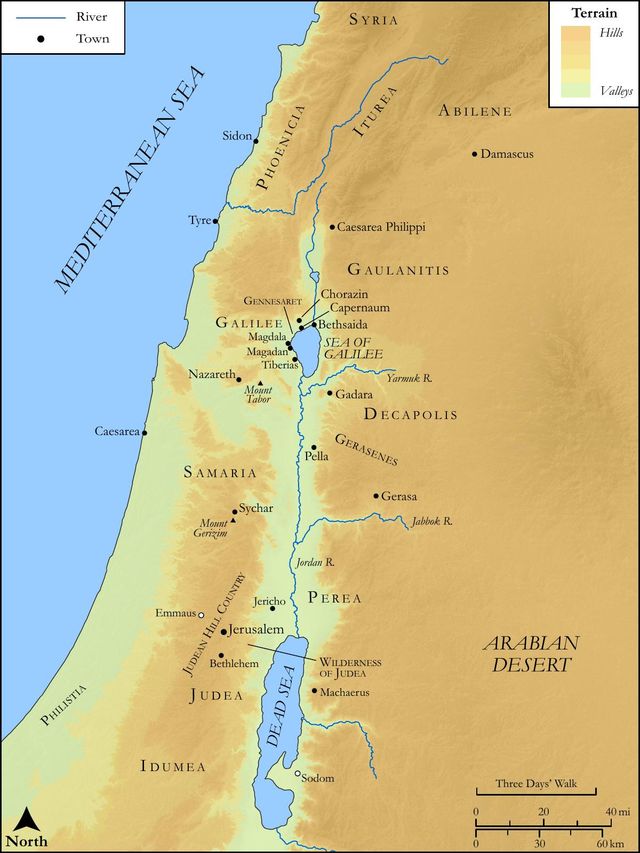
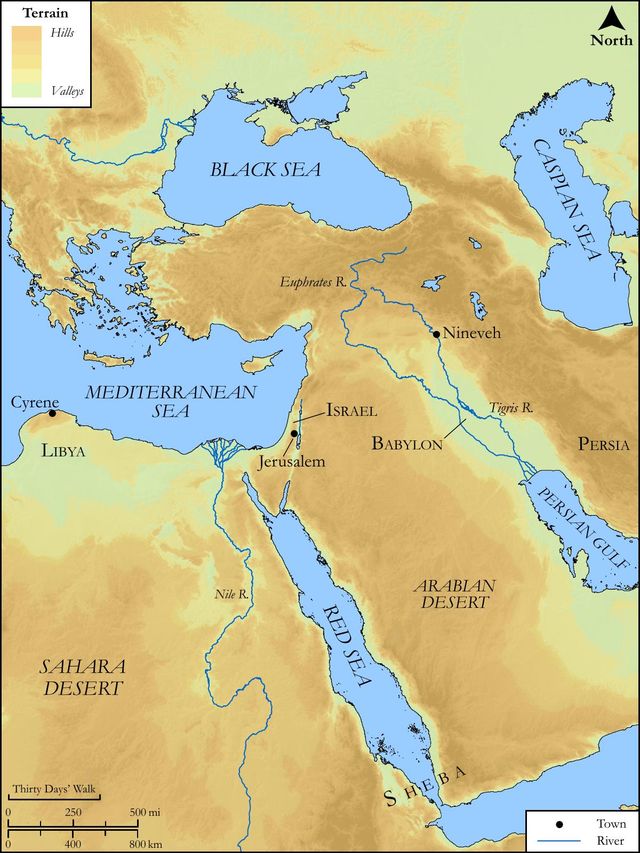
See on the biblical-era maps

Study this verse
Public-domain commentary
Matthew Henry
From his Commentary on the Whole Bible. Henry comments on passages, not single verses — this entry covers Matthew 5:1–2.
We have here a general account of this sermon.
I.The Preacher was our Lord Jesus, the Prince of preachers, the great Prophet of his church, who came into the world, to be the Light of the world. The prophets and John had done virtuously in preaching, but Christ excelled them all. He is the eternal Wisdom, that lay in the bosom of the Father, before all worlds, and perfectly knew his will (Joh 1:18); and he is the eternal Word, by whom he has in these last days spoken to us. The many miraculous cures wrought by Christ in Galilee, which we read of in the close of the foregoing chapter, were intended to make way for this sermon, and to dispose people to receive instructions from one in whom there appeared so much of a divine power and goodness; and, probably, this sermon was the summary, or rehearsal, of what he had preached up and down in the synagogues of Galilee. His text was, Repent, for the kingdom of heaven is at hand. This is a sermon on the former part of that text, showing what it is to repent; it is to reform, both in judgment and practice; and here he tells us wherein, in answer to that question (Mal 3:7), Wherein shall we return? He afterward preached upon the latter part of the text, when, in divers parables, he showed what the kingdom of heaven is like, ch. 13.
II.The place was a mountain in Galilee.
As in other things, so in this, our Lord Jesus was but ill accommodated; he had no convenient place to preach in, any more than to lay his head on. While the scribes and Pharisees had Moses' chair to sit in, with all possible ease, honour, and state, and there corrupted the law; our Lord Jesus, the great Teacher of truth, is driven out to the desert, and finds no better a pulpit than a mountain can afford; and not one of the holy mountains neither, not one of the mountains of Zion, but a common mountain; by which Christ would intimate that there is no such distinguishing holiness of places now, under the gospel, as there was under the law; but that it is the will of God that men should pray and preach every where, any where, provided it be decent and convenient. Christ preached this sermon, which was an exposition of the law, upon a mountain, because upon a mountain the law was given; and this was also a solemn promulgation of the Christian law. But observe the difference: when the law was given, the Lord came down upon the mountain; now the Lord went up: then, he spoke in thunder and lightning; now, in a still small voice: then the people were ordered to keep their distance; now they are invited to draw near: a blessed change! If God's grace and goodness are (as they certainly are) his glory, then the glory of the gospel is the glory that excels, for grace and truth came by Jesus Christ, Co2 3:7; Heb 12:18, etc. It was foretold of Zebulun and Issachar, two of the tribes of Galilee (Deu 33:19), that they shall call the people to the mountain; to this mountain we are called, to learn to offer the sacrifices of righteousness. Now was this the mountain of the Lord, where he taught us his ways, Isa 2:2, Isa 2:3; Mic 4:1, Mic 4:2.
III.The auditors were his disciples, who came unto him; came at his call, as appears by comparing Mar 3:13, Luk 6:13.
To them he directed his speech, because they followed him for love and learning, while others attended him only for cures. He taught them, because they were willing to be taught (the meek will he teach his way); because they would understand what he taught, which to others was foolishness; and because they were to teach others; and it was therefore requisite that they should have a clear and distinct knowledge of these things themselves. The duties prescribed in this sermon were to be conscientiously performed by all those that would enter into that kingdom of heaven which they were sent to set up, with hope to have the benefit of it. But though this discourse was directed to the disciples, it was in the hearing of the multitude; for it is said (Mat 7:28), The people were astonished. No bounds were set about this mountain, to keep the people off, as were about mount Sinai (Exo 19:12); for, through Christ, we have access to God, not only to speak to him, but to hear from him. Nay, he had an eye to the multitude, in preaching this sermon. When the fame of his miracles had brought a vast crowd together, he took the opportunity of so great a confluence of people, to instruct them. Note, It is an encouragement to a faithful minister to cast the net of the gospel where there are a great many fishes, in hope that some will be caught. The sight of a multitude puts life into a preacher, which yet must arise from a desire of their profit, not his own praise.
IV.The solemnity of his sermon is intimated in that word, when he was set.
Christ preached many times occasionally, and by interlocutory discourses; but this was a set sermon, kathisantos autou, when he had placed himself so as to be best heard. He sat down as a Judge or Lawgiver. It intimates with what sedateness and composure of mind the things of God should be spoken and heard. He sat, that the scriptures might be fulfilled (Mal 3:3), He shall sit as a refiner, to purge away the dross, the corrupt doctrines of the sons of Levi. He sat as in the throne, judging right (Psa 9:4); for the word he spoke shall judge us. That phrase, He opened his mouth, is only a Hebrew periphrasis of speaking, as Job 3:1. Yet some think it intimates the solemnity of this discourse; the congregation being large, he raised his voice, and spoke louder than usual. He had spoken long by his servants the prophets, and opened their mouths (Eze 3:27; Eze 24:27; Eze 33:22); but now he opened his own, and spoke with freedom, as one having authority. One of the ancients has this remark upon it; Christ taught much without opening his mouth. that is, by his holy and exemplary life; nay, he taught, when, being led as a lamb to the slaughter, he opened not his mouth, but now he opened his mouth, and taught, that the scriptures might be fulfilled, Pro 8:1, Pro 8:2, Pro 8:6. Doth not wisdom cry - cry on the top of high places? And the opening of her lips shall be right things. He taught them, according to the promise (Isa 54:13), All thy children shall be taught of the Lord; for this purpose he had the tongue of the learned (Isa 50:4), and the Spirit of the Lord, Isa 61:1. He taught them, what was the evil they should abhor, and what was the good they should abide and abound in; for Christianity is not a matter of speculation, but is designed to regulate the temper of our minds and the tenour of our conversations; gospel-time is a time of reformation (Heb 9:10); and by the gospel we must be reformed, must be made good, must be made better. The truth, as it is in Jesus, is the truth which is according to godliness, Tit 1:1.
Historical interpretation
Nine Centuries of Reception
19 surviving comments on this verse. Each one is dated, so this reads as a timeline rather than a list.
Select a marker to jump to its quote. Markers stagger vertically where authors wrote within a few decades of each other.
Or, He ascends the mountain, because it is placed in the loftiness of His Father's Majesty that He gives the commands of heavenly life.
(De Officiis i. 16.) In the eye of Heaven blessedness begins there where misery begins in human estimation.
From the low and humble to the high and exalted places, the Lord, ready to instruct his disciples, went up the mountain—specifically to the Mount of Olives—so that according to the very meaning of this word, he might present the gift of his divine mercy. The Lord went up the mountain that he might give the precepts of the heavenly commandments to his disciples, leaving the earthly and seeking the sublime things as though already placed on high. He went up that he might now give the divine gift of the long-promised blessing, according to what David had once declared: “For indeed he who gave the law will give blessings.”
And that he might more openly show the grace of the apostles and the author of this very great blessing, he added, “They shall walk from strength to strength; God shall look down upon Zion.” That is to say, the Son of God, who gave blessings to the apostles on Zion. On this mountain he also gave his apostles a blessing. He is the One who had once handed down the Mosaic law on Mt. Sinai, showing that he was the author of both laws.… When the law was first given on the mountain, the people were forbidden to draw close. But now, as the Lord was teaching on the mountain, no one is forbidden. Rather, all are invited that they may hear, because there is severity in the law and grace in the gospel. In the former case, terror is instilled in the unbelievers. In the latter case, a gift of blessings is poured out on the believers.
(Hom. xv.) By not choosing His seat in the city, and the market place, but on a mountain in a desert, He has taught us to do nothing with ostentation, and to depart from crowds, above all when we are to be employed in philosophy, or in speaking of serious things.
He ascended a mountain, first, that He might fulfil the prophecy of Esaias, Get thee up into a mountain; (Is. 40:9.) secondly, to show that as well he who teaches, as he who hears the righteousness of God should stand on an high ground of spiritual virtues; for none can abide in the valley and speak from a mountain. If thou stand on the earth, speak of the earth; if thou speak of heaven, stand in heaven. Or, He ascended into the mountain to show that all who would learn the mysteries of the truth should go up into the Mount of the Church of which the Prophet speaks, The hill of God is a hill of fatness. (Ps. 68:15.)
Or, that we may understand that He sometimes teaches by opening His mouth in speech, sometimes by that voice which resounds from His works.
Or, He here calls all loftiness of soul and temper spirit; for as there are many humble against their will, constrained by their outward condition, they have no praise; the blessing is on those who humble themselves by their own choice. Thus He begins at once at the root, pulling up pride which is the root and source of all evil, setting up as its opposite humility as a firm foundation. If this be well laid, other virtues may be firmly built thereon; if that be sapped, whatever good yon gather upon it perishes.
Or, the poor in spirit may be those who fear and tremble at God's commandments, whom the Lord by the Prophet Isaiah commends. Though why more than simply humble? Of the humble there may be in this place but few, in that again an abundance.
See how unambitious He was, and void of boasting: in that He did not lead people about with Him, but whereas, when healing was required, He had Himself gone about everywhere, visiting both towns and country places; now when the multitude is become very great, He sits in one spot: and that not in the midst of any city or forum, but on a mountain and in a wilderness; instructing us to do nothing for display, and to separate ourselves from the tumults of ordinary life, and this most especially, when we are to study wisdom, and to discourse of things needful to be done.
But when He had gone up into the mount, and was set down, His disciples came unto Him. Seest thou their growth in virtue? and how in a moment they became better men? Since the multitude were but gazers on the miracles, but these from that hour desired also to hear some great and high thing. And indeed this it was set Him on His teaching, and made Him begin this discourse.
For it was not men's bodies only that He was healing, but He was also amending their souls; and again from the care of these He would pass to attendance on the other. Thus He at once varied the succor that He gave, and likewise mingled with the instruction afforded by His words, the manifestation of His glory from His works; and besides, He stopped the shameless mouths of the heretics, signifying by this His care of both parts of our being, that He Himself is the Maker of the whole creation. Therefore also on each nature He bestowed abundant providence, now amending the one, now the other.
And it is said, that He opened His mouth, and taught them. And wherefore is the clause added, He opened His mouth? To inform thee that in His very silence He gave instruction, and not when He spoke only: but at one time by opening His mouth, at another uttering His voice by the works which He did.
But when thou hearest that He taught them, do not think of Him as discoursing with His disciples only, but rather with all through them. For since the multitude was such as a multitude ever is, and consisted moreover of such as creep on the ground, He withdraws the choir of His disciples, and makes His discourse unto them: in His conversation with them providing that the rest also, who were yet very far from the level of His sayings, might find His lesson of self-denial no longer grievous unto them.
Some of the less learned brethren suppose the Lord to have spoken what follows from the Mount of Olives, which is by no means the case; what went before and what follows fixes the place in Galilee. aMount Tabor. we may suppose, or any other high mountain.
He spoke to them sitting and not standing, for they could not have understood Him had He appeared in His own Majesty.
The poor in spirit are those who embrace a voluntary poverty for the sake of the Holy Spirit.
The Lord went up the mountain that he might bring the crowds with him to higher things. The crowds were unable to go up, however, and he was followed by the disciples to whom he spoke, not standing but sitting together. For they were unable to understand this brilliant man in his majesty. Many of the simple believers literally believed that he taught the Beatitudes and other things on the Mount of Olives, but this is not really true. From the events that went before and followed, the place in Galilee has been shown to be what we believe is either Mount Tabor or some other high mountain. After he finished speaking, the Evangelist says, “Now when he had entered Capernaum.”
(Chapter 5, Verses 1, 2.) But Jesus, seeing the crowds, went up the mountain, and when he had sat down, his disciples came to him. And opening his mouth, he taught them, saying, 'The Lord goes up to the mountains, so that he may draw the multitudes to higher things with him. But the crowds are not able to ascend. And the disciples follow, to whom he speaks not standing, but sitting and huddled. For they were not able to understand him shining in his majesty.' According to the letter, some of the simpler brothers think that he taught the Beatitudes and the rest that follow on the Mount of Olives, which is not at all the case: for from what precedes and follows, the place is shown to be in Galilee, which we thought was either Mount Tabor or any other lofty mountain. Finally, after he finished his speeches, it immediately follows: But when he entered Capernaum.
If we ask what the mountain signifies, it is rightly understood to point toward the gospel’s higher righteousness. The precepts given to the Hebrews were lower. Yet, through his holy prophets and servants and in accordance with a most orderly arrangement of circumstance, the same God gave the lower precepts to a people to whom it was fitting to be bound by fear. Through his Son he gave the higher precepts to a people to whom it is fitting to be set free by love.
The beginning, then, of this sermon is introduced as follows: And when He saw the great multitudes, He went up into a mountain: and when He was set, His disciples came unto Him: and He opened His mouth, and taught them, saying. If it is asked what the mountain means, it may well be understood as meaning the greater precepts of righteousness; for there were lesser ones which were given to the Jews. Yet it is one God who, through His holy prophets and servants, according to a thoroughly arranged distribution of times, gave the lesser precepts to a people who as yet required to be bound by fear; and who, through His Son, gave the greater ones to a people whom it had now become suitable to set free by love. Moreover, when the lesser are given to the lesser, and the greater to the greater, they are given by Him who alone knows how to present to the human race the medicine suited to the occasion. Nor is it surprising that the greater precepts are given for the kingdom of heaven, and the lesser for an earthly kingdom, by that one and the same God, who made heaven and earth. With respect, therefore, to that righteousness which is the greater, it is said through the prophet, Your righteousness is like the mountains of God: and this may well mean that the one Master alone fit to teach matters of so great importance teaches on a mountain. Then He teaches sitting, as behooves the dignity of the instructor's office; and His disciples come to Him, in order that they might be nearer in body for hearing His words, as they also approached in spirit to fulfil His precepts
(de Cons. Ev. ii. 19.) Or He may be thought to have sought to shun the thickest crowd, and to have ascended the mountain that He might speak to His disciples alone.
(de Serm. Dom. in Mont. i. 1.) Or, He ascends the mountain to show that the precepts of righteousness given by God through the Prophets to the Jews, who were yet under the bondage of fear, were the lesser commandments; but that by His own Son were given the greater commandments to a people which He had determined to deliver by love.
Or, to teach sitting is the prerogative of the Master. His disciples came to him, that they who in spirit approached more nearly to keeping His commandments, should also approach Him nearest with their bodily presence.
(de Cons. Ev. ii. 19.) It causes a thought how it is that Matthew relates this sermon to have been delivered by the Lord sitting on the mountain; Luke, as He stood in the plain. This diversity in their accounts would lead us to think that the occasions were different. Why should not Christ repeat once more what He said before, or do once more what He had done before? Although another method of reconciling the two may occur to us; namely, that our Lord was first with His disciples alone on some more lofty peak of the mountain when He chose the twelve; that He then descended with them not from the mountain entirely, but from the top to some expanse of level ground in the side, capable of holding a great number of people; that He stood there while the crowd was gathering around Him, and after when He had sate down, then His disciples came near to Him, and so to them and in the presence of the rest of the multitude He spoke the same sermon which Matthew and Luke give, in a different manner, but with equal truth of facts.
If any one will piously and soberly consider the sermon which our Lord Jesus Christ spoke on the mount, as we read it in the Gospel according to Matthew, I think that he will find in it, so far as regards the highest morals, a perfect standard of the Christian life: and this we do not rashly venture to promise, but gather it from the very words of the Lord Himself. For the sermon itself is brought to a close in such a way, that it is clear there are in it all the precepts which go to mould the life. For thus He speaks: Therefore, whosoever hears these words of mine, and does them, I will liken him unto a wise man, which built his house upon a rock: and the rain descended, and the floods came, and the winds blew, and beat upon that house; and it fell not: for it was founded upon a rock. And every one that hears these words of mine, and does them not, I will liken unto a foolish man, which built his house upon the sand: and the rain descended, and the floods came, and the winds blew, and beat upon that house; and it fell: and great was the fall of it. Since, therefore, He has not simply said, Whosoever hears my words, but has made an addition, saying, Whosoever hears these words of mine, He has sufficiently indicated, as I think, that these sayings which He uttered on the mount so perfectly guide the life of those who may be willing to live according to them, that they may justly be compared to one building upon a rock. I have said this merely that it may be clear that the sermon before us is perfect in all the precepts by which the Christian life is moulded; for as regards this particular section a more careful treatment will be given in its own place.
Every man in his own trade or profession rejoices when he sees an opportunity of exercising it; the carpenter if he sees a goodly tree desires to have it to cut down to employ his skill on, and the Priest when he sees a full Church, his heart rejoices, he is glad of the occasion to teach. So the Lord seeing a great congregation of people was stirred to teach them.
Blessed are the poor in spirita, or, according to the literal rendering of the Greek, 'they who beg,' that the humble may learn that they should be ever begging at God's almshouse. For there are many naturally humble and not of faith, who do not knock at God's almshouse; but they alone are humble who are so of faith.
For as all other vices, but chiefly pride, casts down to hell; so all other virtues, but chiefly humility, conduct to Heaven; it is proper that he that humbles himself should be exalted.
This should be known, that the Lord had three places of retirement that we read of, the ship, the mountain, and the desert; to one of these He was wont to withdraw whenever He was pressed by the multitude.
Wherever it is said that the Lord opened His mouth, we may know how great things are to follow.
(Moral. iv. 1.) When the Lord on the mountain is about to utter His sublime precepts, it is said, Opening his month he taught them, He who had before opened the mouth of the Prophets.
Mystically, this sitting down of Christ is His incarnation; had He not taken flesh on Him, mankind could not have come unto Him.
. He teaches us not to do anything ostentatiously. For when He is about to teach, He goes up onto the mountain, thus instructing us also when we would teach, to depart from the bustle in the city.
The multitude comes for the miracles, but the disciples come for the teachings. So when He has finished the miracles and healed their bodies, then He heals their souls as well, that we may learn that He is the Creator of both souls and bodies.
(interlin.) The riches of Heaven are suitably promised to those who at this present are in poverty.
Continue studying Matthew 5:1 across the web’s major study libraries — every link below opens this exact verse, chapter, or book on the destination site.
Read & Compare
 BibleGatewayThis verse in more than 200 translations and 70 languages.
 Bible.comThe YouVersion reader — hundreds of translations, reading plans, and highlights.
 ESV.orgCrossway's official English Standard Version reader.
 NET BibleThe NET translation with 60,000+ translators' notes on every rendering decision.
 STEP BibleTyndale House's free study tool — original text, vocabulary, and scholarly resources.
 BibliaLogos Bible Software's free web reader.
 USCCBThe New American Bible (Revised Edition) with the U.S. bishops' study notes.
Commentaries
 BibleHub CommentariesDozens of classic commentaries on this verse, gathered on one page.
 StudyLightMore than 100 commentary sets — the largest collection on the web.
 BibleRefPlain-English commentary on what this verse means, verse by verse.
 Enduring WordDavid Guzik's free commentary on this chapter, widely used by Bible teachers.
 Bible Study ToolsVerse commentary alongside Greek and Hebrew study aids.
Original Language & Research
- BibleHub InterlinearThe verse word by word — original language, transliteration, and English.
- BibleHub LexiconEvery word's original-language definition and Strong's entry.
 Blue Letter BibleDeep-study tools — Strong's numbers, concordance, and word studies.
 CNTR CollationThe earliest Greek manuscripts of this verse, collated letter by letter.
Sermons, Hymns & Audio


TrulyRandomVerse is not affiliated with these sites and doesn’t control their content. They’re linked because they’re genuinely useful.
Summary
Matthew 5:1 serves as the pivotal introduction to the Sermon on the Mount, one of Jesus' most profound and comprehensive discourses in the Gospels. It describes Jesus' deliberate withdrawal from the vast crowds that followed Him, ascending a mountain, and then seating Himself to teach His disciples. This verse sets the stage for a foundational teaching moment, signaling a shift from general public ministry to an intimate, authoritative instruction intended for those committed to following Him.
Context
ShowHideLiterary Context
Matthew 5:1 immediately follows a period of intense and widespread ministry by Jesus throughout Galilee, as detailed in Matthew 4:23-25. During this time, Jesus was "teaching in their synagogues, preaching the gospel of the kingdom, and healing all manner of sickness and all manner of disease among the people" (Matthew 4:23). This extensive work drew "great multitudes" from diverse regions, including Galilee, Decapolis, Jerusalem, Judea, and beyond Jordan (Matthew 4:25). The transition in Matthew 5:1 from "seeing the multitudes" to teaching specifically His "disciples" marks a significant shift from broad public engagement to focused, intentional instruction for His committed followers, preparing them for the deeper truths of the Kingdom of God.
Historical & Cultural Context
The act of going "up into a mountain" and sitting down was deeply significant in ancient Jewish culture. Rabbis and authoritative teachers typically sat when delivering formal instruction, signifying their authority and the solemnity of the teaching. This posture distinguished a formal discourse from casual conversation. Mountains themselves held profound theological significance in the Old Testament, often serving as places of divine revelation and covenant-making, most notably Mount Sinai where Moses received the Law. By choosing a mountain, Jesus evokes this imagery, subtly presenting Himself as a new Lawgiver, delivering the principles of the new covenant and the Kingdom of Heaven. The presence of both "multitudes" and "disciples" highlights the dual nature of Jesus' ministry: broad outreach to all, but specific, intensive training for those called to deeper commitment.
Key Themes
ShowHideThis verse introduces several key themes that permeate the Sermon on the Mount and the broader Gospel of Matthew. Firstly, it underscores the theme of Discipleship, highlighting that while many followed Jesus, a select group of disciples were being prepared for a deeper understanding and application of His teachings. Secondly, it emphasizes Jesus' Authority as a teacher, conveyed through His deliberate actions of ascending and sitting, a posture of rabbinic instruction. This authority is further underscored by the content of the Sermon itself, which often contrasts Jesus' teaching with traditional interpretations of the Law (Matthew 5:21-48). Finally, the Symbolism of the Mountain connects Jesus' ministry to Old Testament revelation, particularly the giving of the Law, positioning Jesus not as one who abolishes the Law but one who fulfills and reinterprets it in light of the Kingdom of God (Matthew 5:17).
Exposition and Analysis
ShowHideKey Word Analysis
ShowHideThis verb signifies more than just a casual glance; it implies a perceptive understanding or awareness. Jesus "saw" the multitudes not merely as a physical presence but understood their spiritual need and the context of His ministry among them. This perceptive seeing prompts His subsequent action.
This word denotes an ascent, a deliberate movement upwards. It is not a casual stroll but a purposeful action to gain elevation. In this context, it suggests Jesus' intentional withdrawal from the clamor of the crowds to a more secluded and elevated place, suitable for focused teaching.
This verb means "to seat down" or "to sit." It refers to the specific posture adopted by ancient teachers and rabbis when commencing formal instruction. Jesus' act of sitting down signifies the beginning of an authoritative and solemn discourse, indicating His readiness to impart profound truth.
Derived from a word meaning "to learn," a disciple is a learner or pupil. This term emphasizes the relationship between Jesus and His followers—they are not just admirers or casual listeners, but committed students who have chosen to draw near and receive His instruction.
Verse Breakdown
ShowHide"And seeing the multitudes,"
This clause establishes the immediate context: Jesus' awareness of the vast numbers of people who had gathered around Him, drawn by His healing and preaching ministry. It highlights the scale of His popularity and the widespread interest in His message.
"he went up into a mountain:"
This describes Jesus' deliberate action of withdrawing from the crowds and ascending to an elevated position. This physical movement signifies a purposeful separation and the choice of a specific, symbolic location for His teaching.
"and when he was set,"
This phrase indicates Jesus' posture. His act of sitting down was the customary stance of a rabbi or authoritative teacher, signaling the commencement of a formal, weighty instruction. It conveys His authority and the solemnity of the impending discourse.
"his disciples came unto him:"
This specifies the primary audience for the Sermon on the Mount. While multitudes were present, it was Jesus' committed followers, His disciples, who drew near to Him, indicating their readiness to receive His intimate and foundational teachings.
Literary Devices
ShowHideMatthew 5:1 effectively employs several literary devices. Symbolism is prominent, with the "mountain" serving as a powerful symbolic backdrop. Echoing Mount Sinai, where Moses received the Law, Jesus' ascent to a mountain positions Him as the new Lawgiver, delivering the Kingdom's constitution. This creates a Typological Connection between Moses and Jesus, presenting Jesus as the greater prophet and the fulfillment of the Law. The Contrast between "multitudes" and "disciples" highlights the shift in audience and purpose, moving from general evangelism to focused discipleship training. Furthermore, Jesus' deliberate actions—"went up" and "was set"—demonstrate Intentionality, emphasizing the profound significance and authority of the teaching that is about to unfold.
Theological and Thematic Connections
ShowHideMatthew 5:1 serves as the gateway to the Sermon on the Mount, a discourse that lays out the ethical and spiritual demands of the Kingdom of God, revealing the heart of God's righteous expectations for His people. It is not merely a collection of moral precepts but a radical call to a transformed life, rooted in a transformed heart. The setting on the mountain, reminiscent of Mount Sinai, powerfully connects Jesus' teaching to the Mosaic Law, yet simultaneously elevates it, presenting Jesus as the ultimate interpreter and fulfiller of God's will. This moment marks the inauguration of a new covenant teaching, where the spirit of the law is emphasized over mere external adherence, inviting believers into a deeper, more profound relationship with God and one another.
Reflection and Application
ShowHideMatthew 5:1 offers profound insights for contemporary believers. Just as Jesus deliberately withdrew to a quiet, elevated place to teach, and His disciples intentionally drew near, we are called to cultivate a similar intentionality in our pursuit of spiritual truth. In a world filled with distractions and clamor, we must actively seek out spaces—whether physical or spiritual—where we can quiet our hearts and minds to truly listen to God's Word. This verse reminds us that while God's grace is extended to all ("the multitudes"), there is a distinct call to deeper discipleship—a willingness to draw near, to commit, and to submit to the authoritative instruction of Jesus, our ultimate Teacher. This act of drawing near signifies a readiness to move beyond casual interest to a transformative engagement with His kingdom principles, allowing them to shape our character and conduct, leading to a life of profound obedience and spiritual flourishing.
Questions for Reflection
ShowHideFAQ
ShowHideWhy did Jesus go up into a mountain to teach?
ShowHideJesus' ascent to a mountain to teach was deeply symbolic and practical. Symbolically, it evoked the imagery of Mount Sinai, where Moses received the Law, positioning Jesus as the new Lawgiver delivering the principles of the Kingdom of Heaven. Practically, it provided a natural amphitheater, allowing His voice to carry to a larger audience, and offered a degree of separation from the pressing crowds, creating a more intimate setting for His disciples.
Who were "his disciples" mentioned in this verse?
ShowHideWhile the term "disciples" can broadly refer to anyone who followed Jesus, in this context, it primarily refers to the inner circle of His committed followers, including the twelve apostles He had recently called (Matthew 4:18-22). These were individuals who had chosen to leave their former lives and dedicate themselves to learning from and serving Jesus. The Sermon on the Mount was primarily intended for their instruction and training.
What is the significance of Jesus being "set" or seated when He taught?
ShowHideIn ancient Jewish culture, the posture of sitting was the traditional stance of a rabbi or teacher when delivering formal instruction. It conveyed authority, solemnity, and the commencement of a significant discourse. By being "set," Jesus was signaling that He was about to impart authoritative and foundational truths, not merely engaging in casual conversation. This posture underscores the weighty and profound nature of the Sermon on the Mount.
Christ-Centered Fulfillment
ShowHideMatthew 5:1, introducing the Sermon on the Mount, finds its profound Christ-centered fulfillment in Jesus Himself. He is not merely a teacher of the Law, but the very embodiment and fulfillment of the Law and the Prophets (Matthew 5:17). Just as Moses mediated the old covenant from Sinai, Jesus, the greater Moses and the Son of God, inaugurates the new covenant from this mountain, revealing the true heart of God's righteousness. The principles He teaches are not external rules but flow from His own perfect character and His kingdom. He is the one who perfectly lives out the Beatitudes, exemplifies radical love for enemies, and demonstrates complete trust in the Father. The "mountain" becomes a new Zion, from which the King of Kings proclaims the constitution of His eternal kingdom. His authority to teach, underscored by His seated posture, is not derived but inherent, for He speaks as God incarnate, the very Word made flesh (John 1:1-14). Thus, the Sermon on the Mount, initiated in Matthew 5:1, is not merely a set of ethical guidelines but a revelation of the nature of the Kingdom and the character of its King, calling His followers to be conformed to His image (Romans 8:29).