


Matthew 28:11
Bible text: King James Version (1769 Blayney text) · Public domain
Bible text: Berean Standard Bible · Public domain
Bible text: American Standard Version (1901) · Public domain
Bible text: World English Bible, Messianic edition · Public domain
Bible text: Geneva Bible (1599) · Public domain
Bible text: Young's Literal Translation · Public domain
- ΠορευομένωνPoreuomenōnWhen were goingG4198V-PNP-GPFVerb Present Middle Or Passive Deponent Participle Genitive Plural Feminine
- δὲdenowG1161CONJConjunction
- αὐτῶνautōntheyG846P-GPFPersonal pronoun Genitive Plural Feminine
- ἰδούidoubeholdG2400INJInterjection
- τινεςtinessomeG5100X-NPMIndefinite pronoun Nominative Plural Masculine
- τῆςtēsof theG3588T-GSFDefinite article Genitive Singular Feminine
- κουστωδίαςkoustōdiasguardG2892N-GSFNoun Genitive Singular Feminine
- ἐλθόντεςelthonteshaving goneG2064V-2AAP-NPMVerb 2nd Aorist Active Participle Nominative Plural Masculine
- εἰςeisintoG1519PREPPreposition
- τὴνtēntheG3588T-ASFDefinite article Accusative Singular Feminine
- πόλινpolincityG4172N-ASFNoun Accusative Singular Feminine
- ἀπήγγειλανapēngeilanreportedG518V-AAI-3PVerb Aorist Active Indicative 3rd Plural
- τοῖςtoisto theG3588T-DPMDefinite article Dative Plural Masculine
- ἀρχιερεῦσινarchiereusinchief priestsG749N-DPMNoun Dative Plural Masculine
- ἅπανταhapantaallG537A-APNAdjective Accusative Plural Neuter
- τὰtathe [things]G3588T-APNDefinite article Accusative Plural Neuter
- γενόμεναgenomenahaving been doneG1096V-2ADP-APNVerb 2nd Aorist Middle Deponent Participle Accusative Plural Neuter
English is a literal word-by-word gloss of the Greek, not the KJV's wording. Why?
This is the original text the KJV's translators worked from — each Greek word with its own literal English meaning in this verse, prepared by scholars at Tyndale House, Cambridge. The KJV translates whole sentences, not word by word, so its wording differs: one Greek word can become several English words, and the KJV may choose “charity” where the gloss reads “love”. Both are faithful — they answer different questions. For the KJV's own rendering, switch to the KJV text.
Details
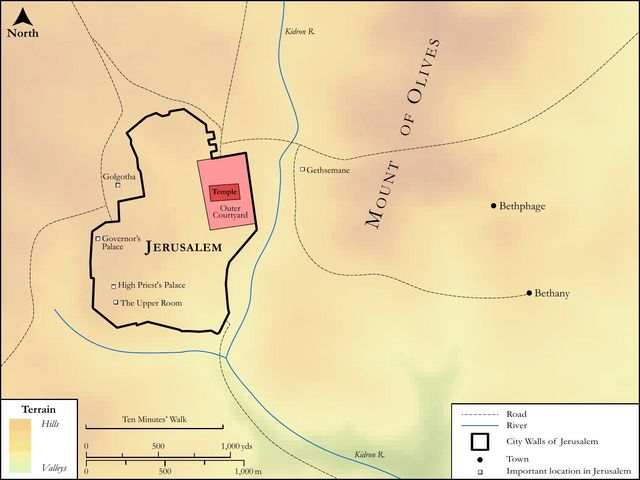
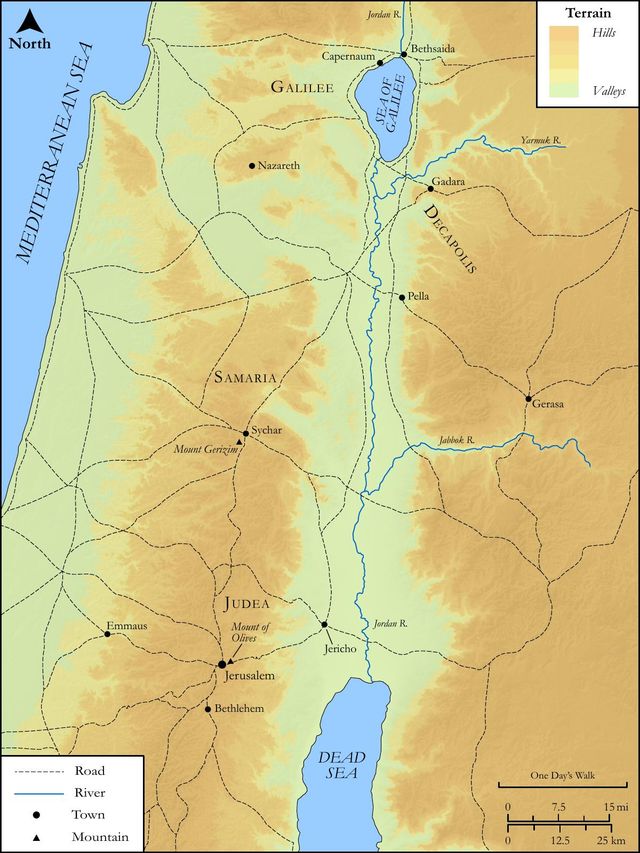
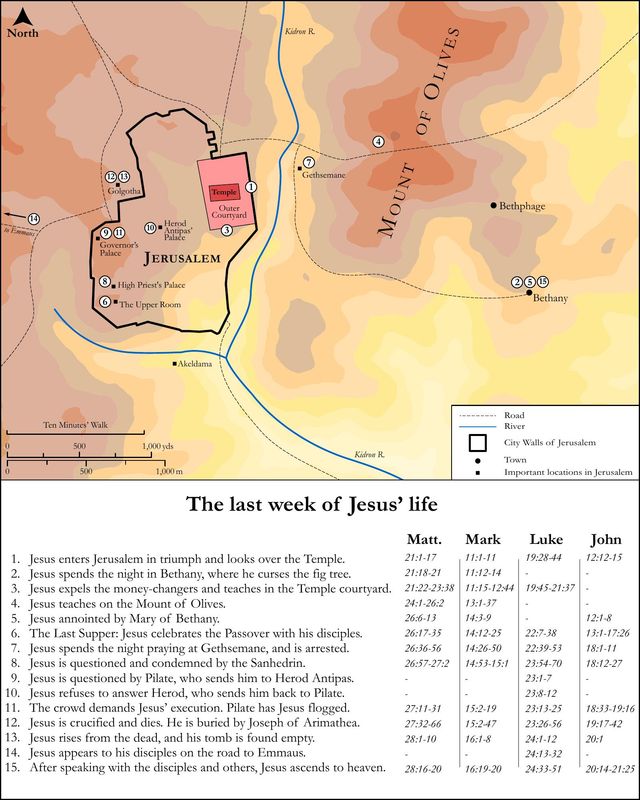
See on the biblical-era maps
Study this verse
Historical interpretation
Nine Centuries of Reception
8 surviving comments on this verse. Each one is dated, so this reads as a timeline rather than a list.
Select a marker to jump to its quote. Markers stagger vertically where authors wrote within a few decades of each other.
The concealment of the Resurrection, and the false allegation of theft, is purchased by money; because by the honour of this world, which consists in money and desire, Christ's glory is denied.
(Hom. xc.) Of the signs which were shown around Christ, some were common to the whole world, as the darkness; some peculiar to the watch, as the wonderful apparition of Angels, and the earthquake, which were wrought for the soldiers' sake, that they might be stunned with amazement, and bear testimony to the truth. For when truth is proclaimed by its adversaries, it adds to its brightness. Which befel now; Some of the watch came into the city, and showed unto the Chief Priests all the things that were done.
How should the disciples carry Him away by stealth, men poor, and of no station, and who scarcely dared to show themselves? They fled when afterwards they saw Christ alive, how, when He was dead, would they not have feared so great a multitude of soldiers? How were they to remove the door of the sepulchre? One might have done it unperceived by the guard. But a large stone was rolled to the mouth requiring many hands. And was not the seal thereon? And why did they not attempt it the first night, when there was none at the sepulchre? For it was on the Sabbath that they begged the body of Jesus. Moreover, what mean these napkins which Peter sees laid here? Had the disciples stolen the Body, they would never have stripped it, both because it might so receive hurt, and cause unnecessary delay to themselves, and so expose them to be taken by the watch; especially since the Body and clothes were covered with myrrh, a glutinous spice, which would cause them to adhere. The allegation of the theft then is improbable. So that their endeavours to conceal the Resurrection do but make it more manifest. For when they say, His disciples stole the body, they confess that it is not in the sepulchre. And as they thus confess that they had not the Body, and as the watch, the sealing, and the fears of the disciples, make the theft improbable, there is seen evidence of the Resurrection not to be gainsaid.
See how all are corrupted; Pilate persuaded; the people stirred up; the soldiers bribed; as it follows, And they look the money, and did as they were instructed. If money prevailed with a disciple so far as to make him become the betrayer of his Master, what wonder that the soldiers are overcome by it.
For the sake of these soldiers that earthquake took place, in order to dismay them, and that the testimony might come from them, which accordingly was the result. For the report was thus free from suspicion, as proceeding from the guards themselves. For of the signs some were displayed publicly to the world, others privately to those present on the spot; publicly for the world was the darkness, privately the appearance of the angel, the earthquake. When then they came and showed it (for truth shines forth, being proclaimed by its adversaries), they again gave money, that they might say, as it is expressed, "that His disciples came and stole Him."
How did they steal Him? O most foolish of all men! For because of the clearness and conspicuousness of the truth, they are not even able to make up a falsehood. For indeed what they said was highly incredible, and the falsehood had not even speciousness. For how, I ask, did the disciples steal Him, men poor and unlearned, and not venturing so much as to show themselves? What? was not a seal put upon it? What? were there not so many watchmen, and soldiers, and Jews stationed round it? What? did not those men suspect this very thing, and take thought, and break their rest, and continue anxious about it? And wherefore moreover did they steal it? That they might feign the doctrine of the resurrection? And how should it enter their minds to feign such a thing, men who were well content to be hidden and to live? And how could they remove the stone that was made sure? how could they have escaped the observation of so many? Nay, though they had despised death, they would not have attempted without purpose, and fruitlessly to venture in defiance of so many who were on the watch. And that moreover they were timorous, what they had done before showed clearly, at least, when they saw Him seized, all rushed away from Him. If then at that time they did not dare so much as to stand their ground when they saw Him alive, how when He was dead could they but have feared such a number of soldiers? What? was it to burst open a door? Was it that one should escape notice? A great stone lay upon it, needing many hands to move it.
They were right in saying, "So the last error shall be worse than the first," making this declaration against themselves, for that, when after so much mad conduct they ought to have repented, they rather strive to outdo their former acts, feigning absurd fictions, and as, when He was alive, they purchased His blood, so when He was dead and risen again, they again by money were striving to undermine the evidence of His resurrection. But do thou mark, I pray thee, how by their own doings they are caught everywhere. For if they had not come to Pilate, nor asked for the guard, they would have been more able to act thus impudently, but as it was, not so. For indeed, as though they were laboring to stop their own mouths, even so did they all things. For if the disciples had not strength to watch with Him, and that, though upbraided by Him, how could they have ventured upon these things? And wherefore did they not steal Him before this, but when ye were come? For if they had been minded to do this, they would have done it, when the tomb was not yet guarded on the first night, when it was to be done without danger, and in security. For it was on the Sabbath that they came and begged of Pilate to have the watch, and kept guard, but during the first night none of these was present by the sepulchre.
And what mean also the napkins that were stuck on with the myrrh; for Peter saw these lying. For if they had been disposed to steal, they would not have stolen the body naked, not because of dishonoring it only, but in order not to delay and lose time in stripping it, and not to give them that were so disposed opportunity to awake and seize them. Especially when it was myrrh, a drug that adheres so to the body, and cleaves to the clothes, whence it was not easy to take the clothes off the body, but they that did this needed much time, so that from this again, the tale of the theft is improbable.
What? did they not know the rage of the Jews? and that they would vent their anger on them? And what profit was it at all to them, if He had not risen again?
So these men, being conscious that they had made up all this tale, gave money, and said, "Say ye these things, and we will persuade the governor." For they desire that the report should be published, fighting in vain against the truth; and by their endeavor to obscure it, by these even against their will they occasioned it to appear clearly. For indeed even this establishes the resurrection, the fact I mean of their saying, that the disciples stole Him. For this is the language of men confessing, that the body was not there. When therefore they confess the body was not there, but the stealing it is shown to be false and incredible, by their watching by it, and by the seals, and by the timidity of the disciples, the proof of the resurrection even hence appears incontrovertible.
Nevertheless, these shameless and audacious men, although there were so many things to stop their mouths, "Say ye," these are their words, "and we will persuade, and will secure you." Seest thou all depraved? Pilate, for he was persuaded? the soldiers? the Jewish people? But marvel not, if money prevailed over soldiers. For if with His disciple it showed its might to be so great, much more with these.
"And this saying is commonly reported," it is said, "until this day." Seest thou again the disciples' love of truth, how they are not ashamed of saying even this, that such a report prevailed against them.
Thus the Chief Priests, who ought to have been by this turned to penitence, and to seek Jesus risen, persevere in their wickedness, and convert the money which was given for the use of the Temple to the purchase of a lie, as before they had given thirty pieces of silver to the traitor Judas.
All who abuse to other purposes the money of the Temple, and the contributions for the use of the Church, purchasing with them their own pleasure, are like the Scribes and Priests who bought this lie, and the blood of the Saviour.
(ubi sup.) Not content to have put the Master to death, they plot how they may destroy the disciples, and make the Master's power matter of charge against His disciples. The soldiers indeed lost Him, the Jews missed Him, but the disciples crimed Him away, not by theft, but by faith; by virtue, and not by fraud; by holiness, and not by wickedness; alive, and not dead.
(ubi sup.) Among the Jews, not among the Christians; what in Judæa the Jew concealed by his gold, is by faith blazed abroad throughout the world.
But if the guards slept, how saw they the theft? And if they saw it not, how could they witness thereto? So that what they desire to show, they cannot show.
Simple minds, and unlearned country-folk, often make manifest without guile the truth of a matter, as the thing is; but on the other hand, a crafty wickedness studies how to recommend falsehood by glosing words.
But as the guilt of His blood, which they imprecated upon themselves and their children, presses them down with a heavy weight of sin, so the purchase of the lie, by which they deny the truth of the Resurrection, charges this guilt upon them for ever; as it follows, And this saying is commonly reported among the Jews until this day.
(non occ.) That the fear of the Governor might not restrain them from this lie, they promise them impunity.
Continue studying Matthew 28:11 across the web’s major study libraries — every link below opens this exact verse, chapter, or book on the destination site.
Read & Compare
 BibleGatewayThis verse in more than 200 translations and 70 languages.
 Bible.comThe YouVersion reader — hundreds of translations, reading plans, and highlights.
 ESV.orgCrossway's official English Standard Version reader.
 NET BibleThe NET translation with 60,000+ translators' notes on every rendering decision.
 STEP BibleTyndale House's free study tool — original text, vocabulary, and scholarly resources.
 BibliaLogos Bible Software's free web reader.
 USCCBThe New American Bible (Revised Edition) with the U.S. bishops' study notes.
Commentaries
 BibleHub CommentariesDozens of classic commentaries on this verse, gathered on one page.
 StudyLightMore than 100 commentary sets — the largest collection on the web.
 BibleRefPlain-English commentary on what this verse means, verse by verse.
 Enduring WordDavid Guzik's free commentary on this chapter, widely used by Bible teachers.
 Bible Study ToolsVerse commentary alongside Greek and Hebrew study aids.
Original Language & Research
- BibleHub InterlinearThe verse word by word — original language, transliteration, and English.
- BibleHub LexiconEvery word's original-language definition and Strong's entry.
 Blue Letter BibleDeep-study tools — Strong's numbers, concordance, and word studies.
 CNTR CollationThe earliest Greek manuscripts of this verse, collated letter by letter.
Sermons, Hymns & Audio


TrulyRandomVerse is not affiliated with these sites and doesn’t control their content. They’re linked because they’re genuinely useful.
Summary
Matthew 28:11 details the immediate aftermath of the resurrection, focusing on the Roman guards who had been stationed at Jesus' tomb. Having witnessed the cataclysmic events of the resurrection morning—the earthquake, the angelic appearance, and the empty tomb—some of these guards returned to Jerusalem. They reported their astonishing and undeniable eyewitness account of "all the things that were done" directly to the chief priests, the very religious leaders who had insisted on their deployment to prevent any claims of resurrection. This verse sets the stage for the religious authorities' desperate attempt to suppress the truth by fabricating a lie.
Context
ShowHideLiterary Context
This verse immediately follows the climactic resurrection narrative in Matthew 28:1-10. Mary Magdalene and the other Mary have just encountered the angel at the empty tomb, received the news of Jesus' resurrection, and then met the risen Christ Himself. Their joy and mission to tell the disciples are contrasted sharply with the reaction of the Roman guards. The narrative then shifts from the faithful witnesses to the unwilling ones, setting up the subsequent confrontation between the undeniable truth of the resurrection and the determined suppression of it by the Jewish religious elite, as detailed in Matthew 28:12-15. This juxtaposition highlights the stark difference in response to the same divine event.
Historical & Cultural Context
The "watch" refers to the Roman koustodia, a detachment of Roman soldiers assigned to guard the tomb at the insistence of the chief priests and Pharisees (Matthew 27:62-66). These soldiers were highly disciplined and faced severe penalties, even death, for dereliction of duty, especially for losing a prisoner. Their report to the chief priests was not a casual conversation but a formal account of extraordinary events that directly impacted their professional standing and safety. The chief priests, representing the powerful Sanhedrin, held significant authority within Jewish society, albeit under Roman oversight. Their immediate response to the guards' report, as seen in the subsequent verses, underscores their deep-seated opposition to Jesus and their fear of His messianic claims, which they perceived as a threat to their power and status.
Key Themes
ShowHideMatthew 28:11 contributes to several key themes. Firstly, it underscores the uncontainable truth of the resurrection. Despite all human efforts to secure the tomb—a large stone, a Roman seal, and a professional guard—God's power could not be thwarted. The empty tomb and the angelic appearance were undeniable, even to those tasked with preventing such an outcome. Secondly, it highlights eyewitness testimony from unexpected sources. The guards, pagan Roman soldiers with no vested interest in promoting Jesus' cause, become unwilling but powerful witnesses to the supernatural events. Their testimony, given under duress and at risk to their own lives, lends significant credibility to the resurrection narrative. Thirdly, it foreshadows the desperation and moral bankruptcy of the religious leaders, who, confronted with irrefutable evidence from their own appointed guards, choose not to repent or believe, but instead to conspire and spread a fabricated lie (Matthew 28:12-15).
Exposition and Analysis
ShowHideKey Word Analysis
ShowHideThis particle serves as a crucial transition, indicating a shift in narrative focus. While often translated simply as "now," it can carry an adversative or continuative sense, here marking a pivotal moment where the focus moves from the disciples' encounter with the risen Christ to the reaction of those who sought to suppress the truth. It signals a new development in the unfolding resurrection drama.
Derived from Latin, this term specifically refers to a Roman military guard or sentry. Its use emphasizes the official, professional, and disciplined nature of the soldiers stationed at the tomb. This was not a casual group of men but a detachment of trained personnel, whose testimony would carry significant weight, especially given the severe penalties for failing their assigned duty. Their presence underscores the human efforts to prevent the resurrection, making their report all the more compelling.
This verb means "to come into being," "to happen," or "to occur." In this context, "all the things that were done" refers to the entirety of the supernatural events witnessed by the guards: the great earthquake, the angel's descent, his terrifying appearance, the rolling away of the stone, and the subsequent emptiness of the tomb. The use of this verb emphasizes the objective reality and factual occurrence of these events, leaving no room for the guards to dismiss them as mere illusions or fabrications.
Verse Breakdown
ShowHide"Now when they were going"
This phrase marks a narrative transition, shifting from the women's encounter with Jesus to the guards' actions. "They" refers to the Roman guards who had been stationed at the tomb. Their "going" implies a departure from the tomb site after the astonishing events of the resurrection.
"behold, some of the watch came into the city"
The interjection "behold" (Greek: idoú) draws immediate attention to a significant and surprising event. It highlights the unexpected action of the guards, who, instead of maintaining their post or fleeing in disarray, actively sought out the authorities. "Some of the watch" suggests that not all the guards may have gone, perhaps due to fear or the need to maintain some semblance of order, but enough went to deliver a credible report. Their entry "into the city" (Jerusalem) signifies their direct approach to the centers of power.
"and shewed unto the chief priests all the things that were done"
This is the crux of the verse. The guards "shewed" (reported, announced) their account directly to the "chief priests," the very individuals who had orchestrated Jesus' crucifixion and insisted on the tomb's security. The phrase "all the things that were done" is crucial, indicating a comprehensive and detailed eyewitness testimony of the earthquake, the angel's appearance, the stone being rolled away, and the empty tomb. This report was not a rumor but a direct, official account from the very personnel entrusted with preventing the resurrection.
Literary Devices
ShowHideMatthew 28:11 employs several powerful literary devices. Irony is prominent, as the very guards appointed by the chief priests to prevent any claim of resurrection become the unwilling, yet undeniable, witnesses to its reality. Their report, intended to secure their own safety, inadvertently serves as powerful evidence against the chief priests' narrative. The use of Eyewitness Testimony from an unexpected and hostile source lends significant credibility to the resurrection account; the guards had no motive to lie in favor of Jesus, and indeed, their lives were at risk for failing to secure the tomb. The interjection "behold" (Greek: idoú) acts as a dramatic marker, drawing the reader's attention to the sudden and significant shift in the narrative's focus, emphasizing the profound impact of the events on even the most hardened observers. This verse also functions as Foreshadowing, setting the stage for the religious leaders' desperate and morally corrupt attempt to suppress the truth in the subsequent verses.
Theological and Thematic Connections
ShowHideMatthew 28:11 profoundly underscores the unassailable truth of the resurrection, demonstrating that God's plan cannot be thwarted by human opposition or security measures. The testimony of the Roman guards, pagan soldiers with no allegiance to Christ, serves as powerful, objective evidence that the events at the tomb were real and supernatural. Their report to the chief priests, who had every reason to deny the resurrection, highlights the pervasive nature of this truth, reaching even into the heart of the opposition. This verse reveals the human tendency to reject overwhelming evidence when it conflicts with deeply entrenched beliefs or self-interest, a theme that resonates throughout biblical history and human experience. It sets the stage for the stark contrast between those who embrace the truth of Christ's victory and those who actively suppress it.
Reflection and Application
ShowHideMatthew 28:11 offers a powerful reminder that the truth of Jesus' resurrection is not a mere theological doctrine but a historical event, attested to by even the most unlikely witnesses. For believers, this provides immense assurance in the foundational truth of our faith: Christ has indeed conquered death. This verse challenges us to consider our own responses to truth, especially when it is inconvenient or demands a change in our perspective or lifestyle. Just as the chief priests chose to suppress the truth, we too can be tempted to ignore or rationalize away evidence that challenges our comfort zones or preconceived notions. The unwavering reality of the empty tomb, even in the face of human attempts to conceal it, should inspire us to live with bold confidence in God's power and sovereignty. It also serves as a poignant reminder that while God provides ample evidence, faith ultimately involves a choice to believe and respond.
Questions for Reflection
ShowHideFAQ
ShowHideWhy did the Roman guards report to the chief priests instead of their own Roman superiors?
ShowHideThe chief priests and Pharisees were directly responsible for requesting and funding the Roman guard at the tomb (Matthew 27:62-66). They had approached Pilate, expressing their fear that Jesus' disciples would steal the body and claim resurrection. Therefore, the guards' primary accountability for the tomb's security was effectively to these Jewish leaders. Reporting to the chief priests was a logical step for soldiers who had witnessed an inexplicable event and failed in their assigned duty, seeking to explain themselves to those who had commissioned them, rather than immediately facing the severe disciplinary actions of their Roman commanders without a clear explanation.
What was the significance of "all the things that were done" that the guards reported?
ShowHideThe phrase "all the things that were done" (Greek: hápas gínomai) indicates a comprehensive and detailed account of the supernatural events the guards had just witnessed. This would have included the violent earthquake, the terrifying appearance of the angel of the Lord descending from heaven, the angel rolling back the stone from the tomb's entrance, and the subsequent discovery that the tomb was empty. These were not minor occurrences but cataclysmic and undeniable phenomena that directly contradicted their mission to secure the tomb. Their detailed report underscores the objective reality of the resurrection events, making their testimony all the more compelling, even to the hostile chief priests.
How does this verse highlight the contrast between belief and unbelief?
ShowHideThis verse starkly highlights the contrast between belief and unbelief by showing how undeniable evidence can be met with hardened hearts. The Roman guards, though pagan and indifferent to Jesus' message, were confronted with irrefutable, supernatural proof of the resurrection. Their report presented the chief priests with the very evidence they sought to suppress. However, instead of leading to repentance or belief, this evidence fueled their determination to reject Jesus, leading them to conspire and fabricate a lie in Matthew 28:12-15. This demonstrates that unbelief is often not a lack of evidence, but a willful rejection of truth that challenges one's power, comfort, or worldview, fulfilling what Jesus himself said in John 3:19-20.
Christ-Centered Fulfillment
ShowHideMatthew 28:11, though seemingly a minor detail, powerfully underscores the unassailable reality of Christ's resurrection, which is the cornerstone of Christian faith. The fact that the Roman guards, tasked with preventing any claim of resurrection, became unwilling witnesses to the very event they were meant to suppress, highlights the absolute triumph of Christ over death and all human opposition. Their report to the chief priests, the very architects of Jesus' crucifixion, demonstrates that the truth of His victory could not be contained or concealed, even by those with the most vested interest in its suppression. This uncontainable truth foreshadows the global spread of the Gospel, empowered by the resurrected Christ. The empty tomb, attested to by these hostile witnesses, is the ultimate proof that Jesus is indeed the Son of God, who has conquered sin and death, fulfilling the prophecies of His resurrection (e.g., Psalm 16:10). His resurrection validates His authority and power, which He immediately asserts in the subsequent verses of Matthew 28, commissioning His disciples to make disciples of all nations, knowing that "all power is given unto me in heaven and in earth" (Matthew 28:18). Thus, the guards' unwilling testimony serves as an early, unexpected confirmation of the very truth that would transform the world through Christ's ongoing mission.