


Matthew 27:4
- λέγων·legōnsayingG3004V-PAP-NSMVerb Present Active Participle Nominative Singular Masculine
- ἥμαρτονhēmartonI sinnedG264V-2AAI-1SVerb 2nd Aorist Active Indicative 1st Singular
- παραδοὺςparadoushaving betrayedG3860V-2AAP-NSMVerb 2nd Aorist Active Participle Nominative Singular Masculine
- αἷμαhaimabloodG129N-ASNNoun Accusative Singular Neuter
- ἀθῷονathōoninnocentG121A-ASNAdjective Accusative Singular Neuter
- οἱhoi<the>G3588T-NPMDefinite article Nominative Plural Masculine
- δὲdeThenG1161CONJConjunction
- εἶπαν·eipanthey saidG2036V-2AAI-3PVerb 2nd Aorist Active Indicative 3rd Plural
- τίtiWhat [is that]G5101I-NSNInterrogative pronoun Nominative Singular Neuter
- πρὸςprostoG4314PREPPreposition
- ἡμᾶς;hēmasus?G3165P-1APPersonal pronoun Accusative 1st Plural
- σὺsuYou yourselfG4771P-2NSPersonal pronoun Nominative 2nd Singular
- ὄψῃopsēwill seeG3708V-FDI-2SVerb Future Middle Deponent Indicative 2nd Singular
English is a literal word-by-word gloss of the Greek, not the KJV's wording. Why?
This is the original text the KJV's translators worked from — each Greek word with its own literal English meaning in this verse, prepared by scholars at Tyndale House, Cambridge. The KJV translates whole sentences, not word by word, so its wording differs: one Greek word can become several English words, and the KJV may choose “charity” where the gloss reads “love”. Both are faithful — they answer different questions. For the KJV's own rendering, switch to the KJV text.
Details
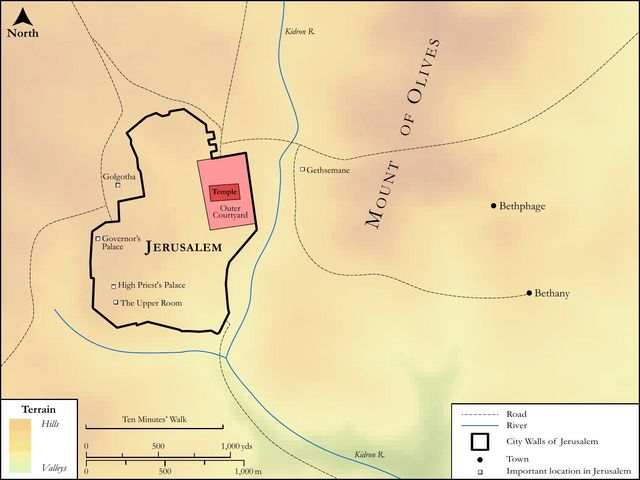
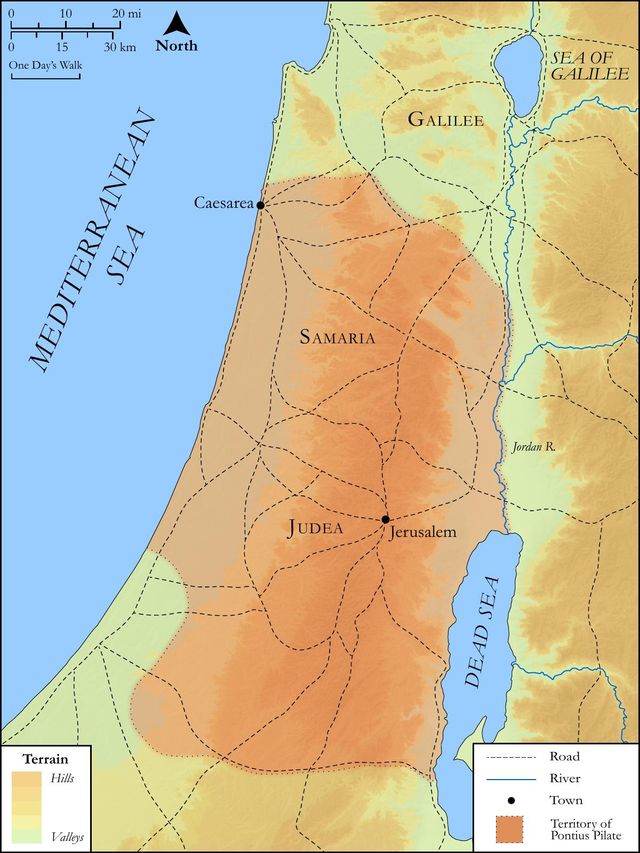
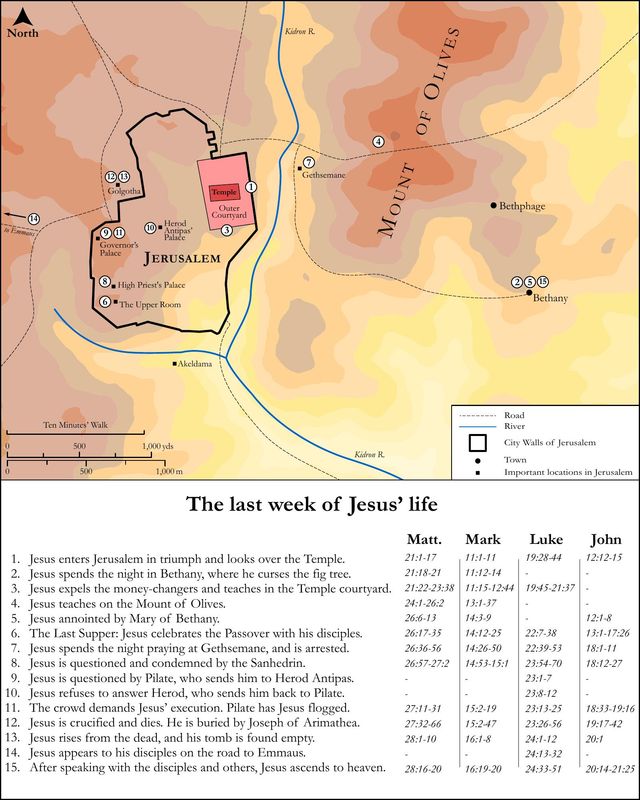
See on the biblical-era map
Study this verse
Historical interpretation
Seven Centuries of Reception
11 surviving comments on this verse. Each one is dated, so this reads as a timeline rather than a list.
Select a marker to jump to its quote. Markers stagger vertically where authors wrote within a few decades of each other.
(Hil. Quæst. V. et N. Test. q. 94.) Since the Chief Priests were employed about the murder of the Lord from the morning to the ninth hour, how is this proved that before the crucifixion Judas returned them the money he had received, and said to them in the temple, I have sinned, in that I have betrayed innocent blood? Whereas it is manifest that the Chief Priests and Elders were never in the temple before the Lord's crucifixion, seeing that when He was hanging on the Cross they were there to insult Him. Nor indeed can this be proved hence, because it is related before the Lord's Passion, for many things which were manifestly done before, are related after, that, and the reverse. It might have been done after the ninth hour, when Judas, seeing the Saviour dead and the veil of the temple rent, the earthquake, the bursting of the rocks, and the elements terrified, was seized with fear and sorrow thereupon. But after the ninth hour the Chief Priests and Elders were occupied, as I suppose, in the celebration of the Passover; and on the Sabbath, the Law would not have allowed him to bring money. Therefore it is to me as yet unproved on what day or at what time Judas ended his life by hanging.
Judas did not die by hanging, but lived on, having been cut down before he was suffocated. And the acts of the apostles show this, that falling head long he burst asunder in the midst, and all his bowels gushed out. This fact is related more clearly by Papias, the disciple of John, and the fourth book of the Expositions of the Oracles of the Lord as follows:
Judas walked about in this world a terrible example of impiety; his flesh swollen to such an extent that, where hay wagon can pass with ease, he was not able to pass, no, not even the mass of his head merely. They say that his eyelids swelled to such an extent that he could not see the light at all, while as for his eyes they were not visible even by a physician looking through an instrument, so far have they sunk from the surface.
His genitals appeared entirely disfigured, nauseous and large. When he carried himself about discharge and worms flowed from his entire body through his private areas only, on account of his outrages. After many agonies and punishments, he died in his own place. And on account of this the place is desolate and uninhabited even now. And to this day no one is able to go by that place, except if they block their noses with their hands. Such judgment was spread through his body and upon the earth.
For because they were desirous to put Him to death, but were not able themselves because of the feast, they lead Him to the governor.
But mark, I pray thee, how the act was forced on, so as to take place at the feast. For so was it typified from the first.
This was a charge both against him, and against these men; against him, not because he repented, but because he did so, late, and slowly, and became self-condemned (for that he delivered Him up, he himself confessed); and against them, for that having the power to reverse it, they repented not.
But mark, when it is that he feels remorse. When his sin was completed, and had received an accomplishment. For the devil is like this; he suffers not those that are not watchful to see the evil before this, lest he whom he has taken, should repent. At least, when Jesus was saying so many things, he was not influenced, but when his offense was completed, then repentance came upon him; and not then profitably. For to condemn it, and to throw down the pieces of silver, and not to regard the Jewish people, were all acceptable things; but to hang himself, this again was unpardonable, and a work of an evil spirit. For the devil led him out of his repentance too soon, so that he should reap no fruit from thence; and carries him off, by a most disgraceful death, and one manifest to all, having persuaded him to destroy himself.
But mark, I pray thee, the truth shining forth on every side, even by what the adversaries both do and suffer. For indeed even the very end of the traitor stops the mouths of them that had condemned Him, and suffers them not to have so much as any shadow of an excuse that is surely shameless. For what could they have to say, when the traitor is shown to pass such a sentence on himself.
He brought again the thirty pieces of silver to the chief priests, and saith, I have sinned in that I have betrayed innocent blood. And they said, what is that to us? see thou to that. And he cast down the pieces of silver in the temple, and departed, and went and hanged himself.
For neither could he bear his conscience scourging him. But mark, I pray thee, the Jews too suffering the same things. For these men also, when they ought to have been amended by what they suffered, do not stop, until they have completed their sin. For his sin had been completed, for it was a betrayal; but theirs not yet. But when they too had accomplished theirs, and had nailed Him to the cross then they also are troubled.
Hear, ye covetous, consider what befell him; how he at the same time lost the money, and committed the sin, and destroyed his own soul. Such is the tyranny of covetousness. He enjoyed not the money, neither the present life, nor that to come, but lost all at once, and having got a bad character even with those very men, so hanged himself.
(Hom. lxxxiv.) They did not put Him to death in secret, because they sought to destroy His reputation, and the wonder with which He was regarded by many. For this reason they were minded to put Him to death openly before all, and therefore they led Him to the governor.
Observe that he repents only when his sin is finished and complete; for so the Devil suffers not those who are not watchful to see the evil before they bring it to an end.
(Chapter 27, verses 1 onwards) Now when morning came, all the chief priests and elders of the people took counsel against Jesus to put him to death. And they bound him, and led him away, and delivered him to Pontius Pilate the governor. He was not only taken to Pilate, but also to Herod, so that both of them might mock the Lord. And see the eagerness of the priests for evil. They stayed awake all night in order to commit murder. And they handed him over bound to Pilate. For they had this custom, that whoever they had condemned to death, they would hand over to the judge bound.
Then seeing Judas, who had betrayed Him, that He was condemned, being moved by repentance, he returned the thirty pieces of silver to the chief priests and elders, saying: I have sinned in betraying innocent blood. He cast away the weight of impiety from the greatness of his greed. Seeing that the Lord was condemned to death, Judas returned the price to the priests, as if he had the power to change the sentence of those who persecuted. Therefore, although he changed his will, he did not change the outcome of his first intention. But if he who handed over the innocent blood sinned, how much more did the Jews sin, who bought the innocent blood, and by offering a price, provoked the betrayal of the disciple? Let those who attempt to introduce different natures and say that Judas, the traitor, had an evil nature, and could not be saved by election, answer how an evil nature could have repented.
Observe the evil zeal of the Chief Priests; they watched the whole night with a view to this murder. And they gave Him up to Pilate bound, for such was their practice to send bound to the judge any whom they had sentenced to death.
Judas, when he saw that the Lord was condemned to death, returned the money to the Priests, as though it had been in his power to change the minds of His persecutors.
It profits nothing to do an act of penance which is incapable of correcting the sin. If a man sins against his brother in such a way that the wrong he committed can be amended, it is possible for him to be forgiven. If the consequences of his sin remain in force, however, in vain does he attempt to do penance. The psalmist applies this truth to our most miserable Judas when he says, “Let his prayer be counted as sin.” Not only was Judas unable to repair the damage of his sinful betrayal, but he even continued to compound the evil of that initial crime by committing suicide. Of such things the apostle speaks in his second epistle to the Corinthians: “Let not a brother be overwhelmed by greater sorrow.”
The weight of Judas’s impiety overshadowed the magnitude of his avarice. Seeing the Lord condemned to death, he brought the money to the priests as if it were in his power to change the sentence of Christ’s persecutors. Although he would change his mind eventually, he could not change the consequence of his first decision. Yet if he sins who betrays innocent blood, how much more do they sin who purchase innocent blood and provoke a disciple by offering a reward for his apostasy. Those who deny the apostle’s free will and attempt instead to explain Judas’s betrayal by attributing to him an evil nature will need also to explain how a person of evil nature can repent.
(Serm. 52, 5.) When he says, I have sinned, in that I have betrayed innocent blood, he persists in his wicked treachery, seeing that amid the last struggles of death he believed not Jesus to be the Son of God, but merely man of our rank; for had he not thus denied His omnipotence, he would have obtained His mercy.
But they said, What is that to us? that is to say, What is it to us that He is righteous? See thou to it, i. e. to thy own deed what will come of it. Though some would read these in one1, What must we think of you, when you confess that the man whom yourself have betrayed is innocent?
Though it should be observed that they did not now first bind Him, but before, when they first laid hands upon Him in the garden, as John relates. (John 18:12.)
He hung himself, to show that he was hateful to both heaven and earth.
Continue studying Matthew 27:4 across the web’s major study libraries — every link below opens this exact verse, chapter, or book on the destination site.
Read & Compare
 BibleGatewayThis verse in more than 200 translations and 70 languages.
 Bible.comThe YouVersion reader — hundreds of translations, reading plans, and highlights.
 ESV.orgCrossway's official English Standard Version reader.
 NET BibleThe NET translation with 60,000+ translators' notes on every rendering decision.
 STEP BibleTyndale House's free study tool — original text, vocabulary, and scholarly resources.
 BibliaLogos Bible Software's free web reader.
 USCCBThe New American Bible (Revised Edition) with the U.S. bishops' study notes.
Commentaries
 BibleHub CommentariesDozens of classic commentaries on this verse, gathered on one page.
 StudyLightMore than 100 commentary sets — the largest collection on the web.
 BibleRefPlain-English commentary on what this verse means, verse by verse.
 Enduring WordDavid Guzik's free commentary on this chapter, widely used by Bible teachers.
 Bible Study ToolsVerse commentary alongside Greek and Hebrew study aids.
Original Language & Research
- BibleHub InterlinearThe verse word by word — original language, transliteration, and English.
- BibleHub LexiconEvery word's original-language definition and Strong's entry.
 Blue Letter BibleDeep-study tools — Strong's numbers, concordance, and word studies.
 CNTR CollationThe earliest Greek manuscripts of this verse, collated letter by letter.
Sermons, Hymns & Audio


TrulyRandomVerse is not affiliated with these sites and doesn’t control their content. They’re linked because they’re genuinely useful.
Summary
Matthew 27:4 captures the desperate confession of Judas Iscariot, who, overwhelmed by guilt upon seeing Jesus condemned, admits to the chief priests and elders, "I have sinned in that I have betrayed the innocent blood." This profound declaration underscores Jesus's blamelessness even from the lips of His betrayer. The religious leaders' chillingly dismissive response—"What is that to us? see thou to that"—reveals their hardened hearts, their refusal to acknowledge their complicity, and their prioritization of self-preservation over justice.
Context
ShowHideLiterary Context
This verse immediately follows Judas's deep remorse and his attempt to return the thirty pieces of silver, the payment for his betrayal of Jesus. Having witnessed the condemnation of Jesus by the Sanhedrin, Judas is overcome by a profound sense of guilt and despair. He seeks to undo his grave sin by returning the blood money to the very people who orchestrated the arrest and trial. The dialogue in Matthew 27:4 is his direct confession to these leaders, setting the stage for his tragic suicide in Matthew 27:5 and the priests' subsequent decision regarding the money in Matthew 27:6-10. This passage highlights the stark contrast between Judas's despairing confession and the leaders' unrepentant, self-serving indifference, all against the backdrop of Jesus's unjust trial and impending crucifixion.
Historical & Cultural Context
The scene likely takes place within or near the temple precincts, where the chief priests and elders would have been gathered, possibly still discussing the logistics of Jesus's condemnation before presenting Him to Pilate. The "thirty pieces of silver" refer to the price of a slave (Exodus 21:32), a deeply symbolic and debasing sum for the Son of God. The religious leaders' concern, as seen in subsequent verses, is not with the innocent blood shed, but with the ritual impurity of "blood money" being placed into the temple treasury (Matthew 27:6). This reveals a profound hypocrisy: they meticulously observe ceremonial laws while utterly disregarding the weightier matters of justice, mercy, and faithfulness (Matthew 23:23). Their dismissive attitude toward Judas's confession underscores the deep spiritual blindness and moral corruption that characterized their leadership, culminating in their rejection of the Messiah.
Key Themes
ShowHideThis verse contributes significantly to several key themes within Matthew's Gospel and the broader Passion narrative. Firstly, it powerfully reinforces the theme of Jesus's Innocence. Even His betrayer, a hostile witness, testifies to Christ's blamelessness, echoing Pilate's later declarations in Matthew 27:24. Secondly, it explores the theme of Guilt and (False) Repentance. Judas experiences profound remorse and confession, yet it is a worldly sorrow that leads to despair and self-destruction, rather than a godly sorrow leading to saving repentance (2 Corinthians 7:10). Thirdly, the passage highlights the Hardening of Hearts and Moral Responsibility. The chief priests and elders exemplify spiritual callousness, refusing to accept any responsibility for their actions, demonstrating the corrupting power of sin and pride. Finally, it foreshadows the Consequences of Betrayal and Rejection, not only for Judas but also for the nation of Israel, which ultimately rejected its Messiah.
Exposition and Analysis
ShowHideKey Word Analysis
ShowHideMeaning "to miss the mark (and so not share in the prize), i.e. (figuratively) to err, especially (morally) to sin." Judas's use of this word is a direct acknowledgment of his moral transgression against God and man. It signifies a failure to meet a divine standard, a deviation from righteousness.
Meaning "to surrender, i.e. yield up, intrust, transmit." In this context, it carries the sinister connotation of handing over someone to an enemy, implying treachery and a breach of trust. It highlights the active role Judas played in delivering Jesus into the hands of those who sought His death.
Meaning "not guilty." This word is crucial as it directly describes Jesus's state. Judas, despite his heinous act, cannot deny Jesus's blamelessness. This confession from a hostile source serves as a powerful testament to Christ's purity and the unjust nature of His condemnation.
Verse Breakdown
ShowHide"Saying, I have sinned in that I have betrayed the innocent blood."
This is Judas's desperate confession. The phrase "innocent blood" (Greek: haima athōon) is a powerful idiom signifying a life unjustly taken or condemned. Judas acknowledges his profound moral failure ("I have sinned") and specifies the nature of his sin: the treacherous act of handing over a blameless person to be put to death. His words are a direct, albeit despairing, affirmation of Jesus's purity and the profound injustice of His condemnation. This confession is born of an overwhelming sense of guilt and remorse, but notably, it lacks any indication of turning to God for forgiveness.
"And they said,"
This simple conjunction and verb introduce the response of the chief priests and elders, marking a sharp transition from Judas's anguished confession to their cold, dismissive reply. It sets up the dramatic contrast between the betrayer's despair and the leaders' callous indifference.
"What [is that] to us?"
This rhetorical question from the religious leaders is a shocking display of their hardened hearts and moral evasion. It is a complete dismissal of Judas's guilt, Jesus's innocence, and their own culpability. They effectively wash their hands of the matter, refusing to accept any responsibility for the profound injustice they have orchestrated. Their concern is not with the truth or the sanctity of life, but with maintaining their power and avoiding any personal implication.
"see thou [to that]."
This imperative command further emphasizes their complete disavowal of responsibility. It is a cold, unfeeling directive, essentially telling Judas to deal with his own conscience and consequences. This phrase encapsulates their moral bankruptcy and their utter lack of empathy or concern for either Judas's spiritual state or Jesus's unjust fate.
Literary Devices
ShowHideMatthew 27:4 is rich with Irony and Contrast. The supreme irony lies in the fact that the betrayer of Jesus is the one who declares His innocence, while the religious leaders, who claim to uphold God's law, refuse to acknowledge it. This creates a stark Contrast between Judas's agonizing, though unredemptive, confession and the chief priests' and elders' cold, self-serving dismissal. The passage also employs Dialogue to reveal character and advance the plot, with Judas's desperate plea met by the leaders' callous retort. This exchange is a powerful example of Foreshadowing, as Judas's declaration of "innocent blood" anticipates Pilate's later public declaration of Jesus's blamelessness (Matthew 27:24) and ultimately highlights the unparalleled purity of the Lamb of God. The leaders' response itself is a form of Evasion and Denial, showcasing their spiritual blindness and the hardening effect of their sin.
Theological and Thematic Connections
ShowHideMatthew 27:4 stands as a stark theological commentary on the nature of guilt, the purity of Christ, and the perils of spiritual hardness. Judas's confession of "innocent blood" serves as an undeniable, albeit tragic, testimony to Jesus's sinless perfection. Even from the mouth of His betrayer, the truth of Christ's blamelessness shines forth, underscoring the profound injustice of His condemnation. This confession, however, is born of worldly sorrow, leading to despair and self-destruction, rather than godly sorrow that leads to repentance and life. In contrast, the chief priests and elders embody the dangers of a hardened heart, where religious zeal becomes a cloak for moral depravity. Their dismissive response illustrates a profound spiritual blindness and a refusal to acknowledge their complicity in shedding innocent blood, prioritizing ritual purity over true justice and human life. This passage thus highlights the critical difference between remorse and genuine repentance, and the devastating consequences of rejecting truth and responsibility.
Reflection and Application
ShowHideMatthew 27:4 offers profound insights for personal reflection and application, challenging us to examine our own responses to sin, guilt, and responsibility. Judas's experience serves as a powerful, cautionary tale: while he felt profound remorse and even confessed his sin, his sorrow did not lead to repentance but to despair. True repentance involves not just acknowledging wrong, but turning to God for forgiveness, trusting in His mercy, and seeking reconciliation. Are we quick to confess our sins to God, seeking His grace, or do we wallow in guilt, perhaps even attempting to "fix" things ourselves apart from Him? The chief priests and elders, on the other hand, illustrate the dangers of a hardened heart—a refusal to take responsibility, a callous indifference to justice, and a prioritizing of self-preservation over truth. We must ask ourselves if we, too, sometimes dismiss the truth when it implicates us, or if we are willing to face our complicity in injustice, even when it is uncomfortable. This verse also reminds us of the unblemished purity of Christ, attested even by His betrayer. This truth should deepen our awe and gratitude for His perfect life and His willingness to be the sinless sacrifice for our sins.
Questions for Reflection
ShowHideFAQ
ShowHideWhy did Judas confess his sin to the chief priests and elders, and why did they respond as they did?
ShowHideJudas confessed to the chief priests and elders because they were the ones who had paid him to betray Jesus, and they were the ones who had now condemned Jesus. He was overwhelmed by guilt and likely sought to undo his action by returning the money and declaring Jesus's innocence. He was seeking a release from his unbearable burden, perhaps even hoping they would reverse their judgment. Their response, "What is that to us? see thou to that," was a cold and dismissive rejection of his confession and their own culpability. They had achieved their objective of getting rid of Jesus and had no interest in Judas's moral crisis or the truth of Jesus's innocence. Their concern was purely pragmatic and self-serving, as evidenced by their subsequent discussion about what to do with the "blood money" in Matthew 27:6-7. Their response highlights their hardened hearts and their complete lack of empathy or moral responsibility.
Christ-Centered Fulfillment
ShowHideMatthew 27:4, with Judas's desperate confession of having "betrayed the innocent blood," profoundly underscores the Christ-centered narrative. This declaration, coming from the very one who delivered Jesus to His enemies, serves as an unexpected yet powerful testimony to Jesus's absolute purity and blamelessness. It confirms that Jesus was indeed the spotless Lamb of God, without blemish or defect, perfectly qualified to be the atoning sacrifice for the sins of the world (1 Peter 1:18-19). The "innocent blood" shed by Jesus was not merely the result of an unjust trial, but the divinely appointed means of redemption, foreshadowed throughout the Old Testament sacrificial system (Hebrews 9:22). Unlike the worldly sorrow of Judas, which led to despair, Christ's innocent blood, poured out on the cross, offers true repentance and forgiveness to all who believe (Romans 5:9). Thus, even in the depths of human betrayal and the callous indifference of religious leaders, the purity of Christ shines forth, setting the stage for His ultimate triumph over sin and death, making Him the perfect sacrifice for our redemption (Hebrews 10:10-14).