


Matthew 16:9
Bible text: King James Version (1769 Blayney text) · Public domain
Bible text: Berean Standard Bible · Public domain
Bible text: American Standard Version (1901) · Public domain
Bible text: World English Bible, Messianic edition · Public domain
Bible text: Geneva Bible (1599) · Public domain
Bible text: Young's Literal Translation · Public domain
- οὔπωoupōNot yetG3768ADV-NAdverb or adverb and particle combined Negative
- νοεῖτεnoeitedo you understandG3539V-PAI-2PVerb Present Active Indicative 2nd Plural
- οὐδὲoudenorG3761CONJ-NConjunction Negative
- μνημονεύετεmnēmoneueterememberG3421V-PAI-2PVerb Present Active Indicative 2nd Plural
- τοὺςtoustheG3588T-APMDefinite article Accusative Plural Masculine
- πέντεpentefiveG4002A-NUIAdjective
- ἄρτουςartousloavesG740N-APMNoun Accusative Plural Masculine
- τῶνtōnfor theG3588T-GPMDefinite article Genitive Plural Masculine
- πεντακισχιλίωνpentakischiliōnfive thousandG4000A-GPMAdjective Genitive Plural Masculine
- καὶkaiandG2532CONJConjunction
- πόσουςposoushow manyG4214Q-APMCorrelative or Interrogative pronoun Accusative Plural Masculine
- κοφίνουςkophinoushand-basketsG2894N-APMNoun Accusative Plural Masculine
- ἐλάβετε;elabeteyou gathered?G2983V-2AAI-2PVerb 2nd Aorist Active Indicative 2nd Plural
English is a literal word-by-word gloss of the Greek, not the KJV's wording. Why?
This is the original text the KJV's translators worked from — each Greek word with its own literal English meaning in this verse, prepared by scholars at Tyndale House, Cambridge. The KJV translates whole sentences, not word by word, so its wording differs: one Greek word can become several English words, and the KJV may choose “charity” where the gloss reads “love”. Both are faithful — they answer different questions. For the KJV's own rendering, switch to the KJV text.
Details
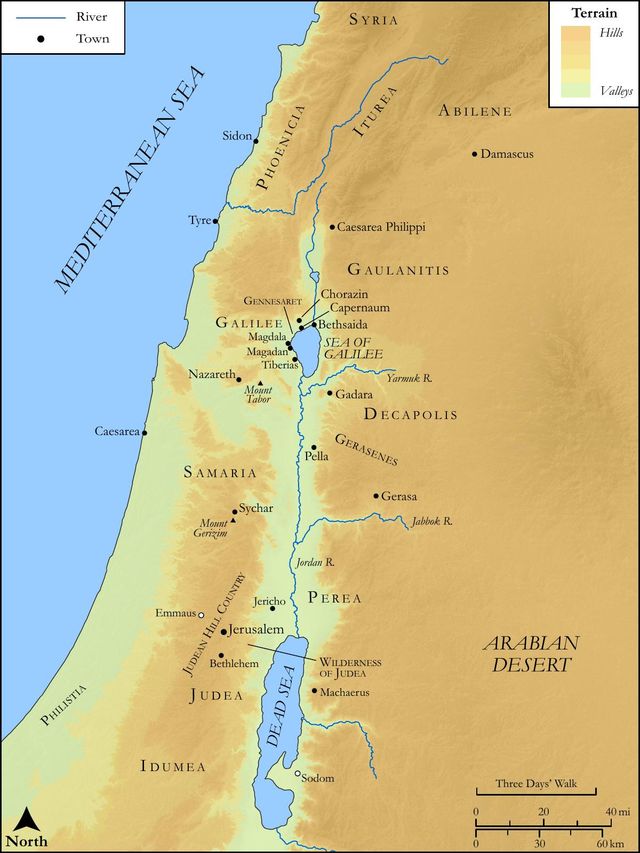
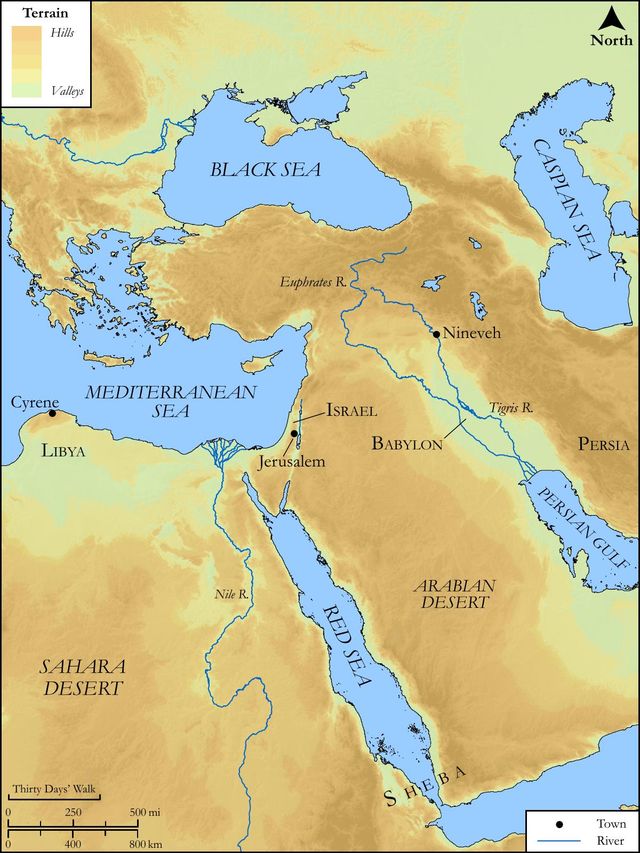
See on the biblical-era maps

Study this verse
Public-domain commentary
Matthew Henry
From his Commentary on the Whole Bible. Henry comments on passages, not single verses — this entry covers Matthew 16:5–12. His three-level outline is real structure in the source text, so it is rendered as structure.
We have here Christ's discourse with his disciples concerning bread, in which, as in many other discourses, he speaks to them of spiritual things under a similitude, and they misunderstand him of carnal things. The occasion of it was, their forgetting to victual their ship, and to take along with them provisions for their family on the other side of the water; usually they carried bread along with them, because they were sometimes in desert places; and when they were not, yet they would not be burthensome. But now they forgot; we will hope it was because their minds and memories were filled with better things. Note, Christ's disciples are often such as have no great forecast for the world.
I.Here is the caution Christ gave them, to beware of the leaven of the Pharisees.
He had now been discoursing with the Pharisees and Sadducees, and saw them to be men of such a spirit, that it was necessary to caution his disciples to have nothing to do with them. Disciples are in most danger from hypocrites; against those that are openly vicious they stand upon their guard, but against Pharisees, who are great pretenders to devotion, and Sadducees, who pretend to a free and impartial search after truth, they commonly lie unguarded: and therefore the caution is doubted, Take heed, and beware.
The corrupt principles and practices of the Pharisees and Sadducees are compared to leaven; they were souring, and swelling, and spreading, like leaven; they fermented wherever they came.
II.Their mistake concerning this caution, Mat 16:7.
They thought Christ hereby upbraided them with their improvidence and forgetfulness, that they were so busy attending to his discourse with the Pharisees, that therefore they forgot their private concerns. Or, because having no bread of their own with them, they must be beholden to their friends for supply, he would not have them to ask it of the Pharisees and Sadducees, nor to receive of their alms, because he would not so far countenance them; or, for fear, lest, under pretence of feeding them, they should do them a mischief. Or, they took it for a caution, not to be familiar with the Pharisees and Sadducees, not to eat with them (Pro 23:6), whereas the danger was not in their bread (Christ himself did eat with them, Luk 7:36; Luk 11:37; Luk 14:1), but in their principles.
III.The reproof Christ gave them for this.
1.He reproves their distrust of his ability and readiness to supply them in this strait (Mat 16:8); "O ye of little faith, why are ye in such perplexity because ye have taken no bread, that ye can mind nothing else, that ye think your Master is as full of it as you, and apply every thing he saith to that?" He does not chide them for their little forecast, as they expected he would. Note, Parents and masters must not be angry at the forgetfulness of their children and servants, more than is necessary to make them take more heed another time; we are all apt to be forgetful of our duty. This should serve to excuse a fault, Peradventure it was an oversight. See how easily Christ forgave his disciples' carelessness, though it was in such a material point as taking bread; and do likewise. But that which he chides them for is their little faith.
(1.)He would have them to depend upon him for supply, though it were in a wilderness, and not to disquiet themselves with anxious thoughts about it. Note, Though Christ's disciples be brought into wants and straits, through their own carelessness and incogitancy, yet he encourages them to trust in him for relief. We must not therefore use this as an excuse for our want of charity to those who are really poor, that they should have minded their own affairs better, and then they would not have been in need. It may be so, but they must not therefore be left to starve when they are in need.
(2.)He is displeased at their solicitude in this matter. The weakness and shiftlessness of good people in their worldly affairs is that for which men are apt to condemn them; but it is not such an offence to Christ as their inordinate care and anxiety about those things. We must endeavour to keep the mean between the extremes of carelessness and carefulness; but of the two, the excess of thoughtfulness about the world worst becomes Christ's disciples. "O ye of little faith, why are ye disquieted for want of bread?" Note, To distrust Christ, and to disturb ourselves when we are in straits and difficulties, is an evidence of the weakness of our faith, which, if it were in exercise as it should be, would ease us of the burthen of care, by casting it on the Lord, who careth for us.
(3.)The aggravation of their distrust was the experience they had so lately had of the power and goodness of Christ in providing for them, Mat 16:9, Mat 16:10. Though they had no bread with them, they had him with them who could provide bread for them. If they had not the cistern, they had the Fountain. Do ye not yet understand, neither remember? Note, Christ's disciples are often to be blamed for the shallowness of their understandings, and the slipperiness of their memories. "Have ye forgot those repeated instances of merciful and miraculous supplies; five thousand fed with five loaves, and four thousand with seven loaves, and yet they had enough and to spare? Remember how many baskets ye took up." These baskets were intended for memorials, by which to keep the mercy in remembrance, as the pot of manna which was preserved in the ark, Exo 16:32. The fragments of those meals would be a feast now; and he that could furnish them with such an overplus then, surely could furnish them with what was necessary now. That meat for their bodies was intended to be meat or their faith (Psa 74:14), which therefore they should have lived upon, now that they had forgotten to take bread. Note, We are therefore perplexed with present cares and distrusts, because we do not duly remember our former experiences of divine power and goodness.
2.He reproves their misunderstanding of the caution he gave them (Mat 16:11); How is it that you do not understand? Note, Christ's disciples may well be ashamed of the slowness and dulness of their apprehensions in divine things; especially when they have long enjoyed the means of grace; I spake it not unto you concerning bread. He took it ill,
(1.)That they should think him as thoughtful about bread as they were; whereas his meat and drink were to do his Father's will.
(2.)That they should be so little acquainted with his way of preaching, as to take that literally which he spoke by way of parable; and should thus make themselves like the multitude, who, when Christ spoke to them in parables, seeing, saw not, and hearing, heard not, Mat 13:13.
IV.The rectifying of the mistake by this reproof (Mat 16:12); Then understood they what he meant.
Note, Christ therefore shows us our folly and weakness, that we may stir up ourselves to take things right. He did not tell them expressly what he meant, but repeated what he had said, that they should beware of the leaven; and so obliged them, by comparing this with his other discourses, to arrive at the sense of it in their own thoughts. Thus Christ teaches by the Spirit of wisdom in the heart, opening the understanding to the Spirit of revelation in the word. And those truths are most precious, which we have thus digged for, and have found out after some mistakes. Though Christ did not tell them plainly, yet now they were aware that by the leaven of the Pharisees and Sadducees, he meant their doctrine and way, which were corrupt and vicious, but, as they managed them, very apt to insinuate themselves into the minds of men like leaven, and to eat like a canker. They were leading men, and were had in reputation, which made the danger of infection by their errors the greater. In our age, we may reckon atheism and deism to be the leaven of the Sadducees, and popery to be the leaven of the Pharisees, against both which it concerns all Christians to stand upon their guard.
Historical interpretation
Nine Centuries of Reception
7 surviving comments on this verse. Each one is dated, so this reads as a timeline rather than a list.
Select a marker to jump to its quote. Markers stagger vertically where authors wrote within a few decades of each other.
Observe, we do not read here as in other places, that He sent the multitudes away and departed; but because the error of unbelief held the minds of the presumptuous, it is said that He left them.
Herein the Apostles are admonished not to be partakers in the doctrine of the Jews; for the works of the Law were established to produce faith, and to prefigure the things that were to follow; and they on whose times truth itself had chanced should look for no further types of truth; lest the teaching of the Pharisees, which knew not of Christ, should stay the effect of Gospel truth.
"And when His disciples," so it is said, "were come to the other side, they forgot to take bread. Then Jesus said unto them, Take heed and beware of the leaven of the Pharisees and of the Sadducees."
And why said He not plainly, Beware of their teaching? His will is to remind them of what had been done, for He knew they had forgotten. But for accusing them at once there seemed to be no reasonable ground, but to take the occasion from themselves, and so to reprove them, would make the charge admissible. "And why did He not then reprove them, when they said, 'Whence should we have so many loaves in the wilderness?' for it seemed a good time then to say what He says here." That He might not seem to rush hastily on the miracle. And besides, He would not blame them before the multitude, nor seek honor in their presence. And now too the accusation had greater reason, for that after repetition of the miracle they were so minded.
Wherefore also He works another miracle, and then and not till then He reproves; I mean, He brings forward what they were reasoning in their hearts. But what were their reasonings? "Because," so it is said, "we have taken no bread." For as yet they were full of trepidation about the purifications of the Jews, and the observances of meats.
Wherefore on all accounts He attacks them even with severity, saying, "Why reason ye in yourselves, O ye of little faith, because ye have brought no bread? Perceive ye not yet, neither understand? Have ye your heart hardened? Having eyes, see ye not? Having ears, hear ye not? Do ye not remember the five loaves of the five thousand, and how many baskets ye took up? neither the seven loaves of the four thousand, and how many baskets ye took up?"
Seest thou intense displeasure? For nowhere else doth He appear to have so rebuked them. Wherefore then doth He so? In order again to cast out their prejudice about the meats. I mean that with this view, whereas then He had only said, "Perceive ye not, neither understand?" in this place, and with a strong rebuke, He saith, "O ye of little faith."
For not everywhere is lenity a good thing. And as He used to allow them freedom of speech, so doth He also reprove, by this variety providing for their salvation. And mark thou at once His reproof, how strong, and His mildness. For all but excusing Himself to them for His severe reproofs to them, He saith, "Do ye not yet consider the five loaves, and how many baskets ye took up; and the seven loaves, and how many baskets ye took up?" And to this end He sets down also the numbers, as well of the persons fed as of the fragments, at once both bringing them to recollection of the past, and making them more attentive to the future.
And to teach thee how great the power of His reproof, and how it roused up their slumbering mind, hear what saith the evangelist. For Jesus having said no more, but having reproved them, and added this only, "How is it that ye do not understand, that I spake it not to you concerning bread that ye should beware, but of the leaven of the Pharisees and Sadducees;" He subjoined, saying, "Then understood they that He bade them not beware of the leaven of bread, but of the doctrine of the Pharisees and Sadducees," although He had not uttered that interpretation.
See how much good His reproof wrought. For it both led them away from the Jewish observances, and when they were remiss, made them more heedful, and delivered them from want of faith; so that they were not afraid nor in alarm, if at any time they seemed to have few loaves; nor were they careful about famine, but despised all these things.
Why did He not say plainly, Take heed of the doctrine of the Pharisees? Because He would remind them of those things that had been done in the multiplication of the loaves, knowing them to be forgetful. To have given them this charge at once bluntly would have seemed unreasonable; but to find fault with them on occasion furnished by themselves prepared the way for the charge; therefore it is that the Evangelist brings forward their thoughts; But they thought within themselves, saying, It is because we have taken no bread.
Because the disciples still grovelled about Jewish observances, the Lord sharply rebukes them for the benefit of all; whence it follows, But Jesus knowing their thoughts said unto them, O ye of little faith, why consider ye among yourselves because ye have no bread?
This He does that He may put away from them all care for food. But why did He not reprove them, when they said, Whence should we have so much bread in the wilderness? for that seemed a more fitting occasion. He did not blame them at that time that He might not seem to be by that urged on to do miracles, and He was unwilling to find fault with them before the people. Also there was more reason in the charge, when after two miracles of multiplication of loaves, they had anxiety about food. Observe with what mildness He rebukes them; He makes an excuse in answer Himself, saying, Do ye not yet understand, nor remember the five loaves?
By this calling to mind what was past, and rousing their attention to what was to come.
But that you may learn what force Christ's reproof had upon His disciples, and how it roused their sluggish spirit, hear what says the Evangelist; Then they understood how that he bade them not beware of the leaven of bread, but of the doctrine of the Pharisees and the Sadducees; yet He had not interpreted this to them. This instruction of the Lord them drew them away from Jewish observances, and made them attentive instead of careless, and raised them out of their little faith, that whenever they should seem to have but little provision of bread they should have no fear about food, but should despise all those things.
For he that takes heed of the leaven of the Pharisees and the Sadducees, does not observe the precepts of the Law and of the letter, and neglects the traditions of men that he may do the commandments of God. This is the leaven of which the Apostle speaks, A little leaven leaveneth the whole lump. (1 Cor. 5:6.) By every means also we should avoid that leaven which Marcion, Valentinus, and all the heretics had. For the nature of leaven is such, that when mixed with flour, that which seemed a little increases to a large quantity, and brings the whole mixture to its own flavour. Thus heretical doctrine if it have cast but a small spark into your breast, in a short time a mighty flame is raised, and drives the whole temper of the man along with it.
How had they no bread, seeing that as soon as they had filled seven baskets they entered into the boat, and came into the parts of Magedan? There they hear that they ought to take heed of the leaven of the Pharisees and Sadducees. But the Scripture is witness that they had forgotten to take the baskets with them.
Thus He takes this occasion to instruct them what is meant by the five loaves and the seven loaves, the five thousand and the four thousand, who were fed in the desert. For if the leaven of the Pharisees and Sadducees signified not earthly food, but corrupt traditions and heretical dogmas, why should not the food with which the people of God is nourished signify the true and uncorrupt doctrine?
(Verses 8 and following.) But Jesus, being aware of this, said to them: Why are you discussing among yourselves, O you of little faith, that you have no bread? Do you still not understand or remember the five loaves for the five thousand men, and how many baskets you took up? Nor the seven loaves for the four thousand men, and how many baskets you took up? How is it that you do not understand that I did not speak to you about bread? Beware of the leaven of the Pharisees and Sadducees. Then they understood that he did not tell them to beware of the leaven of bread, but of the teaching of the Pharisees and Sadducees. By occasion of the precept, which the Savior had commanded, saying: Beware of the leaven of the Pharisees and Sadducees, He teaches them what the five loaves and the seven signify: the five thousand men, and the four thousand, who were fed in the wilderness. Although the greatness of the miracles is clear, yet something else is shown in spiritual understanding. For if the leaven of the Pharisees and Sadducees signifies not bodily bread, but perverse traditions and heretical doctrines, why do the foods, with which the people of God are nourished, not signify the true and complete teaching? Let someone ask and say: How is it that they did not have bread, who, when seven baskets were filled immediately, they got into the boat and came to the region of Magadan; and there the sailors hear that they should beware of the leaven of the Pharisees and Sadducees? But the Scripture testifies that they forgot to take bread with them. This is the leaven that the Apostle speaks of; A little leaven leavens the whole lump (I Cor. V, 6). Marcion and Valentinus and all heretics had this kind of leaven, which is to be avoided in every way. This fermentation has the power that if it is mixed with flour, which seemed small, it grows into something greater, and attracts the entire mixture to its flavor ((or conversion)) : and so also heretical doctrine, if it has thrown even a small spark into your heart, in a short time it grows into a great flame, and draws the entire possession of the person to itself. Finally, it follows: Then they understood that he did not say to beware of leavened bread, but of the doctrine of the Pharisees and Sadducees.
They were bound to their Master with so great affection, that they were unwilling to part from Him for even a moment of time. And herein it should be observed how far they were from any longing for delicacies, when they took so small care for necessaries, that they had even forgotten to take bread, without which human weakness cannot support itself. He said unto them, Take heed and beware of the leaven of the Pharisees; and of the Sadducees.
(non occ.) As the Lord had left the Pharisees on account of their unbelief, so now He teaches His disciples to be on their guard against their doctrine; whence it follows, And when His disciples were come to the other side, they had forgotten to take bread.
(ord.) As much as to say; Why do ye think that I spake of earthly bread, for which ye ought not to have a thought, having beheld Me of so little make such abundant overplus?
(interlin.) As much as to say, Do ye not understand the mystery, nor remember the miracle?
Continue studying Matthew 16:9 across the web’s major study libraries — every link below opens this exact verse, chapter, or book on the destination site.
Read & Compare
 BibleGatewayThis verse in more than 200 translations and 70 languages.
 Bible.comThe YouVersion reader — hundreds of translations, reading plans, and highlights.
 ESV.orgCrossway's official English Standard Version reader.
 NET BibleThe NET translation with 60,000+ translators' notes on every rendering decision.
 STEP BibleTyndale House's free study tool — original text, vocabulary, and scholarly resources.
 BibliaLogos Bible Software's free web reader.
 USCCBThe New American Bible (Revised Edition) with the U.S. bishops' study notes.
Commentaries
 BibleHub CommentariesDozens of classic commentaries on this verse, gathered on one page.
 StudyLightMore than 100 commentary sets — the largest collection on the web.
 BibleRefPlain-English commentary on what this verse means, verse by verse.
 Enduring WordDavid Guzik's free commentary on this chapter, widely used by Bible teachers.
 Bible Study ToolsVerse commentary alongside Greek and Hebrew study aids.
Original Language & Research
- BibleHub InterlinearThe verse word by word — original language, transliteration, and English.
- BibleHub LexiconEvery word's original-language definition and Strong's entry.
 Blue Letter BibleDeep-study tools — Strong's numbers, concordance, and word studies.
 CNTR CollationThe earliest Greek manuscripts of this verse, collated letter by letter.
Sermons, Hymns & Audio


TrulyRandomVerse is not affiliated with these sites and doesn’t control their content. They’re linked because they’re genuinely useful.
Summary
Matthew 16:9 captures Jesus' profound disappointment and rhetorical questioning of His disciples' spiritual dullness. Despite having personally witnessed His miraculous power to feed thousands with meager provisions and collect abundant leftovers, they fail to grasp the spiritual implications of His warning about the "leaven" of the Pharisees and Sadducees. This verse underscores their struggle to move beyond a literal understanding to discern deeper spiritual truths, highlighting the persistent challenge of spiritual comprehension even among those closest to Christ.
Context
ShowHideLiterary Context
This verse is a pivotal moment in a dialogue that immediately follows Jesus' warning to His disciples to "beware of the leaven of the Pharisees and of the Sadducees" (Matthew 16:6). The disciples, having forgotten to bring bread, misinterpret "leaven" literally, thinking Jesus is scolding them for their lack of physical provisions (Matthew 16:7). Jesus' subsequent questions in Matthew 16:8-10 are a direct, rhetorical rebuke, expressing His astonishment at their inability to connect His recent miracles of feeding multitudes with His current spiritual teaching. He is pushing them to see beyond the physical and understand the spiritual nature of His warning. The passage culminates in their eventual understanding that He spoke not of literal bread, but of the doctrine of the religious leaders (Matthew 16:11-12).
Historical & Cultural Context
The setting is likely in the region of Caesarea Philippi, a Gentile area, after Jesus' ministry in Galilee. The "leaven" metaphor was common in Jewish culture, often symbolizing pervasive influence, whether good or bad. For instance, leaven could represent corruption or hypocrisy (as in the Pharisees' teachings) because a small amount could affect an entire batch of dough. The disciples, being Jewish, would have been familiar with the literal and metaphorical uses of leaven. Their literal interpretation in this context, despite having just witnessed two massive miraculous feedings, reveals a deep-seated spiritual blindness or preoccupation with earthly concerns. The two miracles referenced—the feeding of the five thousand (Matthew 14:13-21) and the feeding of the four thousand (Matthew 15:32-39)—were recent and highly impactful events, making the disciples' lack of understanding even more perplexing to Jesus.
Key Themes
ShowHideThis verse powerfully contributes to several overarching themes in Matthew's Gospel. Firstly, it highlights the theme of Spiritual Discernment vs. Literalism, showing the disciples' struggle to grasp the spiritual implications of Jesus' teachings and miracles. They are repeatedly challenged to look beyond the surface. Secondly, it reinforces the theme of Remembering God's Faithfulness and Provision. Jesus explicitly calls them to recall His past acts of boundless provision, emphasizing that remembering God's past works is crucial for developing present faith and understanding. This theme is foundational throughout the biblical narrative, from the wilderness wanderings in Exodus to the prophetic calls to remembrance. Thirdly, the verse subtly underscores Jesus' Divine Authority and Omnipotence. By referencing the miracles of the loaves, Jesus implicitly reminds them of His supernatural power to provide for all needs, whether physical or spiritual, transcending all natural limitations. The vast quantities of leftovers, specifically the "baskets ye took up," served as undeniable, tangible proof of His unique ability, a point Jesus presses upon them here.
Exposition and Analysis
ShowHideKey Word Analysis
ShowHideFrom the root nous (mind), this verb signifies the act of exercising the mind, observing, comprehending, or heeding. Jesus is questioning their ability to connect the dots, to synthesize the evidence of His past miracles with His current warning, and thereby grasp the spiritual, non-literal meaning of "leaven." It implies a failure not just of memory, but of intellectual and spiritual processing.
This word denotes the act of exercising memory, recalling from memory, or being mindful of past events. Jesus challenges them to actively bring to mind the specific details of the feeding miracles, particularly the quantities of food and the abundance of leftovers, which should have informed their understanding of His power and their own lack of need. Their failure to remember these recent, powerful events indicates a deeper spiritual amnesia.
This term refers to a small, portable basket, typically used by Jews for carrying provisions. In the context of the feeding of the five thousand, twelve kóphinos baskets of leftovers were collected. The specific mention of "how many baskets ye took up" emphasizes the tangible, undeniable evidence of the super-abundance of Jesus' provision, serving as a stark contrast to the disciples' current anxiety over a lack of bread.
Verse Breakdown
ShowHide"Do ye not yet understand,"
This rhetorical question expresses Jesus' astonishment and disappointment. The phrase "not yet" (Greek, oúpō) emphasizes a continued state of spiritual dullness despite repeated teaching and miraculous demonstrations. Jesus expects them to have moved beyond a purely literal interpretation.
"neither remember the five loaves of the five thousand,"
Jesus directly appeals to their memory, specifically referencing the miracle of feeding five thousand men (plus women and children) with only five loaves. This event was a profound demonstration of His power to provide abundantly from scarcity. Their failure to remember this recent, powerful event underscores their spiritual amnesia.
"and how many baskets ye took up?"
This part of the question highlights the tangible evidence of super-abundance. The "baskets" (referring to the twelve baskets of leftovers from the feeding of the five thousand) served as irrefutable proof of Jesus' limitless provision. By asking "how many," Jesus prompts them to recall the specific, measurable evidence that should have dispelled any anxiety about physical bread.
Literary Devices
ShowHideMatthew 16:9 is rich with Rhetorical Question, a device where a question is posed not to elicit an answer, but to make a point or provoke thought. Jesus' question is a pointed rebuke, designed to highlight the disciples' spiritual dullness and their failure to connect His past miraculous provisions with His current spiritual teaching. There is also a strong element of Irony present; the disciples, who have personally witnessed Jesus' power to create abundance from scarcity, are now anxious about a lack of physical bread, demonstrating a profound disconnect between their experience and their understanding. The mention of "five loaves of the five thousand" and "how many baskets ye took up" functions as Allusion, referring directly to the two specific, recent miracles of feeding the multitudes, calling upon the disciples' shared experience and memory as evidence against their current spiritual blindness.
Theological and Thematic Connections
ShowHideThis verse profoundly illustrates the human tendency towards spiritual amnesia and a focus on the temporal rather than the eternal. Despite overwhelming evidence of God's power and provision, even those closest to Jesus struggled to internalize these truths and apply them to new situations. Jesus' exasperation reveals a divine desire for His followers to develop a deeper, spiritual understanding that transcends mere physical observation. It underscores that true faith is not just about witnessing miracles, but about remembering them and allowing them to transform one's perspective on God's character and capabilities. The disciples' failure to remember the abundance of the baskets highlights their inability to trust in Jesus' sufficient provision, both physically and spiritually, and to discern the true nature of His warnings.
Reflection and Application
ShowHideMatthew 16:9 serves as a potent mirror for every believer, challenging us to examine the depth of our spiritual understanding and the reliability of our spiritual memory. How often do we, like the disciples, become preoccupied with earthly concerns or literal interpretations, missing the profound spiritual truths Jesus is trying to impart? This verse calls us to move beyond superficial understanding, to actively recall God's past faithfulness, and to trust in His boundless provision in every circumstance. When faced with new challenges or anxieties, we are encouraged to consciously remember how God has provided, protected, and guided us in the past. This act of remembrance cultivates a deeper faith and enables us to discern the spiritual realities behind life's circumstances, preventing us from falling into the same trap of spiritual dullness that plagued the disciples. It is a call to cultivate a discerning heart that sees God's hand not just in grand miracles, but in the everyday provisions and spiritual insights He offers.
Questions for Reflection
ShowHideFAQ
ShowHideWhy were the disciples so slow to understand, even after witnessing miracles?
ShowHideThe disciples' slowness to understand, despite witnessing Jesus' miracles, highlights a common human struggle with spiritual discernment. Their minds were often preoccupied with earthly concerns—like forgetting bread—and they tended to interpret Jesus' words literally rather than spiritually. This was compounded by their deeply ingrained Jewish expectations of a political Messiah, which often overshadowed their comprehension of His spiritual kingdom. Even after seeing Jesus feed thousands, their immediate concern was still physical provision, demonstrating a lack of faith and an inability to connect Jesus' power over physical needs with His authority over spiritual matters, such as the corrupting influence of the Pharisees' doctrine. Their spiritual dullness was a recurring theme, showing that even close proximity to Christ does not automatically guarantee full spiritual insight; it requires a receptive heart and a willingness to transcend worldly perspectives.
Christ-Centered Fulfillment
ShowHideMatthew 16:9, though a rebuke, ultimately points to Christ as the sole source of true understanding and spiritual nourishment. The disciples' failure to grasp the significance of the physical bread miracles foreshadows their need for the ultimate Bread of Life. Jesus, in His exasperation, is not merely scolding them for a lack of memory, but for a lack of faith in Him as the one who provides all things, both physical and spiritual. He is the true manna from heaven, the one who satisfies spiritual hunger and thirst, as He declares in John 6:35. Their struggle to understand the "leaven" of doctrine underscores their need for the illuminating work of the Holy Spirit, whom Christ would send to guide them into all truth (John 16:13). Ultimately, Jesus' question serves to highlight His own identity as the one who not only provides miraculously for physical needs but also is the very embodiment of spiritual wisdom and discernment. His sacrifice on the cross and resurrection would be the ultimate "basket" of provision, offering eternal life and true understanding to all who believe, fulfilling the deepest spiritual hunger that the disciples, in this moment, still struggled to comprehend.