


Matthew 16:11
- πῶςpōsHowG4459PRT-IInterrogative Particle Interrogative
- οὐounotG3756PRT-NNegative Particle Negative
- νοεῖτεnoeiteunderstand youG3539V-PAI-2PVerb Present Active Indicative 2nd Plural
- ὅτιhotithatG3754CONJConjunction
- οὐounotG3756PRT-NNegative Particle Negative
- περὶpericoncerningG4012PREPPreposition
- ἄρτωνartōnloavesG740N-GPMNoun Genitive Plural Masculine
- εἶπονeiponI spokeG2036V-2AAI-1SVerb 2nd Aorist Active Indicative 1st Singular
- ὑμῖν;huminto you?G4771P-2DPPersonal pronoun Dative 2nd Plural
- προσέχετεprosechetedo bewareG4337V-PAM-2PVerb Present Active Imperative 2nd Plural
- ἀπὸapoofG575PREPPreposition
- τῆςtēstheG3588T-GSFDefinite article Genitive Singular Feminine
- ζύμηςzumēsleavenG2219N-GSFNoun Genitive Singular Feminine
- τῶνtōnof theG3588T-GPMDefinite article Genitive Plural Masculine
- ΦαρισαίωνPharisaiōnPhariseesG5330N-GPM-TNoun Genitive Plural Masculine Title
- καὶkaiandG2532CONJConjunction
- ΣαδδουκαίωνSaddoukaiōnSadducees!G4523N-GPM-TNoun Genitive Plural Masculine Title
English is a literal word-by-word gloss of the Greek, not the KJV's wording. Why?
This is the original text the KJV's translators worked from — each Greek word with its own literal English meaning in this verse, prepared by scholars at Tyndale House, Cambridge. The KJV translates whole sentences, not word by word, so its wording differs: one Greek word can become several English words, and the KJV may choose “charity” where the gloss reads “love”. Both are faithful — they answer different questions. For the KJV's own rendering, switch to the KJV text.
Details
See on the biblical-era map

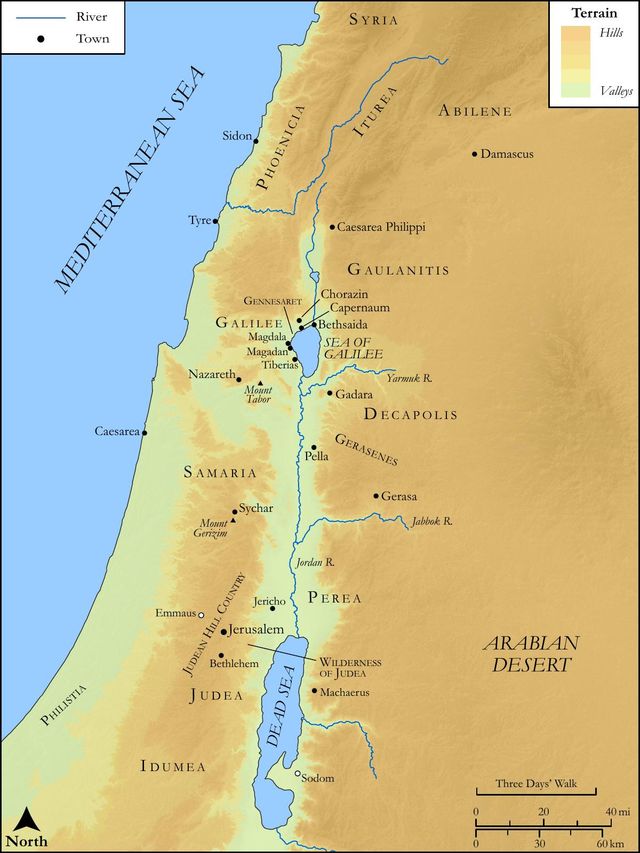
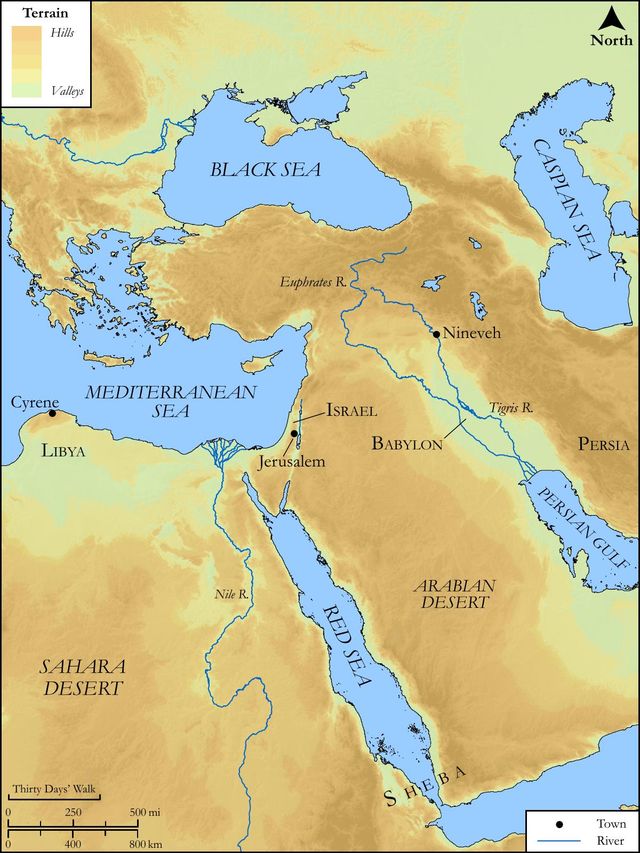
Study this verse
Public-domain commentary
Matthew Henry
From his Commentary on the Whole Bible. Henry comments on passages, not single verses — this entry covers Matthew 16:5–12. His three-level outline is real structure in the source text, so it is rendered as structure.
We have here Christ's discourse with his disciples concerning bread, in which, as in many other discourses, he speaks to them of spiritual things under a similitude, and they misunderstand him of carnal things. The occasion of it was, their forgetting to victual their ship, and to take along with them provisions for their family on the other side of the water; usually they carried bread along with them, because they were sometimes in desert places; and when they were not, yet they would not be burthensome. But now they forgot; we will hope it was because their minds and memories were filled with better things. Note, Christ's disciples are often such as have no great forecast for the world.
I.Here is the caution Christ gave them, to beware of the leaven of the Pharisees.
He had now been discoursing with the Pharisees and Sadducees, and saw them to be men of such a spirit, that it was necessary to caution his disciples to have nothing to do with them. Disciples are in most danger from hypocrites; against those that are openly vicious they stand upon their guard, but against Pharisees, who are great pretenders to devotion, and Sadducees, who pretend to a free and impartial search after truth, they commonly lie unguarded: and therefore the caution is doubted, Take heed, and beware.
The corrupt principles and practices of the Pharisees and Sadducees are compared to leaven; they were souring, and swelling, and spreading, like leaven; they fermented wherever they came.
II.Their mistake concerning this caution, Mat 16:7.
They thought Christ hereby upbraided them with their improvidence and forgetfulness, that they were so busy attending to his discourse with the Pharisees, that therefore they forgot their private concerns. Or, because having no bread of their own with them, they must be beholden to their friends for supply, he would not have them to ask it of the Pharisees and Sadducees, nor to receive of their alms, because he would not so far countenance them; or, for fear, lest, under pretence of feeding them, they should do them a mischief. Or, they took it for a caution, not to be familiar with the Pharisees and Sadducees, not to eat with them (Pro 23:6), whereas the danger was not in their bread (Christ himself did eat with them, Luk 7:36; Luk 11:37; Luk 14:1), but in their principles.
III.The reproof Christ gave them for this.
1.He reproves their distrust of his ability and readiness to supply them in this strait (Mat 16:8); "O ye of little faith, why are ye in such perplexity because ye have taken no bread, that ye can mind nothing else, that ye think your Master is as full of it as you, and apply every thing he saith to that?" He does not chide them for their little forecast, as they expected he would. Note, Parents and masters must not be angry at the forgetfulness of their children and servants, more than is necessary to make them take more heed another time; we are all apt to be forgetful of our duty. This should serve to excuse a fault, Peradventure it was an oversight. See how easily Christ forgave his disciples' carelessness, though it was in such a material point as taking bread; and do likewise. But that which he chides them for is their little faith.
(1.)He would have them to depend upon him for supply, though it were in a wilderness, and not to disquiet themselves with anxious thoughts about it. Note, Though Christ's disciples be brought into wants and straits, through their own carelessness and incogitancy, yet he encourages them to trust in him for relief. We must not therefore use this as an excuse for our want of charity to those who are really poor, that they should have minded their own affairs better, and then they would not have been in need. It may be so, but they must not therefore be left to starve when they are in need.
(2.)He is displeased at their solicitude in this matter. The weakness and shiftlessness of good people in their worldly affairs is that for which men are apt to condemn them; but it is not such an offence to Christ as their inordinate care and anxiety about those things. We must endeavour to keep the mean between the extremes of carelessness and carefulness; but of the two, the excess of thoughtfulness about the world worst becomes Christ's disciples. "O ye of little faith, why are ye disquieted for want of bread?" Note, To distrust Christ, and to disturb ourselves when we are in straits and difficulties, is an evidence of the weakness of our faith, which, if it were in exercise as it should be, would ease us of the burthen of care, by casting it on the Lord, who careth for us.
(3.)The aggravation of their distrust was the experience they had so lately had of the power and goodness of Christ in providing for them, Mat 16:9, Mat 16:10. Though they had no bread with them, they had him with them who could provide bread for them. If they had not the cistern, they had the Fountain. Do ye not yet understand, neither remember? Note, Christ's disciples are often to be blamed for the shallowness of their understandings, and the slipperiness of their memories. "Have ye forgot those repeated instances of merciful and miraculous supplies; five thousand fed with five loaves, and four thousand with seven loaves, and yet they had enough and to spare? Remember how many baskets ye took up." These baskets were intended for memorials, by which to keep the mercy in remembrance, as the pot of manna which was preserved in the ark, Exo 16:32. The fragments of those meals would be a feast now; and he that could furnish them with such an overplus then, surely could furnish them with what was necessary now. That meat for their bodies was intended to be meat or their faith (Psa 74:14), which therefore they should have lived upon, now that they had forgotten to take bread. Note, We are therefore perplexed with present cares and distrusts, because we do not duly remember our former experiences of divine power and goodness.
2.He reproves their misunderstanding of the caution he gave them (Mat 16:11); How is it that you do not understand? Note, Christ's disciples may well be ashamed of the slowness and dulness of their apprehensions in divine things; especially when they have long enjoyed the means of grace; I spake it not unto you concerning bread. He took it ill,
(1.)That they should think him as thoughtful about bread as they were; whereas his meat and drink were to do his Father's will.
(2.)That they should be so little acquainted with his way of preaching, as to take that literally which he spoke by way of parable; and should thus make themselves like the multitude, who, when Christ spoke to them in parables, seeing, saw not, and hearing, heard not, Mat 13:13.
IV.The rectifying of the mistake by this reproof (Mat 16:12); Then understood they what he meant.
Note, Christ therefore shows us our folly and weakness, that we may stir up ourselves to take things right. He did not tell them expressly what he meant, but repeated what he had said, that they should beware of the leaven; and so obliged them, by comparing this with his other discourses, to arrive at the sense of it in their own thoughts. Thus Christ teaches by the Spirit of wisdom in the heart, opening the understanding to the Spirit of revelation in the word. And those truths are most precious, which we have thus digged for, and have found out after some mistakes. Though Christ did not tell them plainly, yet now they were aware that by the leaven of the Pharisees and Sadducees, he meant their doctrine and way, which were corrupt and vicious, but, as they managed them, very apt to insinuate themselves into the minds of men like leaven, and to eat like a canker. They were leading men, and were had in reputation, which made the danger of infection by their errors the greater. In our age, we may reckon atheism and deism to be the leaven of the Sadducees, and popery to be the leaven of the Pharisees, against both which it concerns all Christians to stand upon their guard.
Historical interpretation
Ten Centuries of Reception
8 surviving comments on this verse. Each one is dated, so this reads as a timeline rather than a list.
Select a marker to jump to its quote. Markers stagger vertically where authors wrote within a few decades of each other.
Some were distracted by the use of bread and yeast. In order to clarify and enlighten them in a still symbolic way that he was not speaking about literal bread but about yeast as representing teaching, Jesus adds, “How is it that you do not understand that I was not talking to you about bread? Beware of the yeast of the Pharisees and Sadducees.” Even though he still had not exposed the literal meaning of his words but continued as before, the disciples would have understood the Savior as referring to the teaching of the Pharisees and Sadducees as leaven.When Jesus said “beware of the yeast,” the disciples understood that he did not tell them to watch out for bread but instead for the teaching of the Pharisees and Sadducees. You, of course, are aware that whenever yeast is used in the law or in the Scripture which follows the law, it refers to teaching. Perhaps then yeast should not be burnt on an altar. Prayers should not have the form of teachings but should be only supplications for good things from God.
Now, someone might ask, based on what has been said about the disciples crossing over to the other side, how can anyone who has reached the other side be rebuked as a person with little faith, not yet understanding or remembering what Jesus did? It is not difficult, I think, to answer this. That which has only a part will be done away with before that which is perfect. Little faith is all the faith we can have. Accordingly, we who know in part do not yet fully understand or remember. Therefore we are not able to achieve a mind sufficient and capable of attaining the magnitude and nature of such speculations.
Observe, we do not read here as in other places, that He sent the multitudes away and departed; but because the error of unbelief held the minds of the presumptuous, it is said that He left them.
Herein the Apostles are admonished not to be partakers in the doctrine of the Jews; for the works of the Law were established to produce faith, and to prefigure the things that were to follow; and they on whose times truth itself had chanced should look for no further types of truth; lest the teaching of the Pharisees, which knew not of Christ, should stay the effect of Gospel truth.
"And when His disciples," so it is said, "were come to the other side, they forgot to take bread. Then Jesus said unto them, Take heed and beware of the leaven of the Pharisees and of the Sadducees."
And why said He not plainly, Beware of their teaching? His will is to remind them of what had been done, for He knew they had forgotten. But for accusing them at once there seemed to be no reasonable ground, but to take the occasion from themselves, and so to reprove them, would make the charge admissible. "And why did He not then reprove them, when they said, 'Whence should we have so many loaves in the wilderness?' for it seemed a good time then to say what He says here." That He might not seem to rush hastily on the miracle. And besides, He would not blame them before the multitude, nor seek honor in their presence. And now too the accusation had greater reason, for that after repetition of the miracle they were so minded.
Wherefore also He works another miracle, and then and not till then He reproves; I mean, He brings forward what they were reasoning in their hearts. But what were their reasonings? "Because," so it is said, "we have taken no bread." For as yet they were full of trepidation about the purifications of the Jews, and the observances of meats.
Wherefore on all accounts He attacks them even with severity, saying, "Why reason ye in yourselves, O ye of little faith, because ye have brought no bread? Perceive ye not yet, neither understand? Have ye your heart hardened? Having eyes, see ye not? Having ears, hear ye not? Do ye not remember the five loaves of the five thousand, and how many baskets ye took up? neither the seven loaves of the four thousand, and how many baskets ye took up?"
Seest thou intense displeasure? For nowhere else doth He appear to have so rebuked them. Wherefore then doth He so? In order again to cast out their prejudice about the meats. I mean that with this view, whereas then He had only said, "Perceive ye not, neither understand?" in this place, and with a strong rebuke, He saith, "O ye of little faith."
For not everywhere is lenity a good thing. And as He used to allow them freedom of speech, so doth He also reprove, by this variety providing for their salvation. And mark thou at once His reproof, how strong, and His mildness. For all but excusing Himself to them for His severe reproofs to them, He saith, "Do ye not yet consider the five loaves, and how many baskets ye took up; and the seven loaves, and how many baskets ye took up?" And to this end He sets down also the numbers, as well of the persons fed as of the fragments, at once both bringing them to recollection of the past, and making them more attentive to the future.
And to teach thee how great the power of His reproof, and how it roused up their slumbering mind, hear what saith the evangelist. For Jesus having said no more, but having reproved them, and added this only, "How is it that ye do not understand, that I spake it not to you concerning bread that ye should beware, but of the leaven of the Pharisees and Sadducees;" He subjoined, saying, "Then understood they that He bade them not beware of the leaven of bread, but of the doctrine of the Pharisees and Sadducees," although He had not uttered that interpretation.
See how much good His reproof wrought. For it both led them away from the Jewish observances, and when they were remiss, made them more heedful, and delivered them from want of faith; so that they were not afraid nor in alarm, if at any time they seemed to have few loaves; nor were they careful about famine, but despised all these things.
Why did He not say plainly, Take heed of the doctrine of the Pharisees? Because He would remind them of those things that had been done in the multiplication of the loaves, knowing them to be forgetful. To have given them this charge at once bluntly would have seemed unreasonable; but to find fault with them on occasion furnished by themselves prepared the way for the charge; therefore it is that the Evangelist brings forward their thoughts; But they thought within themselves, saying, It is because we have taken no bread.
Because the disciples still grovelled about Jewish observances, the Lord sharply rebukes them for the benefit of all; whence it follows, But Jesus knowing their thoughts said unto them, O ye of little faith, why consider ye among yourselves because ye have no bread?
This He does that He may put away from them all care for food. But why did He not reprove them, when they said, Whence should we have so much bread in the wilderness? for that seemed a more fitting occasion. He did not blame them at that time that He might not seem to be by that urged on to do miracles, and He was unwilling to find fault with them before the people. Also there was more reason in the charge, when after two miracles of multiplication of loaves, they had anxiety about food. Observe with what mildness He rebukes them; He makes an excuse in answer Himself, saying, Do ye not yet understand, nor remember the five loaves?
By this calling to mind what was past, and rousing their attention to what was to come.
But that you may learn what force Christ's reproof had upon His disciples, and how it roused their sluggish spirit, hear what says the Evangelist; Then they understood how that he bade them not beware of the leaven of bread, but of the doctrine of the Pharisees and the Sadducees; yet He had not interpreted this to them. This instruction of the Lord them drew them away from Jewish observances, and made them attentive instead of careless, and raised them out of their little faith, that whenever they should seem to have but little provision of bread they should have no fear about food, but should despise all those things.
For he that takes heed of the leaven of the Pharisees and the Sadducees, does not observe the precepts of the Law and of the letter, and neglects the traditions of men that he may do the commandments of God. This is the leaven of which the Apostle speaks, A little leaven leaveneth the whole lump. (1 Cor. 5:6.) By every means also we should avoid that leaven which Marcion, Valentinus, and all the heretics had. For the nature of leaven is such, that when mixed with flour, that which seemed a little increases to a large quantity, and brings the whole mixture to its own flavour. Thus heretical doctrine if it have cast but a small spark into your breast, in a short time a mighty flame is raised, and drives the whole temper of the man along with it.
How had they no bread, seeing that as soon as they had filled seven baskets they entered into the boat, and came into the parts of Magedan? There they hear that they ought to take heed of the leaven of the Pharisees and Sadducees. But the Scripture is witness that they had forgotten to take the baskets with them.
Thus He takes this occasion to instruct them what is meant by the five loaves and the seven loaves, the five thousand and the four thousand, who were fed in the desert. For if the leaven of the Pharisees and Sadducees signified not earthly food, but corrupt traditions and heretical dogmas, why should not the food with which the people of God is nourished signify the true and uncorrupt doctrine?
(Verses 8 and following.) But Jesus, being aware of this, said to them: Why are you discussing among yourselves, O you of little faith, that you have no bread? Do you still not understand or remember the five loaves for the five thousand men, and how many baskets you took up? Nor the seven loaves for the four thousand men, and how many baskets you took up? How is it that you do not understand that I did not speak to you about bread? Beware of the leaven of the Pharisees and Sadducees. Then they understood that he did not tell them to beware of the leaven of bread, but of the teaching of the Pharisees and Sadducees. By occasion of the precept, which the Savior had commanded, saying: Beware of the leaven of the Pharisees and Sadducees, He teaches them what the five loaves and the seven signify: the five thousand men, and the four thousand, who were fed in the wilderness. Although the greatness of the miracles is clear, yet something else is shown in spiritual understanding. For if the leaven of the Pharisees and Sadducees signifies not bodily bread, but perverse traditions and heretical doctrines, why do the foods, with which the people of God are nourished, not signify the true and complete teaching? Let someone ask and say: How is it that they did not have bread, who, when seven baskets were filled immediately, they got into the boat and came to the region of Magadan; and there the sailors hear that they should beware of the leaven of the Pharisees and Sadducees? But the Scripture testifies that they forgot to take bread with them. This is the leaven that the Apostle speaks of; A little leaven leavens the whole lump (I Cor. V, 6). Marcion and Valentinus and all heretics had this kind of leaven, which is to be avoided in every way. This fermentation has the power that if it is mixed with flour, which seemed small, it grows into something greater, and attracts the entire mixture to its flavor ((or conversion)) : and so also heretical doctrine, if it has thrown even a small spark into your heart, in a short time it grows into a great flame, and draws the entire possession of the person to itself. Finally, it follows: Then they understood that he did not say to beware of leavened bread, but of the doctrine of the Pharisees and Sadducees.
They were bound to their Master with so great affection, that they were unwilling to part from Him for even a moment of time. And herein it should be observed how far they were from any longing for delicacies, when they took so small care for necessaries, that they had even forgotten to take bread, without which human weakness cannot support itself. He said unto them, Take heed and beware of the leaven of the Pharisees; and of the Sadducees.
(non occ.) As the Lord had left the Pharisees on account of their unbelief, so now He teaches His disciples to be on their guard against their doctrine; whence it follows, And when His disciples were come to the other side, they had forgotten to take bread.
(ord.) As much as to say; Why do ye think that I spake of earthly bread, for which ye ought not to have a thought, having beheld Me of so little make such abundant overplus?
(interlin.) As much as to say, Do ye not understand the mystery, nor remember the miracle?
Continue studying Matthew 16:11 across the web’s major study libraries — every link below opens this exact verse, chapter, or book on the destination site.
Read & Compare
 BibleGatewayThis verse in more than 200 translations and 70 languages.
 Bible.comThe YouVersion reader — hundreds of translations, reading plans, and highlights.
 ESV.orgCrossway's official English Standard Version reader.
 NET BibleThe NET translation with 60,000+ translators' notes on every rendering decision.
 STEP BibleTyndale House's free study tool — original text, vocabulary, and scholarly resources.
 BibliaLogos Bible Software's free web reader.
 USCCBThe New American Bible (Revised Edition) with the U.S. bishops' study notes.
Commentaries
 BibleHub CommentariesDozens of classic commentaries on this verse, gathered on one page.
 StudyLightMore than 100 commentary sets — the largest collection on the web.
 BibleRefPlain-English commentary on what this verse means, verse by verse.
 Enduring WordDavid Guzik's free commentary on this chapter, widely used by Bible teachers.
 Bible Study ToolsVerse commentary alongside Greek and Hebrew study aids.
Original Language & Research
- BibleHub InterlinearThe verse word by word — original language, transliteration, and English.
- BibleHub LexiconEvery word's original-language definition and Strong's entry.
 Blue Letter BibleDeep-study tools — Strong's numbers, concordance, and word studies.
 CNTR CollationThe earliest Greek manuscripts of this verse, collated letter by letter.
Sermons, Hymns & Audio


TrulyRandomVerse is not affiliated with these sites and doesn’t control their content. They’re linked because they’re genuinely useful.
Summary
In Matthew 16:11, Jesus expresses profound disappointment and frustration with His disciples' persistent spiritual dullness. Despite His clear demonstrations of divine power and repeated metaphorical teaching, they continue to interpret His words literally, failing to grasp that His warning about the "leaven" of the Pharisees and Sadducees was not about physical bread, but about the insidious, corrupting influence of their false doctrines, legalistic hypocrisy, and skeptical worldviews. This verse serves as a pivotal moment, highlighting the disciples' struggle with spiritual discernment and Jesus' call for a deeper understanding of His kingdom message.
Context
ShowHideLiterary Context
This verse is embedded within a crucial section of Matthew's Gospel that underscores the disciples' slow spiritual growth and Jesus' attempts to deepen their understanding. Immediately preceding this, Jesus had miraculously fed four thousand people with seven loaves and a few small fish, demonstrating His abundant provision and power (Matthew 15:32-39). Following this, He encountered the Pharisees and Sadducees, who demanded a sign from heaven, to which Jesus responded by rebuking their inability to interpret the "signs of the times" and warning His disciples to "beware of the leaven of the Pharisees and of the Sadducees" (Matthew 16:1-6). The disciples, having forgotten to bring bread for themselves, mistakenly thought Jesus was scolding them for their oversight regarding physical food (Matthew 16:7-8). Jesus' rhetorical question in verse 11, coupled with His reminder of the two miraculous feedings (Matthew 16:9-10), reveals His exasperation that they still had not connected His previous actions and words to the spiritual truth He was conveying. This sets the stage for Peter's confession in the subsequent verses, marking a turning point in their understanding.
Historical & Cultural Context
The first-century Jewish landscape was dominated by various religious and political factions, primarily the Pharisees and Sadducees. The Pharisees were a popular, influential sect known for their strict adherence to the Mosaic Law and their extensive oral traditions (which they considered equally authoritative). While zealous for God, their "leaven" often manifested as legalism, self-righteousness, hypocrisy, and an emphasis on external observance over internal transformation, as frequently condemned by Jesus (e.g., Matthew 23:1-36). The Sadducees, on the other hand, were an aristocratic, priestly class, largely confined to Jerusalem, who held political power and controlled the Temple. They accepted only the Torah (the first five books of Moses) as authoritative Scripture and rejected many core beliefs, including the resurrection of the dead, angels, and spirits (e.g., Acts 23:8). Their "leaven" was characterized by skepticism, materialism, and a focus on worldly power and tradition. The metaphor of "leaven" (yeast) was culturally understood as a small agent that permeates and transforms an entire batch of dough. In Jewish thought, leaven was often associated with corruption or impurity, particularly in the context of Passover, where all leaven was removed from homes (e.g., Exodus 12:15). Jesus' use of this metaphor would have immediately evoked its pervasive and often negative connotations.
Key Themes
ShowHideMatthew 16:11 contributes significantly to several overarching themes in the Gospel. Firstly, it highlights the critical theme of spiritual discernment versus literalism. The disciples' repeated failure to grasp the metaphorical nature of Jesus' teaching underscores the challenge of moving beyond a superficial understanding to true spiritual insight. Jesus often taught in parables and figurative language, requiring His listeners to "have ears to hear" (e.g., Matthew 13:9). Secondly, the verse emphasizes the danger of false doctrine and hypocrisy. The "leaven" of the Pharisees and Sadducees represents their corrupting influence on spiritual truth and genuine faith. Jesus consistently warned against those who would lead others astray with their teachings and practices, emphasizing the importance of sound doctrine for the health of the soul and the community (e.g., Matthew 7:15-20). Lastly, it speaks to the importance of truly understanding Jesus' teachings. This moment serves as a wake-up call for the disciples, urging them to reflect more deeply on Jesus' identity and the nature of the kingdom He proclaimed, moving beyond their earthly concerns and expectations to grasp the profound spiritual realities He was revealing.
Exposition and Analysis
ShowHideKey Word Analysis
ShowHideThis word, derived from nous (mind), signifies the act of exercising the mind, comprehending, perceiving, or heeding. In this context, Jesus is lamenting the disciples' inability to mentally grasp the deeper, spiritual meaning behind His words, suggesting a lack of spiritual insight or discernment rather than mere intellectual deficiency. It implies a failure to connect the dots between His miraculous provisions and His metaphorical warnings.
This term refers to ferment or yeast, an agent that causes dough to rise. As a metaphor, it powerfully conveys something small that, once introduced, permeates and transforms the whole. In biblical usage, particularly in the New Testament, "leaven" often carries negative connotations, symbolizing corrupting influence, sin, or false doctrine due to its pervasive and transformative nature.
This verb means "to hold the mind towards," implying to pay careful attention to, be cautious about, or apply oneself to. Jesus' command to "beware" is a strong admonition for the disciples to be vigilant and guard themselves against the insidious and pervasive influence of the Pharisees' and Sadducees' teachings and practices. It calls for active discernment and spiritual watchfulness.
Verse Breakdown
ShowHide"How is it that ye do not understand"
This is a rhetorical question from Jesus, expressing His astonishment, disappointment, and perhaps a touch of exasperation. It highlights the disciples' persistent spiritual dullness, despite having witnessed countless miracles and received direct teaching from Him. It underscores their inability to move beyond a literal interpretation to grasp the spiritual truth.
"that I spake it not to you concerning bread"
Jesus directly addresses and corrects their misinterpretation. He clarifies that His earlier warning was not about the physical absence of bread or the literal consumption of leavened bread, but about something far more significant and spiritual. This directly refutes their literalistic thinking as recorded in Matthew 16:7.
"that ye should beware of the leaven of the Pharisees and of the Sadducees?"
This final clause reiterates the original spiritual warning. Jesus is redirecting their focus back to the true danger: the pervasive, corrupting influence of the religious leaders' doctrines (legalism, hypocrisy, skepticism, materialism) which, like leaven, could subtly infect and undermine genuine faith and spiritual purity if not actively guarded against.
Literary Devices
ShowHideMatthew 16:11 employs several powerful literary devices to convey Jesus' message and the disciples' spiritual state. The primary device is a Rhetorical Question, "How is it that ye do not understand...?" This question is not posed to elicit information but to express Jesus' frustration, disappointment, and to prompt the disciples to self-reflection and deeper insight. It highlights the stark contrast between Jesus' clear spiritual teaching and the disciples' persistent literal interpretation. Secondly, the verse relies heavily on Metaphor, specifically the "leaven of the Pharisees and of the Sadducees." "Leaven" (yeast) is a common biblical metaphor for a small, pervasive influence that spreads throughout a larger whole. Here, it vividly represents the insidious and corrupting doctrines, hypocrisy, and spiritual errors of these religious groups. This metaphor effectively communicates the subtle yet powerful way false teaching can permeate and corrupt one's faith. Finally, there is an element of Irony present. The disciples, having just witnessed Jesus miraculously feed thousands with minimal provisions, are still preoccupied with the lack of physical bread, demonstrating a profound spiritual blindness despite overwhelming evidence of Jesus' divine power and spiritual authority.
Theological and Thematic Connections
ShowHideMatthew 16:11 serves as a crucial reminder of the ongoing struggle between spiritual truth and human misunderstanding, a theme prevalent throughout Scripture. It underscores the vital importance of spiritual discernment, urging believers to look beyond the superficial and grasp the deeper realities of God's Word. The "leaven" metaphor highlights the insidious nature of false teaching and hypocrisy, which can subtly corrupt the purity of faith and practice, just as a small amount of yeast permeates an entire batch of dough. This passage calls believers to vigilant self-examination and a critical evaluation of all doctrines against the standard of divine truth, emphasizing that true faith is not merely intellectual assent but a profound, transformative understanding of Christ's message.
Reflection and Application
ShowHideJesus' exasperation with His disciples in Matthew 16:11 serves as a timeless warning and a call to profound spiritual introspection for believers today. We, too, can fall prey to spiritual dullness, misinterpreting God's word through a literalistic or worldly lens, rather than seeking the deeper, transformative truths. This passage compels us to cultivate a spirit of discernment, to actively "beware" of subtle influences that can corrupt our faith and practice. Just as the leaven of the Pharisees represented legalism and hypocrisy, and that of the Sadducees represented skepticism and materialism, contemporary believers must guard against modern forms of "leaven"—whether it be worldly philosophies that subtly undermine biblical truth, cultural norms that compromise Christian values, or even religious traditions that prioritize outward form over genuine heart devotion. It challenges us to move beyond superficial understanding, to prayerfully engage with Scripture, and to allow the Holy Spirit to illuminate its spiritual depths, ensuring that our faith is rooted in pure doctrine and lived out with authentic integrity.
Questions for Reflection
ShowHideFAQ
ShowHideWhy did Jesus use the metaphor of "leaven" to describe the Pharisees and Sadducees?
ShowHideJesus used "leaven" (yeast) as a metaphor because it vividly illustrates how a small amount of something can subtly but thoroughly permeate and change an entire batch of dough. In the biblical context, leaven often symbolized corruption or impurity (e.g., during Passover, all leaven was removed from homes, as seen in Exodus 12:15). By referring to the "leaven of the Pharisees and of the Sadducees," Jesus was warning His disciples about the pervasive, corrupting influence of their false doctrines, legalistic hypocrisy, and skeptical worldviews, which could subtly infect and undermine genuine faith. This metaphor was culturally resonant and effectively conveyed the insidious nature of their spiritual dangers.
What were the specific "leaven" elements of the Pharisees and Sadducees that Jesus warned against?
ShowHideThe "leaven" of the Pharisees primarily referred to their legalism and hypocrisy. They emphasized strict adherence to external religious rituals and oral traditions, often at the expense of genuine heart transformation and true righteousness (as seen in Jesus' woes against them in Matthew 23). Their outward show of piety often masked inner corruption. The "leaven" of the Sadducees, on the other hand, was their skepticism and materialism. They denied core biblical truths like the resurrection of the dead, angels, and spirits (Acts 23:8), focusing instead on political power and worldly concerns. Jesus warned against both of these pervasive influences, which distorted true worship and hindered spiritual growth.
Christ-Centered Fulfillment
ShowHideMatthew 16:11, while highlighting the disciples' spiritual dullness, ultimately points to Christ as the sole source of true understanding and the antidote to all forms of spiritual "leaven." Jesus Himself is the "Bread of Life" (John 6:35), the one who provides spiritual nourishment that satisfies eternally, in stark contrast to the physical bread the disciples were preoccupied with. His warning against the leaven of the Pharisees and Sadducees foreshadows His ultimate mission to purify His people from all defilement. He is the truth that exposes the legalism of the Pharisees and the skepticism of the Sadducees, offering a new covenant of grace and a spiritual reality that transcends human traditions and earthly philosophies. Through His perfect life, atoning death, and glorious resurrection, Christ became the unleavened sacrifice, purging the "old leaven" of sin and corruption from humanity (1 Corinthians 5:7-8). He alone grants the spiritual discernment necessary to distinguish between truth and error, inviting His followers to partake of His pure teaching and to live in the freedom of His Spirit, rather than being enslaved by the "leaven" of human traditions or worldly wisdom (Colossians 2:8). Thus, Jesus' frustration in Matthew 16:11 is not merely a rebuke but a gracious call for His disciples, and for us, to fix our eyes on Him as the embodiment of truth and the source of all spiritual understanding.