


Luke 2:18
Bible text: King James Version (1769 Blayney text) · Public domain
Bible text: Berean Standard Bible · Public domain
Bible text: American Standard Version (1901) · Public domain
Bible text: World English Bible, Messianic edition · Public domain
Bible text: Geneva Bible (1599) · Public domain
Bible text: Young's Literal Translation · Public domain
- καὶkaiAndG2532CONJConjunction
- πάντεςpantesallG3956A-NPMAdjective Nominative Plural Masculine
- οἱhoithoseG3588T-NPMDefinite article Nominative Plural Masculine
- ἀκούσαντεςakousanteshaving heardG191V-AAP-NPMVerb Aorist Active Participle Nominative Plural Masculine
- ἐθαύμασανethaumasanthey marveledG2296V-AAI-3PVerb Aorist Active Indicative 3rd Plural
- περὶpericoncerningG4012PREPPreposition
- τῶνtōnthe [things]G3588T-GPNDefinite article Genitive Plural Neuter
- λαληθέντωνlalēthentōnhaving been spokenG2980V-APP-GPNVerb Aorist Passive Participle Genitive Plural Neuter
- ὑπὸhupobyG5259PREPPreposition
- τῶνtōntheG3588T-GPMDefinite article Genitive Plural Masculine
- ποιμένωνpoimenōnshepherdsG4166N-GPMNoun Genitive Plural Masculine
- πρὸςprostoG4314PREPPreposition
- αὐτούςautousthemG846P-APMPersonal pronoun Accusative Plural Masculine
English is a literal word-by-word gloss of the Greek, not the KJV's wording. Why?
This is the original text the KJV's translators worked from — each Greek word with its own literal English meaning in this verse, prepared by scholars at Tyndale House, Cambridge. The KJV translates whole sentences, not word by word, so its wording differs: one Greek word can become several English words, and the KJV may choose “charity” where the gloss reads “love”. Both are faithful — they answer different questions. For the KJV's own rendering, switch to the KJV text.
Details
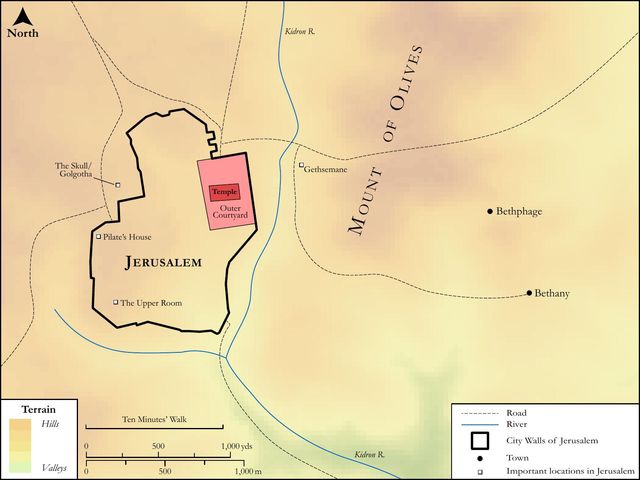
See on the biblical-era maps


Study this verse
Public-domain commentary
Matthew Henry
From his Commentary on the Whole Bible. Henry comments on passages, not single verses — this entry covers Luke 2:8–20. His two-level outline is real structure in the source text, so it is rendered as structure.
The meanest circumstances of Christ's humiliation were all along attended with some discoveries of his glory, to balance them, and take off the offence of them; for even when he humbled himself God did in some measure exalt him and give him earnests of his future exaltation. When we saw him wrapped in swaddling clothes and laid in a manger, we were tempted to say, "Surely this cannot be the Son of God." But see his birth attended, as it is here, with a choir of angels, and we shall say, "Surely this cannot be the Son of God." But see his birth attended, as it is here, with a choir of angels, and we shall say, "Surely it can be no other than the Son of God, concerning whom it was said, when he was brought into the world, Let all the angels of God worship him," Heb 1:6.
We had in Matthew an account of the notice given of the arrival of this ambassador, this prince from heaven, to the wise men, who were Gentiles, by a star; here we are told of the notice given of it to the shepherds, who were Jews, by an angel: to each God chose to speak in the language they were most conversant with.
I.See here how the shepherds were employed; they were abiding in the fields adjoining to Bethlehem, and keeping watch over their flocks by night, Luk 2:8. The angel was not sent to the chief priests or the elders (they were not prepared to receive these tidings), but to a company of poor shepherds, who were like Jacob, plain men dwelling in tents, not like Esau, cunning hunters. The patriarchs were shepherds. Moses and David particularly were called from keeping sheep to rule God's people; and by this instance God would show that he had still a favour for those of that innocent employment. Tidings were brought to Moses of the deliverance of Israel out of Egypt, when he was keeping sheep, and to these shepherds, who, it is probable, were devout pious men, the tidings were brought of a greater salvation. Observe,
1.They were not sleeping in their beds, when this news was brought them (though many had very acceptable intelligence from heaven in slumbering upon the bed), but abiding in the fields, and watching. Those that would hear from God must stir up themselves. They were broad awake, and therefore could not be deceived in what they saw and heard, so as those may be who are half asleep.
2.They were employed now, not in acts of devotion, but in the business of their calling; they were keeping watch over their flock, to secure them from thieves and beasts of prey, it being probably in the summer time, when they kept their cattle out all night, as we do now, and did not house them. Note, We are not out of the way of divine visits when we are sensibly employed in an honest calling, and abide with God in it.
II.How they were surprised with the appearance of the angel (Luk 2:9):
Behold, an angel of the Lord came upon them, of a sudden, epestē - stood over them; most probably, in the air over their heads, as coming immediately from heaven. We read it, the angel, as if it were the same that appeared once and again in the chapter before, the angel Gabriel, that was caused to fly swiftly; but that is not certain. The angel's coming upon them intimates that they little thought of such a thing, or expected it; for it is in a preventing way that gracious visits are made us from heaven, or ever we are aware. That they might be sure it was an angel from heaven, they saw and heard the glory of the Lord round about them; such as made the night as bright as day, such a glory as used to attend God's appearance, a heavenly glory, or an exceedingly great glory, such as they could not bear the dazzling lustre of. This made them sore afraid, put them into great consternation, as fearing some evil tidings. While we are conscious to ourselves of so much guilt, we have reason to fear lest every express from heaven should be a messenger of wrath.
III.What the message was which the angel had to deliver to the shepherds, Luk 2:10-12.
1. He gives a supersedeas to their fears: "Fear not, for we have nothing to say to you that needs be a terror to you; you need not fear your enemies, and should not fear your friends." 2. He furnishes them with abundant matter for joy: "Behold, I evangelize to you great joy; I solemnly declare it, and you have reason to bid it welcome, for it shall bring joy to all people, and not to the people of the Jews only; that unto you is born this day, at this time, a Saviour, the Saviour that has been so long expected, which is Christ the Lord, in the city of David," Luk 2:11. Jesus is the Christ, the Messiah, the Anointed; he is the Lord, Lord of all; he is a sovereign prince; nay, he is God, for the Lord, in the Old Testament, answers to Jehovah. He is a Saviour, and he will be a Saviour to those only that accept him for their Lord. "The Saviour is born, he is born this day; and, since it is matter of great joy to all people, it is not to be kept secret, you may proclaim it, may tell it to whom you please. He is born in the place where it was foretold he should be born, in the city of David; and he is born to you; to you Jews he is sent in the first place, to bless you, to you shepherds, though poor and mean in the world." This refers to Isa 9:6, Unto us a child is born, unto us a son is given. To you men, not to us angels; he took not on him the nature of angels. This is matter of joy indeed to all people, great joy. Long-looked for is come at last. Let heaven and earth rejoice before this Lord, for he cometh. 3. He gives them a sign for the confirming of their faith in this matter. "How shall we find out this child in Bethlehem, which is now full of the descendants from David?" "You will find him by this token: he is lying in a manger, where surely never any new-born infant was laid before." They expected to be told, "You shall find him, though a babe, dressed up in robes, and lying in the best house in the town, lying in state, with a numerous train of attendants in rich liveries." "No, you will find him wrapped in swaddling clothes, and laid in a manger." When Christ was here upon earth, he distinguished himself, and made himself remarkable, by nothing so much as the instances of his humiliation.
IV.The angels' doxology to God, and congratulations of men, upon this solemn occasion, Luk 2:13, Luk 2:14.
The message was no sooner delivered by one angel (that was sufficient to go express) than suddenly there was with that angel a multitude of the heavenly hosts; sufficient, we may be sure, to make a chorus, that were heard by the shepherds, praising God; and certainly their song was not like that (Rev 14:3) which no man could learn, for it was designed that we should all learn it.
1.Let God have the honour of this work: Glory to God in the highest. God's good-will to men, manifested in sending the Messiah, redounds very much to his praise; and angels in the highest heavens, though not immediately interested in it themselves, will celebrate it to his honour, Rev 5:11, Rev 5:12. Glory to God, whose kindness and love designed this favour, and whose wisdom contrived it in such a way as that one divine attribute should not be glorified at the expense of another, but the honour of all effectually secured and advanced. Other works of God are for his glory, but the redemption of the world is for his glory in the highest.
2.Let men have the joy of it: On earth peace, good-will toward men. God's good-will in sending the Messiah introduced peace in this lower world, slew the enmity that sin had raised between God and man, and resettled a peaceable correspondence. If God be at peace with us, all peace results from it: peace of conscience, peace with angels, peace between Jew and Gentile. Peace is here put for all good, all that good which flows to us from the incarnation of Christ. All the good we have, or hope, is owing to God's good-will; and, if we have the comfort of it, he must have the glory of it. Nor must any peace, and good, be expected in a way inconsistent with the glory of God; therefore not in any way of sin, nor in any way but by a Mediator. Here was the peace proclaimed with great solemnity; whoever will, let them come and take the benefit of it. It is on earth peace, to men of good-will (so some copies read it), en anthrōpois eudokias; to men who have a good-will to God, and are willing to be reconciled; or to men whom God has a good-will to, though vessels of his mercy. See how well affected the angels are to man, and to his welfare and happiness; how well pleased they were in the incarnation of the Son of God, though he passed by their nature; and ought not we much more to be affected with it? This is a faithful saying, attested by an innumerable company of angels, and well worthy of all acceptation, That the good-will of God toward men is glory to God in the highest, and peace on the earth.
V.The visit which the shepherds made to the new-born Saviour.
1.They consulted about it, Luk 2:15. While the angels were singing their hymn, they could attend to that only; but, when they were gone away from them into heaven (for angels, when they appeared, never made any long stay, but returned as soon as they had despatched their business), the shepherds said one to another, Let us go to Bethlehem. Note, When extraordinary messages from the upper world are no more to be expected, we must set ourselves to improve the advantages we have for the confirming of our faith, and the keeping up of our communion with God in this lower world. And it is no reflection upon the testimony of angels, no nor upon a divine testimony itself, to get it corroborated by observation and experience. But observe, These shepherds do not speak doubtfully, "Let us go see whether it be so or no;" but with assurance, Let us go see this thing which is come to pass; for what room was left to doubt of it, when the Lord had thus made it known to them? The word spoken by angels was stedfast and unquestionably true.
2.They immediately made the visit, Luk 2:16. They lost no time, but came with haste to the place, which, probably, the angel directed them to more particularly than is recorded ("Go to the stable of such an inn"); and there they found Mary and Joseph, and the babe lying in the manger. The poverty and meanness in which they found Christ the Lord were no shock to their faith, who themselves knew what it was to live a life of comfortable communion with God in very poor and mean circumstances. We have reason to think that the shepherds told Joseph and Mary of the vision of the angels they had seen, and the song of the angels they had heard, which was a great encouragement to them, more than if a visit had been made them by the best ladies in the town. And it is probable that Joseph and Mary told the shepherds what visions they had had concerning the child; and so, by communicating their experiences to each other, they greatly strengthened one another's faith.
VI.The care which the shepherds took to spread the report of this (Luk 2:17):
When they had seen it, though they saw nothing in the child that should induce them to believe that he was Christ the Lord, yet the circumstances, how mean soever they were, agreeing with the sign that the angel had given them, they were abundantly satisfied; and as the lepers argued (Kg2 12:9, This being a day of good tidings, we dare not hold our peace), so they made known abroad the whole story of what was told them, both by the angels, and by Joseph and Mary, concerning this child, that he was the Saviour, even Christ the Lord, that in him there is peace on earth, and that he was conceived by the power of the Holy Ghost, and born of a virgin. This they told every body, and agreed in their testimony concerning it. And now if, when he is in the world, the world knows him not, it is their own fault, for they have sufficient notice given them. What impression did it make upon people? Why truly, All they that heard it wondered at those things which were told them by the shepherds, Luk 2:18. The shepherds were plain, downright, honest men, and they could not suspect them guilty of any design to impose upon them; what they had said therefore was likely to be true, and, if true, they could not but wonder at it, that the Messiah should be born in a stable and not in a palace, that angels should bring news of it to poor shepherds and not to the chief priests. They wondered, but never enquired any further about the Saviour, their duty to him, or advantages by him, but let the thing drop as a nine days' wonder. O the amazing stupidity of the men of that generation! Justly were the things which belonged to their peace hid from their eyes, when they thus wilfully shut their eyes against them.
VII.The use which those made of these things, who did believe them.
1.The virgin Mary made them the matter of her private meditation. She said little, but kept all these things, and pondered them in her heart, Luk 2:19. She laid the evidences together, and kept them in reserve, to be compared with the discoveries that should afterwards be made her. As she had silently left it to God to clear up her virtue, when that was suspected, so she silently leaves it to him to publish her honour, now when it was veiled; and it is satisfaction enough to find that, if no one else takes notice of the birth of her child, angels do. Note, The truths of Christ are worth keeping; and the way to keep them safe is to ponder them. Meditation is the best help to memory.
2.The shepherds made them the matter of their more public praises. If others were not affected with those things, yet they themselves were (Luk 2:20): They returned, glorifying and praising God, in concurrence with the holy angels. If others would not regard the report they made to them, God would accept the thanksgivings they offered to him. They praised God for what they had heard from the angel, and for what they had seen, the babe in the manger, and just then in the swaddling, when they came in, as it had been spoken to them. They thanked God that they had seen Christ, though in the depth of his humiliation. As afterwards the cross of Christ, so now his manger, was to some foolishness and a stumbling-block, but others saw in it, and admired, and praised, the wisdom of God and the power of God.
Historical interpretation
Eleven Centuries of Reception
8 surviving comments on this verse. Each one is dated, so this reads as a timeline rather than a list.
Select a marker to jump to its quote. Markers stagger vertically where authors wrote within a few decades of each other.
And the angel of the Lord, he says, appeared to the shepherds, proclaiming joy to them: "For [Luke 2:11, etc.] there is born in the house of David, a Saviour, which is Christ the Lord. Then [appeared] a multitude of the heavenly host, praising God, and saying, Glory in the highest to God, and on earth peace, to men of good will." The falsely-called Gnostics say that these angels came from the Ogdoad, and made manifest the descent of the superior Christ. But they are again in error, when saying that the Christ and Saviour from above was not born, but that also, after the baptism of the dispensational Jesus, he, [the Christ of the Pleroma,] descended upon him as a dove. Therefore, according to these men, the angels of the Ogdoad lied, when they said, "For unto you is born this day a Saviour, who is Christ the Lord, in the city of David." For neither was Christ nor the Saviour born at that time, by their account; but it was he, the dispensational Jesus, who is of the framer of the world, the [Demiurge], and upon whom, after his baptism, that is, after [the lapse of] thirty years, they maintain the Saviour from above descended. But why did [the angels] add, "in the city of David," if they did not proclaim the glad tidings of the fulfilment of God's promise made to David, that from the fruit of his body there should be an eternal King? For the Framer [Demiurge] of the entire universe made promise to David, as David himself declares: "My help is from God, who made heaven and earth;" and again: "In His hand are the ends of the earth, and the heights of the mountains are His. For the sea is His, and He did Himself make it; and His hands founded the dry land. Come, let us worship and fall down before Him, and weep in the presence of the Lord who made us; for He is the Lord our God." The Holy Spirit evidently thus declares by David to those hearing him, that there shall be those who despise Him who formed us, and who is God alone. Wherefore he also uttered the foregoing words, meaning to say: See that you do not err; besides or above Him there is no other God, to whom you should rather stretch out [your hands], thus rendering us pious and grateful towards Him who made, established, and [still] nourishes us. What, then, shall happen to those who have been the authors of so much blasphemy against their Creator? This identical truth was also what the angels [proclaimed]. For when they exclaim, "Glory to God in the highest, and in earth peace," they have glorified with these words Him who is the Creator of the highest, that is, of super-celestial things, and the Founder of everything on earth: who has sent to His own handiwork, that is, to men, the blessing of His salvation from heaven. Wherefore he adds: "The shepherds returned, glorifying God for all which they had heard and seen, as it was told unto them." [Luke 2:20] For the Israelitish shepherds did not glorify another god, but Him who had been announced by the law and the prophets, the Maker of all things, whom also the angels glorified. But if the angels who were from the Ogdoad were accustomed to glorify any other, different from Him whom the shepherds [adored], these angels from the Ogdoad brought to them error and not truth.
(non occ.) But every one rejoiced in the nativity of Christ, not with human feelings, as men are wont to rejoice when a son is born, but at the presence of Christ and the lustre of the Divine light. As it follows: And the shepherds returned, glorifying and praising God for every thing they had heard, &c.
The shepherds did not keep silent about the hidden mysteries that they had come to know by divine influence. They told whomever they could. Spiritual shepherds in the church are appointed especially for this, that they may proclaim the mysteries of the Word of God and that they may show to their listeners that the marvels which they have learned in the Scriptures are to be marveled at.
Abiding by the rules of virginal modesty, Mary wished to divulge to no one the secret things which she knew about Christ. She reverently waited for the time and place when he would wish to divulge them. However, though her mouth was silent, in her careful, watchful heart she weighed these secret things. And this is what the Evangelist says, pondering in her heart—indeed, she weighed those acts which she saw in relation to those things which she had read were to be done. Now she saw that she herself, who had arisen from the stock of Jesse, had conceived God’s Son of the Holy Spirit. She had read in the prophet, “A shoot will sprout from the root of Jesse, and a ‘nazareus’ will ascend from his root, and the Spirit of the Lord shall rest upon him.” She had read, “And you, Bethlehem Ephratha, are a little one among the thousands of Judah. Out of you will come forth for me the one who is ruler in Israel, and his coming forth is from the beginning, from the days of eternity.” She saw that she had given birth in Bethlehem to the Ruler of Israel, who was born eternal from the Father, God before the ages. She saw that she had conceived as a virgin, and given birth to a son, and called his name Jesus. She had read in the prophets, “Behold, a virgin will conceive and give birth to a son, and his name will be called Immanuel.” She had read, “An ox recognizes its owner and an ass its master’s manger.” She saw the Lord lying in a manger, where an ox and an ass used to come to be nourished. She remembered that it had been said to her by the angel, “The Holy Spirit will come upon you, and the power of the Most High will overshadow you, and so the holy one who will be born from you will be called the Son of God.” She had read that the manner of his nativity could be recognized only by the revelation of an angel, in accordance with Isaiah’s saying, “Who will tell of his generation?” She had read, “And you, tower of the flock, misty daughter of Zion, to you shall it come, the former power shall come, the kingdom of the daughter of Jerusalem.” She heard that angelic powers, who are daughters of the city on high, had appeared to shepherds in a place which was in former times called “tower of the flock” from the gathering of cattle—and this is one mile to the east of Bethlehem. There, even now, the three tombs of these shepherds are pointed out in a church. She then knew that the Lord had come in the flesh, whose power is one and eternal with the Father, and he would give to his daughter the church the kingdom of the heavenly Jerusalem. Mary was comparing these things which she had read were to occur with those which she recognized as already having occurred. Nevertheless she did not bring these things forth from her mouth but kept them closed up in her heart.
As men who were truly watching, they said not, Let us see (the child; but) the word which has come to pass, i. e. the Word which was from the beginning, let us see how it has been made flesh for us. since this very Word is the Lord. For it follows, Which the Lord hath made, and has shown to us; i. e. Let us see how the Lord hath made Himself, and hath shown His flesh to us.
It seems to succeed in due order, that after having rightly celebrated the incarnation of the Word, we should at length come to behold the actual glory of that Word. Hence it follows: But when they saw it, they made known the word which had been spoken to them.
(Hom. ubi sup.) For keeping the laws of virgin modesty, she who had known the secrets of Christ would divulge them to no one, but comparing what she had read in prophecy with what she now acknowledged to have taken place, she did not utter them with the mouth, but preserved them shut up in her heart.
That is to say, from the Angels, and had seen, i. e. in Bethlehem, as it was told them, i. e. they glory in this, that when they came they found it even as it was told them, or as it was told them they give praise and glory to God. For this they were told by the Angels to do, not in very word commanding them, but setting before them the form of devotion when they sung glory to God in the highest.
(Hom. ubi sup.) To speak in a mystery, let the shepherds of spiritual flocks, (nay, all the faithful,) after the example of these shepherds, go in thought even to Bethlehem, and celebrate the incarnation of Christ with due honours. Let us go indeed casting aside all fleshly lusts, with the whole desire of the mind even to the heavenly Bethlehem, (i. e. the house of the living bread,) that He whom they saw crying in the manger we may deserve to see reigning on the throne of His Father. And such bliss as this is not to be sought for with sloth and idleness, but with eagerness must we follow the footsteps of Christ. When they saw Him they knew Him; and let us haste to embrace in the fulness of our love those things which were spoken of our Saviour, that When the time shall come that we shall see with perfect knowledge we may be able to comprehend them.
Again, the shepherds of the Lord's flock by contemplating the life of the fathers who went before them, (which preserved the bread of life,) enter as it were the gates of Bethlehem, and find therein none other than the virgin beauty of the Church, that is, Mary; the manly company of spiritual doctors, that is, Joseph; and the lowly coming of Christ contained in the pages of Holy Scripture, that is, the infant child Christ, laid in the manger.
(Hom. ubi sup.) The shepherds did not hide in silence what they knew, because to this end have the Shepherds of the Church been ordained, that what they have learned in the Scriptures they might explain to their hearers.
(in loc.) The masters of the spiritual flocks also, while others sleep, at one time by contemplation enter into the heavenly places, at another time pass around them by seeking the examples of the faithful, at another time by teaching return to the public duties of the pastoral office.
(Hom. ubi sup.) Every one of us, even he who is supposed to live as a private person, exercises the office of shepherd, if, keeping together a multitude of good actions and pure thoughts, he strive to rule them with due moderation, to feed them with the food of the Scriptures, and to preserve them against the snares of the devil.
And all who heard were amazed at what was spoken to them by the shepherds. By the shepherds, the people are driven to the reverence of God. Do not consider this example of faith to be trivial, nor the person of the shepherds to be insignificant. Certainly, the less they are esteemed for their prudence, the more precious they are for their faith. The Lord chose not the wise but the simple, who would not know how to embellish what they heard, to be His heralds; He appointed fishermen, not orators, to evangelize. Indeed, even in the Old Testament, He ordained shepherds as the primary messengers of His dispensation. The first martyr Abel, who dedicated the innocent conduct of his pastoral duty with his own blood and whose blood, in the figure of the Lord's passion, cries out from the ground, offered the first fruits of his flock to the Lord as a devoted shepherd. Abraham, the father of faith, who rejoiced to see the day of Christ and saw it and was glad, is described not as seeking gold mines to obtain ornaments for his worship but as digging to find water sources to water his flocks. Jacob, the father of the twelve tribes, was tormented by heat and frost for twenty years while tending the flocks, a figure of the true shepherd who, with the variety of his virtues shown between the waters of salvific doctrine, was elevated to a higher state. Moses, the lawgiver, who first, as a type of the sevenfold Church, defended seven sisters who were pasturing from the outrage of the shepherds until they could water their flock, and later, in the pastures of the desert, earned the privilege of seeing and speaking with the Lord, performing signs with the pastoral staff, and liberating God's people. David himself, whom our Lord deigned to be called and to be the son of, by rescuing his father's ram from the hand of the bear or the lion, showed that from his stock and city the one would be born who, unrivaled, would rescue the poor from the hand of the stronger one, and the needy and poor from those who prey upon them. Therefore, the witness of the shepherds should not be considered of little value, who then were worthy not only to see but also to hear the hymn of angelic exultation, when, leaving the ninety-nine sheep in the desert, the Good Shepherd appeared to seek the hundredth sheep. The whole flock of the faithful, always longing for His coming, implores: I have gone astray like a lost sheep; seek your servant, Lord (Psalm 118).
(Photius) Beholding with hidden faith indeed the happy events which had been told them, and not content with marvelling at the reality of those things which at the very first they saw and embraced when the Angel told them, they began to relate them not only to Mary and Joseph, but to the others also, (and what is more they impressed them on their minds,) as it follows, And all who heard it marvelled. For how could it be otherwise, at the sight of one of the heavenly host upon earth, and earth in peace reconciled to heaven; and that ineffable Child binding together in one, by His divinity, heavenly things, by His humanity, earthly things, and by this conjunction of Himself effecting a wonderful union!
Not only do they marvel at the mystery of the incarnation, but also at so wonderful an attestation of the shepherds, men who could not have devised these unheard of things, but were with simple eloquence proclaiming the truth.
Continue studying Luke 2:18 across the web’s major study libraries — every link below opens this exact verse, chapter, or book on the destination site.
Read & Compare
 BibleGatewayThis verse in more than 200 translations and 70 languages.
 Bible.comThe YouVersion reader — hundreds of translations, reading plans, and highlights.
 ESV.orgCrossway's official English Standard Version reader.
 NET BibleThe NET translation with 60,000+ translators' notes on every rendering decision.
 STEP BibleTyndale House's free study tool — original text, vocabulary, and scholarly resources.
 BibliaLogos Bible Software's free web reader.
 USCCBThe New American Bible (Revised Edition) with the U.S. bishops' study notes.
Commentaries
 BibleHub CommentariesDozens of classic commentaries on this verse, gathered on one page.
 StudyLightMore than 100 commentary sets — the largest collection on the web.
 BibleRefPlain-English commentary on what this verse means, verse by verse.
 Enduring WordDavid Guzik's free commentary on this chapter, widely used by Bible teachers.
 Bible Study ToolsVerse commentary alongside Greek and Hebrew study aids.
Original Language & Research
- BibleHub InterlinearThe verse word by word — original language, transliteration, and English.
- BibleHub LexiconEvery word's original-language definition and Strong's entry.
 Blue Letter BibleDeep-study tools — Strong's numbers, concordance, and word studies.
 CNTR CollationThe earliest Greek manuscripts of this verse, collated letter by letter.
Sermons, Hymns & Audio


TrulyRandomVerse is not affiliated with these sites and doesn’t control their content. They’re linked because they’re genuinely useful.
Summary
Luke 2:18 captures the immediate and profound reaction of the people in Bethlehem to the extraordinary news of Jesus' birth, as conveyed by the humble shepherds. Having witnessed the angelic announcement and the infant Messiah, the shepherds became the first evangelists, sharing their incredible experience. The verse highlights the astonishment and awe that gripped those who heard this divine revelation, underscoring the universal significance of Christ's arrival and the unexpected manner of its public disclosure.
Context
ShowHideLiterary Context
Luke 2:18 serves as the direct consequence of the shepherds' obedience to the angelic command and their subsequent visit to the manger. Luke 2:15-17 describes their journey to Bethlehem, their discovery of Mary, Joseph, and the baby, and their immediate action of making known the word which was told them concerning this child. This verse, therefore, marks the initial ripple effect of the Incarnation, demonstrating how the divine message, once received, begins to spread and elicit a response. It sets the stage for Mary's contemplative response in Luke 2:19, contrasting the public wonder with her private pondering.
Historical & Cultural Context
In ancient Israel, shepherds were often overlooked, considered a low-status occupation, sometimes even ritually unclean due to their constant contact with animals and their nomadic lifestyle. Their testimony, therefore, would not typically carry significant social weight. However, God chose these humble individuals to be the first human witnesses and evangelists of the Messiah's birth, subverting societal expectations. Bethlehem, a small town, was likely abuzz with activity due to the Roman census (as mentioned in Luke 2:1-3). The news of a newborn Messiah, especially one heralded by angels and attested to by shepherds, would have been utterly astonishing in this setting, challenging preconceived notions of how the long-awaited King would appear.
Key Themes
ShowHideThis verse powerfully contributes to several key themes within Luke's Gospel and the broader biblical narrative. The immediate theme is Wonder and Amazement, as the people's reaction of "wondered" (Greek: thaumázō) signifies a deep sense of awe and astonishment at something truly extraordinary and divine, far beyond mere curiosity. It also highlights the Power of Testimony, demonstrating how God uses ordinary, even overlooked, individuals like the shepherds to convey His extraordinary truth. Their firsthand account, though from humble sources, stirred profound wonder. Furthermore, it underscores the theme of Divine Revelation, emphasizing that the news of the Messiah's arrival was not confined to a select few but was openly declared, first by angels (Luke 2:9-14) and then by humble men, inviting a universal response.
Exposition and Analysis
ShowHideKey Word Analysis
ShowHideThis primary verb signifies not just the physical act of hearing, but often implies to give attention, to understand, or to perceive. In this context, it suggests that those who heard the shepherds' account truly took in the information, leading to their subsequent reaction of wonder. It implies a reception of the message that went beyond mere auditory sensation.
Derived from thaûma (a wonder, marvel), this verb denotes a profound sense of astonishment, awe, or marvel. It is a reaction to something extraordinary, unexpected, or divine, often implying a mixture of surprise, admiration, and sometimes even fear. It's a stronger emotion than simple curiosity, indicating that the news deeply impacted those who heard it.
This verb means to talk, utter words, or speak. While similar to légō (to say, speak), laléō often emphasizes the act of speaking itself, the articulation of words, rather than the content of the message. Here, it highlights the shepherds' active proclamation and verbal dissemination of the incredible events they had witnessed, emphasizing their role as vocal messengers.
Verse Breakdown
ShowHide"And all they that heard [it]"
This phrase emphasizes the widespread nature of the shepherds' testimony. It wasn't just a few individuals, but "all" who came into contact with their story. The "it" refers to the entire narrative the shepherds shared: the angelic announcement, the heavenly host, and their discovery of the baby in the manger. This highlights the immediate public impact of the divine revelation.
"wondered at those things"
This clause describes the profound emotional and intellectual response of the listeners. The word "wondered" (Greek: thaumázō) conveys a deep sense of awe, astonishment, and marvel, indicating that the news was perceived as truly extraordinary and beyond human expectation. Their reaction was fitting for the revelation of God's Son becoming flesh in such humble circumstances.
"which were told them by the shepherds"
This final clause identifies the source of the astonishing news. It underscores the unexpected nature of God's chosen messengers. That such news was delivered not by religious elites or powerful figures, but by simple, often overlooked shepherds, adds to the wonder and highlights God's preference for using the humble to accomplish His grand purposes.
Literary Devices
ShowHideLuke's narrative in this verse employs several literary devices to convey its profound message. Narrative Irony is evident in the contrast between the eternal significance of the event (the birth of the Messiah) and the humble, even overlooked, status of its first human heralds—the shepherds. This irony underscores God's ways, which often confound human expectations. Emphasis is placed on the reaction of "wonder," highlighting the extraordinary nature of the events and inviting the reader to share in that awe. The use of "all they that heard" also employs Hyperbole or Generalization to convey the widespread impact of the shepherds' testimony, suggesting a collective astonishment rather than a limited response, thereby magnifying the event's significance.
Theological and Thematic Connections
ShowHideThe wonder expressed by those who heard the shepherds' testimony is a profound theological statement. It signifies humanity's innate capacity to recognize and respond to divine intervention, even when it manifests in unexpected ways. This wonder is not merely intellectual curiosity but a deep, heart-level recognition of God's activity in the world. It foreshadows the appropriate response to the Gospel message throughout history: a sense of awe at God's redemptive plan, which culminates in Christ. The fact that the news came through humble shepherds also emphasizes God's consistent pattern of choosing the weak and lowly to confound the wise and powerful, ensuring that the glory belongs solely to Him. This initial public astonishment sets a precedent for the ongoing proclamation of Christ, which continues to evoke wonder and calls for a response of faith.
Reflection and Application
ShowHideLuke 2:18 serves as a timeless invitation for us to examine our own hearts and the depth of our response to the good news of Jesus Christ. Do we approach the story of the Incarnation, the life, death, and resurrection of our Savior, with the same sense of wonder and awe that gripped those first hearers? In a world often desensitized to the miraculous, this verse calls us back to a posture of profound amazement at God's incredible love and His redemptive plan. Like the shepherds, we are called to be witnesses, to share the transformative truth of Christ. Our personal testimony, born of genuine encounter and expressed with humble conviction, still possesses the power to inspire wonder and draw others into the marvelous light of the Gospel. May our lives reflect the ongoing wonder of God's work, compelling us to share His story with a world in need of His astonishing grace.
Questions for Reflection
ShowHideFAQ
ShowHideWho are "all they that heard it" in Luke 2:18?
ShowHide"All they that heard it" refers to the people in Bethlehem who encountered the shepherds after their visit to the manger. This likely included Mary and Joseph themselves, as well as other residents of Bethlehem—perhaps those gathered around the stable, or simply those the shepherds met as they went about the town. Given the context of the Roman census, Bethlehem would have been more populated than usual, providing a wider audience for the shepherds' astonishing testimony. The phrase emphasizes the widespread, public nature of the initial reaction to the news of Jesus' birth.
Why did they "wonder" at what the shepherds told them?
ShowHideTheir "wonder" (Greek: thaumázō) was a profound reaction of astonishment and awe because the shepherds' account was truly extraordinary and defied normal expectations. They heard of angelic visitations, a heavenly choir, and the birth of a Savior—the Messiah—in the humble circumstances of a manger, as attested by simple shepherds. This combination of divine revelation and humble manifestation was deeply counter-cultural and miraculous, prompting a response of deep marvel and perhaps even a sense of the sacred. It was not merely curiosity, but a recognition of something truly divine and unexpected.
What is the significance of the shepherds being the ones to tell this news?
ShowHideThe significance of the shepherds as the first evangelists is profound. In Jewish society, shepherds were often overlooked, considered low-status, and sometimes even ritually impure. Yet, God chose these humble, overlooked individuals to be the first human recipients of the angelic announcement and the first to proclaim the news of the Messiah's birth. This choice highlights God's pattern of using the weak and lowly to accomplish His great purposes, confounding human wisdom and social hierarchies (as seen in 1 Corinthians 1:27). It underscores that God's kingdom is not built on human power or prestige, but on divine grace and unexpected revelation.
Christ-Centered Fulfillment
ShowHideThe wonder evoked in Bethlehem by the shepherds' testimony about the infant Jesus foreshadows the even greater and more profound wonder that Jesus Himself would inspire throughout His ministry, and ultimately, through His death and resurrection. The initial astonishment at a baby in a manger, heralded by angels and shepherds, finds its ultimate fulfillment in the awe-inspiring reality that the Word became flesh and dwelt among us, full of grace and truth (John 1:14). The public's reaction in Luke 2:18 is a precursor to the conviction and amazement that would grip hearts at Pentecost when Peter proclaimed the resurrected Christ (Acts 2:37). The shepherds, as the first to "tell" (Greek: laléō) the good news, prefigure the universal call to proclaim Christ, whose life, miracles, teachings, and especially His triumph over sin and death, compel a response of faith and worship. The wonder at His birth is but the beginning of the journey into the glorious mystery of Christ, the true Shepherd (John 10:11), whose voice still calls all who hear to believe and marvel at His saving grace (Romans 10:17).