


Luke 1:66
Bible text: King James Version (1769 Blayney text) · Public domain
Bible text: King James Version with Strong's numbers · Public domain
Bible text: Berean Standard Bible · Public domain
Bible text: American Standard Version (1901) · Public domain
Bible text: World English Bible, Messianic edition · Public domain
Bible text: Geneva Bible (1599) · Public domain
Bible text: Young's Literal Translation · Public domain
- καὶkaiAndG2532CONJConjunction
- ἔθεντοethentolaid [them] upG5087V-2AMI-3PVerb 2nd Aorist Middle Indicative 3rd Plural
- πάντεςpantesallG3956A-NPMAdjective Nominative Plural Masculine
- οἱhoithoseG3588T-NPMDefinite article Nominative Plural Masculine
- ἀκούσαντεςakousanteshaving heardG191V-AAP-NPMVerb Aorist Active Participle Nominative Plural Masculine
- ἐνeninG1722PREPPreposition
- τῇtēatheG3588T-DSFDefinite article Dative Singular Feminine
- καρδίᾳkardiaheartG2588N-DSFNoun Dative Singular Feminine
- αὐτῶνautōnof themG846P-GPMPersonal pronoun Genitive Plural Masculine
- λέγοντες·legontessayingG3004V-PAP-NPMVerb Present Active Participle Nominative Plural Masculine
- τίtiWhatG5101I-NSNInterrogative pronoun Nominative Singular Neuter
- ἄραarathenG686CONJConjunction
- τὸto<the>G3588T-NSNDefinite article Nominative Singular Neuter
- παιδίονpaidionchildG3813N-NSNNoun Nominative Singular Neuter
- τοῦτοtoutothisG3778D-NSNDemonstrative pronoun Nominative Singular Neuter
- ἔσται;estaiwill be?G1510V-FDI-3SVerb Future Middle Deponent Indicative 3rd Singular
- καὶkaiAndG2532CONJConjunction
- χεὶρcheir[the] handG5495N-NSFNoun Nominative Singular Feminine
- κυρίουkuriouof [the] LordG2962N-GSM-TNoun Genitive Singular Masculine Title
- ἦνēnwasG1510V-IAI-3SVerb Imperfect Active Indicative 3rd Singular
- μετ᾽met᾽withG3326PREPPreposition
- αὐτοῦautouhimG846P-GSMPersonal pronoun Genitive Singular Masculine
English is a literal word-by-word gloss of the Greek, not the KJV's wording. Why?
This is the original text the KJV's translators worked from — each Greek word with its own literal English meaning in this verse, prepared by scholars at Tyndale House, Cambridge. The KJV translates whole sentences, not word by word, so its wording differs: one Greek word can become several English words, and the KJV may choose “charity” where the gloss reads “love”. Both are faithful — they answer different questions. For the KJV's own rendering, switch to the KJV text.
Details
See on the biblical-era maps
Study this verse
Public-domain commentary
Matthew Henry
From his Commentary on the Whole Bible. Henry comments on passages, not single verses — this entry covers Luke 1:57–66. His three-level outline is real structure in the source text, so it is rendered as structure.
In these verses, we have,
I.The birth of John Baptist, Luk 1:57.
Though he was conceived in the womb by miracle, he continued in the womb according to the ordinary course of nature (so did our Saviour): Elisabeth's full time came, that she should be delivered, and then she brought forth a son. Promised mercies are to be expected when the full time for them is come, and not before.
II.The great joy that was among all the relations of the family, upon this extraordinary occasion (Luk 1:58):
Her neighbours and her cousins heard of it; for it would be in every body's mouth, as next to miraculous. Dr. Lightfoot observes that Hebron was inhabited by priests of the family of Aaron, and that those were the cousins here spoken of; but the fields and villages about, by the children of Judah, and that those were the neighbours. Now these here discovered,
1.A pious regard to God. They acknowledged that the Lord had magnified his mercy to her, so the word is. It was a mercy to have her reproach taken away, a mercy to have her family built up, and the more being a family of priests, devoted to God, and employed for him. Many things concurred to make the mercy great - that she had been long barren, was now old, but especially that the child should be great in the sight of the Lord.
2.A friendly regard to Elisabeth. When she rejoiced, they rejoiced with her. We ought to take pleasure in the prosperity of our neighbours and friends, and to be thankful to God for their comforts as for our own.
III.The dispute that was among them concerning the naming him (Luk 1:59):
On the eighth day, as God has appointed, they came together, to circumcise the child; it was here, in Hebron, that circumcision was first instituted; and Isaac, who, like John Baptist, was born by promise, was one of the first that was submitted to it, at least the chief eyed in the institution of it. They that rejoiced in the birth of the child came together to the circumcising of him. Note, The greatest comfort we can take in our children is in giving them up to God, and recognizing their covenant-relation to him. The baptism of our children should be more our joy than their birth.
Now it was the custom, when they circumcised their children, to name them, because, when Abram was circumcised God gave him a new name, and called him Abraham; and it is not unfit that they should be left nameless till they are by name given up to God. Now,
1.Some proposed that he should be called by his father's name, Zacharias. We have not any instance in scripture that the child should bear the father's name; but perhaps it was of late come into use among the Jews, at it is with us, and they intended hereby to do honour to the father, who was not likely to have another child.
2.The mother opposed it, and would have called him John; having learned, either by inspiration of the Holy Ghost (as is most probable), or by information in writing from her husband, that God appointed this to be his name (Luk 1:60); He shall be called Johanan - Gracious, because he shall introduce the gospel of Christ, wherein God's grace shines more brightly than ever.
3.The relations objected against that (Luk 1:61): "There is none of thy kindred, none of the relations of thy family, that is called by that name; and therefore, if he may not have his father's name, yet let him have the name of some of his kindred, who will take it as a piece of respect to have such a child of wonders as this named from them." Note, As those that have friends must show themselves friendly, so those that have relations must be obliging to them in all the usual regards that are paid to kindred.
4.They appealed to the father, and would try if they could possibly get to know his mind; for it was his office to name the child, Luk 1:62. They made signs to him, by which it appears that he was deaf as well as dumb; nay, it should seem, mindless of any thing, else one would think they should at first have desired him to write down his child's name, if he had ever communicated any thing by writing since he was struck. However, they would carry the matter as far as they could, and therefore gave him to understand what the dispute was which he only could determine; whereupon he made signs to them to give him a table-book, such as they then used, and with the pencil he wrote these words, His name is John, Luk 1:63. Note, "It shall be so," or, "I would have it so," but "It is so." The matter is determined already; the angel had given him that name. Observe, When Zacharias could not speak, he wrote. When ministers have their mouths stopped, that they cannot preach, yet they may be doing good as long as they have not their hands tied, that they cannot write. Many of the martyrs in prison wrote letters to their friends, which were of great use; blessed Paul himself did so. Zacharias's pitching upon the same name that Elisabeth had chosen was a great surprise to the company: They marvelled all; for they knew not that, though by reason of his deafness and dumbness they could not converse together, yet they were both guided by one and the same Spirit: or perhaps they marvelled that he wrote so distinctly and intelligently, which (the stroke he was under being somewhat like that of a palsy) he had not done before.
5.He thereupon recovered the use of his speech (Luk 1:64): His mouth was opened immediately. The time prefixed for his being silenced was till the day that these blessed things shall be fulfilled (Luk 1:20); not all the things going before concerning John's ministry, but those which relate to his birth and name (Luk 1:13). That time was now expired, whereupon the restraint was taken off, and God gave him the opening of the mouth again, as he did to Ezekiel, Eze 3:27. Dr. Lightfoot compares this case of Zacharias with that of Moses, Exo 4:24-26. Moses, for distrust, is in danger of his life, as Zacharias, for the same fault, is struck dumb; but, upon the circumcision of his child, and recovery of his faith, there, as here, the danger is removed. Infidelity closed his mouth, and now believing opens it again; he believes, therefore he speaks. David lay under guilt from the conception of his child till a few days after its birth; then the Lord takes away his sin: upon his repentance, he shall not die. So here he shall be no longer dumb; his mouth was opened, and he spoke, and praised God. Note, When God opens our lips, our mouths must show forth his praise. As good be without our speech as not use it in praising God; for then our tongue is most our glory when it is employed for God's glory.
6.These things were told all the country over, to the great amazement of all that heard them, Luk 1:65, Luk 1:66. The sentiments of the people are not to be slighted, but taken notice of. We are here told,
(1.)That these sayings were discoursed of, and were the common talk all about the hill-country of Judea. It is a pity but a narrative of them had been drawn up, and published in the world, immediately.
(2.)That most people who heard of these things were put into consternation by them: Fear came on all them that dwell round about there. If we have not a good hope, as we ought to have, built upon the gospel, we may expect that the tidings of it will fill us with fear. They believed and trembled, whereas they should have believed and triumphed.
(3.)It raised the expectations of people concerning this child, and obliged them to have their eye upon him, to see what he would come to. They laid up these presages in their hearts, treasured them up in mind and memory, as foreseeing they should hereafter have occasion to recollect them. Note, What we hear, that may be of use to us, we should treasure up, that we may be able to bring forth, for the benefit of others, things new and old, and, when things come to perfection, may be able to look back upon the presages thereof, and to say, "It was what we might expect." They said within themselves, and said among themselves, "What manner of child shall this be? What will be the fruit when these are the buds, or rather when the root is out of such a dry ground?" Note, When children are born into the world, it is very uncertain what they will prove; yet sometimes there have been early indications of something great, as in the birth of Moses, Samson, Samuel, and here of John. And we have reason to think that there were some of those living at the time when John began his public ministry who could, and did, remember these things, and relate them to others, which contributed as much as any thing to the great flocking there was after him.
Lastly, It is said, The hand of the Lord was with him; that is, he was taken under the special protection of the Almighty, from his birth, as one designed for something great and considerable, and there were many instances of it. It appeared likewise that the Spirit was at work upon his soul very early. As soon as he began to speak or go, you might perceive something in him very extraordinary. Note, God has ways of operating upon children in their infancy, which we cannot account for. God never made a soul but he knew how to sanctify it.
Historical interpretation
Eight Centuries of Reception
6 surviving comments on this verse. Each one is dated, so this reads as a timeline rather than a list.
Select a marker to jump to its quote. Markers stagger vertically where authors wrote within a few decades of each other.
When John his son was born, among his neighbors there was concern about what name he should be given. Writing tablets were offered to his father so that he himself could put down the name that he had decided upon, so that he might express in writing what he could not in speech. Then, in a wonderful manner, when he had taken the tablets in order to begin writing, his tongue was loosened, the written word gave way to speech, and he did not write “John” but spoke it. Consider, then, the merit of the holy Baptist: he gave his father back his voice, he restored the faculty of speech to the priest. Consider, I say, his merit: John unloosed the mouth that the angel had bound. What Gabriel had closed the little child unlocked.… When John is born the father suddenly becomes a prophet or priest, speech attains its use, love receives an offspring, the office recognizes the priest.
For forerunning signs prepare the way for the forerunner of the truth, and the future prophet is recommended by auspices sent before him; hence it follows, For the hand of the Lord was with him.
On the day of John’s circumcision, when he also received his name, “fear came upon all their neighbors, and all these words were spread abroad throughout the mountain country of Judea.” Furthermore, at the time of our Lord’s resurrection, when the Spirit had been sent down from above and the glory of his name was made known to the world by the apostles, a most salutary fear immediately struck the hearts. Not only of the Jews, who were of the neighborhood either by their physical location or by their knowledge of the law, but also those of foreign nations, even to the ends of the earth. And John’s reputation for virtue exceeded not only the whole mountain country of Judea, but also all the heights of worldly kingdoms and worldly wisdom, so that everywhere people left behind their former way of life and flocked together to attain the sacramental mysteries of his faith.
As at the silence of Zacharias the people marvelled, so likewise when he spoke. Hence it is said, And fear came upon all; that from these two circumstances all might believe there was something great in the child that was born. But all these things were ordained, to the end that he who was to bear witness of Christ might also be esteemed trustworthy. Hence it follows, And all they that heard them laid them up in their heart, saying, What manner of child, &c.
(Metaphrastes.) For God worked miracles in John which he did not himself, but the right hand of God in him.
(ordin.) But mystically, at the time of our Lord's resurrection, by the preaching of the grace of Christ, a wholesome dread shook the hearts not only of the Jews, (who were neighbours, either from the place of their dwelling, or from the knowledge of the law,) but of the foreign nations also. The name of Christ surmounts not only the hilly country of Judæa, but all the heights of worldly dominion and wisdom.
Continue studying Luke 1:66 across the web’s major study libraries — every link below opens this exact verse, chapter, or book on the destination site.
Read & Compare
 BibleGatewayThis verse in more than 200 translations and 70 languages.
 Bible.comThe YouVersion reader — hundreds of translations, reading plans, and highlights.
 ESV.orgCrossway's official English Standard Version reader.
 NET BibleThe NET translation with 60,000+ translators' notes on every rendering decision.
 STEP BibleTyndale House's free study tool — original text, vocabulary, and scholarly resources.
 BibliaLogos Bible Software's free web reader.
 USCCBThe New American Bible (Revised Edition) with the U.S. bishops' study notes.
Commentaries
 BibleHub CommentariesDozens of classic commentaries on this verse, gathered on one page.
 StudyLightMore than 100 commentary sets — the largest collection on the web.
 BibleRefPlain-English commentary on what this verse means, verse by verse.
 Enduring WordDavid Guzik's free commentary on this chapter, widely used by Bible teachers.
 Bible Study ToolsVerse commentary alongside Greek and Hebrew study aids.
Original Language & Research
- BibleHub InterlinearThe verse word by word — original language, transliteration, and English.
- BibleHub LexiconEvery word's original-language definition and Strong's entry.
 Blue Letter BibleDeep-study tools — Strong's numbers, concordance, and word studies.
 CNTR CollationThe earliest Greek manuscripts of this verse, collated letter by letter.
Sermons, Hymns & Audio


TrulyRandomVerse is not affiliated with these sites and doesn’t control their content. They’re linked because they’re genuinely useful.
Summary
Luke 1:66 captures the profound public reaction to the miraculous events surrounding the birth of John the Baptist, specifically the restoration of Zechariah's speech and his subsequent prophetic utterance. Those who witnessed or heard of these extraordinary occurrences were deeply impacted, internalizing the significance of what transpired and openly wondering about the future and destiny of this divinely appointed child. The verse culminates with a powerful theological affirmation: "And the hand of the Lord was with him," declaring God's active presence, favor, and providential guidance over John from his earliest days, setting the stage for his unique role in salvation history.
Context
ShowHideLiterary Context
Luke 1:66 concludes a dramatic sequence of events that began with the angel Gabriel's announcement to Zechariah in the temple, promising him a son, John, despite his and Elizabeth's old age and barrenness (Luke 1:5-25). Zechariah's doubt led to his temporary muteness (Luke 1:20). Nine months later, at John's circumcision, the family's insistence on naming him Zechariah was overridden by Elizabeth, who declared his name would be John. When Zechariah confirmed this in writing, his speech was miraculously restored (Luke 1:57-64). This immediate context of divine intervention and fulfilled prophecy sets the stage for the public's reaction in verse 66, which then naturally transitions into Zechariah's Spirit-filled prophecy, the Benedictus (Luke 1:67-79), further solidifying John's prophetic identity.
Historical & Cultural Context
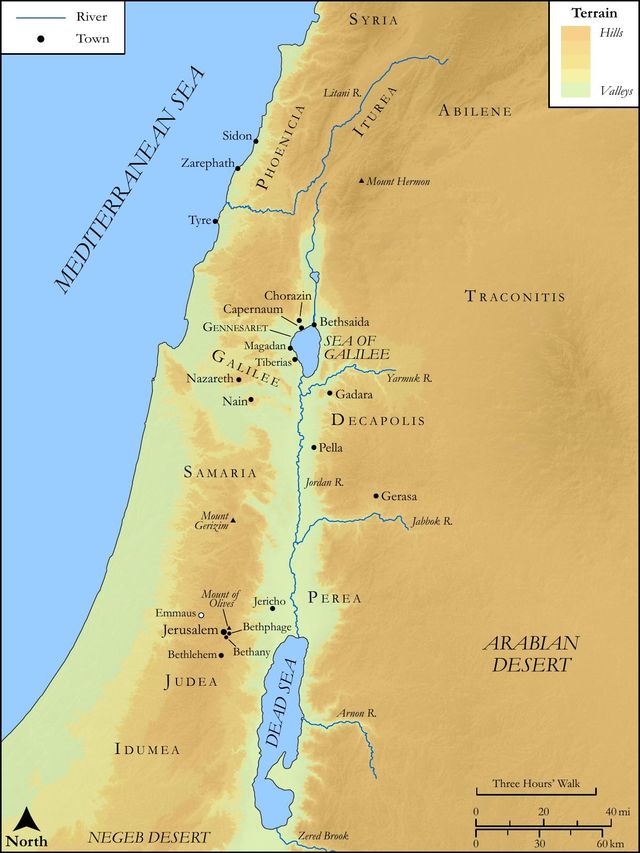
The events surrounding John's birth unfolded in the hill country of Judea, likely in a small, close-knit community where news traveled quickly and miraculous occurrences would be widely discussed. In ancient Israel, a miraculous birth, especially to elderly or barren parents, was a clear sign of divine favor and often indicated that the child was destined for a special purpose, as seen with Isaac (Genesis 18:9-15) and Samuel (1 Samuel 1:19-20). The restoration of Zechariah's speech after a period of divine judgment would have been perceived as a profound act of God, confirming the authenticity of the angelic message and the divine appointment of John. The community's "laying up" of these things in their hearts reflects a common practice of pondering significant events, especially those with spiritual implications, in a culture deeply attuned to signs and wonders from God.
Key Themes
ShowHideThis verse powerfully contributes to several key themes within Luke's Gospel. Firstly, it highlights Divine Intervention and Sovereignty, demonstrating God's active involvement in human history, orchestrating events to fulfill His redemptive plan. The miraculous circumstances of John's birth and Zechariah's restored speech are undeniable proofs of God's hand at work. Secondly, it underscores Prophetic Anticipation and Preparation. The people's question, "What manner of child shall this be!" reflects their recognition that John was no ordinary child, but one marked for a unique, divinely ordained purpose, foreshadowing his role as the forerunner of the Messiah, as prophesied in Malachi 3:1. Finally, the verse emphasizes the theme of Public Witness and Response to God's Works. The community's deep reflection ("laid them up in their hearts") and widespread discussion ("all they that heard them") illustrate the impact of God's mighty acts on those who witness them, prompting wonder and spiritual contemplation, much like Mary's response to the events surrounding Jesus' birth in Luke 2:19.
Exposition and Analysis
ShowHideKey Word Analysis
ShowHideThis primary verb signifies more than just auditory perception; it implies attentive listening, understanding, and even obedience. In this context, "all they that heard" suggests that the news of Zechariah's restored speech and John's naming spread widely, and people not only heard the facts but grasped their profound implications, leading to their subsequent pondering and questioning.
Prolonged from a primary Latin root, "cor," this term refers to the innermost being of a person—the seat of thoughts, feelings, will, and moral character. To "lay them up in their hearts" means to internalize, ponder deeply, and retain these events, not merely as fleeting news but as significant divine acts worthy of profound consideration and memory. It indicates a spiritual and intellectual processing of God's work.
This word, potentially from a root relating to grasping, literally means the physical hand, but here it is used figuratively. Especially in Hebraic idiom, "the hand of the Lord" (Greek, cheír_ _kýrios') signifies God's active power, presence, favor, protection, and providential care. It denotes divine intervention, empowerment for a specific task, or the direct influence of God's might. Its presence "with him" indicates God's special anointing and guidance over John from his earliest days.
Verse Breakdown
ShowHide"And all they that heard [them] laid [them] up in their hearts"
This clause describes the profound internal response of the community. The "them" refers to the miraculous events—Zechariah's muteness, John's birth, his naming, and Zechariah's restored speech. To "lay them up in their hearts" means to store these events deeply in their minds and spirits, to ponder them, to reflect on their significance, and to understand that they were not ordinary occurrences but divine interventions. This suggests a process of spiritual discernment and memory.
"saying, What manner of child shall this be!"
This phrase reveals the external, verbalized reaction of the people. Their question expresses a mix of awe, wonder, and profound curiosity. They recognized that John's birth was extraordinary, marked by divine signs, and therefore anticipated that he was destined for a unique and significant purpose. It highlights their recognition of God's active hand and their anticipation of John's future role, which they intuitively knew would be special.
"And the hand of the Lord was with him."
This is a powerful, declarative statement from the narrator, confirming the divine reality behind the people's wonder. "The hand of the Lord" is a potent Old Testament idiom signifying God's active power, sovereign favor, protective presence, and empowering anointing. Its presence "with him" affirms that John was under God's special care, guidance, and preparation from infancy, destined for the specific prophetic ministry for which he was born.
Literary Devices
ShowHideLuke 1:66 employs several significant literary devices. The most prominent is Idiom through the phrase "the hand of the Lord." This is a well-established Old Testament expression (e.g., Exodus 9:3, 1 Kings 18:46, Ezekiel 3:14) signifying God's active power, presence, and favor. Its use here immediately conveys divine endorsement and purpose for John. There is also an element of Foreshadowing, as the people's questioning, "What manner of child shall this be!", anticipates John's future prophetic ministry as the forerunner of Christ. Their wonder serves to build narrative tension and expectation for John's unique role. Finally, the phrase "laid them up in their hearts" can be seen as a form of Metaphor, representing the deep internal processing and spiritual reflection on the miraculous events, rather than a literal physical action.
Theological and Thematic Connections
ShowHideLuke 1:66 serves as a crucial theological bridge, connecting the miraculous circumstances of John's birth to his divinely ordained purpose. It underscores the theme of divine election and preparation, demonstrating that God actively chooses and equips individuals for His redemptive plans from their earliest moments. The community's wonder and the affirmation of "the hand of the Lord" reveal a God who is intimately involved in human affairs, working through specific individuals to bring about His will. This verse highlights that God's plan is not haphazard but meticulously orchestrated, with every detail, including a child's birth and early life, serving His ultimate purposes. It invites believers to recognize and trust in God's sovereign hand in their own lives and in the unfolding of history.
Reflection and Application
ShowHideThe public's reaction to John's miraculous beginnings in Luke 1:66 offers profound lessons for contemporary believers. Their deep pondering ("laid them up in their hearts") and curious questioning ("What manner of child shall this be!") model a posture of spiritual attentiveness. In a world often characterized by fleeting attention and quick judgments, this verse calls us to slow down, to observe God's work around us—whether in grand, miraculous displays or in the quiet, unfolding providence of everyday life—and to deeply internalize its significance. It reminds us that God is always at work, often in ways that defy human expectation, preparing individuals and circumstances for His purposes. Just as the "hand of the Lord" was upon John, guiding and empowering him for his unique calling, so too does God's hand rest upon His people today, equipping us for the specific roles He has ordained. This should inspire both wonder and trust, encouraging us to discern His leading and to step into our callings with faith, even when the path ahead is uncertain or seems extraordinary.
Questions for Reflection
ShowHideFAQ
ShowHideWhat does "the hand of the Lord was with him" signify for John the Baptist?
ShowHideThe phrase "the hand of the Lord was with him" is a powerful biblical idiom signifying God's active presence, sovereign favor, protective care, and empowering anointing. For John the Baptist, it meant that he was under God's special guidance and preparation from his earliest days. It indicated that God had a specific purpose for his life—to be the forerunner of the Messiah—and was actively equipping him for that unique role. This divine endorsement confirmed that John's life and future ministry were not accidental but part of God's meticulously orchestrated plan for salvation history. This idiom is also used in the Old Testament to describe God's power in delivering Israel (Exodus 9:3) and empowering prophets like Elijah (1 Kings 18:46) and Ezekiel (Ezekiel 3:14).
Christ-Centered Fulfillment
ShowHideWhile Luke 1:66 focuses on John the Baptist, its ultimate Christ-centered fulfillment lies in how John's divinely appointed life and ministry directly prepared the way for Jesus Christ. The "hand of the Lord" on John was not an end in itself, but a powerful testament to God's meticulous planning for the arrival of His Son. John, empowered by the Spirit from birth (Luke 1:15), would later fulfill the prophecy of being the voice crying in the wilderness, making straight the way for the Lord (Isaiah 40:3). His entire purpose, from his miraculous conception to his powerful preaching, was to point to Jesus, the "Lamb of God, who takes away the sin of the world!" (John 1:29). Thus, the wonder and anticipation surrounding John in Luke 1:66 ultimately find their complete answer and purpose in the person and work of Jesus, the promised Messiah, for whom John was merely the divinely prepared herald. John himself declared, "He must increase, but I must decrease" (John 3:30), beautifully illustrating how his entire life was a Christ-centered preparation.