


Luke 13:6
Bible text: King James Version (1769 Blayney text) · Public domain
Bible text: King James Version with Strong's numbers · Public domain
Bible text: Berean Standard Bible · Public domain
Bible text: American Standard Version (1901) · Public domain
Bible text: World English Bible, Messianic edition · Public domain
Bible text: Geneva Bible (1599) · Public domain
Bible text: Young's Literal Translation · Public domain
- ἜλεγενElegenHe was speakingG3004V-IAI-3SVerb Imperfect Active Indicative 3rd Singular
- δὲdethenG1161CONJConjunction
- ταύτηνtautēnthisG3778D-ASFDemonstrative pronoun Accusative Singular Feminine
- τὴνtēn<the>G3588T-ASFDefinite article Accusative Singular Feminine
- παραβολήν·parabolēnparableG3850N-ASFNoun Accusative Singular Feminine
- συκῆνsukēnA fig treeG4808N-ASFNoun Accusative Singular Feminine
- εἶχένeichenhadG2192V-IAI-3SVerb Imperfect Active Indicative 3rd Singular
- τιςtisa certain [man]G5100X-NSMIndefinite pronoun Nominative Singular Masculine
- πεφυτευμένηνpephuteumenēnplantedG5452V-RPP-ASFVerb Perfect Passive Participle Accusative Singular Feminine
- ἐνeninG1722PREPPreposition
- τῷtōtheG3588T-DSMDefinite article Dative Singular Masculine
- ἀμπελῶνιampelōnivineyardG290N-DSMNoun Dative Singular Masculine
- αὐτοῦautouof himG846P-GSMPersonal pronoun Genitive Singular Masculine
- καὶkaiandG2532CONJConjunction
- ἦλθενēlthenhe cameG2064V-2AAI-3SVerb 2nd Aorist Active Indicative 3rd Singular
- ζητῶνzētōnseekingG2212V-PAP-NSMVerb Present Active Participle Nominative Singular Masculine
- καρπὸνkarponfruitG2590N-ASMNoun Accusative Singular Masculine
- ἐνenonG1722PREPPreposition
- αὐτῇautēaitG846P-DSFPersonal pronoun Dative Singular Feminine
- καὶkaiandG2532CONJConjunction
- οὐχouchnotG3756PRT-NNegative Particle Negative
- εὗρενheurendid find [any]G2147V-2AAI-3SVerb 2nd Aorist Active Indicative 3rd Singular
English is a literal word-by-word gloss of the Greek, not the KJV's wording. Why?
This is the original text the KJV's translators worked from — each Greek word with its own literal English meaning in this verse, prepared by scholars at Tyndale House, Cambridge. The KJV translates whole sentences, not word by word, so its wording differs: one Greek word can become several English words, and the KJV may choose “charity” where the gloss reads “love”. Both are faithful — they answer different questions. For the KJV's own rendering, switch to the KJV text.
Details
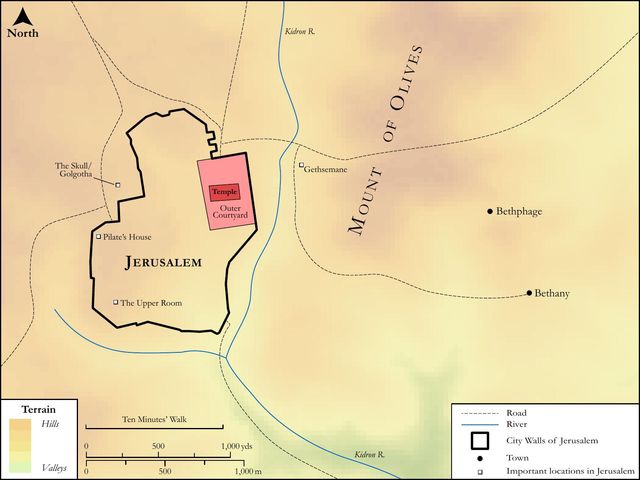
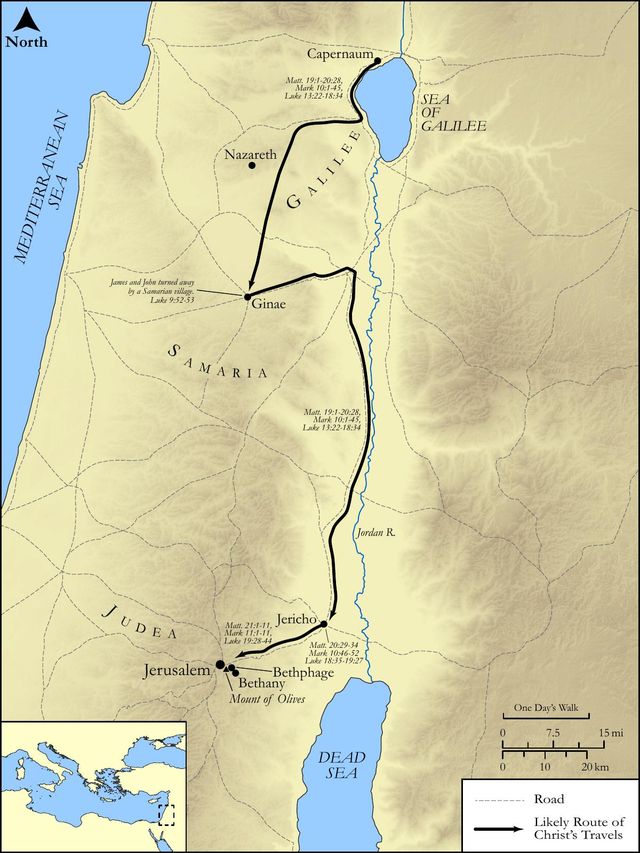
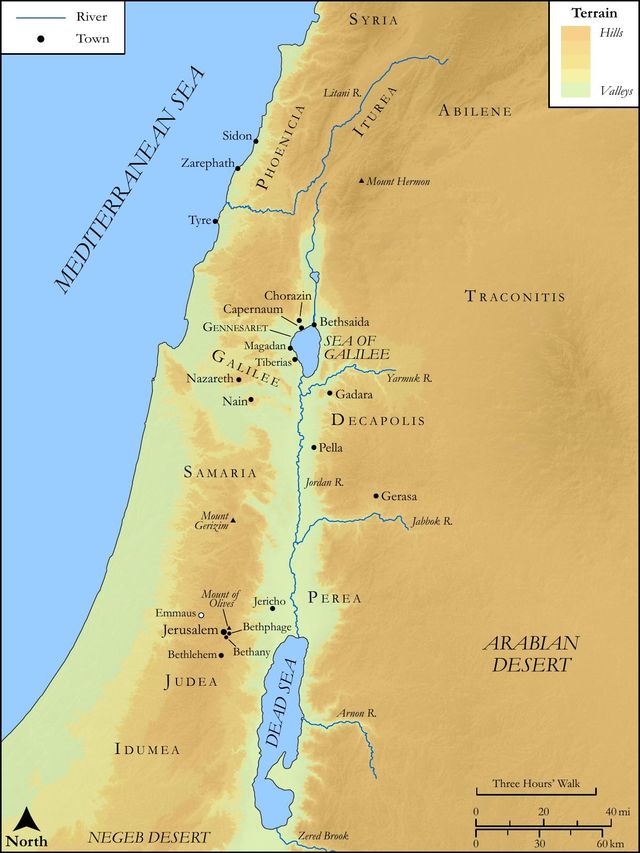
See on the biblical-era maps
Study this verse
Public-domain commentary
Matthew Henry
From his Commentary on the Whole Bible. Henry comments on passages, not single verses — this entry covers Luke 13:6–9. His four-level outline is real structure in the source text, so it is rendered as structure.
This parable is intended to enforce that word of warning immediately going before, "Except ye repent, ye shall all likewise perish; except you be reformed, you will be ruined, as the barren tree, except it bring forth fruit, will be cut down."
I.This parable primarily refers to the nation and people of the Jews.
God chose them for his own, made them a people near to him, gave them advantages for knowing and serving him above any other people, and expected answerable returns of duty and obedience from them, which, turning to his praise and honour, he would have accounted fruit; but they disappointed his expectations: they did not do their duty; they were a reproach instead of being a credit to their profession. Upon this, he justly determined to abandon them, and cut them off, to deprive them of their privileges, to unchurch and unpeople them; but, upon Christ's intercession, as of old upon that of Moses, he graciously gave them further time and further mercy; tried them, as it were, another year, by sending his apostles among them, to call them to repentance, and in Christ's name to offer them pardon, upon repentance. Some of them were wrought upon to repent, and bring forth fruit, and with them all was well; but the body of the nation continued impenitent and unfruitful, and ruin without remedy came upon them; about forty years after they were cut down, and cast into the fire, as John Baptist had told them (Mat 3:10), which saying of his this parable enlarges upon.
II.Yet it has, without doubt, a further reference, and is designed for the awakening of all that enjoy the means of grace, and the privileges of the visible church, to see to it that the temper of their minds and the tenour of their lives be answerable to their professions and opportunities, for that is the fruit required. Now observe here,
1.The advantages which this fig-tree had. It was planted in a vineyard, in better soil, and where it had more care taken of it and more pains taken with it, than other fig-trees had, that commonly grew, not in vineyards (Those are for vines), but by the way-side, Mat 21:19. This fig-tree belonged to a certain man, that owned it, and was at expense upon it. Note, The church of God is his vineyard, distinguished from the common, and fenced about, Isa 5:1, Isa 5:2. We are fig-trees planted in this vineyard by our baptism; we have a place and a name in the visible church, and this is our privilege and happiness. It is a distinguishing favour: he has not dealt so with other nations.
2.The owner's expectation from it: He came, and sought fruit thereon, and he had reason to expect it. He did not send, but came himself, intimating his desire to find fruit. Christ came into this world, came to his own, to the Jews, seeking fruit. Note, The God of heaven requires and expects fruit from those that have a place in his vineyard. He has his eye upon those that enjoy the gospel, to see whether they live up to it; he seeks evidences of their getting good by the means of grace they enjoy. Leaves will not serve, crying, Lord, Lord; blossoms will not serve, beginning well and promising fair; there must be fruit. Our thoughts, words, and actions must be according to the gospel, light and love.
3.The disappointment of his expectation: He found none, none at all, not one fig. Note, It is sad to think how many enjoy the privileges of the gospel, and yet do nothing at all to the honour of God, nor to answer the end of his entrusting them with those privileges; and it is a disappointment to him and a grief to the Spirit of his grace.
(1.)He here complains of it to the dresser of the vineyard: I come, seeking fruit, but am disappointed - I find none, looking for grapes, but behold wild grapes. He is grieved with such a generation.
(2.)He aggravates it, with two considerations: - [1.] That he had waited long, and yet was disappointed. As he was not high in his expectations, he only expected fruit, not much fruit, so he was not hasty, he came three years, year after year: applying it to the Jews, he came one space of time before the captivity, another after that, and another in the preaching of John Baptist and of Christ himself; or it may allude to the three years of Christ's public ministry, which were now expiring. In general, it teaches us that the patience of God is stretched out to long-suffering with many that enjoy the gospel, and do not bring forth the fruits of it; and this patience is wretchedly abused, which provokes God to so much the greater severity. How many times three years has God come to many of us, seeking fruit, but has found none, or next to none, or worse than none! [2.] That this fig-tree did not only not bring forth fruit, but did hurt; it cumbered the ground; it took up the room of a fruitful tree, and was injurious to all about it. Note, Those who do not do good commonly do hurt by the influence of their bad example; they grieve and discourage those that are good; they harden and encourage those that are bad. And the mischief is the greater, and the ground the more cumbered, if it be a high, large, spreading tree, and if it be an old tree of long standing.
4.The doom passed upon it; Cut it down. He saith this to the dresser of the vineyard, to Christ, to whom all judgment is committed, to the ministers who are in his name to declare this doom. Note, No other can be expected concerning barren trees than that they should be cut down. As the unfruitful vineyard is dismantled, and thrown open to the common (Isa 5:5, Isa 5:6), so the unfruitful trees in the vineyard are cast out of it, and wither, Joh 15:6. It is cut down by the judgments of God, especially spiritual judgments, such as those on the Jews that believed not, Isa 6:9, Isa 6:10. It is cut down by death, and cast into the fire of hell; and with good reason, for why cumbers it the ground? What reason is there why it should have a place in the vineyard to no purpose?
5.The dresser's intercession for it. Christ is the great Intercessor; he ever lives, interceding. Ministers are intercessors; they that dress the vineyard should intercede for it; those we preach to we should pray for, for we must give ourselves to the word of God and to prayer. Now observe,
(1.)What it is he prays for, and that is a reprieve: Lord, let it alone this year also. He doth not pray, "Lord, let it never be cut down," but, "Lord, not now. Lord, do not remove the dresser, do not withhold the dews, do not pluck up the tree." Note,
[1.]It is desirable to have a barren tree reprieved. Some have not yet grace to repent, yet it is a mercy to them to have space to repent, as it was to the old world to have 120 years allowed them to make their peace with God.
[2.]We owe it to Christ, the great Intercessor, that barren trees are not cut down immediately: had it not been for his interposition, the whole world had been cut down, upon the sin of Adam; but he said, Lord, let it alone; and it is he that upholds all things.
[3.]We are encouraged to pray to God for the merciful reprieve of barren fig-trees: "Lord, let them alone; continue them yet awhile in their probation; bear with them a little longer, and wait to be gracious." Thus must we stand in the gap, to turn away wrath.
[4.]Reprieves of mercy are but for a time; Let it alone this year also, a short time, but a sufficient time to make trial. When God has borne long, we may hope he will bear yet a little longer, but we cannot expect he should bear always.
[5.]Reprieves may be obtained by the prayers of others for us, but not pardons; there must be our own faith, and repentance, and prayers, else no pardon.
(2.)How he promises to improve this reprieve, if it be obtained: Till I shall dig about it, and dung it, Note,
[1.]In general, our prayers must always be seconded with our endeavours. The dresser seems to say, "Lord, it may be I have been wanting in that which is my part; but let it alone this year, and I will do more than I have done towards its fruitfulness." Thus in all our prayers we must request God's grace, with a humble resolution to do our duty, else we mock God, and show that we do not rightly value the mercies we pray for.
[2.]In particular, when we pray to God for grace for ourselves or others, we must follow our prayers with diligence in the use of the means of grace. The dresser of the vineyard engages to do his part, and therein teaches ministers to do theirs. He will dig about the tree and will dung it. Unfruitful Christians must be awakened by the terrors of the law, which break up the fallow ground, and then encouraged by the promises of the gospel, which are warming and fattening, as manure to the tree. Both methods must be tried; the one prepares for the other, and all little enough.
(3.)Upon what foot he leaves the matter: "Let us try it, and try what we can do with it one year more, and, if it bear fruit, well, Luk 13:9. It is possible, nay, there is hope, that yet it may be fruitful." In this hope the owner will have patience with it, and the dresser will take pains with it, and, if it should have the desired success, both will be pleased that it was not cut down. The word well is not in the original, but the expression is abrupt: If it bear fruit! - supply it how you please, so as to express how wonderfully well-pleased both the owner and dresser will be. If it bear fruit, there will be cause of rejoicing; we have what we would have. But it cannot be better expressed than as we do: well. Note, Unfruitful professors of religion, if after long unfruitfulness they will repent, and amend, and bring forth fruit, shall find all is well. God will be pleased, for he will be praised; ministers' hands will be strengthened, and such penitents will be their joy now and their crown shortly. Nay, there will be joy in heaven for it; the ground will be no longer cumbered, but bettered, the vineyard beautified, and the good trees in it made better. As for the tree itself, it is well for it; it shall not only not be cut down, but it shall receive blessing from God (Heb 6:7); it shall be purged, and shall bring forth more fruit, for the Father is its husbandman (Joh 15:2); and it shall at last be transplanted from the vineyard on earth to the paradise above.
But he adds, If not, then after that thou shalt cut it down. Observe here, [1.] That, though God bear long, he will not bear always with unfruitful professors; his patience will have an end, and, if it be abused, will give way to that wrath which will have no end. Barren trees will certainly be cut down at last, and cast into the fire. [2.] The longer God has waited, and the more cost he has been at upon them, the greater will their destruction be: to be cut down after that, after all these expectations from it, these debates concerning it, this concern for it, will be sad indeed, and will aggravate the condemnation. [3.] Cutting down, though it is work that shall be done, is work that God does not take pleasure in: for observe here, the owner said to the dresser, "Do thou cut it down, for it cumbereth the ground." "Nay," said the dresser, "if it must be done at last, thou shalt cut it down; let not my hand be upon it." [4.] Those that now intercede for barren trees, and take pains with them, if they persist in their unfruitfulness will be even content to see them cut down, and will not have one word more to say for them. Their best friends will acquiesce in, nay, they will approve and applaud, the righteous judgment of God, in the day of the manifestation of it, Rev 15:3, Rev 15:4.
Historical interpretation
Nine Centuries of Reception
18 surviving comments on this verse. Each one is dated, so this reads as a timeline rather than a list.
Select a marker to jump to its quote. Markers stagger vertically where authors wrote within a few decades of each other.
(De Pœnit.) For it is the part of God's mercy not silently to inflict punishment, but to send forth threatenings to recall the sinner to repentance, as He did to the men of Nineveh, and now to the dresser of the vineyard, saying, Cut it down, exciting him indeed to the care of it, and stirring up the barren soil to bring forth the proper fruits.
Then, again, this truth was clearly shown forth by the parable of the fig-tree, of which the Lord says, "Behold, now these three years I come seeking fruit on this fig-tree, but I find none"
He told another parable, “A certain man had planted a fig tree in his vineyard and he said to the vinedresser.” This refers to the law, taking its point of view. “Behold, for three years I have come seeking fruit on this fig tree.” This refers to the three captivities in which the Israelites were taken away, so that they might be chastened, but they were not chastened.… The fig tree is a figure of the synagogue. He sought the fruits of faith in it, but it did not have that which it could offer.…During three years, he showed himself among them as Savior. When he wished that the fig tree be uprooted, the event was similar to that earlier one, when the Father said to Moses, “Permit me to destroy the people.” He gave Moses a reason to intercede with him. Here he also showed the vinedresser that he wished to uproot it. The vinedresser made known his plea, and the merciful One showed his pity, that if, in another year, the fig tree did not produce fruit, it would be uprooted. The vinedresser however did not condemn through vengeance like Moses, who, after having interceded and was heard, said, “For the day of their ruin is near and that which is about to happen to them is fast approaching.” … We are not saying that the Jews are tares, for they are capable of being chosen, but they are not pure wheat grains, for they can be rejected.
The Jews were boasting, that while the eighteen had perished, they all remained unhurt. He therefore sets before them the parable of the fig tree, for it follows, He spake also this parable; A certain man had a fig tree planted in his vineyard.
For it is the part of God's mercy not silently to inflict punishment, but to send forth threatenings to recall the sinner to repentance, as He did to the men of Nineveh, and now to the dresser of the vineyard, saying, Cut it down, exciting him indeed to the care ofit, and stirring up the barren soil to bring forth the proper fruits.
(Orat. 32.) Let us not then strike suddenly, but overcome by gentleness, lest we cut down the fig tree still able to bear fruit, which the care perhaps of a skilful dresser will restore. Hence it is also here added, And he answering said unto him, Lord, let alone, &c.
There was a vineyard of the Lord of hosts, which He gave for a spoil to the Gentiles. And the comparison of the fig tree to the synagogue is well chosen, because as that tree abounds with wide and spreading foliage, and deceives the hopes of its possessor with the vain expectation of promised fruit, so also in the synagogue, while its teachers are unfruitful in good works, yet magnify themselves with words as with abundant leaves, the empty shadow of the law stretches far and wide. This tree also is the only one which puts forth fruit in place of flowers. And the fruit falls, that other fruit may succeed; yet some few of the former remain, and do not fall. For the first people of the synagogue fell off as a useless fruit, in order that out of the fruitfulness of the old religion might arise the new people of the Church; yet they who were the first out of Israel whom a branch of a stronger nature bore, under the shadow of the law and the cross, in the bosom of both, stained with a double juice after the example of a ripening fig, surpassed all others in the grace of most excellent fruits; to whom it is said, You shall sit upon twelve thrones. Some however think the fig tree to be a figure not of the synagogue, but of wickedness and treachery; yet these differ in nothing from what has gone before, except that they choose the genus instead of the species.
But our Lord sought, not because He was ignorant that the fig tree had no fruit, but that He might show in a figure that the synagogue ought by this time to have fruit. Lastly, from what follows, He teaches that He Himself came not before the time who came after three years. For so it is said, Then said he to the dresser of the vineyard, Behold, these three years I come seeking fruit on this fig tree, and find none. He came to Abraham, He came to Moses, He came to Mary, that is, He came in the seal of the covenant, He came in the law, He came in the body. We recognise His coming by His gifts; at one time purification, at another sanctification, at another justification. Circumcision purified, the law sanctified, grace justified. The Jewish people then could not be purified because they had not the circumcision of the heart, but of the body; nor be sanctified, because ignorant of the meaning of the law, they followed carnal things rather than spiritual; nor justified, because not working repentance for their offences, they knew nothing of grace. Rightly then was there no fruit found in the synagogue, and consequently it is ordered to be cut down; for it follows, Cut it down, why cumbereth it the ground? But the merciful dresser, perhaps meaning him on whom the Church is founded, foreseeing that another would be sent to the Gentiles, but he himself to them who were of the circumcision, piously intercedes that it may not be cut off; trusting to his calling, that the Jewish people also might be saved through the Church. Hence it follows, And he answering said unto him, Lord, let it alone this year also. He soon perceived hardness of heart and pride to be the causes of the barrenness of the Jews. He knew therefore how to discipline, who knew how to censure faults. Therefore adds He, till I shall dig about it. He promises that the hardness of their hearts shall be dug about by the Apostles' spades, lest a heap of earth cover up and obscure the root of wisdom. And He adds, and dung it, that is, by the grace of humility, by which even the fig is thought to become fruitful toward the Gospel of Christ. Hence He adds, And if it bear fruit, well, that is, it shall be well, but if not, then after that thou shall cut it down.
(ubi sup.) Or, in another sense, the fig tree is the race of mankind. For the first man after he had sinned concealed with fig leaves his nakedness, that is, the members from which we derive our birth.
The Lord also has something very fitting to say about a fruitless tree, "Look, it is now three years that I have been coming to it. Finding no fruit on it, I will cut it down, to stop it blocking up my field." The gardener intercedes.…This tree is the human race. The Lord visited this tree in the time of the patriarchs, as if for the first year. He visited it in the time of the law and the prophets, as if for the second year. Here we are now; with the gospel the third year has dawned. Now it is as though it should have been cut down, but the merciful one intercedes with the merciful one. He wanted to show how merciful he was, and so he stood up to himself with a plea for mercy. "Let us leave it," he says, "this year too. Let us dig a ditch around it." Manure is a sign of humility. "Let us apply a load of manure; perhaps it may bear fruit."
Since it does bear fruit in one part, and in another part does not bear fruit, its Lord will come and divide it. What does that mean, "divide it"? There are good people and bad people now in one company, as though constituting one body.
He says, “Look, these three years I have come seeking fruit on this fig tree, and I find none. Cut it down; why should it use up the ground?” It is as if he would say, “Let the place of this barren fig tree be laid bare; then some other tree will come up or may be planted there.” This was also done. The crowds of the Gentiles were called into its place and took possession of the inheritance of the Israelites. It became the people of God, the plant of paradise, a good and honorable seed. It knows how to produce fruit, not in shadows and types but rather by a pure and perfectly stainless service that is in spirit and truth, as being offered to God, who is an immaterial Being.
Now the literal sense of this passage does not need a single word of explanation. When we search into its inward, secret and unseen meaning, we affirm it as follows. The Israelites, after our Savior’s crucifixion, were doomed to fall into the miseries they deserved, Jerusalem being captured, and its inhabitants slaughtered by the enemy’s sword. Their houses would be burned with fire, and even the temple of God demolished. It is probable that he compares the synagogue of the Jews with a fig tree. The sacred Scripture also compares them with various plants: the vine, the olive, and even to a forest.
If any one should say that the vinedresser is the Son, this view also has a suitable reason on its side. He is our Advocate with the Father, our propitiation, and the gardener of our souls. He constantly prunes away whatever is harmful and fills us with rational and holy seeds so we may produce fruits for him. He spoke of himself, “A sower went out to sow his seed.” It does not influence the glory of the Son to assume the character of the vinedresser. The Father assumes it himself, without being exposed to any blame for so doing. The Son said to the holy apostles, “I am the Vine; you are the branches; my Father is the Vinedresser.”
Our Lord and Redeemer speaks through His Gospel sometimes in words, sometimes in deeds; sometimes one thing in words and another in deeds; but sometimes the same thing in words as in deeds. For you have heard two things from the Gospel, brothers: the unfruitful fig tree and the bent woman, and compassion was bestowed upon both. The one He told through a parable, the other He performed through an actual deed. But the unfruitful fig tree signifies the same thing as the bent woman, and the fig tree that was spared signifies the same as the woman made upright. The lord of the vineyard came to the fig tree three times and found no fruit at all, and the woman who was made upright had been bent for eighteen years. What is signified by this number of eighteen years is the same as what is conveyed by the lord of the vineyard coming to the unfruitful fig tree three times. Since, therefore, by setting forth these things in advance we have touched upon the whole summary, let us now discuss each point in order through the reading.
Someone had a fig tree planted in his vineyard; and he came seeking fruit on it, and found none. What does the fig tree designate, if not human nature? What does the bent woman signify and declare, if not the same nature? Which was both well planted like the fig tree, and well made like the woman; but having fallen into fault by its own will, it preserves neither the fruit of good work nor the state of uprightness. For falling into sin by its own will, because it refused to bear the fruit of obedience, it lost the state of uprightness. Created in the likeness of God, while it did not persist in its dignity, it scorned to preserve what it had been when planted or created.
(Hom. 31. in Evang.) But our Lord came three times to the fig tree, because He sought after man's nature before the law, under the law, and under grace, by waiting, admonishing, visiting; but yet He complains that for three years he found no fruit, for there are some wicked men whose hearts are neither corrected by the law of nature breathed into them, nor instructed by precepts, nor converted by the miracles of His incarnation.
(ubi. sup.) But with great fear and trembling should we hear the word which follows, Cut it down, why cumbereth it the ground. For every one according to his measure, in whatsoever station of life he is, except he show forth the fruits of good works, like an unfruitful tree, cumbereth the ground; for wherever he is himself placed, he there denies to another the opportunity of working.
(31. in Ev.) By the dresser of the vineyard is represented the order of Bishops, who, by ruling over the Church, take care of our Lord's vineyard.
(ubi sup.) Or, the sins of the flesh are called the dung. From this then the tree revives to bear fruit again, for from the remembrance of sin the soul quickens itself to good works. But there are very many who hear reproof, and yet despise the return to repentance; wherefore it is added, And if it bear fruit, well.
(ubi sup.) But he who will not by correction grow rich unto fruitfulness, falls to that place from whence he is no more able to rise again by repentance.
He also spoke this parable. A certain man had a fig tree planted in his vineyard. This fig tree could indeed represent human nature. Well planted, that is, created in the likeness of its author. But when God sought fruit from it for three years, it refused to give because it disdained to obey before the law, under the law, and under grace. But if you look higher, you will notice it, and if generally for all, especially it bears the type of the synagogue. For when that terrible and fearful sentence precedes: "If you do not repent, you will all likewise perish," immediately he adds the parable of the unfruitful and to be uprooted tree, very clearly teaching those to whom he spoke, like the unfruitful fig tree, that if they did not repent, they would be cut down. Therefore, the vineyard of the Lord of Hosts is the house of Israel, as we are taught by the song of Isaiah. But the synagogue established in the same house is the fig tree in the vineyard. But he who allowed his vineyard to be plundered by travelers also commanded the fig tree to be cut down.
And he came seeking fruit on it, and found none. He who instituted the synagogue through Moses, the Lord born in the flesh appeared, and frequently teaching in the synagogue, sought the fruit of faith, but found it not in the minds of the Pharisees.
The Lord Himself who established the synagogue by Moses, came born in the flesh, and frequently teaching in the synagogue, sought for the fruits of faith, but in the hearts of the Pharisees found none; therefore it follows, And came seeking fruit on it, and found none.
Which indeed came to pass under the Romans, by whom the Jewish nation was cut off, and thrust out from the land of promise.
But each one of us also is a fig tree planted in the vineyard of God, that is, in the Church, or in the world.
Our nature yields no fruit though three times sought for; once indeed when we transgressed the commandment in paradise; the second time, when they made the molten calf under the law; thirdly, when they rejected the Saviour. But that three years' time must be understood to mean also the three ages of life, boyhood, manhood, and old age.
Or the master of the household is God the Father, the dresser is Christ, who will not have the fig tree cut down as barren, as if saying to the Father, Although through the Law and the Prophets they gave no fruit of repentance, I will water them with My sufferings and teaching, and perhaps they will yield us fruits of obedience.
Continue studying Luke 13:6 across the web’s major study libraries — every link below opens this exact verse, chapter, or book on the destination site.
Read & Compare
 BibleGatewayThis verse in more than 200 translations and 70 languages.
 Bible.comThe YouVersion reader — hundreds of translations, reading plans, and highlights.
 ESV.orgCrossway's official English Standard Version reader.
 NET BibleThe NET translation with 60,000+ translators' notes on every rendering decision.
 STEP BibleTyndale House's free study tool — original text, vocabulary, and scholarly resources.
 BibliaLogos Bible Software's free web reader.
 USCCBThe New American Bible (Revised Edition) with the U.S. bishops' study notes.
Commentaries
 BibleHub CommentariesDozens of classic commentaries on this verse, gathered on one page.
 StudyLightMore than 100 commentary sets — the largest collection on the web.
 BibleRefPlain-English commentary on what this verse means, verse by verse.
 Enduring WordDavid Guzik's free commentary on this chapter, widely used by Bible teachers.
 Bible Study ToolsVerse commentary alongside Greek and Hebrew study aids.
Original Language & Research
- BibleHub InterlinearThe verse word by word — original language, transliteration, and English.
- BibleHub LexiconEvery word's original-language definition and Strong's entry.
 Blue Letter BibleDeep-study tools — Strong's numbers, concordance, and word studies.
 CNTR CollationThe earliest Greek manuscripts of this verse, collated letter by letter.
Sermons, Hymns & Audio


TrulyRandomVerse is not affiliated with these sites and doesn’t control their content. They’re linked because they’re genuinely useful.
Summary
Luke 13:6 introduces the profound Parable of the Barren Fig Tree, a vivid illustration spoken by Jesus. It describes a landowner's expectation of fruit from a fig tree carefully planted in his vineyard, only to repeatedly find it barren. This scenario sets the stage for a crucial spiritual lesson concerning divine expectation, the urgency of spiritual fruitfulness, and the consequences of persistent unresponsiveness to God's patient grace.
Context
ShowHideLiterary Context
This parable is strategically placed immediately following Jesus' direct challenge to His listeners regarding two recent tragic events: the slaughter of Galileans by Pilate and the eighteen people killed by the collapse of the tower in Siloam (Luke 13:1-5). In response to the common assumption that such victims were greater sinners, Jesus emphatically states that unless His audience repents, they too will perish (Luke 13:3, 5). The Parable of the Barren Fig Tree serves as a powerful and urgent reinforcement of this call to repentance, visually depicting God's patient yet time-limited expectation for His people to bear the fruit of genuine change. It shifts the focus from external judgment on others to the internal spiritual state and responsibility of each individual.
Historical & Cultural Context
In ancient Israel, fig trees were a common and valuable crop, often planted in vineyards alongside grapevines. This practice was not merely for convenience; it indicated a deliberate investment and expectation of a return. A fig tree typically began bearing fruit within three years, and by the fourth or fifth year, it was expected to be consistently productive. To have a fig tree in a vineyard for three years (as implied by the owner's repeated visits in the subsequent verses of the parable, though not explicitly in Luke 13:6) without fruit represented a significant waste of resources and space. The imagery of a fig tree and a vineyard held deep symbolic resonance for a Jewish audience, often representing Israel as God's chosen people and His diligent care for them, as seen in prophetic literature.
Key Themes
ShowHideLuke 13:6 introduces several critical themes that permeate this passage and the broader biblical narrative. Firstly, it highlights Divine Expectation: God, as the owner of the vineyard, justly expects His people to produce spiritual fruit in response to His gracious provision and cultivation. This expectation is rooted in the covenant relationship and the purpose for which humanity was created. Secondly, the verse subtly introduces the theme of Patience and Opportunity: the owner's repeated visits imply a period of grace and forbearance, mirroring God's long-suffering with humanity, offering multiple opportunities for repentance and growth before judgment. This aligns with themes found in passages like Romans 2:4, where Paul speaks of God's kindness leading to repentance. Finally, the stark reality of "found none" underscores the Danger of Barrenness: spiritual unfruitfulness, despite receiving divine care, is a serious condition that ultimately leads to judgment. This echoes the prophetic warnings to Israel, such as Isaiah 5:1-7, which laments Israel's failure to produce justice and righteousness.
Exposition and Analysis
ShowHideKey Word Analysis
ShowHideThis term, translated as "parable," refers to a similitude or a symbolic fictitious narrative drawn from common life, designed to convey a moral or spiritual truth. Jesus frequently employed parables to reveal profound spiritual realities in an accessible, yet often challenging, manner, inviting listeners to engage deeply with His message.
Meaning "to seek," this word implies a deliberate and purposeful search or inquiry. In the context of the parable, the owner's act of "seeking" fruit is not a casual glance but an active expectation and repeated effort to find what he has a right to expect from his investment. This signifies God's earnest desire for His people to bear fruit.
Translated as "fruit," this term literally refers to the produce of the earth, but biblically, it carries significant figurative meaning. In this parable, "fruit" represents the tangible evidence of spiritual life: repentance, righteousness, obedience, and character transformation that aligns with God's will. Its absence ("found none") is the core problem.
Verse Breakdown
ShowHide"He spake also this parable"
This opening clause immediately identifies the genre of Jesus' teaching, signaling to the audience that a deeper, symbolic meaning is to be understood beyond the literal narrative. It highlights Jesus' characteristic method of instruction, drawing from everyday life to illuminate eternal truths.
"A certain [man] had a fig tree planted in his vineyard"
This establishes the setting and the primary characters. The "certain man" represents God, the owner and cultivator. The "fig tree" symbolizes God's people (often Israel, but broadly applicable to any recipient of God's grace). Its planting "in his vineyard" signifies deliberate care, provision, and a prime location for flourishing, emphasizing the owner's investment and the tree's abundant opportunity to thrive.
"and he came and sought fruit thereon"
This phrase reveals the owner's consistent expectation and repeated efforts. It implies a period of waiting and observation, reflecting God's patience and His righteous expectation that His investment in His people will yield a return in the form of spiritual fruitfulness. The owner's action is entirely reasonable given the care provided.
"and found none"
This concise and stark declaration is the pivotal point of the verse, introducing the central problem of the parable. The absence of fruit, despite the ideal conditions and the owner's diligent seeking, highlights the tree's barrenness and failure to fulfill its purpose. This sets up the tension and the subsequent discussion of judgment and a final opportunity.
Literary Devices
ShowHideLuke 13:6 is rich with literary devices that enhance its meaning and impact. The primary device is Parable itself, a short, illustrative story that teaches a moral or spiritual lesson. Jesus masterfully uses this form to engage His audience and convey complex theological truths in an accessible way. Symbolism is central, with the "man" representing God, the "fig tree" symbolizing Israel (and by extension, any individual or community given divine favor), and the "vineyard" representing God's care, covenant, or kingdom. The "fruit" symbolizes the expected spiritual response: repentance, righteousness, and obedience. Furthermore, there is an inherent Antithesis between the owner's expectation ("sought fruit") and the disappointing reality ("found none"), highlighting the stark contrast between divine desire and human unresponsiveness, which drives the parable's urgent message.
Theological and Thematic Connections
ShowHideThe Parable of the Barren Fig Tree, introduced in Luke 13:6, is a profound theological statement on God's just expectations, His remarkable patience, and the critical urgency of spiritual fruitfulness. It underscores the truth that divine privilege (being "planted in His vineyard") comes with divine responsibility. God invests in His people, providing all necessary resources for growth and fruitfulness, and He rightly expects a return on that investment. The barrenness of the fig tree serves as a stark warning: continued unfruitfulness, despite ample opportunity and grace, will eventually lead to judgment. This parable is a call to self-examination, urging individuals and communities to assess whether their lives are producing the spiritual fruit that reflects genuine repentance and faith, or if they are merely occupying space without fulfilling their God-given purpose.
Reflection and Application
ShowHideLuke 13:6 serves as a powerful mirror for self-reflection for every believer. We, too, have been "planted in His vineyard" through salvation and the indwelling of the Holy Spirit, given every spiritual blessing and opportunity to grow. The question this verse implicitly poses to us is: Are we bearing fruit? This isn't about striving for perfection or human achievement, but about the natural outflow of a life transformed by Christ. Spiritual fruit, as described in Galatians 5:22-23, includes love, joy, peace, patience, kindness, goodness, faithfulness, gentleness, and self-control. It is the character of Christ being formed within us and expressed through our lives. The parable reminds us that God's patience, while vast, is not infinite. There is an urgency to respond to His grace and cultivate a life of genuine repentance and obedience, ensuring that we are not merely consuming resources but actively contributing to His kingdom through a fruitful life. Let us not be found barren when the Master comes seeking fruit.
Questions for Reflection
ShowHideFAQ
ShowHideWhat does the fig tree symbolize in this parable?
ShowHideIn this parable, the fig tree primarily symbolizes Israel, God's chosen people. Throughout the Old Testament, the fig tree is often used metaphorically to represent Israel (e.g., Jeremiah 8:13, Hosea 9:10). Just as the fig tree was expected to bear fruit, Israel, having received God's special care and covenant, was expected to produce the fruit of righteousness and obedience. By extension, the parable also applies to any individual or community that has received God's grace and provision, signifying God's expectation for all who claim to be His to bear spiritual fruit.
What kind of "fruit" is the owner seeking from the fig tree?
ShowHideThe "fruit" the owner seeks is not literal figs, but spiritual fruit. In the context of Jesus' preceding call to repentance in Luke 13:3, this fruit primarily refers to genuine repentance, which involves a change of mind and heart leading to a change in behavior and lifestyle. More broadly, it encompasses righteous living, obedience to God's commands, and the manifestation of Christ-like character. The Apostle Paul later elaborates on this as the "fruit of the Spirit" in Galatians 5:22-23, which includes love, joy, peace, patience, kindness, goodness, faithfulness, gentleness, and self-control. It is the tangible evidence that one's life is aligned with God's will and purpose.
Christ-Centered Fulfillment
ShowHideWhile Luke 13:6 presents a warning about barrenness and impending judgment, its ultimate fulfillment and deepest meaning are found in Jesus Christ. He is the divine "owner" who has come seeking fruit, and His very presence among humanity marked the final, decisive period of grace before judgment. In the New Testament, Jesus Himself is the True Vine, and believers are the branches who must abide in Him to bear fruit (as powerfully articulated in John 15:1-8). He is also the ultimate intercessor, the one who, like the vinedresser in the subsequent verses of the parable (Luke 13:7-9), pleads for one more opportunity for humanity. His death on the cross and resurrection provided the means for barren humanity to become fruitful, offering true repentance and the power to live a new life. Through His sacrifice, the judgment due to unfruitfulness was borne by Him, and through His Spirit, believers are empowered to produce the fruit of righteousness that God desires, transforming barren lives into flourishing ones. He is the one who perfectly fulfilled God's expectations, bearing the ultimate fruit of salvation for all who believe, and He continues to intercede for us, as seen in Romans 8:34 and Hebrews 7:25.