


Luke 13:5
Bible text: King James Version (1769 Blayney text) · Public domain
Bible text: Berean Standard Bible · Public domain
Bible text: American Standard Version (1901) · Public domain
Bible text: World English Bible, Messianic edition · Public domain
Bible text: Geneva Bible (1599) · Public domain
Bible text: Young's Literal Translation · Public domain
- οὐχίouchiNoG3780PRT-NNegative Particle Negative
- λέγωlegōI sayG3004V-PAI-1SVerb Present Active Indicative 1st Singular
- ὑμῖνhuminto youG4771P-2DPPersonal pronoun Dative 2nd Plural
- ἀλλ᾽all᾽butG235CONJConjunction
- ἐὰνeanonlyG1437CONDConjunction
- μὴmēunlessG3361PRT-NNegative Particle Negative
- μετανοῆτεmetanoēteyou shall repentG3340V-PAS-2PVerb Present Active Subjunctive 2nd Plural
- πάντεςpantesallG3956A-NPMAdjective Nominative Plural Masculine
- ὡσαύτωςhōsautōslikewiseG5615ADVAdverb
- ἀπολεῖσθεapoleistheyou will perishG622V-FMI-2PVerb Future Middle Indicative 2nd Plural
English is a literal word-by-word gloss of the Greek, not the KJV's wording. Why?
This is the original text the KJV's translators worked from — each Greek word with its own literal English meaning in this verse, prepared by scholars at Tyndale House, Cambridge. The KJV translates whole sentences, not word by word, so its wording differs: one Greek word can become several English words, and the KJV may choose “charity” where the gloss reads “love”. Both are faithful — they answer different questions. For the KJV's own rendering, switch to the KJV text.
Details
See on the biblical-era maps
Study this verse
Public-domain commentary
Matthew Henry
From his Commentary on the Whole Bible. Henry comments on passages, not single verses — this entry covers Luke 13:1–5. His three-level outline is real structure in the source text, so it is rendered as structure.
We have here, I. Tidings brought to Christ of the death of some Galileans lately, whose blood Pilate had mingled with their sacrifices, Luk 13:1. Let us consider,
1.What this tragical story was. It is briefly related here, and is not met with in any of the historians of those times. Josephus indeed mentions Pilate's killing some Samaritans, who, under the conduct of a factious leader, were going in a tumultuous manner to mount Gerizim, where the Samaritans' temple was; but we can by no means allow that story to be the same with this. Some think that these Galileans were of the faction of Judas Gaulonita, called also Judas of Galilee (Act 5:37), who disowned Caesar's authority and refused to pay tribute to him: or perhaps these, being Galileans, were only suspected by Pilate to be of that faction, and barbarously murdered, because those who were in league with that pretender were out of his reach. The Galileans being Herod's subjects, it is probable that this outrage committed upon them by Pilate occasioned the quarrel that was between Herod and Pilate, which we read of in Luk 23:12. We are not told what number they were, perhaps but a few, whom Pilate had some particular pique against (and therefore the story is overlooked by Josephus); but the circumstance remarked is that he mingled their blood with their sacrifices in the court of the temple. Though perhaps they had reason to fear Pilate's malice, yet they would not, under pretence of that fear, keep away from Jerusalem, whither the law obliged them to go up with their sacrifices. Dr Lightfoot thinks it probable that they were themselves killing their sacrifices (which was allowed, for the priest's work, they said, began with the sprinkling of the blood), and that Pilate's officers came upon them by surprise, just at the time when they were off their guard (for otherwise the Galileans were mettled men, and generally went well-armed), and mingled the blood of the sacrificers with the blood of the sacrifices, as if it had been equally acceptable to God. Neither the holiness of the place nor of the work would be a protection to them from the fury of an unjust judge, who neither feared God nor regarded man. The altar, which used to be a sanctuary and place of shelter, is now become a snare and a trap, a place of danger and slaughter.
2.Why it was related at this season to our Lord Jesus.
(1.)Perhaps merely as a matter of news, which they supposed he had not heard before, and as a thing which they lamented, and believed he would do so too; for the Galileans were their countrymen. Note, Sad providences ought to be observed by us, and the knowledge of them communicated to others, that they and we may be suitably affected with them, and make a good use of them.
(2.)Perhaps it was intended as a confirmation of what Christ had said in the close of the foregoing chapter, concerning the necessity of making our peace with God in time, before we be delivered to the officer, that is, to death, and so cast into prison, and then it will be too late to make agreements: "Now," say they, "Master, here is a fresh instance of some that were very suddenly delivered to the officer, that were taken away by death when they little expected it; and therefore we have all need to be ready." Note, It will be of good use to us both to explain the word of God and to enforce it upon ourselves by observing the providences of God.
(3.)Perhaps they would stir him up, being himself of Galilee, and a prophet, and one that had a great interest in that country, to find out a way to revenge the death of these Galileans upon Herod. If they had any thoughts of this kind, they were quite mistaken; for Christ was now going up to Jerusalem, to be delivered into the hands of Pilate, and to have his blood, not mingled with his sacrifice, but itself made a sacrifice.
(4.)Perhaps this was told Christ to deter him from going up to Jerusalem, to worship (Luk 13:22), lest Pilate should serve him as he had served those Galileans, and should suggest against him, as probably he had insinuated against those Galileans, in vindication of his cruelty, that they came to sacrifice as Absalom did, with a seditious design, under colour of sacrificing, to raise rebellion. Now, lest Pilate, when his hand was in, should proceed further, they think it advisable that Christ should for the present keep out of the way.
(5.)Christ's answer intimates that they told him this with a spiteful innuendo, that, though Pilate was unjust in killing them, yet without doubt they were secretly bad men, else God would not have permitted Pilate thus barbarously to cut them off. It was very invidious; rather than they would allow them to be martyrs, though they died sacrificing, and perhaps suffered for their devotion, they would, without any colour of proof, suppose them to be malefactors; and it may be for no other reason than because they were not of their party and denomination, differed from them, or had difference with them. This fate of theirs, which was capable not only of a favourable, but an honourable construction, shall be called a just judgment of God upon them, though they know not for what.
II.Christ's reply to this report, in which,
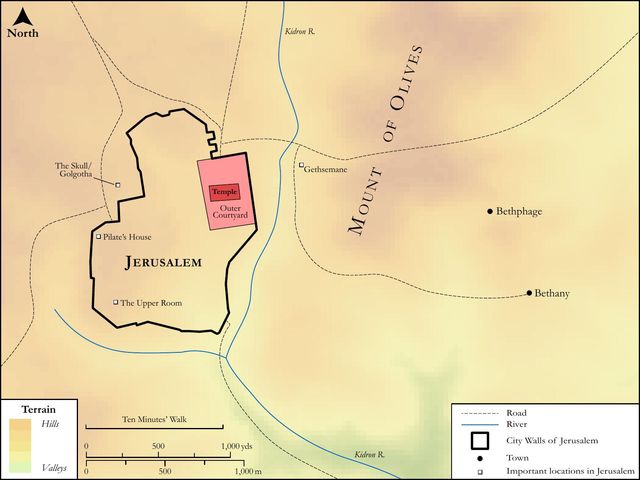
1.He seconded it with another story, which, like it, gave an instance of people's being taken away by sudden death. It is not long since the tower of Siloam fell, and there were eighteen persons killed and buried in the ruins of it. Dr Lightfoot's conjecture is that this tower adjoined to the pool of Siloam, which was the same with the pool of Bethesda, and that it belonged to those porches which were by the pool, in which the impotent folks lay, that waited for the stirring of the water (Joh 5:3), and that they who were killed were some of them, or some of those who in this pool used to purify themselves for the temple-service, for it was near the temple. Whoever they were, it was a sad story; yet such melancholy accidents we often hear of: for as the birds are caught in a snare, so are the sons of men snared in an evil time, when it falls suddenly upon them, Ecc 9:12. Towers, that were built for safety, often prove men's destruction.
2.He cautioned his hearers not to make an ill use of these and similar events, nor take occasion thence to censure great sufferers, as if they were therefore to be accounted great sinners: Suppose ye that these Galileans, who were slain as they were sacrificing, were sinners above all the Galileans, because they suffered such things? I tell you nay, Luk 13:2, Luk 13:3. Perhaps they that told him the story of the Galileans were Jews, and were glad of any thing that furnished them with matter of reflection upon the Galileans, and therefore Christ retorted upon them the story of the men of Jerusalem, that came to an untimely end; for, with what measure of that kind we mete, it shall be measured to us again. "Now suppose ye that those eighteen who met with their death from the tower of Siloam, while perhaps they were expecting their cure from the pool of Siloam, were debtors to divine justice above all men that dwelt at Jerusalem? I tell you nay." Whether it make for us or against us, we must abide by this rule, that we cannot judge of men's sins by their sufferings in this world; for many are thrown into the furnace as gold to be purified, not as dross and chaff to be consumed. We must therefore not be harsh in our censures of those that are afflicted more than their neighbours, as Job's friends were in their censures of him, lest we condemn the generation of the righteous, Psa 72:14. If we will be judging, we have enough to do to judge ourselves; nor indeed can we know love or hatred by all that is before us, because all things come alike to all, Ecc 9:1, Ecc 9:2. And we might as justly conclude that the oppressors, and Pilate among the rest, on whose side are power and success, are the greatest saints, as that the oppressed, and those Galileans among the rest, who are all in tears and have no comforter, no, not the priests and Levites that attended the altar, are the greatest sinners. Let us, in our censures of others, do as we would be done by; for as we do we shall be done by: Judge not, that ye be not judged, Mat 7:1.
3.On these stories he founded a call to repentance, adding to each of them this awakening word, Except ye repent, ye shall all likewise perish, Luk 13:3-5.
(1.)This intimates that we all deserve to perish as much as they did, and had we been dealt with according to our sins, according to the iniquity of our holy things, our blood had been long ere this mingled with our sacrifices by the justice of God. It must moderate our censure, not only that we are sinners, but that we are as great sinners as they, have as much sin to repent of as they had to suffer for.
(2.)That therefore we are all concerned to repent, to be sorry for what we have done amiss, and to do so no more. The judgments of God upon others are loud calls to us to repent. See how Christ improved every thing for the pressing of that great duty which he came not only to gain room for, and give hopes to, but to enjoin upon us - and that is, to repent.
(3.)That repentance is the way to escape perishing, and it is a sure way: so iniquity shall not be your ruin, but upon no other terms.
(4.)That, if we repent not, we shall certainly perish, as others have done before us. Some lay an emphasis upon the word likewise, and apply it to the destruction that was coming upon the people of the Jews, and particularly upon Jerusalem, who were destroyed by the Romans at the time of their passover, and so, like the Galileans, they had their blood mingled with their sacrifices; and many of them, both in Jerusalem and in other places, were destroyed by the fall of walls and buildings which were battered down about their ears, as those that died by the fall of the tower of Siloam. But certainly it looks further; except we repent, we shall perish eternally, as they perished out of this world. The same Jesus that calls us to repent because the kingdom of heaven is at hand, bids us repent because otherwise we shall perish; so that he has set before us life and death, good and evil, and put us to our choice.
(5.)The perishing of those in their impenitency who have been most harsh and severe in judging others will be in a particular manner aggravated.
Historical interpretation
Nine Centuries of Reception
6 surviving comments on this verse. Each one is dated, so this reads as a timeline rather than a list.
Select a marker to jump to its quote. Markers stagger vertically where authors wrote within a few decades of each other.
They came and informed Jesus concerning the men from Galilee, whose blood Pilate had mixed with their sacrifices, on the festival of Herod’s birthday, when he cut off John’s head. Since Herod had illegally killed John, Pilate sent and killed those who were present at the feast. Since he was not able to injure Herod, he destroyed his accomplice to his shame, and he left him in anger until the day of the Lord’s judgment. The two were reconciled through the pretext of the Lord. Pilate mixed their blood with their sacrifices, because the Roman authorities forbid them to offer sacrifice. Pilate found them transgressing the law and offering sacrifices, and he destroyed them at that same place and time.
And He here plainly shows, that whatever judgments are passed for the punishment of the guilty, happen not only by the authority of the judges, but the will of God. Whether therefore the judge punishes upon the strict grounds of conscience, or has some other object in his condemnation, we must ascribe the work to the Divine appointment.
Now one tower is compared to the whole city, that the destruction of a part may alarm the whole. Hence it is added, But, except ye repent, ye shall all likewise perish; as if He said, The whole city shall shortly be smitten if the inhabitants continue in impenitence.
In those whose blood Pilate mingled with the sacrifices, there seems to be a certain mystical type, which concerns all who by the compulsion of the Devil offer not a pure sacrifice, whose prayer is for a sin, (Ps. 109:7.) as it was written of Judas, who when he was amongst the sacrifices devised the betrayal of our Lord's blood.
(de Laz. Conc. 3.) For God punishes some sinners by cutting off their iniquities, and appointing to them hereafter a lighter punishment, or perhaps even entirely releasing them, and correcting those who are living in wickedness by their punishment. Again, he does not punish others, that if they take heed to themselves by repentance they may escape both the present penalty and future punishment, but if they continue in their sins, suffer still greater torment.
(ubi sup.) And herein he shows that He permitted them to suffer such things, that the heirs of the kingdom yet living might be dismayed by the dangers of others. "What then," you will say, "is this man punished, that I might become better?" Nay, but he is punished for his own crimes, and hence arises an opportunity of salvation to those who see it.
(ubi sup.) Again, there had been eighteen others crushed to death by the falling of a tower, of whom He adds the same things, as it follows, Or those eighteen upon whom the tower of Siloam fell and slew them, think ye that they were sinners above all men that dwell in Jerusalem? I tell you, Nay, For he does not punish all in this life, giving them a time meet for repentance. Nor however does he reserve all for future punishment, lest men should deny His providence.
But because they repented not in the fortieth year of our Lord's Passion, the Romans coming, (whom Pilate represented, as belonging to their nation,) and beginning from Galilee, (whence our Lord's preaching had begun,) utterly destroyed that wicked nation, and defiled with human blood not only the courts of the temples, where they were wont to offer sacrifies, but also the inner parts of the doors, (where there was no entrance to the Galileans.)
For Pilate, who is interpreted, "The mouth of the hammerer," signifies the devil ever ready to strike. The blood expresses sin, the sacrifices good actions. Pilate then mingles the blood of the Galilæans with their sacrifices when the devil stains the alms and other good works of the faithful either by carnal indulgence, or by courting the praise of men, or any other defilement. Those men of Jerusalem also who were crushed by the falling of the tower, signify that the Jews who refuse to repent will perish within their own walls. Nor without meaning is the number eighteen given, (which number among the Greeks is made up of Ι and Η, that is, of the same letters with which the name of Jesus begins.) And it signifies that the Jews were chiefly to perish, because they would not receive the name of the Saviour. That tower represents Him who is the tower of strength. And this is rightly in Siloam, which is interpreted, "sent;" for it signifies Him who, sent by the Father, came into the world, and who shall grind to powder all on whom He falls.
As He had been speaking of the punishments of sinners, the story is fitly told Him of the punishment of certain particular sinners, from which He takes occasion to denounce vengeance also against other sinners: as it is said, There were present at that season some that told him of the Galilæans, whose blood Pilate had mingled with their sacrifices.
Continue studying Luke 13:5 across the web’s major study libraries — every link below opens this exact verse, chapter, or book on the destination site.
Read & Compare
 BibleGatewayThis verse in more than 200 translations and 70 languages.
 Bible.comThe YouVersion reader — hundreds of translations, reading plans, and highlights.
 ESV.orgCrossway's official English Standard Version reader.
 NET BibleThe NET translation with 60,000+ translators' notes on every rendering decision.
 STEP BibleTyndale House's free study tool — original text, vocabulary, and scholarly resources.
 BibliaLogos Bible Software's free web reader.
 USCCBThe New American Bible (Revised Edition) with the U.S. bishops' study notes.
Commentaries
 BibleHub CommentariesDozens of classic commentaries on this verse, gathered on one page.
 StudyLightMore than 100 commentary sets — the largest collection on the web.
 BibleRefPlain-English commentary on what this verse means, verse by verse.
 Enduring WordDavid Guzik's free commentary on this chapter, widely used by Bible teachers.
 Bible Study ToolsVerse commentary alongside Greek and Hebrew study aids.
Original Language & Research
- BibleHub InterlinearThe verse word by word — original language, transliteration, and English.
- BibleHub LexiconEvery word's original-language definition and Strong's entry.
 Blue Letter BibleDeep-study tools — Strong's numbers, concordance, and word studies.
 CNTR CollationThe earliest Greek manuscripts of this verse, collated letter by letter.
Sermons, Hymns & Audio


TrulyRandomVerse is not affiliated with these sites and doesn’t control their content. They’re linked because they’re genuinely useful.
Summary
Luke 13:5 delivers a profound and urgent warning from Jesus, directly challenging the common misconception that suffering or calamity is a direct indicator of greater sin in the afflicted. Instead, Jesus uses the recent tragedies of the Galileans slaughtered by Pilate and the eighteen crushed by the tower of Siloam as a stark, universal object lesson. He emphatically declares that unless all people repent, they will face a similar, ultimate perishing, shifting the focus from judging victims to the critical, personal necessity of spiritual transformation and readiness.
Context
ShowHideLiterary Context
This verse is a direct continuation of Jesus' teaching in Luke 13:1-4. People had reported to Jesus about the Galileans whose blood Pilate had mingled with their sacrifices, implying a belief that these victims must have been exceptionally sinful to suffer such a fate. Jesus immediately refutes this notion in Luke 13:2-3, stating, "Suppose ye that these Galileans were sinners above all the Galileans, because they suffered such things? I tell you, Nay: but, except ye repent, ye shall all likewise perish." He then reinforces this point with another recent tragedy, the collapse of the tower in Siloam, which killed eighteen people, again asserting that they were not "sinners above all men that dwelt in Jerusalem" (Luke 13:4). Verse 5 reiterates the warning from verse 3, emphasizing the universal applicability and urgency of repentance. This passage sets the stage for the parable of the barren fig tree in Luke 13:6-9, which further illustrates God's patience but also the inevitable judgment if fruit is not produced through repentance.
Historical & Cultural Context
In ancient Jewish thought, there was a prevalent belief that suffering, illness, or misfortune was a direct consequence of specific sin, either by the individual or their ancestors. This idea is evident in the book of Job, where Job's friends insist his suffering must be due to hidden sin, and also in John 9:2, where disciples ask Jesus if a man was born blind due to his own sin or his parents'. Jesus' audience would have naturally interpreted the tragedies of the Galileans and Siloam as divine judgment on particularly egregious sinners. Pontius Pilate was known for his brutality and insensitivity to Jewish customs, making the slaughter of Galileans during worship a particularly shocking and sacrilegious act. The collapse of the tower in Siloam, a pool near the Temple, would have been a well-known, recent urban disaster. By addressing these specific events, Jesus directly confronts and corrects this deeply ingrained theological misconception, redirecting their focus from judgmental speculation about others to personal spiritual accountability.
Key Themes
ShowHideThe central theme in Luke 13 is the imperative and urgency of repentance. Jesus uses the tragic events not as examples of specific divine punishment for specific sins, but as a stark reminder of human mortality and the universal need for a change of heart and life. This passage underscores the theme of divine justice – that unrepentant hearts face spiritual ruin – but also divine mercy, as the very call to repent offers an opportunity for reconciliation and deliverance. It challenges misconceptions about suffering, teaching that not all suffering is a direct result of individual sin, but rather a universal human experience that should prompt spiritual introspection. Finally, it highlights the sovereignty of God over life and death, and the unpredictability of life, urging immediate spiritual readiness rather than complacency. These themes are further developed throughout Luke's Gospel, emphasizing God's call to all people to turn to Him, as seen in the parables of the lost sheep, coin, and son in Luke 15.
Exposition and Analysis
ShowHideKey Word Analysis
ShowHideThis word is an intensive form of the Greek negative, meaning "not indeed" or "absolutely not." Jesus uses this emphatic negation to strongly refute the assumption that the victims of the tragedies were worse sinners than others. It underscores His direct challenge to their flawed theological premise, setting the stage for His counter-assertion about the universal need for repentance.
Derived from metá (after, with) and noéō (to perceive, to think), this verb literally means "to think differently afterwards" or "to change one's mind." In a moral and spiritual context, it signifies a profound transformation of one's entire outlook, a complete reorientation of one's thoughts, attitudes, and actions away from sin and towards God. It is not merely sorrow for sin, but a decisive turning.
From apó (from) and the base of ólethros (ruin, destruction), this verb means "to destroy fully," "to ruin," or "to lose." In this context, it refers to spiritual ruin, eternal separation from God, and ultimate destruction, contrasting sharply with the concept of eternal life. It implies a state of being utterly lost and without hope in the ultimate sense.
This adverb means "similarly" or "in like manner." Jesus uses it to draw a direct parallel between the physical perishing of the Galileans and those in Siloam, and the spiritual perishing that awaits all who fail to repent. It emphasizes that while the manner of perishing might differ, the outcome of spiritual ruin is the same for the unrepentant.
Verse Breakdown
ShowHide"I tell you, Nay:"
Jesus begins with an emphatic rejection of the faulty premise presented to Him. The "Nay" (οὐχί, ouchí) is a strong, absolute denial, leaving no room for doubt about His disagreement with the popular belief that the victims of calamity were necessarily greater sinners. He directly challenges their judgmental and superficial interpretation of suffering.
"but, except ye repent,"
Following His strong denial, Jesus introduces the crucial condition for avoiding spiritual ruin. The conjunction "but" (ἀλλά, allá) marks a sharp contrast, shifting the focus from the victims' supposed sinfulness to the universal and urgent need for personal repentance. "Except ye repent" (ἐὰν μή μετανοῆτε, eàn mḗ metanoēte) establishes a non-negotiable prerequisite: without a fundamental change of mind and direction toward God, the dire consequences that follow are inevitable.
"ye shall all likewise perish."
This is the sobering warning and the core message. The term "all" (πᾶς, pâs) underscores the universal applicability – no one is exempt from this spiritual requirement. "Likewise" (ὁμοίως, homoíōs) draws a chilling parallel, implying that just as the Galileans and those in Siloam experienced a sudden, unexpected end to their physical lives, so too will all who remain unrepentant face a spiritual "perishing" (ἀπόλλυμι, apóllymi), signifying eternal ruin or separation from God. This is not necessarily about the mode of death, but the ultimate spiritual destiny.
Literary Devices
ShowHideLuke 13:5 powerfully employs several literary devices to convey its urgent message. Contrast is central, as Jesus sharply juxtaposes the popular, judgmental interpretation of suffering with His own radical call to universal repentance. The phrase "I tell you, Nay: but..." exemplifies this stark opposition. Repetition is also used for emphasis, as Jesus repeats the core warning from Luke 13:3 in verse 5, reinforcing the critical nature of repentance. Hyperbole is subtly present in the implied universality of "all likewise perish," not meaning all will die in the exact same physical manner as the victims, but that the spiritual consequence of unrepentance is universally dire. The passage functions as a Warning, serving as a prophetic declaration of the spiritual danger facing those who do not turn from sin. Finally, the entire exchange is framed as a Didactic Discourse, where Jesus uses real-world events as teaching opportunities to correct theological error and impart essential spiritual truth.
Theological and Thematic Connections
ShowHideLuke 13:5 serves as a cornerstone for understanding the New Testament's emphasis on genuine repentance as a prerequisite for salvation and spiritual life. It demolishes the false security derived from comparing oneself to others or from a superficial understanding of divine judgment. Instead, Jesus universalizes the call to spiritual accountability, asserting that human mortality and the unpredictability of life should serve as constant reminders of the urgent need to reconcile with God. The "perishing" is not merely physical death, but a profound spiritual ruin, an eternal separation from God's life and presence, underscoring the gravity of an unrepentant heart in the face of God's holiness and justice. Yet, the very warning is an act of divine mercy, offering a window of opportunity for transformation before it is too late.
Reflection and Application
ShowHideLuke 13:5 is a timeless and piercing call to introspection, urging us to look inward at our own spiritual condition rather than outward at the perceived sins of others. In a world still grappling with tragedy and suffering, this verse reminds us that while we may seek explanations for misfortune, our primary focus should always be on our personal readiness to meet God. It shatters any illusion that our "goodness" or lack of overt sin exempts us from the universal need for a transformative change of heart. Life is fragile and uncertain, and the opportunity for repentance is not guaranteed indefinitely. Therefore, this verse compels us to embrace genuine repentance—a radical reorientation of our lives towards God—not as an option for the exceptionally wicked, but as an essential, ongoing posture for all who desire to avoid spiritual ruin and embrace the fullness of God's life. It calls for an immediate, decisive turning from self-reliance and sin, to humble reliance on God's grace and obedience to His will.
Questions for Reflection
ShowHideFAQ
ShowHideDoes "perish" in Luke 13:5 refer to physical death or eternal damnation?
ShowHideWhile the immediate context refers to physical calamities (the Galileans' slaughter, the tower collapse), Jesus' use of "likewise perish" (ἀπόλλυμι, apóllymi) in a spiritual warning strongly implies a spiritual and eternal ruin, not merely physical death. Everyone eventually dies physically, but Jesus' warning is about a distinct, dire consequence for the unrepentant. It points to a spiritual death, an ultimate separation from God, which is often understood in Christian theology as eternal damnation or spiritual ruin, contrasting with eternal life. The physical perishing serves as a vivid metaphor for the spiritual perishing that awaits those who do not turn to God.
Is Jesus saying that everyone who doesn't repent will die in a sudden, tragic way?
ShowHideNo. Jesus explicitly states, "I tell you, Nay" (Luke 13:3). He is directly correcting the misconception that those who suffer tragic deaths are somehow worse sinners. The "likewise" (ὁμοίως, homoíōs) refers to the certainty of perishing, not the manner of death. Just as those individuals met an unexpected end, so too will all who remain unrepentant face a certain spiritual ruin, regardless of how they physically die. The focus is on the spiritual consequence, not the physical circumstances of death.
What is the difference between feeling sorry for sin and true repentance?
ShowHideFeeling sorry for sin, often called remorse or regret, is an emotional response that may or may not lead to change. True repentance (μετανοέω, metanoéō) is much deeper. It involves a fundamental "change of mind" and a complete reorientation of one's life. It's not just feeling bad about past actions, but a decisive turning away from sin and towards God, marked by a commitment to live according to His will. This transformation impacts one's thoughts, attitudes, and behaviors, producing "fruit worthy of repentance" as called for by John the Baptist in Matthew 3:8.
Christ-Centered Fulfillment
ShowHideLuke 13:5, with its stark warning of perishing without repentance, finds its ultimate fulfillment and resolution in the person and work of Jesus Christ. He is not merely the one who issues the call to repentance, but the very means by which true repentance becomes possible and the perishing averted. Christ embodies the perfect repentance, living a life utterly devoted to God, and His atoning sacrifice on the cross provides the basis for forgiveness and reconciliation, offering the unrepentant a path to life. The "perishing" Jesus warns against is the spiritual death and separation from God that humanity faces due to sin, a fate that the Lamb of God came to reverse. Through His death and resurrection, Jesus conquered sin and death, offering eternal life to all who believe and repent (John 3:16). He is the one who calls sinners to Himself (Matthew 9:13), not to condemn them, but to offer them a new heart and a new spirit (Ezekiel 36:26). Thus, the urgency of Luke 13:5 is not a message of despair, but a profound invitation to embrace the saving grace found exclusively in Christ, who is the Way, the Truth, and the Life, and the only escape from eternal perishing (John 14:6).