


Luke 12:50
- βάπτισμαbaptismaBaptismG908N-ASNNoun Accusative Singular Neuter
- δὲdehoweverG1161CONJConjunction
- ἔχωechōI haveG2192V-PAI-1SVerb Present Active Indicative 1st Singular
- βαπτισθῆναιbaptisthēnaito be baptized [with]G907V-APNVerb Aorist Passive Infinitive
- καὶkaiandG2532CONJConjunction
- πῶςpōshowG4459PRT-IInterrogative Particle Interrogative
- συνέχομαιsunechomaiI am distressedG4912V-PPI-1SVerb Present Passive Indicative 1st Singular
- ἕωςhe'ōsuntilG2193PREPPreposition
- ὅτουhotouwhileG3748R-GSNRelative pronoun Genitive Singular Neuter
- τελεσθῇtelesthēait may be accomplished!G5055V-APS-3SVerb Aorist Passive Subjunctive 3rd Singular
English is a literal word-by-word gloss of the Greek, not the KJV's wording. Why?
This is the original text the KJV's translators worked from — each Greek word with its own literal English meaning in this verse, prepared by scholars at Tyndale House, Cambridge. The KJV translates whole sentences, not word by word, so its wording differs: one Greek word can become several English words, and the KJV may choose “charity” where the gloss reads “love”. Both are faithful — they answer different questions. For the KJV's own rendering, switch to the KJV text.
Details
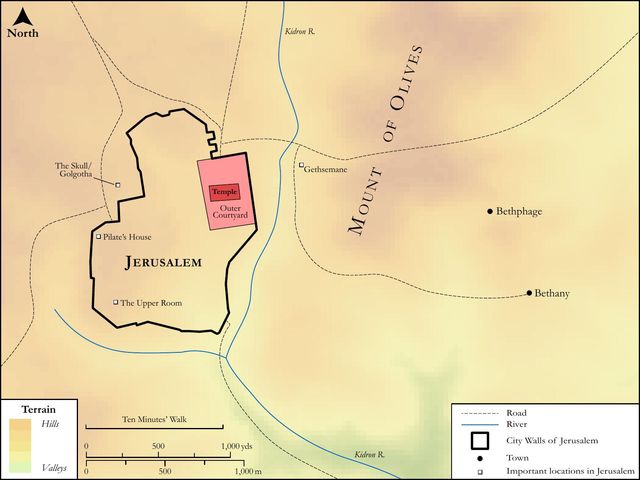
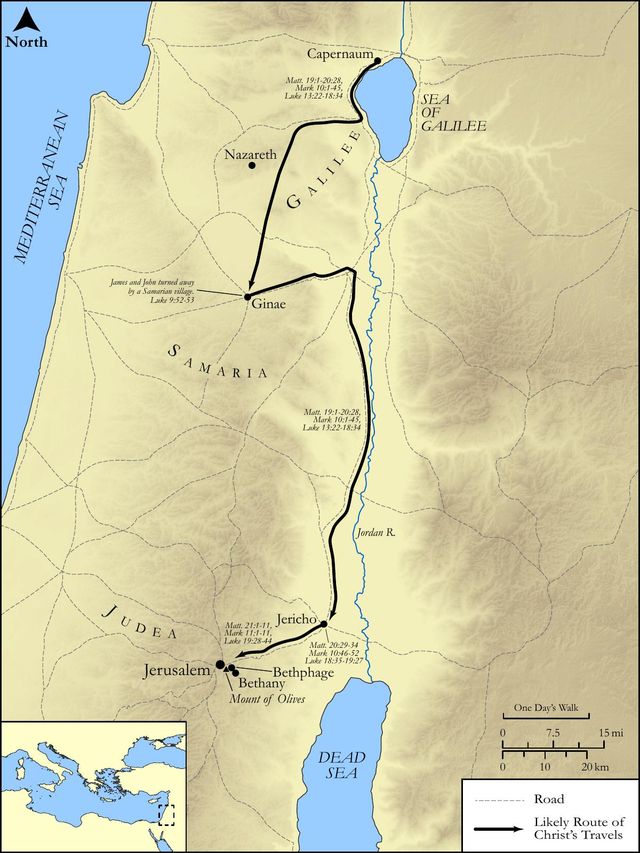
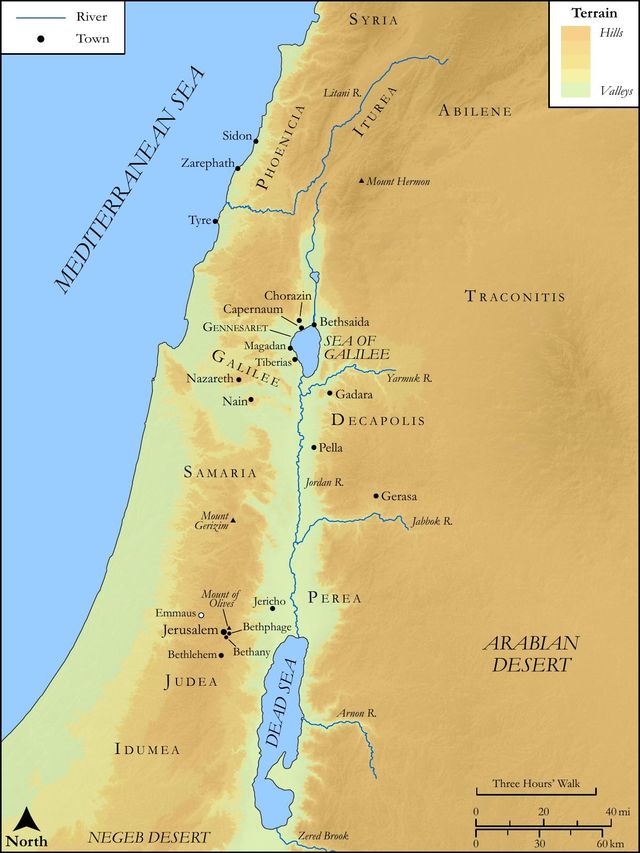
See on the biblical-era map
Study this verse
Public-domain commentary
Matthew Henry
From his Commentary on the Whole Bible. Henry comments on passages, not single verses — this entry covers Luke 12:41–53. His three-level outline is real structure in the source text, so it is rendered as structure.
Here is, I. Peter's question, which he put to Christ upon occasion of the foregoing parable (Luk 12:41): "Lord, speakest thou this parable to us that are thy constant followers, to us that are ministers, or also to all that come to be taught by thee, to all the hearers, and in them to all Christians?" Peter was now, as often, spokesman for the disciples. We have reason to bless God that there are some such forward men, that have a gift of utterance; let those that are such take heed of being proud. Now Peter desires Christ to explain himself, and to direct the arrow of the foregoing parable to the mark he intended. He calls it a parable, because it was not only figurative, but weighty, solid, and instructive. Lord, said Peter, was it intended for us, or for all? To this Christ gives a direct answer (Mar 13:37): What I say unto you, I say unto all. Yet here he seems to show that the apostles were primarily concerned in it. Note, We are all concerned to take to ourselves what Christ in his word designs for us, and to enquire accordingly concerning it: Speakest thou this to us? To me? Speak, Lord, for thy servant hears. Doth this word belong to me? Speak it to my heart.
II.Christ's reply to this question, directed to Peter and the rest of the disciples.
If what Christ had said before did not so peculiarly concern them, but in common with other Christians, who must all watch and pray for Christ's coming, as his servants, yet this that follows is peculiarly adapted to ministers, who are the stewards in Christ's house. Now our Lord Jesus here tells them,
1.What was their duty as stewards, and what the trust committed to them.
(1.)They are made rulers of God's household, under Christ, whose own the house is; ministers derive an authority from Christ to preach the gospel, and to administer the ordinances of Christ, and apply the seals of the covenant of grace.
(2.)Their business is to give God's children and servants their portion of meat, that which is proper for them and allotted to them; convictions and comfort to those to whom they respectively belong. Suum cuique - to every one his own. This is rightly to divide the word of truth, Ti2 2:15.
(3.)To give it to them in due season, at that time and in that way which are most suitable to the temper and condition of those that are to be fed; a word in season to him that is weary.
(4.)Herein they must approve themselves faithful and wise; faithful to their Master, by whom this great trust is reposed in them, and faithful to their fellow-servants, for whose benefit they are put in trust; and wise to improve an opportunity of doing honour to their Master, and service in the family. Ministers must be both skilful and faithful.
2.What would be their happiness if they approved themselves faithful and wise (Luk 12:43): Blessed is that servant,
(1.)That is doing, and is not idle, nor indulgent of his ease; even the rulers of the household must be doing, and make themselves servants of all.
(2.)That is so doing, doing as he should be, giving them their portion of meat, by public preaching and personal application.
(3.)That is found so doing when his Lord comes; that perseveres to the end, notwithstanding the difficulties he may meet with in the way. Now his happiness is illustrated by the preferment of a steward that has approved himself within a lower and narrower degree of service; he shall be preferred to a larger and higher (Luk 12:44): He will make him ruler over all that he has, which was Joseph's preferment in Pharaoh's court. Note, Ministers that obtain mercy of the Lord to be faithful shall obtain further mercy to be abundantly rewarded for their faithfulness in the day of the Lord.
3.What a dreadful reckoning there would be if they were treacherous and unfaithful, Luk 12:45, Luk 12:46. If that servant begin to be quarrelsome and profane, he shall be called to an account, and severely punished. We had all this before in Matthew, and therefore shall here only observe,
(1.)Our looking upon Christ's second coming as a thing at a distance is the cause of all those irregularities which render the thought of it terrible to us: He saith in his heart, My Lord delays his coming. Christ's patience is very often misinterpreted his delay, to the discouragement of his people, and the encouragement of his enemies.
(2.)The persecutors of God's people are commonly abandoned to security and sensuality; they beat their fellow-servants, and then eat and drink with the drunken, altogether unconcerned either at their own sin or their brethren's sufferings, as the king and Haman, who sat down to drink when the city Shushan was perplexed. Thus they drink, to drown the clamours of their own consciences, and baffle them, which would otherwise fly in their faces.
(3.)Death and judgment will be very terrible to all wicked people, but especially to wicked ministers. It will be a surprise to them: At an hour when they are not aware. It will be the determining of them to endless misery; they shall be cut in sunder, and have their portion assigned them with the unbelievers.
4.What an aggravation it would be of their sin and punishment that they knew their duty, and did not do it (Luk 12:47, Luk 12:48): That servant that knew his lord's will, and did it not, shall be beaten with many stripes, shall fall under a sorer punishment; and he that knew not shall be beaten with few stripes, his punishment shall, in consideration of this, be mitigated. Here seems to be an allusion to the law, which made a distinction between sins committed through ignorance, and presumptuous sins (Lev 5:15, etc.; Num 15:29, Num 15:30), as also to another law concerning the number of stripes given to a malefactor, to be according to the nature of the crime, Deu 25:2, Deu 25:3. Now,
(1.)Ignorance of our duty is an extenuation of sin. He that knew not his lord's will, through carelessness and neglect, and his not having such opportunities as some others had of coming to the knowledge of it, and did things worthy of stripes, he shall be beaten, because he might have known his duty better, but with few stripes; his ignorance excuses in part, but not wholly. Thus through ignorance the Jews put Christ to death (Act 3:17; Co1 2:8), and Christ pleaded that ignorance in their excuse: They know not what they do.
(2.)The knowledge of our duty is an aggravation of our sin: That servant that knew his lord's will, and yet did his own will, shall be beaten with many stripes. God will justly inflict more upon him for abusing the means of knowledge he afforded him, which others would have made a better use of, because it argues a great degree of wilfulness and contempt to sin against knowledge; of how much sorer punishment then shall they be thought worthy, besides the many stripes that their own consciences will give them! Son, remember. Here is a good reason for this added: To whomsoever much is given, of him shall be much required, especially when it is committed as a trust he is to account for. Those have greater capacities of mind than others, more knowledge and learning, more acquaintance and converse with the scriptures, to them much is given, and their account will be accordingly.
III.A further discourse concerning his own sufferings, which he expected, and concerning the sufferings of his followers, which he would have them also to live in expectation of. In general (Luk 12:49): I am come to send fire on the earth. By this some understand the preaching of the gospel, and the pouring out of the Spirit, holy fire; this Christ came to send with a commission to refine the world, to purge away its dross, to burn up its chaff, and it was already kindled. The gospel was begun to be preached; some prefaces there were to the pouring out of the Spirit. Christ baptized with the Holy Ghost and with fire; this Spirit descended in fiery tongues. But, by what follows, it seems rather to be understood of the fire of persecution. Christ is not the Author of it, as it is the sin of the incendiaries, the persecutors; but he permits it, nay, he commissions it, as a refining fire for the trial of the persecuted. This fire was already kindled in the enmity of the carnal Jews to Christ and his followers. "What will I that it may presently be kindled? What thou doest, do quickly. If it be already kindled, what will I? Shall I wait the quenching of it? No, for it must fasten upon myself, and upon all, and glory will redound to God from it."
1.He must himself suffer many things; he must pass through this fire that was already kindled (Luk 12:50): I have a baptism to be baptized with. Afflictions are compared both to fire and water, Psa 66:12; Psa 69:1, Psa 69:2. Christ's sufferings were both. He calls them a baptism (Mat 20:22); for he was watered or sprinkled with them, as Israel was baptized in the cloud, and dipped into them, as Israel was baptized in the sea, Co1 10:2. He must be sprinkled with his own blood, and with the blood of his enemies, Isa 63:3. See here,
(1.)Christ's foresight of his sufferings; he knew what he was to undergo, and the necessity of undergoing it: I am to be baptized with a baptism. He calls his sufferings by a name that mitigates them; it is a baptism, not a deluge; I must be dipped in them, not drowned in them; and by a name that sanctifies them, for baptism is a name that sanctifies them, for baptism is a sacred rite. Christ in his sufferings devoted himself to his Father's honour, and consecrated himself a priest for evermore, Heb 7:27, Heb 7:28.
(2.)Christ's forwardness to his sufferings: How am I straitened till it be accomplished! He longed for the time when he should suffer and die, having an eye to the glorious issue of his sufferings. It is an allusion to a woman in travail, that is pained to be delivered, and welcomes her pains, because they hasten the birth of the child, and wishes them sharp and strong, that the work may be cut short. Christ's sufferings were the travail of his soul, which he cheerfully underwent, in hope that he should by them see his seed, Isa 53:10, Isa 53:11. So much was his heart set upon the redemption and salvation of man.
2.He tells those about him that they also must bear with hardships and difficulties (Luk 12:51): "Suppose ye that I came to give peace on earth, to give you a peaceable possession of the earth, and outward prosperity on the earth?" It is intimated that they were ready to entertain such a thought as this, nay, that they went upon this supposition, that the gospel would meet with a universal welcome, that people unanimously embrace it, and would therefore study to make the preachers of it easy and great, that Christ, if he did not give them pomp and power, would at least give them peace; and herein they were encouraged by divers passages of the Old Testament, which speak of the peace of the Messiah's kingdom, which they were willing to understand of external peace. "But," saith Christ, "you will be mistaken, the event will declare the contrary, and therefore do not flatter yourselves into a fool's paradise. You will find,"
(1.)"That the effect of the preaching of the gospel will be division." Not but that the design of the gospel and its proper tendency are to unite the children of men to one another, to knit them together in holy love, and, if all would receive it, this would be the effect of it; but there being multitudes that not only will not receive it, but oppose it, and have their corruptions exasperated by it, and are enraged at those that do receive it, it proves, though not the cause yet the occasion of division. While the strong man armed kept his palace, in the Gentile world, his goods were at peace; all was quiet, for all went one way, the sects of philosophers agreed well enough, so did the worshippers of different deities; but when the gospel was preached, and many were enlightened by it, and turned from the power of Satan to God, then there was a disturbance, a noise and a shaking, Eze 37:7. Some distinguished themselves by embracing the gospel, and others were angry that they did so. Yea, and among them that received the gospel there would be different sentiments in minor things, which would occasion division; and Christ permits it for holy ends (Co1 11:18), that Christians may learn and practise mutual forbearance, Rom 14:1, Rom 14:2.
(2.)"That this division will reach into private families, and the preaching of the gospel will give occasion for discord among the nearest relations" (Luk 12:53): The father shall be divided against the son, and the son against the father, when the one turns Christian and the other does not; for the one that does turn Christian will be zealous by arguments and endearments to turn the other too, Co1 7:16. As soon as ever Paul was converted, he disputed, Act 9:29. The one that continues in unbelief will be provoked, and will hate and persecute the one that by his faith and obedience witnesses against, and condemns, his unbelief and disobedience. A spirit of bigotry and persecution will break through the strongest bonds of relation and natural affection; see Mat 10:35; Mat 24:7. Even mothers and daughters fall out about religion; and those that believe not are so violent and outrageous that they are ready to deliver up into the hands of the bloody persecutors those that believe, though otherwise very near and dear to them. We find in the Acts that, wherever the gospel came, persecution was stirred up; it was every where spoken against, and there was no small stir about that way. Therefore let not the disciples of Christ promise themselves peace upon earth, for they are sent forth as sheep in the midst of wolves.
Historical interpretation
Five Centuries of Reception
17 surviving comments on this verse. Each one is dated, so this reads as a timeline rather than a list.
Select a marker to jump to its quote. Markers stagger vertically where authors wrote within a few decades of each other.
And to this He refers when He says, "And I have another baptism to be baptized with, and I hasten eagerly towards it."
In the act, however, of urgently entreating from a martyr pardon for adulterers and fornicators, you yourself confess that crimes of that nature are not to be washed away except by the martyrdom of the criminal himself, while you presume (they can be washed away) by another's If this is so, then martyrdom will be another baptism. For "I have withal," saith He, "another baptism." Whence, too, it was that there flowed out of the wound in the Lord's side water and blood, the materials of either baptism.
When, however, it is led forth unto the final proof of happiness, unto the occasion of the second baptism, unto the act of ascending the divine seat, no patience is more needed there than bodily patience.
We have indeed, likewise, a second font, (itself withal one with the former, ) of blood, to wit; concerning which the Lord said, "I have to be baptized with a baptism," when He had been baptized already.
On which place some, as if by human reasoning they were able to make void the truth of the Gospel declaration, object to us the case of catechumens; asking if any one of these, before he is baptized in the Church, should be apprehended and slain on confession of the name, whether he would lose the hope of salvation and the reward of confession, because he had not previously been born again of water? Let men of this kind, who are aiders and favourers of heretics, know therefore, first, that those catechumens hold the sound faith and truth of the Church, and advance from the divine camp to do battle with the devil, with a full and sincere acknowledgment of God the Father, and of Christ, and of the Holy Ghost; then, that they certainly are not deprived of the sacrament of baptism who are baptized with the most glorious and greatest baptism of blood, concerning which the Lord also said, that He had "another baptism to be baptized with." But the same Lord declares in the Gospel, that those who are baptized in their own blood, and sanctified by suffering, are perfected, and obtain the grace of the divine promise, when He speaks to the thief believing and confessing in His very passion, and promises that he should be with Himself in paradise. Wherefore we who are set over the faith and truth ought not to deceive and mislead those who come to the faith and truth, and repent, and beg that their sins should be remitted to them; but to instruct them when corrected by us, and reformed for the kingdom of heaven by celestial discipline.
And we must here believe that Christ came down from heaven. For if He had come from earth to earth, He would not say, I came to send fire upon the earth.
He also said, “I came to cast fire upon the earth; and would that it were already kindled!” These flaming words from the lips of our Lord Jesus Christ reveal the malice of sin. He also reveals the excellence of good actions performed for the glory of God and his Christ.… Then we are ready for the baptism of water, which is a type of the cross, death, burial and resurrection from the dead.…One who is prepared to be baptized in the name of the Holy Spirit is one who has been born anew, who undergoes a change of residence, habits and associates so that, walking by the Spirit, he may be ready to be baptized in the name of the Son and to put on Christ.
Why is it “fire”? It is because the descent of the Holy Spirit was in fiery tongues. Concerning this the Lord says with joy, “I came to cast fire upon the earth, and would that it were already kindled!”
To stewards, that is, to Priests, the preceding words seem to have been addressed, that they may thereby know that hereafter a heavier punishment awaits them, if, intent upon the world's pleasures, they have neglected the charge of their Lord's household, and the people entrusted to their care. But as it profiteth little to be recalled from error by the fear of punishment, and far greater is the privilege of charity and love, our Lord therefore kindles in men the desire of acquiring the divine nature, saying, I came to send fire on earth, not indeed that He is the Consumer of good men, but the Author of good will, who purifies the golden vessels of the Lord's house, but burns up the straw and stubble.
But so great was our Lord's condescension, that He tells us He has a desire of inspiring us with devotion, of accomplishing perfection in us, and of hastening His passion for us; as it follows, And how am I straitened till it be accomplished?
Therefore, good charity having the wings of a burning fire, which flies through the chests and hearts of the saints, and consumes whatever is material and earthly: it tests whatever is sincere, and improves whatever it touches with its fire. This fire the Lord Jesus sent upon the earth, and faith shone forth, devotion was kindled, charity was illuminated, justice shone brightly. With this fire, he inflamed the hearts of his apostles, as Cleophas testifies, saying: Was not our heart burning within us, while he opened the Scriptures? Therefore, the flames of the scriptures are divine.
For by the earth He now means not that which we tread under our feet, but that which was fashioned by His hands, namely, man, upon whom the Lord pours out fire for the consuming of sins, and the renewing of souls.
(non occ.) Now hereby He declared a future event, for it so happened in the same house that there have been believers whose fathers wished to bring them to unbelief; but the power of Christ's doctrines has so prevailed, that fathers were left by sons, mothers by daughters, and children by parents. For the faithful in Christ were content not only to despise their own, but at the same time also to suffer all things as long as they were not without the worship of their faith. But if He were mere man, how would it have occurred to Him to conceive it possible that He should be more loved by fathers than their children were, by children than their fathers, by husbands than their wives, and they too not in one house or a hundred, but throughout the world? And not only did he predict this, but accomplish it in deed.
He teaches us this by saying, "I have a baptism to be baptized with; and how I am constrained until it is accomplished!" By his baptism, he means his death in the flesh. By being constrained because of it, he means that he was saddened and troubled until it was accomplished. What was to happen when it was accomplished? The saving message of the gospel would not be proclaimed only in Judea. Comparing it with fire, he said, "I have come to send fire upon earth—but that now it should be published even to the whole world." Before the precious cross and his resurrection from the dead, his commandments and the glory of his divine miracles were spoken of in Judea only.
But our Lord was hastening the kindling of the fire, and hence it follows, And what will I, save that it be kindled? (nisi ut accendatur) For already some of the Jews believed, of whom the first were the holy Apostles, but the fire once lighted in Judaea was about to take possession of the whole world, yet not till after the dispensation of His Passion had been accomplished. Hence it follows, But I have a baptism to be baptized with. For before the holy cross and His resurrection from the dead, in Judaea only was the news told of His preaching and miracles; but after that the Jews in their rage had slain the Prince of life, then commanded He His Apostles, saying, Go and teach all nations. (Matt. 28:19.)
(in Ezech. lib. i. Hom. 2.) Or else, fire is sent upon the earth, when by the fiery breath of the Holy Spirit, the earthly mind has all its carnal desires burnt up, but inflamed with spiritual love, bewails the evil it has done; and so the earth is burnt, when the conscience accusing itself, the heart of the sinner is consumed in the sorrow of repentance.
But I have a baptism to be baptized with. With the staining (he says) of my own blood I must first be washed, and thus inflame the hearts of the believers with the fire of the Spirit, by which they are able to despise or even hate all earthly things simultaneously and their own souls. For the Spirit had not been given, because Jesus had not yet been glorified (Thess. III), that is, the victory of passion. About which elsewhere he says: Can you drink the cup that I drink, or be baptized with the baptism with which I am baptized? (Mark X).
Or else, much is often given also to certain individuals, upon whom is bestowed the knowledge of God's will, and the means of performing what they know; much also is given to him to whom, together with his own salvation, is committed the care also of feeding our Lord's flock. Upon those then who are gifted with more abundant grace a heavier penalty falls; but the mildest punishment of all will be theirs, who, beyond the guilt they originally contracted, have added none besides; and in all who have added, theirs will be the more tolerable who have committed fewest iniquities.
But He adds, I have a baptism to be baptized with, that is, I have first to be sprinkled with the drops of My own Blood, and then to inflame the hearts of believers by the fire of the Spirit.
Some manuscripts have, "And how am I anguished," (coangor) that is, grieved. For though He had in Himself nothing to grieve Him, yet was He afflicted by our woes, and at the time of death He betrayed the anguish which He underwent not from the fear of His death, but from the delay of our redemption. For he who is troubled until he reaches perfection, is secure of perfection, for the condition of bodily affections not the dread of death offends him. For ho who has put on the body must suffer all things which are of the body, hunger, thirst, vexation, sorrow; but the Divine nature knows no change from such feelings. At the same time He also shows, that in the conflict of suffering consists the death of the body, peace of mind has no struggle with grief.
But the manner in which after the baptism of His passion and the coming of the spiritual fire the earth will be burnt, He declares as follows, Suppose ye that I am to give peace, &c.
Or in another way. By three are signified those who have faith in the Trinity, by two the unbelievers who depart from the unity of the faith. But the father is the devil, whose children we were by following him, but when that heavenly fire came down, it separated us from one another, and showed us another Father who is in heaven. The mother is the Synagogue, the daughter is the Primitive Church, who had to bear the persecution of that same synagogue, from whom she derived her birth, and whom she did herself in the truth of the faith contradict. The mother in law is the Synagogue, the daughter in law the Gentile Church, for Christ the husband of the Church is the son of the Synagogue, according to the flesh. The Synagogue then was divided both against its daughter in law, and its daughter, persecuting believers of each people. But they also were divided against their mother in law and mother, because they wished to abolish the circumcision of the flesh.
And how am I distressed until it is accomplished? Some manuscripts have, And how am I anguished. Thus, the Lord's dignity is so great that he testifies that the zeal for infusing devotion in us, for completing perfection in us, and for ripening the passion's zeal for us is within himself; for he, who had nothing in himself to cause suffering, yet was distressed or constrained by our afflictions, and at the time of passion displayed sorrow, which he had assumed not from fear of his own death, but from the delay of our redemption. As he says: And how am I anguished until it is accomplished? Certainly, he who is anguished until perfection is secure about the perfection.
Continue studying Luke 12:50 across the web’s major study libraries — every link below opens this exact verse, chapter, or book on the destination site.
Read & Compare
 BibleGatewayThis verse in more than 200 translations and 70 languages.
 Bible.comThe YouVersion reader — hundreds of translations, reading plans, and highlights.
 ESV.orgCrossway's official English Standard Version reader.
 NET BibleThe NET translation with 60,000+ translators' notes on every rendering decision.
 STEP BibleTyndale House's free study tool — original text, vocabulary, and scholarly resources.
 BibliaLogos Bible Software's free web reader.
 USCCBThe New American Bible (Revised Edition) with the U.S. bishops' study notes.
Commentaries
 BibleHub CommentariesDozens of classic commentaries on this verse, gathered on one page.
 StudyLightMore than 100 commentary sets — the largest collection on the web.
 BibleRefPlain-English commentary on what this verse means, verse by verse.
 Enduring WordDavid Guzik's free commentary on this chapter, widely used by Bible teachers.
 Bible Study ToolsVerse commentary alongside Greek and Hebrew study aids.
Original Language & Research
- BibleHub InterlinearThe verse word by word — original language, transliteration, and English.
- BibleHub LexiconEvery word's original-language definition and Strong's entry.
 Blue Letter BibleDeep-study tools — Strong's numbers, concordance, and word studies.
 CNTR CollationThe earliest Greek manuscripts of this verse, collated letter by letter.
Sermons, Hymns & Audio


TrulyRandomVerse is not affiliated with these sites and doesn’t control their content. They’re linked because they’re genuinely useful.
Summary
Luke 12:50 captures a profound and intensely personal declaration from Jesus, revealing His deep anticipation of the suffering and death He must undergo to fulfill His divine mission. Using the metaphor of a "baptism" of affliction, He expresses an overwhelming sense of urgency and inner constraint until this pivotal, redemptive event is fully accomplished, underscoring both the necessity and the immense personal cost of His atoning work.
Context
ShowHideLiterary Context
This poignant declaration by Jesus is situated within a broader discourse concerning the nature and impact of His ministry. Immediately preceding this verse, Jesus speaks of having "come to send fire on the earth" (Luke 12:49), a statement often interpreted as the purifying and divisive effect of His gospel. Following His personal revelation in Luke 12:50, He then warns His disciples about the divisions His coming will cause, even within families, stating, "Suppose ye that I am come to give peace on earth? I tell you, Nay; but rather division" (Luke 12:51). This sequence highlights a thematic progression: the radical impact of His mission, His personal journey through suffering to achieve it, and the consequential division it will bring among humanity. The "baptism" here serves as the necessary conduit through which the "fire" of His redemptive work will be fully kindled, leading to the ultimate fulfillment of God's plan. This passage also looks forward to the passion narrative, which dominates the latter part of Luke's Gospel as Jesus steadfastly sets His face toward Jerusalem and the cross.
Historical & Cultural Context
While "baptism" in a literal sense was understood as a ritual washing (like John's baptism or Jewish ceremonial washings), Jesus' metaphorical use of the term here transcends this common understanding. In the ancient world, to be "baptized" or "immersed" could also signify being overwhelmed or engulfed by a powerful experience, whether it be a flood, a calamity, or profound suffering. This concept is not unique to the New Testament; the Old Testament occasionally uses similar imagery to describe overwhelming distress or judgment (e.g., Psalm 69:2 speaks of sinking in deep mire). Jesus' statement would have resonated with the cultural understanding of being "submerged" by an event, but He elevates it to a unique, redemptive suffering. The "straitened" aspect reflects the intense pressure and burden felt by prophets and righteous individuals throughout biblical history who bore the weight of God's message or mission, often facing opposition and personal cost, a common experience in the prophetic tradition of Israel.
Key Themes
ShowHideLuke 12:50 contributes significantly to several major themes within Luke's Gospel and broader biblical theology. Firstly, it powerfully underscores Jesus' Impending Suffering and Sacrifice, revealing His full awareness and willing embrace of the atoning death awaiting Him on the cross. This "baptism" is His ultimate act of self-giving. Secondly, it highlights the Divine Necessity and Purpose of His suffering; it was not an accidental or unfortunate turn of events, but a predetermined and essential part of God's redemptive plan for humanity, as prophesied in the Old Testament (e.g., Isaiah 53). Thirdly, the verse conveys Jesus' intense Urgency and Resolve. The phrase "how am I straitened till it be accomplished!" expresses a profound inner anguish and a fervent longing for the completion of this crucial event, demonstrating His unwavering commitment despite the agony it entailed. This resolve is a recurring theme in Luke, particularly as Jesus journeys towards Jerusalem (e.g., Luke 9:51). Finally, it points to the Fulfillment of Prophecy, as Jesus' suffering aligns with the numerous Old Testament predictions concerning the Messiah's role as a suffering servant who would bear the sins of many.
Exposition and Analysis
ShowHideKey Word Analysis
ShowHideFrom baptízō (G907), meaning "to immerse, submerge; to make whelmed (i.e. fully wet)." In the New Testament, it is used of ceremonial ablution, especially Christian baptism, but here it is used figuratively. It signifies being completely overwhelmed or engulfed by an experience, specifically one of immense suffering, affliction, and ultimately, death. This is not a literal water baptism but a profound metaphor for Jesus' impending passion.
From sýn (together) and échō (to hold), meaning "to hold together, i.e. to compress or arrest; figuratively, to compel, perplex, afflict, preoccupy." This word conveys a powerful sense of intense internal pressure, constraint, distress, or being "pressed in." It describes Jesus' profound inner turmoil, His eager longing for the completion of His mission, and the immense burden and spiritual anguish He felt under the weight of the task before Him.
From télos (an end, completion), meaning "to end, i.e. complete, execute, conclude, discharge (a debt)." This term signifies the full and final completion of something, bringing it to its intended purpose or conclusion. For Jesus, it refers to the perfect fulfillment of His redemptive mission through His suffering, death, and resurrection, signifying the successful payment of the debt of sin.
Verse Breakdown
ShowHide"But I have a baptism to be baptized with;"
This clause introduces Jesus' personal and profound declaration. The conjunction "But" (G1161, dé) indicates a shift in focus from the general impact of His ministry to His own impending experience. The phrase "a baptism to be baptized with" is a powerful Metaphor (discussed further below) for the overwhelming suffering and death that awaited Him. It signifies His complete immersion into the depths of human sin and divine judgment on the cross. The active "I have" (G2192, échō) combined with the passive "to be baptized with" (G907, baptízō) highlights both His possession of this destiny and the necessity of its fulfillment.
"and how am I straitened till it be accomplished!"
This second clause expresses Jesus' intense emotional and spiritual state regarding this impending "baptism." The interrogative "how" (G4459, pōs) functions as an exclamation, conveying the depth of His feeling – "how greatly!" or "how intensely!" The word "straitened" (G4912, synéchō) vividly portrays His inner anguish, a feeling of being constrained, pressed upon, or in deep distress. This is not reluctance, but a profound yearning and spiritual urgency for the completion of His mission. The phrase "till it be accomplished" (G2193, héōs G3739, hós G5055, teléō) emphasizes that this internal pressure will persist until His suffering and death are fully completed and brought to their divinely appointed end. It underscores His unwavering resolve to see God's redemptive plan through to its perfect conclusion.
Literary Devices
ShowHideLuke 12:50 is rich in literary devices that amplify its profound meaning. The most prominent is Metaphor, specifically in Jesus' use of "baptism" to describe His impending suffering and death. While literal baptism involves immersion in water, Jesus employs the term to signify being completely overwhelmed or submerged by an experience of profound agony and divine judgment. This powerful imagery conveys the totality and intensity of His sacrifice, far beyond a mere physical event. Another device at play is Hyperbole, or at least intense emphasis, conveyed through the exclamation "how am I straitened!" This is not a casual statement but an expression of profound emotional and spiritual pressure, highlighting the immense burden Jesus felt. The use of the passive voice in "to be baptized with" and "till it be accomplished" also subtly points to Divine Necessity or Divine Passive, suggesting that these events are not random but part of God's sovereign plan, which Jesus willingly embraces to its ultimate fulfillment.
Theological and Thematic Connections
ShowHideLuke 12:50 stands as a powerful testament to the heart of Christian theology: the atoning work of Jesus Christ. It reveals that Jesus' suffering and death were not an unfortunate consequence but a divinely ordained "baptism" that He eagerly awaited to "accomplish." This verse underscores His unique role as the Suffering Servant, who willingly embraced the cross as the means to reconcile humanity to God. It highlights the profound depth of His love and obedience to the Father's will, even unto death, and the absolute necessity of His sacrifice for the forgiveness of sins. The "straitened" feeling speaks to the immense spiritual and emotional burden of bearing the sins of the world, yet His longing for its completion demonstrates His unwavering commitment to the Father's redemptive plan.
Reflection and Application
ShowHideLuke 12:50 offers a profound window into the heart and mission of Jesus, inviting believers to a deeper appreciation of His sacrifice and a more resolute commitment to His call. Jesus' willing embrace of His "baptism" of suffering, despite the intense internal "straitening," serves as the ultimate example of obedience to God's will. For us, this means understanding that following Christ often involves our own forms of "baptism" – not redemptive suffering, but trials, challenges, and personal costs incurred in living out our faith. Just as Jesus was constrained until His mission was accomplished, we too are called to press forward with urgency and resolve in our God-given tasks, enduring hardship with purpose and a focus on God's ultimate plan. This verse encourages us to face our difficulties with an eternal perspective, knowing that God's purposes will be accomplished through our faithfulness, and that our present sufferings are light and momentary compared to the eternal weight of glory they are preparing for us (see 2 Corinthians 4:17). It challenges us to ask if we are as "straitened" by the urgency of God's kingdom work as Jesus was by His.
Questions for Reflection
ShowHideFAQ
ShowHideWhat kind of "baptism" is Jesus referring to in Luke 12:50?
ShowHideJesus is not referring to water baptism, such as the one performed by John the Baptist or Christian baptism for believers. Instead, He is using the term "baptism" metaphorically to describe His impending suffering, death, and resurrection. It signifies a complete immersion into the depths of affliction, divine judgment, and ultimately, the atoning sacrifice on the cross. This metaphorical usage is paralleled in other passages where Jesus speaks of His suffering as a "cup" He must drink or a "baptism" He must undergo, such as in Mark 10:38-39, where He asks James and John if they can be baptized with the baptism He is baptized with. It represents the overwhelming experience of bearing the sins of the world and enduring the wrath of God in humanity's place.
What does "straitened" mean in this context, and what does it reveal about Jesus?
ShowHideThe Greek word translated "straitened" (G4912, synéchō) is very strong, meaning "to be held together," "to be constrained," "to be pressed in," or "to be in distress." In Luke 12:50, it conveys Jesus' intense internal pressure, profound anguish, and eager longing for His redemptive mission to be fulfilled. It reveals that Jesus, though fully divine, also experienced genuine human emotions. He was not indifferent to the suffering awaiting Him; rather, He felt an immense spiritual and emotional burden, a deep yearning for the completion of the task that would secure salvation for humanity. This "straitening" was not reluctance, but a powerful, compelling urgency to accomplish the Father's will.
How does this verse relate to Jesus' overall mission and the purpose of His coming?
ShowHideLuke 12:50 is central to understanding Jesus' overall mission. It reveals that the ultimate purpose of His incarnation was not merely to teach or heal, but to suffer and die as a sacrificial atonement for sin. His "baptism" of suffering was the necessary means by which the "fire" He came to send (mentioned in Luke 12:49) would be fully ignited – the fire of divine judgment against sin and the fire of the Holy Spirit bringing purification and new life. This verse underscores the divine necessity of the cross, demonstrating that Jesus willingly embraced this path to "accomplish" God's redemptive plan, thereby securing salvation and establishing His kingdom. It highlights the profound love and obedience that drove Him to fulfill His mission, even at the cost of His own life.
Christ-Centered Fulfillment
ShowHideLuke 12:50, with its poignant declaration of Jesus' impending "baptism" of suffering and His intense longing for its "accomplishment," finds its profound Christ-centered fulfillment in the crucifixion and resurrection. This verse is a prophetic utterance from the very heart of the Son of God, anticipating the moment when He would be fully immersed in the depths of human sin and divine wrath on behalf of humanity. The "baptism" Jesus yearned to complete was the ultimate act of atonement, where He, the sinless Lamb of God, took away the sin of the world (John 1:29). His feeling of being "straitened" until this was accomplished speaks to the divine urgency and necessity of His sacrifice, which perfectly fulfilled the Old Testament prophecies of the Suffering Servant (Isaiah 53:5-6). Through this "accomplished" work on the cross, Jesus disarmed the powers and authorities, triumphing over them (Colossians 2:14-15). His resurrection then confirmed the victory of this "baptism," demonstrating that death could not hold Him and that His sacrifice was fully accepted by the Father. Thus, Luke 12:50 is not merely a statement of personal anguish, but a declaration of the pivotal event that would inaugurate the New Covenant, secure eternal redemption, and establish the reign of God, making possible reconciliation and new life for all who believe (Hebrews 9:26-28).