


Joshua 19:51
Bible text: King James Version (1769 Blayney text) · Public domain
Bible text: King James Version with Strong's numbers · Public domain
Bible text: Berean Standard Bible · Public domain
Bible text: American Standard Version (1901) · Public domain
Bible text: World English Bible, Messianic edition · Public domain
Bible text: Geneva Bible (1599) · Public domain
Bible text: Young's Literal Translation · Public domain
- אֵלֶּה'E·lehtheseH428PrtParticle Demonstrative
- הַנְּחָלֹתha·ne·cha·Lot[are] the inheritancesH5159Art ¦ N-fpNoun Plural Feminine Absoluteהַ[are] theנְּחָלֹתinheritances
- אֲשֶׁר'a·SherwhichH834RelParticle Relative
- נִחֲלוּni·cha·Luthey gave as a possessionH5157V-Piel-Perf-3cpVerb Piel Perfect 3rd Plural common gender
- אֶלְעָזָר'el·'a·ZarEleazarH499N-proper-mNoun Proper Masculine
- הַכֹּהֵןha·ko·Henthe priestH3548Art ¦ N-msNoun Singular Masculine Absoluteהַtheכֹּהֵןpriest
- וִיהוֹשֻׁעַvi·ho·Shu·a'and JoshuaH3091Conj-w ¦ N-proper-mNoun Proper MasculineוִandיהוֹשֻׁעַJoshua
- בִּןbin[the] son ofH1121N-mscNoun Singular Masculine Construct
- נוּןnunNunH5126N-proper-mNoun Proper Masculine
- וְרָאשֵׁיve·ra·Sheiand [the] leaders ofH7218Conj-w ¦ N-mpcNoun Plural Masculine Constructוְandרָאשֵׁי[the] leaders of
- הָאָבוֹתha·'a·Votthe fathersH1Art ¦ N-fpNoun Plural Feminine Absoluteהָtheאָבוֹתfathers
- לְמַטּוֹתle·ma·tOtof [the] tribes ofH4294Prep-l ¦ N-fpcNoun Plural Feminine Constructלְofמַטּוֹת[the] tribes of
- בְּנֵיbe·nei[the] people ofH1121N-mpcNoun Plural Masculine Construct
- יִשְׂרָאֵלYis·ra·'ElIsraelH3478N-properNoun Proper Location
- בְּגוֹרָלbe·go·Ralby lotH1486Prep-b ¦ N-msNoun Singular Masculine Absoluteבְּbyגוֹרָלlot
- בְּשִׁלֹהbe·shi·Lohat ShilohH7887Prep-b ¦ N-properNoun Proper LocationבְּatשִׁלֹהShiloh
- לִפְנֵיlif·Nei<to> beforeH6440Prep-l ¦ N-mpcNoun Plural Masculine Constructלִ<to>פְנֵיbefore
- יְהוָהYah·wehYahwehH3068N-properNoun Proper Title
- פֶּתַחPe·tach[the] entrance ofH6607N-mscNoun Singular Masculine Construct
- אֹהֶל'O·hel[the] tent ofH168N-mscNoun Singular Masculine Construct
- מוֹעֵדmo·'EdmeetingH4150N-msNoun Singular Masculine Absolute
- וַיְכַלּוּvay·kha·Luand they finishedH3615Conj-w ¦ V-Piel-ConsecImperf-3mpVerb Piel Consecutive Imperfect 3rd Plural Masculineוַandיְכַלּוּthey finished
- מֵחַלֵּקme·cha·Lekfrom apportioningH2505Prep-m ¦ V-Piel-InfVerb Piel Infinitive Constructמֵfromחַלֵּקapportioning
- אֶת'et<obj.>H853DirObjMParticle Object Indicator
- הָאָרֶץha·'A·retzthe landH776Art ¦ N-fsNoun Singular Feminine Absoluteהָtheאָרֶץland
English is a literal word-by-word gloss of the Hebrew, not the KJV's wording. Why?
This is the original text the KJV's translators worked from — each Hebrew word with its own literal English meaning in this verse, prepared by scholars at Tyndale House, Cambridge. The KJV translates whole sentences, not word by word, so its wording differs: one Hebrew word can become several English words, and the KJV may choose “the LORD” where the gloss reads “Yahweh”. Both are faithful — they answer different questions. For the KJV's own rendering, switch to the KJV text.
Details
See on the biblical-era maps
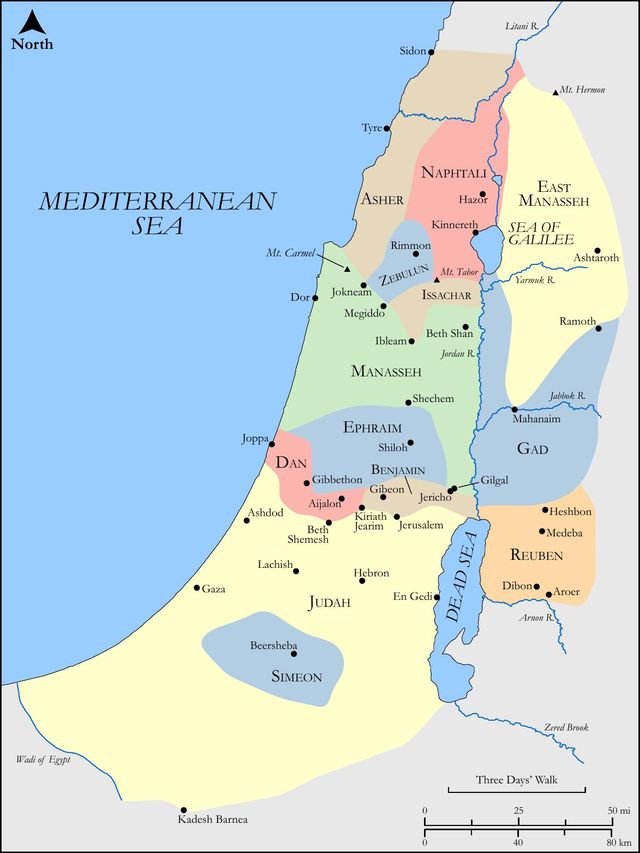
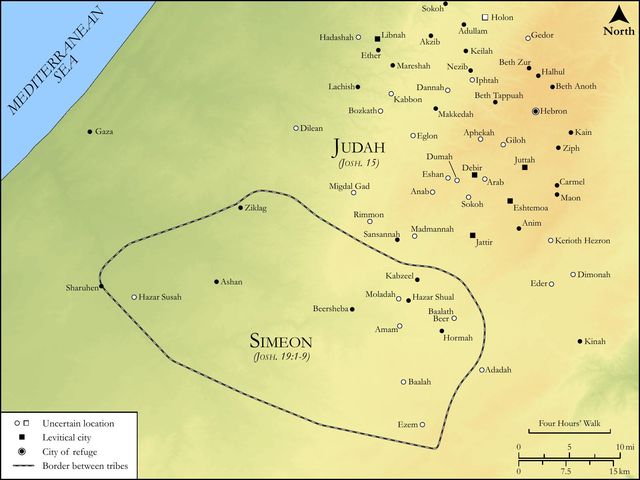
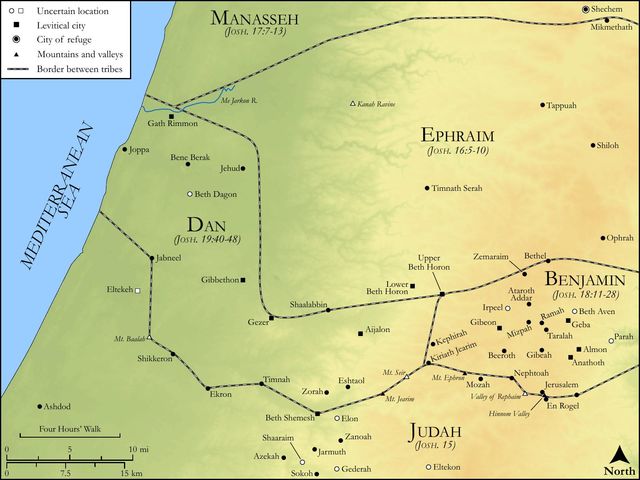
Study this verse
Public-domain commentary
Matthew Henry
From his Commentary on the Whole Bible. Henry comments on passages, not single verses — this entry covers Joshua 19:49–51.
Before this account of the dividing of the land is solemnly closed up, in the last verse, which intimates that the thing was done to the satisfaction of all, here is an account of the particular inheritance assigned to Joshua. 1. He was last served, though the eldest and greatest man of all Israel, and who, having commanded in the conquest of Canaan, might have demanded the first settlement in it for himself and his family. But he would make it to appear that in all he did he sought the good of his country, and not any private interest of his own. He was content to be unfixed till he saw them all settled; and herein is a great example to all in public places to prefer the common welfare before their particular satisfaction. Let the public be first served. 2. He had his lot according to the word of the Lord. It is probable that, when God by Moses told Caleb what inheritance he should have (Jos 14:9), he gave the like promise to Joshua, which he had an eye to in making his election: this made his portion doubly pleasant, that he had it, not as the rest by common providence, but by special promise. 3. He chose it in Mount Ephraim, which belonged to his own tribe, with which he thereby put himself in common, when he might by prerogative have chosen his inheritance in some other tribe, as suppose that of Judah, and thereby have distinguished himself from them. Let no man's preferment or honour make him ashamed of his family or country, or estrange him from it. The tabernacle was set up in the lot of Ephraim, and Joshua would forecast not to be far from that. 4. The children of Israel are said to give it to him (Jos 19:49), which bespeaks his humility, that he would not take it to himself without the people's consent and approbation, as if he would thereby own himself, though major singulis - greater than any one, yet minor universis - less than the whole assemblage, and would hold even the estate of his family, under God, by the grant of the people. 5. It was a city that must be built before it was fit to be dwelt in. While others dwelt in houses which they built not, Joshua must erect for himself (that he might be a pattern of industry and contentment with mean things) such buildings as he could hastily run up, without curiosity or magnificence. Our Lord Jesus thus came and dwelt among us, not in pomp but poverty, providing rest for us, yet himself not having where to lay his head. Even Christ pleased not himself.
Continue studying Joshua 19:51 across the web’s major study libraries — every link below opens this exact verse, chapter, or book on the destination site.
Read & Compare
 BibleGatewayThis verse in more than 200 translations and 70 languages.
 Bible.comThe YouVersion reader — hundreds of translations, reading plans, and highlights.
 ESV.orgCrossway's official English Standard Version reader.
 NET BibleThe NET translation with 60,000+ translators' notes on every rendering decision.
 STEP BibleTyndale House's free study tool — original text, vocabulary, and scholarly resources.
 BibliaLogos Bible Software's free web reader.
 USCCBThe New American Bible (Revised Edition) with the U.S. bishops' study notes.
Commentaries
 BibleHub CommentariesDozens of classic commentaries on this verse, gathered on one page.
 StudyLightMore than 100 commentary sets — the largest collection on the web.
 BibleRefPlain-English commentary on what this verse means, verse by verse.
 Enduring WordDavid Guzik's free commentary on this chapter, widely used by Bible teachers.
 Bible Study ToolsVerse commentary alongside Greek and Hebrew study aids.
Original Language & Research
- BibleHub InterlinearThe verse word by word — original language, transliteration, and English.
- BibleHub LexiconEvery word's original-language definition and Strong's entry.
 Blue Letter BibleDeep-study tools — Strong's numbers, concordance, and word studies.
 SefariaThe Hebrew text with Rashi and centuries of Jewish commentary.
Sermons, Hymns & Audio


TrulyRandomVerse is not affiliated with these sites and doesn’t control their content. They’re linked because they’re genuinely useful.
Summary
Joshua 19:51 stands as the definitive declaration of the successful and divinely sanctioned distribution of the Promised Land among the tribes of Israel. This pivotal verse marks the culmination of a monumental task undertaken by Eleazar the priest, Joshua the son of Nun, and the tribal heads, signifying the faithful fulfillment of God's ancient covenant promises regarding the inheritance of Canaan and ushering in a period of establishment and rest for the nascent nation in their divinely appointed territory.
Context
ShowHideLiterary Context
Joshua 19:51 serves as the concluding statement for the extensive section of the book (chapters Joshua 13 through Joshua 19) that meticulously details the allocation of tribal territories within the Promised Land. This section follows the initial division of land east of the Jordan for Reuben, Gad, and the half-tribe of Manasseh (Joshua 13) and the major conquest campaigns. Chapters Joshua 14-17 then describe the inheritances for Judah, Ephraim, and the other half-tribe of Manasseh. A crucial turning point occurs in Joshua 18:1 with the relocation of the tabernacle to Shiloh, establishing it as the central spiritual and administrative hub for the final seven tribes' allotments. This verse, Joshua 19:51, brings this entire narrative segment to a definitive close, emphasizing the systematic and complete nature of the land distribution before the book transitions to the establishment of cities of refuge and Levitical cities.
Historical & Cultural Context
The division of the land followed decades of wilderness wandering and a period of intense military conquest, marking a profound transition for Israel from a nomadic and warring people to a settled agrarian society. Shiloh, strategically located in the territory of Ephraim, became the de facto religious and administrative capital of Israel during this foundational period, serving as the dwelling place for the Tabernacle. The practice of "dividing by lot" (Hebrew: goral) was a common and divinely sanctioned method in ancient Israel for discerning God's will and ensuring impartiality in critical decisions, as evidenced in Proverbs 16:33. This method underscored the belief that the land allotments were not arbitrary human determinations but divinely ordained distributions. The collective involvement of Eleazar the priest (representing spiritual authority and the Mosaic Law), Joshua the son of Nun (the military and political leader, Moses' successor), and the "heads of the fathers of the tribes" (representing tribal autonomy and communal consent) highlights the comprehensive and legitimate nature of the process, ensuring both divine sanction and broad acceptance.
Key Themes
ShowHideThis verse encapsulates several pivotal themes woven throughout the book of Joshua and the broader Pentateuch. Foremost is Divine Faithfulness and Promise Fulfillment, as the land division directly actualizes God's ancient covenant promises to Abraham, Isaac, and Jacob that their descendants would inherit this specific land (e.g., Genesis 12:7). Joshua himself emphatically affirms this in Joshua 21:45, declaring that "not one word of all the good promises that the LORD had made to the house of Israel failed; all came to pass." Another crucial theme is Order and Authority, vividly demonstrated by the structured process involving established leadership—priestly, military, and tribal—reflecting God's desire for order and righteous governance within His chosen people. The phrase "by lot" underscores God's Sovereignty in Distribution, emphasizing that even seemingly random events were under divine control, ensuring that each tribe's inheritance was perceived as God's specific, impartial provision. Finally, the concluding phrase, "So they made an end of dividing the country," signifies Completion and Rest, marking the culmination of the conquest and initial settlement, leading to a period of relative peace and stability for the nation as they began to inhabit their God-given inheritance.
Exposition and Analysis
ShowHideKey Word Analysis
ShowHideThis term (H5159) signifies something inherited, an occupancy, or concretely, an heirloom, an estate, patrimony, or portion. In Joshua 19:51, "inheritances" refers to the divinely allotted land portions given to each tribe of Israel. It emphasizes not merely temporary possession but a permanent, inalienable gift from God, foundational to Israel's identity, security, and communal life in the Promised Land, representing the fulfillment of God's covenant promises to their ancestors.
This word (H1486) literally means a pebble (small stones being used for that purpose) and figuratively refers to a portion or destiny as if determined by lot. In ancient Israel, casting lots was a sacred practice, not a game of chance, used to discern God's will and ensure impartiality. It conveyed the theological truth that the distribution of the land was not a human strategic decision but a direct, sovereign act of divine providence, ensuring each tribe's portion was God's specific assignment.
This proper noun (H7887) refers to a specific place in Palestine. Its significance in this verse is immense, as it was the location where the Tabernacle, the dwelling place of God's presence, was set up (Joshua 18:1). Performing the land division "before the LORD, at the door of the tabernacle of the congregation" underscored the sacred, covenantal nature of the entire process, signifying that the distribution was a religious ceremony performed under direct divine observation and sanction.
Verse Breakdown
ShowHide"These [are] the inheritances"
This opening phrase functions as a conclusive summary statement, drawing a definitive close to the preceding chapters that meticulously detailed the tribal allotments. It emphatically declares that the process of land distribution has reached its final, comprehensive, and authoritative conclusion, presenting the full scope of what each tribe received as their divinely appointed portion.
"which Eleazar the priest, and Joshua the son of Nun, and the heads of the fathers of the tribes of the children of Israel, divided for an inheritance by lot in Shiloh before the LORD, at the door of the tabernacle of the congregation."
This lengthy and highly descriptive clause precisely identifies the key agents, the method employed, and the sacred location of the land division. The inclusion of Eleazar (representing priestly and spiritual authority), Joshua (representing military and political leadership), and the tribal heads (representing the people's collective consent and tribal autonomy) underscores the comprehensive and legitimate nature of the entire undertaking. The phrase "by lot" highlights the divine guidance and impartiality inherent in the process, while the specific mention of "in Shiloh before the LORD, at the door of the tabernacle of the congregation" profoundly emphasizes the sacred, covenantal context of the distribution, affirming that it was conducted under God's direct oversight, approval, and sanction.
"So they made an end of dividing the country."
This concise yet powerful concluding statement provides a profound sense of finality, completion, and accomplishment. It signifies the successful and exhaustive allocation of the entire Promised Land to the twelve tribes, marking the culmination of a monumental, multi-generational task. This completion heralds a significant transition from a period of conquest and division to one of settlement and rest, signifying a major milestone in Israel's national history and the fulfillment of God's promise to grant them rest from their enemies.
Literary Devices
ShowHideJoshua 19:51 masterfully employs several literary devices to convey its profound theological and historical significance. The most prominent is Fulfillment Language, as the verse explicitly states the completion of the land division, directly echoing and confirming the ancient, unconditional promises of God to Abraham, Isaac, and Jacob regarding their descendants inheriting the land. This creates a powerful sense of divine faithfulness and the absolute reliability of God's word. The Repetition of the word "inheritance" (Hebrew: naḥălāh) throughout the preceding chapters and its climactic placement here emphasizes its central theological significance as a divinely bestowed, permanent, and foundational possession. The meticulous listing of the key figures involved (Eleazar, Joshua, tribal heads) and the precise specification of the location ("in Shiloh before the LORD, at the door of the tabernacle of the congregation") functions as a form of Attestation or Legalistic Precision. This detailed enumeration lends undeniable authority, legitimacy, and sacred weight to the entire process, ensuring that the distribution was perceived not as arbitrary, but as meticulously executed according to both divine mandate and human authority. Finally, the succinct concluding phrase, "So they made an end of dividing the country," acts as a definitive Closure or Culmination, providing a clear and satisfying end to the narrative segment about land distribution and signaling a significant shift in the nation's experience from conquest and allocation to settlement and rest.
Theological and Thematic Connections
ShowHideJoshua 19:51 stands as a powerful testament to the unwavering faithfulness of God and the meticulous, uncompromised fulfillment of His covenant promises. It profoundly demonstrates that God's word is not an empty declaration but a living, active force that brings about precisely what He declares, even across generations and through challenging circumstances. The division of the land, achieved through divine guidance (the casting of lots) and human agency (the appointed leaders), reveals a God who is sovereign over all details, orchestrating events with precision to bring His overarching purposes to pass. This foundational act of establishing Israel in their inheritance was crucial to their identity as God's chosen people, providing them with a secure and permanent dwelling place where they could live in covenant relationship with Him, worship Him according to His commands, and ultimately serve as a light to the surrounding nations. It signifies the profound transition from a wandering, warring people to a settled nation, now poised to live out their unique calling in the land God had prepared for them, a land of rest and promise.
Reflection and Application
ShowHideJoshua 19:51 offers profound and enduring lessons for believers today, serving as a powerful reminder that God is a faithful promise-keeper who meticulously brings His purposes to glorious completion. Just as He precisely guided Israel into their physical inheritance, He continually guides us in our spiritual journey, leading us toward the imperishable inheritance He has prepared for us in Christ. This verse encourages us to cultivate a deep and unwavering trust in God's sovereign hand, even when circumstances seem uncertain, random, or beyond our control, knowing that His perfect plan is always unfolding for our good and His glory. It also underscores the vital importance of order, godly leadership, and communal cooperation within the community of faith, recognizing that God often works through appointed individuals and established processes to bring about His divine will. Furthermore, it invites us to find true rest and profound contentment in God's perfect provision, celebrating the milestones of His faithfulness in our lives and acknowledging that ultimate security and peace come from Him alone. As we reflect on Israel's arduous yet ultimately successful journey to their promised land, we are called to persevere in faith, confident that God will bring us to our ultimate spiritual rest and eternal inheritance in His presence.
Questions for Reflection
ShowHideFAQ
ShowHideWhy was Shiloh chosen as the place for the land division?
ShowHideShiloh was chosen because it became the central and most significant location for the Tabernacle, the portable sanctuary where God's tangible presence dwelt among His people (see Joshua 18:1). By conducting the division "before the LORD, at the door of the tabernacle," the entire process was profoundly imbued with spiritual significance and divine sanction. This emphasized that the land distribution was not merely a political or logistical act, but a sacred, covenantal undertaking, carried out under God's direct oversight and explicit approval, reinforcing the theological truth of Israel's possession of the land as a divine gift.
What was the significance of "casting lots" in this process? Was it just a random gamble?
ShowHideNo, casting lots (Hebrew: goral) in ancient Israel was far from a random gamble; it was a divinely recognized and sacred method for discerning God's will and ensuring impartiality. It was firmly believed that while human hands cast the lot, its ultimate outcome was sovereignly determined and directed by the Lord. Proverbs 16:33 explicitly states this principle: "The lot is cast into the lap, but its every decision is from the LORD." This practice ensured that the land allotments were perceived and accepted as God's specific, sovereign assignment for each tribe, thereby minimizing disputes and reinforcing the profound theological truth that their inheritance was a direct, unmerited gift from God.
Who were Eleazar, Joshua, and the heads of the tribes, and why were they all involved?
ShowHideEleazar was the High Priest, representing the supreme spiritual authority and the Law of God, ensuring the process adhered to divine commands. Joshua, the son of Nun, was Moses' divinely appointed successor, the military commander who led the conquest, and the primary political leader of Israel, providing executive authority. The "heads of the fathers of the tribes" were the recognized tribal leaders, representing the various clans and families within each tribe, ensuring communal consent and broad acceptance. Their collective involvement was crucial because it ensured that the land division was legitimate, comprehensive, and divinely sanctioned, bringing together priestly authority, military and political leadership, and the consent of the people's representatives, thereby highlighting the orderly and authoritative nature of God's work among His people.
Christ-Centered Fulfillment
ShowHideJoshua 19:51, with its profound emphasis on a divinely appointed inheritance, the promise of rest, and the faithful fulfillment of God's covenant promises, finds its ultimate and most glorious fulfillment in Jesus Christ. The physical land of Canaan, given to Israel as a tangible inheritance, serves as a powerful foreshadowing of the spiritual and eternal inheritance that believers receive in Christ. Just as Israel entered a promised land of rest after their wanderings and battles, so too does Jesus, our ultimate "Joshua" (whose name, Yeshua, means "the Lord saves"), invite all who are weary and burdened to come to Him and find true, abiding rest for their souls (Matthew 11:28-30). Christ is the true High Priest, far greater than Eleazar, who has entered the heavenly sanctuary once for all, not with the blood of animals, but with His own precious blood, to secure our eternal redemption and an imperishable inheritance, kept in heaven for us (1 Peter 1:3-5). The meticulous division of the land by lot, demonstrating God's absolute sovereignty over all details, powerfully points to God's sovereign and perfect plan of salvation, which culminates in Christ. Through Him, all of God's magnificent promises find their resounding "Yes" and "Amen" (2 Corinthians 1:20). Our spiritual inheritance in Christ is not earned by human conquest or determined by chance, but is freely given through God's abundant grace, establishing us in a secure, eternal, and intimate relationship with God—a profound spiritual rest that infinitely transcends any earthly possession or territory.