


Joshua 19:50
- עַל'alonH5921PrepPreposition
- פִּיpi[the] mouth ofH6310N-mscNoun Singular Masculine Construct
- יְהוָהYah·wehYahwehH3068N-properNoun Proper Title
- נָתְנוּNa·te·nuthey gaveH5414V-Qal-Perf-3cpVerb Qal Perfect 3rd Plural common gender
- לוֹloto <the> himPrep-l ¦ 3msSuffix Personal 3rd Singular Masculineלto <the>וֹhim
- אֶת'et<obj.>H853DirObjMParticle Object Indicator
- הָעִירha·'Irthe cityH5892Art ¦ N-fsNoun Singular Feminine Absoluteהָtheעִירcity
- אֲשֶׁר'a·SherwhichH834RelParticle Relative
- שָׁאָלsha·'Alhe asked forH7592V-Qal-Perf-3msVerb Qal Perfect 3rd Singular Masculine
- אֶת'et<obj.>H853DirObjMParticle Object Indicator
- תִּמְנַתtim·natTimnathH8556N-properNoun Proper Location
- סֶרַחSe·rachSerahH8556N-properNoun Proper Location
- בְּהַרbe·Harin [the] hill country ofH2022Prep-b ¦ N-mscNoun Singular Masculine Constructבְּinהַר[the] hill country of
- אֶפְרָיִם'ef·Ra·yimEphraimH669N-proper-mNoun Proper Masculine
- וַיִּבְנֶהvai·yiv·Nehand he builtH1129Conj-w ¦ V-Qal-ConsecImperf-3msVerb Qal Consecutive Imperfect 3rd Singular Masculineוַandיִּבְנֶהhe built
- אֶת'et<obj.>H853DirObjMParticle Object Indicator
- הָעִירha·'Irthe cityH5892Art ¦ N-fsNoun Singular Feminine Absoluteהָtheעִירcity
- וַיֵּשֶׁבvai·Ye·shevand he dweltH3427Conj-w ¦ V-Qal-ConsecImperf-3msVerb Qal Consecutive Imperfect 3rd Singular Masculineוַandיֵּשֶׁבhe dwelt
- בָּהּBahin <the> itPrep-b ¦ 3fsSuffix Personal 3rd Singular Feminineבָּin <the>הּit
English is a literal word-by-word gloss of the Hebrew, not the KJV's wording. Why?
This is the original text the KJV's translators worked from — each Hebrew word with its own literal English meaning in this verse, prepared by scholars at Tyndale House, Cambridge. The KJV translates whole sentences, not word by word, so its wording differs: one Hebrew word can become several English words, and the KJV may choose “the LORD” where the gloss reads “Yahweh”. Both are faithful — they answer different questions. For the KJV's own rendering, switch to the KJV text.
Details
See on the biblical-era map
Study this verse
Public-domain commentary
Matthew Henry
From his Commentary on the Whole Bible. Henry comments on passages, not single verses — this entry covers Joshua 19:49–51.
Before this account of the dividing of the land is solemnly closed up, in the last verse, which intimates that the thing was done to the satisfaction of all, here is an account of the particular inheritance assigned to Joshua. 1. He was last served, though the eldest and greatest man of all Israel, and who, having commanded in the conquest of Canaan, might have demanded the first settlement in it for himself and his family. But he would make it to appear that in all he did he sought the good of his country, and not any private interest of his own. He was content to be unfixed till he saw them all settled; and herein is a great example to all in public places to prefer the common welfare before their particular satisfaction. Let the public be first served. 2. He had his lot according to the word of the Lord. It is probable that, when God by Moses told Caleb what inheritance he should have (Jos 14:9), he gave the like promise to Joshua, which he had an eye to in making his election: this made his portion doubly pleasant, that he had it, not as the rest by common providence, but by special promise. 3. He chose it in Mount Ephraim, which belonged to his own tribe, with which he thereby put himself in common, when he might by prerogative have chosen his inheritance in some other tribe, as suppose that of Judah, and thereby have distinguished himself from them. Let no man's preferment or honour make him ashamed of his family or country, or estrange him from it. The tabernacle was set up in the lot of Ephraim, and Joshua would forecast not to be far from that. 4. The children of Israel are said to give it to him (Jos 19:49), which bespeaks his humility, that he would not take it to himself without the people's consent and approbation, as if he would thereby own himself, though major singulis - greater than any one, yet minor universis - less than the whole assemblage, and would hold even the estate of his family, under God, by the grant of the people. 5. It was a city that must be built before it was fit to be dwelt in. While others dwelt in houses which they built not, Joshua must erect for himself (that he might be a pattern of industry and contentment with mean things) such buildings as he could hastily run up, without curiosity or magnificence. Our Lord Jesus thus came and dwelt among us, not in pomp but poverty, providing rest for us, yet himself not having where to lay his head. Even Christ pleased not himself.
Historical interpretation
Historical reception
1 surviving comment on this verse from the historical church.
And indeed we said above that even our Lord Jesus Christ asks us for a place he may build and in which he may live and that we ought to become so clean of heart, and so sincere of mind, so holy in body and spirit, that he may both deign to accept this place in our soul and to build it and dwell in it. And who do you think among all the people are so acceptable to God that they are worthy to be chosen for this? Or perhaps no individuals can be capable of this, but can the whole people and all the church together barely be capable of receiving the Lord Jesus in themselves so that he may dwell in them?Let us see, therefore, what is this place in which Jesus is bound to dwell. "In Mount Ephraim," it says, that is, in the fruit-bearing mountain. Who do you think among us are fruit-bearing mountains, in whom Jesus may dwell? Surely those in whom exist "the fruit of the Spirit: joy, peace, patience, love," and the rest. Those, therefore, are the fruit-bearing mountains who produce the fruit of the Spirit and who are always lofty in mind and expectation. And although few are able to be like this, nevertheless, even if they are few, the Lord Jesus, who is the "true light" dwelling in them, will send forth the beams of his light also upon all the rest, those whom he has not yet, in this first round, judged worthy of his habitation.
Continue studying Joshua 19:50 across the web’s major study libraries — every link below opens this exact verse, chapter, or book on the destination site.
Read & Compare
 BibleGatewayThis verse in more than 200 translations and 70 languages.
 Bible.comThe YouVersion reader — hundreds of translations, reading plans, and highlights.
 ESV.orgCrossway's official English Standard Version reader.
 NET BibleThe NET translation with 60,000+ translators' notes on every rendering decision.
 STEP BibleTyndale House's free study tool — original text, vocabulary, and scholarly resources.
 BibliaLogos Bible Software's free web reader.
 USCCBThe New American Bible (Revised Edition) with the U.S. bishops' study notes.
Commentaries
 BibleHub CommentariesDozens of classic commentaries on this verse, gathered on one page.
 StudyLightMore than 100 commentary sets — the largest collection on the web.
 BibleRefPlain-English commentary on what this verse means, verse by verse.
 Enduring WordDavid Guzik's free commentary on this chapter, widely used by Bible teachers.
 Bible Study ToolsVerse commentary alongside Greek and Hebrew study aids.
Original Language & Research
- BibleHub InterlinearThe verse word by word — original language, transliteration, and English.
- BibleHub LexiconEvery word's original-language definition and Strong's entry.
 Blue Letter BibleDeep-study tools — Strong's numbers, concordance, and word studies.
 SefariaThe Hebrew text with Rashi and centuries of Jewish commentary.
Sermons, Hymns & Audio


TrulyRandomVerse is not affiliated with these sites and doesn’t control their content. They’re linked because they’re genuinely useful.
Summary
Joshua 19:50 marks the culmination of the land distribution in Canaan, recording the faithful leader Joshua's personal inheritance of Timnathserah in the hill country of Ephraim. This verse profoundly underscores God's unwavering faithfulness in fulfilling His promises, not only to the nation of Israel but also to His individual servants. It highlights Joshua's exemplary, selfless leadership, as he patiently waited until all the tribes had received their portions before claiming his own. The subsequent act of building and dwelling in the city signifies the establishment of his well-deserved rest and the completion of his monumental, divinely appointed task of settling Israel in the Promised Land.
Context
ShowHideLiterary Context
Joshua 19:50 serves as the climactic conclusion to the extensive and meticulously detailed account of the tribal land allocations, which spans chapters 13-19 of the Book of Joshua. Following the precise descriptions of the boundaries and cities for each of the twelve tribes of Israel, this verse specifically addresses the personal inheritance granted to Joshua himself. Its strategic placement at the very end of the distribution narrative is profoundly significant, emphasizing Joshua's humility and his exemplary servant leadership. As the one who led the conquest and oversaw the entire division process, Joshua deliberately waited until every other tribe had received its allotted portion before claiming his own. This act stands in stark contrast to the typical leadership practices of the ancient Near East, where rulers often prioritized their own gain and claimed the choicest spoils, thereby powerfully reinforcing Joshua's unique character as a divinely appointed and selfless servant of God and His people. The narrative then transitions into the establishment of the cities of refuge in Joshua 20 and the Levitical cities in Joshua 21, before the book concludes with Joshua's farewell addresses and his death.
Historical & Cultural Context
The division of the land of Canaan was a monumental undertaking, representing the tangible fulfillment of the covenant promises made by God to Abraham, Isaac, and Jacob centuries earlier (e.g., Genesis 12:7). This intricate process involved complex geographical surveys and careful tribal negotiations, all overseen by Joshua and Eleazar the priest, with the assistance of appointed tribal heads (Numbers 34:16-29). In ancient Israelite society, land ownership was not merely a material possession but was foundational to one's identity, security, and economic stability, being directly tied to tribal and family lineage. The concept of an "inheritance" (Hebrew: nachalah) was understood as a divinely granted, inalienable birthright, deeply connected to God's covenant faithfulness. For a leader of Joshua's stature to receive his portion last, and moreover, to choose a city that required personal building and development, speaks volumes about his character. It powerfully demonstrates a profound commitment to the communal good over personal gain, reflecting the ideals of a covenant community where God's will and the welfare of His people took absolute precedence.
Key Themes
ShowHideThis verse powerfully encapsulates several key themes central to the Book of Joshua and the broader Old Testament narrative. First, it highlights Divine Faithfulness and the Fulfillment of God's Promises. The opening phrase, "According to the word of the LORD," is paramount, echoing the overarching theme of the book that God is utterly true to His word, bringing Israel into the Promised Land just as He swore to their ancestors (Joshua 21:45). Second, it exemplifies Servant Leadership. Joshua's deliberate decision to receive his inheritance last, and his willingness to build a city rather than inherit an established one, profoundly underscores his humility and unwavering dedication to the people he served. This act sets a powerful precedent for future leaders within Israel, contrasting sharply with the self-serving leadership often observed in the world. Third, the verse speaks to the profound theme of Rest and Inheritance. After years of arduous warfare and meticulous administration, Joshua finally enters into his personal "rest" in the land, a tangible foreshadowing of the ultimate spiritual rest God provides for His people, as later expounded in the New Testament (Hebrews 4:9). His dwelling in Timnathserah symbolizes the completion of the conquest and the inauguration of a new era of settlement, stability, and peace for the nation of Israel.
Exposition and Analysis
ShowHideKey Word Analysis
ShowHideThis city, located in the mountainous region of Ephraim, was designated as Joshua's personal inheritance. The name "Timnathserah" (תִּמְנַת סֶרַח), derived from the Hebrew, is often interpreted as "portion of abundance" or, significantly, "remaining portion." The latter interpretation is particularly fitting given that Joshua received his inheritance last, after all other tribal portions had been meticulously distributed. This name, therefore, carries a profound double significance: it was indeed the "remaining" portion, yet by divine decree, it became his "portion of abundance," a place of rest, security, and prosperity after his long and demanding service. It is also known as Timnath-heres in Judges 2:9, meaning "portion of the sun," possibly reflecting a later name or a different aspect of its significance.
The verb "built" (בָּנָה, H1129) indicates that Timnathserah was not a fully developed, established city that Joshua simply moved into. Instead, it was likely a site that required significant construction, reconstruction, or development. This detail further accentuates Joshua's profound humility and dedication. He did not seek an easy or luxurious inheritance, but was willing to invest his own effort, resources, and leadership to establish his home. This active engagement in building also powerfully symbolizes the establishment and consolidation of the new Israelite presence in the land, marking a transition from a period of conquest and warfare to one of settlement, development, and peaceful habitation.
Verse Breakdown
ShowHide"According to the word of the LORD they gave him the city which he asked"
This opening clause is foundational, emphasizing both divine initiative and divine fulfillment. Joshua's request for his inheritance was not an arbitrary personal desire but was sanctioned by God's prior directive, likely communicated through Moses or directly to Joshua himself. The phrase "according to the word of the LORD" underscores the ultimate divine authority behind the meticulous distribution of the land and the specific, gracious provision for Joshua. It powerfully reinforces the overarching theme of God's unwavering faithfulness to His promises and His tender care for His faithful servant. The use of "they gave him" indicates that the people, or more specifically, the leaders responsible for the land division (Eleazar the priest and the tribal heads), honored Joshua's divinely sanctioned request, acting in obedience to God's command.
"[even] Timnathserah in mount Ephraim"
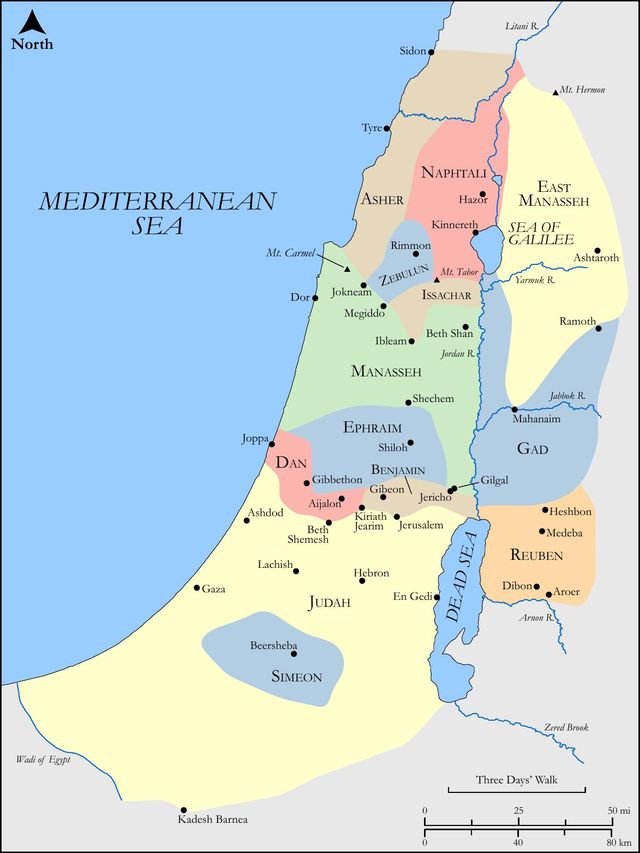
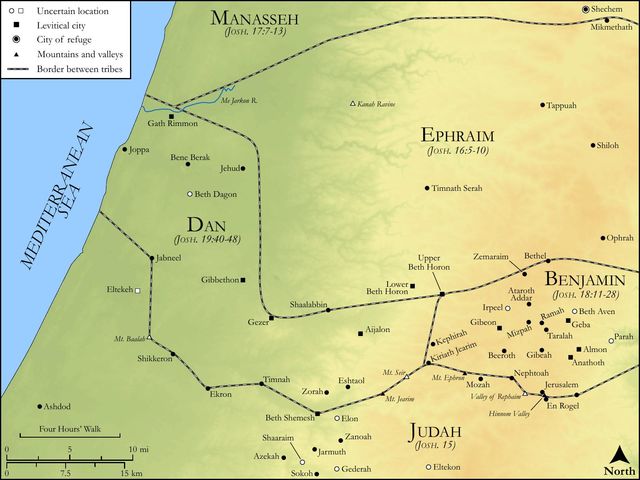
This clause precisely specifies the geographical location of Joshua's personal inheritance. Timnathserah was strategically situated within the tribal territory of Ephraim, which was Joshua's own tribe. The "mount Ephraim" (or hill country of Ephraim) was a central and strategically important region within Canaan, though perhaps not the most fertile or easily defensible land compared to some other areas. This geographical detail further highlights Joshua's remarkable lack of self-aggrandizement; he did not choose a prime, highly desirable location for himself, but humbly accepted a portion within his own tribal area that required personal effort and development.
"and he built the city, and dwelt therein."
This final clause vividly describes Joshua's actions upon receiving his inheritance, marking the culmination of his life's work. The act of "building the city" signifies his active engagement in establishing his home and consolidating his portion of the land. It implies a process of significant construction, development, and perhaps even fortification, transforming a raw site into a habitable dwelling. "And dwelt therein" marks the profound culmination of his long journey and arduous service to God and Israel. It signifies a period of well-deserved rest, stability, and personal settlement after years of tirelessly leading Israel in conquest and the complex land distribution. This is his final, personal inheritance, a place of peace, security, and fulfillment graciously provided by God.
Literary Devices
ShowHideJoshua 19:50 employs several powerful literary devices to convey its profound theological and historical message. The most prominent is Fulfillment, as the verse explicitly states that the giving of the city was "According to the word of the LORD," highlighting God's absolute faithfulness in bringing His promises to pass, not only for the collective nation but also for His individual servants. There is also rich Symbolism present throughout the verse: Joshua's act of waiting until all other tribes received their inheritance before claiming his own profoundly symbolizes Servant Leadership and deep humility, setting an enduring example. His choice to "build the city" rather than inherit an already established one further symbolizes his dedication, diligent hard work, and unwavering commitment to the development and flourishing of the land, even for his personal portion. The ultimate act of "dwelling therein" powerfully symbolizes the attainment of Rest and the completion of a monumental, divinely appointed task, representing a personal Sabbath after years of intense warfare and meticulous administration. Finally, there is a subtle yet significant Contrast between Joshua's selfless leadership and the typical self-aggrandizement and privilege-seeking behavior of ancient Near Eastern rulers, reinforcing his unique character as a truly divinely appointed and exemplary leader.
Theological and Thematic Connections
ShowHideJoshua 19:50 stands as a powerful testament to God's meticulous faithfulness, demonstrating unequivocally that His promises extend not only to the collective nation but also to the individual, honoring those who faithfully serve Him. It underscores the profound biblical principle that God rewards diligent, humble service, providing a "rest" and an "inheritance" for those who prioritize His will and the well-being of others above their own immediate gain. Joshua's exemplary conduct of waiting for his portion until all others were served resonates deeply with the New Testament emphasis on humility and putting others first, trusting implicitly that God sees and ultimately rewards what is done in secret or without seeking immediate personal recognition or gain. This verse serves as a timeless reminder to believers that true fulfillment, lasting security, and an enduring inheritance come ultimately from God's gracious hand, often after a season of dedicated labor, self-sacrifice, and patient perseverance.
Reflection and Application
ShowHideJoshua 19:50 offers profound and timeless lessons for contemporary believers, challenging us to re-evaluate our priorities, our approach to leadership, and our understanding of service. Joshua, the supreme leader of Israel, conspicuously did not leverage his position for personal gain, immediate comfort, or a pre-eminent inheritance. Instead, he patiently waited, demonstrating a profound trust in God's ultimate provision and an unwavering, selfless commitment to the welfare of the entire community he served. This calls us to a deep introspection regarding how we exercise leadership, whether in our families, our workplaces, our churches, or any sphere of influence. Are we quick to claim privileges, assert our rights, or seek the most comfortable path, or do we genuinely prioritize the needs and well-being of others, trusting implicitly that God will ultimately provide our just portion in His perfect timing? The verse also speaks powerfully to the concept of rest. After years of intense labor, arduous warfare, and meticulous administration, Joshua finally settles into his inheritance, finding his personal "rest." This serves as a vital reminder that God faithfully provides seasons of rest, peace, and fulfillment after periods of diligent, faithful service. Our "Timnathserah" may not be a physical city, but it profoundly represents the peace, provision, and spiritual rest that God graciously grants to those who faithfully complete the tasks He has set before them. It encourages us to persevere with unwavering commitment in our calling, knowing that our ultimate reward and eternal rest come solely from Him.
Questions for Reflection
ShowHideFAQ
ShowHideWhat is the significance of Joshua receiving his inheritance last?
ShowHideJoshua receiving his inheritance last is profoundly significant, serving as a powerful demonstration of his selfless leadership and profound humility. As the supreme leader who guided Israel through the arduous conquest of Canaan and oversaw the complex, meticulous land distribution, he could have easily claimed the choicest portion for himself first, leveraging his position for personal gain or privilege. However, by deliberately waiting until every single tribe had received its allocated portion, Joshua unequivocally demonstrated that his paramount priority was the welfare of the people and the faithful fulfillment of God's promises to them, rather than any personal advantage or immediate comfort. This act sets a compelling and enduring example of servant leadership, where the leader consciously puts the needs and well-being of others before his own, trusting implicitly in God's faithfulness to provide his due portion in His own perfect time. It powerfully underscores the biblical principle that true greatness in God's kingdom often involves humility, sacrifice, and a willingness to defer one's own desires, standing in stark contrast to typical worldly leadership models.
Christ-Centered Fulfillment
ShowHideJoshua 19:50, while meticulously detailing the earthly inheritance of a faithful servant of God, beautifully and prophetically foreshadows the ultimate spiritual inheritance and eternal rest found exclusively in Jesus Christ. Joshua, whose very name (Yeshua) means "the Lord saves," serves as a profound type of Christ, leading God's people into their promised land. Just as Joshua brought the nation of Israel into a physical rest within the land of Canaan, Jesus, the greater Joshua, leads His redeemed people into a spiritual and eternal rest, a true and incorruptible "inheritance" that transcends all earthly possessions and temporal boundaries (Hebrews 4:8-10). Joshua's remarkable humility in receiving his portion last powerfully mirrors Christ's ultimate act of divine humility, who, "though he was in the form of God, did not count equality with God a thing to be grasped, but emptied himself, by taking the form of a servant, being born in the likeness of men" (Philippians 2:6-7). Jesus, like Joshua, did not claim the best for Himself first, but rather laid down His very life, enduring the ignominious cross, so that His people might receive their eternal, imperishable inheritance (1 Peter 1:3-4). Our true "Timnathserah" is not a plot of physical land but a secure place within God's eternal kingdom, meticulously prepared and secured by Christ's finished work, where we will ultimately "dwell therein" with Him forever, experiencing perfect rest, abundant life, and unending fellowship (John 14:2-3).