


Joshua 10:39
Bible text: King James Version (1769 Blayney text) · Public domain
Bible text: King James Version with Strong's numbers · Public domain
Bible text: Berean Standard Bible · Public domain
Bible text: American Standard Version (1901) · Public domain
Bible text: World English Bible, Messianic edition · Public domain
Bible text: Geneva Bible (1599) · Public domain
Bible text: Young's Literal Translation · Public domain
- וַיִּלְכְּדָהּvai·yil·ke·Dahand he captured itH3920Conj-w ¦ V-Qal-ConsecImperf-3ms ¦ 3fsVerb Qal Consecutive Imperfect 3rd Singular Masculineוַandיִּלְכְּדָhe capturedהּit
- וְאֶתve·'Etand <obj.>H853Conj-w ¦ DirObjMParticle Object Indicatorוְandאֶת<obj.>
- מַלְכָּהּmal·Kahits kingH4428N-msc ¦ 3fsNoun Singular Masculine Constructמַלְכָּkingהּits
- וְאֶתve·'Etand <obj.>H853Conj-w ¦ DirObjMParticle Object Indicatorוְandאֶת<obj.>
- כָּלkolallH3605N-mscNoun Singular Masculine Construct
- עָרֶיהָ'a·Rei·haits citiesH5892N-mpc ¦ 3fsNoun Plural Masculine Constructעָרֶיcitiesהָits
- וַיַּכּוּםvai·ya·Kumand they struck themH5221Conj-w ¦ V-Hiphil-ConsecImperf-3mp ¦ 3mpVerb Hiphil Consecutive Imperfect 3rd Plural Masculineוַandיַּכּוּthey struckםthem
- לְפִיle·fito [the] mouth ofH6310Prep-l ¦ N-mscNoun Singular Masculine Constructלְtoפִי[the] mouth of
- חֶרֶבChe·rev[the] swordH2719N-fsNoun Singular Feminine Absolute
- וַיַּחֲרִימוּvai·ya·cha·Ri·muand they totally destroyedH2763Conj-w ¦ V-Hiphil-ConsecImperf-3mpVerb Hiphil Consecutive Imperfect 3rd Plural Masculineוַandיַּחֲרִימוּthey totally destroyed
- אֶת'et<obj.>H853DirObjMParticle Object Indicator
- כָּלkoleveryH3605N-mscNoun Singular Masculine Construct
- נֶפֶשׁNe·feshpersonH5315N-fsNoun Singular Feminine Absolute
- אֲשֶׁר'a·SherwhoH834RelParticle Relative
- בָּהּBah[was] in <the> itPrep-b ¦ 3fsSuffix Personal 3rd Singular Feminineבָּ[was] in <the>הּit
- לֹאlo'notH3808NegParticle Negative
- הִשְׁאִירhish·'Irhe leftH7604V-Hiphil-Perf-3msVerb Hiphil Perfect 3rd Singular Masculine
- שָׂרִידsa·Rida survivorH8300N-msNoun Singular Masculine Absolute
- כַּאֲשֶׁרka·'a·Sherjust asH834Prep-k ¦ RelParticle Relativeכַּjustאֲשֶׁרas
- עָשָׂה'a·Sahhe had doneH6213V-Qal-Perf-3msVerb Qal Perfect 3rd Singular Masculine
- לְחֶבְרוֹןle·chev·Ronto HebronH2275Prep-l ¦ N-properNoun Proper LocationלְtoחֶבְרוֹןHebron
- כֵּןkensoH3651AdvAdverb
- עָשָׂה'a·Sahhe didH6213V-Qal-Perf-3msVerb Qal Perfect 3rd Singular Masculine
- לִדְבִרָהlid·Vi·rahto Debir <towards>H1688Prep-l ¦ N-proper ¦ SfxNoun Proper LocationלִtoדְבִרָDebirה<towards>
- וּלְמַלְכָּהּu·le·mal·Kahand to its kingH4428Conj-w ¦ Prep-l ¦ N-msc ¦ 3fsNoun Singular Masculine Constructוּandלְtoמַלְכָּkingהּits
- וְכַאֲשֶׁרve·kha·'a·Sherand just asH834Conj-w ¦ Prep-k ¦ RelParticle Relativeוְandכַjustאֲשֶׁרas
- עָשָׂה'a·Sahhe had doneH6213V-Qal-Perf-3msVerb Qal Perfect 3rd Singular Masculine
- לְלִבְנָהle·liv·Nahto LibnahH3841Prep-l ¦ N-properNoun Proper LocationלְtoלִבְנָהLibnah
- וּלְמַלְכָּהּu·le·mal·Kahand to its kingH4428Conj-w ¦ Prep-l ¦ N-msc ¦ 3fsNoun Singular Masculine Constructוּandלְtoמַלְכָּkingהּits
English is a literal word-by-word gloss of the Hebrew, not the KJV's wording. Why?
This is the original text the KJV's translators worked from — each Hebrew word with its own literal English meaning in this verse, prepared by scholars at Tyndale House, Cambridge. The KJV translates whole sentences, not word by word, so its wording differs: one Hebrew word can become several English words, and the KJV may choose “the LORD” where the gloss reads “Yahweh”. Both are faithful — they answer different questions. For the KJV's own rendering, switch to the KJV text.
Details
See on the biblical-era maps
Study this verse
Public-domain commentary
Matthew Henry
From his Commentary on the Whole Bible. Henry comments on passages, not single verses — this entry covers Joshua 10:28–43. His three-level outline is real structure in the source text, so it is rendered as structure.
We are here informed how Joshua improved the late glorious victory he had obtained and the advantages he had gained by it, and to do this well is a general's praise.
I.Here is a particular account of the several cities which he immediately made himself master of.
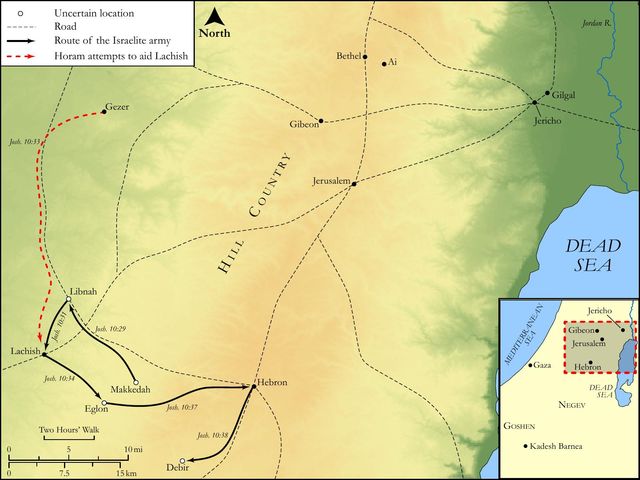
1.The cities of three of the kings whom he had conquered in the field he went and took possession of, Lachish (Jos 10:31, Jos 10:32), Eglon (Jos 10:34, Jos 10:35), and Hebron, Jos 10:36, Jos 10:37. The other two, Jerusalem and Jarmuth, were not taken at this time; perhaps his forces were either so much fatigued with what they had done or so well content with what they had got that they had no mind to attack those places, and so they let slip the fairest opportunity they could ever expect of reducing them with ease, which afterwards was not done without difficulty, Jdg 1:8; Sa2 5:6.
2.Three other cities, and royal cities too, he took: Makkedah, into the neighbourhood of which the five kings had fled, which brought Joshua and his forces thither in pursuit of them, and so hastened its ruin (Jos 10:28), Libnah (Jos 10:29, Jos 10:30), and Debir, Jos 10:38, Jos 10:39.
3.One king that brought in his forces for the relief of Lachish, that had lost its king, proved to meddle to his own hurt; it was Horam king of Gezer, who, either in friendship to his neighbours or for his own security, offered to stop the progress of Joshua's arms, and was cut off with all his forces, Jos 10:33. Thus wicked men are often snared in their counsels, and, by opposing God in the way of his judgments, bring them the sooner on their own heads.
II.A general account of the country which was hereby reduced and brought into Israel's hands (Jos 10:40-42), that part of the land of Canaan of which they first got possession, which lay south of Jerusalem, and afterwards fell, for the most part, to the lot of the tribe of Judah. Observe in this narrative,
1.The great speed Joshua made in taking these cities, which, some think, is intimated in the manner of relating it, which is quick and concise. He flew like lightning from place to place; and though they all stood it out to the last extremity, and none of these cities opened their gates to him, yet in a little time he got them all into his hands, summoned them, and seized them, the same day (Jos 10:28), or in two days, Jos 10:32. Now that they were struck with fear, by the defeat of their armies and the death of their kings, Joshua prudently followed his blow. See what a great deal of work may be done in a little time, if we will but be busy and improve our opportunities.
2.The great severity Joshua used towards those he conquered. He gave no quarter to man, woman, nor child, put to the sword all the souls (Jos 10:28, Jos 10:30, Jos 10:32, Jos 10:35, etc.), utterly destroyed all that breathed (Jos 10:40), and left none remaining. Nothing could justify this military execution but that herein they did as the Lord God of Israel commanded (Jos 10:40), which was sufficient not only to bear them out, and save them for the imputation of cruelty, but to sanctify what they did, and make it an acceptable piece of service to his justice. God would hereby,
(1.)Manifest his hatred of the idolatries and other abominations which the Canaanites had been guilty of, and leave us to judge how great the provocation was which they had given him by the greatness of the destruction which was brought upon them when the measure of their iniquity was full.
(2.)He would hereby magnify his love to his people Israel, in giving so many men for them, and people for their life, Isa 43:4. When the heathen are to be cast out to make room for this vine (Psa 80:8) divine justice appears more prodigal than ever of human blood, that the Israelites might find themselves for ever obliged to spend their lives to the glory of that God who had sacrificed so many of the lives of his creatures to their interest.
(3.)Hereby was typified the final and eternal destruction of all the impenitent implacable enemies of the Lord Jesus, who, having slighted the riches of his grace, must for ever feel the weight of his wrath, and shall have judgment without mercy. Nations that forget God shall be turned into hell, and no reproach at all to God's infinite goodness.
3.The great success of this expedition. The spoil of these cities was now divided among the men of war that plundered them; and the cities themselves, with the land about them, were shortly to be divided among the tribes, for the Lord fought for Israel, Jos 10:42. They could not have gotten the victory if God had not undertaken the battle; then we conquer when God fights for us; and, if he be for us, who can be against us?
Continue studying Joshua 10:39 across the web’s major study libraries — every link below opens this exact verse, chapter, or book on the destination site.
Read & Compare
 BibleGatewayThis verse in more than 200 translations and 70 languages.
 Bible.comThe YouVersion reader — hundreds of translations, reading plans, and highlights.
 ESV.orgCrossway's official English Standard Version reader.
 NET BibleThe NET translation with 60,000+ translators' notes on every rendering decision.
 STEP BibleTyndale House's free study tool — original text, vocabulary, and scholarly resources.
 BibliaLogos Bible Software's free web reader.
 USCCBThe New American Bible (Revised Edition) with the U.S. bishops' study notes.
Commentaries
 BibleHub CommentariesDozens of classic commentaries on this verse, gathered on one page.
 StudyLightMore than 100 commentary sets — the largest collection on the web.
 BibleRefPlain-English commentary on what this verse means, verse by verse.
 Enduring WordDavid Guzik's free commentary on this chapter, widely used by Bible teachers.
 Bible Study ToolsVerse commentary alongside Greek and Hebrew study aids.
Original Language & Research
- BibleHub InterlinearThe verse word by word — original language, transliteration, and English.
- BibleHub LexiconEvery word's original-language definition and Strong's entry.
 Blue Letter BibleDeep-study tools — Strong's numbers, concordance, and word studies.
 SefariaThe Hebrew text with Rashi and centuries of Jewish commentary.
Sermons, Hymns & Audio


TrulyRandomVerse is not affiliated with these sites and doesn’t control their content. They’re linked because they’re genuinely useful.
Summary
Joshua 10:39 marks the decisive conclusion of Israel's southern campaign, meticulously documenting the capture and complete devastation of Debir and its inhabitants. This verse powerfully underscores the systematic and unwavering nature of the conquest of Canaan, highlighting Joshua's uncompromising obedience to God's specific commands for judgment upon the land's wicked nations. It explicitly parallels the severity applied to Debir with the earlier conquests of Hebron and Libnah, reinforcing the divine mandate behind the herem (devotion to destruction) and the fulfillment of God's ancient promises to Israel concerning the Promised Land.
Context
ShowHideLiterary Context
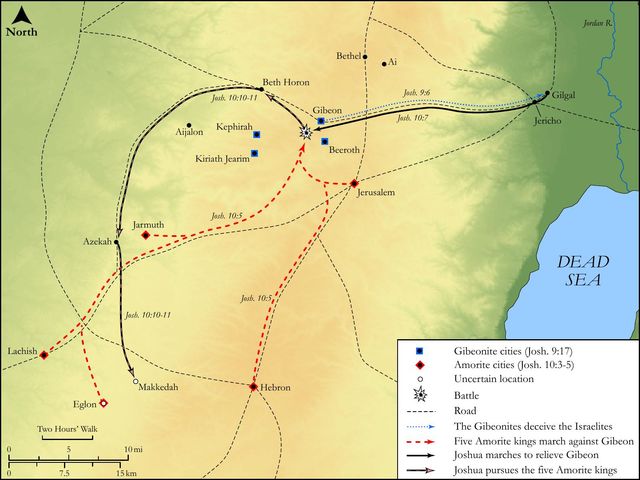
Joshua 10:39 is strategically placed at the culmination of Joshua's swift and decisive southern campaign. This phase of the conquest began with the miraculous victory at Gibeon, where the Lord intervened by causing the sun to stand still, enabling Israel to achieve a decisive triumph over a coalition of five Amorite kings. This pivotal victory initiated a series of rapid conquests against the cities of the defeated kings. The narrative meticulously records the capture of Makkedah (Joshua 10:28), Libnah (Joshua 10:29-30), Lachish (Joshua 10:31-32), Eglon (Joshua 10:34-35), and Hebron (Joshua 10:36-37), before finally detailing the conquest of Debir in this verse. The repeated formula, "as he had done to X, so he did to Y," serves to emphasize the consistent, comprehensive, and divinely mandated nature of the judgment applied to each city, bringing the southern regional subjugation to a close before the narrative transitions to the northern campaign.
Historical & Cultural Context
The conquest described in the book of Joshua is set in Canaan, a land in that day characterized by fragmented city-states and frequent military engagements. The Canaanite inhabitants of the land were notorious for their deeply entrenched polytheistic idolatry, which included the worship of deities like Baal and Asherah, and abhorrent practices such as child sacrifice, cultic prostitution, and various forms of severe immorality. These practices are explicitly and repeatedly condemned throughout the Pentateuch, particularly in passages like Leviticus 18:24-28. God's command for herem (Hebrew: חֵרֶם, ḥērem), often translated as "devotion to destruction" or "the ban," was a unique and specific divine judgment against these nations. Their iniquity was "not yet full" in Abraham's time, but by the era of Joshua, it had reached its full measure, as indicated in Genesis 15:16. This was not a standard practice of warfare among the nations, but a divinely ordained act intended to prevent Israel's corruption by the pervasive Canaanite religious and moral practices and to maintain the holiness of the Promised Land as God's dwelling place among His people (Deuteronomy 7:1-6).
Key Themes
ShowHideThis verse profoundly contributes to several overarching themes woven throughout the book of Joshua and the broader Old Testament narrative. Firstly, it powerfully highlights the theme of Divine Judgment and Holiness. The herem demonstrates God's righteous wrath against profound human wickedness and His absolute intolerance for idolatry and moral corruption. The command underscores God's intrinsic holiness and His unwavering commitment to purifying the land for His covenant people. Secondly, the verse emphasizes Obedience to God's Commands. Joshua's consistent and thorough execution of the herem in Debir, mirroring his actions in Hebron and Libnah, exemplifies faithful and unwavering obedience to the divine mandate, even when the commands are severe and difficult (Deuteronomy 20:16-18). This obedience is consistently presented throughout Joshua as a prerequisite for Israel's success, blessing, and continued possession of the land. Lastly, Joshua 10:39 reinforces the Fulfillment of God's Promises. The systematic conquest and eradication of the Canaanite presence directly fulfilled God's ancient covenant promises to Abraham and his descendants to give them the land and to drive out its inhabitants (Genesis 12:7; Exodus 23:27-31).
Exposition and Analysis
ShowHideKey Word Analysis
ShowHideThe KJV phrase "utterly destroyed" translates the Hebrew verb חָרַם (châram, H2763). This word carries the profound theological meaning of "to seclude," "to devote," or "to put under the ban." In the context of warfare against the Canaanites, it signifies the complete consecration of a city and its inhabitants, often for destruction, as an act of divine judgment. This was not merely a military strategy but a religious act, ensuring that nothing from the idolatrous culture would remain to corrupt Israel. It implies a total separation from anything deemed an abomination to Yahweh, emphasizing God's absolute holiness and His demand for purity from His covenant people.
The verb נָכָה (nâkâh, H5221) means "to strike," "smite," "beat," "wound," or "kill." When used with the phrase "edge of the sword," it vividly describes the violent, decisive, and often brutal military action taken by the Israelites. It conveys the physical force and thoroughness of the conquest, highlighting the direct and uncompromising means by which God's judgment was executed through His chosen instruments.
The phrase "he left none remaining" comes from the verb שָׁאַר (shâʼar, H7604), meaning "to leave over, allow to remain," used here in the Hiphil stem with a negative particle. This emphasizes the absolute completeness of the herem command. It signifies that no survivors were permitted, no remnant of the original inhabitants or their idolatrous practices was to persist, ensuring the total purification of the land and the prevention of future spiritual contamination for Israel.
Verse Breakdown
ShowHide"And he took it, and the king thereof, and all the cities thereof;"
This clause refers to Debir, its reigning king, and the surrounding towns or dependent settlements that comprised its sphere of influence. It indicates the successful military capture and subjugation of the entire urban and regional entity, signifying a comprehensive victory that extended beyond just the main city.
"and they smote them with the edge of the sword, and utterly destroyed all the souls that [were] therein;"
This describes the execution of the herem command. "Smote them with the edge of the sword" details the method of destruction, while "utterly destroyed all the souls" emphasizes the complete eradication of every living person within the captured territory. This was a direct fulfillment of God's command to eliminate the Canaanite population due to their severe wickedness and the need to purify the land.
"he left none remaining:"
This phrase reiterates and emphasizes the absolute thoroughness of the destruction. It underscores that the command of herem was carried out without exception, leaving no survivors who could potentially re-establish Canaanite idolatry or corrupt Israel's spiritual purity.
"as he had done to Hebron, so he did to Debir, and to the king thereof;"
This clause draws a direct parallel between the conquest of Debir and the earlier conquest of Hebron, as detailed in Joshua 10:36-37. It highlights the consistency of Joshua's actions and the uniform application of the herem command across different cities in the southern campaign, reinforcing the idea of a systematic divine judgment.
"as he had done also to Libnah, and to her king."
This further reinforces the pattern of thorough conquest by drawing another parallel, this time with Libnah, as recorded in Joshua 10:29-30. The repetition emphasizes Joshua's unwavering obedience and the comprehensive nature of the campaign, ensuring that God's will for the land's purification was meticulously executed.
Literary Devices
ShowHideJoshua 10:39 employs several literary devices to convey its message with force and clarity. Repetition is a prominent feature, particularly in the phrases "as he had done to Hebron, so he did to Debir" and "as he had done also to Libnah." This Parallelism serves to emphasize the systematic, consistent, and thorough nature of Joshua's conquest, highlighting his unwavering obedience to God's commands across multiple cities. It creates a sense of inevitability and completeness, underscoring the divine consistency behind the campaign. The language of "utterly destroyed all the souls that were therein; he left none remaining" uses Hyperbole, a rhetorical device, to underscore the totality of the victory and the comprehensive nature of the herem. While the herem was a literal command involving widespread destruction, the emphatic phrasing conveys the absolute devastation and the complete removal of the enemy presence, leaving no doubt about the outcome. This strong, emphatic language contributes to the overall tone of divine judgment and the fulfillment of prophecy.
Theological and Thematic Connections
ShowHideJoshua 10:39 serves as a stark reminder of God's absolute holiness and His righteous judgment against profound human sin and idolatry. The herem command, executed with such thoroughness, was not an act of arbitrary cruelty but a unique, divinely ordained judgment against nations whose wickedness had reached its full measure, threatening to corrupt God's chosen people. It demonstrates that God takes sin seriously and will not tolerate practices that defile His creation or His covenant community. This passage foreshadows a broader biblical principle: God's ultimate victory over evil and His commitment to establishing a pure people and a holy dwelling place. While the direct application of herem is specific to Old Testament Israel's conquest of Canaan, the underlying theological truths about God's character—His justice, holiness, and intolerance for sin—remain eternally relevant.
Reflection and Application
ShowHideWhile the historical context of the herem command is unique to ancient Israel's conquest of Canaan, Joshua 10:39 offers profound spiritual lessons for believers today. It compels us to consider the profound seriousness of sin and idolatry in God's eyes. Just as God commanded the thorough removal of corrupting influences from the Promised Land, so too are believers called to engage in a spiritual battle against sin and worldly influences within their own lives. We are to "put off the old self, which belongs to your former manner of life and is corrupt through deceitful desires" (Ephesians 4:22) and to "destroy arguments and every lofty opinion raised against the knowledge of God" (2 Corinthians 10:5). This passage challenges us to examine our own hearts and lives, identifying any "idols" or sinful patterns that defile our relationship with God, and to ruthlessly "destroy" them through repentance, faith, and reliance on the Holy Spirit. Our spiritual conquest is not against flesh and blood, but against spiritual forces of evil, requiring a similar thoroughness in obedience to God's word, ensuring that no spiritual "remnant" of sin remains to corrupt our walk with God.
Questions for Reflection
ShowHideFAQ
ShowHideWas the herem command in Joshua 10:39 an act of genocide?
ShowHideThe herem command, as executed in Joshua 10:39 and elsewhere, involved the complete destruction of the Canaanite inhabitants of certain cities. From a modern humanitarian perspective, this appears to be genocide. However, biblically, it is presented as a unique, divinely ordained act of righteous judgment, not a general pattern for warfare or an endorsement of ethnic cleansing. God had warned these nations for centuries, and their iniquity (including child sacrifice, cultic prostitution, and extreme idolatry) had reached a point where His patience was exhausted (Genesis 15:16). The purpose was twofold: to execute divine justice upon an exceedingly wicked people and to prevent the spiritual corruption of Israel, who were to be God's holy people in a land consecrated to Him (Deuteronomy 7:1-6). It was a specific, limited command for a particular time and place within salvation history, not a universal moral principle for all generations.
Christ-Centered Fulfillment
ShowHideWhile Joshua 10:39 vividly describes a historical act of physical conquest and divine judgment, it finds its ultimate Christ-centered fulfillment in the spiritual victory achieved by Jesus Christ. Just as Joshua thoroughly conquered the enemies of Israel and cleansed the Promised Land, so Christ, the greater Joshua, has utterly defeated the spiritual enemies of humanity—sin, death, and the devil. The thoroughness of the herem in Debir foreshadows the comprehensive nature of Christ's triumph on the cross, where He "disarmed the rulers and authorities and put them to open shame, by triumphing over them in him" (Colossians 2:15). Furthermore, the purification of the land for God's people points to Christ's work in cleansing His church, making us a holy people set apart for God (Ephesians 5:25-27). He "destroys" the power of sin in our lives, leaving "none remaining" of its dominion, so that we might live in the "promised land" of new life in Him (Romans 6:6). Ultimately, Christ's final victory will culminate in a new heaven and new earth, where sin and its effects are completely eradicated, and "nothing unclean will ever enter it" (Revelation 21:27), fulfilling the ultimate purpose of God's righteous judgment and purification.