


Obadiah 1:18
Bible text: King James Version (1769 Blayney text) · Public domain
Bible text: King James Version with Strong's numbers · Public domain
Bible text: Berean Standard Bible · Public domain
Bible text: American Standard Version (1901) · Public domain
Bible text: World English Bible, Messianic edition · Public domain
Bible text: Geneva Bible (1599) · Public domain
Bible text: Young's Literal Translation · Public domain
- וְהָיָהve·ha·Yahand it will beH1961Conj-w ¦ V-Qal-ConsecPerf-3msVerb Qal Consecutive Perfect 3rd Singular Masculineוְandהָיָהit will be
- בֵיתveit[the] house ofH1004N-mscNoun Singular Masculine Construct
- יַעֲקֹבya·'a·KoJacobH3290N-proper-mNoun Proper Masculine
- אֵשׁ'esha fireH784N-csNoun Singular common gender Absolute
- וּבֵיתu·Veitand [the] house ofH1004Conj-w ¦ N-mscNoun Singular Masculine Constructוּandבֵית[the] house of
- יוֹסֵףyo·SefJosephH3130N-proper-mNoun Proper Masculine
- לֶהָבָהle·ha·Vah[will be] a flameH3852N-fsNoun Singular Feminine Absolute
- וּבֵיתu·Veitand [the] house ofH1004Conj-w ¦ N-mscNoun Singular Masculine Constructוּandבֵית[the] house of
- עֵשָׂו'e·SavEsauH6215N-properNoun Proper Location
- לְקַשׁle·Kash[will become] <into> stubbleH7179Prep-l ¦ N-msNoun Singular Masculine Absoluteלְ[will become] <into>קַשׁstubble
- וְדָלְקוּve·dal·Kuand they will burnH1814Conj-w ¦ V-Qal-ConsecPerf-3cpVerb Qal Consecutive Perfect 3rd Plural common genderוְandדָלְקוּthey will burn
- בָהֶםva·Hem<in> themPrep-b ¦ 3mpSuffix Personal 3rd Plural Masculineבָ<in>הֶםthem
- וַאֲכָלוּםva·'a·kha·Lumand they will consume themH398Conj-w ¦ V-Qal-ConsecPerf-3cp ¦ 3mpVerb Qal Consecutive Perfect 3rd Plural common genderוַandאֲכָלוּthey will consumeםthem
- וְלֹאve·lo'and notH3808Conj-w ¦ NegParticle Negativeוְandלֹאnot
- יִהְיֶהyih·Yehhe will belongH1961V-Qal-Imperf-3msVerb Qal Imperfect 3rd Singular Masculine
- שָׂרִידsa·Rida survivorH8300N-msNoun Singular Masculine Absolute
- לְבֵיתle·Veitto [the] house ofH1004Prep-l ¦ N-mscNoun Singular Masculine Constructלְtoבֵית[the] house of
- עֵשָׂו'e·SavEsauH6215N-properNoun Proper Location
- כִּיkiforH3588PrtParticle Conditional
- יְהוָהYah·wehYahwehH3068N-properNoun Proper Title
- דִּבֵּרdi·Berhe has spokenH1696V-Piel-Perf-3msVerb Piel Perfect 3rd Singular Masculine
English is a literal word-by-word gloss of the Hebrew, not the KJV's wording. Why?
This is the original text the KJV's translators worked from — each Hebrew word with its own literal English meaning in this verse, prepared by scholars at Tyndale House, Cambridge. The KJV translates whole sentences, not word by word, so its wording differs: one Hebrew word can become several English words, and the KJV may choose “the LORD” where the gloss reads “Yahweh”. Both are faithful — they answer different questions. For the KJV's own rendering, switch to the KJV text.
Details
See on the biblical-era map
Study this verse
Public-domain commentary
Matthew Henry
From his Commentary on the Whole Bible. Henry comments on passages, not single verses — this entry covers Obadiah 1:17–21. His three-level outline is real structure in the source text, so it is rendered as structure.
After the destruction of the church's enemies is threatened, which will be completely accomplished in the great day of recompence, and that judgment for which Christ came once, and will come again, into this world, here follow precious promises of the salvation of the church, with which this prophecy concludes, and those of Joel and Amos did, which, however they might be in part fulfilled in the return of the Jews out of Babylon notwithstanding the triumphs of Edom in their captivity, as if it were perpetual, are yet, doubtless, to have their full accomplishment in that great salvation wrought out by Jesus Christ, to which all the prophets bore witness. It is promised here,
I.That there shall be salvation upon Mount Zion, that holy hill where God sets his anointed King (Psa 2:6):
Upon Mount Zion shall be deliverance, Oba 1:17. There shall be those that escape; so the margin. A remnant of Israel, upon the holy mountain shall be saved, Oba 1:16. Christ said, Salvation is of the Jews, Joh 4:22. God wrought deliverances for the Jews, typical of our redemption by Christ. But Mount Zion is the gospel-church, from which the New Testament law went forth, Isa 2:3. There salvation shall be preached and prayed for; to the gospel-church those are added who shall be saved; and for those who come in faith and hope to this Mount Zion deliverance shall be wrought from wrath and the curse, from sin, and death, and hell, while those who continue afar off shall be left to perish.
II.That, where there is salvation, there shall be sanctification in order to it:
And there shall be holiness, to prepare and qualify the children of Zion for this deliverance; for wherever God designs glory he gives grace. Temporal deliverances are indeed wrought for us in mercy when with them there is holiness, when there is wrought in us a disposition to receive them with love and gratitude to God; when we are sanctified, they are sanctified to us. Holiness is itself a great deliverance, and an earnest of that eternal salvation which we look for. There, upon Mount Zion, in the gospel-church, shall be holiness; for that is it which becomes God's house for ever, and the great design of the gospel, and its grace, is to plant and promote holiness. There shall be the Holy Spirit, the holy ordinances, the holy Jesus, and a select remnant of holy souls, in whom, and among whom, the holy God will delight to dwell. Note, Where there is holiness there shall be deliverance.
III.That this salvation and sanctification shall spread, and prevail, and get ground in the world:
The house of Jacob, even this Mount Zion, with the deliverance and their holiness there wrought, shall possess their possessions; that is, the gospel-church shall be set up among the heathen, and shall replenish the earth; the apostles of Christ by their preaching shall gain possession of the hearts of men for him whose messengers and ministers they are, and when they possess their hearts they shall possess their possessions, for those who have given up themselves to the Lord give up all they have to him. When Lydia's heart was opened to Christ her house was opened to his ministers. When the Gentile nations became nations of those that were saved, were disciplined, walked in the light of the Lord, and brought their glory and honour into the new Jerusalem (Rev 21:24), then the house of Jacob possessed their possessions. This is the part fulfilled by the planting of the Christian religion in the world, and shall be fulfilled yet more and more by the setting up of Christ's throne where Satan's seat is, and the erecting of trophies of his victory upon the ruins of the devil's kingdom. Now here is foretold,
1.How this possession shall be gained, and the opposition given to it got over (Oba 1:18): The house of Jacob shall be a fire, and the house of Joseph a flame, for their God is, and will be, a consuming fire; and the house of Esau shall be for stubble, easily devoured and consumed by this fire. This is fulfilled,
(1.)In the conversion of multitudes by the grace of Christ; the gospel, preached in the house of Jacob and Joseph, and there owned and professed, shall be as a fire and a flame to melt and to soften hard hearts, to burn up the dross of sin and corruption, that they may be purified and refined with the spirit of judgment and the spirit of burning. Christ, when he comes, shall be as a refiner's fire, Mal 3:1, Mal 3:2.
(2.)In the confusion of all the impenitent implacable enemies of the gospel of Christ, that oppose it and do all they can to hinder the setting up of the kingdom of the Messiah by it. The gospel day is a day that burns like an oven, in which all the proud, and all that do wickedly, shall be a stubble, Mal 4:1. Jacob and Joseph shall be as a fire and a flame; for those that meddle with them, to do them hurt, will find that they do so at their peril; they shall be to them as a torch of fire in a sheaf, Zac 12:6. The word of God in the mouth of his ministers is said to be like fire, and the people as wood to be devoured by it, Jer 5:14. And the man of sin is to be consumed by the breath of Christ's mouth, Th2 2:8. Those that are not refined as gold by fire of the gospel shall be consumed as dross by it; for it will be a savour either of life or of death. When idols and idolatry were abolished, and the wealth and power of nations were brought into the service of Christ and his gospel, and the spoils of the strong man armed were divided by him that was stronger than he, then the house of Jacob and Joseph devoured the house of Esau, so that there was none of them left remaining. This the Lord spoke by his prophets, and this he did by his apostles.
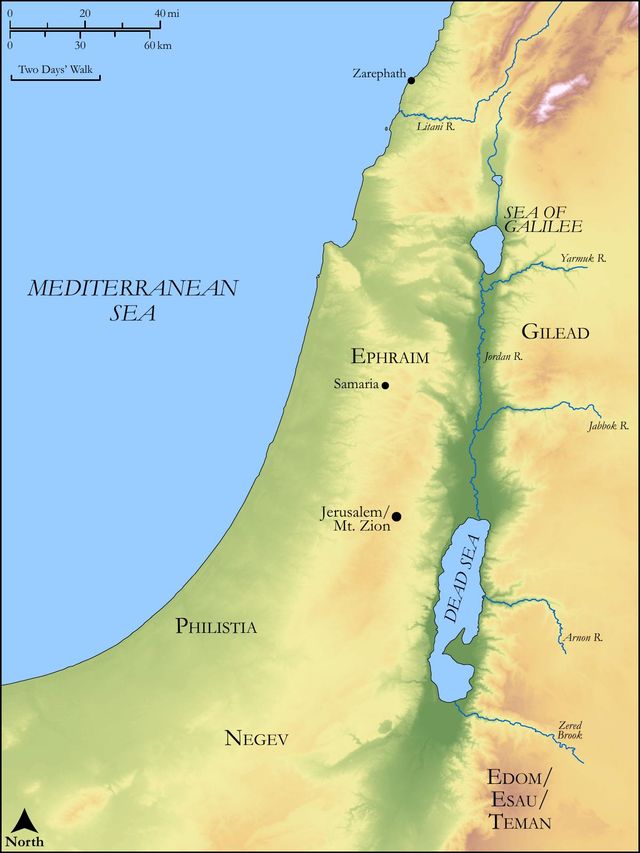
2.How far this possession shall extend, Oba 1:19, Oba 1:20. This is described in Jewish language, which speaks the accession made to the land of Israel, after the return out of captivity into Babylon. The captivity of this host of Israel, that is, this host of Israel that have been so long in captivity and now they have come back are still called the children of the captivity, these shall not only recover their own land, but shall gain ground upon their neighbours adjoining to them, some of whom shall become proselytes and shall incorporate with the Jews, who, by possessing them in a holy communion, possess their land. We must reckon ourselves truly enriched by the conversion of our neighbours to the fear of God and the faith of Christ, and their coming to join with us in the worship of God. Such an accession to our Christian communion we must reckon to be more our wealth and strength than an accession to our estates. Or, The ancient inhabitants of those lands that were carried away into captivity being lost, and never returning to their estates, the children of Israel shall take possession of that which lies next them; for their numbers shall so increase that their own land shall be too strait for them, and their neighbours' estates shall escheat to them ob defectum sanguinis - through default of heirs. They shall enter upon that which is adjoining to them. The country of Esau shall be possessed by those of the south parts of Canaan, for to them it lies contiguous. Those of the plain, on the west of Canaan, which was a champaign country, shall enter upon the land of the Philistines, their neighbours. Those of Judah, which was the chief of the two returning tribes, shall possess the field of Ephraim and Samaria, which before belonged to the ten tribes; and Benjamin, the other tribe, shall possess Gilead on the other side of Jordan, which had belonged to the two tribes and a half. The kingdom of Israel shall join with that of Judah both in civil and sacred interests, and, as friends and brethren, shall mutually possess and enjoy one another; and both together shall possess the Canaanites, even to Zarephath, which belongeth to Zidon; and Jerusalem shall possess the cities of the south, even to Sepharad. Thus did the Jews enlarge their borders on all sides. The modern rabbin teach their scholars by Zarephath and Sepharad to understand France and Spain, grounding upon this a foolish groundless expectation that some time or other the Jews shall be masters of those countries; and they call and count the Christians Edomites, over whom they are to have dominion. But the promise here, no doubt, has a spiritual signification, and had its accomplishment in the setting up of the Christian church, the gospel-Israel, in the world, and shall have its accomplishment more and more in the enlargement of it and the additions made to it, till the mystical body is completed. When ministers and Christians prevail with their neighbours to come to Christ, to yield themselves to the Lord, they possess them. The converts that Abraham had are said to be the souls that he had gotten, Gen 12:5. The possession is gained, not vi et armis - by force and arms; for the weapons of our warfare are not carnal, but spiritual; it is by the preaching of the gospel, and the power of divine grace going along with it, that this possession is got and kept.
IV.That the kingdom of the Redeemer shall be erected and maintained, to the comfort of his loyal subjects and the terror and shame of all his enemies (Oba 1:21): The kingdom shall be the Lord's, the Lord Christ's. God shall give it to him, by putting all things into his hand, all power both in heaven and in earth; men shall give it to him, by resigning themselves to him as his willing people, and appointing him their head. Now the work of kings is to protect their subjects and suppress their enemies; and this Christ will do; he will both reward and punish.
1.The mountain of Zion shall be saved; on it saviours shall come, the preachers of the gospel, who are called saviours, because their business is to save themselves and those that hear them; and in this they are workers together with Christ, but to little purpose if he by his grace did not work together with them.
2.The mountain of Esau shall be judged; and the same that come as saviours on Mount Zion shall judge the mountain of Esau; for the word of the gospel in their mouth, that saves believers, judges unbelievers, convinces and condemns them. Christ's ministers are saviours on Mount Zion when they preach that he that believes shall be saved; but they judge the mount of Esau when they preach that he that believeth not shall be damned, which they are not only commissioned, but commanded to do, Mar 16:16. And in the course of God's providence his scripture is fulfilled; when God raises up friends to the church in her distress (as he raised up judges to deliver Israel of old, Jdg 2:16), then saviours come on Mount Zion, to save it from being sunk and ruined; and when the enemies of the church are brought down, and their power broken, then is the mount of Esau judged; and this shall be done in every age in such a way as God thinks best; we may depend upon it that the gates of hell shall not prevail against the church, but the church shall prevail against them; for the kingdom shall be the Lord's; the kingdoms of the world shall become his, and he has taken, and will take, to himself his great power and reign.
Historical interpretation
Historical reception
6 surviving comments on this verse. Each one is dated, so this reads as a timeline rather than a list.
Select a marker to jump to its quote. Markers stagger vertically where authors wrote within a few decades of each other.
The Hebrews, like a fire, will consume the Edomites like stubble. If anything remains, they will scatter it. What David and Amaziah had begun was accomplished by the Jews after their return, when many Israelites who came back from Persia joined them, and the Edomites were deprived of any form of domination and were forced to change their religion and to embrace the Jewish rituals.
Edom is subjugated and will be devoured by the hostile nations with whom it formerly was in league against Jacob. The remnant, however, will be on Mount Zion, where there will be salvation and holiness. The interpretation here is, either it is that the Lord himself will return to the temple which he left because of sin, or there will be absolute holiness, that is, the Holy of Holies will once again be established. And the house of Jacob will occupy it under the rule of Zerubbabel and Ezra and Nehemiah, who occupied it as Jacob’s descendants. And the house of Jacob (that is, Judah) will be a fire, the house of Joseph (that is, the ten tribes of Samaria) a flame. But the house of Esau, that is, the Edomites, who nevertheless raged and cruelly stood against their brother, will be turned into stubble. And as fire and flames devour stubble, so the two kingdoms in union with one another will destroy Edom and devour it. And there will be nothing left of the people of Edom that might be able to announce the destruction of the adversary to the neighboring nations. For this is why the Septuagint translates pyrophoros, which we interpret as “stubble,” as nearest to the ancient way of speaking.
In mount Zion, there will be salvation, and it will be holy and possess the house of Jacob, those who possess it. And the house of Jacob will be a fire, and the house of Joseph a flame, and the house of Esau straw. They will set them on fire and consume them, and there will be no survivors in the house of Esau, for the Lord has spoken. The Septuagint version: In mount Zion there will be salvation, and it will be holy, and possess the house of Jacob, those who possess it. And the house of Jacob will be a fire, and the house of Joseph a flame, but the house of Esau will be stubble; they will set them on fire and consume them. There will be no survivor for the house of Esau, for the LORD has spoken. The land of Edom will be a devastation; every ally will plunder it and there will be no survivors from it, for the LORD has spoken. The survivors of the house of Jacob will possess the land of Mount Zion. There will be deliverance and holiness, and the house of Jacob will possess their inheritance. The LORD Himself will return to the temple, which He had previously forsaken because of their sins, or it will be completely holy, that is, the Holy of Holies. And the house of Jacob shall possess Zorobabel, and Esdras, and Nehemiah, those who have inherited. And the house of Jacob, that is, Judah, shall be fire, and the house of Joseph, that is, the ten tribes, shall be flame. For from Joseph was born Ephraim, from which tribe the kingdom of Samaria arose; but the house of Esau, that is, the Edomites, who were so fierce and cruel against their brother, shall be turned into stubble. And just as fire and flame quickly devour stubble, so the two kingdoms under the rod of one alliance, according to the book of Ezekiel (Ezek. XVII), shall lay waste to Edom and consume it, and there shall be no remnant of the people who can announce the overthrow of their adversaries to neighboring nations. This is indeed what the LXX translated as πυροφόρον, which we render as Frumentarium, according to the language of ancient discourse; for they called those who are now called Agentes in rebus or Veredarios, the Ancient Frumentarios. But it is better to follow the Hebrew itself, that is, Sarid (), which means either remaining, according to Aquila, or escaping, according to Symmachus, or according to Theodotion and the fifth edition, residue. But all these things will be done because the Lord has spoken, and what He has commanded, He has done. Otherwise: With the works of the flesh destroyed, and the earthly rule laid waste, there will be salvation in the Church for those who have not come forth from their mother. And in her will dwell the holy one, of whom it is said in Isaiah: Holy, holy, holy is the Lord God of hosts (Isaiah 6:3), for both the one who sanctifies and those who are sanctified are from one. And the house of the supplanter Jacob will possess those who had possessed themselves as heirs, making Christians out of the persecutors, and receiving even the Edomites into the faith of the Church. But the house of Esau will be turned into stubble. And just as fire cannot sustain the proximity of straw, so the argument of Jacob, which is inflamed by the word of the Lord, cannot be sustained: for the words of the Lord are tested by fire (Ps. 17:31), and the flame of Joseph, who is interpreted as 'increase' (Gen. 37), because he was sold to his brothers and fed the people in Egypt, will not be able to sustain the house of Esau: but at the first encounter, their sophisms will be turned to nothing. And they will be devoured for their own salvation, according to what is said in the blessing of Isaac to Esau: 'But I have made him your lord, and have subjected all his brothers to him as his servants: and with grain also will you serve your brother' (Gen. 27:37). And there shall be no remnant of the house of Esau, when all things shall bow to Christ, of those in heaven and on earth, and under the earth (Philippians 2), and all things shall be subjected to him, so that God may be all in all. But because Esau had built upon the foundation of Christ with hay, wood, and straw (1 Corinthians 3): therefore the house of Jacob and Joseph shall be turned into fire and flame, imitating their Lord who says: I am a consuming fire (Deuteronomy 4:24), so that the pure wheat may be gathered into the barns after the chaff of sinners is consumed. All the things we have said, and all the things we are about to say, the Jews promise for themselves in the future, when they will accept the Antichrist instead of Christ, fulfilling the prophecy of the Lord Savior: 'I came in the name of my Father, and you did not receive me: if another comes in his own name, you will receive him' (John 5:43). And whatever we have interpreted against Edom, they dream against the Roman kingdom: what we say is either already fulfilled according to history under Zorobabel, or certainly according to prophecy, and mystical understandings happen daily in the Church, and are fulfilled in the kingdom of the soul against the flesh, in each individual. But we say that the frumentarium, according to the allegory, ceases among heretics when there is no one among them who boasts of having the grain of wheat, which is dead in the earth, and the bread from heaven. There are those who think that it is not πυρφόρον, that is, frumentarium, but πυρφόρον, that is, one who can carry a little fire, as translated by the Seventy. Therefore, agreeing with the various interpretations, we will say according to the allegory that not only the frumentarium will cease among heretics, but also the one who pretends to have the light of Christ. For even Satan disguises himself as an angel of light (2 Corinthians 11).
The spiritual interpretation is as follows: Through destruction of the works of the flesh and the desolation of earthly kingdoms, there will be salvation in the church for those who do not go out from their mother church. And the saints who die inside her—concerning whom it is said in Isaiah, “Holy, holy, holy, Lord God of Sabbaoth,” because it refers to those whom he sanctifies as well as those who are sanctified—all are from one and the same church. And the house of Jacob the supplanter will occupy that which they possess by heredity from those who persecuted the Christians. And Edom itself will be received by faith into the church.… The house of Esau will not survive, for when the wise men [who came from Edom] come to see Jesus, they will be turned into nothing, that is, they will be absorbed into his salvation near the same place where, in blessing, Isaac said to Esau, “I have given him your master, all your sons I have given to him as servants.” And there will be no remnant of the house of Esau left when all the heavens and earth bow to Christ and hell and the universe is subjected to him so that God may be all in all.
The prosperity of Israel was made manifest as well as the punishment of their wicked enemies.… Yahweh proved himself as a true king to his people because he brought the very salvation they needed.
The foolish Edomites thought that they alone were about to possess the house of Jacob. Instead the land was divided with them and with the Chaldeans. That very unforseen thing was turned against them, it says. They would be possessed by the house of Jacob and likewise be consumed like chaff or stubble by a flame. And the house of Jacob will be a fire, but the house of Joseph will be only a flame, and thus not as strong. And they will be devoured internally so that among all the tribes Jacob and Joseph will be unable to come together as one. But the other side of this fiery trope should also be seen, for the house of Jacob is called a fire and the house of Joseph a flame. It is not unreasonable to understand in the literal sense the house of Jacob as those from Judah and Benjamin. It is just as true that the house of Joseph represents Samaria, specifically, the ten tribes who were sometimes kings of the Ephraimites, since Manasseh and Ephraim were born from Joseph. Israel will possess the land of Edom and possess all of its confines to the south. They will capture no less than Mount Ephraim, Samaria, Benjamin and Gilead—which were the names of those areas when their leader, Joshua, the successor of Moses, apportioned the land to the tribes of Israel. But after Israel was devastated at the hand of Assyria and again after the attack of Nebuchadnezzar, ruled by Phua and Shalmanezer, he predicts they will once again inhabit the land after they are released from their former captivity.
Continue studying Obadiah 1:18 across the web’s major study libraries — every link below opens this exact verse, chapter, or book on the destination site.
Read & Compare
 BibleGatewayThis verse in more than 200 translations and 70 languages.
 Bible.comThe YouVersion reader — hundreds of translations, reading plans, and highlights.
 ESV.orgCrossway's official English Standard Version reader.
 NET BibleThe NET translation with 60,000+ translators' notes on every rendering decision.
 STEP BibleTyndale House's free study tool — original text, vocabulary, and scholarly resources.
 BibliaLogos Bible Software's free web reader.
 USCCBThe New American Bible (Revised Edition) with the U.S. bishops' study notes.
Commentaries
 BibleHub CommentariesDozens of classic commentaries on this verse, gathered on one page.
 StudyLightMore than 100 commentary sets — the largest collection on the web.
 BibleRefPlain-English commentary on what this verse means, verse by verse.
 Enduring WordDavid Guzik's free commentary on this chapter, widely used by Bible teachers.
 Bible Study ToolsVerse commentary alongside Greek and Hebrew study aids.
Original Language & Research
- BibleHub InterlinearThe verse word by word — original language, transliteration, and English.
- BibleHub LexiconEvery word's original-language definition and Strong's entry.
 Blue Letter BibleDeep-study tools — Strong's numbers, concordance, and word studies.
 SefariaThe Hebrew text with Rashi and centuries of Jewish commentary.
Sermons, Hymns & Audio


TrulyRandomVerse is not affiliated with these sites and doesn’t control their content. They’re linked because they’re genuinely useful.
Summary
Obadiah 1:18 delivers a powerful prophetic declaration regarding the decisive and complete judgment of Edom, represented by "the house of Esau," at the hands of Israel, symbolized by "the house of Jacob" and "the house of Joseph." This verse vividly portrays the overwhelming triumph of God's covenant people over their long-standing adversary, underscoring divine retribution, the vindication of Israel, and the absolute sovereignty of the LORD in orchestrating historical outcomes.
Context
ShowHideLiterary Context
The book of Obadiah is the shortest book in the Old Testament, a concise oracle primarily directed against Edom. The preceding verses (Obadiah 1:1-14) detail Edom's pride, treachery, and violence against Judah, particularly their complicity during Jerusalem's destruction by foreign invaders, as highlighted in Obadiah 1:11-14. This verse, Obadiah 1:18, marks a pivotal shift in the prophecy, moving from the condemnation of Edom to the glorious future of Israel. It is part of the concluding section (Obadiah 1:15-21) which describes "the day of the LORD" against all nations, culminating in Israel's restoration and dominion. The imagery of fire consuming stubble serves as a climactic depiction of the finality of Edom's judgment and Israel's ultimate triumph.
Historical & Cultural Context
The animosity between Israel and Edom (descendants of Jacob and Esau, respectively) was deeply rooted, stemming from the biblical narrative of the twin brothers (see Genesis 25:23). Edom, situated in the mountainous region south of the Dead Sea, often acted as an antagonist to Israel throughout their history, refusing passage during the Exodus (Numbers 20:14-21) and later participating in raids and betrayals. Their most egregious act, which forms the immediate backdrop for Obadiah's prophecy, was their gloating over and active participation in the Babylonian conquest of Jerusalem in 586 BC. Culturally, the use of "fire" and "stubble" imagery was common in the prophets of Israel to denote complete destruction and the vulnerability of the defeated. The concept of "house" (bayith) signified not just a physical dwelling but an entire lineage, family, and national identity, emphasizing the comprehensive nature of the judgment.
Key Themes
ShowHideObadiah 1:18 profoundly contributes to several overarching themes within the book and broader biblical theology. Foremost is the theme of Divine Judgment and Retribution, where God repays Edom for their violence against His people, demonstrating His unwavering justice. The imagery of Israel as an all-consuming fire and Edom as easily destroyed stubble underscores the inevitability and totality of this judgment, a common motif seen in passages like Isaiah 5:24. Another crucial theme is Israel's Vindication and Restoration. "The house of Jacob" and "the house of Joseph" represent the unified nation of Israel, encompassing both the southern kingdom of Judah and the northern tribes (often associated with Ephraim/Joseph), rising as God's instrument of judgment. This signifies God's enduring faithfulness to His covenant people and their future triumph over adversaries, echoing promises found in Amos 9:11-15. Finally, the verse powerfully asserts the Sovereignty of God over nations and history. The concluding declaration, "for the LORD hath spoken it," elevates the prophecy from human conjecture to an unalterable divine decree, guaranteeing its fulfillment and affirming God's ultimate control over the destinies of all peoples, a truth reinforced in Isaiah 46:10.
Exposition and Analysis
ShowHideKey Word Analysis
ShowHideThis term (H1004) is used four times in this single verse, emphasizing the collective identity of the groups involved: "the house of Jacob," "the house of Joseph," and "the house of Esau." Beyond a mere dwelling, bayith signifies a family, lineage, or entire nation, highlighting that the prophecy concerns the destinies of these distinct peoples. The repetition underscores the comprehensive nature of the judgment and the national scope of the conflict.
As a primitive word (H784), 'êsh denotes fire in its literal and figurative senses. Here, it is a potent metaphor for the destructive power and divine wrath that Israel (Jacob) will wield. In biblical contexts, fire often symbolizes judgment, purification, and the consuming presence of God, indicating that Israel's action against Edom is divinely sanctioned and empowered.
Derived from a root meaning "to be dry," qash (H7179) refers to dry straw or chaff—something worthless, easily combustible, and utterly vulnerable to fire. This stark image contrasts sharply with the "fire" and "flame" of Israel, emphasizing Edom's utter helplessness and the ease with which they will be consumed and annihilated in the face of God's determined judgment.
This primitive root (H398) means "to eat" or "to consume," literally or figuratively. In this context, it vividly describes the complete destruction of Edom. The fire will not merely scorch but utterly "devour" the stubble, leaving nothing behind. This word reinforces the finality and totality of the judgment, ensuring "there shall not be any remaining."
Verse Breakdown
ShowHide"And the house of Jacob shall be a fire,"
This clause establishes Jacob (representing the southern kingdom of Judah and the broader Israelite nation) as the agent of divine judgment, endowed with the destructive power of fire. It signifies their active role in executing God's will against Edom.
"and the house of Joseph a flame,"
Parallel to the previous clause, this identifies Joseph (representing the northern tribes, particularly Ephraim) as a "flame." The imagery of fire and flame together underscores the unified and irresistible force of the entire Israelite nation in their appointed task of judgment.
"and the house of Esau for stubble,"
This clause starkly contrasts Edom (the house of Esau) with Israel. Edom is depicted as dry, worthless stubble—utterly vulnerable and easily consumed, highlighting their complete helplessness before the divine judgment channeled through Israel.
"and they shall kindle in them, and devour them;"
This describes the decisive action. "They" refers to the house of Jacob and Joseph. They will ignite the "stubble" of Esau and completely consume it. This phrase emphasizes the active and destructive nature of Israel's role, leading to the total annihilation of Edom.
"and there shall not be [any] remaining of the house of Esau;"
This powerful declaration underscores the absolute finality and completeness of Edom's destruction. It signifies the end of Edom as a distinct national entity, a direct consequence of their actions against God's people.
"for the LORD hath spoken [it]."
This concluding phrase serves as a divine guarantee. It attributes the entire prophecy and its certain fulfillment to the sovereign will and authoritative word of Yahweh (the LORD). This statement removes any doubt about the outcome, affirming God's ultimate control over history and nations.
Literary Devices
ShowHideObadiah 1:18 is rich in Metaphor, which is the primary literary device driving its powerful imagery. "The house of Jacob" and "the house of Joseph" are not literally fire and flame, nor is "the house of Esau" literally stubble. Instead, these comparisons vividly convey the overwhelming power of Israel as an instrument of divine judgment and the utter vulnerability and destined destruction of Edom. The contrast between the consuming fire and the consumed stubble creates a striking visual. Parallelism is also evident in the structure, particularly in the phrases "the house of Jacob shall be a fire, and the house of Joseph a flame," which reinforces the unified and comprehensive nature of Israel's destructive power. The phrase "there shall not be [any] remaining" employs Hyperbole to emphasize the totality and finality of Edom's demise, signifying their complete eradication as a distinct nation. Finally, the concluding statement, "for the LORD hath spoken it," functions as a Divine Fiat or Declaration, lending ultimate authority and certainty to the prophecy, underscoring God's absolute sovereignty and the inevitability of His word.
Theological and Thematic Connections
ShowHideObadiah 1:18 encapsulates profound theological truths regarding divine justice, the consequences of opposing God's people, and the ultimate triumph of God's redemptive plan. It illustrates that God is not indifferent to the injustices committed against His covenant people, and that retribution, though delayed, is certain and complete. The prophecy serves as a stark reminder that those who align themselves against God's purposes or actively participate in the oppression of His chosen ones will ultimately face His consuming judgment. Conversely, for God's people, it offers a powerful message of hope and vindication, assuring them that their oppressors will not prevail indefinitely, and that God will faithfully uphold His promises of restoration and dominion. This divine decree underscores that history moves according to God's sovereign word, ensuring that His ultimate will for justice and salvation will be accomplished.
Reflection and Application
ShowHideObadiah 1:18, while rooted in a specific historical conflict, offers timeless principles for personal and communal reflection. It powerfully reminds us that God is a God of justice who will ultimately bring all injustice to account. In a world where evil often seems to triumph and the oppressed suffer, this verse provides a profound assurance that divine reckoning is certain and comprehensive. It encourages believers to trust in God's perfect timing and His unwavering commitment to righteousness, even when circumstances seem bleak. For those who feel overlooked, persecuted, or wronged, it offers a deep well of hope, affirming that God sees their plight and will act on their behalf, ultimately bringing about a reversal of fortunes where righteousness prevails. Conversely, it serves as a solemn warning against pride, malice, and any opposition to God's people or His purposes, reminding us that such actions incur divine displeasure and inevitable judgment. Our response should be one of humble submission to God's will, confident in His justice, and compassionate toward those who suffer, recognizing that true vindication comes from Him alone.
Questions for Reflection
ShowHideFAQ
ShowHideWhat is the historical significance of the conflict between Jacob and Esau, and how does it relate to this prophecy?
ShowHideThe conflict between Jacob and Esau, twin sons of Isaac, began even before their birth, with God declaring that "the older shall serve the younger" (Genesis 25:23). This fraternal rivalry, marked by Esau's impulsive sale of his birthright and Jacob's deceptive acquisition of the blessing, laid the foundation for the enduring national animosity between their descendants: Israel (from Jacob) and Edom (from Esau). Throughout their history, Edom consistently acted with hostility towards Israel, refusing passage during the Exodus (Numbers 20:14-21), and most significantly, participating in or gloating over Jerusalem's destruction by Babylon in 586 BC, as detailed in Obadiah 1:10-14. Obadiah 1:18, therefore, represents the culmination of this centuries-long divine judgment against Edom for their persistent pride, treachery, and lack of brotherly compassion towards Israel, fulfilling the ancient prophecy of their subservience and ultimate demise.
Christ-Centered Fulfillment
ShowHideObadiah 1:18, while specifically prophesying the historical judgment of Edom by Israel, finds its ultimate and spiritual fulfillment in the person and work of Jesus Christ. The "house of Jacob" and "house of Joseph" as agents of consuming fire foreshadow the greater spiritual Israel—the Church—empowered by the Holy Spirit to participate in Christ's final victory over all spiritual adversaries. Just as Edom, representing the ungodly world system and those who reject God's covenant, was utterly consumed like "stubble," so too will all unrighteousness and opposition to God be definitively judged and abolished by Christ. Jesus himself speaks of a coming judgment where the wicked will be like "chaff" consumed by "unquenchable fire" (Matthew 3:12). The promise that "there shall not be any remaining of the house of Esau" points to the absolute finality of Christ's judgment, where every enemy will be put under His feet (1 Corinthians 15:25). Moreover, the vindication and restoration of Israel find their truest expression in the spiritual blessings and eternal inheritance granted to all who are "in Christ," who is the true seed of Abraham and the ultimate fulfillment of God's covenant promises, uniting Jew and Gentile into one new humanity (Galatians 3:29). Thus, Obadiah 1:18 ultimately points to Christ's triumphant reign, where He will execute perfect justice and establish His eternal kingdom, leaving no remnant of evil or opposition to His glorious rule (Revelation 19:11-21).