


John 12:20
- ἮσανĒsanThere wereG1510V-IAI-3PVerb Imperfect Active Indicative 3rd Plural
- δὲdenowG1161CONJConjunction
- ἝλληνέςHellēnesGreeksG1672N-NPM-LGNoun Nominative Plural Masculine Location Gentilic
- τινεςtinescertainG5100X-NPMIndefinite pronoun Nominative Plural Masculine
- ἐκekamongG1537PREPPreposition
- τῶνtōnthoseG3588T-GPMDefinite article Genitive Plural Masculine
- ἀναβαινόντωνanabainontōncoming upG305V-PAP-GPMVerb Present Active Participle Genitive Plural Masculine
- ἵναinathatG2443CONJConjunction
- προσκυνήσωσινproskunēsōsinthey may worshipG4352V-AAS-3PVerb Aorist Active Subjunctive 3rd Plural
- ἐνenatG1722PREPPreposition
- τῇtēatheG3588T-DSFDefinite article Dative Singular Feminine
- ἑορτῇhe'ortēafeastG1859N-DSFNoun Dative Singular Feminine
English is a literal word-by-word gloss of the Greek, not the KJV's wording. Why?
This is the original text the KJV's translators worked from — each Greek word with its own literal English meaning in this verse, prepared by scholars at Tyndale House, Cambridge. The KJV translates whole sentences, not word by word, so its wording differs: one Greek word can become several English words, and the KJV may choose “charity” where the gloss reads “love”. Both are faithful — they answer different questions. For the KJV's own rendering, switch to the KJV text.
Details
See on the biblical-era map
Study this verse
Public-domain commentary
Matthew Henry
From his Commentary on the Whole Bible. Henry comments on passages, not single verses — this entry covers John 12:20–26. His four-level outline is real structure in the source text, so it is rendered as structure.
Honour is here paid to Christ by certain Greeks that enquired or him with respect. We are not told what day of Christ's last week this was, probably not the same day he rode into Jerusalem (for that day was taken up in public work), but a day or two after.
I.We are told who they were that paid this honour to our Lord Jesus:
Certain Greeks among the people who came up to worship at the feast, Joh 12:20. Some think they were Jews of the dispersion, some of the twelve tribes that were scattered among the Gentiles, and were called Greeks, Hellenist Jews; but others think they were Gentiles, those whom they called proselytes of the gate, such as the eunuch and Cornelius. Pure natural religion met with the best assistance among the Jews, and therefore those among the Gentiles who were piously inclined joined with them in their solemn meetings, as far as was allowed them. There were devout worshippers of the true God even among those that were strangers to the commonwealth of Israel. It was in the latter ages of the Jewish church that there was this flocking of the Gentiles to the temple at Jerusalem, - a happy presage of the taking down of the partition-wall between Jews and Gentiles. The forbidding of the priests to accept of any oblation or sacrifice from a Gentile (which was done by Eleazar the son of Ananias, the high priest), Josephus says, was one of those things that brought the Romans upon them, War 2.409-410. Though these Greeks, if uncircumcised, were not admitted to eat the passover, yet they came to worship at the feast. We must thankfully use the privileges we have, though there may be others from which we are shut out.
II.What was the honour they paid him:
they desired to be acquainted with him, Joh 12:21. Having come to worship at the feast, they desired to make the best use they could of their time, and therefore applied to Philip, desiring that he would put them in a way to get some personal converse with the Lord Jesus.
1.Having a desire to see Christ, they were industrious in the use of proper means. They did not conclude it impossible, because he was so much crowded, to get to speak with him, nor rest in bare wishes, but resolved to try what could be done. Note, Those that would have the knowledge of Christ must seek it.
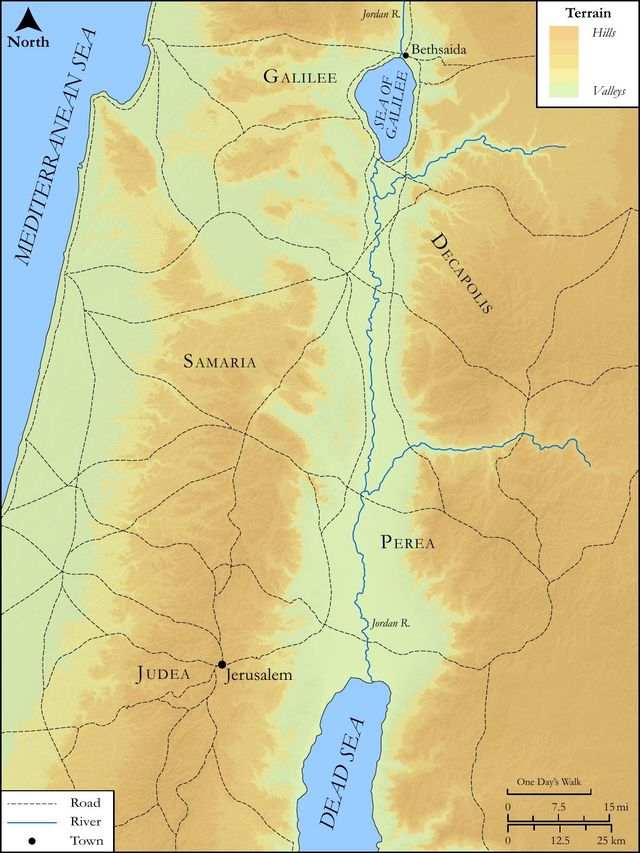
2.They made their application to Philip, one of his disciples. Some think that they had acquaintance with him formerly, and that they lived near Bethsaida in Galilee of the Gentiles; and then it teaches us that we should improve our acquaintance with good people, for our increase in the knowledge of Christ. It is good to know those who know the Lord. But if these Greeks had been near Galilee it is probable that they would have attended Christ there, where he mostly resided; therefore I think that they applied to him only because they saw him a close follower of Christ, and he was the first they could get to speak with. It was an instance of the veneration they had for Christ that they made an interest with one of his disciples for an opportunity to converse with him, a sign that they looked upon him as some great one, though he appeared mean. Those that would see Jesus by faith now that he is in heaven must apply to his ministers, whom he had appointed for this purpose, to guide poor souls in their enquiries after him. Paul must send for Ananias, and Cornelius for Peter. The bringing of these Greeks to the knowledge of Christ by the means of Philip signified the agency of the apostles, and the use made of their ministry in the conversion of the Gentiles to the faith and the discipling of the nations.
3.Their address to Philip was in short this: Sir, we would see Jesus. They gave him a title of respect, as one worthy of honour, because he was in relation to Christ. Their business is, they would see Jesus; not only see his face, that they might be able to say, when they came home, they had seen one that was so much talked of (it is probable they had seen him when he appeared publicly); but they would have some free conversation with him, and be taught by him, for which it was no easy thing to find him at leisure, his hands were so full of public work. Now that they were come to worship at the feast, they would see Jesus. Note, In our attendance upon holy ordinances, and particularly the gospel passover, the great desire of our souls should be to see Jesus; to have our acquaintance with him increased, our dependence on him encouraged, our conformity to him carried on; to see him as ours, to keep up communion with him, and derive communications of grace from him: we miss of our end in coming if we do not see Jesus.
4.Here is the report which Philip made of this to his Master, Joh 12:22. He tells Andrew, who was of Bethsaida likewise, and was a senior fellow in the college of the apostles, contemporary with Peter, and consults him what was to be done, whether he thought the motion would be acceptable or no, because Christ had sometimes said that he was not sent but to the house of Israel. They agree that it must be made; but then he would have Andrew go along with him, remembering the favourable acceptance Christ had promised them, in case two of them should agree touching any thing they should ask, Mat 18:19. Note, Christ's ministers should be helpful to one another and concur in helping souls to Christ: Two are better than one. It should seem that Andrew and Philip brought this message to Christ when he was teaching in public, for we read (Joh 12:29) of the people that stood by; but he was seldom alone.
III.Christ's acceptance of this honour paid him, signified by what he said to the people hereupon, Joh 12:23, etc., where he foretels both the honour which he himself should have in being followed (Joh 12:23, Joh 12:24) and the honour which those should have that followed him, Joh 12:25, Joh 12:26. This was intended for the direction and encouragement of these Greeks, and all others that desired acquaintance with him.
1.He foresees that plentiful harvest, in the conversion of the Gentiles, of which this was as it were the first-fruits, Joh 12:23. Christ said to the two disciples who spoke a good word for these Greeks, but doubted whether they should speed or no, The hour is come when the Son of Man shall be glorified, by the accession of the Gentiles to the church, and in order to that he must be rejected of the Jews. Observe,
(1.)The end designed hereby, and that is the glorifying of the Redeemer: "And is it so? Do the Gentiles begin to enquire after me? Does the morning-star appear to them? and that blessed day-spring, which knows its place and time too, does that begin to take hold of the ends of the earth? Then the hour is come for the glorifying of the Son of man." This was no surprise to Christ, but a paradox to those about him. Note, [1.] The calling, the effectual calling, of the Gentiles into the church of God greatly redounded to the glory of the Son of man. The multiplying of the redeemed was the magnifying of the Redeemer. [2.] there was a time, a set time, an hour, a certain hour, for the glorifying of the Son of man, which did come at last, when the days of his humiliation were numbered and finished, and he speaks of the approach of it with exultation and triumph: The hour is come.
(2.)The strange way in which this end was to be attained, and that was by the death of Christ, intimated in that similitude (Joh 12:24): "Verily, verily, I say unto you, you to whom I have spoken of my death and sufferings, except a corn of wheat fall not only to, but into, the ground, and die, and be buried and lost, it abideth alone, and you never see any more of it; but if it die according to the course of nature (otherwise it would be a miracle) it bringeth forth much fruit, God giving to every seed its own body." Christ is the corn of wheat, the most valuable and useful grain. Now here is,
[1.]The necessity of Christ's humiliation intimated. He would never have been the living quickening head and root of the church if he had not descended from heaven to this accursed earth and ascended from earth to the accursed tree, and so accomplished our redemption. He must pour out his soul unto death, else he cannot divide a portion with the great, Isa 53:12. He shall have a seed given him, but he must shed his blood to purchase them and purify, must win them and wear them. It was necessary likewise as a qualification for that glory which he was to have by the accession of multitudes to his church; for if he had not by his sufferings made satisfaction for sin, and so brought in an everlasting righteousness, he would not have been sufficiently provided for the entertainment of those that should come to him, and therefore must abide alone.
[2.]The advantage of Christ's humiliation illustrated. He fell to the ground in his incarnation, seemed to be buried alive in this earth, so much was his glory veiled; but this was not all: he died. This immortal seed submitted to the laws of mortality, he lay in the grave like seed under the clods; but as the seed comes up again green, and fresh, and flourishing, and with a great increase, so one dying Christ gathered to himself thousands of living Christians, and he became their root. The salvation of souls hitherto, and henceforward to the end of time, is all owing to the dying of this corn of wheat. Hereby the Father and the Son are glorified, the church is replenished, the mystical body is kept up, and will at length be completed; and, when time shall be no more, the Captain of our salvation, bringing many sons to glory by the virtue of his death, and being so made perfect by sufferings, shall be celebrated for ever with the admiring praises of saints and angels, Heb 2:10, Heb 2:13.
2.He foretels and promises an abundant recompence to those who should cordially embrace him and his gospel and interest, and should make it appear that they do so by their faithfulness in suffering for him or in serving him.
(1.)In suffering for him (Joh 12:25): He that loves his life better than Christ shall lose it; but he that hates his life in this world, and prefers the favour of God and an interest in Christ before it, shall keep it unto life eternal. This doctrine Christ much insisted on, it being the great design of his religion to wean us from this world, by setting before us another world.
[1.]See here the fatal consequences of an inordinate love of life; many a man hugs himself to death, and loses his life by over-loving it. He that so loves his animal life as to indulge his appetite, and make provision for the flesh, to fulfil the lusts thereof, shall thereby shorten his days, shall lose the life he is so fond of, and another infinitely better. He that is so much in love with the life of the body, and the ornaments and delights of it, as, for fear of exposing it or them, to deny Christ, he shall lose it, that is, lose a real happiness in the other world, while he thinks to secure an imaginary one in this. Skin for skin a man may give for his life, and make a good bargain, but he that gives his soul, his God, his heaven, for it, buys life too dear, and is guilty of the folly of him who sold a birth-right for a mess of pottage.
[2.]See also the blessed recompence of a holy contempt of life. He that so hates the life of the body as to venture it for the preserving of the life of his soul shall find both, with unspeakable advantage, in eternal life. Note, First, It is required of the disciples of Christ that they hate their life in this world; a life in this world supposes a life in the other world, and this is hated when it is loved less than that. Our life in this world includes all the enjoyments of our present state, riches, honours, pleasures, and long life in the possession of them; these we must hate, that is, despise them as vain and insufficient to make us happy, dread the temptations that are in them, and cheerfully part with them whenever they come in competition with the service of Christ, Act 20:24; Act 21:13; Rev 12:11. See here much of the power of godliness - that it conquers the strongest natural affections; and much of the mystery of godliness - that it is the greatest wisdom, and yet makes men hate their own lives. Secondly, Those who, in love to Christ, hate their own lives in this world, shall be abundantly recompensed in the resurrection of the just. He that hateth his life shall keep it; he puts it into the hands of one that will keep it to life eternal, and restore it with as great an improvement as the heavenly life can make of the earthly one.
(2.)In serving him (Joh 12:26): If any man profess to serve me, let him follow me, as a servant follows his master; and where I am, ekei kai ho diakonos ho emos estai - there let my servant be; so some read it, as part of the duty, there let him be, to attend upon me; we read it as part of the promise, there shall he be in happiness with me. And, lest this should seem a small matter, he adds, If any man serve me, him will my Father honour; and that is enough, more than enough. The Greeks desired to see Jesus (Joh 12:21), but Christ lets them know that it was not enough to see him, they must serve him. He did not come into the world, to be a show for us to gaze at, but a king to be ruled by. And he says this for the encouragement of those who enquired after him to become his servants. In taking servants it is usual to fix both the work and the wages; Christ does both here.
[1.]Here is the work which Christ expects from his servants; and it is very easy and reasonable, and such as becomes them.
First, Let them attend their Master's movements: If any man serve me, let him follow me. Christians must follow Christ, follow his methods and prescriptions, do the things that he says, follow his example and pattern, walk as he also walked, follow his conduct by his providence and Spirit. We must go whither he leads us, and in the way he leads us; must follow the Lamb whithersoever he goes before us. "If any man serve me, if he put himself into that relation to me, let him apply himself to the business of my service, and be always ready at my call." Or, "If any man do indeed serve me, let him make an open and public profession of his relation to me, by following me, as the servant owns his Master by following him in the streets."
Secondly, Let them attend their Master's repose: Where I am, there let my servant be, to wait upon me. Christ is where his church is, in the assemblies of his saints, where his ordinances are administered; and there let his servants be, to present themselves before him, and receive instructions from him. Or, "Where I am to be in heaven, whither I am now going, there let the thoughts and affections of my servants be, there let their conversation be, where Christ sitteth." Col 3:1, Col 3:2.
[2.]Here are the wages which Christ promises to his servants; and they are very rich and noble.
First, They shall be happy with him: Where I am, there shall also my servant be. To be with him, when he was here in poverty and disgrace, would seem but poor preferment, and therefore, doubtless, he means being with him in paradise, sitting with him at his table above, on his throne there; it is the happiness of heaven to be with Christ there, Joh 17:24. Christ speaks of heaven's happiness as if he were already in it: Where I am; because he was sure of it, and near to it, and it was still upon his heart, and in his eye. And the same joy and glory which he thought recompence enough for all his services and sufferings are proposed to his servants as the recompence of theirs. Those that follow him in the way shall be with him in the end.
Secondly, They shall be honoured by his Father; he will make them amends for all their pains and loss, by conferring an honour upon them, such as becomes a great God to give, but far beyond what such worthless worms of the earth could expect to receive. The rewarder is God himself, who takes the services done to the Lord Jesus as done to himself. The reward is honour, true lasting honour, the highest honour; it is the honour that comes from God. It is said (Pro 27:18), He that waits on his Master (humbly and diligently) shall be honoured. Those that wait on Christ God will put honour upon, such as will be taken notice of another day, though now under a veil. Those that serve Christ must humble themselves, and are commonly vilified by the world, in recompence of both which they shall be exalted in due time.
Thus far Christ's discourse has reference to those Greeks who desired to see him, encouraging them to serve him. What became of those Greeks we are not told, but are willing to hope that those who thus asked the way to heaven with their faces thitherward, found it, and walked in it.
Historical interpretation
Three Centuries of Reception
4 surviving comments on this verse. Each one is dated, so this reads as a timeline rather than a list.
Select a marker to jump to its quote. Markers stagger vertically where authors wrote within a few decades of each other.
"And there were certain Gentiles among them that had come up to worship at the feast: the same came therefore to Philip, who was of Bethsaida of Galilee, and desired him, saying, Sir, we would see Jesus. Philip cometh and telleth Andrew: and again Andrew and Philip tell Jesus." Let us hearken to the Lord's reply. See how the Jews wish to kill Him, the Gentiles to see Him; and yet those, too, were of the Jews who cried, "Blessed is He that cometh in the name of the Lord, the King of Israel." Here, then, were they of the circumcision and they of the uncircumcision, like two house walls running from different directions and meeting together with the kiss of peace, in the one faith of Christ.
(Tr. li. 8) Lo! the Jews wish to kill Him, the Gentiles to see Him. But they also were of the Jews who cried, Blessed is He that cometh in the name of the Lord. So behold them of the circumcision, and them of the uncircumcision, once so wide apart, coming together like two walls, and meeting in one faith of Christ by the kiss of peace.
Philip cometh and telleth Andrew.
Anyone might be perplexed at these words and wonder with what motive certain Greeks should be going up to Jerusalem to worship. Note that they were doing this at the time when the feast was being celebrated according to the Law. For surely no one will say that they went up merely to look at the people there. Certainly it was with the intention of participating in the feast that was suitable for Jews and Jews only that they were journeying up in the company of the Jews. What was the point as regards the motive of worship that was common to both Greeks and Jews?…Since the territory of the Jews was situated near that of the Galileans, and since both they and the Greeks had cities and villages in close vicinity to each other, they were continually intermingling together and interchanging visits, being invited for a variety of occasions. And since it somehow happens that the disposition of idol worshipers is very easily brought to welcome a change for the better, and since nothing is easier than to convict their false worship of being utterly unprofitable, some among them were easily persuaded to change. This does not mean that they fully and perfectly worshiped him who alone is truly God, since they were somewhat divided with regard to the arguments in favor of abandoning idolatry and following the precepts of their own teachers.…
It was then a custom for certain of the inhabitants of Palestine, especially the Greeks, who had the territory of the Jews closely adjoining and bordering on their own, to be impressed in some way by the Jewish habits of thought and to honor the name of one sovereign [deity]. And this was the view current among those Greeks whom we just now mentioned, albeit they did not express it in the same way that we do. And they, not having the tendency to Judaism in full force, nor even having separated themselves from the habits dear to the Greeks but holding an intermediate opinion that inclined both ways, are called “worshipers of God.” People of this kind, therefore, seeing that their own habits of thought were not very sharply distinguished from those of the Jews … were in the habit of going up with the Jews to worship, especially at the national gatherings, not meaning to slight their own religion but as an act of honor to the one all-supreme God.
The temple at Jerusalem was so famous, that on the feast days, not only the people near, but many Gentiles from distant countries came to worship in it; as that eunuch of Candace, Queen of the Ethiopians, mentioned in the Acts. The Gentiles who were at Jerusalem now, had come up for this purpose: And there were certain Gentiles among them who came to worship at the feast.
Continue studying John 12:20 across the web’s major study libraries — every link below opens this exact verse, chapter, or book on the destination site.
Read & Compare
 BibleGatewayThis verse in more than 200 translations and 70 languages.
 Bible.comThe YouVersion reader — hundreds of translations, reading plans, and highlights.
 ESV.orgCrossway's official English Standard Version reader.
 NET BibleThe NET translation with 60,000+ translators' notes on every rendering decision.
 STEP BibleTyndale House's free study tool — original text, vocabulary, and scholarly resources.
 BibliaLogos Bible Software's free web reader.
 USCCBThe New American Bible (Revised Edition) with the U.S. bishops' study notes.
Commentaries
 BibleHub CommentariesDozens of classic commentaries on this verse, gathered on one page.
 StudyLightMore than 100 commentary sets — the largest collection on the web.
 BibleRefPlain-English commentary on what this verse means, verse by verse.
 Enduring WordDavid Guzik's free commentary on this chapter, widely used by Bible teachers.
 Bible Study ToolsVerse commentary alongside Greek and Hebrew study aids.
Original Language & Research
- BibleHub InterlinearThe verse word by word — original language, transliteration, and English.
- BibleHub LexiconEvery word's original-language definition and Strong's entry.
 Blue Letter BibleDeep-study tools — Strong's numbers, concordance, and word studies.
 CNTR CollationThe earliest Greek manuscripts of this verse, collated letter by letter.
Sermons, Hymns & Audio


TrulyRandomVerse is not affiliated with these sites and doesn’t control their content. They’re linked because they’re genuinely useful.
Summary
John 12:20 marks a pivotal moment in Jesus' public ministry, just days before His crucifixion, by introducing the presence of "certain Greeks" among the Jewish pilgrims in Jerusalem. This seemingly incidental detail profoundly signals the imminent expansion of the Gospel message beyond its Jewish origins to encompass all nations, foreshadowing the universal scope of salvation achieved through Christ's redemptive work.
Context
ShowHideLiterary Context
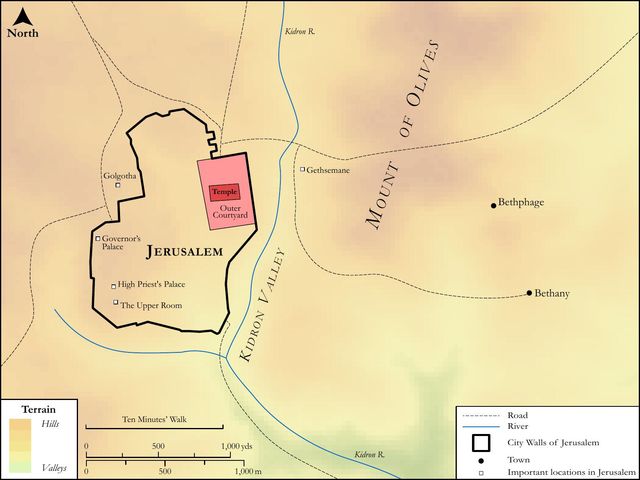
This verse immediately follows Jesus' triumphal entry into Jerusalem, detailed in John 12:12-19. The city is abuzz with the excitement of the Passover feast and the recent, widely publicized raising of Lazarus from the dead, which had significantly amplified Jesus' fame and drawn large crowds. The chief priests and Pharisees are actively plotting to kill Jesus and Lazarus, recognizing the growing popular support for Jesus. Amidst this volatile atmosphere, the arrival of these Greeks, who then seek to "see Jesus" (John 12:21), serves as a direct catalyst for Jesus' profound discourse on His impending "hour" of glorification through death and resurrection, as described in John 12:23-36. Their presence is not merely an observation but a narrative turning point.
Historical & Cultural Context
The Passover feast was one of the three annual pilgrimage festivals, drawing Jews and proselytes from across the Roman Empire and beyond to Jerusalem. The term "Greeks" (Gk. Hellenes) in this context typically refers not to ethnic Greeks from Greece, but to Hellenized Gentiles—non-Jews who had adopted Greek language and culture, which was prevalent throughout the Roman world. These individuals were likely either full proselytes to Judaism or "God-fearers," Gentiles who revered the God of Israel, attended synagogue, and observed some Jewish customs without undergoing full conversion. Their presence at the feast indicates a genuine spiritual seeking and an attraction to the monotheistic worship of the God of Abraham, Isaac, and Jacob, making them spiritually fertile ground for the message of the Messiah.
Key Themes
ShowHideThe introduction of these Greeks prominently highlights the Universal Reach of the Gospel, a theme central to John's Gospel, which emphasizes Jesus as the Lamb of God who takes away the sin of the world. Their appearance foreshadows the breaking down of the barrier between Jew and Gentile, signaling that salvation through Christ is not exclusive to Israel but extends to all nations, fulfilling Old Testament prophecies such as Isaiah 49:6. Furthermore, their desire to "see Jesus" initiates a profound discourse from Jesus concerning His "Hour" of Glorification. This "hour" in John's Gospel consistently refers to the climactic moment of His crucifixion, resurrection, and ascension, which would ultimately lead to Him drawing all people to Himself. The arrival of Gentiles at this precise moment underscores that His sacrificial death would indeed be for the entire world.
Exposition and Analysis
ShowHideKey Word Analysis
ShowHideThis term (G1672) signifies a Hellen (Grecian) or inhabitant of Hellas, but by extension, a Greek-speaking person, especially a non-Jew. In the New Testament, particularly in contexts like John 12:20, it often denotes Gentiles, or non-Jews, who were culturally Hellenized. Their presence at a Jewish feast underscores their spiritual curiosity and openness to the God of Israel, distinguishing them from pagan idolaters and making them receptive to the Messiah.
Derived from G305, meaning "to go up (literally or figuratively)," this verb indicates their pilgrimage to Jerusalem. It implies a deliberate journey with a specific purpose, highlighting their active participation in the religious life associated with the feast. This ascent to Jerusalem was a common practice for pilgrims attending the major festivals, signifying their devotion and anticipation.
Meaning "to fawn or crouch to, i.e. (literally or figuratively) prostrate oneself in homage (do reverence to, adore)." This word describes their fundamental purpose for being at the feast. It denotes an act of profound reverence and adoration, emphasizing their spiritual seeking and their desire to honor God within the context of the Jewish religious system, even as Gentiles.
Verse Breakdown
ShowHide"¶ And there were certain Greeks"
This opening phrase introduces a new, significant element into the narrative. The "certain Greeks" (Gk. tìs Héllēn) are not just any individuals but represent a specific group whose presence is noteworthy. Their identity as "Greeks" immediately broadens the scope of the narrative beyond the Jewish audience, hinting at a universal appeal.
"among them that came up"
This clause places the Greeks within the larger throng of pilgrims who had ascended to Jerusalem. The phrase "among them" suggests they were integrated, at least physically, with the Jewish worshippers, indicating their participation in the Passover pilgrimage. The act of "coming up" (Gk. anabaínō) emphasizes the intentionality of their journey to the holy city for the feast.
"to worship at the feast:"
This final clause clarifies the primary motivation for their journey. Their purpose was to "worship" (Gk. proskynéō), indicating a genuine spiritual desire to participate in the religious observances of the Passover "feast" (Gk. heortḗ). Their presence at this significant Jewish festival, with the intent to worship, highlights their spiritual openness and their connection, however partial, to the God of Israel, setting the stage for their encounter with Jesus.
Literary Devices
ShowHideJohn 12:20 is rich in Symbolism and Foreshadowing. The "Greeks" themselves are symbolic; they represent the broader Gentile world, those outside the covenant people of Israel, who are now beginning to seek Jesus. Their arrival at the Passover feast, a central event in Jewish religious life, is highly symbolic of the breaking down of the traditional boundaries between Jew and Gentile. This event directly Foreshadows the global mission of the church and the universal reach of the Gospel, which will extend "to the end of the earth" (Acts 1:8). The verse also employs Universal Reach as a thematic device; the mere presence of non-Jews seeking to worship at a Jewish festival underscores God's expansive plan of salvation, which has always encompassed all humanity, not just one nation. Their appearance prompts Jesus' discourse on His "hour," linking their seeking directly to the universal implications of His impending death and glorification.
Theological and Thematic Connections
ShowHideThe arrival of the Greeks in John 12:20 is a profound theological statement, signifying the imminent fulfillment of God's ancient promise to bless all nations through Abraham's seed. It marks a turning point where the focus of God's redemptive plan visibly expands beyond the confines of Israel, signaling that the light of the Messiah is for the Gentiles as well. This event directly prompts Jesus to declare that "the hour has come for the Son of Man to be glorified" (John 12:23), linking His impending death and resurrection to the drawing of all people to Himself. It underscores the universal scope of the atonement and the inclusive nature of God's kingdom, where ethnicity and background are no longer barriers to fellowship with God.
Reflection and Application
ShowHideJohn 12:20 serves as a powerful reminder that the Gospel of Jesus Christ is inherently expansive and inclusive, reaching beyond cultural, ethnic, and social boundaries. The presence of these Greeks, seeking to "see Jesus," challenges us to examine our own perspectives on who is "worthy" or "expected" to encounter Christ. It calls us to cultivate a welcoming and outward-focused posture in our faith communities, actively seeking to engage and embrace those from diverse backgrounds who are spiritually curious or seeking truth. This verse encourages us to recognize that God is always at work, drawing people from every corner of the earth to Himself, and that we are called to participate in this global mission. It prompts us to consider how our lives and ministries reflect the universal invitation of the Gospel, ensuring that no one feels excluded from the opportunity to encounter the Savior.
Questions for Reflection
ShowHideFAQ
ShowHideWhat does the term "Greeks" mean in this context, and why is their presence significant?
ShowHideIn the context of John 12:20, "Greeks" (Gk. Héllēn) most likely refers not to ethnic Greeks from Greece, but to Hellenized Gentiles, meaning non-Jewish people who had adopted Greek language and culture. These individuals were likely "God-fearers" or proselytes—Gentiles who revered the God of Israel and participated in Jewish worship, though perhaps not as full converts. Their presence at the Passover feast is highly significant because it signals the breaking down of the traditional barrier between Jew and Gentile, foreshadowing the universal reach of the Gospel. It indicates that people from outside the Jewish covenant were already being drawn to the God of Israel and, by extension, to Jesus, even before His crucifixion and the formal commissioning of the disciples to the Gentiles (as seen in Acts 10). Their desire to "worship at the feast" and later to "see Jesus" (John 12:21) prompts Jesus to speak about His "hour" of glorification through death, which would ultimately draw all people to Himself (John 12:32).
Christ-Centered Fulfillment
ShowHideThe arrival of the Greeks in John 12:20 is a profound Christ-centered fulfillment, marking a pivotal moment where the trajectory of salvation history visibly shifts towards its universal consummation in Jesus. Their desire to "see Jesus" directly precipitates Jesus' declaration that "the hour has come for the Son of Man to be glorified" (John 12:23). This "hour" is the climactic moment of His sacrificial death, resurrection, and ascension, which is the very means by which He would draw all people to Himself (John 12:32). Just as a grain of wheat must fall into the earth and die to bear much fruit (John 12:24), so too must Christ undergo His suffering and death to bring forth a harvest of believers from every nation. The presence of these Gentiles at the Passover feast, a celebration of Israel's deliverance, powerfully foreshadows the new covenant in Christ's blood, which offers spiritual deliverance to all who believe, regardless of their ethnic origin. This scene anticipates the Great Commission (Matthew 28:19-20) and the outpouring of the Spirit on all flesh (Acts 2:17), demonstrating that Christ's redemptive work was always intended to reconcile "both Jew and Gentile in one body through the cross" (Ephesians 2:16), thereby fulfilling God's ancient promise to bless all the families of the earth through Him (Genesis 12:3).