


Job 22:1
Bible text: King James Version (1769 Blayney text) · Public domain
Bible text: Berean Standard Bible · Public domain
Bible text: American Standard Version (1901) · Public domain
Bible text: World English Bible, Messianic edition · Public domain
Bible text: Geneva Bible (1599) · Public domain
Bible text: Young's Literal Translation · Public domain
- וַיַּעַןVai·ya·'anand he answeredH6030Conj-w ¦ V-Qal-ConsecImperf-3msVerb Qal Consecutive Imperfect 3rd Singular Masculineוַandיַּעַןhe answered
- אֱלִיפַז'e·li·FazEliphazH464N-proper-mNoun Proper Masculine
- הַתֵּמָנִיha·te·ma·Nithe TemaniteH8489Art ¦ N-msNoun Gentilic Singular Masculine AbsoluteהַtheתֵּמָנִיTemanite
- וַיֹּאמַרvai·yo·Marand he saidH559Conj-w ¦ V-Qal-ConsecImperf-3msVerb Qal Consecutive Imperfect 3rd Singular Masculineוַandיֹּאמַרhe said
English is a literal word-by-word gloss of the Hebrew, not the KJV's wording. Why?
This is the original text the KJV's translators worked from — each Hebrew word with its own literal English meaning in this verse, prepared by scholars at Tyndale House, Cambridge. The KJV translates whole sentences, not word by word, so its wording differs: one Hebrew word can become several English words, and the KJV may choose “the LORD” where the gloss reads “Yahweh”. Both are faithful — they answer different questions. For the KJV's own rendering, switch to the KJV text.
Details
See on the biblical-era map
Study this verse
Public-domain commentary
Matthew Henry
From his Commentary on the Whole Bible. Henry comments on passages, not single verses — this entry covers Job 22:1–4. His two-level outline is real structure in the source text, so it is rendered as structure.
Eliphaz here insinuates that, because Job complained so much of his afflictions, he thought God was unjust in afflicting him; but it was a strained innuendo. Job was far from thinking so. What Eliphaz says here is therefore unjustly applied to Job, but in itself it is very true and good,
I.That when God does us good it is not because he is indebted to us; if he were, there might be some colour to say, when he afflicts us, "He does not deal fairly with us." But whoever pretends that he has by any meritorious action made God his debtor, let him prove this debt, and he shall be sure not to lose it, Rom 11:35. Who has given to him, and it shall be recompensed to him again? But Eliphaz here shows that the righteousness and perfection of the best man in the world are no real benefit or advantage to God, and therefore cannot be thought to merit any thing from him.
1.Man's piety is no profit to God, no gain, Job 22:1, Job 22:2. If we could by any thing merit from God, it would be by our piety, our being righteous, and making our way perfect. If that will not merit, surely nothing else will. If a man cannot make God his debtor by his godliness, and honesty, and obedience to his laws, much less can he by his wit, and learning, and worldly policy. Now Eliphaz here asks whether any man can possibly be profitable to God. It is certain that he cannot. By no means. He that is wise may be profitable to himself. Note, Our wisdom and piety are that by which we ourselves are, and are likely to be, great gainers. Wisdom is profitable to direct, Ecc 10:10. Godliness is profitable to all things, Ti1 4:8. If thou be wise, thou shalt be wise for thyself, Pro 9:12. The gains of religion are infinitely greater than the losses of it, and so it will appear when they are balanced. But can a man be thus profitable to God? No, for such is the perfection of God that he cannot receive any benefit or advantage by men; what can be added to that which is infinite? And such is the weakness and imperfection of man that he cannot offer any benefit or advantage to God. Can the light of a candle be profitable to the sun or the drop of the bucket to the ocean? He that is wise is profitable to himself, for his own direction and defence, his own credit and comfort; he can with his wisdom entertain himself and enrich himself; but can he so be profitable to God? No; God needs not us nor our services. We are undone, for ever undone, without him; but he is happy, for ever happy, without us. Is it any gain to him, any real addition to his glory or wealth, if we make our way perfect? Suppose it were absolutely perfect, yet what is God the better? Much less when it is so far short of being perfect.
2.It is no pleasure to him. God has indeed expressed himself in his word well pleased with the righteous; his countenance beholds them and his delight is in them and their prayers; but all that adds nothing to the infinite satisfaction and complacency which the Eternal Mind has in itself. God can enjoy himself without us, though we could have but little enjoyment of ourselves without our friends. This magnifies his condescension, in that, though our services be no real profit or pleasure to him, yet he invites, encourages, and accepts them.
II.That when God restrains or rebukes us it is not because he is in danger from us or jealous of us (Job 22:4):
"Will he reprove thee for fear of thee, and take thee down from thy prosperity lest thou shouldst grow too great for him, as princes sometimes have thought it a piece of policy to curb the growing greatness of a subject, lest he should become formidable?" Satan indeed suggested to our first parents that God forbade them the tree of knowledge for fear of them, lest they should be as gods, and so become rivals with him; but it was a base insinuation. God rebukes the good because he loves them, but he never rebukes the great because he fears them. He does not enter into judgment with men, that is, pick a quarrel with them and seek occasion against them, through fear lest they should eclipse his honour or endanger his interest. Magistrates punish offenders for fear of them. Pharaoh oppressed Israel because he feared them. It was for fear that Herod slew the children of Bethlehem and that the Jews persecuted Christ and his apostles. But God does not, as they did, pervert justice for fear of any. See Job 35:5-8.
Historical interpretation
Four Centuries of Reception
3 surviving comments on this verse. Each one is dated, so this reads as a timeline rather than a list.
Select a marker to jump to its quote. Markers stagger vertically where authors wrote within a few decades of each other.
The things that are administered by the Holy Spirit are worthy of description. Therefore, they are described, so that the reader may take advantage of the things being read. If the speeches of those three who came to Job were not useful, so that the reader might gain nothing from what was said to Job through them, to be sure the divine Providence would have not reported the speeches of those three in the book of Job. It is possible, therefore, to obtain a certain advantage from their speeches by observing carefully their doctrine.Notice that the fault in their speeches is singular: every time they accuse Job, they believe that he is suffering his misfortunes because he had sinned. They do not see that there are many reasons why adversities happen to people. It was established that these are the things that happen, both good and bad, or whatever you want to call them.
“Is it not the Lord that teaches understanding and knowledge?” This statement is wise. Indeed, the true doctor of virtue cannot be a person. “He that teaches man knowledge” is also mentioned in the psalms and is no one else but God. And the prophet says, “Teach me your ordinances,” because he knows that God is the true and perfect doctor. In truth God teaches, by lighting the soul of the pupil from him and by illuminating his mind with his light, his truthful word. For this reason, the righteous men, who received the grace of teaching, teach us.
“Then Eliphaz the Temanite answered and said, ‘Is it not the Lord who teaches understanding and knowledge?’ ” After being defeated, Eliphaz eventually agrees with this. Then, since what had been said allowed everyone to come to the conclusion that Job was not impious and that the conduct of a person could not be judged on the basis of his punishments, notice the perfidy at which he almost arrives to suppress the role of Providence.
THOSE persons, who being opposed to the words of truth, get the worst in making out a case, often repeat even what is well known, lest by holding their tongue they should seem defeated. Hence Eliphaz, being pressed closely by the sayings of blessed Job, utters things which no one but is aware of.
Continue studying Job 22:1 across the web’s major study libraries — every link below opens this exact verse, chapter, or book on the destination site.
Read & Compare
 BibleGatewayThis verse in more than 200 translations and 70 languages.
 Bible.comThe YouVersion reader — hundreds of translations, reading plans, and highlights.
 ESV.orgCrossway's official English Standard Version reader.
 NET BibleThe NET translation with 60,000+ translators' notes on every rendering decision.
 STEP BibleTyndale House's free study tool — original text, vocabulary, and scholarly resources.
 BibliaLogos Bible Software's free web reader.
 USCCBThe New American Bible (Revised Edition) with the U.S. bishops' study notes.
Commentaries
 BibleHub CommentariesDozens of classic commentaries on this verse, gathered on one page.
 StudyLightMore than 100 commentary sets — the largest collection on the web.
 BibleRefPlain-English commentary on what this verse means, verse by verse.
 Enduring WordDavid Guzik's free commentary on this chapter, widely used by Bible teachers.
 Bible Study ToolsVerse commentary alongside Greek and Hebrew study aids.
Original Language & Research
- BibleHub InterlinearThe verse word by word — original language, transliteration, and English.
- BibleHub LexiconEvery word's original-language definition and Strong's entry.
 Blue Letter BibleDeep-study tools — Strong's numbers, concordance, and word studies.
 SefariaThe Hebrew text with Rashi and centuries of Jewish commentary.
Sermons, Hymns & Audio


TrulyRandomVerse is not affiliated with these sites and doesn’t control their content. They’re linked because they’re genuinely useful.
Summary
Job 22:1 serves as a concise yet structurally significant introductory verse, marking the commencement of Eliphaz the Temanite's third and final speech within the dramatic dialogue of the Book of Job. This seemingly simple statement signals a critical turning point in the theological debate, as Eliphaz abandons earlier subtlety to launch his most direct, severe, and ultimately misguided accusations against Job, moving the narrative closer to its climax and revealing the escalating tension between human wisdom and divine mystery.
Context
ShowHideLiterary Context
Job 22:1 immediately follows Job's powerful and poignant defense in Job 21, where he challenges the traditional retribution theology by pointing out that the wicked often prosper in this life. This verse initiates the third and final cycle of speeches from Job's friends, though this cycle is notably truncated, with Zophar not speaking and Bildad offering only a brief response. Eliphaz, who began the first two cycles (in Job 4 and Job 15 respectively), now delivers his most aggressive pronouncements. His previous arguments relied on personal experience and general wisdom; here, he escalates to explicit accusations of specific sins, setting a tone of harsh judgment that pervades the remainder of the friends' counsel. This shift indicates a deepening impasse and a move away from any pretense of comfort.
Historical & Cultural Context
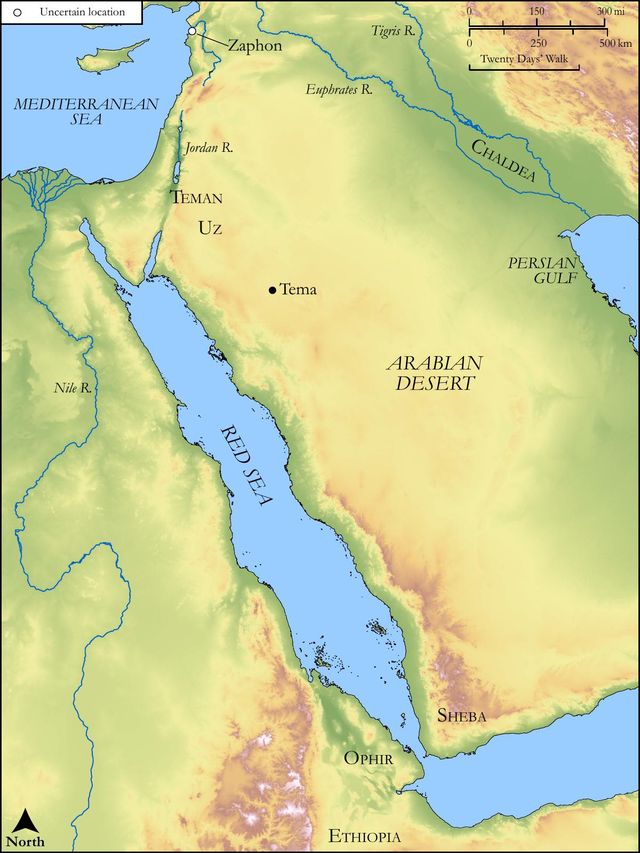
The Book of Job is set among the wisdom books, which often explored questions of justice, suffering, and the divine order. The debate format, where speakers take turns presenting their arguments, is characteristic of such literature. The friends, including Eliphaz, represent the prevailing conventional wisdom of their time, particularly the doctrine of divine retribution: that righteousness leads to prosperity and wickedness to suffering. Eliphaz is identified as a "Temanite," indicating his origin from Teman, a city in Edom renowned for its wisdom (as referenced in Jeremiah 49:7). This background underscores the irony of his flawed counsel; a man from a place associated with profound wisdom ultimately offers a narrow and uncompassionate perspective on Job's suffering, highlighting the limitations of human wisdom when confronted with the mysteries of God's ways.
Key Themes
ShowHideThis verse contributes significantly to several key themes in the Book of Job. Firstly, it underscores the persistence of misguided counsel and the friends' unwavering commitment to their rigid theological framework, even in the face of Job's consistent declarations of innocence. Their initial silent sympathy, described in Job 2:11, has completely evaporated. Secondly, it signals the escalation of accusation, preparing the reader for the climax of the friends' arguments where their implied suspicions transform into direct, uncharitable charges. Thirdly, the phrase "answered and said" highlights the cyclical and often unproductive nature of the debate, where each speaker responds to the previous one, yet often fails to genuinely engage with or understand the core of the other's argument, leading to a deepening impasse rather than resolution. This verse sets the stage for the friends' final, desperate attempt to force Job into confession.
Exposition and Analysis
ShowHideKey Word Analysis
ShowHideThis proper noun, meaning "God of gold," identifies the speaker. Eliphaz is consistently presented as the most prominent, and arguably the most articulate, of Job's three friends. His name might subtly allude to the worldly "gold" of human wisdom that he offers, which ultimately proves insufficient and even detrimental in the face of Job's profound suffering and God's mysterious ways. His position as the first to speak in each cycle of dialogue underscores his leadership among the friends.
A primitive root verb, this term primarily means "to eye" or "to heed," by implication "to respond" or "to pay attention." While it often introduces a direct reply, in the context of the Book of Job, this "answer" frequently signifies a response that fails to genuinely engage with or understand the previous speaker's points. Here, Eliphaz's "answer" is less a compassionate reply to Job's lament and more a determined continuation of his own theological agenda, indicating a lack of true listening and empathy.
This is a primitive root verb meaning "to say" or "to speak," used with great latitude in Hebrew. Often appearing in conjunction with "answered" (as it does here), it simply indicates the commencement of direct speech. In this context, it sets the stage for the specific content of Eliphaz's third and final discourse, which will be characterized by a shift from general theological principles to explicit and severe accusations against Job.
Verse Breakdown
ShowHide"¶ Then Eliphaz the Temanite"
This initial clause serves to reintroduce and specifically identify the speaker, Eliphaz, who is about to deliver his final major contribution to the debate. The "¶" (pilcrow) in the KJV text is a paragraph mark, indicating a new section or thought, which in this case is the beginning of a new speech. The identification of Eliphaz by his name and origin (Temanite) reminds the reader of his established role and his reputation for wisdom, which will be starkly contrasted with the content of his ensuing speech, setting up a dramatic irony that pervades the chapter.
"answered and said,"
This common biblical formula signifies the commencement of a verbal response. In the dramatic context of Job, it highlights the ongoing dialogue structure of the book. However, the nature of Eliphaz's "answer" is not one of empathetic understanding or genuine engagement with Job's suffering and arguments. Instead, it signals a continuation of the friends' attempts to impose their rigid theological framework onto Job's experience, leading to further condemnation rather than comfort. It sets the stage for a speech driven by conviction rather than compassion, intensifying the conflict between Job and his counselors.
Literary Devices
ShowHideJob 22:1, though brief, employs several significant Literary Devices. It functions primarily as a Framing Device, structurally marking the beginning of Eliphaz's third and climactic speech, thereby dividing the larger dialogue into discernible segments and signaling a new phase in the argument. This structural marker also serves as Foreshadowing, subtly indicating that the nature of the discourse is about to shift; the simple introduction precedes a speech that will be the most direct and accusatory of all Eliphaz's contributions, preparing the reader for the heightened tension. Furthermore, there is a strong element of Irony present. Eliphaz, identified as "the Temanite," comes from a region renowned for its wisdom. Yet, the content of his speech in Job 22 is profoundly unwise and uncompassionate, accusing an innocent man of grievous sins. This contrast between his reputation and his actions highlights the limitations of human wisdom when it becomes rigid and lacks empathy, a central theme of the entire book.
Theological and Thematic Connections
ShowHideJob 22:1, in introducing Eliphaz's final and most aggressive speech, powerfully connects to the broader theological theme of the inadequacy of human wisdom and rigid doctrinal frameworks when confronted with the complexities of divine justice and human suffering. The friends' unwavering adherence to the retribution principle—that suffering must be a direct consequence of sin—blinds them to Job's innocence and God's sovereign purposes. This verse sets the stage for a dramatic illustration of how even well-intentioned theological propositions can become instruments of condemnation rather than comfort, revealing a profound misunderstanding of God's character and the nature of faith. It challenges the reader to consider whether their own theological convictions lead to humble empathy or to judgmental pronouncements in the face of others' pain, ultimately pointing to the need for a deeper, more nuanced understanding of God's ways beyond simplistic formulas.
Reflection and Application
ShowHideJob 22:1, though a simple introductory phrase, carries profound implications for how we engage with suffering and offer counsel. Eliphaz's "answer" is not one of empathetic listening but of predetermined judgment, reflecting a common human tendency to quickly categorize and explain suffering based on our limited understanding of divine justice. This verse challenges us to examine our own hearts when confronted with the pain of others. Do we truly listen with compassion, allowing space for mystery and lament, or do we rush to offer simplistic explanations or even veiled accusations? The friends' failure to genuinely comfort Job serves as a powerful warning against the dangers of rigid theology that prioritizes explanation over empathy. True comfort often requires humility, patience, and a willingness to sit in silence with those who grieve, rather than imposing our own frameworks. It calls us to reflect on the nature of our "answers" to those in distress – are they born of genuine care and a desire to understand, or are they rooted in a need to categorize and control, ultimately adding to the burden of the suffering?
Questions for Reflection
ShowHideFAQ
ShowHideWhy is Eliphaz's speech significant at this point in the Book of Job?
ShowHideEliphaz's speech, introduced by Job 22:1, is highly significant because it marks the climax of the friends' accusations against Job. Up to this point, while their arguments implied Job's guilt, they had not explicitly accused him of specific, grievous sins. In Job 22, Eliphaz abandons subtlety and directly charges Job with specific acts of injustice and oppression, such as exploiting the poor and denying water to the thirsty. This escalation demonstrates the friends' complete failure to understand Job's innocence and their unwavering commitment to their rigid retribution theology. It sets the stage for Job's final, desperate defense and ultimately for God's direct intervention in Job 38:1, which will dismantle their flawed arguments.
What does "Temanite" tell us about Eliphaz?
ShowHideThe designation "Temanite" for Eliphaz is crucial because Teman was a city in Edom renowned for its wisdom. This is evidenced in biblical texts like Jeremiah 49:7, which asks, "Is wisdom no more in Teman?" By identifying Eliphaz as a "Temanite," the author immediately establishes him as a figure of respected wisdom and authority. This background, however, creates a profound irony: despite his reputation for wisdom, Eliphaz's counsel to Job is ultimately deeply flawed, uncompassionate, and based on a limited understanding of God's ways. His "wisdom" proves inadequate in the face of true suffering and divine mystery, highlighting a central message of the Book of Job: that human wisdom, even at its best, cannot fully comprehend the ways of God.
Christ-Centered Fulfillment
ShowHideThe brief introductory phrase of Job 22:1, signaling Eliphaz's misguided counsel, finds profound Christ-centered fulfillment in the stark contrast between the friends' judgmental approach to suffering and the compassionate, redemptive work of Jesus Christ. Eliphaz and the friends represent human attempts to explain suffering through rigid theological frameworks, often leading to false accusations and a lack of true empathy. They presumed Job's sin, demanding confession. In contrast, Jesus, the Lamb of God who takes away the sin of the world, perfectly embodies divine wisdom and compassion. He did not accuse the suffering but bore the accusations and sins of humanity himself, as prophesied in Isaiah 53:7 and fulfilled on the cross. Unlike the friends who offered flawed human wisdom, Christ is presented as the wisdom of God and the ultimate answer to the problem of suffering, not by explaining it away, but by entering into it and conquering it through his atoning sacrifice. He is our great high priest who can sympathize with our weaknesses, having been tempted in every way, yet without sin, offering true comfort and redemption where human counsel fails.