


Genesis 8:17
Bible text: King James Version (1769 Blayney text) · Public domain
Bible text: King James Version with Strong's numbers · Public domain
Bible text: Berean Standard Bible · Public domain
Bible text: American Standard Version (1901) · Public domain
Bible text: World English Bible, Messianic edition · Public domain
Bible text: Geneva Bible (1599) · Public domain
Bible text: Young's Literal Translation · Public domain
- כָּלkoleveryH3605N-mscNoun Singular Masculine Construct
- הַחַיָּהha·chai·Yah<the> animalH2416Art ¦ N-fsNoun Singular Feminine Absoluteהַ<the>חַיָּהanimal
- אֲשֶׁר'a·SherwhichH834RelParticle Relative
- אִתְּךָ'i·te·Kha[is] with youH854Prep ¦ 2msPreposition Definiteאִתְּ[is] withךָyou
- מִכָּלmi·kolsome of allH3605Prep-m ¦ N-mscNoun Singular Masculine Constructמִsome ofכָּלall
- בָּשָׂרba·SarfleshH1320N-msNoun Singular Masculine Absolute
- בָּעוֹףba·'ofamong the bird[s]H5775Prep-b ¦ N-msNoun Singular Masculine Absoluteבָּamong theעוֹףbird[s]
- וּבַבְּהֵמָהu·va·be·he·Mahand among the livestockH929Conj-w ¦ Prep-b ¦ N-fsNoun Singular Feminine Absoluteוּandבַamong theבְּהֵמָהlivestock
- וּבְכָלu·ve·Kholand among everyH3605Conj-w ¦ Prep-b ¦ N-mscNoun Singular Masculine Constructוּandבְamongכָלevery
- הָרֶמֶשׂha·Re·mes<the> creeping thingH7431Art ¦ N-msNoun Singular Masculine Absoluteהָ<the>רֶמֶשׂcreeping thing
- הָרֹמֵשׂha·ro·Meswhich creepsH7430Art ¦ V-Qal-Prtcpl-msVerb Qal Participle Singular Masculine Absoluteהָwhichרֹמֵשׂcreeps
- עַל'alonH5921PrepPreposition
- הָאָרֶץha·'A·retzthe earthH776Art ¦ N-fsNoun Singular Feminine Absoluteהָtheאָרֶץearth
- הַיְצֵאhay·tze'bring outH3318V-Hiphil-Imp-2msVerb Hiphil Imperative 2nd Singular Masculine
- אִתָּךְ'i·Takhwith youH854Prep ¦ 2msPreposition Definiteאִתָּwithךְyou
- וְשָׁרְצוּve·sha·re·Tzuand they will swarmH8317Conj-w ¦ V-Qal-ConsecPerf-3cpVerb Qal Consecutive Perfect 3rd Plural common genderוְandשָׁרְצוּthey will swarm
- בָאָרֶץva·'A·retzon the earthH776Prep-b ¦ N-fsNoun Singular Feminine Absoluteבָon theאָרֶץearth
- וּפָרוּu·fa·Ruand they will be fruitfulH6509Conj-w ¦ V-Qal-ConsecPerf-3cpVerb Qal Consecutive Perfect 3rd Plural common genderוּandפָרוּthey will be fruitful
- וְרָבוּve·ra·Vuand they will multiplyH7235Conj-w ¦ V-Qal-ConsecPerf-3cpVerb Qal Consecutive Perfect 3rd Plural common genderוְandרָבוּthey will multiply
- עַל'alonH5921PrepPreposition
- הָאָרֶץha·'A·retzthe earthH776Art ¦ N-fsNoun Singular Feminine Absoluteהָtheאָרֶץearth
English is a literal word-by-word gloss of the Hebrew, not the KJV's wording. Why?
This is the original text the KJV's translators worked from — each Hebrew word with its own literal English meaning in this verse, prepared by scholars at Tyndale House, Cambridge. The KJV translates whole sentences, not word by word, so its wording differs: one Hebrew word can become several English words, and the KJV may choose “the LORD” where the gloss reads “Yahweh”. Both are faithful — they answer different questions. For the KJV's own rendering, switch to the KJV text.
Details
See on the biblical-era maps


Study this verse
Public-domain commentary
Matthew Henry
From his Commentary on the Whole Bible. Henry comments on passages, not single verses — this entry covers Genesis 8:15–19. His two-level outline is real structure in the source text, so it is rendered as structure.
Here is, I. Noah's dismission out of the ark, Gen 8:15-17. Observe, 1. Noah did not stir till God bade him. As he had a command to go into the ark (Gen 7:1), so, how tedious soever his confinement there was, he would wait for a command to go out of it again. Note, We must in all our ways acknowledge God, and set him before us in all our removes. Those only go under God's protection that follow God's direction and submit to his government. Those that steadily adhere to God's word as their rule, and are guided by his grace as their principle, and take hints from his providence to assist them in their application of general directions to particular cases, may in faith see him guiding their motions in their march through this wilderness. 2. Though God detained him long, yet at last he gave him his discharge; for the vision is for an appointed time, and at the end it shall speak, it shall speak truth (Hab 2:3), it shall not lie. 3. God had said, Come into the ark which he says, not, Come forth, but, Go forth, which intimates that God, who went in with him, staid with him all the while, till he sent him out safely; for he has said, I will not leave thee. 4. Some observe that, when they were ordered into the ark, the men and the women were mentioned separately (Gen 6:18): Thou, and thy sons, and thy wife, and thy sons' wives; hence they infer that, during the time of mourning, they were apart, and their wives apart, Zac 12:12. But now God did as it were new - marry them, sending out Noah and his wife together, and his sons and their wives together, that they might be fruitful and multiply. 5. Noah was ordered to bring the creatures out with him, that having taken the care of feeding them so long, and been at so much pains about them, he might have the honour of leading them forth by their armies, and receiving their homage.
II.Noah's departure when he had his dismission.
As he would not go out without leave, so he would not, out of fear or humour, stay in when he had leave, but was in all points observant of the heavenly vision. Though he had been now a full year and ten days a prisoner in the ark, yet when he found himself preserved there, not only for a new life, but for a new world, he saw no reason to complain of his long confinement. Now observe,
1.Noah and his family came out alive, though one of them was a wicked Ham, whom, though he escaped the flood, God's justice could have taken away by some other stroke. But they are all alive. Note, When families have been long continued together, and no breaches made among them, it must be looked upon as a distinguishing favour, and attributed to the Lord's mercies.
2.Noah brought out all the creatures that went in with him, except the raven and the dove, which, probably, were ready to meet their mates at their coming out. Noah was able to give a very good account of his charge; for of all that were given to him he had lost none, but was faithful to him that appointed him, pro hac vice - on this occasion, high steward of his household.
Historical interpretation
Seven Centuries of Reception
6 surviving comments on this verse. Each one is dated, so this reads as a timeline rather than a list.
Select a marker to jump to its quote. Markers stagger vertically where authors wrote within a few decades of each other.
Let us fix our gaze on those who have perfectly served his magnificent glory. Let us take Enoch, who was found righteous in obedience and was taken up without there being a trace of his death. Noah was found faithful by reason of his service; he proclaimed a new birth to the world, and through him the Lord saved the living creatures who entered in harmony into the ark.
Those whom he had brought in “one by one” in order to maintain chastity on the ark, he now brought out “two by two” so that they might “be fruitful and multiply in creation.” Even with respect to the animals that had preserved their chastity in the ark God said, “Bring forth with you every living thing that is with you of all flesh—birds and animals and every creeping thing that creeps on the earth—that they may breed abundantly on the earth.”
Now let us inquire by what order they entered into the ark, how long they remained there, and in what order they went out; how in the first instance Noah entered, and after him his sons; then his wife, and the wives of his sons; and when they went out, in what order they went forth. For it is written: 'Noah went forth, and his wife, and his sons, and the wives of his sons' (Genesis 8:18). And the letter indeed signifies, in the entrance, the abstinence from generation, and in the going out, the use of generation. For at that time the father entered first with his sons, and the sons with their parent, and afterwards his wife, and the wives of his sons; that is, the sexes were not mixed in entering, but were mixed in leaving. Therefore, as if in the very order of entering, he emits a certain voice, declaring that that time is not for intercourse or pleasures, which would bring destruction upon all... But later, the proper practice and care for marriage followed after the flood subsided.
Then all creation was cleansed as if of some blemish, removing all defilement caused in it by human wickedness. Its countenance was made resplendent; God then finally commanded the just man to disembark from the ark, freeing him from that awful prison with these words, “Then the Lord God said to Noah, ‘Disembark, you and your sons, your wife and your sons’ wives with you, as well as all flesh, from birds to cattle; take off with you every reptile that crawls upon the earth, and increase and multiply on the earth.’ ” Notice God’s goodness, how in everything he encourages the good man. After ordering him to disembark from the ark along with his sons, his wife, his sons’ wives and all the wild animals, then lest great discouragement should gradually overtake him by this further development and he become anxious at the thought that he would be on his own, dwelling alone in such a vast expanse of earth, with no one else existing, God first said, “Disembark from the ark, and take off everything with you,” and then added, “Increase and multiply, and gain dominion over the earth.” See how once again this good man receives that former blessing that Adam had received before the fall. The same words were as man heard when he was created: God blessed them in the words “increase and multiply, and gain dominion over the earth.” So too this man now hears the words “increase and multiply on the earth.” In other words, just as the former man became the beginning and root of all creatures before the deluge, so too this just man becomes a kind of leaven, beginning and root of everything after the deluge. From this point on, what is comprised in the makeup of human beings takes its beginning, and the whole of creation recovers its proper order, both the soil reawakening to productivity as well as everything else that had been created for the service of human beings.
For as Noah’s ark preserved alive everyone whom it had taken in when the world was going under, so also Peter’s church will bring back unhurt everyone whom it embraces when the world goes up in flames. And as a dove brought the sign of peace to Noah’s ark when the flood was over, so also Christ will bring the joy of peace to Peter’s church when the judgment is over, since he himself is dove and peace, as he promised when he said, “I shall see you again and your heart will rejoice.”
When Noah was ordered to enter the ark and was entrusted with the safeguarding of the seed of the earth, he was given this command, which reads, “Go forth from the ark, you and your wife, and your sons and your sons’ wives with you.” He had separated them from their wives, so that with the help of chastity they might escape the deep and that worldwide destruction. However, after the cessation of the flood, the command was “Go forth from the ark, you and your wife, and your sons and your sons’ wives with you.” Here, see how marriage was again permitted for the sake of increase.
Continue studying Genesis 8:17 across the web’s major study libraries — every link below opens this exact verse, chapter, or book on the destination site.
Read & Compare
 BibleGatewayThis verse in more than 200 translations and 70 languages.
 Bible.comThe YouVersion reader — hundreds of translations, reading plans, and highlights.
 ESV.orgCrossway's official English Standard Version reader.
 NET BibleThe NET translation with 60,000+ translators' notes on every rendering decision.
 STEP BibleTyndale House's free study tool — original text, vocabulary, and scholarly resources.
 BibliaLogos Bible Software's free web reader.
 USCCBThe New American Bible (Revised Edition) with the U.S. bishops' study notes.
Commentaries
 BibleHub CommentariesDozens of classic commentaries on this verse, gathered on one page.
 StudyLightMore than 100 commentary sets — the largest collection on the web.
 BibleRefPlain-English commentary on what this verse means, verse by verse.
 Enduring WordDavid Guzik's free commentary on this chapter, widely used by Bible teachers.
 Bible Study ToolsVerse commentary alongside Greek and Hebrew study aids.
Original Language & Research
- BibleHub InterlinearThe verse word by word — original language, transliteration, and English.
- BibleHub LexiconEvery word's original-language definition and Strong's entry.
 Blue Letter BibleDeep-study tools — Strong's numbers, concordance, and word studies.
 SefariaThe Hebrew text with Rashi and centuries of Jewish commentary.
Sermons, Hymns & Audio


TrulyRandomVerse is not affiliated with these sites and doesn’t control their content. They’re linked because they’re genuinely useful.
Summary
Genesis 8:17 records God's explicit command to Noah to release all living creatures from the ark, marking a pivotal moment of divine initiative for the repopulation and restoration of the earth after the Great Flood. This divine mandate not only signifies the conclusion of the judgment phase but also underscores God's enduring will for life to thrive, be fruitful, and multiply, initiating a new era of creation's renewal and demonstrating His unwavering faithfulness to His original purposes.
Context
ShowHideLiterary Context
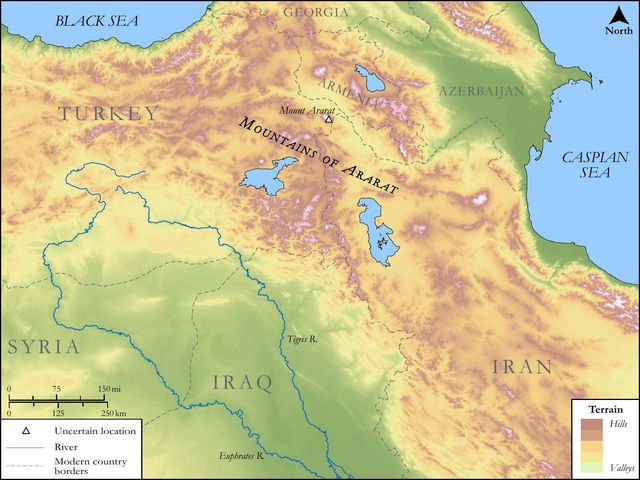
Genesis 8:17 functions as a crucial turning point in the post-Flood narrative. Following the global deluge and the ark's resting on the mountains of Ararat, the preceding verses detail the gradual recession of the waters and Noah's sending out of birds to test the earth's habitability. The divine remembrance of Noah and all living creatures in Genesis 8:1 sets the stage for this command. This verse directly reverses God's earlier instruction to bring the animals into the ark, now commanding their release. It is immediately followed by Noah's obedient act of disembarking the creatures in Genesis 8:18-19 and his subsequent offering of thanksgiving, which prompts God's covenant promise in Genesis 8:20-22. Thus, Genesis 8:17 is the divine catalyst for the re-establishment of life and the unfolding of God's covenant with humanity and creation.
Historical & Cultural Context
Among the nations, catastrophic floods were a recurring motif in creation and re-creation myths, often depicting capricious deities. However, the biblical account of the Flood, culminating in Genesis 8:17, presents a stark contrast. Here, the one true God acts with purpose, justice, and ultimately, restorative grace. The command to "bring forth" and "multiply" echoes the original creation accounts in Genesis 1, signaling a deliberate act of re-creation, not merely survival. The concept of a divine mandate for life to fill the earth was foundational to ancient Israelite understanding of God's design for order and abundance, emphasizing His sovereignty over all living things and His desire for the earth to be inhabited and fruitful.
Key Themes
ShowHideThis verse powerfully contributes to several overarching themes in Genesis and the broader biblical narrative. It highlights God's Sovereignty over Creation and Judgment, demonstrating His absolute control over life, death, and restoration. The command to "be fruitful and multiply" reintroduces the Creation Mandate, signifying God's enduring purpose for life on earth despite the judgment of the Flood, a theme reiterated in Genesis 9:1. It also underscores the theme of New Beginnings and Restoration, positioning the post-Flood world as a fresh start, a cleansed canvas for God's continued work. Furthermore, it subtly introduces the theme of Covenantal Faithfulness, as this divine instruction paves the way for the rainbow covenant established in Genesis 9, promising never again to destroy all life by flood.
Exposition and Analysis
ShowHideKey Word Analysis
ShowHideThis primitive root signifies "to go (causatively, bring) out" or "to issue forth." In this context, it emphasizes God's active, intentional command for Noah to initiate the release, rather than the animals simply leaving on their own accord. It highlights divine agency in the process of re-creation and the precise timing of this new beginning.
Derived from the root meaning "to live," this term encompasses all forms of animate existence. Its use here underscores the comprehensive nature of God's preservation and His plan for the re-establishment of life. It signifies that every single creature preserved on the ark, imbued with the breath of life, is now to be released to fulfill its purpose.
This root means "to wriggle," and by implication, "to swarm or abound." It conveys the idea of vigorous, prolific reproduction, emphasizing not just survival but an explosion of life. It speaks to the rapid and numerous increase of creatures, ensuring the swift repopulation of the earth.
Verse Breakdown
ShowHide"Bring forth with thee every living thing that [is] with thee, of all flesh,"
This initial clause is a direct, imperative command from God to Noah. "Bring forth" (yâtsâʼ) signifies Noah's active role as God's agent in this process. The phrase "every living thing... of all flesh" emphasizes the universality of the command, encompassing all categories of animate life that were preserved on the ark. It highlights the comprehensive scope of God's plan for renewal, leaving no category of creature behind.
"[both] of fowl, and of cattle, and of every creeping thing that creepeth upon the earth;"
This section provides a detailed, inclusive enumeration of the types of creatures to be released. "Fowl," "cattle," and "creeping thing" represent the three broad categories of land-dwelling animals, ensuring that the command covers the entire spectrum of animal life. The repetition of "that creepeth" (râmas) for "creeping thing" (remes) underscores the nature of these smaller, often overlooked creatures, affirming God's care for all forms of life.
"that they may breed abundantly in the earth, and be fruitful, and multiply upon the earth."
This final clause states the explicit divine purpose for the release. The verbs "breed abundantly" (shârats), "be fruitful" (pârâh), and "multiply" (râbâh) are strong, overlapping terms that convey the idea of vigorous, prolific, and rapid increase. This echoes the original creation mandate found in Genesis 1:22 and Genesis 1:28, signifying that despite the judgment of the Flood, God's original design for a vibrant, life-filled earth remains unchanged and is now being re-instituted. The repetition of "upon the earth" emphasizes the global scope of this repopulation.
Literary Devices
ShowHideThe verse employs several significant literary devices. Repetition is prominent, particularly with the phrase "upon the earth," which appears three times, underscoring the universal scope of the command and the re-establishment of life across the entire globe. Merism or Universal Reach is evident in the listing of "fowl, and of cattle, and of every creeping thing," which serves to encompass all categories of land-dwelling animals, ensuring the comprehensiveness of God's restorative plan. The entire verse functions as a Divine Command or Imperative, highlighting God's sovereign authority and His direct involvement in orchestrating the new beginning for creation. The echo of the creation mandate's language ("be fruitful, and multiply") serves as an important Allusion, linking this post-Flood re-creation directly to the original act of creation, emphasizing continuity in God's purposes.
Theological and Thematic Connections
ShowHideGenesis 8:17 profoundly illustrates God's active and purposeful involvement in the restoration of His creation after judgment. It is a testament to His unwavering commitment to life and His original design for the earth to be filled with living beings. This divine command is not merely an instruction but an empowering word, enabling the very processes of life and growth to resume. It showcases God's intricate providence, orchestrating not just survival but flourishing, and sets the stage for the covenantal relationship He will establish with Noah and all living creatures, ensuring the stability and continuity of life on earth.
Reflection and Application
ShowHideGenesis 8:17 offers profound lessons for believers today, reminding us that even after periods of profound destruction, loss, or personal difficulty, God consistently provides opportunities for new beginnings and growth. Just as Noah's release of the animals symbolized a fresh start for the entire earth, we are assured that God, in His sovereign power, can bring renewal out of desolation in our lives and circumstances. This passage also reinforces our enduring responsibility as stewards of God's creation, for Noah was tasked not merely with preserving life but with facilitating its repopulation and flourishing. This principle continues to call us to care for the natural world, recognizing its inherent value as God's handiwork and our role in its preservation and wise management. Ultimately, the verse serves as a powerful reminder that God's overarching plan for life to be abundant and to fill the earth persists through all circumstances, demonstrating His unwavering power and grace in preserving and restoring His creation.
Questions for Reflection
ShowHideFAQ
ShowHideDoes God's command to "breed abundantly" apply to humans today?
ShowHideWhile Genesis 8:17 specifically addresses the animal kingdom, the underlying divine blessing and command to "be fruitful and multiply" (pârâh and râbâh) was originally given to both animals and humanity in Genesis 1:28 and powerfully reiterated to Noah and his descendants in Genesis 9:1. This indicates a foundational divine purpose for humanity to procreate, fill the earth, and steward it. While modern contexts involve responsible family planning, the enduring principle remains: God values life, desires the flourishing of humanity, and calls us to contribute to the human family. The command speaks to a general divine desire for life to thrive and expand, both physically and, by extension, spiritually.
Christ-Centered Fulfillment
ShowHideGenesis 8:17, with its emphasis on repopulation and a new beginning after judgment, profoundly foreshadows the ultimate new creation found in Jesus Christ. Just as God commanded life to multiply to fill the cleansed earth, Christ inaugurates a spiritual new creation, bringing humanity out of the judgment of sin into a new covenant of grace. Through His redemptive work, believers are made "new creatures" (2 Corinthians 5:17), called to "be fruitful" not merely physically but spiritually, bearing the fruit of the Spirit (Galatians 5:22-23) and multiplying the kingdom of God through the Great Commission (Matthew 28:19-20). The ark's release of life points to Christ as the source of true life and renewal, the one in whom all things are reconciled and made new (Colossians 1:15-20). Ultimately, this verse anticipates the glorious consummation of God's plan, where a redeemed humanity will inhabit the "new heavens and new earth" (Revelation 21:1-5), a spiritual lineage that will eternally fill God's renewed creation.