


Genesis 42:24
Bible text: King James Version (1769 Blayney text) · Public domain
Bible text: Berean Standard Bible · Public domain
Bible text: American Standard Version (1901) · Public domain
Bible text: World English Bible, Messianic edition · Public domain
Bible text: Geneva Bible (1599) · Public domain
Bible text: Young's Literal Translation · Public domain
- וַיִּסֹּבvai·yi·Soand he turned awayH5437Conj-w ¦ V-Qal-ConsecImperf-3msVerb Qal Consecutive Imperfect 3rd Singular Masculineוַandיִּסֹּבhe turned away
- מֵעֲלֵיהֶםme·'a·lei·Hemfrom with <the> themH5921Prep-m ¦ Prep ¦ 3mpPreposition Definiteמֵfromעֲלֵיwith <the>הֶםthem
- וַיֵּבְךְּvai·Ye·vekand he weptH1058Conj-w ¦ V-Qal-ConsecImperf-3msVerb Qal Consecutive Imperfect 3rd Singular Masculineוַandיֵּבְךְּhe wept
- וַיָּשָׁבvai·Ya·shovand he returnedH7725Conj-w ¦ V-Qal-ConsecImperf-3msVerb Qal Consecutive Imperfect 3rd Singular Masculineוַandיָּשָׁבhe returned
- אֲלֵהֶם'a·le·Hemto themH413Prep ¦ 3mpPreposition Definiteאֲלֵtoהֶםthem
- וַיְדַבֵּרvay·da·Berand he spokeH1696Conj-w ¦ V-Piel-ConsecImperf-3msVerb Piel Consecutive Imperfect 3rd Singular Masculineוַandיְדַבֵּרhe spoke
- אֲלֵהֶם'a·le·Hemto themH413Prep ¦ 3mpPreposition Definiteאֲלֵtoהֶםthem
- וַיִּקַּחvai·yi·Kachand he tookH3947Conj-w ¦ V-Qal-ConsecImperf-3msVerb Qal Consecutive Imperfect 3rd Singular Masculineוַandיִּקַּחhe took
- מֵאִתָּםme·'i·Tamfrom with <the> themH854Prep-m ¦ Prep ¦ 3mpPreposition Definiteמֵfromאִתָּwith <the>םthem
- אֶת'et<obj.>H853DirObjMParticle Object Indicator
- שִׁמְעוֹןshim·'onSimeonH8095N-proper-mNoun Proper Masculine
- וַיֶּאֱסֹרvai·ye·'e·Sorand he boundH631Conj-w ¦ V-Qal-ConsecImperf-3msVerb Qal Consecutive Imperfect 3rd Singular Masculineוַandיֶּאֱסֹרhe bound
- אֹתוֹ'o·To<obj.> himH853DirObjM ¦ 3msParticle Object Indicatorאֹת<obj.>וֹhim
- לְעֵינֵיהֶםle·'ei·nei·Hemto their eyesH5869Prep-l ¦ N-fdc ¦ 3mpNoun Dual Feminine Constructלְtoעֵינֵיeyesהֶםtheir
English is a literal word-by-word gloss of the Hebrew, not the KJV's wording. Why?
This is the original text the KJV's translators worked from — each Hebrew word with its own literal English meaning in this verse, prepared by scholars at Tyndale House, Cambridge. The KJV translates whole sentences, not word by word, so its wording differs: one Hebrew word can become several English words, and the KJV may choose “the LORD” where the gloss reads “Yahweh”. Both are faithful — they answer different questions. For the KJV's own rendering, switch to the KJV text.
Details
See on the biblical-era maps


Study this verse
Public-domain commentary
Matthew Henry
From his Commentary on the Whole Bible. Henry comments on passages, not single verses — this entry covers Genesis 42:21–28. His three-level outline is real structure in the source text, so it is rendered as structure.
Here is, I. The penitent reflection Joseph's brethren made upon the wrong they had formerly done to him, Gen 42:21. They talked the matter over in the Hebrew tongue, not suspecting that Joseph, whom they took for a native of Egypt, understood them, much less that he was the person they spoke of.
1.They remembered with regret the barbarous cruelty wherewith they persecuted him: We are verily guilty concerning our brother. We do not read that they said this during their three days' imprisonment; but now, when the matter had come to some issue and they saw themselves still embarrassed, now they began to relent. Perhaps Joseph's mention of the fear of God (Gen 42:18) put them upon consideration and extorted this reflection. Now see here,
(1.)The office of conscience; it is a remembrancer, to bring to mind things long since said and done, to show us wherein we have erred, though it was long ago, as the reflection here mentioned was above twenty years after the sin was committed. As time will not wear out the guilt of sin, so it will not blot out the records of conscience; when the guilt of this sin of Joseph's brethren was fresh they made light of it, and sat down to eat bread; but now, long afterwards, their consciences reminded them of it.
(2.)The benefit of affliction; they often prove the happy and effectual means of awakening conscience, and bringing sin to our remembrance, Job 13:26.
(3.)The evil of guilt concerning our brethren; of all their sins, it was this that conscience now reproached them for. Whenever we think we have wrong done us, we ought to remember the wrong we have done to others, Ecc 7:21, Ecc 7:22.
2.Reuben alone remembered, with comfort, that he had been an advocate for his brother, and had done what he could to prevent the mischief they did him (Gen 42:22): Spoke I not unto you, saying, Do not sin against the child? Note,
(1.)It is an aggravation of any sin that it was committed against admonitions.
(2.)When we come to share with others in their calamities, it will be a comfort to us if we have the testimony of our consciences for us that we did not share with them in their iniquities, but, in our places, witnessed against them. This shall be our rejoicing in the day of evil, and shall take out the sting.
II.Joseph's tenderness towards them upon this occasion.
He retired from them to weep, Gen 42:24. Though his reason directed that he should still carry himself as a stranger to them, because they were not as yet humbled enough, yet natural affection could not but work, for he was a man of a tender spirit. This represents the tender mercies of our God towards repenting sinners. See Jer 31:20, Since I spoke against him I do earnestly remember him still. See Jdg 10:16.
III.The imprisonment of Simeon, Gen 42:24.
He chose him for the hostage probably because he remembered him to have been his most bitter enemy, or because he observed him now to be least humbled and concerned; he bound him before their eyes to affect them all; or perhaps it is intimated that, though he bound him with some severity before them, yet afterwards, when they were gone, he took off his bonds.
IV.The dismission of the rest of them.
They came for corn, and corn they had; and not only so, but every man had his money restored in his sack's mouth. Thus Christ, our Joseph, gives out supplies without money and without price. Therefore the poor are invited to buy, Rev 3:17, Rev 3:18. This put them into great consternation (Gen 42:28): Their heart failed them, and they were afraid, saying one to another, What is this that God hath done to us?
1.It was really a merciful event; for I hope they had no wrong done to them when they had their money given them back, but a kindness; yet they were thus terrified by it. Note,
(1.)Guilty consciences are apt to take good providences in a bad sense, and to put wrong constructions even upon those things that make for them. They flee when none pursues.
(2.)Wealth sometimes brings as much care along with it as want does, and more too. If they had been robbed of their money, they could not have been worse frightened than they were now when they found their money in their sacks. Thus he whose ground brought forth plentifully said, What shall I do? Luk 12:17.
2.Yet in their circumstances it was very amazing. They knew that the Egyptians abhorred a Hebrew (Gen 43:32), and therefore, since they could not expect to receive any kindness from them, they concluded that this was done with a design to pick a quarrel with them, and the rather because the man, the lord of the land, had charged them as spies. Their own consciences also were awake, and their sins set in order before them; and this put them into confusion. Note,
(1.)When men's spirits are sinking every thing helps to sink them.
(2.)When the events of Providence concerning us are surprising it is good to enquire what it is that God has done and is doing with us, and to consider the operation of his hands.
Historical interpretation
Historical reception
2 surviving comments on this verse. Each one is dated, so this reads as a timeline rather than a list.
Select a marker to jump to its quote. Markers stagger vertically where authors wrote within a few decades of each other.
See how Joseph takes every means of putting fear into them so that, on seeing Simeon’s bonds, they may reveal whether they manifested any sympathy for their brother. You see, everything he does is to test their attitude out of his wish to discover if they had been like that in dealing with Benjamin. Hence Joseph also had Simeon bound in front of them to test them carefully and see if they showed any signs of affection for him. That is to say, concern for Simeon led them to hasten Benjamin’s arrival, which he was anxious for, so as to gain assurance from his brother’s arrival.
Hearing people talk about his brother, Joseph longed for him and said, “I will prove in this manner that you are not spies, if your younger brother comes along with you.” And taking Simeon from them he had him bound before him and sent him to prison. If you want to know who is Benjamin, our younger brother, desired by our Joseph, that is, Christ, he is Paul, formerly Saul, from the tribe of Benjamin according to his testimony, who asserts to be the least among the apostles. In Simeon we can recognize Peter bound by the threefold chain of denial, that Peter whom fear has bound and love has untied.
Continue studying Genesis 42:24 across the web’s major study libraries — every link below opens this exact verse, chapter, or book on the destination site.
Read & Compare
 BibleGatewayThis verse in more than 200 translations and 70 languages.
 Bible.comThe YouVersion reader — hundreds of translations, reading plans, and highlights.
 ESV.orgCrossway's official English Standard Version reader.
 NET BibleThe NET translation with 60,000+ translators' notes on every rendering decision.
 STEP BibleTyndale House's free study tool — original text, vocabulary, and scholarly resources.
 BibliaLogos Bible Software's free web reader.
 USCCBThe New American Bible (Revised Edition) with the U.S. bishops' study notes.
Commentaries
 BibleHub CommentariesDozens of classic commentaries on this verse, gathered on one page.
 StudyLightMore than 100 commentary sets — the largest collection on the web.
 BibleRefPlain-English commentary on what this verse means, verse by verse.
 Enduring WordDavid Guzik's free commentary on this chapter, widely used by Bible teachers.
 Bible Study ToolsVerse commentary alongside Greek and Hebrew study aids.
Original Language & Research
- BibleHub InterlinearThe verse word by word — original language, transliteration, and English.
- BibleHub LexiconEvery word's original-language definition and Strong's entry.
 Blue Letter BibleDeep-study tools — Strong's numbers, concordance, and word studies.
 SefariaThe Hebrew text with Rashi and centuries of Jewish commentary.
Sermons, Hymns & Audio


TrulyRandomVerse is not affiliated with these sites and doesn’t control their content. They’re linked because they’re genuinely useful.
Summary
Genesis 42:24 captures a profoundly emotional and strategic moment for Joseph, the powerful governor of Egypt, as he navigates the complex reunion with his unsuspecting brothers. His private act of turning away to weep reveals the deep internal conflict between his enduring love for his family and the necessity of maintaining his stern disguise, all while meticulously orchestrating a divine plan to bring his brothers to repentance, test their character, and ultimately reunite his fractured family during a severe famine.
Context
ShowHideLiterary Context
This verse is a critical turning point within the larger narrative of Joseph's reunion with his brothers in Genesis 42. Immediately preceding this, Joseph's brothers, unaware that he understood their language, confessed their guilt regarding their past treatment of him, stating, "We are verily guilty concerning our brother, in that we saw the anguish of his soul, when he besought us, and we would not hear; therefore is this distress come upon us" (Genesis 42:21). Joseph's hearing of this confession, a clear sign of their remorse and the beginning of their repentance, overwhelmed him, prompting the private emotional outburst described in verse 24. His subsequent actions—returning to them, speaking harshly, and taking Simeon—are calculated moves within his elaborate strategy to bring them to full reconciliation and ensure the survival of his family line.
Historical & Cultural Context
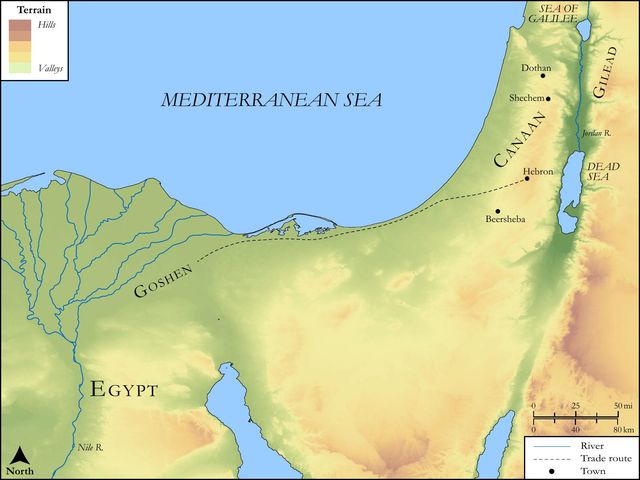
The events unfold during a severe famine that afflicted not only Egypt but also the surrounding lands, including Canaan, where Jacob and his family resided. This famine serves as the divine catalyst forcing Joseph's brothers to come to Egypt for grain, thereby initiating the long-awaited reunion. Among the Egyptians, a powerful official like Joseph would maintain a strict and imposing demeanor, especially when dealing with perceived foreign spies, making his private display of emotion all the more significant. The practice of taking a hostage to ensure compliance was also a recognized tactic in diplomatic and legal negotiations of the era, adding a layer of authenticity to Joseph's feigned harshness and providing a strong incentive for the brothers to return with Benjamin.
Key Themes
ShowHideGenesis 42:24 powerfully contributes to several overarching themes within the book of Genesis and the broader biblical narrative. It highlights Divine Providence and Sovereignty, demonstrating how God meticulously works through human actions, even painful ones, to accomplish His redemptive purposes, as later articulated by Joseph in Genesis 50:20. The verse also underscores the theme of Repentance and Reconciliation, showing the beginning of the brothers' journey toward acknowledging their sin, which Joseph's actions are designed to facilitate. Furthermore, it exemplifies the theme of Testing and Character Development, as Joseph's trials are designed to reveal and refine the character of his brothers, preparing them for their role in the burgeoning nation of Israel. Finally, it subtly introduces the theme of Compassion Amidst Authority, revealing Joseph's profound humanity and love for his family despite the stern facade he must maintain.
Exposition and Analysis
ShowHideKey Word Analysis
ShowHideThis primitive root signifies "to revolve, surround, or border," used in various applications, literally and figuratively, including to "turn (self) (about, aside, away, back)." In this context, it vividly describes Joseph's physical act of turning away from his brothers. This action was not merely a physical pivot but a deliberate move to secure privacy for an intensely personal emotional release, shielding his true feelings from those he was strategically testing. It highlights his self-control and the immense pressure he was under to maintain his disguise.
This primitive root means "to weep; generally to bemoan." It denotes a deep, heartfelt crying, often accompanied by lamentation and sorrow. Joseph's weeping here is not a casual shedding of tears but a profound outpouring of emotion—a complex mixture of sorrow over the years of separation and the pain his family endured, relief at seeing them again, and the emotional burden of the intricate, divinely guided plan he was executing. It underscores his enduring love and humanity, contrasting sharply with the stern persona he presented.
This primitive root means "to speak," or "to arrange." While it can mean to speak generally, in this context, "communed" implies a resumption of formal, official communication. After his private emotional release, Joseph "returned to them again, and communed with them," indicating a swift and disciplined transition back into his role as the harsh Egyptian governor. This word emphasizes his ability to regain composure and continue the strategic dialogue necessary to advance his plan, demonstrating remarkable self-mastery.
Verse Breakdown
ShowHide"And he turned himself about from them, and wept"
This clause reveals Joseph's immediate and overwhelming emotional response to his brothers' confession of guilt. The act of "turning himself about" signifies his urgent need for privacy, allowing him to express the profound sorrow, relief, and perhaps even joy that welled up within him, without betraying his identity or the intricate plan he was enacting. His "weeping" was a deep, uninhibited outpouring of pent-up emotion, a testament to his enduring love for his family despite their past betrayal and the years of separation.
"and returned to them again, and communed with them"
Following his private emotional release, Joseph quickly regained his composure and resumed his role as the stern Egyptian official. The phrase "returned to them again" emphasizes his deliberate re-engagement, while "communed with them" indicates he resumed speaking to them, maintaining the necessary emotional distance and authoritative tone. This swift transition highlights his remarkable self-control and unwavering commitment to the strategic unfolding of God's redemptive purpose for his family.
"and took from them Simeon, and bound him before their eyes"
This final action in the verse is a calculated and pivotal move within Joseph's larger plan. The selection and public binding of Simeon served multiple strategic purposes: it provided a tangible hostage, ensuring the brothers' return with Benjamin; it was a powerful test of the brothers' unity and resolve; and it may have been a specific choice due to Simeon's past aggressive nature (e.g., in the Dinah incident) or his potential role in Joseph's own betrayal. This act solidified the brothers' predicament and intensified the pressure on them to comply with Joseph's demands, pushing them further towards repentance and full reconciliation.
Literary Devices
ShowHideThe verse employs several significant literary devices. Dramatic Irony is paramount, as the audience is privy to Joseph's true identity and his inner turmoil, while his brothers remain completely unaware, interpreting his actions as those of a harsh foreign ruler. This creates tension and highlights the profound emotional chasm between Joseph's hidden compassion and his overt severity. The act of Joseph turning away to weep is a powerful instance of Pathos, evoking sympathy for his profound emotional struggle and the immense burden he carries. Furthermore, the entire scene functions as Foreshadowing, hinting at the eventual revelation of Joseph's identity and the subsequent reconciliation, while also serving as a Test of the brothers' character, revealing their transformation from their earlier callousness to a newfound sense of responsibility and remorse.
Theological and Thematic Connections
ShowHideJoseph's actions in Genesis 42:24, though seemingly harsh, are integral to God's overarching plan for the nascent nation of Israel. His strategic testing of his brothers, rooted in a deep, hidden love, demonstrates how divine providence often works through difficult and painful circumstances to bring about profound spiritual transformation and reconciliation. This moment underscores that God uses human experiences, including suffering and perceived injustice, as instruments for His redemptive purposes, ultimately turning evil into good and fostering genuine repentance. Joseph's blend of stern authority and profound compassion reflects aspects of God's own character, who is both just and merciful.
Reflection and Application
ShowHideJoseph's experience in Genesis 42:24 offers a profound lesson on the complexities of leadership, reconciliation, and the often-hidden workings of divine providence. It reminds us that true compassion can sometimes be expressed through difficult, even seemingly harsh, actions when a greater redemptive purpose is at stake. Joseph's ability to weep in private yet maintain a stern facade in public speaks to the immense personal cost and emotional fortitude required when one is called to facilitate a painful but necessary process of healing and restoration. For us, this narrative underscores the importance of confronting past wrongs and acknowledging guilt as a necessary, albeit painful, step towards genuine reconciliation, both within our families and communities, and in our relationship with God. It encourages us to trust that even in moments of profound sorrow or when we are subjected to difficult circumstances, God is meticulously working all things for good, transforming our trials into pathways for spiritual growth and ultimate restoration.
Questions for Reflection
ShowHideFAQ
ShowHideWhy did Joseph weep secretly?
ShowHideJoseph's tears were a complex outpouring of deep emotion, encompassing sorrow for the years of separation, the pain of his brothers' past betrayal, and immense relief at seeing them again. He wept secretly to maintain his disguise as a stern Egyptian official, which was absolutely crucial for his strategic plan to unfold. Revealing his identity prematurely would have undermined the process of testing his brothers' hearts and bringing them to genuine repentance and reconciliation, which was God's ultimate purpose for this elaborate encounter. His private weeping demonstrated his profound love and humanity, contrasting sharply with the harsh persona he was forced to project.
Why did Joseph choose Simeon as the hostage?
ShowHideThe biblical text does not explicitly state Joseph's specific reason for choosing Simeon. However, commentators often speculate on several possibilities. Simeon, along with Levi, was particularly aggressive and violent in the incident concerning Dinah in Genesis 34, suggesting a potentially volatile character. Choosing Simeon might have been a strategic move to remove a potentially disruptive element from the group, to further test the other brothers' willingness to comply, or simply a practical choice to ensure the return of Benjamin. Regardless of the precise reason, Simeon's detention served as a powerful motivator for the remaining brothers to fulfill Joseph's demand and return to Egypt.
Christ-Centered Fulfillment
ShowHideJoseph, in his suffering, rejection by his own brothers, and eventual exaltation to a position of immense power that saved his family from famine, serves as a profound type of Christ. Like Joseph, Christ was rejected by His own people, suffered unjustly at their hands, and was exalted to the right hand of God, becoming the ultimate provider and savior. Just as Joseph, through his hidden identity and strategic testing, brought his brothers to acknowledge their sin and enter into a process of repentance and reconciliation, so too does Christ, through His atoning work on the cross and the convicting power of the Holy Spirit, bring humanity to acknowledge its sin and enter into reconciliation with God (2 Corinthians 5:18-19). Joseph's ultimate revelation of himself to his brothers, leading to their full restoration and the preservation of the covenant line, powerfully foreshadows Christ's future revelation at His second coming and the ultimate reconciliation of all things through Him, providing not just physical sustenance but eternal spiritual life and redemption for all who believe (Colossians 1:19-20).