


Genesis 41:14
Bible text: King James Version (1769 Blayney text) · Public domain
Bible text: King James Version with Strong's numbers · Public domain
Bible text: Berean Standard Bible · Public domain
Bible text: American Standard Version (1901) · Public domain
Bible text: World English Bible, Messianic edition · Public domain
Bible text: Geneva Bible (1599) · Public domain
Bible text: Young's Literal Translation · Public domain
- וַיִּשְׁלַחvai·yish·Lachand he sentH7971Conj-w ¦ V-Qal-ConsecImperf-3msVerb Qal Consecutive Imperfect 3rd Singular Masculineוַandיִּשְׁלַחhe sent
- פַּרְעֹהpar·'OhPharaohH6547N-msNoun Title Singular Masculine Absolute
- וַיִּקְרָאvai·yik·Ra'and he summonedH7121Conj-w ¦ V-Qal-ConsecImperf-3msVerb Qal Consecutive Imperfect 3rd Singular Masculineוַandיִּקְרָאhe summoned
- אֶת'et<obj.>H853DirObjMParticle Object Indicator
- יוֹסֵףyo·SefJosephH3130N-proper-mNoun Proper Masculine
- וַיְרִיצֻהוּvay·ri·Tzu·huand people brought quickly himH7323Conj-w ¦ V-Hiphil-ConsecImperf-3mp ¦ 3msVerb Hiphil Consecutive Imperfect 3rd Plural Masculineוַandיְרִיצֻpeople brought quicklyהוּhim
- מִןminfromH4480PrepPreposition
- הַבּוֹרha·Borthe pitH953Art ¦ N-msNoun Singular Masculine Absoluteהַtheבּוֹרpit
- וַיְגַלַּחvay·ga·Lachand he shavedH1548Conj-w ¦ V-Piel-ConsecImperf-3msVerb Piel Consecutive Imperfect 3rd Singular Masculineוַandיְגַלַּחhe shaved
- וַיְחַלֵּףvay·cha·Lefand he changedH2498Conj-w ¦ V-Piel-ConsecImperf-3msVerb Piel Consecutive Imperfect 3rd Singular Masculineוַandיְחַלֵּףhe changed
- שִׂמְלֹתָיוsim·lo·Tavhis clothesH8071N-fpc ¦ 3msNoun Plural Feminine Constructשִׂמְלֹתָיclothesוhis
- וַיָּבֹאvai·ya·Vo'and he cameH935Conj-w ¦ V-Qal-ConsecImperf-3msVerb Qal Consecutive Imperfect 3rd Singular Masculineוַandיָּבֹאhe came
- אֶל'eltoH413PrepPreposition
- פַּרְעֹהpar·'OhPharaohH6547N-msNoun Title Singular Masculine Absolute
English is a literal word-by-word gloss of the Hebrew, not the KJV's wording. Why?
This is the original text the KJV's translators worked from — each Hebrew word with its own literal English meaning in this verse, prepared by scholars at Tyndale House, Cambridge. The KJV translates whole sentences, not word by word, so its wording differs: one Hebrew word can become several English words, and the KJV may choose “the LORD” where the gloss reads “Yahweh”. Both are faithful — they answer different questions. For the KJV's own rendering, switch to the KJV text.
Details
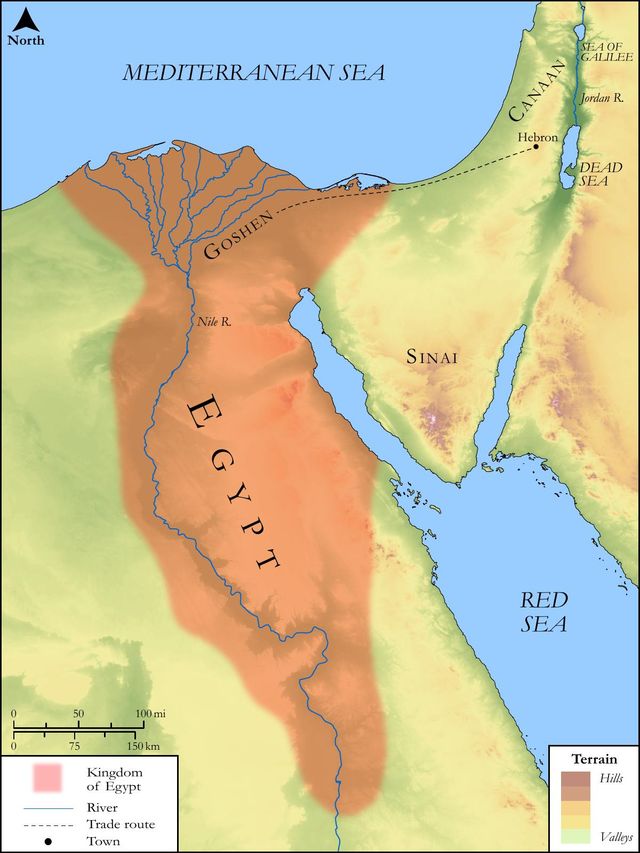
See on the biblical-era maps


Study this verse
Public-domain commentary
Matthew Henry
From his Commentary on the Whole Bible. Henry comments on passages, not single verses — this entry covers Genesis 41:9–16.
Here is, 1. The recommending of Joseph to Pharaoh for an interpreter. The chief butler did it more in compliment to Pharaoh, to oblige him, than in gratitude to Joseph, or in compassion for his case. He makes a fair confession (Gen 41:9): "I remember my faults this day, in forgetting Joseph." Note, It is best to remember our duty, and to do it in its time; but, if we have neglected that, it is next best to remember our faults, and repent of them, and do our duty at last; better late than never. Some think he means his faults against Pharaoh, for which he was imprisoned; and then he would insinuate that, though Pharaoh had forgiven him, he had not forgiven himself. The story he had to tell was, in short, That there was an obscure young man in the king's prison, who had very properly interpreted his dream, and the chief baker's (the event corresponding in each with the interpretation), and that he would recommend him to the king his master for an interpreter. Note, God's time for the enlargement of his people will appear at last to be the fittest time. If the chief butler had at first used his interest for Joseph's enlargement, and had obtained it, it is probable that upon his release he would have gone back to the land of the Hebrews again, which he spoke of so feelingly (Gen 40:15), and then he would neither have been so blessed himself, nor such a blessing to his family, as afterwards he proved. But staying two years longer, and coming out now upon this occasion, at last, to interpret the king's dreams, way was made for his very great preferment. Those that patiently wait for God shall be paid for their waiting, not only principal but interest, Lam 3:26. 2. The introducing of Joseph to Pharaoh. The king's business requires haste. Joseph is sent for out of the dungeon with all speed; Pharaoh's order discharged him both from his imprisonment and from his servitude, and made him a candidate for some of the highest trusts at court. The king can scarcely allow him time, but that decency required it, to shave himself, and to change his raiment, Gen 41:14. It is done with all possible expedition, and Joseph is brought in, perhaps almost as much surprised as Peter was, Act 12:9. So suddenly is his captivity brought back that he is as one that dreams, Psa 126:1. Pharaoh immediately, without enquiring who or whence he was, tells him his business, that he expected he should interpret his dream, Gen 41:15. To which, Joseph makes him a very modest decent reply, (Gen 41:16), in which, (1.) He gives honour to God. "It is not in me, God must give it." Note, Great gifts appear most graceful and illustrious when those that have them use them humbly, and take not the praise of them to themselves, but give it to God. To such God gives more grace. (2.) He shows respect to Pharaoh, and hearty good-will to him and his government, in supposing that the interpretation would be an answer of peace. Note, Those that consult God's oracles may expect an answer of peace. If Joseph be made the interpreter, hope the best.
Historical interpretation
Historical reception
1 surviving comment on this verse from the historical church.
Notice immediately how much esteem Joseph enjoys from the outset. After being completely purified by endurance and emerging from prison like some piece of glittering gold, he was brought into Pharaoh’s presence.Do you see how wonderful a thing it is to be helped by grace from on high? See how many things divine providence had arranged so that the events affecting Joseph should come to pass. After surviving that greatest challenge and avoiding the clutches of that wanton Egyptian, he was thrown into prison. It was arranged that Pharaoh’s chief cupbearer and chief baker should be imprisoned there at the same time and should come to know the man’s wisdom through his interpretation of dreams, so that now at the opportune moment the cupbearer should remember and bring him forward.
Continue studying Genesis 41:14 across the web’s major study libraries — every link below opens this exact verse, chapter, or book on the destination site.
Read & Compare
 BibleGatewayThis verse in more than 200 translations and 70 languages.
 Bible.comThe YouVersion reader — hundreds of translations, reading plans, and highlights.
 ESV.orgCrossway's official English Standard Version reader.
 NET BibleThe NET translation with 60,000+ translators' notes on every rendering decision.
 STEP BibleTyndale House's free study tool — original text, vocabulary, and scholarly resources.
 BibliaLogos Bible Software's free web reader.
 USCCBThe New American Bible (Revised Edition) with the U.S. bishops' study notes.
Commentaries
 BibleHub CommentariesDozens of classic commentaries on this verse, gathered on one page.
 StudyLightMore than 100 commentary sets — the largest collection on the web.
 BibleRefPlain-English commentary on what this verse means, verse by verse.
 Enduring WordDavid Guzik's free commentary on this chapter, widely used by Bible teachers.
 Bible Study ToolsVerse commentary alongside Greek and Hebrew study aids.
Original Language & Research
- BibleHub InterlinearThe verse word by word — original language, transliteration, and English.
- BibleHub LexiconEvery word's original-language definition and Strong's entry.
 Blue Letter BibleDeep-study tools — Strong's numbers, concordance, and word studies.
 SefariaThe Hebrew text with Rashi and centuries of Jewish commentary.
Sermons, Hymns & Audio


TrulyRandomVerse is not affiliated with these sites and doesn’t control their content. They’re linked because they’re genuinely useful.
Summary
Genesis 41:14 chronicles the dramatic and swift transition of Joseph from the squalor of a prison dungeon to the immediate presence of Pharaoh, the most powerful ruler of that day. This pivotal moment, marked by Pharaoh's urgent summons and Joseph's necessary acts of cultural preparation, vividly portrays God's precise timing and sovereign elevation of the humble for His divine purposes, setting the stage for Joseph's interpretive gift to be revealed.
Context
ShowHideLiterary Context
This verse serves as the climax of Joseph's long imprisonment and the immediate prelude to his rise to power. For over a decade, Joseph had endured profound hardship, beginning with his brothers' betrayal and sale into slavery Genesis 37:28 and culminating in his unjust imprisonment on false charges Genesis 39:20. While in the dungeon, Joseph accurately interpreted the dreams of Pharaoh's chief butler and baker Genesis 40:8-19, specifically prophesying the butler's restoration. Despite this, the butler forgot Joseph for two full years after his release. The narrative then shifts to Pharaoh's own disturbing, inexplicable dreams Genesis 41:1-7, which none of his wise men or magicians could interpret. This crisis prompts the chief butler to finally remember Joseph, leading directly to the urgent summons described in [Genesis 41:14 "Pharaoh summons Joseph"]. The swiftness of Joseph's elevation underscores the divine orchestration at play, as God's timing is revealed to be perfect, bringing Joseph to the forefront at the precise moment of Pharaoh's desperate need.
Historical & Cultural Context
Ancient Egypt was a highly structured society with rigid protocols, especially concerning interactions with the Pharaoh, who was considered a divine king. Cleanliness and appearance were paramount, particularly for those in positions of authority or in the royal court. Unlike many Semitic peoples, including Hebrews, who typically wore beards as a sign of maturity and honor, Egyptians, especially priests and those in the royal presence, were meticulously clean-shaven. Facial hair was often associated with foreigners or those of lower status. Therefore, Joseph's acts of shaving and changing his raiment were not merely hygienic but culturally imperative and deeply symbolic. They signified a transition from the defilement and low status of a prisoner to one deemed pure, respectful, and worthy of standing before the monarch. The "dungeon" (Hebrew: bôwr) would have been a dark, often subterranean pit, likely unsanitary, making the need for purification even more pronounced before entering the pristine royal palace.
Key Themes
ShowHideGenesis 41:14 powerfully contributes to several overarching themes within the book of Genesis and the broader biblical narrative. Firstly, it highlights Divine Providence and Sovereignty, demonstrating God's active hand in orchestrating events, even through human forgetfulness and injustice, to fulfill His ultimate purposes. Joseph's long period of suffering was not wasted but was a divinely appointed preparation for his future role as a deliverer. Secondly, the verse underscores the theme of Exaltation of the Humble, showcasing God's consistent pattern of raising up those who have been brought low, often through suffering and faithfulness, to positions of great influence and service. This is a recurring motif seen throughout the biblical narrative, from Abraham's call in [Genesis 12:1-3 "The Call of Abraham"] to David's anointing in [1 Samuel 16:1-13 "David's Anointing"]. Finally, it subtly introduces the theme of Preparation and Cultural Adaptability, as Joseph's willingness to conform to Egyptian customs (shaving, changing clothes) demonstrates practical wisdom and respect, which were necessary for effective engagement in his divinely appointed task.
Exposition and Analysis
ShowHideThe verse vividly portrays the dramatic and instantaneous shift in Joseph's circumstances, marking the culmination of years of suffering and the dawn of his divinely appointed purpose.
Key Word Analysis
ShowHideThis term refers to the general title of Egyptian kings. Its repeated mention here, alongside Joseph's name, emphasizes the immense power disparity between the two individuals and highlights the extraordinary nature of Joseph's summons. It signifies the highest earthly authority, underscoring the magnitude of Joseph's elevation.
A primitive root meaning "to run," "to rush," or "to bring quickly." The use of "hastily" here emphasizes the urgency and immediacy of Pharaoh's command. It conveys a sense of rapid movement and the desperate need that Pharaoh felt for an interpretation of his troubling dreams, underscoring the divine timing of Joseph's release.
A primitive root meaning "to be bald" or, causatively, "to shave." This act was culturally significant in ancient Egypt. Unlike Semitic peoples, Egyptians, especially those in the royal court, were clean-shaven. This act was not merely hygienic but a ritualistic purification, symbolizing Joseph's shedding of his prisoner status and his conformity to the customs of the royal court, signaling his readiness to stand before the king.
A primitive root meaning "to slide by," "to hasten away," or "to change." Applied to "raiment," it signifies a complete transformation in appearance. Joseph's changing from prison rags to clean, perhaps even ceremonial, attire was a visual declaration of his immediate change in status, honor, and readiness to serve. It symbolized a shedding of his past suffering and an embrace of his new, divinely appointed role.
Verse Breakdown
ShowHide"Then Pharaoh sent and called Joseph,"
This opening phrase immediately establishes the sovereign authority initiating the action. Pharaoh, the most powerful man in the known world, takes the decisive step to summon Joseph, demonstrating the extraordinary nature of the situation and the depth of his need. The "sending" and "calling" indicate a formal and urgent royal decree.
"and they brought him hastily out of the dungeon:"
The plural "they" likely refers to Pharaoh's servants or guards, acting on his command. The word "hastily" underscores the urgency of the summons, reflecting Pharaoh's desperation for an interpretation of his dreams. Being brought "out of the dungeon" (Hebrew: bôwr, a pit or prison) signifies a dramatic reversal of fortune, a literal ascent from the depths of despair and confinement into the light of opportunity.
"and he shaved [himself],"
Joseph's act of shaving was a crucial cultural requirement for appearing before Pharaoh. As a Hebrew, Joseph would likely have worn a beard, but Egyptian custom dictated a clean-shaven appearance for those in positions of honor or in the king's presence. This act signifies Joseph's immediate and pragmatic adaptation to the cultural norms necessary for his new context, demonstrating his wisdom and respect for the royal court.
"and changed his raiment,"
Similar to shaving, changing his clothes from prison rags to clean attire was a symbolic and practical necessity. It marked his transition from a defiled, low-status prisoner to someone presentable and worthy of standing before the king. This transformation in appearance visually communicated his readiness to engage in a new, honorable role.
"and came in unto Pharaoh."
This final clause marks the successful completion of the summons and preparation. Joseph, having undergone the necessary physical and symbolic transformation, now stands directly before the most powerful man in Egypt. This moment is the culmination of years of suffering and divine preparation, setting the stage for Joseph's prophetic gift to be exercised and for God's redemptive plan to unfold.
Literary Devices
ShowHideThe verse employs several powerful literary devices. Juxtaposition is starkly evident, contrasting Joseph's previous state in the "dungeon" with his immediate entry into the presence of "Pharaoh." This creates a dramatic effect, highlighting the sudden and miraculous nature of his elevation. Symbolism is richly present in Joseph's acts of shaving and changing his raiment. These actions are not merely practical but symbolize purification, a shedding of his past identity as a prisoner, and an embrace of a new status worthy of the royal court. The "hastily" (Hebrew: rûwts) also serves as a form of Hyperbole or Emphasis, stressing the extreme urgency and the rapid turnaround of Joseph's circumstances, underscoring the divine orchestration of events.
Theological and Thematic Connections
ShowHideGenesis 41:14 stands as a profound testament to God's meticulous providence and His sovereign timing. Joseph's long years of suffering were not arbitrary but were a crucible for character formation and a precise preparation for this very moment. God orchestrated Pharaoh's dreams, the butler's forgetfulness, and his eventual remembrance, all to bring Joseph to the seat of power at the exact time his unique gift was needed to save a nation and, ultimately, his own family. This verse illustrates that God works behind the scenes, often through seemingly ordinary or even negative circumstances, to bring about His extraordinary purposes, revealing His faithfulness to His covenant promises.
Reflection and Application
ShowHideGenesis 41:14 offers profound encouragement and practical wisdom for believers today. It reminds us that even in the most challenging, forgotten, or seemingly hopeless seasons of life, God is actively at work, weaving together circumstances for His perfect timing and purposes. Joseph's faithfulness in the dungeon, though unseen by human eyes, was not in vain. His readiness to adapt to new cultural norms, while maintaining his integrity, also teaches us the importance of practical wisdom and cultural sensitivity when engaging with the world, always remembering that our ultimate trust and power come from God alone, as Joseph himself would declare to Pharaoh Genesis 41:16. This verse calls us to cultivate patience, trust in God's unseen hand, and maintain faithfulness even in obscurity, knowing that He can swiftly turn our circumstances around for His glory and the good of others.
Questions for Reflection
ShowHideFAQ
ShowHideWhy was Joseph required to shave and change his clothes before seeing Pharaoh?
ShowHideIn ancient Egypt, appearance was highly significant, especially for those in the royal court. Being clean-shaven was a mark of purity, high status, and respect for the Egyptians, particularly when in the presence of the divine Pharaoh. Unlike many Semitic peoples (including Hebrews) who wore beards, Egyptians considered facial hair unclean for such formal audiences. Changing from the dirty, likely tattered, prison rags to clean raiment further symbolized a transition from a state of defilement and low social status to one of honor, readiness, and acceptance into the royal sphere. These acts were not merely hygienic but deeply culturally and religiously significant, preparing Joseph to be presented as a person worthy of Pharaoh's attention and trust.
Does Joseph's sudden elevation negate the years of suffering he endured?
ShowHideNo, Joseph's sudden elevation does not negate his suffering; rather, it powerfully demonstrates God's redemptive purpose through his suffering. The years Joseph spent as a slave and in prison were not wasted time but a period of profound preparation, character development, and testing of his faith. These trials refined him, taught him patience, and honed his administrative and interpretive skills. His suffering positioned him to be precisely where God needed him to be, at the exact moment he was needed to interpret Pharaoh's dreams and ultimately save many lives from famine. This illustrates the biblical truth that God uses all circumstances, even hardship and injustice, to fulfill His sovereign plan and bring about His good purposes for those who trust Him Genesis 50:20.
Christ-Centered Fulfillment
ShowHideJoseph's dramatic transition from the dungeon to the palace, from suffering to exaltation, serves as a powerful type of Christ. Like Joseph, Jesus endured unjust suffering, humiliation, and the ultimate "imprisonment" in the tomb, though He was innocent of any wrongdoing Isaiah 53:7. Yet, in God's perfect timing, He was swiftly exalted from the depths of death to the highest place of authority at the right hand of the Father Philippians 2:8-11. Just as Joseph's exaltation led to the salvation and sustenance of many, including his own family, Christ's resurrection and ascension ensure the spiritual salvation and eternal sustenance of all who believe in Him, delivering humanity from the famine of sin and death John 6:35. Joseph's preparation (shaving, changing clothes) for his audience with Pharaoh can be seen as a faint echo of Christ's perfect righteousness and sinlessness, which alone made Him worthy to stand before God as our High Priest and mediator Hebrews 4:14-16.