


Ezra 8:31
Bible text: King James Version (1769 Blayney text) · Public domain
Bible text: King James Version with Strong's numbers · Public domain
Bible text: Berean Standard Bible · Public domain
Bible text: American Standard Version (1901) · Public domain
Bible text: World English Bible, Messianic edition · Public domain
Bible text: Geneva Bible (1599) · Public domain
Bible text: Young's Literal Translation · Public domain
- וַנִּסְעָהva·nis·'Ahand we set out !H5265Conj-w ¦ V-Qal-ConsecImperf-1cp ¦ SfxVerb Qal Consecutive Imperfect 1st Plural common genderוַandנִּסְעָwe set outה!
- מִנְּהַרmi·ne·Harfrom [the] river ofH5104Prep-m ¦ N-mscNoun Singular Masculine Constructמִfromנְּהַר[the] river of
- אַהֲוָא'a·ha·Va'AhavaH163N-properNoun Proper Location
- בִּשְׁנֵיםbish·Neimon [day] two [plus]H8147Prep-b ¦ Adj-cdAdjective Numerical Dual common gender Absoluteבִּonשְׁנֵים[day] two [plus]
- עָשָׂר'a·SartenH6240Adj-csAdjective Numerical Singular common gender Absolute
- לַחֹדֶשׁla·Cho·deshof the monthH2320Prep-l ¦ N-msNoun Singular Masculine Absoluteלַof theחֹדֶשׁmonth
- הָרִאשׁוֹןha·ri·Shon<the> firstH7223Art ¦ Adj-msAdjective Numerical Position Singular Masculine Absoluteהָ<the>רִאשׁוֹןfirst
- לָלֶכֶתla·Le·khetto goH1980Prep-l ¦ V-Qal-InfVerb Qal Infinitive Constructלָtoלֶכֶתgo
- יְרוּשָׁלִָםye·ru·sha·LimJerusalemH3389N-properNoun Proper Location
- וְיַדve·yadand [the] hand ofH3027Conj-w ¦ N-cscNoun Singular common gender Constructוְandיַד[the] hand of
- אֱלֹהֵינוּ'e·lo·Hei·nuour GodH430N-mpc ¦ 1cpNoun Plural Masculine ConstructאֱלֹהֵיGodנוּour
- הָיְתָהha·ye·Tahit wasH1961V-Qal-Perf-3fsVerb Qal Perfect 3rd Singular Feminine
- עָלֵינוּ'a·Lei·nuon usH5921Prep ¦ 1cpPrepositionעָלֵיonנוּus
- וַיַּצִּילֵנוּvai·Ya·tzi·Le·nuand he delivered usH5337Conj-w ¦ V-Hiphil-ConsecImperf-3ms ¦ 1cpVerb Hiphil Consecutive Imperfect 3rd Singular Masculineוַandיַּצִּילֵhe deliveredנוּus
- מִכַּףmi·Kaffrom [the] hand ofH3709Prep-m ¦ N-fscNoun Singular Feminine Constructמִfromכַּף[the] hand of
- אוֹיֵב'o·Yevan enemyH341V-Qal-Prtcpl-msVerb Qal Participle Singular Masculine Absolute
- וְאוֹרֵבve·'o·Revand from an ambusherH693Conj-w ¦ V-Qal-Prtcpl-msVerb Qal Participle Singular Masculine Absoluteוְandאוֹרֵבfrom an ambusher
- עַל'alonH5921PrepPreposition
- הַדָּרֶךְha·Da·rekhthe journeyH1870Art ¦ N-csNoun Singular common gender Absoluteהַtheדָּרֶךְjourney
English is a literal word-by-word gloss of the Hebrew, not the KJV's wording. Why?
This is the original text the KJV's translators worked from — each Hebrew word with its own literal English meaning in this verse, prepared by scholars at Tyndale House, Cambridge. The KJV translates whole sentences, not word by word, so its wording differs: one Hebrew word can become several English words, and the KJV may choose “the LORD” where the gloss reads “Yahweh”. Both are faithful — they answer different questions. For the KJV's own rendering, switch to the KJV text.
Details
See on the biblical-era map
Study this verse
Public-domain commentary
Matthew Henry
From his Commentary on the Whole Bible. Henry comments on passages, not single verses — this entry covers Ezra 8:31–36. His two-level outline is real structure in the source text, so it is rendered as structure.
We are now to attend Ezra to Jerusalem, a journey of about four months in all; but his multitude made his marches slow and his stages short. Now here we are told,
I.That his God was good, and he acknowledged his goodness:
The hand of our God was upon us, to animate us for our undertaking. To him they owed it,
1.That they were preserved in their journey, and not all cut off; for there were enemies that laid wait for them by the way to do them a mischief, or at least, like Amalek, to smite the hindmost of them, but God protected them, Ezr 8:31. Even the common perils of journeys are such as oblige us to sanctify our going out with prayer and our returns in peace with praise and thanksgiving; much more ought God to be thus eyed in such a dangerous expedition as this was.
2.That they were brought in safety to their journey's end, Ezr 8:32. Let those that have stedfastly set their faces towards the new Jerusalem proceed and persevere to the end till they appear before God in Zion, and they shall find that he who has begun the good work will perform it.
II.That his treasurers were faithful.
When they had come to Jerusalem they were impatient to be discharged of their trust, and therefore applied to the great men of the temple, who received it from them and gave them an acquittance in full, Ezr 8:33, Ezr 8:34. It is a great ease to one's mind to be discharged from a trust, and a great honour to one's name to be able to make it appear that it has been faithfully discharged.
III.That his companions were devout.
As soon as they came to be near the altar they thought themselves obliged to offer sacrifice, whatever they had done in Babylon, Ezr 8:35. That will be dispensed with when we want opportunity which when the door is opened again will be expected from us. It is observable,
1.That among their sacrifices they had a sin-offering; for it is the atonement that sweetens and secures every mercy to us, which will not be truly comfortable unless iniquity be taken away and our peace made with God.
2.That the number of their offerings related to the number of the tribes, twelve bullocks, twelve he-goats, and ninety-six rams (that is, eight times twelve), intimating the union of the two kingdoms, according to what was foretold, Eze 37:22. They did not any longer go two tribes one way and ten another, but all the twelve met by their representatives at the same altar.
IV.That even the enemies of the Jews became their friends, bowed to Ezra's commission, and, instead of hindering the people of God, furthered them (Ezr 8:36), purely in complaisance to the king: when he appeared moderate they all coveted to appear so too. Then had the churches rest.
Historical interpretation
Historical reception
1 surviving comment on this verse from the historical church.
We therefore moved from the river Ahava on the twelfth, and all the rest full of mysteries. For it is read above that on the first day of the first month they began to go up from Babylon; and now it is said that on the twelfth day of the same month they moved from the river Ahava. Therefore, on the first day of the month, they went out from the gates of Babylon, but until the twelfth day, they waited by the mentioned river until they called Levites and Nathinneos from the region of Caspia to themselves and commended themselves to the Lord more diligently through fasting and praying due to the dangers of the long journey. So, when we teach the new people of the Church to renounce the devil and believe and confess the true God, it is as if we depart from Babylon at the beginning of the first month with money to be consecrated to the Lord; because we show them the beginning of a new conversation, which leads those who are snatched from the devil to the heavenly kingdom. Hence, the same month is usually called the month of new or new fruits in the Holy Scripture. For in the same month, under the same signification of new conversation, the fathers were brought out of Egypt by Moses. But when we give the symbol of faith to these same listeners of the new life, which was arranged by the twelve apostles and is comprehended by as many sentences, it is as if we stay twelve days in the first resting place; and so, we undertake the journey begun to the promised land, which by the acceptance of the knowledge of faith, we show them that a path of virtues must be entered upon to reach life. In these days, Ezra was occupied with fasting, prayers, and gathering Levites and Nathinneos with the children of the migration, because it is necessary that when we propose to acquire new people for faith, then we ourselves must especially give our attention to diligence in virtues, by which we commend ourselves more familiarly to the Lord, and offer an example of good action to those we instruct: we also call in a religious cohort of brethren to assist us, so that helped by them, we may more effectively transfer the souls of the faithful to the fellowship of the elect and to the summit of a more perfect life, as holy vessels to the temple of the Lord. It is aptly subjoined that those who came to Jerusalem from Babylon stayed there for three days, and then the silver, gold, and vessels they had brought were offered and weighed in the house of the Lord. Indeed, the three days of stay in Jerusalem represent the virtues that should be held by all the faithful, faith, hope, and charity. Therefore, it is necessary for teachers to show these virtues first in themselves, and then to offer those they have taught and instructed in these same virtues to be tested by the foremost fathers in Christ. For when the holy Church finds those we catechize to be proven in faith and action, as the vessels we offer in the temple, by the hands of the priests, it will find them to be of pure metal and perfect weight. This is also done daily in this Church through the chosen ones in the examination of the life of believers, and in the heavenly Jerusalem, it is more perfectly fulfilled in those who have merited to enter it, as we have said above. In this life, holy teachers, staying as it were for three days in Jerusalem, on the fourth day offer the silver and gold they have brought to be weighed by the priests, when they show themselves to be strong in faith, sublime in hope, fervent in love, and also demonstrate that their listeners shine like tested silver by the confession of true faith, gleam like pure gold through the purity of inviolate sense, and excel like vessels consecrated to God by accepting spiritual gifts. In the heavenly homeland, these same teachers first receive the grace of reward for their faith, hope, and love, and then also for those they have taught, as they are honored more for the precious and worthy vessels they have brought, as after the joy of a three-day stay in Jerusalem. But there is a difference between the vessels that Ezra offers with the priests in Jerusalem and those that above Zerubbabel and Joshua are said to have offered; because those were transported from the temple of the Lord to Babylon and afterward brought back to Jerusalem; but these were made in Babylon itself, but in devotion were sent to Jerusalem by the king or princes of Persia, or even by the people of Israel who lived in those parts. Therefore, those vessels signify those who, after receiving the knowledge and sacraments of faith, and after beginning virtuous works, are deceived by the ancient enemy and taken into the confusion of errors; but by the mercy of Christ’s grace, they are called back to salvation. However, these signify those who were born subject to the death of the first transgression by sin, but through the washing of regeneration by the ministry of priests, they were cleansed and gathered as children of the holy Church. Those represent penitents from their errors, these persevering nations in the beginning virtue. Concerning which it is well subjoined:
Continue studying Ezra 8:31 across the web’s major study libraries — every link below opens this exact verse, chapter, or book on the destination site.
Read & Compare
 BibleGatewayThis verse in more than 200 translations and 70 languages.
 Bible.comThe YouVersion reader — hundreds of translations, reading plans, and highlights.
 ESV.orgCrossway's official English Standard Version reader.
 NET BibleThe NET translation with 60,000+ translators' notes on every rendering decision.
 STEP BibleTyndale House's free study tool — original text, vocabulary, and scholarly resources.
 BibliaLogos Bible Software's free web reader.
 USCCBThe New American Bible (Revised Edition) with the U.S. bishops' study notes.
Commentaries
 BibleHub CommentariesDozens of classic commentaries on this verse, gathered on one page.
 StudyLightMore than 100 commentary sets — the largest collection on the web.
 BibleRefPlain-English commentary on what this verse means, verse by verse.
 Enduring WordDavid Guzik's free commentary on this chapter, widely used by Bible teachers.
 Bible Study ToolsVerse commentary alongside Greek and Hebrew study aids.
Original Language & Research
- BibleHub InterlinearThe verse word by word — original language, transliteration, and English.
- BibleHub LexiconEvery word's original-language definition and Strong's entry.
 Blue Letter BibleDeep-study tools — Strong's numbers, concordance, and word studies.
 SefariaThe Hebrew text with Rashi and centuries of Jewish commentary.
Sermons, Hymns & Audio


TrulyRandomVerse is not affiliated with these sites and doesn’t control their content. They’re linked because they’re genuinely useful.
Summary
Ezra 8:31 powerfully recounts the successful and divinely protected departure of Ezra and the returning exiles from the river of Ahava, marking the commencement of their perilous journey to Jerusalem. This verse stands as a profound testament to God's active faithfulness and sovereign care, demonstrating His tangible intervention in safeguarding His people from the inherent dangers of their route, including enemies and ambushes. It underscores the efficacy of humble reliance on God's power over human strength, validating Ezra's prior declaration of trust in the Almighty.
Context
ShowHideLiterary Context
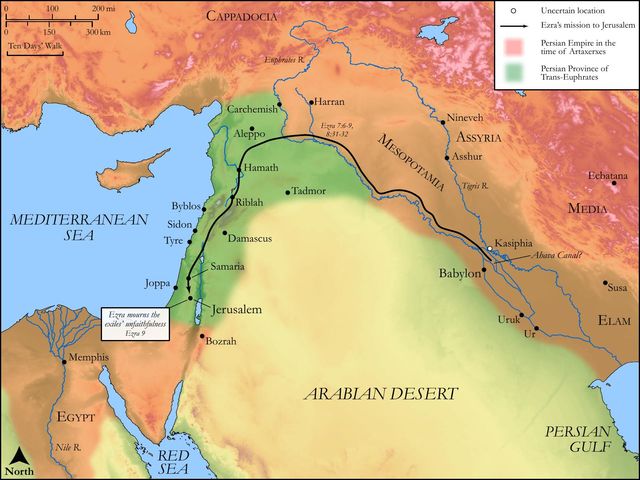
Ezra 8:31 serves as the triumphant culmination of a significant preparatory phase detailed earlier in the chapter. Prior to their departure, Ezra had gathered the returning exiles at the river of Ahava, where he proclaimed a solemn fast and sought God's protection for their arduous journey, as meticulously recorded in Ezra 8:21-23. This act of profound humility and dependence was particularly crucial because Ezra had previously declined a military escort from King Artaxerxes, having confidently declared to the king that "the hand of our God is upon all them for good that seek him" (Ezra 8:22). The precise dating of their departure on the twelfth day of the first month, following this period of spiritual consecration and fervent prayer, directly validates Ezra's unwavering faith and God's responsive faithfulness. This verse thus transitions the narrative from a period of intense spiritual preparation and prayer to the active execution of the journey, highlighting the tangible outcome of their reliance on divine intervention.
Historical & Cultural Context
The journey from Babylon to Jerusalem, spanning approximately 900 miles across vast deserts and through potentially hostile territories, was an inherently dangerous undertaking in that day. Travelers faced myriad threats, including brigands, wild animals, and various antagonistic groups who might oppose the restoration of Jerusalem and its temple. The "river of Ahava" was likely a canal or tributary of the Euphrates River, serving as a strategic gathering point for the Jewish exiles before embarking on the long and arduous trek. Culturally, fasting was a deeply ingrained practice among the Israelites, employed as a means of expressing repentance, seeking divine favor, and imploring God's protection and guidance, especially before significant or perilous undertakings. Ezra's bold decision to rely solely on God's protection, rather than accepting the king's military might, was a profound theological statement. It reflected a deep-seated belief in God's active, personal involvement in the affairs of His people, particularly in the vulnerable post-exilic period when the community was striving to rebuild their spiritual and national identity.
Key Themes
ShowHideThis verse powerfully encapsulates several overarching themes found throughout the book of Ezra and the broader biblical narrative. Firstly, it highlights Divine Protection and Providence, underscoring God's active, personal, and sovereign involvement in safeguarding His people. The phrase "the hand of our God was upon us" serves as a clear and emphatic testament to God's protective care, demonstrating that their safety was not a matter of chance or human strength, but a direct result of divine intervention. Secondly, it exemplifies Faith and Dependence, particularly Ezra's profound and exemplary trust in God, which led him to forgo a royal military escort in favor of seeking God's protection through corporate prayer and fasting, as explicitly detailed in Ezra 8:22-23. This radical reliance on God's power rather than human resources serves as a timeless model of spiritual dependence. Finally, the verse emphasizes Deliverance from Adversity, as God "delivered us from the hand of the enemy, and of such as lay in wait by the way," affirming God's direct and specific intervention against the real and tangible threats faced by the returning community on their journey. This theme resonates deeply with other accounts of God's miraculous deliverance throughout Israel's history, from the Exodus from Egypt to the numerous salvations recorded in the Book of Judges.
Exposition and Analysis
ShowHideKey Word Analysis
ShowHideIn this context, "the hand of our God" is a powerful anthropomorphic idiom signifying God's active power, presence, favor, and protective intervention. It does not imply a literal hand but rather the tangible manifestation of divine strength, authority, and benevolent care. When God's "hand is upon" someone, it indicates His sovereign control, blessing, and, as here, His protective and guiding presence. This idiom frequently appears in the Old Testament to denote divine action, whether for blessing, judgment, or enablement. Here, it confirms God's faithful response to Ezra's trust and the community's earnest prayer.
This verb means "to snatch away," "to rescue," "to preserve," or "to save." It conveys the idea of an active, decisive intervention to remove someone from danger or an oppressive situation. In Ezra 8:31, it emphasizes that God did not merely watch over them but actively intervened to extricate them from the clutches of their enemies and the perils of ambush, highlighting the direct and effective nature of His protection.
This word describes the act of lurking, ambushing, or setting a trap. It refers to those who concealed themselves along the route with malicious intent, planning to attack the travelers unexpectedly. The specific mention of "such as lay in wait" indicates that the threats were not merely general dangers but organized, deliberate attempts by adversaries to harm the exiles, making God's deliverance all the more specific and remarkable.
Verse Breakdown
ShowHide"Then we departed from the river of Ahava on the twelfth [day] of the first month, to go unto Jerusalem"
This clause precisely dates the commencement of the journey, indicating a deliberate and prayerfully considered departure. The "first month" (Nisan), corresponding to March/April, was a favorable time for travel due to milder weather. The specific dating highlights the historical accuracy and the fulfillment of the plans laid out by Ezra, emphasizing the transition from a period of intense spiritual preparation and consecration to active movement towards their divine mandate.
"and the hand of our God was upon us"
This is the central theological statement of the verse, providing the divine explanation for the successful journey. It attributes the safety and success directly to divine intervention. The phrase signifies God's active, benevolent, and powerful presence overseeing, guiding, and empowering the exiles. It underscores the profound belief that their protection was not a matter of luck, human strategy, or military might, but a direct result of God's sovereign care, confirming Ezra's earlier declaration of trust in the Lord.
"and he delivered us from the hand of the enemy, and of such as lay in wait by the way"
This final clause provides the tangible, verifiable evidence of God's protective "hand." It specifies the nature of the threats faced—"the enemy" (general adversaries and hostile forces) and "such as lay in wait by the way" (ambushers, bandits, or specific groups seeking to obstruct their mission). The deliverance from these specific and very real dangers demonstrates God's practical, effective, and direct safeguarding, powerfully validating the community's decision to rely on Him rather than a human escort.
Literary Devices
ShowHideEzra 8:31 employs several significant literary devices that enrich its theological impact. The most prominent is Anthropomorphism and Idiom in the phrase "the hand of our God was upon us." While "hand" is a human body part, here it functions as a powerful metaphor for God's active power, presence, favor, and protective intervention, making an abstract divine attribute concrete and relatable. This idiom effectively conveys divine intervention without reducing God to human form. There is also a strong element of Narrative Irony or Divine Vindication at play: Ezra had famously refused a royal military escort, trusting solely in God's protection. This verse then serves as the direct fulfillment and triumphant vindication of that radical faith, demonstrating unequivocally that God's invisible "hand" was far more effective and reliable than any visible army. The Contrast between human vulnerability and divine omnipotence is stark, highlighting God's faithfulness to those who trust Him implicitly and choose spiritual reliance over worldly security.
Theological and Thematic Connections
ShowHideEzra 8:31 stands as a powerful testament to the biblical truth that God honors and meticulously protects those who place their complete trust in Him. It profoundly reinforces the theme of divine providence, demonstrating that God is not a distant, detached deity but an active, intimately involved participant in the lives of His people, especially when they embark on His mission. The successful and safe journey, despite the inherent and significant dangers and the deliberate lack of human military protection, serves as a concrete and undeniable example of God's unwavering faithfulness to His covenant promises and His absolute ability to deliver His people from all forms of adversity. This narrative underscores the timeless spiritual principle that true security, ultimate provision, and genuine success lie not in human strength, strategic planning, or abundant resources, but in humble, prayerful, and unwavering reliance upon the Almighty.
Reflection and Application
ShowHideEzra 8:31 offers profound encouragement and a compelling challenge for contemporary believers facing daunting challenges or embarking on new ventures, whether personal, professional, or spiritual. It calls us to emulate Ezra's radical trust, prioritizing spiritual preparation, humble prayer, and absolute dependence on God over reliance on human strength, conventional safeguards, or visible assurances. In a world that often values tangible security, measurable resources, and human ingenuity, this verse serves as a powerful reminder that our ultimate protection, provision, and guidance come from the unseen yet ever-present "hand of our God." When we genuinely commit our plans to Him, seek His guidance through prayer and spiritual disciplines, and step out in faith—even when the path seems perilous or the odds are stacked against us—we can confidently expect His active presence to navigate us through life's perils. This is not a naive guarantee of an easy or obstacle-free path, but a profound promise of His faithful companionship, His sovereign control, and His ultimate deliverance from the true enemies of our souls and the obstacles that threaten our spiritual journey and divine purpose.
Questions for Reflection
ShowHideFAQ
ShowHideWhy did Ezra refuse a military escort from the king, and was it wise?
ShowHideEzra refused a military escort from King Artaxerxes because he had already made a bold declaration to the king, stating, "the hand of our God is upon all them for good that seek him" (Ezra 8:22). To subsequently request a military guard would have appeared to contradict his confident declaration of faith in God's protection, potentially dishonoring God's name and undermining his testimony before a pagan king. His decision was an extraordinary act of profound faith and a bold theological statement, demonstrating that he trusted God's omnipotent power and providential care more than any human military might. As Ezra 8:31 unequivocally attests, it proved to be an exceptionally wise decision, as God indeed delivered them from all dangers, thereby vindicating Ezra's unwavering trust and glorifying His own name among both believers and unbelievers.
What is the significance of the "river of Ahava" and the fasting there?
ShowHideThe "river of Ahava" was a crucial gathering point for the Jewish exiles before their long, arduous, and perilous journey to Jerusalem. Its profound significance lies in the intense spiritual preparation and consecration that occurred there. Before embarking on such a monumental undertaking, Ezra proclaimed a solemn fast for all the people (Ezra 8:21). This act of corporate fasting was a powerful expression of humility, repentance, and earnest prayer, specifically seeking God's favor, a safe journey, and divine protection from the numerous enemies and ambushes they anticipated. It underscored their complete and utter dependence on God's providence for the success and safety of their mission, rather than their own strength, numbers, or human resources. The safe arrival in Jerusalem, as described in Ezra 8:31, was seen as a direct and miraculous answer to these fervent prayers and the spiritual consecration that took place at Ahava.
Christ-Centered Fulfillment
ShowHideEzra 8:31, with its powerful declaration of God's protective "hand" and miraculous deliverance from enemies, finds its ultimate and most profound fulfillment in the person and work of Jesus Christ. While Ezra and the exiles experienced a temporal and physical deliverance from immediate dangers on a historical journey, Christ embodies the ultimate and eternal "hand of God" reaching down to humanity. He is the one through whom God delivers His people not merely from physical enemies and ambushes on a terrestrial journey, but from the far greater, spiritual enemies of sin, death, and the devil, definitively triumphing over them through His crucifixion and resurrection (Hebrews 2:14-15). Just as God's protective hand was tangibly upon Ezra and the exiles, the full power, presence, and benevolent authority of God were perfectly and uniquely manifest in Jesus, who continually exercised divine authority over sickness, demons, and even the grave (Matthew 8:16). Believers today, embarking on their spiritual journey towards the New Jerusalem (Revelation 21:2), are not protected by a military escort or human might, but by the indwelling Holy Spirit, the very presence of Christ, who guides, guards, and empowers them through all spiritual perils and temptations (John 14:16-17). Our ultimate deliverance, foreshadowed so beautifully in Ezra's journey, is secured through the finished, redemptive work of the Lamb of God, who ensures safe passage to eternal life for all who place their trust in Him (John 10:28-29).