


Exodus 9:23
Bible text: King James Version (1769 Blayney text) · Public domain
Bible text: King James Version with Strong's numbers · Public domain
Bible text: Berean Standard Bible · Public domain
Bible text: American Standard Version (1901) · Public domain
Bible text: World English Bible, Messianic edition · Public domain
Bible text: Geneva Bible (1599) · Public domain
Bible text: Young's Literal Translation · Public domain
- וַיֵּטvai·Yetand he stretched outH5186Conj-w ¦ V-Qal-ConsecImperf-3msVerb Qal Consecutive Imperfect 3rd Singular Masculineוַandיֵּטhe stretched out
- מֹשֶׁהmo·ShehMosesH4872N-proper-mNoun Proper Masculine
- אֶת'et<obj.>H853DirObjMParticle Object Indicator
- מַטֵּהוּma·te·Huhis staffH4294N-msc ¦ 3msNoun Singular Masculine Constructמַטֵּstaffהוּhis
- עַל'altoH5921PrepPreposition
- הַשָּׁמַיִםha·sha·ma·Yimthe heavensH8064Art ¦ N-mpNoun Plural Masculine Absoluteהַtheשָּׁמַיִםheavens
- וַיהוָהva·Yah·wehand YahwehH3068Conj-w ¦ N-properNoun Proper TitleוַandיהוָהYahweh
- נָתַןna·Tanhe gaveH5414V-Qal-Perf-3msVerb Qal Perfect 3rd Singular Masculine
- קֹלֹתko·Lotthunder clapsH6963N-fpNoun Plural Feminine Absolute
- וּבָרָדu·va·Radand hailH1259Conj-w ¦ N-msNoun Singular Masculine Absoluteוּandבָרָדhail
- וַתִּהֲלַךְva·Ti·ha·lakhand it wentH1980Conj-w ¦ V-Qal-ConsecImperf-3fsVerb Qal Consecutive Imperfect 3rd Singular Feminineוַandתִּהֲלַךְit went
- אֵשׁ'eshfireH784N-csNoun Singular common gender Absolute
- אָרְצָה'A·re·tzah[the] ground towardsH776N-fs ¦ SfxNoun Singular Feminine Absoluteאָרְצָ[the] groundהtowards
- וַיַּמְטֵרvai·yam·Terand he rained downH4305Conj-w ¦ V-Hiphil-ConsecImperf-3msVerb Hiphil Consecutive Imperfect 3rd Singular Masculineוַandיַּמְטֵרhe rained down
- יְהוָהYah·wehYahwehH3068N-properNoun Proper Title
- בָּרָדba·RadhailH1259N-msNoun Singular Masculine Absolute
- עַל'alonH5921PrepPreposition
- אֶרֶץ'E·retz[the] land ofH776N-fscNoun Singular Feminine Construct
- מִצְרָיִםmitz·Ra·yimEgyptH4714N-properNoun Proper Location
English is a literal word-by-word gloss of the Hebrew, not the KJV's wording. Why?
This is the original text the KJV's translators worked from — each Hebrew word with its own literal English meaning in this verse, prepared by scholars at Tyndale House, Cambridge. The KJV translates whole sentences, not word by word, so its wording differs: one Hebrew word can become several English words, and the KJV may choose “the LORD” where the gloss reads “Yahweh”. Both are faithful — they answer different questions. For the KJV's own rendering, switch to the KJV text.
Details
See on the biblical-era maps

Study this verse
Public-domain commentary
Matthew Henry
From his Commentary on the Whole Bible. Henry comments on passages, not single verses — this entry covers Exodus 9:22–35. His four-level outline is real structure in the source text, so it is rendered as structure.
The threatened plague of hail is here summoned by the powerful hand and rod of Moses (Exo 9:22, Exo 9:23), and it obeys the summons, or rather the divine command; for fire and hail fulfil God's word, Psa 148:8. And here we are told,
I.What desolations it made upon the earth.
The thunder, and fire from heaven (or lightning), made it both the more dreadful and the more destroying, Exo 9:23, Exo 9:24. Note, God makes the clouds, not only his store-houses whence he drops fatness on his people, but his magazines whence, when he pleases, he can draw out a most formidable train of artillery, with which to destroy his enemies. He himself speaks of the treasures of hail which he hath reserved against the day of battle and war, Job 38:22, Job 38:23. Woeful havoc this hail made in the land of Egypt. It killed both men and cattle, and battered down, not only the herbs, but the trees, Exo 9:25. The corn that was above ground was destroyed, and that only preserved which as yet had not come up, Exo 9:31, Exo 9:32. Note, God has many ways of taking away the corn in the season thereof (Hos 2:9), either by a secret blasting, or a noisy hail. In this plague the hot thunderbolts, as well as the hail, are said to destroy their flocks, Psa 78:47, Psa 78:48; and see Psa 105:32, Psa 105:33. Perhaps David alludes to this when, describing God's glorious appearances for the discomfiture of his enemies, he speaks of the hailstones and coals of fire he threw among them, Psa 18:12, Psa 18:13. And there is a plan reference to it on the pouring out of the seventh vial, Rev 16:21. Notice is here taken (Exo 9:26) of the land of Goshen's being preserved from receiving any damage by this plague. God has the directing of the pregnant clouds, and causes it to rain or hail on one city and not on another, either in mercy or in judgment.
II.What a consternation it put Pharaoh in. See what effect it had upon him,
1.He humbled himself to Moses in the language of a penitent, Exo 9:27, Exo 9:28. No man could have spoken better. He owns himself on the wrong side in his contest with the God of the Hebrews: "I have sinned in standing it out so long." He owns the equity of God's proceedings against him: The Lord is righteous, and must be justified when he speaks, though he speak in thunder and lightning. He condemns himself and his land: "I and my people are wicked, and deserve what is brought upon us." He begs the prayers of Moses: "Entreat the Lord for me, that this direful plague may be removed." And, lastly, he promises to yield up his prisoners: I will let you go. What could one desire more? And yet his heart was hardened all this while. Note, The terror of the rod often extorts penitent acknowledgments from those who have no penitent affections; under the surprise and smart of affliction, they start up, and say that which is pertinent enough, not because they are deeply affected, but because they know that they should be and that it is meet to be said.
2.Moses, hereupon, becomes an intercessor for him with God. Though he had all the reason in the world to think that he would immediately repent of his repentance, and told him so (Exo 9:30), yet he promises to be this friend in the court of heaven. Note, Even those whom we have little hopes of, yet we should continue to pray for, and to admonish, Sa1 12:23. Observe,
(1.)The place Moses chose for his intercession. He went out of the city (Exo 9:33), not only for privacy in his communion with God, but to show that he durst venture abroad into the field, notwithstanding the hail and lightning which kept Pharaoh and his servants within doors, knowing that every hail-stone had its direction from his God, who meant him no hurt. Note, Peace with God makes men thunderproof, for thunder is the voice of their Father.
(2.)The gesture: He spread abroad his hands unto the Lord - an outward expression of earnest desire and humble expectation. Those that come to God for mercy must stand ready to receive it.
(3.)The end Moses aimed at in interceding for him: That thou mayest know, and be convinced, that the earth is the Lord's (Exo 9:29), that is, that God has a sovereign dominion over all the creatures, that they all are ruled by him, and therefore that thou oughtest to be so. See what various methods God uses to bring men to their proper senses. Judgments are sent, judgments removed, and all for the same end, to make men know that he Lord reigns.
(4.)The success of it.
[1.]He prevailed with God, Exo 9:33. But,
[2.]He could not prevail with Pharaoh: He sinned yet more, and hardened his heart, Exo 9:34, Exo 9:35. The prayer of Moses opened and shut heaven, like Elias's (Jam 5:17, Jam 5:18), and such is the power of God's two witnesses (Rev 11:6); yet neither Moses nor Elias, nor those two witnesses, could subdue the hard hearts of men. Pharaoh was frightened into a compliance by the judgment, but, when it was over, his convictions vanished, and his fair promises were forgotten. Note, Little credit is to be given to confessions upon the rack. Note also, Those that are not bettered by judgments and mercies are commonly made worse.
Continue studying Exodus 9:23 across the web’s major study libraries — every link below opens this exact verse, chapter, or book on the destination site.
Read & Compare
 BibleGatewayThis verse in more than 200 translations and 70 languages.
 Bible.comThe YouVersion reader — hundreds of translations, reading plans, and highlights.
 ESV.orgCrossway's official English Standard Version reader.
 NET BibleThe NET translation with 60,000+ translators' notes on every rendering decision.
 STEP BibleTyndale House's free study tool — original text, vocabulary, and scholarly resources.
 BibliaLogos Bible Software's free web reader.
 USCCBThe New American Bible (Revised Edition) with the U.S. bishops' study notes.
Commentaries
 BibleHub CommentariesDozens of classic commentaries on this verse, gathered on one page.
 StudyLightMore than 100 commentary sets — the largest collection on the web.
 BibleRefPlain-English commentary on what this verse means, verse by verse.
 Enduring WordDavid Guzik's free commentary on this chapter, widely used by Bible teachers.
 Bible Study ToolsVerse commentary alongside Greek and Hebrew study aids.
Original Language & Research
- BibleHub InterlinearThe verse word by word — original language, transliteration, and English.
- BibleHub LexiconEvery word's original-language definition and Strong's entry.
 Blue Letter BibleDeep-study tools — Strong's numbers, concordance, and word studies.
 SefariaThe Hebrew text with Rashi and centuries of Jewish commentary.
Sermons, Hymns & Audio


TrulyRandomVerse is not affiliated with these sites and doesn’t control their content. They’re linked because they’re genuinely useful.
Summary
Dramatically narrates the unleashing of the seventh plague upon Egypt, a cataclysmic storm of hail, thunder, and fire, initiated by the LORD through Moses. This pivotal moment vividly demonstrates God's absolute sovereignty over all creation and His righteous, targeted judgment against Pharaoh's obstinate rebellion and the pervasive idolatry of the Egyptian empire.
Context
ShowHideLiterary Context
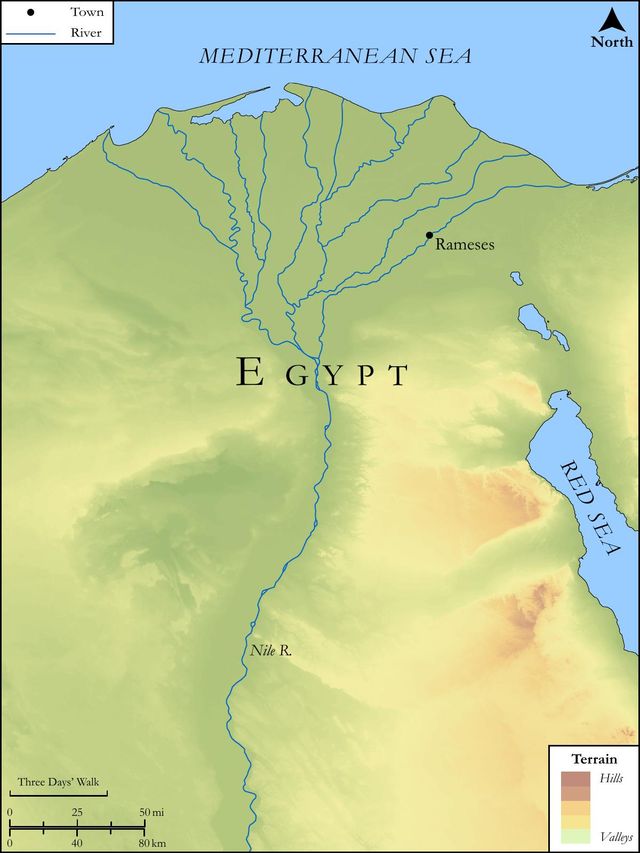
This verse marks the terrifying fulfillment of the LORD's explicit warning to Pharaoh, detailed in Exodus 9:13-21. Crucially, this warning included a merciful provision for those who would heed it, allowing them to protect their livestock and servants, highlighting God's grace even amidst impending judgment. The immediate narrative flow, from the LORD's command to Moses in Exodus 9:22 to the vivid description of the plague's severity in Exodus 9:24, underscores Moses' obedient action as the catalyst for divine intervention. The narrative consistently emphasizes that this was no ordinary weather event but a direct, supernatural act of God, meticulously distinguished from the land of Goshen where the Israelites resided, which remained untouched (Exodus 9:26).
Historical & Cultural Context
The plague of hail was a devastating assault on the very fabric of Egyptian society and its religious worldview. As an agrarian civilization, Egypt's economy was deeply reliant on the predictable cycles of the Nile and the stability of its climate; a hailstorm of this magnitude would obliterate crops, decimate livestock, and bring widespread famine. Spiritually, this plague directly challenged the dominion of several prominent Egyptian deities and undermined Pharaoh's divine authority. It specifically targeted Nut, the sky goddess; Shu, the god of the air and atmosphere; Seth, the god of storms and chaos; and even Ra, the sun god, whose light and warmth were now overshadowed by divine tempest. Pharaoh himself, considered the living embodiment of Horus and the guarantor of ma'at (Egypt's order), was utterly discredited. The LORD's ability to unleash such unprecedented chaos, despite Pharaoh's fervent prayers and rituals to his gods, unequivocally demonstrated the God of Israel's supreme sovereignty over all creation, exposing the impotence of the Egyptian pantheon.
Key Themes
ShowHideExodus 9:23 contributes significantly to several overarching themes within the book of Exodus. Primarily, it powerfully illustrates God's absolute sovereignty over creation, demonstrating His complete control over natural elements like thunder, hail, and fire, directly challenging the perceived control of Egyptian deities. Secondly, it highlights the theme of divine judgment and justice, showcasing God's righteous wrath against Pharaoh's hardened heart and the idolatry of Egypt, a theme that resonates throughout the plague narratives and finds its theological basis in passages like Romans 1:18. Thirdly, the miraculous sparing of Goshen (Exodus 9:26) reinforces the theme of God's distinction and protective care for His covenant people, underscoring His faithfulness to Israel even amidst widespread destruction. This distinction anticipates God's ultimate separation of the righteous from the wicked.
Exposition and Analysis
ShowHideExodus 9:23 precisely details the divine orchestration of the hail plague, emphasizing God's direct involvement through Moses' obedient action.
Key Word Analysis
ShowHideMeaning "a rod, whether for chastising (figuratively, correction), ruling (a sceptre), throwing (a lance), or walking (a staff; figuratively, a support of life, e.g. bread); rod, staff, tribe." Moses' "rod" is far more than a simple shepherd's staff; it is a potent symbol of divine authority and a tangible instrument through which God's miraculous power is channeled. Its stretching "toward heaven" signifies a direct appeal to the celestial realm, from which the judgment descends, emphasizing that the power originates solely from the LORD, not from Moses himself.
Meaning "(the) self-Existent or Eternal; Jehovah, Jewish national name of God; Jehovah, the Lord." The repeated use of "the LORD" (YHWH, God's covenant name) throughout the verse ("the LORD sent," "the LORD rained") is profoundly significant. It asserts that this was not a random meteorological event but a personal, intentional act of the sovereign God who had entered into covenant with Israel. This repetition highlights His active, personal involvement and supreme control over all natural phenomena, distinguishing Him from the impotent gods of Egypt.
Meaning "to walk (in a great variety of applications, literally and figuratively); ...run (along)..." The phrase "the fire ran along upon the ground" translates the Hebrew 'esh mithhallekhet, literally "fire walking" or "fire moving itself." The verb hâlak (to walk/run) here personifies the fire, suggesting a terrifying, active, and independent movement of supernatural fire, perhaps intertwined with or preceding the hailstones. This unique manifestation adds an element of divine terror and demonstrates a power far beyond any natural storm, underscoring the miraculous and unprecedented nature of this judgment.
Verse Breakdown
ShowHide"And Moses stretched forth his rod toward heaven:"
This action is the divinely appointed signal, a direct and obedient response to God's command in Exodus 9:22. Moses acts as God's chosen agent, visually connecting the earthly gesture with the heavenly decree. His posture, reaching "toward heaven," signifies that the ensuing catastrophe is not random but a direct, willed response from the divine realm.
"and the LORD sent thunder and hail,"
Immediately following Moses' obedient action, the LORD Himself initiates the plague. The inclusion of "thunder" (Hebrew qôl, "voice" or "sound") adds an overwhelming auditory dimension to the terror, signifying God's powerful voice and majestic presence. The "hail" (Hebrew bârâd) is not merely frozen precipitation but a weapon in God's arsenal, demonstrating His mastery over the elements.
"and the fire ran along upon the ground;"
This unique and terrifying phenomenon, the "walking fire," emphasizes the supernatural intensity and destructive power of the plague. It suggests a direct, active manifestation of divine energy accompanying the hail, making the storm uniquely devastating and clearly miraculous. This fire, distinct from ordinary lightning, underscores the extraordinary nature of God's judgment.
"and the LORD rained hail upon the land of Egypt."
The repetition of "the LORD" (YHWH) and the specific mention of "rained hail" reinforce God's direct agency and the widespread impact of the judgment. The hail was not localized but fell "upon the land of Egypt," indicating a comprehensive, inescapable, and divinely orchestrated judgment across the entire nation, leaving no doubt as to its source or purpose.
Literary Devices
ShowHideExodus 9:23 masterfully employs several literary devices to convey its powerful message. Vivid Imagery is prominent, painting a terrifying picture of "thunder and hail" and "fire ran along upon the ground," engaging both auditory and visual senses to impress the severity of the plague. The phrase "fire ran along upon the ground" is a striking example of Personification, attributing a human action (running) to an inanimate force (fire), which creates a sense of active, almost sentient destruction, making the divine judgment feel immediate and inescapable. The Repetition of "the LORD" (YHWH) throughout the verse ("the LORD sent," "the LORD rained") serves to emphasize divine agency and reinforce God's absolute sovereignty, leaving no ambiguity about the source of this cataclysm. Furthermore, the rapid succession of events—Moses' action, God's sending, the fire's movement, and the raining hail—builds Dramatic Tension and highlights the instantaneous and overwhelming nature of divine judgment.
Theological and Thematic Connections
ShowHideExodus 9:23 profoundly articulates several core theological truths. It unequivocally demonstrates God's absolute and unchallenged sovereignty over all creation, asserting that the LORD is not merely a tribal deity but the supreme ruler who commands the very elements of nature—thunder, hail, and fire—using them as instruments of His will. This directly challenges and dismantles the authority of the Egyptian pantheon and Pharaoh's perceived control over the heavens and the earth. Furthermore, the plague is a clear act of divine judgment and justice, underscoring the biblical principle that persistent rebellion against God's commands and the oppression of His people will inevitably incur severe consequences. It illustrates God's righteous wrath in action, revealing His unwavering commitment to justice. Finally, the miraculous sparing of Goshen highlights God's covenant faithfulness and His protective care for His chosen people, distinguishing them from those under judgment.
Reflection and Application
ShowHideUnderstanding Exodus 9:23 calls us to a deeper apprehension of God's character as the active, sovereign Lord who holds ultimate control over all things, including the most formidable forces of nature. In a world frequently shaken by natural disasters, this verse offers a profound and comforting truth: even amidst chaos and destruction, God remains firmly on His throne. It compels us to place our complete trust in His ultimate authority and to recognize that His judgments, though at times severe and terrifying, are always rooted in perfect righteousness and justice. For believers, it powerfully underscores His protective care, assuring us that He knows and distinguishes His own, watching over them with unwavering faithfulness. For those who resist His will, it serves as a sober and urgent warning that persistent rebellion and unrepentant sin will ultimately face the inescapable reality of His righteous judgment.
Questions for Reflection
ShowHideFAQ
ShowHideWhy did God use a natural phenomenon like hail for a plague?
ShowHideWhile hail is a natural phenomenon, the plague described in Exodus 9:23 was profoundly supernatural in its orchestration, intensity, and selectivity. It occurred precisely at Moses' command, was uniquely severe (hail mixed with active fire), and miraculously spared the land of Goshen where the Israelites lived (Exodus 9:26). God often uses natural elements to demonstrate His power and judgment, showing that He is the Creator and Sustainer of all things, not limited by natural laws. This particular plague served to highlight His absolute supremacy over the Egyptian gods who supposedly controlled such elements, proving their impotence and His singular omnipotence.
Does God still act with such direct judgment today?
ShowHideWhile we do not typically witness direct, localized plagues like those in Exodus, the Bible teaches that God's judgment is still active in the world, though often in different forms. This can manifest through the natural consequences of sin, societal decay, and even natural disasters, which serve as sobering reminders of human fragility and God's ultimate authority over creation. Ultimately, the New Testament points to a future, final judgment that will be executed by Jesus Christ (Matthew 25:31-46), making the Exodus plagues a powerful foreshadowing of God's righteous wrath against sin and His ultimate victory over all rebellion.
Christ-Centered Fulfillment
ShowHideThe awe-inspiring themes embedded in Exodus 9:23 find their ultimate fulfillment and profound amplification in the person and redemptive work of Jesus Christ. The demonstration of God's absolute sovereignty over creation in the plague narrative points directly to Jesus, who Himself displayed unparalleled authority over nature, effortlessly calming tempestuous storms with a mere word (Mark 4:39) and walking upon the tumultuous sea (Matthew 14:25). He is revealed not merely as a prophet, but as the very Creator through whom all things were made, and by whom all things are sustained and held together (Colossians 1:16-17). Furthermore, the judgment meted out against Egypt foreshadows the ultimate and final judgment that will be carried out by Christ. While the plagues were a partial, temporal judgment against Pharaoh's hardened heart and the idolatry of a nation, Jesus will return as the righteous Judge of all humanity, bringing perfect justice against all ungodliness and rebellion (Revelation 19:11-16). Yet, in His first coming, Jesus bore the full, unmitigated weight of God's wrath against sin on the cross, offering a pathway of salvation and protection from that wrath to all who believe in Him (Romans 5:9). Thus, the distinction God made between Israel and Egypt in the plague finds its ultimate and eternal expression in Christ, who separates those who are His by faith from those who are not, offering eternal refuge and life to His chosen people.