


Exodus 36:5
Bible text: King James Version (1769 Blayney text) · Public domain
Bible text: Berean Standard Bible · Public domain
Bible text: American Standard Version (1901) · Public domain
Bible text: World English Bible, Messianic edition · Public domain
Bible text: Geneva Bible (1599) · Public domain
Bible text: Young's Literal Translation · Public domain
- וַיֹּאמְרוּvai·yo·me·Ruand they saidH559Conj-w ¦ V-Qal-ConsecImperf-3mpVerb Qal Consecutive Imperfect 3rd Plural Masculineוַandיֹּאמְרוּthey said
- אֶל'eltoH413PrepPreposition
- מֹשֶׁהmo·ShehMosesH4872N-proper-mNoun Proper Masculine
- לֵּאמֹרle·Mor<to> sayingH559Prep-l ¦ V-Qal-InfVerb Qal Infinitive Constructלֵּ<to>אמֹרsaying
- מַרְבִּיםmar·Bim[are] multiplyingH7235V-Hiphil-Prtcpl-mpVerb Hiphil Participle Plural Masculine Absolute
- הָעָםha·'Amthe peopleH5971Art ¦ N-msNoun Singular Masculine Absoluteהָtheעָםpeople
- לְהָבִיאle·ha·Vi'to bringH935Prep-l ¦ V-Hiphil-InfVerb Hiphil Infinitive Constructלְtoהָבִיאbring
- מִדֵּיmi·Deimore than sufficiency ofH1767Prep-m ¦ N-mscNoun Singular Masculine Constructמִmore thanדֵּיsufficiency of
- הָעֲבֹדָהha·'a·vo·Dahthe serviceH5656Art ¦ N-fsNoun Singular Feminine Absoluteהָtheעֲבֹדָהservice
- לַמְּלָאכָהla·me·la·Khahfor the workH4399Prep-l ¦ N-fsNoun Singular Feminine Absoluteלַfor theמְּלָאכָהwork
- אֲשֶׁר'a·SherwhichH834RelParticle Relative
- צִוָּהtzi·Vahhe has commandedH6680V-Piel-Perf-3msVerb Piel Perfect 3rd Singular Masculine
- יְהוָהYah·wehYahwehH3068N-properNoun Proper Title
- לַעֲשֹׂתla·'a·Sotto doH6213Prep-l ¦ V-Qal-InfVerb Qal Infinitive Constructלַtoעֲשֹׂתdo
- אֹתָהּ'o·Tah<obj.> itH853DirObjM ¦ 3fsParticle Object Indicatorאֹתָ<obj.>הּit
English is a literal word-by-word gloss of the Hebrew, not the KJV's wording. Why?
This is the original text the KJV's translators worked from — each Hebrew word with its own literal English meaning in this verse, prepared by scholars at Tyndale House, Cambridge. The KJV translates whole sentences, not word by word, so its wording differs: one Hebrew word can become several English words, and the KJV may choose “the LORD” where the gloss reads “Yahweh”. Both are faithful — they answer different questions. For the KJV's own rendering, switch to the KJV text.
Details
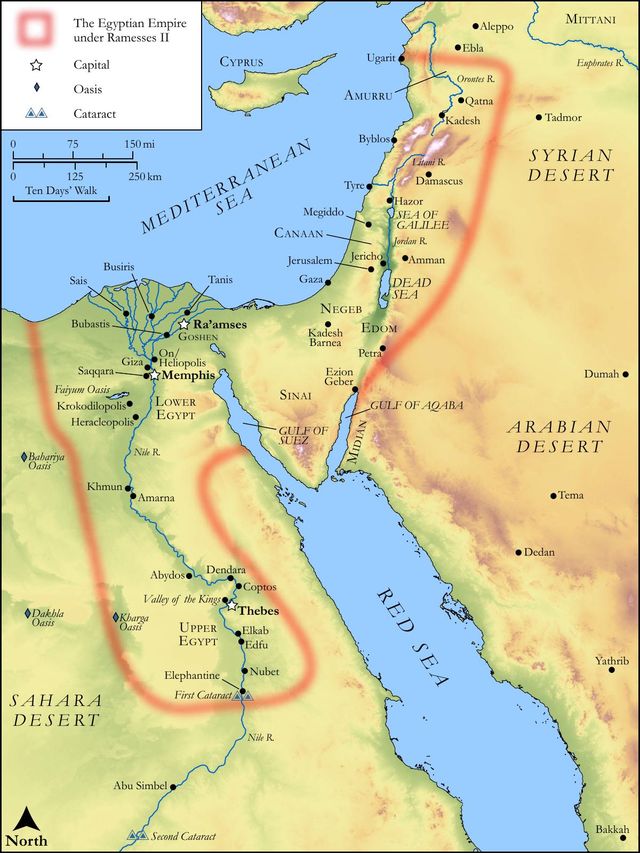
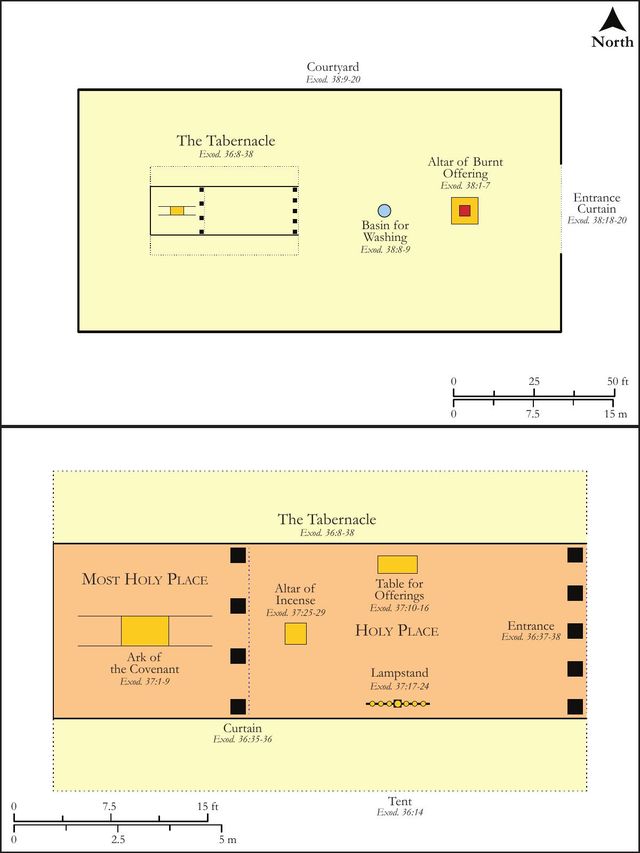
See on the biblical-era maps
Study this verse
Public-domain commentary
Matthew Henry
From his Commentary on the Whole Bible. Henry comments on passages, not single verses — this entry covers Exodus 36:1–7. His two-level outline is real structure in the source text, so it is rendered as structure.
I.The workmen set in without delay.
Then they wrought, Exo 36:1. When God had qualified them for the work, then they applied themselves to it. Note, The talents we are entrusted with must not be laid up, but laid out; not hid in a napkin, but traded with. What have we all our gifts for, but to do good with them? They began when Moses called them, Exo 36:2. Even those whom God has qualified for, and inclined to, the service of the tabernacle, yet must wait for a regular call to it, either extraordinary, as that of prophets and apostles, or ordinary, as that of pastors and teachers. And observe who they were that Moses called: Those in whose heart God had put wisdom for this purpose, beyond their natural capacity, and whose heart stirred them up to come to the work in good earnest. Note, Those are to be called to the building of the gospel tabernacle whom God has by his grace made in some measure fit for the work and free to engage in it. Ability and willingness (with resolution) are the two things to be regarded in the call of ministers. Has God given them not only knowledge, but wisdom? (for those that would win souls must be wise, and have their hearts stirred up to come to the work, and not to the honour only; to do it, and not to talk of it only), let them come to it with full purpose of heart to go through with it. The materials which the people had contributed were delivered by Moses to the workmen, Exo 36:3. They could not create a tabernacle, that is, make it out of nothing, nor work, unless they had something to work upon; the people therefore brought the materials and Moses put them into their hands. Precious souls are the materials of the gospel tabernacle; they are built up a spiritual house, Pe1 2:5. To this end they are to offer themselves a free-will offering to the Lord, for his service (Rom 15:16), and they are then committed to the care of his ministers, as builders, to be framed and wrought upon by their edification and increase in holiness, till they all come, like the curtains of the tabernacle, in the unity of the faith, to be a holy temple, Eph 2:21, Eph 2:22; Eph 4:12, Eph 4:13.
II.The contributions restrained.
The people continued to bring free offerings every morning, Exo 36:3. Note, We should always make it our morning's work to bring our offerings unto the Lord; even the spiritual offerings of prayer and praise, and a broken heart surrendered entirely to God. This is that which the duty of every day requires. God's compassions are new every morning, and so must our duty to him be. Probably there were some that were backward at first to bring their offering, but their neighbours' forwardness stirred them up and shamed them. The zeal of some provoked many. There are those who will be content to follow who yet do not care for leading in a good work. It is best to be forward, but better late than never. Or perhaps some who had offered at first, having pleasure in reflecting upon it, offered more; so far were they from grudging what they had contributed, that they doubled their contribution. Thus, in charity, give a portion to seven, and also to eight; having given much, give more. Now observe,
1.The honesty of the workmen. When they had cut out their work, and found how their stuff held out, and that the people were still forward to bring in more, they went in a body to Moses to tell him that there needed no more contributions, Exo 36:4, Exo 36:5. Had they sought their own things, they had now a fair opportunity of enriching themselves by the people's gifts; for they might have made up their work, and converted the overplus to their own use, as perquisites of their place. But they were men of integrity, that scorned to do so mean a thing as to sponge upon the people, and enrich themselves with that which was offered to the Lord. Those are the greatest cheats that cheat the public. If to murder many is worse than to murder one, by the same rule to defraud communities, and to rob the church or state, is a much greater crime than to pick the pocket of a single person. But these workmen were not only ready to account for all they received, but were not willing to receive more than they had occasion for, lest they should come either into the temptation or under the suspicion of taking it to themselves. These were men that knew when they had enough.
2.The liberality of the people. Though they saw what an abundance was contributed, yet they continued to offer, till they were forbidden by proclamation, Exo 36:6, Exo 36:7. A rare instance! Most need a spur to quicken their charity; few need a bridle to check it, yet these did. Had Moses aimed to enrich himself, he might have suffered them still to bring in their offerings; and when the work was finished might have taken the remainder to himself: but he also preferred the public before his own private interest, and was therein a good example to all in public trusts. It is said (Exo 36:6), The people were restrained from bringing; they looked upon it as a restraint upon them not to be allowed to do more for the tabernacle; such was the zeal of those people, who gave to their power, yea, and beyond their power, praying the collectors with much entreaty to receive the gift, Co2 8:3, Co2 8:4. These were the fruits of a first love; in these last-days charity has grown too cold for us to expect such things from it.
Continue studying Exodus 36:5 across the web’s major study libraries — every link below opens this exact verse, chapter, or book on the destination site.
Read & Compare
 BibleGatewayThis verse in more than 200 translations and 70 languages.
 Bible.comThe YouVersion reader — hundreds of translations, reading plans, and highlights.
 ESV.orgCrossway's official English Standard Version reader.
 NET BibleThe NET translation with 60,000+ translators' notes on every rendering decision.
 STEP BibleTyndale House's free study tool — original text, vocabulary, and scholarly resources.
 BibliaLogos Bible Software's free web reader.
 USCCBThe New American Bible (Revised Edition) with the U.S. bishops' study notes.
Commentaries
 BibleHub CommentariesDozens of classic commentaries on this verse, gathered on one page.
 StudyLightMore than 100 commentary sets — the largest collection on the web.
 BibleRefPlain-English commentary on what this verse means, verse by verse.
 Enduring WordDavid Guzik's free commentary on this chapter, widely used by Bible teachers.
 Bible Study ToolsVerse commentary alongside Greek and Hebrew study aids.
Original Language & Research
- BibleHub InterlinearThe verse word by word — original language, transliteration, and English.
- BibleHub LexiconEvery word's original-language definition and Strong's entry.
 Blue Letter BibleDeep-study tools — Strong's numbers, concordance, and word studies.
 SefariaThe Hebrew text with Rashi and centuries of Jewish commentary.
Sermons, Hymns & Audio


TrulyRandomVerse is not affiliated with these sites and doesn’t control their content. They’re linked because they’re genuinely useful.
Summary
Exodus 36:5 records an extraordinary moment during the construction of the wilderness Tabernacle, revealing the unprecedented and overwhelming generosity of the Israelite people. So abundant were their freewill offerings for the sacred project that the skilled artisans and overseers, entrusted with the work, reported to Moses that they had received "much more than enough" material to complete all the intricate tasks the LORD had commanded. This verse powerfully underscores the people's zealous, willing, and unified participation in God's divine blueprint for His dwelling place among them.
Context
ShowHideLiterary Context
This verse is strategically placed as the climax of the people's initial response to Moses' call for Tabernacle offerings. Following the detailed divine instructions for the Tabernacle's construction in earlier chapters, Moses relays the LORD's specific requirements for materials and skilled labor in Exodus 35:4-19. The narrative then immediately shifts to the overwhelming generosity of the people in Exodus 35:20-29, where "every one whose heart stirred him up, and every one whom his spirit made willing" brought their diverse contributions. Exodus 36:5 serves as the direct, astonishing outcome of this outpouring, as the master craftsmen—Bezaleel, Aholiab, and their colleagues—find themselves with an unexpected and unmanageable surplus. This surplus directly prompts Moses' subsequent command in Exodus 36:6-7, instructing the people to cease bringing gifts, as more than enough had already been provided for the entire project.
Historical & Cultural Context
The events of Exodus 36:5 unfold in the wilderness, a pivotal period following the Israelites' miraculous liberation from Egyptian bondage and their covenanting with God at Mount Sinai. The Tabernacle, whose construction is the focus here, was not merely a building but God's portable sanctuary, a tangible manifestation of His covenant presence, holiness, and a central locus for worship, sacrifice, and atonement, as explicitly commanded in Exodus 25:8. Crucially, these contributions were not forced levies or taxes, but freewill offerings (Exodus 35:29), a spontaneous and heartfelt demonstration of devotion from a people recently delivered and newly committed to their God. This extraordinary generosity stands in stark contrast to their earlier grumbling, impatience, and egregious idolatry, such as the incident of the golden calf detailed in Exodus 32. This moment in Exodus 36:5 thus highlights a unique spiritual fervor and national unity, showcasing a profound transformation in the hearts of the Israelites as they willingly participated in God's redemptive plan.
Key Themes
ShowHideExodus 36:5 contributes significantly to several overarching themes within the book of Exodus and the Pentateuch. It powerfully illustrates the theme of Divine Command and Human Obedience, as the people's generosity is a direct response to the LORD's specific instructions for the Tabernacle. It highlights the theme of Willing and Abundant Giving, showcasing a paradigm of cheerful and overflowing contribution that far exceeds mere obligation, reflecting a heart moved by God's Spirit (Exodus 35:21). This verse also speaks to the theme of God's Provision Through His People, demonstrating that when God stirs the hearts of His community, He provides abundantly for His purposes, often beyond human expectation. Finally, it subtly foreshadows the theme of God's Dwelling Among His People, as the Tabernacle's construction, enabled by this generosity, prepares the way for the LORD's glory to fill the sanctuary, as described in Exodus 40:34-35.
Exposition and Analysis
ShowHideKey Word Analysis
ShowHideThis phrase combines the Hebrew root H7235 (râbâh), meaning "to increase, to be great, to multiply," with H1767 (day), meaning "enough, sufficiency." The combination emphatically conveys a state of superabundance, an overflowing quantity that far exceeds the requirement. It is not merely 'enough' but a significant, even overwhelming, surplus, indicating an extraordinary and unprecedented liberality on the part of the Israelite community, surpassing all expectations for the sacred project.
The term H5656 (ʻăbôdâh) refers to "service, work, labor," often carrying connotations of sacred duty or worship, particularly in the context of the Tabernacle and later Temple rituals. H4399 (mᵉlâʼkâh) denotes "work, occupation, business," specifically referring to the skilled craftsmanship and detailed tasks involved. Together, "service of the work" precisely designates the sacred, intricate, and divinely commanded labor involved in constructing the Tabernacle and its elaborate furnishings. It emphasizes that the offerings were not for general purposes but for a very particular, holy, and precise endeavor, highlighting the precision and sacredness of the task at hand.
This phrase underscores the divine origin and authoritative mandate behind the entire Tabernacle project. The verb H6680 (tsâvâh) means "to command, to order, to enjoin," signifying a direct and binding instruction from a higher authority. H6213 (ʻâsâh) means "to do or make," encompassing a wide range of actions from creation to execution. This divine command provided the ultimate motivation and justification for the people's generous giving, transforming their contributions into acts of obedience and devotion to God's revealed will and blueprint for His dwelling place.
Verse Breakdown
ShowHide"And they spake unto Moses, saying"
This opening clause identifies the speakers as the skilled craftsmen and overseers, specifically Bezaleel, Aholiab, and their assistants (Exodus 36:1-2), who were directly responsible for receiving, managing, and utilizing the offerings from the people. Their communication to Moses is an official and urgent report regarding the progress and state of the materials.
"The people bring much more than enough"
This is the core message of the verse, a direct and astonishing report of the overwhelming and unexpected generosity of the Israelite community. The phrase "much more than enough" vividly conveys the extent of the surplus, indicating that the volume of contributions far exceeded the estimated requirements for the Tabernacle's construction, necessitating an immediate halt to further giving.
"for the service of the work, which the LORD commanded to make"
This concluding clause clarifies the specific and sacred purpose of the abundant gifts—they were designated exclusively for the intricate and holy labor of constructing the Tabernacle. It also reiterates the ultimate authority behind the entire project, emphasizing that it was not a human initiative but a direct divine command from Yahweh, thus underscoring the sacred and obedient nature of both the work itself and the people's contributions towards it.
Literary Devices
ShowHideThe text of Exodus 36:5 employs several literary techniques to emphasize the extraordinary nature of the Israelites' generosity and the divine hand at work. The most prominent is Hyperbole, or at least a strong emphasis on Superabundance. While "much more than enough" might seem like an exaggeration, it is presented as a factual and urgent report from the craftsmen, indicating a truly unprecedented and overwhelming surplus that necessitated immediate action. This highlights the sheer magnitude and unexpected nature of the people's giving. There is also an implicit Contrast at play. The people's eager, unified, and overflowing generosity stands in stark contrast to their earlier grumbling, lack of faith, and particularly their recent egregious idolatry with the golden calf (Exodus 32). This moment showcases a transformed heart and renewed covenant commitment, demonstrating a national unity and spiritual zeal that had been notably absent before. Furthermore, the narrative implies Divine Inspiration or Divine Providence. Though not explicitly stated as a literary device in this verse, the preceding context in Exodus 35:21 notes that "every one whose heart stirred him up, and every one whom his spirit made willing" brought their gifts. This suggests that God Himself was actively at work in the hearts of the people, making their extraordinary generosity a testament to His power and influence, rather than merely human effort.
Theological and Thematic Connections
ShowHideExodus 36:5 powerfully illustrates several profound theological themes: the principle of freewill giving, the abundance of God's provision through His people, and the transformative power of a Spirit-stirred heart. The Israelites' overwhelming generosity was not coerced but flowed from a willing spirit, demonstrating their deep devotion and commitment to God's dwelling place among them. This act of giving foreshadows the New Testament emphasis on cheerful and sacrificial giving as a response to God's grace, recognizing that all we have ultimately comes from Him. It highlights that when God moves among His people, their response can exceed all expectations, providing more than enough for His purposes. This superabundance serves as a testament to the power of collective, Spirit-led generosity in advancing God's kingdom work, demonstrating that true worship often manifests in lavish giving.
Reflection and Application
ShowHideThe scene in Exodus 36:5 offers a compelling challenge and profound inspiration for believers today. It calls us to examine the posture of our hearts when it comes to contributing to God's work. The Israelites' response was not merely adequate, but "much more than enough," flowing from a spirit that was "stirred up" and "willing." This generosity extended beyond material wealth to their time and skills, as seen in the craftsmen who willingly offered their expertise. For us, this translates into a call for wholehearted engagement in the mission of the Church and the needs of the world, not out of obligation, but out of grateful love for God and obedience to His call. Whether through our financial resources, our unique talents and abilities, or our dedicated time, God desires a cheerful, abundant, and willing spirit of giving. This verse reminds us that when God's people are truly moved by His Spirit, they can accomplish extraordinary things, often exceeding what is humanly imagined, to the glory of His name and the advancement of His purposes. It encourages us to consider how we might give beyond what is merely expected, reflecting the lavish generosity of God Himself who has given us infinitely more than we could ask or imagine.
Questions for Reflection
ShowHideFAQ
ShowHideWhy did the people give so much more than was needed for the Tabernacle?
ShowHideThe overwhelming generosity of the Israelites stemmed from a unique confluence of factors: deep spiritual fervor, a profound sense of collective purpose, and divine inspiration. Having recently experienced God's miraculous deliverance from Egypt and His awe-inspiring presence at Mount Sinai, their hearts were deeply stirred to contribute to the construction of His dwelling place among them. This was a moment of national unity and intense devotion, demonstrating their love, obedience, and eagerness to participate in God's sacred project. Exodus 35:21 explicitly states that "every one whose heart stirred him up, and every one whom his spirit made willing" brought their gifts, indicating a divinely empowered outpouring of generosity that surpassed all practical requirements and expectations.
What happened to the surplus materials that were collected?
ShowHideAccording to Exodus 36:6-7, Moses had to issue a public proclamation for the people to stop bringing offerings because there was already "much more than enough" material. The text does not explicitly detail the exact disposition of the surplus. It is highly probable that any excess materials were either stored for future repairs or maintenance of the Tabernacle and its furnishings, or perhaps repurposed for other necessities related to the ongoing wilderness journey. The primary emphasis of the narrative is not on the precise fate of the surplus itself, but on the extraordinary abundance of the people's giving and the immediate need to halt further contributions due to the overwhelming supply, underscoring the people's profound devotion.
Christ-Centered Fulfillment
ShowHideThe overflowing generosity of the Israelites in Exodus 36:5, providing "much more than enough" for God's dwelling place, finds its ultimate fulfillment and profound meaning in Jesus Christ. The Tabernacle, though a magnificent symbol of God's presence and a temporary shadow of heavenly realities, was a physical structure. Christ is the true and ultimate dwelling place of God among humanity, the very embodiment of God's presence, as John 1:14 declares, "The Word became flesh and made his dwelling among us." The Spirit who stirred the hearts of the Israelites to give lavishly for a physical structure is the same Holy Spirit who empowers believers in the New Covenant to give their lives, talents, and resources for the building of the spiritual temple, the Church, with Christ as its cornerstone (Ephesians 2:19-22). Furthermore, the Tabernacle's construction, made possible by the people's gifts, foreshadows the ultimate, incomprehensible gift of God Himself in sending His Son. Christ's sacrifice on the cross was not merely "enough" for our salvation, but "much more than enough," an overflowing grace that covers all sin and provides eternal life, demonstrating that "where sin increased, grace abounded all the more" (Romans 5:20). Our giving in the New Covenant, therefore, is not a means to earn favor, but a joyful, Spirit-empowered response to the immeasurable generosity of God in Christ, who, "though he was rich, yet for your sakes he became poor, so that you through his poverty might become rich" (2 Corinthians 8:9). This divine superabundance in Christ calls us to a corresponding, Spirit-driven generosity that reflects His own lavish love.