


Exodus 10:10
Bible text: King James Version (1769 Blayney text) · Public domain
Bible text: Berean Standard Bible · Public domain
Bible text: American Standard Version (1901) · Public domain
Bible text: World English Bible, Messianic edition · Public domain
Bible text: Geneva Bible (1599) · Public domain
Bible text: Young's Literal Translation · Public domain
- וַיֹּאמֶרvai·Yo·merand he saidH559Conj-w ¦ V-Qal-ConsecImperf-3msVerb Qal Consecutive Imperfect 3rd Singular Masculineוַandיֹּאמֶרhe said
- אֲלֵהֶם'a·le·Hemto themH413Prep ¦ 3mpPreposition Definiteאֲלֵtoהֶםthem
- יְהִיye·Himay he beH1961V-Qal-Imperf-3msVerb Qal Imperfect 3rd Singular Masculine
- כֵןkhenthusH3651AdvAdverb
- יְהוָהYah·wehYahwehH3068N-properNoun Proper Title
- עִמָּכֶם'i·ma·Khemwith youH5973Prep ¦ 2mpPreposition Definiteעִמָּwithכֶםyou
- כַּאֲשֶׁרka·'a·Sherjust asH834Prep-k ¦ RelParticle Relativeכַּjustאֲשֶׁרas
- אֲשַׁלַּח'a·sha·LachI will let goH7971V-Piel-Imperf-1csVerb Piel Imperfect 1st Singular common gender
- אֶתְכֶם'et·Khem<obj.> youH853DirObjM ¦ 2mpParticle Object Indicatorאֶתְ<obj.>כֶםyou
- וְאֶתve·'Etand <obj.>H853Conj-w ¦ DirObjMParticle Object Indicatorוְandאֶת<obj.>
- טַפְּכֶםta·pe·Khemyour little one[s]H2945N-msc ¦ 2mpNoun Singular Masculine Constructטַפְּlittle one[s]כֶםyour
- רְאוּre·'UseeH7200V-Qal-Imp-2mpVerb Qal Imperative 2nd Plural Masculine
- כִּיkithatH3588PrtParticle Conditional
- רָעָהra·'AhevilH7451N-fsNoun Singular Feminine Absolute
- נֶגֶדNe·ged[is] beforeH5048Adj-mscAdjective Numerical Singular Masculine Construct
- פְּנֵיכֶםpe·nei·Khemyour facesH6440N-mpc ¦ 2mpNoun Plural Masculine Constructפְּנֵיfacesכֶםyour
English is a literal word-by-word gloss of the Hebrew, not the KJV's wording. Why?
This is the original text the KJV's translators worked from — each Hebrew word with its own literal English meaning in this verse, prepared by scholars at Tyndale House, Cambridge. The KJV translates whole sentences, not word by word, so its wording differs: one Hebrew word can become several English words, and the KJV may choose “the LORD” where the gloss reads “Yahweh”. Both are faithful — they answer different questions. For the KJV's own rendering, switch to the KJV text.
Details
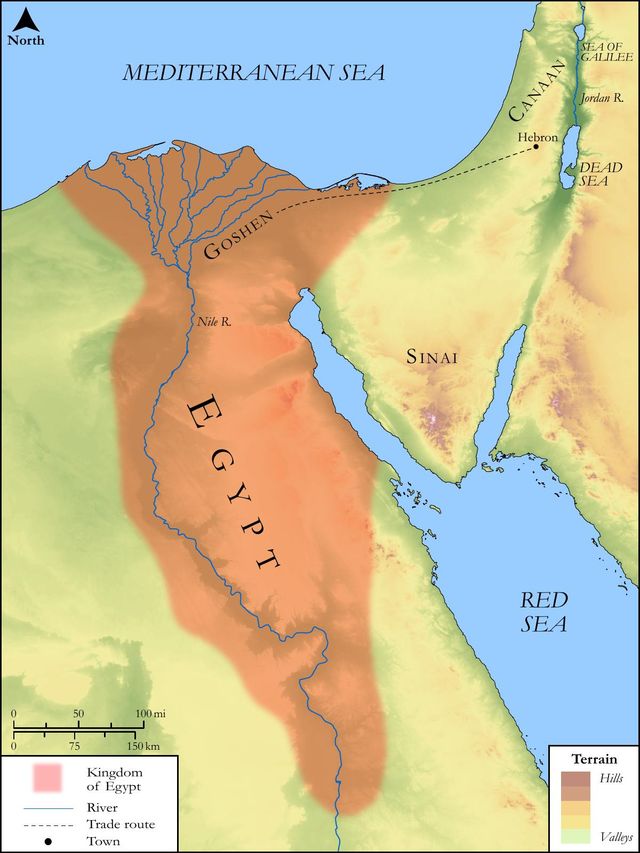
See on the biblical-era maps

Study this verse
Public-domain commentary
Matthew Henry
From his Commentary on the Whole Bible. Henry comments on passages, not single verses — this entry covers Exodus 10:1–11.
Here, I. Moses is instructed. We may well suppose that he, for his part, was much astonished both at Pharaoh's obstinacy and at God's severity, and could not but be compassionately concerned for the desolations of Egypt, and at a loss to conceive what this contest would come to at last. Now here God tells him what he designed, not only Israel's release, but the magnifying of his own name: That thou mayest tell in thy writings, which shall continue to the world's end, what I have wrought in Egypt, Exo 10:1, Exo 10:2. The ten plagues of Egypt must be inflicted, that they may be recorded for the generations to come as undeniable proofs, 1. Of God's overruling power in the kingdom of nature, his dominion over all the creatures, and his authority to use them either as servants to his justice or sufferers by it, according to the counsel of his will. 2. Of God's victorious power over the kingdom of Satan, to restrain the malice and chastise the insolence of his and his church's enemies. These plagues are standing monuments of the greatness of God, the happiness of the church, and the sinfulness of sin, and standing monitors to the children of men in all ages not to provoke the Lord to jealousy nor to strive with their Maker. The benefit of these instructions to the world sufficiently balances the expense.
II.Pharaoh is reproved (Exo 10:3):
Thus saith the Lord God of the poor, despised, persecuted, Hebrews, How long wilt thou refuse to humble thyself before me? Note, It is justly expected from the greatest of men that they humble themselves before the great God, and it is at their peril if they refuse to do it. This has more than once been God's quarrel with princes. Belshazzar did not humble his heart, Dan 5:22. Zedekiah humbled not himself before Jeremiah, Ch2 36:12. Those that will not humble themselves God will humble. Pharaoh had sometimes pretended to humble himself, but no account was made of it, because he was neither sincere nor constant in it.
III.The plague of locusts is threatened, Exo 10:4-6.
The hail had broken down the fruits of the earth, but these locusts should come and devour them: and not only so, but they should fill their houses, whereas the former inroads of these insects had been confined to their lands. This should be much worse than all the calamities of that king which had ever been known. Moses, when he had delivered his message, not expecting any better answer than he had formerly, turned himself and went out from Pharaoh, Exo 10:6. Thus Christ appointed his disciples to depart from those who would not receive them, and to shake off the dust of their feet for a testimony against them; and ruin is not far off from those who are thus justly abandoned by the Lord's messengers, Sa1 15:27, etc.
IV.Pharaoh's attendants, his ministers of state, or privy-counsellors, interpose, to persuade him to come to some terms with Moses, Exo 10:7.
They, as in duty bound, represent to him the deplorable condition of the kingdom (Egypt is destroyed), and advise him by all means to release his prisoners (Let the men go); for Moses, they found, would be a snare to them till it was done, and it were better to consent at first than to be compelled at last. The Israelites had become a burdensome stone to the Egyptians, and now, at length, the princes of Egypt were willing to be rid of them, Zac 12:3. Note, It is a thing to be regretted (and prevented, if possible) that a whole nation should be ruined for the pride and obstinacy of its princes, Salus populi suprema lex - To consult the welfare of the people is the first of laws.
V.A new treaty is, hereupon, set on foot between Pharaoh and Moses, in which Pharaoh consents for the Israelites to go into the wilderness to do sacrifice; but the matter in dispute was who should go, Exo 10:8. 1. Moses insists that they should take their whole families, and all their effects, along with them, Exo 10:9. note, Those that serve God must serve him with all they have. Moses pleads, "We must hold a feast, therefore we must have our families to feast with, and our flocks and herds to feast upon, to the honour of God." 2. Pharaoh will by no means grant this: he will allow the men to go, pretending that this was all they desired, though this matter was never yet mentioned in any of the former treaties; but, for the little ones, he resolves to keep them as hostages, to oblige them to return, Exo 10:10, Exo 10:11. In a great passion he curses them, and threatens that, if they offer to remove their little ones, they will do it at their peril. Note, Satan does all he can to hinder those that serve God themselves from bringing their children in to serve him. He is a sworn enemy to early piety, knowing how destructive it is to the interests of his kingdom; whatever would hinder us from engaging our children to the utmost in God's service, we have reason to suspect the hand of Satan in it. 3. The treaty, hereupon, breaks off abruptly; those that before went out from Pharaoh's presence (Exo 10:6) were now driven out. Those will quickly hear their doom that cannot bear to hear their duty. See Ch2 25:16. Quos Deus destruet eos dementat - Whom God intends to destroy he delivers up to infatuation. Never was man so infatuated to his own ruin as Pharaoh was.
Continue studying Exodus 10:10 across the web’s major study libraries — every link below opens this exact verse, chapter, or book on the destination site.
Read & Compare
 BibleGatewayThis verse in more than 200 translations and 70 languages.
 Bible.comThe YouVersion reader — hundreds of translations, reading plans, and highlights.
 ESV.orgCrossway's official English Standard Version reader.
 NET BibleThe NET translation with 60,000+ translators' notes on every rendering decision.
 STEP BibleTyndale House's free study tool — original text, vocabulary, and scholarly resources.
 BibliaLogos Bible Software's free web reader.
 USCCBThe New American Bible (Revised Edition) with the U.S. bishops' study notes.
Commentaries
 BibleHub CommentariesDozens of classic commentaries on this verse, gathered on one page.
 StudyLightMore than 100 commentary sets — the largest collection on the web.
 BibleRefPlain-English commentary on what this verse means, verse by verse.
 Enduring WordDavid Guzik's free commentary on this chapter, widely used by Bible teachers.
 Bible Study ToolsVerse commentary alongside Greek and Hebrew study aids.
Original Language & Research
- BibleHub InterlinearThe verse word by word — original language, transliteration, and English.
- BibleHub LexiconEvery word's original-language definition and Strong's entry.
 Blue Letter BibleDeep-study tools — Strong's numbers, concordance, and word studies.
 SefariaThe Hebrew text with Rashi and centuries of Jewish commentary.
Sermons, Hymns & Audio


TrulyRandomVerse is not affiliated with these sites and doesn’t control their content. They’re linked because they’re genuinely useful.
Summary
Exodus 10:10 captures Pharaoh's escalating defiance against God's command for Israel's complete liberation. Faced with Moses' non-negotiable demand for all Israelites, including their children, to depart for worship, Pharaoh responds with a cutting, sarcastic "blessing" that quickly devolves into a thinly veiled threat. He accuses the Israelites of malicious intent and warns them of dire consequences if they persist in seeking total freedom. This pivotal verse vividly illustrates the profound hardening of Pharaoh's heart and underscores the intense spiritual battle over God's people and the very nature of their freedom.
Context
ShowHideLiterary Context
This verse is a direct and hostile response to Moses' unwavering declaration in Exodus 10:9 that all Israelites—men, women, children, and livestock—must go into the wilderness to worship the Lord. Pharaoh had previously attempted to negotiate partial concessions, first suggesting they worship within Egypt (Exodus 8:28), then only allowing the men to go (Exodus 10:8). Moses' insistence on a complete departure pushes Pharaoh's frustration to a breaking point, leading to this sarcastic and threatening retort. The immediate consequence of Pharaoh's continued refusal is the devastating plague of locusts, described in the subsequent verses of Exodus 10. This exchange marks a critical escalation in the divine-human conflict, highlighting the unyielding nature of both God's demand and Pharaoh's resistance.
Historical & Cultural Context
In ancient Egypt, the Pharaoh was not merely a king but was revered as a divine being, the son of Ra, and the living embodiment of Egypt's order (Ma'at). His word was absolute law, and his authority was unquestionable. The notion of a foreign deity, Yahweh, challenging his power and demanding the release of a significant portion of his labor force—a vital economic asset—was an unprecedented affront to his divine status and the stability of his kingdom. Pharaoh's accusation of "evil" in this verse reflects his perception of Moses' request not as a legitimate religious observance, but as a political rebellion or an elaborate ruse to escape permanent servitude. From Pharaoh's perspective, allowing the entire population, especially the "little ones" (the future workforce and perpetuators of the Israelite identity), to leave would be an act of economic and political suicide, a direct challenge to his divine authority and the very foundations of Egyptian society. His response is deeply rooted in a worldview where he, not Yahweh, held ultimate dominion.
Key Themes
ShowHideExodus 10:10 contributes significantly to several overarching themes in the book of Exodus. Primarily, it underscores the theme of divine sovereignty versus human will. Pharaoh's obstinacy serves as a foil for God's irresistible power, demonstrating that no human authority can ultimately thwart God's purposes. It also highlights the theme of complete versus partial liberation. God's demand for the "little ones" emphasizes that His salvation is holistic, encompassing entire families and future generations, not just individuals or segments of society. This contrasts sharply with Pharaoh's attempts at partial concessions, revealing his desire to maintain some degree of control over Israel. Furthermore, the verse foreshadows the judgment upon Egypt as a consequence of Pharaoh's hardened heart, a recurring motif throughout the plague narratives (Exodus 9:15-16). This clash ultimately reveals God's glory and His faithfulness to His covenant people, setting the stage for the ultimate deliverance and the establishment of Israel as His chosen nation, a theme that echoes through the broader narrative of God's redemptive plan for humanity, as seen in passages like Isaiah 43:1-7.
Exposition and Analysis
ShowHideExodus 10:10 is a pivotal moment revealing Pharaoh's hardened heart and the true nature of his opposition to God's will. His words are not merely a refusal but a calculated insult and a menacing warning.
Key Word Analysis
ShowHideTranslated as "little ones," this Hebrew term refers specifically to young children, often encompassing women and the infirm who would accompany them. Moses' insistence on taking the ṭaph signifies God's demand for a complete, generational liberation. It is not just about the men for a temporary religious festival; it is about the entire community, the future of the nation, being freed from Egyptian bondage. Pharaoh's specific mention of "your little ones" highlights his understanding that this demand represents a permanent and total exodus, which he vehemently opposes because it would mean the loss of future labor and the complete cessation of his control over Israel.
Translated as "evil" in the KJV, this Hebrew word is rich in meaning. While it can denote moral evil, in this context, it primarily signifies "harm," "calamity," "trouble," "mischief," or "disaster." Pharaoh is not necessarily accusing Moses of moral wickedness, but rather of having a mischievous or harmful ulterior motive—a plot to escape completely under the guise of religious worship. He perceives their full departure as a disaster for Egypt and a personal threat to his rule, implying that their intentions are detrimental to his kingdom.
Translated as "look [to it]," this primitive root means "to see, literally or figuratively." In this imperative form, it functions as a stern warning or a command to "take heed" or "beware." Pharaoh is not merely expressing an opinion; he is issuing a direct, ominous declaration of impending trouble. He is telling Moses and Aaron to "see" or "perceive" the danger that lies ahead if they continue their course of action, implying that he himself will be the source of this danger.
Verse Breakdown
ShowHide"And he said unto them, Let the LORD be so with you, as I will let you go, and your little ones"
Pharaoh's opening statement is saturated with sarcasm and thinly veiled contempt. The phrase "Let the LORD be so with you" sounds like a blessing, but it is delivered as a mocking challenge, implying that if Yahweh truly were with them, they would not need to make such an "outrageous" demand. The second part, "as I will let you go, and your little ones," reveals his conditional and manipulative offer, immediately retracting the full scope of their request. He is mockingly saying, "Sure, let your God be with you, but I am certainly not letting your children go with you." This highlights his refusal to acknowledge Yahweh's supreme authority and his determination to maintain control over Israel's future generations, viewing them as property.
"look [to it]; for evil [is] before you."
This is a direct, ominous threat. "Look [to it]" is an imperative, a warning to pay close attention and consider the consequences. Pharaoh is not merely expressing an opinion; he is issuing a veiled declaration of impending trouble. The phrase "for evil [is] before you" means "you are contemplating something disastrous," or "you have mischief in mind, and trouble will surely come upon you." Pharaoh accuses Moses and the Israelites of plotting a deceptive escape, and he warns them of the severe consequences they will face if they continue to pursue this "evil" plan of total departure. He views their demand for complete freedom as an act of rebellion that will bring disaster upon them, rather than an act of obedience to God.
Literary Devices
ShowHidePharaoh's speech in Exodus 10:10 masterfully employs several literary techniques to convey his hardened heart and defiant stance. Foremost is sarcasm, evident in his opening "Let the LORD be so with you." This seemingly pious wish is delivered with derision, mocking Moses and Yahweh by implying that their God is insufficient to grant them their full request without Pharaoh's "permission." This quickly transitions into a clear veiled threat, conveyed by the ominous warning "evil is before you." Pharaoh implies that he himself will be the instrument of this "evil" or calamity if Moses persists in demanding total liberation, turning his words into a chilling declaration of impending retribution. Finally, there is profound dramatic irony at play: Pharaoh warns of "evil" before them, but the true evil is his own hardened heart and defiance against God, which will ultimately bring far greater disaster upon Egypt than anything he imagines for Israel. The reader knows that the "evil" will indeed come, but it will be upon Pharaoh and his nation, not upon the people of God.
THEOLOGICAL AND THEMATIC CONNECTIONS
ShowHideExodus 10:10 powerfully illustrates the clash between human stubbornness and divine sovereignty. Pharaoh's defiance is a profound theological statement about humanity's innate resistance to God's will, especially when it challenges personal power, comfort, or control. This verse teaches that true liberation, as orchestrated by God, is total and comprehensive, affecting every aspect of life, including families and future generations. God's plan is not for partial obedience or convenient service, but for wholehearted devotion and complete freedom from all forms of bondage. This resistance mirrors the rebellion against God's authority seen throughout scripture, where earthly rulers and systems set themselves against the divine plan.
Reflection and Application
ShowHidePharaoh's defiant words in Exodus 10:10 serve as a timeless reminder of the spiritual resistance we may encounter when seeking to follow God's will fully. Often, the world, or even our own sinful nature, will offer partial concessions, attempting to keep us in some form of bondage while giving the illusion of freedom. God, however, desires our complete liberation—our "little ones," our future, our resources, our entire being—to be consecrated to Him. This verse challenges us to discern when human opposition is merely stubbornness or a misunderstanding of God's purposes, and to stand firm in faith, trusting that God will ultimately deliver His people. It encourages us to pursue full obedience, even when it seems costly or provokes resistance, knowing that God's plan for us is always one of holistic freedom and flourishing. It calls us to examine our own lives: are we holding back any part of ourselves from God's complete claim, perhaps fearing the "evil" or discomfort that full surrender might bring?
Questions for Reflection
ShowHideFAQ
ShowHideWhy does Pharaoh seem to offer concessions but then retract them?
ShowHidePharaoh's offers (e.g., worship in Egypt, only men go) are not genuine concessions but tactical maneuvers designed to maintain control and avoid a full surrender to God's demands. He is testing Moses' resolve, hoping to find a compromise that preserves his authority, his economic assets (the Israelite workforce), and his pride. Each retraction reveals his hardened heart and his ultimate unwillingness to truly "let my people go," demonstrating his desire to cling to power at all costs, even in the face of divine judgment.
What does Pharaoh mean by "evil is before you"?
ShowHidePharaoh's statement "evil is before you" is a direct accusation and a veiled threat. He is accusing Moses and the Israelites of having mischievous or harmful intentions—a plot to escape completely under the guise of worship. He warns them that if they persist in this "evil" plan of total departure, they will face dire consequences, implying that he himself will bring trouble or disaster upon them. It's a warning of his impending punitive action if they do not comply with his limited terms.
Is Pharaoh's resistance purely his own, or is God hardening his heart?
ShowHideThe biblical narrative presents both Pharaoh's self-hardening and God's active hardening of Pharaoh's heart. Initially, Pharaoh hardens his own heart (Exodus 7:13). As the plagues progress, God explicitly states that He will harden Pharaoh's heart (Exodus 7:3). This demonstrates God's sovereignty over human will, even in defiance. God uses Pharaoh's obstinacy to display His power and glory, ensuring that His deliverance of Israel is unmistakably His work, and that His name might be proclaimed in all the earth, as stated in Romans 9:17.
Christ-Centered Fulfillment
ShowHideExodus 10:10, with Pharaoh's stubborn refusal to grant complete liberation, finds its ultimate fulfillment and reinterpretation in the person and work of Jesus Christ. The Exodus narrative is the foundational story of God's deliverance from bondage, and Jesus is the greater Moses who brings about a greater Exodus. Pharaoh's resistance to letting the "little ones" go highlights his desire to keep all of Israel in bondage, symbolizing the spiritual forces that hold humanity captive. Similarly, humanity is held captive by sin and spiritual forces, unable to free itself. Jesus, through His life, death, and resurrection, confronts the ultimate "Pharaoh"—Satan and the power of sin and death. He does not offer partial freedom or temporary concessions; He secures complete and total liberation for all who believe, fulfilling the promise of true freedom found in John 8:36. Just as God's plan for Israel was to free entire families and future generations, Jesus' salvation is comprehensive, extending to every aspect of human life and promising eternal freedom from the dominion of sin (Romans 6:22). His sacrifice breaks the chains of sin and death, fulfilling the pattern of deliverance established in the Exodus. The "evil" Pharaoh warned of ultimately fell upon himself and Egypt, while God's people were delivered. In Christ, the "evil" of sin and its consequences were borne by Jesus on the cross (2 Corinthians 5:21), allowing His people to walk in true freedom and enter into a new covenant relationship with God, where the promise is for them and their "little ones" (Acts 2:39). Jesus is the ultimate Deliverer who ensures that no one, not even the "little ones" (the vulnerable, the lowly, the future generations of believers), is left behind in bondage.