


Deuteronomy 32:26
Bible text: King James Version (1769 Blayney text) · Public domain
Bible text: Berean Standard Bible · Public domain
Bible text: American Standard Version (1901) · Public domain
Bible text: World English Bible, Messianic edition · Public domain
Bible text: Geneva Bible (1599) · Public domain
Bible text: Young's Literal Translation · Public domain
- אָמַרְתִּי'a·Mar·tiI saidH559V-Qal-Perf-1csVerb Qal Perfect 1st Singular common gender
- אַפְאֵיהֶם'af·'ei·HemI will cut in pieces themH6284V-Hiphil-Imperf-1cs ¦ 3mpVerb Hiphil Imperfect 1st Singular common genderאַפְאֵיI will cut in piecesהֶםthem
- אַשְׁבִּיתָה'ash·Bi·tahI will make ceaseH7673V-Hiphil-Imperf-1csVerb Hiphil Imperfect 1st Singular common gender
- מֵאֱנוֹשׁme·'e·No·oshfrom humankindH582Prep-m ¦ N-msNoun Singular Masculine Absoluteמֵfromאֱנוֹשׁhumankind
- זִכְרָםzikh·Ramtheir memoryH2143N-msc ¦ 3mpNoun Singular Masculine Constructזִכְרָmemoryםtheir
English is a literal word-by-word gloss of the Hebrew, not the KJV's wording. Why?
This is the original text the KJV's translators worked from — each Hebrew word with its own literal English meaning in this verse, prepared by scholars at Tyndale House, Cambridge. The KJV translates whole sentences, not word by word, so its wording differs: one Hebrew word can become several English words, and the KJV may choose “the LORD” where the gloss reads “Yahweh”. Both are faithful — they answer different questions. For the KJV's own rendering, switch to the KJV text.
Details
See on the biblical-era map
Study this verse
Public-domain commentary
Matthew Henry
From his Commentary on the Whole Bible. Henry comments on passages, not single verses — this entry covers Deuteronomy 32:26–38. His three-level outline is real structure in the source text, so it is rendered as structure.
After many terrible threatenings of deserved wrath and vengeance, we have here surprising intimations of mercy, undeserved mercy, which rejoices against judgment, and by which it appears that God has no pleasure in the death of sinners, but would rather they should turn and live.
I.In jealousy for his own honour, he will not make a full end of them, Deu 32:26-28.
1.It cannot be denied but that they deserved to be utterly ruined, and that their remembrance should be made to cease from among men, so that the name of an Israelite should never be known but in history; for they were a nation void of counsel (v, 28), the most sottish inconsiderate people that ever were, that would not believe the gory of God, though they saw it, nor understand his loving kindness, though they tasted it and lived upon it. Of those who could cast off such a God, such a law, such a covenant, for vain and dunghill-deities, it might truly be said, There is no understanding in them.
2.It would have been an easy thing with God to ruin them and blot out the remembrance of them; when the greatest part of them were cut off by the sword, it was but scattering the remnant into some remote obscure corners of the earth, where they should never have been heard of any more, and the thing had been done. See Eze 5:12. God can destroy those that are most strongly fortified, disperse those that are most closely united, and bury those names in perpetual oblivion that have been most celebrated.
3.Justice demanded it: I said I would scatter them. It is fit those should be cut off from the earth that have cut themselves off from their God; why should they not be dealt with according to their deserts?
4.Wisdom considered the pride and insolence of the enemy, which would take occasion from the ruin of a people that had been so dear to God, and for whom he had done such great things, to reflect upon God and to imagine that because they had got the better of Israel they had carried the day against the God of Israel: The adversaries will say, Our hand is high, high indeed, when it has been too high for those whom God himself fought for; nor will they consider that the Lord has done all this, but will dream that they have done it in despite of him, as if the God of Israel were as weak and impotent, and as easily run down, as the pretended deities of other nations.
5.In consideration of this, Mercy prevails for the sparing of a remnant and the saving of that unworthy people from utter ruin: I feared the wrath of the enemy. It is an expression after the manner of men; it is certain that God fears no man's wrath, but he acted in this matter as if he had feared it. Those few good people in Israel that had a concern for the honour of God's name feared the wrath of the enemy in this instance more than in any other, as Joshua (Jos 7:9), and David often; and, because they feared it, God himself is said to fear it. He needed not Moses to plead it with him, but reminded himself of it: What will the Egyptians say? Let all those whose hearts tremble for the ark of God and his Israel comfort themselves with this, that God will work for his own name, and will not suffer it to be profaned and polluted: how much soever we deserve to be disgraced, God will never disgrace the throne of his glory.
II.In concern for their welfare, he earnestly desires their conversion; and, in order to that, their serious consideration of their latter end, Deu 32:29. Observe,
1.Though God had pronounced them a foolish people and of no understanding, yet he wishes they were wise, as Deu 5:29, O that there were such a heart in them! and Psa 94:8, You fools, when will you be wise? God delights not to see sinners ruin themselves, but desires they will help themselves; and, if they will, he is ready to help them.
2.It is a great piece of wisdom, and will contribute much to the return of sinners to God, seriously to consider the latter end, or the future state. It is here meant particularly of that which God by Moses had foretold concerning this people in the latter days: but it may be applied more generally. We ought to understand and consider,
(1.)The latter end of life, and the future state of the soul. To think of death as our removal from a world of sense to a world of spirits, the final period of our state of trial and probation, and our entrance upon an unchangeable state of recompence and retribution.
(2.)The latter end of sin, and the future state of those that live and die in it. O that men would consider the happiness they will lose, and the misery they will certainly plunge themselves into, if they go on still in their trespasses, what will be in the end thereof, Jer 5:31. Jerusalem forgot this, and therefore came down wonderfully, Lam 1:9.
III.He calls to mind the great things he had done for them formerly, as a reason why he should not quite cast them off.
This seems to be the meaning of that (Deu 32:30, Deu 32:31), "How should one Israelite have been too hard for a thousand Canaanites, as they have been many a time, but that God, who is greater than all gods, fought for them!" And so it corresponds with that, Isa 63:10, Isa 63:11. When he was turned to be their enemy, as here, and fought against them for their sins, then he remembered the days of old, saying, Where is he that brought them out of the sea? So here, his arm begins to awake as in the days of old against the wrath of the enemy, Psa 138:7. there was a time when the enemies of Israel were sold by their own rock, that is, their own idol-gods, who could not help them, but betrayed them, because Jehovah, the God of Israel, had shut them up as sheep for the slaughter. For the enemies themselves must own that their gods were a very unequal match for the God of Israel. For their vine is of the vine of Sodom, Deu 32:32, Deu 32:33. This must be meant of the enemies of Israel, who fell so easily before the sword of Israel because they were ripe for ruin, and the measure of their iniquity was full. Yet these verses may be understood of the strange prevalency of the enemies of Israel against them, when God made use of them as the rod of his anger, Isa 10:5, Isa 10:6. "How should one Canaanite chase a thousand Israelites" (as it is threatened against those that trust to Egypt for help, Isa 30:17, One thousand shall flee at the rebuke of one) "unless Israel's rock had deserted them and given them up." For otherwise, however they may impute their power to their gods (Hab 1:11), as the Philistines imputed their victory to Dagon, it is certain the enemies' rock could not have prevailed against the rock of Israel; God would soon have subdued their enemies (Psa 81:14), but that the wickedness of Israel delivered them into their hands. For their vine, that is, Israel's, is of the vine of Sodom, Deu 32:32, Deu 32:33. They were planted a choice vine, wholly a right seed, but by sin had become the degenerate plant of a strange vine (Jer 2:21), and not only transcribed the iniquity of Sodom, but outdid it, Eze 16:48. God called them his vineyard, his pleasant plant, Isa 5:7. But their fruits were, 1. Very offensive, and displeasing to God, bitter as gall. 2 Very malignant, and pernicious one to another, like the cruel venom of asps. Some understand this of their punishment; their sin would be bitterness in the latter end (Sa2 2:26), it would bite like a serpent and sting like an adder, Job 20:14, Pro 23:32.
IV.He resolves upon the destruction of those at last that had been their persecutors and oppressors.
When the cup of trembling goes round, the king of Babel shall pledge it at last, Jer 25:26, and see Isa 51:22, Isa 51:23. The day is coming when the judgment that began at the house of God shall end with the sinner and ungodly, Pe1 4:17, Pe1 4:18. God will in due time bring down the church's enemies.
1.In displeasure against their wickedness, which he takes notice of, and keeps an account of, Deu 32:34, Deu 32:35. "Is not this implacable fury of theirs against Israel laid up in store with me, to be reckoned for hereafter, when it shall be made to appear that to me belongs vengeance?" Some understand it of the sin of Israel, especially their persecuting the prophets, which was laid up in store against them from the blood of righteous Abel, Mat 23:35. However it teaches us that the wickedness of the wicked is all laid up in store with God. (1.) He observes it, Psa 90:8. He knows both what the vine is and what the grapes are, what is the temper of the mind and what are the actions of life. (21.) He keeps a record of it both in his own omniscience and in the sinner's conscience; and this is sealed up among his treasures, which denotes both safety and secresy: these books cannot be lost, nor will they be opened till the great day. See Hos 13:12. (3.) He often delays the punishment of sin for a great while; it is laid up in store, till the measure be full, and the day of divine patience has expired. See Job 21:28-30. (4.) There is a day of reckoning coming, when all the treasures of guilt and wrath will be broken up, and the sin of sinners shall surely find them out. [1.] The thing itself will certainly be done, for the Lord is a God to whom vengeance belongs, and therefore he will repay, Isa 59:18. This is quoted by the apostle to show the severity of God's wrath against those that revolt from the faith of Christ, Heb 10:30. [2.] It will be done in due time, in the best time; nay, it will be done in a short time. The day of their calamity is at hand; and, though it may seem to tarry, it lingers not, it slumbers not, but makes haste. In one hour, shall the judgment of Babylon come.
2.He will do it in compassion to his own people, who, though they had greatly provoked him, yet stood in relation to him, and their misery appealed to his mercy (Deu 32:36): The Lord shall judge his people,. that is, judge for them against their enemies, plead their cause, and break the yoke of oppression under which they had long groaned, repenting himself for his servants; not changing his mind, but changing his way, and fighting for them, as he had fought against them, when he sees that their power is gone. This plainly points at the deliverances God wrought for Israel by the judges out of the hands of those to whom he had sold them for their sins (see Jdg 2:11-18), and how his soul was grieved for the misery of Israel (Jdg 10:16), and this when they were reduced to the last extremity. God helped them when they could not help themselves; for there was none shut up or left; that is, none that dwelt either in cities or walled towns, in which they were shut up, nor any that dwelt in scattered houses in the country, in which they were left at a distance from neighbours. Note, God's time to appear for the deliverance of his people is when things are at the worst with them. God tries his people's faith, and stirs up prayer, by letting things go to the worst, and then magnifies his own power, and fills the faces of his enemies with shame and the hearts of his people with so much the greater joy, by rescuing them out of extremity as brands out of the burning.
3.He will do it in contempt and to the reproach of idol-gods, Deu 32:37, Deu 32:38. Where are their gods? Two ways it may be understood:
(1.)That God would do that for his people which the idols they had served could not do for them. They had forsaken God, and been very liberal in their sacrifices to idols, had brought to their altars the fat of their sacrifices and the wine of their drink-offerings, which they supposed their deities to feed upon and on which they feasted with them. "Now," says God, "will these gods you have made your court to, at so great an expense, help you in your distress, and so repay you for all your charges in their service? Go get you to the gods you have served, and let them deliver you, Jdg 10:14. This is intended to convince them of their folly in forsaking a God that could help them for gods that could not, and so to bring them to repentance and qualify them for deliverance. When the adulteress shall follow after her lovers and not overtake them, pray to her idols and receive no kindness from them, then she shall say, I will go and return to my first husband, Hos 2:7. See Isa 16:12; Jer 2:27, Jer 2:28. Or,
(2.)That God would do that against his enemies which the idols they had served could not save them from, Sennacherib and Nebuchadnezzar boldly challenged the God of Israel to deliver his worshippers (Isa 37:10; Dan 3:15), and he did deliver them, to the confusion of their enemies. But the God of Israel challenged Bel and Nebo to deliver their worshippers, to rise up and help them, and to be their protection (Isa 47:12, Isa 47:13); but they were so far from helping them that they themselves, that is, their images, which was all that was of them, went into captivity, Isa 46:1, Isa 46:2. Note, Those who trust to any rock but God will find it sand in the day of their distress; it will fail them when they most need it.
Continue studying Deuteronomy 32:26 across the web’s major study libraries — every link below opens this exact verse, chapter, or book on the destination site.
Read & Compare
 BibleGatewayThis verse in more than 200 translations and 70 languages.
 Bible.comThe YouVersion reader — hundreds of translations, reading plans, and highlights.
 ESV.orgCrossway's official English Standard Version reader.
 NET BibleThe NET translation with 60,000+ translators' notes on every rendering decision.
 STEP BibleTyndale House's free study tool — original text, vocabulary, and scholarly resources.
 BibliaLogos Bible Software's free web reader.
 USCCBThe New American Bible (Revised Edition) with the U.S. bishops' study notes.
Commentaries
 BibleHub CommentariesDozens of classic commentaries on this verse, gathered on one page.
 StudyLightMore than 100 commentary sets — the largest collection on the web.
 BibleRefPlain-English commentary on what this verse means, verse by verse.
 Enduring WordDavid Guzik's free commentary on this chapter, widely used by Bible teachers.
 Bible Study ToolsVerse commentary alongside Greek and Hebrew study aids.
Original Language & Research
- BibleHub InterlinearThe verse word by word — original language, transliteration, and English.
- BibleHub LexiconEvery word's original-language definition and Strong's entry.
 Blue Letter BibleDeep-study tools — Strong's numbers, concordance, and word studies.
 SefariaThe Hebrew text with Rashi and centuries of Jewish commentary.
Sermons, Hymns & Audio


TrulyRandomVerse is not affiliated with these sites and doesn’t control their content. They’re linked because they’re genuinely useful.
Summary
Deuteronomy 32:26 captures a profound and chilling declaration from God, spoken through Moses in the climactic "Song of Moses." It reveals a moment of divine contemplation where the Lord considers the most severe judgment against unfaithful Israel: a complete and utter dispersal to the farthest reaches of the earth, coupled with the erasure of their very identity and legacy from human memory. This stark pronouncement serves as a powerful testament to the gravity of covenant infidelity and idolatry, underscoring the righteous wrath of God against persistent rebellion, even as it sets the stage for His subsequent revelation of merciful restraint.
Context
ShowHideLiterary Context
This verse is intricately woven into the fabric of the "Song of Moses," found in Deuteronomy 32:1-43. This lengthy poetic composition functions as a solemn divine witness and a covenant lawsuit against Israel, delivered by Moses just before his death and the nation's entry into the Promised Land. The Song meticulously chronicles God's unwavering faithfulness and abundant provision for His people, juxtaposing it with Israel's spiritual decline, ingratitude, and eventual apostasy. The declaration in verse 26 follows a detailed indictment of Israel's spiritual corruption, describing them as having "provoked him to jealousy with strange gods" (Deuteronomy 32:16) and becoming a "perverse and crooked generation" (Deuteronomy 32:5). The severity of the contemplated judgment in this verse highlights the profound nature of their covenant violations, preparing the audience for God's subsequent explanation of His restraint in the verses immediately following, particularly Deuteronomy 32:27.
Historical & Cultural Context
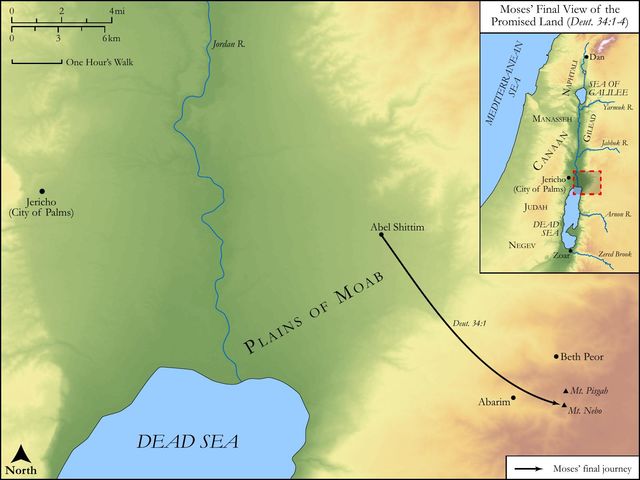
The setting for this prophetic song is the plains of Moab, with the Israelites on the cusp of entering Canaan after four decades of wilderness wandering. Moses, in his final addresses, reiterates the Mosaic Law and the stipulations of the covenant established at Sinai. The concept of a covenant was paramount in Israel. In this covenant, Yahweh established His terms with Israel, with explicit blessings for obedience and severe curses for disobedience, as set out in Deuteronomy 28, which encompassed national dispersion, famine, and the obliteration of national identity. The threat of being "scattered into corners" and having their "remembrance... cease" would have resonated deeply with a people whose very existence and distinct identity were inextricably linked to their promised land, their lineage, and their unique relationship with Yahweh. This cultural understanding amplifies the terror inherent in God's contemplated judgment, as it strikes at the very core of Israel's corporate and individual existence.
Key Themes
ShowHideDeuteronomy 32:26 powerfully contributes to several foundational themes within Deuteronomy and the broader biblical narrative. Firstly, it underscores the theme of Divine Judgment and Wrath, vividly portraying God's righteous indignation and His intention to bring severe consequences upon His unfaithful people. This highlights that God's covenant love and commitment, while steadfast, do not negate His justice when His covenant is repeatedly and flagrantly violated. Secondly, the verse introduces the terrifying theme of the Threat of Dispersion and Annihilation. The phrase "scatter them into corners" speaks to a thorough and widespread dispersion, akin to the exiles prophesied and experienced by Israel, a recurring consequence of disobedience seen throughout the Pentateuch, such as in Leviticus 26:33. The even more extreme declaration, "make the remembrance of them to cease from among men," signifies a potential complete loss of identity, legacy, and even their existence as a distinct people. This emphasizes the ultimate consequence of turning away from the God who gave them their identity. Finally, the verse subtly points to God's Sovereignty and Foreknowledge, as He expresses such a dire thought, demonstrating His absolute control over history and His awareness of Israel's future actions and the deserved repercussions, even as He later reveals His merciful restraint.
Exposition and Analysis
ShowHideKey Word Analysis
ShowHideA primitive root meaning "to say (used with great latitude); answer, appoint, avouch, bid, boast self, call, certify, challenge, charge, [phrase] (at the, give) command(-ment), commune, consider, declare, demand, [idiom] desire, determine, [idiom] expressly, [idiom] indeed, [idiom] intend, name, [idiom] plainly, promise, publish, report, require, say, speak (against, of), [idiom] still, [idiom] suppose, talk, tell, term, [idiom] that is, [idiom] think, use (speech), utter, [idiom] verily, [idiom] yet." In this context, "I said" signifies a deep internal deliberation and a firm resolve on God's part, a declaration of His considered intention or what He would justly do.
A primitive root meaning "to puff, i.e. blow away; scatter into corners." This single Hebrew verb encapsulates the entire action of violent dispersal. It implies a forceful dismemberment of Israel's national unity and presence, driving them to the furthest, most remote, and isolated parts of the earth, leaving no concentrated or recognizable presence. It suggests a total fragmentation of their communal identity.
Meaning "a memento, abstractly recollection (rarely if ever); by implication, commemoration; memorial, memory, remembrance, scent." This word is more profound than mere mental recall. It refers to a "memorial," a "name," "reputation," or "legacy." To "make the remembrance of them to cease" is not simply about people forgetting them, but about the cessation of their very name, their historical presence, their identity as a distinct people, and their continued recognition in the world. It signifies a complete erasure of their unique status as God's covenant people.
A primitive root meaning "to repose, i.e. desist from exertion; used in many implied relations (causative, figurative or specific); (cause to, let, make to) cease, celebrate, cause (make) to fail, keep (sabbath), suffer to be lacking, leave, put away (down), (make to) rest, rid, still, take away." In this verse, it denotes the active termination or removal of their remembrance, emphasizing God's decisive action in bringing about this cessation.
Verse Breakdown
ShowHide"I said, I would scatter them into corners"
This clause reveals God's internal deliberation and expressed intent. The phrase "I said" (אמרתי, 'amarti) indicates a firm resolve or a deep consideration on God's part, signifying a declaration of what He would do, a potential action stemming from His righteous judgment. The scattering signifies a comprehensive and devastating dispersal, breaking apart their national unity and driving them to the farthest reaches of the earth. This vividly portrays exile and disinheritance, dismantling their communal existence and their connection to the Promised Land.
"I would make the remembrance of them to cease from among men"
This second clause escalates the severity of the contemplated judgment. Not only would they be scattered physically, but their very name, legacy, and identity as a people would be erased from human history and consciousness. This is the ultimate threat of annihilation – not necessarily the physical extinction of every individual, but the complete loss of their unique status as God's chosen nation, their covenant identity, and their historical continuity. It implies a removal of their witness and their distinctive place among the nations, a profound spiritual and historical death.
Literary Devices
ShowHideDeuteronomy 32:26 employs several powerful literary devices to convey the gravity of God's contemplated judgment. The most prominent is Anthropomorphism, where God is depicted as having human-like thoughts and intentions ("I said, I would..."). This allows the audience to grasp the depth of God's frustration, sorrow, and righteous anger over Israel's rebellion, making His judgment relatable in human terms, even though His divine nature transcends human limitations. There is also clear Poetic Parallelism between the two clauses: "I would scatter them into corners" and "I would make the remembrance of them to cease from among men." The second clause intensifies and completes the thought of the first, moving from physical dispersal to existential erasure, creating a powerful crescendo of judgment that highlights the comprehensive nature of the potential divine wrath. Furthermore, the declaration could be seen as Hyperbole, an exaggeration for dramatic emphasis. While the threat of complete erasure is terrifyingly real in its intent, God's subsequent actions (as revealed in Deuteronomy 32:27) show His ultimate restraint. This suggests the hyperbolic language serves to underscore the profound seriousness of Israel's sin and the deservedness of such a severe fate, even if not fully executed, thereby driving home the urgency of repentance.
Theological and Thematic Connections
ShowHideThis verse profoundly illustrates the tension between God's justice and His mercy, a recurring and vital theme throughout the biblical narrative. It reveals the absolute seriousness with which God views covenant infidelity and idolatry, underscoring that His holiness demands a response of faithfulness from His people. The contemplation of scattering and erasing Israel's remembrance emphasizes that God's covenant with His people, while initiated by grace and rooted in His unconditional promises, also carried conditional obligations under the Mosaic Law, the breach of which could indeed lead to severe judgment. This passage serves as a stark reminder that God is not to be trifled with, and His righteous character will not overlook sin. Yet, the very next verse (Deuteronomy 32:27) immediately reveals God's self-imposed restraint, driven by His concern for His own reputation among the nations, preventing Israel's complete annihilation. This tension highlights God's complex and perfect character: a righteous judge who is also merciful, faithful to His overarching redemptive plan, and ultimately concerned with His own glory, even when His people are undeserving.
Reflection and Application
ShowHideDeuteronomy 32:26 serves as a powerful and enduring reminder of the gravity of disobedience and the profound consequences of spiritual unfaithfulness. For believers today, this verse underscores that God's character encompasses both immense love and unwavering justice. It challenges us to consider the seriousness of our own covenant relationship with God through Christ, a relationship secured by grace but calling for a faithful response. Just as ancient Israel was called to remember God's law and remain faithful, we are called to walk in obedience to Christ's commands, guarding diligently against spiritual apathy, subtle forms of idolatry, and any rebellion that might diminish our spiritual vitality and witness. The threat of "ceasing remembrance" can be understood metaphorically for the Church or individual believers: a loss of distinct Christian identity, a fading of spiritual influence, or a weakening of our testimony when we drift from God's truth. This verse compels us to cultivate a vibrant, active faith, rooted in genuine devotion, lest our light grow dim and our witness become indistinguishable from the world around us. It calls us to live in a manner that honors God's name and preserves a living "remembrance" of His transforming power in our lives and in the world.
Questions for Reflection
ShowHideFAQ
ShowHideDoes this verse mean God actually intended to completely destroy Israel and erase them from history?
ShowHideWhile the language of Deuteronomy 32:26 is incredibly severe, expressing God's profound anger and His contemplation of such a dire judgment, it's crucial to understand it within the broader context of God's character and His covenant promises. The phrase "I said, I would" indicates a strong intent or a deserved consequence, but not necessarily an unalterable, immediate decree for total annihilation. Indeed, the very next verse, Deuteronomy 32:27, reveals God's explicit reason for not fully executing this plan: "Were it not that I feared the wrath of the enemy, lest their adversaries should behave themselves strangely, and lest they should say, Our hand is high, and the Lord hath not done all this." God's concern for His own reputation among the nations, and His ultimate faithfulness to His unconditional covenant with Abraham (Genesis 12:1-3), ultimately prevented the complete erasure of Israel. Thus, it serves as a powerful warning and a declaration of what Israel deserved due to their profound unfaithfulness, rather than an unfulfilled prophecy of complete extinction.
How does this verse relate to God's unconditional covenant promises to Abraham?
ShowHideThis verse highlights the tension between the unconditional Abrahamic covenant and the conditional Mosaic covenant. God's promise to Abraham to make him a great nation and to bless his descendants (Genesis 12:2) was unconditional and eternal. However, the Mosaic covenant, under which Israel lived, included specific laws and stipulations, with blessings for obedience and curses (like dispersion and loss of identity) for disobedience. Deuteronomy 32:26 expresses the deserved consequences under the conditional Mosaic covenant. Yet, God's ultimate faithfulness to His unconditional Abrahamic covenant, and His concern for His own glory, meant that while Israel would suffer severe judgment and dispersion, they would not be utterly annihilated or completely forgotten. The threat in this verse underscores the seriousness of their sin, but God's overarching redemptive plan and His prior promises ultimately ensured Israel's survival as a distinct people, albeit often chastened and scattered. This tension is further explored in the New Testament, particularly in Romans 9-11, where Paul grapples with God's ongoing plan for Israel despite their temporary hardening.
Christ-Centered Fulfillment
ShowHideDeuteronomy 32:26, with its chilling contemplation of scattering and the cessation of remembrance, powerfully foreshadows the ultimate judgment for sin and highlights the profound grace found in Christ. Israel's deserved fate of being scattered and forgotten due to their covenant infidelity points to the spiritual death and utter separation from God that sin brings upon all humanity. The "remembrance" that was threatened to cease for Israel finds its ultimate solution and reversal in Christ. He is the true Israel, perfectly obedient, who perfectly fulfilled the Law and bore the full weight of God's righteous wrath against sin. Through His atoning sacrifice on the cross, the curse of being "scattered" and "forgotten" is reversed for all who believe, both Jew and Gentile. Instead of a cessation of remembrance, believers are eternally remembered and eternally united with God through Christ, becoming part of God's eternal "remembrance" of His faithfulness and redemptive work. The New Covenant, established through Christ's blood (Jeremiah 31:31-34, Hebrews 8:8-12), ensures that God's people will never be utterly forgotten or cast away, because their righteousness is now found in Him, the Lamb of God who takes away the sin of the world. In Him, we have an enduring inheritance and an eternal name that will never be cut off (Isaiah 56:5).