


Daniel 3:13
- בֵּאדַיִןbe·Da·yin<in> thenH116Prep-b ¦ AdvAdverbבֵּ<in>אדַיִןthen
- נְבוּכַדְנֶצַּרne·vu·khad·ne·TzarNebuchadnezzarH5020N-proper-mNoun Proper Masculine
- בִּרְגַזbir·Gazin rageH7266Prep-b ¦ N-csNoun Singular common gender Absoluteבִּinרְגַזrage
- וַחֲמָהva·cha·Mahand angerH2528Conj-w ¦ N-fsNoun Singular Feminine Absoluteוַandחֲמָהanger
- אֲמַר'a·Marhe saidH560V-Peal-Perf-3msVerb Peal Perfect 3rd Singular Masculine
- לְהַיְתָיָהle·hay·ta·Yahto bringH858Prep-l ¦ V-Hiphil-InfVerb Hiphil Infinitive Constructלְtoהַיְתָיָהbring
- לְשַׁדְרַךְle·shad·Rakh<obj.> ShadrachH7715Prep-l ¦ N-proper-mNoun Proper Masculineלְ<obj.>שַׁדְרַךְShadrach
- מֵישַׁךְmei·ShakhMeshachH4336N-proper-mNoun Proper Masculine
- וַעֲבֵדva·'a·Vedand Abed-H5665Conj-w ¦ N-proper-mNoun Proper MasculineוַandעֲבֵדAbed-
- נְגוֹne·Go-negoH5665N-proper-mNoun Proper Masculine
- בֵּאדַיִןbe·Da·yin<in> thenH116Prep-b ¦ AdvAdverbבֵּ<in>אדַיִןthen
- גֻּבְרַיָּאguv·rai·Ya'men theH1400N-mp ¦ ArtNoun Plural Masculine Definiteגֻּבְרַיָּmenאthe
- אִלֵּךְ'i·LekhtheseH479PrtParticle Demonstrative
- הֵיתָיוּhei·Ta·yuthey were broughtH858V-Hophal-Perf-3mpVerb Hophal Perfect 3rd Plural Masculine
- קֳדָםko·DambeforeH6925N-cscNoun Singular common gender Construct
- מַלְכָּאmal·Ka'king theH4430N-cs ¦ ArtNoun Singular common gender Definiteמַלְכָּkingאthe
English is a literal word-by-word gloss of the Hebrew, not the KJV's wording. Why?
This is the original text the KJV's translators worked from — each Hebrew word with its own literal English meaning in this verse, prepared by scholars at Tyndale House, Cambridge. The KJV translates whole sentences, not word by word, so its wording differs: one Hebrew word can become several English words, and the KJV may choose “the LORD” where the gloss reads “Yahweh”. Both are faithful — they answer different questions. For the KJV's own rendering, switch to the KJV text.
Details
See on the biblical-era map
Study this verse
Public-domain commentary
Matthew Henry
From his Commentary on the Whole Bible. Henry comments on passages, not single verses — this entry covers Daniel 3:8–18. His three-level outline is real structure in the source text, so it is rendered as structure.
It was strange that Shadrach, Meshach, and Abednego, would be present at this assembly, when, it is likely, they knew for what intent it was called together. Daniel, we may suppose, was absent, either his business calling him away or having leave from the king to withdraw, unless we suppose that he stood so high in the king's favour that none durst complain of him for his noncompliance. But why did not his companions keep out of the way? Surely because they would obey the king's orders as far as they could, and would be ready to bear a public testimony against this gross idolatry. They did not think it enough not to bow down to the image, but, being in office, thought themselves obliged to stand up against it, though it was the image which the king their master set up, and would be a golden image to those that worshipped it. Now,
I.Information is brought to the king by certain Chaldeans against these three gentlemen that they did not obey the king's edict, Dan 3:8.
Perhaps these Chaldeans that accused them were some of those magicians or astrologers that were particularly called Chaldeans (Dan 2:2, Dan 2:4) who bore a grudge to Daniel's companions for his sake, because he had eclipsed them, and so had these companions. They by their prayers had obtained the mercy which saved the lives of these Chaldeans, and, behold, how they requite them evil for good! for their love they are their adversaries. Thus Jeremiah stood before God, to speak good for those who afterwards dug a pit for his life, Jer 18:20. We must not think it strange if we meet with such ungrateful men. Or perhaps they were such of the Chaldeans as expected the places to which they were advanced, and envied them their preferments; and who can stand before envy ? They appeal to the king himself concerning the edict, with all due respect to his majesty, and the usual compliment, O king! live forever (as if they aimed at nothing but his honour, and to serve his interest, when really they were putting him upon that which would endanger the ruin of him and his kingdom); they beg leave,
1.To put him in mind of the law he had lately made, That all manner of persons, without exception of nation or language, should fall down and worship this golden image; they put him in mind also of the penalty which by the law was to be inflicted upon recusants, that they were to be cast into the midst of the burning fiery furnace, Dan 3:10, Dan 3:11. It cannot be denied but that this was the law; whether a righteous law or no ought to be considered.
2.To inform him that these three men, Shadrach, Meshach, and Abednego, had not conformed to this edict, Dan 3:12. It is probable that Nebuchadnezzar had no particular design to ensnare them in making the law, for then he would himself have had his eye upon them, and would not have needed this information; but their enemies, that sought an occasion against them, laid hold on this, and were forward to accuse them. To aggravate the matter, and incense the king the more against them,
(1.)They put him in mind of the dignity to which the criminals had been preferred. Though they were Jews, foreigners, captives, men of a despised nation and religion, yet the king had set them over the affairs of the province of Babylon. It was therefore very ungrateful, and an insufferable piece of insolence, for them to disobey the king's command, when they had shared so much of the king's favour. And, besides, the high station they were in would make their refusal the more scandalous; it would be a bad example, and have a bad influence upon others; and therefore it was necessary that it should be severely animadverted upon. Thus princes that are incensed enough against innocent people commonly have but too many about them who do all they can to make them worse.
(2.)They suggest that it was done maliciously, contumaciously, and in contempt of him and his authority: "They have set no regard upon thee; for they serve not the gods which thou servest, and which thou requirest them to serve, nor worship the golden image which thou hast set up."
II.These three pious Jews are immediately brought before the king, and arraigned and examined upon this information.
Nebuchadnezzar fell into a great passion, and in his rage and fury commanded them to be seized, Dan 3:13. How little was it the honour of this mighty prince that he had rule over so many nations when at the same time he had no rule over his own spirit, that there were so many who were subjects and captives to him when he was himself a perfect slave to his own brutish passions and led captive by them! How unfit was he to rule reasonable men who could not himself be ruled by reason! It needed not be a surprise to him to hear that these three men did not now serve his gods, for he knew very well they never had served them, and that their religion, which they had always adhered to, forbade them to do it. Nor had he any reason to think that they designed any contempt of his authority, for they had in all instances shown themselves respectful and dutiful to him as their prince. But it was especially unseasonable at this time, when he was in the midst of his devotions, dedicating his golden image, to be in such a rage and fury, and so much to discompose himself. The discretion of a man, one would think, should at least have deferred this anger. True devotion calms the spirit, quiets and meekens it; but superstition, and a devotion to false gods, inflame men's passions, inspire them with rage, and fury, and turn them into brutes. The wrath of a king is as the roaring of a lion; so was the wrath of this king; and yet, when he was in such a heat, these three men were brought before him, and appeared with an undaunted courage, and unshaken constancy.
III.The case is laid before them in short, and it is put to them whether they will comply or no.
1.The king asked them whether it was true that they had not worshipped the golden image when others did, Dan 3:14. "Is it of purpose?" so some read it. "Was it designedly and deliberately done, or was it only through inadvertency, that you have not served my gods? What! you that I have nourished and brought up, that have been educated and maintained at my charge, that I have been so kind to and done so much for, you that have been in such reputation for wisdom, and therefore should better have known your duty to your prince; what! do not you serve my gods nor worship the golden image which I have set up?" Note, The faithfulness of God's servants to him has often been the wonder of their enemies and persecutors, who think it strange that they run not with them to the same excess of riot.
2.He was willing to admit them to a new trial; if they did on purpose not do it before, yet, it may be, upon second thoughts, they will change their minds; it is therefore repeated to them upon what terms they now stand, Dan 3:15.
(1.)The king is willing that music shall play again, only for their sakes, to soften them into a compliance; and if they will not, like the deaf adder, stop their ears, but will hearken to the voice of the charmers and will worship the golden image, well and good; their former omission shall be pardoned. But,
(2.)The king is resolved, if they persist in their refusal, that they shall immediately be cast into the fiery furnace, and shall not have so much as an hour's reprieve. Thus does the matter lie in a little compass - Turn, or burn; and, because he knew they buoyed themselves up in their refusal with a confidence in their God, he insolently set him a defiance: "And who is that God that shall deliver you out of my hands? Let him, if he can." Now he forgot what he himself once owned, that their God was a God of gods and a Lord of kings, Dan 2:47. Proud men are still ready to say, as Pharaoh, Who is the Lord that I should obey his voice? or, as Nebuchadnezzar, Who is the Lord, that I should fear his power?
IV.They give in their answer, which they all agree in, that they still adhere to their resolution not to worship the golden image, Dan 3:16-18.
We have here such an instance of fortitude and magnanimity as is scarcely to be paralleled. We call these the three children (and they were indeed young men), but we should rather call them the three champions, the first three of the worthies of God's kingdom among men. They did not break out into any intemperate heat or passion against those that did worship the golden image, did not insult or affront them; nor did they rashly thrust themselves upon the trial, or go out of their way to court martyrdom; but, when they were duly called to the fiery trial, they acquitted themselves bravely, with a conduct and courage that became sufferers for so good a cause. The king was not so daringly bad in making this idol, but they were as daringly good in witnessing against it. They keep their temper admirably well, do not call the king a tyrant or an idolater (the cause of God needs not the wrath of man), but, with an exemplary calmness and sedateness of mind, they deliberately give in their answer, which they resolve to abide by. Observe,
1.Their gracious and generous contempt of death, and the noble negligence with which they look upon the dilemma that they are put to: O Nebuchadnezzar! we are not careful to answer thee in this matter. They do not in sullenness deny him an answer, nor stand mute; but they tell him that they are in no care about it. There needs not an answer (so some read it); they are resolved not to comply, and the king is resolved they shall die if they do not; the matter therefore is determined, and why should it be disputed? But it is better read, "We want not an answer for thee, nor have it to seek, but come prepared." (1.) They needed no time to deliberate concerning the matter of their answer; for they did not in the least hesitate whether they should comply or no. It was a matter of life and death, and one would think they might have considered awhile before they had resolved; life is desirable, and death is dreadful. But when the sin and duty that were in the case were immediately determined by the letter of the second commandment, and no room was left to question what was right, the life and death that were in the case were not to be considered. Note, Those that would avoid sin must not parley with temptation. When that which we are allured or affrighted to is manifestly evil the motion is rather to be rejected with indignation and abhorrence than reasoned with; stand not to pause about it, but say, as Christ has taught us, Get thee behind me, Satan. (2.) They needed no time to contrive how they should word it. While they were advocates for God, and were called out to witness in his cause, they doubted not but it should be given them in that same hour what they should speak, Mat 10:19. They were not contriving an evasive answer, when a direct answer was expected from them; no, nor would they seem to court the king not to insist upon it. Here is nothing in their answer that looks like compliment; they begin not, as their accusers did, with, O king! live for ever, no artful insinuation, ad captandam benevolentiam - to put him into a good humour, but every thing that is plain and downright: O Nebuchadnezzar! we are not careful to answer thee. Note, Those that make their duty their main care need not be careful concerning the event.
2.Their believing confidence in God and their dependence upon him, Dan 3:17. It was this that enabled them to look with so much contempt upon death, death in pomp, death in all its terrors: they trusted in the living God, and by that faith chose rather to suffer than to sin; they therefore feared not the wrath of the king, but endured, because by faith they had an eye to him that is invisible (Heb 11:25, Heb 11:27): "If it be so, if we are brought to this strait, if we must be thrown into the fiery furnace unless we serve thy gods, know then," (1.) "That though we worship not thy gods yet we are not atheists; there is a God whom we can call ours, to whom we faithfully adhere." (2.) "That we serve this God; we have devoted ourselves to his honour; we employ ourselves in his work, and depend upon him to protect us, provide for us, and reward us." (3.) "That we are well assured that this God is able to deliver us from the burning fiery furnace; whether he will or no, we are sure that he can either prevent our being cast into the furnace or rescue us out of it." Note, The faithful servants of God will find him a Master able to bear them out in his service, and to control and overrule all the powers that are armed against them. Lord, if thou wilt, thou canst. (4.) "That we have reason to hope he will deliver us," partly because, in such a vast appearance of idolaters, it would be very much for the honour of his great name to deliver them, and partly because Nebuchadnezzar had defied him to do it - Who is that God that shall deliver you? God sometimes appears wonderfully for the silencing of the blasphemies of the enemy, as well as for the answering of the prayers of his people, Psa 74:18-22; Deu 32:27. "But, if he do not deliver us from the fiery furnace, he will deliver us out of thy hand." Nebuchadnezzar can but torment and kill the body, and after that, there is no more that he can do; then they are got out of his reach, delivered out of his hand. Note, Good thoughts of God, and a full assurance that he is with us while we are with him, will help very much to carry us through sufferings; and, if he be for us, we need not fear what man can do unto us; let him do his worst. God will deliver us either from death or in death.
3.Their firm resolution to adhere to their principles, whatever might be the consequence (Dan 3:18): "But, if not, though God should not think fit to deliver us from the fiery furnace (which yet we know he can do), if he should suffer us to fall into thy hand, and fall by thy hand, yet be it known unto thee, O king! we will not serve these gods, though they are thy gods, nor worship this golden image, though thou thyself hast set it up." They are neither ashamed nor afraid to own their religion, and tell the king to his face that they do not fear him, they will not yield to him; had they consulted with flesh and blood, much might have been said to bring them to a compliance, especially when there was no other way of avoiding death, so great a death.
(1.)They were not required to abjure their own God, or to renounce his worship, no, nor by any verbal profession or declaration to own this golden image to be a god, but only to bow down before it, which they might do with a secret reserve of their hearts for the God of Israel, inwardly detesting this idolatry, as Naaman bowed in the house of Rimmon.
(2.)They were not to fall into a course of idolatry; it was but one single act that was required of them, which would be done in a minute, and the danger was over, and they might afterwards declare their sorrow for it.
(3.)The king that commanded it had an absolute power; they were under it, not only as subjects, but as captives; and, if they did it, it was purely by coercion and duress, which would serve to excuse them.
(4.)He had been their benefactor, had educated and preferred them, and in gratitude to him they ought to go as far as they could, though it were to strain a point, a point of conscience.
(5.)They were now driven into a strange country, and to those that were so driven out it was, in effect, said, Go, and serve other gods, Sa1 26:19. It was taken for granted that in their disposition they would serve other gods, and it was made a part of the judgment, Deu 4:28. They might be excused if they should go down the stream, when it is so strong.
(6.)Did not their kings, and their princes, and their fathers, yea, and their priests too, set up idols even in God's temple, and worship them there, and not only bow down to them, but erect altars, burn incense, and offer sacrifices, even their own children, to them? Did not all the ten tribes, for many ages, worship gods of gold at Dan and Bethel? And shall they be more precise than their fathers? Communis error facit jus - What all do must be right.
(7.)If they should comply, they would save their lives and keep their places, and so be in a capacity to do a great deal of service to their brethren in Babylon, and to do it long; for they were young men, and rising men. But there is enough in that one word of God wherewith to answer and silence these and many more such like carnal reasonings: Thou shalt not bow down thyself to any images, nor worship them. They know they must obey God rather than man; they must rather suffer than sin, and must not do evil that good may come. And therefore none of these things move them; they are resolved rather to die in their integrity than live in their iniquity. While their brethren, who yet remained in their own land, were worshipping images by choice, they in Babylon would not be brought to it by constraint, but, as if they were good by antiperistasis, were most zealous against idolatry in an idolatrous country. And truly, all things considered, the saving of them from this sinful compliance was as great a miracle in the kingdom of grace as the saving of them out of the fiery furnace was in the kingdom of nature. These were those who formerly resolved not to defile themselves with the king's meat, and now they as bravely resolve not to defile themselves with his gods. Note, A stedfast self-denying adherence to God and duty in less instances will qualify and prepare us for the like in greater. And in this we must be resolute, never, under any pretence whatsoever, to worship images, or to say "A confederacy" with those that do so.
Historical interpretation
Two Centuries of Reception
2 surviving comments on this verse. Each one is dated, so this reads as a timeline rather than a list.
Select a marker to jump to its quote. Markers stagger vertically where authors wrote within a few decades of each other.
Behold the Holy Spirit as it is manifest in the martyrs’ eloquent speech, comforting them and consoling them and encouraging them to disregard death.… A person deprived of the Holy Spirit would be frightened and hide in fear, taking precautions against this death.… He is terrified as he stands before the blade, panicked at the idea of torment and seeing only the world below. This man is consoled with the life below, as he prefers to have a wife and the love of his children and to see only wealth. This man, who does not possess the power of heaven, readily is lost. Thus, whoever is close to the Word hears the command of the King ng and Lord of the sky: “Whoever does not take up his cross and follow me is not worthy of me, and whoever does not give up all of his possessions will not become my disciple.”
Then the youths alone are led into the midst; in order that from this also the conquest may become even more illustrious, they alone conquering and being proclaimed victors among so vast a multitude. This courage would not have been so surprising if they had acted courageously at the outset, when no one had fallen prostrate. But the greatest and most astonishing fact was that the multitude of those who fell down neither made them frightened nor made them weak. They did not say to themselves such things as many often do, “If we were first, and the only persons to worship the image, this would have been a sin; but if we do this with so many persons, who will not make allowance? Who will not think us worthy of defense?” But nothing of this sort did they say or think when they beheld the shapes of so many princes.… What does the king do at this point? He commands that they should be brought into the midst, so that he may make them scared in every way. But nothing dismayed them, neither the wrath of the king, nor their being left alone in the midst of so many, nor the sight of the fire, nor the sound of the trumpet nor the whole multitude looking wrathfully at them; for deriding all these things, as if they were about to be cast into a cool fountain of water, they entered the furnace uttering that blessed sentence, “We will not serve your gods.” … I have told you this history with good reason that you may learn that whether it is the wrath of a king, or the violence of soldiers, or the envy of enemies, or captivity, or destitution, or fire, or furnace or ten thousand terrors, nothing will work to shame or terrify a righteous person.
Continue studying Daniel 3:13 across the web’s major study libraries — every link below opens this exact verse, chapter, or book on the destination site.
Read & Compare
 BibleGatewayThis verse in more than 200 translations and 70 languages.
 Bible.comThe YouVersion reader — hundreds of translations, reading plans, and highlights.
 ESV.orgCrossway's official English Standard Version reader.
 NET BibleThe NET translation with 60,000+ translators' notes on every rendering decision.
 STEP BibleTyndale House's free study tool — original text, vocabulary, and scholarly resources.
 BibliaLogos Bible Software's free web reader.
 USCCBThe New American Bible (Revised Edition) with the U.S. bishops' study notes.
Commentaries
 BibleHub CommentariesDozens of classic commentaries on this verse, gathered on one page.
 StudyLightMore than 100 commentary sets — the largest collection on the web.
 BibleRefPlain-English commentary on what this verse means, verse by verse.
 Enduring WordDavid Guzik's free commentary on this chapter, widely used by Bible teachers.
 Bible Study ToolsVerse commentary alongside Greek and Hebrew study aids.
Original Language & Research
- BibleHub InterlinearThe verse word by word — original language, transliteration, and English.
- BibleHub LexiconEvery word's original-language definition and Strong's entry.
 Blue Letter BibleDeep-study tools — Strong's numbers, concordance, and word studies.
 SefariaThe Hebrew text with Rashi and centuries of Jewish commentary.
Sermons, Hymns & Audio


TrulyRandomVerse is not affiliated with these sites and doesn’t control their content. They’re linked because they’re genuinely useful.
Summary
Daniel 3:13 powerfully depicts King Nebuchadnezzar's immediate and extreme reaction to the defiance of Shadrach, Meshach, and Abednego. Overwhelmed by explosive rage and fury, the king issues an urgent command for these three Jewish officials to be brought directly into his presence. This pivotal moment sets the stage for a dramatic and high-stakes confrontation, underscoring the severe consequences of their unwavering refusal to worship the golden idol and foreshadowing the extraordinary divine intervention that is about to unfold.
Context
ShowHideLiterary Context
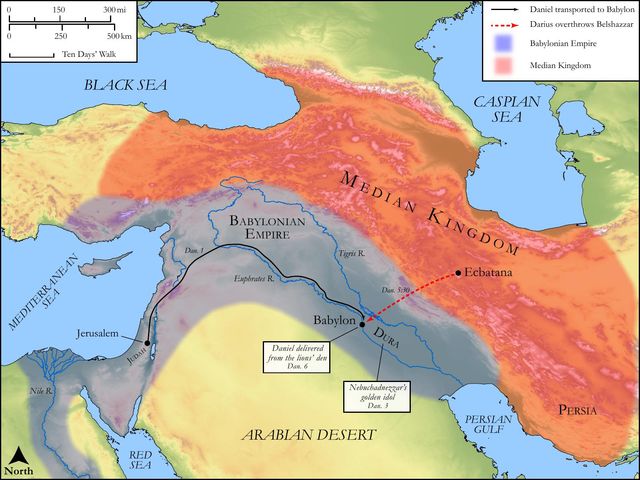
Daniel 3:13 serves as a critical turning point, directly following the accusation against Shadrach, Meshach, and Abednego. The preceding verses establish King Nebuchadnezzar's decree for universal worship of his colossal golden image, with the terrifying penalty of the fiery furnace for non-compliance (Daniel 3:1-7). Jealous Chaldean officials then exploit the situation, reporting to the king that the three Jewish men, whom he himself had appointed to high office, refused to obey his command or serve his gods (Daniel 3:8-12). Verse 13 marks Nebuchadnezzar's visceral response to this perceived insubordination, transitioning the narrative from the decree and accusation to the direct, personal confrontation between the absolute monarch and the three faithful servants of God, setting the stage for their miraculous deliverance.
Historical & Cultural Context
The setting is the Babylonian Empire, the dominant global power of the 6th century BCE under the absolute rule of Nebuchadnezzar II. In this era, monarchs were often considered divine or divinely sanctioned, and their decrees held ultimate authority, with dissent met by swift and brutal punishment. The erection of the golden image was not merely a religious act but a profound political statement, designed to enforce imperial unity and loyalty among the diverse peoples subjugated by Babylon. Refusal to worship was thus interpreted as an act of treason, challenging the king's authority and the very fabric of the empire. The "fiery furnace" was a known, horrific method of execution in ancient Mesopotamia, making the king's threat a tangible and terrifying reality for all subjects, including the Jewish exiles.
Key Themes
ShowHideThis verse powerfully contributes to several overarching themes within the book of Daniel and the broader biblical narrative. It vividly portrays the clash between divine sovereignty and human authority, as Nebuchadnezzar's absolute decree is met with the unwavering conviction of men committed to God's ultimate rule. The king's "rage and fury" dramatically illustrate the tyrannical nature of unchecked power and the perilous cost of conviction in the face of such power, a theme further emphasized when the furnace is later commanded to be heated seven times hotter. Furthermore, Daniel 3:13 serves as a crucial setup for the theme of divine deliverance, preparing the reader for God's miraculous intervention on behalf of His faithful servants, a motif that permeates the book, from Daniel's interpretation of dreams to his own deliverance from the lion's den.
Exposition and Analysis
ShowHideKey Word Analysis
ShowHideThis term (H7266) denotes violent, intense anger, a furious indignation that is uncontrolled and explosive. It describes an emotional state of extreme agitation, often associated with a monarch's wrath that could lead to immediate and severe punishment. Nebuchadnezzar's "rage" here is not a mere annoyance but a deeply unsettling, explosive fury, indicating a loss of composure and a dangerous escalation of the situation.
This word (H2528), often used in parallel with "rage," signifies a burning, seething anger or wrath. It implies a deep-seated indignation that can manifest in destructive actions and a desire for retribution. Together, "rage and fury" create a powerful hendiadys, emphasizing the overwhelming, unbridled nature of Nebuchadnezzar's wrath, leaving no doubt about the king's volatile emotional state and the extreme danger faced by Shadrach, Meshach, and Abednego.
This verb (H560) means "to say" or "to speak," but in this context, especially when issued by a king in a state of "rage and fury," it carries the full force of an authoritative decree or imperative. This "command" is not a request but an absolute order, demanding immediate and unquestioning compliance. It highlights the king's absolute power to issue life-or-death pronouncements and the swiftness with which his will is executed.
Verse Breakdown
ShowHide"Then Nebuchadnezzar in his rage and fury commanded to bring Shadrach, Meshach, and Abednego."
This opening clause immediately establishes the king's volatile emotional state as the primary catalyst for his action. The emphatic coupling of "rage and fury" underscores the intensity and uncontrolled nature of his anger, which is directly aimed at the three men for their perceived insubordination. The phrase "commanded to bring" signifies a direct, urgent, and authoritative summons, leaving no room for delay, negotiation, or appeal, and highlighting the king's absolute power.
"Then they brought these men before the king."
This second clause describes the immediate and efficient execution of the king's command. The swiftness of their appearance before Nebuchadnezzar emphasizes the absolute power of the monarch and the unquestioning obedience of his court. It also highlights the precarious and vulnerable position of Shadrach, Meshach, and Abednego, who are now directly confronting the source of their peril, setting the stage for their defiant stand and the subsequent divine intervention.
Literary Devices
ShowHideDaniel 3:13 employs several potent literary devices to convey the dramatic tension and gravity of the moment. The use of Hyperbole is evident in the phrase "rage and fury," which emphasizes the king's extreme and disproportionate anger, highlighting the gravity of the situation and the king's tyrannical nature. This exaggerated description of his wrath serves to heighten the sense of immediate danger. There is also a strong element of Foreshadowing, as Nebuchadnezzar's intense anger here anticipates his later command to heat the furnace "seven times hotter" (Daniel 3:19), indicating that his fury will only escalate as the narrative progresses. Finally, the verse sets up a dramatic Antithesis between the king's absolute, wrathful power and the unwavering resolve of the three men, preparing the reader for the ultimate demonstration of divine power that will transcend all human authority.
Theological and Thematic Connections
ShowHideDaniel 3:13 serves as a stark reminder of the perennial conflict between worldly power and divine allegiance. Nebuchadnezzar's "rage and fury" reflect the human tendency toward idolatry and the violent opposition that often arises when God's people refuse to compromise their faith. The king's demand for absolute worship of his image stands in direct opposition to the first commandment, "You shall have no other gods before me" (Exodus 20:3). This verse sets the stage for a profound theological truth: true worship belongs to God alone, and faithfulness to Him may require standing firm against the most formidable earthly powers, even at the risk of one's life. It underscores the sovereignty of God over human rulers and the ultimate futility of human attempts to usurp divine authority. The unwavering stance of Shadrach, Meshach, and Abednego exemplifies the principle that obedience to God must take precedence over obedience to human commands when they conflict.
Reflection and Application
ShowHideDaniel 3:13 offers a profound lesson for believers across all generations, illustrating that standing firm in one's faith, particularly when it challenges prevailing societal norms or powerful authorities, can provoke intense opposition and even fury. The "rage and fury" of Nebuchadnezzar represent the world's visceral reaction to those who refuse to conform to its idolatrous demands or compromise their deeply held convictions. This verse calls us to examine our own allegiances and preparedness: are we ready to face discomfort, ridicule, or even severe consequences for our commitment to Christ and His truth? It reminds us that faithfulness is not always convenient or popular, but it is always righteous. In moments of intense pressure, our response should be rooted in an unwavering trust in God's sovereignty and His ability to sustain us, even if His deliverance looks different than we expect. The courage of Shadrach, Meshach, and Abednego, summoned before the enraged king, serves as a timeless example of costly discipleship and the profound peace that comes from prioritizing God's will above all else, regardless of the earthly cost.
Questions for Reflection
ShowHideFAQ
ShowHideWhy was Nebuchadnezzar so angry with Shadrach, Meshach, and Abednego?
ShowHideNebuchadnezzar's extreme anger, described as "rage and fury," stemmed from several significant factors. Primarily, their refusal to worship the golden image was a direct and public challenge to his absolute authority and perceived divine prerogative as king. As the monarch of the most powerful empire, he expected unquestioning obedience to his decrees, especially one as significant as the worship of a national idol designed to unify his diverse subjects under a common symbol of loyalty. The defiance of Shadrach, Meshach, and Abednego was not merely a religious disagreement; in his eyes, it was an act of political rebellion and insubordination. Their high positions within his administration, as officials he had personally elevated, likely exacerbated his fury, as it was a public challenge from those he had trusted. Furthermore, the king's character, as depicted throughout Daniel, suggests a volatile temperament and a deep-seated pride that could not tolerate any perceived slight or disobedience, as seen in his earlier reaction to the wise men's inability to interpret his dream (Daniel 2:12). Their refusal threatened his power, his image, and the very foundation of his imperial control, leading to his explosive wrath.
Christ-Centered Fulfillment
ShowHideDaniel 3:13, with its depiction of Nebuchadnezzar's "rage and fury" directed at those who would not bow, powerfully foreshadows the ultimate confrontation between human rebellion and divine authority, culminating in the person of Jesus Christ. Just as Shadrach, Meshach, and Abednego stood firm in their refusal to worship an earthly image, Jesus, the Son of God, perfectly resisted all temptations to compromise His allegiance to the Father, even when facing the "rage and fury" of religious and political powers. His steadfast obedience, unlike the king's demand for self-exalting worship, was for the glory of God and the salvation of humanity. Christ's journey to the cross, where He was brought "before the king" (Pilate) and condemned by the furious crowds who cried, "Crucify him!" (John 19:15), mirrors the perilous summons of the three men. Yet, in His suffering and death, Jesus did not merely endure; He conquered. His resurrection is the ultimate divine intervention, demonstrating God's power to deliver not from a fiery furnace, but from the very flames of sin and eternal death. Through Christ, believers are empowered by the Holy Spirit to stand firm against the world's pressures, knowing that the one who delivered the three men from the fire has already secured our eternal victory over all opposition (Romans 8:37). He is the true Lamb of God, who, though brought before the enraged powers of this world, took away its sin and offers true freedom to all who follow Him (John 1:29).