


2 Samuel 23:30
Bible text: King James Version (1769 Blayney text) · Public domain
Bible text: Berean Standard Bible · Public domain
Bible text: American Standard Version (1901) · Public domain
Bible text: World English Bible, Messianic edition · Public domain
Bible text: Geneva Bible (1599) · Public domain
Bible text: Young's Literal Translation · Public domain
- בְּנָיָהוּbe·na·Ya·huBenaiahH1141N-proper-mNoun Proper Masculine
- פִּרְעָתֹנִיpir·'A·to·Ni[the] PirathoniteH6553N-msNoun Gentilic Singular Masculine Absolute
- הִדַּיhi·DaiHiddaiH1914N-proper-mNoun Proper Masculine
- מִנַּחֲלֵיmi·Na·cha·leifrom [the] wadis ofH5158Prep-m ¦ N-mpcNoun Plural Masculine Constructמִfromנַּחֲלֵי[the] wadis of
- גָעַשׁGa·'ashGaashH1608N-properNoun Proper Location
English is a literal word-by-word gloss of the Hebrew, not the KJV's wording. Why?
This is the original text the KJV's translators worked from — each Hebrew word with its own literal English meaning in this verse, prepared by scholars at Tyndale House, Cambridge. The KJV translates whole sentences, not word by word, so its wording differs: one Hebrew word can become several English words, and the KJV may choose “the LORD” where the gloss reads “Yahweh”. Both are faithful — they answer different questions. For the KJV's own rendering, switch to the KJV text.
Details
See on the biblical-era maps

Study this verse
Continue studying 2 Samuel 23:30 across the web’s major study libraries — every link below opens this exact verse, chapter, or book on the destination site.
Read & Compare
 BibleGatewayThis verse in more than 200 translations and 70 languages.
 Bible.comThe YouVersion reader — hundreds of translations, reading plans, and highlights.
 ESV.orgCrossway's official English Standard Version reader.
 NET BibleThe NET translation with 60,000+ translators' notes on every rendering decision.
 STEP BibleTyndale House's free study tool — original text, vocabulary, and scholarly resources.
 BibliaLogos Bible Software's free web reader.
 USCCBThe New American Bible (Revised Edition) with the U.S. bishops' study notes.
Commentaries
 BibleHub CommentariesDozens of classic commentaries on this verse, gathered on one page.
 StudyLightMore than 100 commentary sets — the largest collection on the web.
 BibleRefPlain-English commentary on what this verse means, verse by verse.
 Enduring WordDavid Guzik's free commentary on this chapter, widely used by Bible teachers.
 Bible Study ToolsVerse commentary alongside Greek and Hebrew study aids.
Original Language & Research
- BibleHub InterlinearThe verse word by word — original language, transliteration, and English.
- BibleHub LexiconEvery word's original-language definition and Strong's entry.
 Blue Letter BibleDeep-study tools — Strong's numbers, concordance, and word studies.
 SefariaThe Hebrew text with Rashi and centuries of Jewish commentary.
Sermons, Hymns & Audio


TrulyRandomVerse is not affiliated with these sites and doesn’t control their content. They’re linked because they’re genuinely useful.
Summary
2 Samuel 23:30 precisely names two additional figures within the illustrious roster of King David's elite warriors: Benaiah the Pirathonite and Hiddai of the brooks of Gaash. This concise entry, part of a comprehensive catalog of David's "Mighty Men," serves as a profound testament to the diverse individuals whose unwavering valor, loyalty, and dedicated service were instrumental in securing and sustaining David's divinely appointed reign and the nascent kingdom of Israel. Though their individual exploits are not detailed here, their inclusion underscores the biblical principle that the success of a leader and a nation is intricately woven from the faithful, often unsung, contributions of many.
Context
ShowHideLiterary Context
This verse is deeply embedded within the concluding section of 2 Samuel, specifically the comprehensive list of David's "Mighty Men" found in 2 Samuel 23:8-39. This catalog immediately follows David's "last words" (found in 2 Samuel 23:1-7), which serve as a theological reflection on God's covenant faithfulness and the nature of righteous rule. The list of warriors functions as a tangible demonstration of how God's blessing and human dedication coalesced to establish and maintain David's kingdom. It acts as a powerful capstone to the narrative of David's life and legacy, highlighting the human instruments through whom divine purposes were accomplished. The meticulous recording of names, and in some cases specific heroic feats, elevates these individuals, emphasizing their indispensable role in the unfolding history of Israel's monarchy. A parallel and often more expansive account, sometimes with minor variations in spelling or additional details, is also found in 1 Chronicles 11:10-47.
Historical & Cultural Context
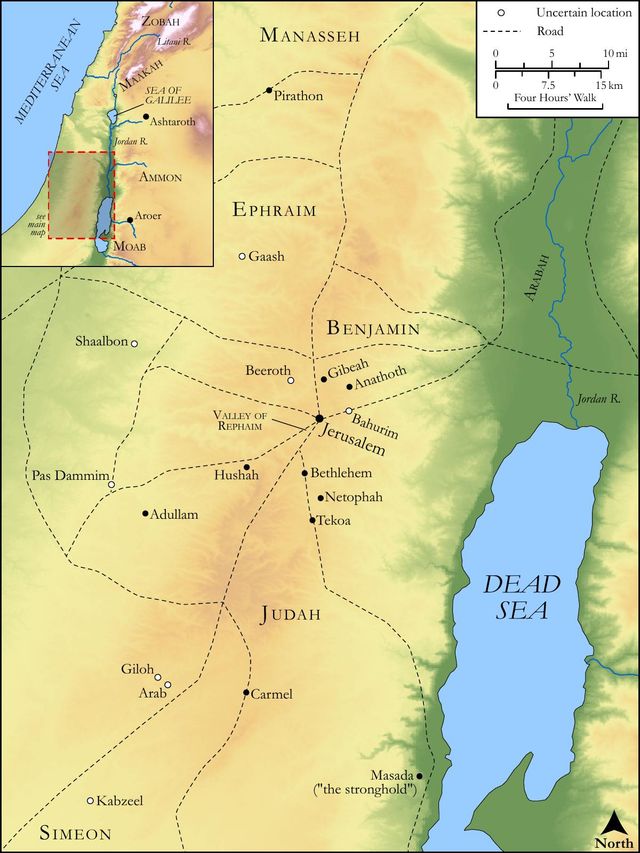
Among the kings of that day, the stability and might of a monarch's rule were directly proportional to the strength and unwavering loyalty of his military elite. David's "Mighty Men" were not merely a standing army; they constituted a highly esteemed and specialized corps, akin to a royal guard or special forces unit, celebrated for their extraordinary courage, exceptional combat skills, and profound devotion to the king. The specification of their origins, such as Pirathon or the brooks of Gaash, is significant. It indicates that David successfully garnered loyal support from across the diverse tribal territories of Israel, thereby fostering a crucial sense of national unity under his leadership. The practice of meticulously listing names was a common custom in Israel, as in the genealogies of Genesis and Chronicles, serving as an honorific record to ensure that the deeds and service of distinguished individuals were remembered for posterity. Pirathon, for instance, is identified as a town in the hill country of Ephraim (see Judges 12:15), known for producing capable leaders. The "brooks of Gaash" also points to a specific geographical feature, likely within the same general region of Ephraim, further grounding these individuals in their historical and geographical context.
Key Themes
ShowHideThe inclusion of Benaiah and Hiddai within this esteemed list profoundly contributes to several overarching biblical themes. Firstly, it powerfully underscores the theme of Loyalty and Selfless Service to the divinely appointed king. These men exemplified unwavering dedication, often at immense personal risk, to David and the nascent kingdom of Israel, serving as the indispensable backbone of his military successes. Secondly, the very act of their inclusion highlights the theme of Recognition and Enduring Honor. The inspired biblical author ensures that even those individuals whose specific exploits are not detailed are nonetheless acknowledged for their faithful contributions, emphasizing that every act of service within God's grand plan is seen, valued, and remembered. This aligns with the broader biblical principle that God observes and rewards faithfulness, whether manifested in prominent or less visible roles, as beautifully articulated in passages like Matthew 25:23. Finally, the list collectively speaks to the profound theme of Collective Strength and Unified Purpose. David's extraordinary success was not solely attributable to his own prowess but was fundamentally built upon the diverse skills, unified effort, and dedicated service of many individuals working harmoniously for a common, God-ordained purpose. This illustrates that truly great achievements often necessitate the dedicated contributions of many members forming a cohesive body, a concept later expounded upon in Romans 12:4-5.
Exposition and Analysis
ShowHideKey Word Analysis
ShowHideThis is a theophoric name, meaning "Yahweh has built" or "Yahweh builds." It is a relatively common name in the Old Testament, borne by several notable figures, most prominently Benaiah son of Jehoiada, who served as a chief captain in David's army and later became Solomon's commander of the army (e.g., 2 Samuel 8:18). The Benaiah mentioned in 2 Samuel 23:30 is distinct, identified by his specific place of origin, "the Pirathonite," indicating a different individual. The name itself reflects a deeply theological worldview where God is perceived as the active builder, sustainer, and architect of individuals and nations.
The etymology of "Hiddai" is considered uncertain by scholars, though some have suggested connections to roots meaning "joy" or "praise." It functions primarily as a proper personal name without a clear theological meaning embedded within its components, serving as a unique identifier for this specific individual. Its significance in this context lies solely in its inclusion within this highly honored list, marking him as a recognized and esteemed warrior in David's elite corps.
This term refers to a stream, specifically a wadi or winter torrent, which is a valley or ravine that is dry except during the rainy season. By implication, it can also denote the narrow valley through which such a brook runs. The use of "brooks" in "brooks of Gaash" provides a specific geographical marker, indicating a particular topographical feature associated with Hiddai's home region. This detail adds a layer of concrete realism and helps to geographically pinpoint the origins of David's diverse loyalists.
Verse Breakdown
ShowHide"Benaiah the Pirathonite"
This clause precisely identifies one of David's mighty men by his personal name, Benaiah, and his specific place of origin, Pirathon. The appellation "the Pirathonite" is crucial, serving to distinguish this Benaiah from other individuals bearing the same common name in the biblical record. Pirathon was a known town situated in the hill country of Ephraim (as noted in Judges 12:15), thereby indicating his tribal affiliation and geographical roots. This detail not only provides precise historical specificity but also subtly highlights the diverse geographical and tribal origins of David's loyal and formidable supporters.
"Hiddai of the brooks of Gaash"
This second clause introduces another distinguished mighty man, Hiddai, and similarly specifies his geographical origin: "of the brooks of Gaash." Gaash is also consistently associated with the territory of Ephraim (Joshua 24:30). The evocative phrase "brooks of Gaash" suggests a specific, perhaps well-known, topographical feature near his home, further pinpointing his identity and regional ties. Like Benaiah, Hiddai's inclusion in this elite list, despite the absence of a detailed narrative about his specific deeds, unequivocally signifies his esteemed status and recognized valor within David's most elite corps.
Literary Devices
ShowHideThe primary literary device prominently at play in 2 Samuel 23:30, and indeed throughout the entire section of verses 2 Samuel 23:8-39, is Catalog or List. This technique involves the systematic enumeration of names, places, or items, serving to provide a comprehensive record and to confer honor. In this specific context, the catalog of David's Mighty Men functions as an Honorific Naming, where the very act of being listed in such an exclusive register bestows profound prestige and ensures enduring remembrance. The inclusion of specific geographical identifiers such as "the Pirathonite" and "of the brooks of Gaash" adds a crucial layer of Specificity and Realism, firmly grounding the narrative in concrete historical and geographical details, thereby making these figures feel tangible and their contributions authentically verifiable. This meticulous listing also subtly employs Understatement or Implication; while no explicit heroic deeds are attached to Benaiah or Hiddai in this particular verse, their mere presence on such an exclusive and celebrated list strongly implies a history of exceptional valor, unwavering loyalty, and significant service that earned them this distinguished recognition.
Theological and Thematic Connections
ShowHideThe inclusion of individuals like Benaiah and Hiddai in the sacred biblical text, even without detailed narratives of their specific exploits, carries profound theological weight. It profoundly underscores God's meticulous attention to and valuing of all who serve faithfully, whether their roles are prominent and widely celebrated or seemingly minor and obscure. The divine record demonstrates that every contribution, however small or unheralded by human standards, plays a vital part in the unfolding of His grand redemptive purposes, reminding us that faithfulness in the "small things" is profoundly seen and honored by God Himself. This passage implicitly teaches that God sovereignly uses a diverse array of individuals, drawn from various backgrounds, regions, and walks of life, to accomplish His divine will, knitting them together into a unified and formidable force for His kingdom. It powerfully highlights the principle of corporate effort and the indispensable importance of every member's unique contribution to the collective good, reflecting the divine economy where no faithful service ever goes unnoticed or unrewarded in His eyes.
Reflection and Application
ShowHideThis seemingly simple verse, by meticulously naming two of David's less-heralded yet equally significant mighty men, offers profound and timeless lessons for contemporary life and faith. It challenges us to cultivate a posture of humility and to intentionally recognize and value the often-unseen contributions of individuals within our own communities, churches, and workplaces. Just as David's flourishing kingdom relied on the steadfast loyalty and dedicated service of men like Benaiah and Hiddai, every collective endeavor, and most especially the advancement of God's kingdom, fundamentally depends on the faithful and consistent service of many whose names may never be widely known or celebrated by human standards. This verse profoundly encourages humility in our service, reminding us that our ultimate audience is God Himself, who sees and cherishes every single act of dedication, no matter how small, quiet, or uncelebrated by the world. It fosters a spirit of profound appreciation for the diverse gifts, unique talents, and varied backgrounds that immeasurably enrich any community, affirming that God sovereignly uses all kinds of people, from all walks of life, to fulfill His grand and eternal design. Our call, therefore, is to be faithfully present and diligently serve where we are, knowing with absolute certainty that our service, however quiet or outwardly insignificant, is profoundly significant and eternally valued in His eyes.
Questions for Reflection
ShowHideFAQ
ShowHideWhy are some of David's Mighty Men listed with their names and origins but no specific heroic deeds?
ShowHideThe inclusion of individuals like Benaiah the Pirathonite and Hiddai of the brooks of Gaash, even without detailed accounts of their specific exploits, serves several crucial and profound purposes. Firstly, it powerfully underscores the sheer breadth and depth of David's loyal support base, demonstrating unequivocally that his kingdom was built not just on a few prominent heroes, but on the dedicated foundation of many individuals drawn from across Israel's diverse tribal territories. Secondly, the very act of being named in this elite and highly selective list is an honorific in itself, signifying that these men were universally recognized and esteemed for their valor, unwavering commitment, and significant contributions, even if their particular deeds were not explicitly recorded for posterity in this specific passage. It strongly suggests that their reputation as "mighty men" was already well-established within David's court and among the people, and that their mere presence on the list was sufficient to convey their worth and standing. This approach also highlights a vital biblical principle: not every faithful act or significant contribution requires a detailed narrative to be profoundly meaningful or eternally significant. God sees and values all faithful service, whether it is widely celebrated and publicly acclaimed or quietly and humbly rendered in obscurity, a profound theme beautifully echoed in passages like Matthew 6:4. The list, therefore, functions as a comprehensive and divinely inspired roll call, ensuring that all who contributed significantly to David's success and the establishment of his kingdom were remembered and honored.
Christ-Centered Fulfillment
ShowHideWhile 2 Samuel 23:30 directly speaks of David's earthly kingdom and his loyal earthly warriors, it finds profound and ultimate Christ-centered fulfillment in the person and work of the ultimate King, Jesus Christ, and the establishment of His eternal, spiritual kingdom. Just as King David relied upon a diverse and dedicated company of mighty men to secure and expand his earthly dominion, so too does Christ build His church—the living body of believers—through the faithful, Spirit-empowered service of countless individuals drawn from every tribe, tongue, people, and nation (Revelation 7:9). The true "mighty men and women" of Christ's kingdom are not those who wield physical swords or earthly power, but rather those who are mighty in faith, fervent in prayer, and empowered by the Holy Spirit, equipped for spiritual warfare against the principalities and powers of darkness (Ephesians 6:10-18). Every single believer, whether a prominent apostle like Peter or a quiet, faithful disciple whose name is known only to God, is an integral and indispensable member of Christ's body, contributing uniquely and vitally to the advance of His glorious kingdom (1 Corinthians 12:27). The ultimate "recognition and honor" for those who serve Christ faithfully is not a place on an earthly roster or a human hall of fame, but rather the eternal assurance of their names being written in the Lamb's Book of Life (Revelation 21:27) and the glorious promise of eternal reward and inheritance from the King of Kings Himself (Matthew 25:34). Thus, Benaiah and Hiddai, as loyal and unsung servants of an earthly king, powerfully foreshadow the countless, often unseen, yet infinitely valued faithful servants of the heavenly King, whose every act of devotion, no matter how small, is profoundly seen, cherished, and eternally rewarded by God.