


Matthew 25:23
Bible text: King James Version (1769 Blayney text) · Public domain
Bible text: King James Version with Strong's numbers · Public domain
Bible text: Berean Standard Bible · Public domain
Bible text: American Standard Version (1901) · Public domain
Bible text: World English Bible, Messianic edition · Public domain
Bible text: Geneva Bible (1599) · Public domain
Bible text: Young's Literal Translation · Public domain
- ἔφηephēwas sayingG5346V-IAI-3SVerb Imperfect Active Indicative 3rd Singular
- αὐτῷautōto himG846P-DSMPersonal pronoun Dative Singular Masculine
- ὁhotheG3588T-NSMDefinite article Nominative Singular Masculine
- κύριοςkuriosmasterG2962N-NSMNoun Nominative Singular Masculine
- αὐτοῦ·autouof HimG846P-GSMPersonal pronoun Genitive Singular Masculine
- εὖeuWell doneG2095ADVAdverb
- δοῦλεdouleservantG1401N-VSMNoun Vocative Singular Masculine
- ἀγαθὲagathegoodG18A-VSMAdjective Vocative Singular Masculine
- καὶkaiandG2532CONJConjunction
- πιστέpistefaithful!G4103A-VSMAdjective Vocative Singular Masculine
- ἐπὶepiOverG1909PREPPreposition
- ὀλίγαoligaa few thingsG3641A-APNAdjective Accusative Plural Neuter
- ἦςēsyou wereG1510V-IAI-2SVerb Imperfect Active Indicative 2nd Singular
- πιστόςpistosfaithfulG4103A-NSMAdjective Nominative Singular Masculine
- ἐπὶepioverG1909PREPPreposition
- πολλῶνpollōnmany thingsG4183A-GPNAdjective Genitive Plural Neuter
- σεseyouG4771P-2ASPersonal pronoun Accusative 2nd Singular
- καταστήσωkatastēsōwill I setG2525V-FAI-1SVerb Future Active Indicative 1st Singular
- εἴσελθεeiselthedo enterG1525V-2AAM-2SVerb 2nd Aorist Active Imperative 2nd Singular
- εἰςeisintoG1519PREPPreposition
- τὴνtēntheG3588T-ASFDefinite article Accusative Singular Feminine
- χαρὰνcharanjoyG5479N-ASFNoun Accusative Singular Feminine
- τοῦtouof theG3588T-GSMDefinite article Genitive Singular Masculine
- κυρίουkurioumasterG2962N-GSMNoun Genitive Singular Masculine
- σουsouof you!G4771P-2GSPersonal pronoun Genitive 2nd Singular
English is a literal word-by-word gloss of the Greek, not the KJV's wording. Why?
This is the original text the KJV's translators worked from — each Greek word with its own literal English meaning in this verse, prepared by scholars at Tyndale House, Cambridge. The KJV translates whole sentences, not word by word, so its wording differs: one Greek word can become several English words, and the KJV may choose “charity” where the gloss reads “love”. Both are faithful — they answer different questions. For the KJV's own rendering, switch to the KJV text.
Details
See on the biblical-era maps
Study this verse
Historical interpretation
Nine Centuries of Reception
8 surviving comments on this verse. Each one is dated, so this reads as a timeline rather than a list.
Select a marker to jump to its quote. Markers stagger vertically where authors wrote within a few decades of each other.
Or, That servant who received five talents is the people of believers under the Law, who beginning with that, doubled their merit by the right obedience of an evangelic faith.
Or, the servant to whom two talents were committed is the people of the Gentiles justified by the faith and confession of the Son and of the Father, confessing our Lord Jesus Christ, to be both God and Man, both Spirit and Flesh. These are the two talents committed to this servant. But as the Jewish people doubled by its belief in the Gospel every Sacrament which it had learned in the Law, (i. e. its five talents,) so this people by its use of its two talents merited understanding and working.
Or, This servant who has received one talent and hid it in the earth is the people that continue in the Law, who through jealousy of the salvation of the Gentiles hide the talent they have received in the earth. For to hide a talent in the earth is to hide the glory of the new preaching through offence at the Passion of His Body. His coming to reckon with them is the assize of the day of judgment.
Or, By this servant is understood the Jewish people which continues in the Law, and says I was afraid of thee, as through fear of the old commandments abstaining from the exercise of evangelical liberty; and it says, Lo, there is that is thine, as though it had continued in those things which the Lord commanded, when yet it knew that the fruits of righteousness should be reaped there, where the Law had not been sown, and that there should be gathered from among the Gentiles some who were not scattered of the seed of Abraham.
And on those who have the privilege of the Gospels, the honour of the Law is also conferred, but from him who has not the faith of Christ is taken away even that honour which seemed to be his through the Law.
This parable was spoken with respect to mercy in alms; but the one that comes after this, to them that neither in money, nor in word, nor in protection, nor in any other things whatever, are willing to assist their neighbors, but withhold all.
And wherefore can it be that this parable brings forward a king, but that a bridegroom? That thou mightest learn how close Christ is joined unto the virgins that strip themselves of their possessions; for this indeed is virginity. Wherefore Paul also makes this as a definition of the thing. "The unmarried woman careth for the things of the Lord;" such are his words: and, "For that which is comely, and that ye may attend upon the Lord without distraction. These things we advise," he saith.
And if in Luke the parable of the talents is otherwise put, this is to be said, that the one is really different from the other. For in that, from the one capital different degrees of increase were made, for from one pound one brought five, another ten; wherefore neither did they obtain the same recompense; but here, it is the contrary, and the crown is accordingly equal. For he that received two gave two, and he that had received the five again in like manner; but there since from the same beginning one made the greater, one the less, increase; as might be expected, in the rewards also, they do not enjoy the same.
But see Him everywhere, not requiring it again immediately. For in the case of the vineyard, He let it out to husbandmen, and went into a far country; and here He committed to them the talents, and took His journey, that thou mightest learn His long-suffering. And to me He seems to say these things, to intimate the resurrection. But here it is no more a vineyard and husbandmen, but all servants. For not to rulers only, nor to Jews, but to all, doth He address His discourse. And they who bring a return unto Him confess frankly, both what is their own, and what their Master's. And the one saith, Lord, "Thou gavest me five talents;" and the other saith, "two," indicating that from Him they received the source of their gain, and they are very thankful, and reckon all to Him.
What then saith the Master? "Well done, thou good" (for this is goodness to look to one's neighbor) "and faithful servant; thou wast faithful over few things, I will set thee over many things: enter thou into the joy of thy Lord," meaning by this expression all blessedness.
But not so that other one, but how? "I knew that thou art a hard man, reaping where thou sowedst not, and gathering where thou strawedst not: and I was afraid, and hid thy talent: lo, there thou hast that is thine." What then the Master? "Thou oughtest to have put my money to the exchangers," that is, "thou oughtest to have spoken, to have admonished, to have advised." But are they disobedient? Yet this is nought to thee.
What could be more gentle than this? For men indeed do not so, but him that hath put out the money at usury, even him do they make also responsible to require it again. But He not so; but, Thou oughtest, He saith, to have put it out, and to have committed the requiring of it again to me. And I should have required it with increase; by increase upon the hearing, meaning the showing forth of the works. Thou oughtest to have done that which is easier, and to have left to me what is more difficult. Forasmuch then as he did not this, "Take," saith He, "the talent from him, and give it to him that hath ten talents. For unto every one that hath shall be given, and he shall have abundance; but from him that hath not shall be taken away even that which he hath." What then is this? He that hath a gift of word and teaching to profit thereby, and useth it not, will lose the gift also; but he that giveth diligence, will gain to himself the gift in more abundance; even as the other loseth what he had received. But not to this is the penalty limited for him that is slothful, but even intolerable is the punishment, and with the punishment the sentence, which is full of a heavy accusation. For "cast ye," saith He, "the unprofitable servant into outer darkness: there shall be weeping and gnashing of teeth." Seest thou how not only the spoiler, and the covetous, nor only the doer of evil things, but also he that doeth not good things, is punished with extreme punishment.
Let us hearken then to these words. As we have opportunity, let us help on our salvation, let us get oil for our lamps, let us labor to add to our talent. For if we be backward, and spend our time in sloth here, no one will pity us any more hereafter, though we should wail ten thousand times. He also that had on the filthy garments condemned himself, and profited nothing. He also that had the one talent restored that which was committed to his charge, and yet was condemned. The virgins again entreated, and came unto Him and knocked, and all in vain, and without effect.
Knowing then these things, let us contribute alike wealth, and diligence, and protection, and all things for our neighbor's advantage. For the talents here are each person's ability, whether in the way of protection, or in money, or in teaching, or in what thing soever of the kind. Let no man say, I have but one talent, and can do nothing; for thou canst even by one approve thyself. For thou art not poorer than that widow; thou art not more uninstructed than Peter and John, who were both "unlearned and ignorant men;" but nevertheless, since they showed forth a zeal, and did all things for the common good, they attained to Heaven. For nothing is so pleasing to God, as to live for the common advantage.
This parable is delivered against those who will not assist their neighbours either with money, or words, or in any other way, but hide all that they have.
Observe also that the Lord does not require the reckoning immediately, that you may learn His long suffering. To me He seems to say this covertly, alluding to the resurrection.
Thou good servant, (Ps. 16:11.) this he means of that goodness which is shown towards our neighbour.
By this word joy He expresses complete blessedness.
Also he who has the graces of eloquence and of teaching to profit withal, and uses it not, loses that grace; but he who does his endeavour in putting it to use acquires a larger share.
The wicked servant is punished not only by loss of his talent, but by intolerable infliction, and a denunciation in accusation joined therewith.
Observe that not only he who robs others, or who works evil, is punished with extreme punishment, but he also who does not good works.
Calling together the Apostles, He gave them the Gospel doctrine, to one more, to another less, not as of His own bounty or scanting, but as meeting the capacity of the receivers, as the Apostle says (1 Cor. 3:2.), that he fed with milk those that were unable to take solid food. In the five, two, and one talent, we recognise the diversity of gifts wherewith we have been entrusted.
He that had received five talents, that is, having received his bodily senses, he doubled his knowledge of heavenly things, from the creature understanding the Creator, from earthly unearthly, from temporal the eternal.
After a long time, because there is a long interval between the Saviour's ascension and His second coming.
He says, Thou wast faithful in a few things, because all that we have at present though they seem great and many, yet in comparison of the things to come are little and few.
What greater thing can be given to a faithful servant than to be with his Lord, and to see his Lord's joy?
The servant who of five talents had made ten, and he who of two had made four, are received with equal favour by the Master of the household, who looks not to the largeness of their profit, but to the disposition of their will.
For truly that which is written, To offer excuses excusing sins (Ps. 141:4.) happened to this servant, so that to slothfulness and idleness was added also the sin of pride. For he who ought to have honestly acknowledged his fault, and to have entreated the Master of the household, on the contrary cavils against him, and avers that he did it with provident design, lest while he sought to make profit he should hazard the capital.
Also, by this which this servant dared to say, Thou, reapest where thou sowedst not, we understand that the Lord accepts the good life of the Gentiles and of the Philosophers.
But what he thought would be his excuse is turned into his condemnation. He calls him wicked servant, because he cavilled against his Lord; and slothful, because he would not double his talent; condemning his pride in the one, and his idleness in the other. If you knew me to be hard and austere, and to seek after other men's goods, you should also have known that I exact with the more rigour that is mine own, and should have given my money to the bankers; for the Greek word here (ἀζγύριον) means money. The words of the Lord are pure words, silver tried in the fire. (Ps. 12:6.) The money, or silver, then are the preaching of the Gospel and the heavenly word; which ought to be given to the bankers, that is, either to the other doctors, which the Apostles did when they ordained Priests and Bishops throughout the cities; or to all the believers, who can double the sum and restore it with usury by fulfilling in act what they have learned in word.
Or, it is given to him who had gained five talents, that we may understand that though the Lord's joy over the labour of each be equal, of him who doubled the five as of him who doubled the two, yet is a greater reward due to him who laboured more in the Lord's money.
Many also who are naturally clever and have sharp wit, if they become neglectful, and by disuse spoil that good they have by nature, these do, in comparison of him who being somewhat dull by nature compensates by industry and painstaking his backwardness, lose their natural gift, and see the reward promised them pass away to others. But it may also be understood thus; To him who has faith, and a right will in the Lord, even if he come in aught short in deed as being man, shall be given by the merciful Judge; but he who has not faith, shall lose even the other virtues which he seems to have naturally. And He says carefully, From him that hath not, shall be taken away even that which he seemeth to have, for whatsoever is without faith in Christ ought not to be imputed to him who uses it amiss, but to Him who gives the goods of nature even to a wicked servant.
What is weeping and gnashing of teeth we have said above.
(Verse 21-23) His master said to him: Well done, good and faithful servant; you have been faithful over a little, I will set you over much; enter into the joy of your master. And he also who had the two talents came forward, saying, 'Master, you delivered to me two talents; here, I have made two talents more.' His master said to him, 'Well done, good and faithful servant; you have been faithful over a little, I will set you over much; enter into the joy of your master.' I keep reminding both those who had made five talents and those who had made ten, and likewise the same speech flatters the master of the household who had made four from two. And it should be noted that all the things we have at present, though they may seem great and numerous, are small and few in comparison to what is to come. 'Enter into the joy of your master,' he says, 'and receive what neither eye has seen nor ear heard nor has it entered the heart of man.' (I Cor. II) But what greater gift can be given to a faithful servant than to be with the Lord and see the joy of his Master?
(Hom. in Ev. ix, l.) The man travelling into a far country is our Redeemer, who ascended into heaven in that flesh which He had taken upon Him. For the proper home of the flesh is the earth, and it, as it were, travels into a foreign country, when it is placed by the Redeemer in heaven.
(ubi sup.) Otherwise; The five talents denote the gift of the five senses, that is, the knowledge of things without; the two signify understanding and action, the one talent understanding only.
(ubi sup.) There are also some who though they cannot pierce to things inward and mystical, yet for their measure of view of their heavenly country they teach rightly such things as they can, what they have gathered from things without, and while they keep themselves from wantonness of the flesh, and from ambition of earthly things, and from the delights of the things that are seen, they restrain others also from the same by their admonitions.
(ubi sup.) Again, there are some who by their understanding and their actions preach to others, and thence gain as it were a twofold profit in such merchandize. This their preaching bestowed upon both sexes is thus a talent doubled.
(ubi sup.) To hide one's talent in the earth is to devote the ability we have received to worldly business.
(ubi sup.) This lesson from this Gospel warns us to consider whether those, who seem to have received more in this world than others, shall not be more severely judged by the Author of the world; the greater the gifts, the greater the reckoning for them. Therefore should every one be humble concerning his talents in proportion as he sees himself tied up with a greater responsibility.
(Hom. in Ev. ix. 2.) And bringing his talents doubled, he is commended by his Lord, and is sent into eternal happiness.
(ubi sup.) The faithful servant is set over many things, when having overcome the afflictions of corruption, he joys with eternal joy in that heavenly seat. He is then fully admitted to the joy of his Lord, when taken in to that abiding country, and numbered among the companies of Angels, he has such inward joy for this gift, that there is no room for outward sorrow at his corruption.
(Hom. in Ev. ix. 3.) The servant who would not trade with his talent returns to his Lord with words of excuse.
(ubi sup.) But there are many within the Church of whom this servant is a type, who fear to set out on the path of a better life, and yet are not afraid to continue in carnal indolence; they esteem themselves sinners, and therefore tremble to take up the paths of holiness, but fearlessly remain in their own iniquities.
(Hom. in Ev. ix. 4.) So then we see as well the peril of the teachers if they withhold the Lord's money, as that of the hearers from whom is exacted with usury that they have heard, namely, that from what they have heard they should strive to understand that they have not heard.
(ubi sup.) Let us hear now the sentence by which the Lord condemns the slothful servant, Take away from him the talent, and give it to him that hath ten talents.
(Hom. in Ev. ix. 5.) It might seem more seasonable to have given it rather to him who had two, than to him who had five. But as the five talents denote the knowledge of things without, the two understanding and action, he who had the two had more than he who had the five talents; this man with his five talents merited the administration of things without, but was yet without any understanding of things eternal. The one talent therefore, which we say signifies the intellect, ought to be given to him who had administered well the things without which he had received; the same we see happen every day in the Holy Church, that they who administer faithfully things without, are also mighty in the in ward understanding.
(Hom. in Ev. ix. 6.) Then follows a general sentence, For to every one that hath shall be given, and he shall have abundance, but from him that hath not, even that which he seemeth to have shall be taken away. For whosoever has charity receives the other gifts also; but whosoever has not charity loses even the gifts which he seemed to have had.
(ubi sup.) Or, Whoso has not charity, loses even those things which he seems to have received.
(ubi sup.) And thus for punishment he shall be cast into outer darkness who has of his own free will fallen into inward darkness.
(Hom. in Ev. ix. 7.) Let him then who has understanding look that he hold not his peace; let him who has affluence not be dead to mercy; let him who has the art of guiding life communicate its use with his neighbour; and him who has the faculty of eloquence intercede with the rich for the poor. For the very least endowment will be reckoned as a talent entrusted for use.
Well done is an interjection of joy; the Lord showing us therein the joy with which He invites the servant who labours well to eternal bliss; of which the Prophet speaks, In thy presence is fulness of joy.
(non occ.) In the foregoing parable is set forth the condemnation of such as have not prepared sufficient oil for themselves, whether by oil is meant the brightness of good works, or inward joy of conscience, or alms paid in money.
(ord.) And straightway took his journey, not changing his place, but leaving them to their own freewill and choice of action.
(non occ.) Faithful, because he appropriated to himself none of those things which were his lord's.
Continue studying Matthew 25:23 across the web’s major study libraries — every link below opens this exact verse, chapter, or book on the destination site.
Read & Compare
 BibleGatewayThis verse in more than 200 translations and 70 languages.
 Bible.comThe YouVersion reader — hundreds of translations, reading plans, and highlights.
 ESV.orgCrossway's official English Standard Version reader.
 NET BibleThe NET translation with 60,000+ translators' notes on every rendering decision.
 STEP BibleTyndale House's free study tool — original text, vocabulary, and scholarly resources.
 BibliaLogos Bible Software's free web reader.
 USCCBThe New American Bible (Revised Edition) with the U.S. bishops' study notes.
Commentaries
 BibleHub CommentariesDozens of classic commentaries on this verse, gathered on one page.
 StudyLightMore than 100 commentary sets — the largest collection on the web.
 BibleRefPlain-English commentary on what this verse means, verse by verse.
 Enduring WordDavid Guzik's free commentary on this chapter, widely used by Bible teachers.
 Bible Study ToolsVerse commentary alongside Greek and Hebrew study aids.
Original Language & Research
- BibleHub InterlinearThe verse word by word — original language, transliteration, and English.
- BibleHub LexiconEvery word's original-language definition and Strong's entry.
 Blue Letter BibleDeep-study tools — Strong's numbers, concordance, and word studies.
 CNTR CollationThe earliest Greek manuscripts of this verse, collated letter by letter.
Sermons, Hymns & Audio


TrulyRandomVerse is not affiliated with these sites and doesn’t control their content. They’re linked because they’re genuinely useful.
Summary
Matthew 25:23 stands as the climactic commendation within the Parable of the Talents, where a master praises his diligent servants for their faithful stewardship. This verse encapsulates the divine affirmation, the principle of escalating responsibility based on proven reliability, and the ultimate, profound joy awaiting those who wisely invest the resources and opportunities entrusted to them, anticipating the return of their Lord.
Context
ShowHideLiterary Context
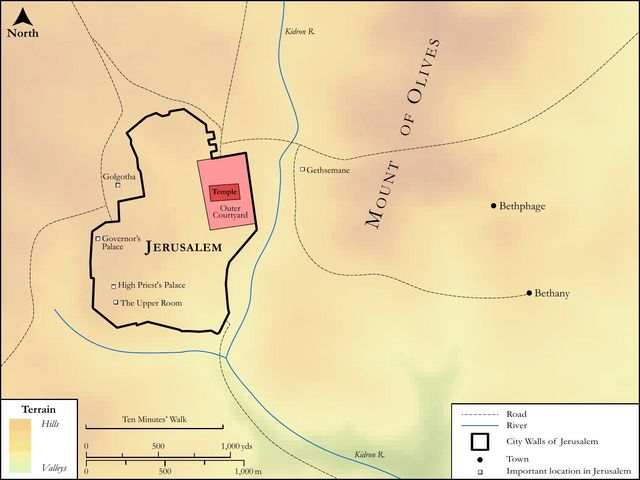
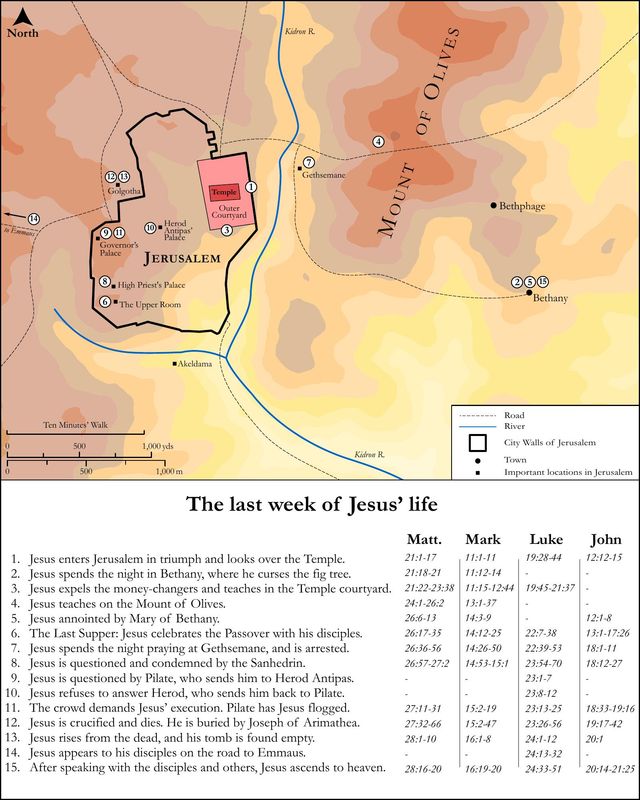
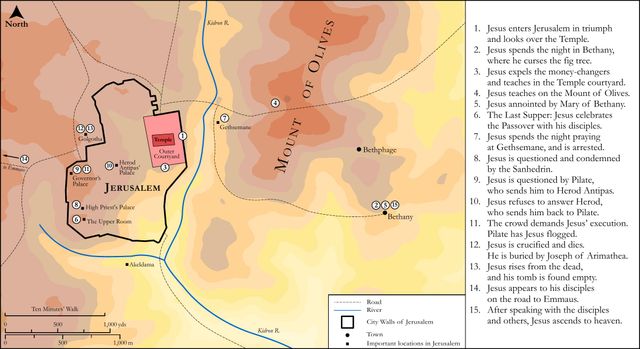
This verse is an integral part of Jesus' Olivet Discourse, delivered on the Mount of Olives to His disciples, immediately preceding His crucifixion. This discourse, spanning Matthew 24-25, focuses heavily on eschatological themes: the signs of the end times, the necessity of vigilance, and the coming judgment. The Parable of the Talents, found in Matthew 25:14-30, is one of three parables (alongside the Ten Virgins in Matthew 25:1-13 and the Sheep and Goats in Matthew 25:31-46) designed to impress upon His followers the importance of preparedness, faithfulness, and productive living in anticipation of His second coming. Matthew 25:23 specifically records the master's identical praise for the first two servants who doubled their entrusted "talents," highlighting a consistent standard of approval.
Historical & Cultural Context
In that day, the master-servant relationship was a fundamental social and economic structure. Servants (often slaves, but also free employees) were entrusted with significant responsibilities, including managing their master's finances or property. A "talent" (Greek: talanton) was not merely an innate ability but a substantial unit of currency, varying in value but always representing a large sum, equivalent to many years' wages for a common laborer. Entrusting such wealth to servants underscored a high degree of trust and expectation. The master's long absence and subsequent return for an accounting were common practices in a time of extensive travel for trade or administration, making the parable's scenario relatable to Jesus' audience. The expectation was not merely to preserve the capital but to grow it, reflecting the economic realities and the master's desire for profit from his investments.
Key Themes
ShowHideMatthew 25:23 powerfully contributes to several overarching themes within Matthew's Gospel and biblical theology. The primary theme is stewardship and accountability, emphasizing that all believers are entrusted with gifts, resources, and opportunities by God, and they will one day give an account for how they used them. This aligns with the broader teaching on the Kingdom of Heaven, where entrance and reward are tied to active participation and faithfulness. Another key theme is divine commendation and reward, illustrating God's pleasure in diligent service and His promise of increased responsibility and blessing for those who prove faithful in small matters, a principle echoed in Luke 16:10. Finally, the promise to "enter thou into the joy of thy lord" introduces the theme of eschatological joy and communion, portraying the ultimate reward for faithful living as a profound, shared delight in the Master's presence, a foretaste of the eternal joy awaiting believers in God's kingdom, as seen in Revelation 21:4.
Exposition and Analysis
ShowHideKey Word Analysis
ShowHideThis term, often translated as "slave," denotes a person in complete subjection to another. It implies not merely a hired hand but one whose very existence and will are bound to the master. In a spiritual sense, it signifies a believer's total devotion and submission to Christ, acting not out of compulsion but out of willing obedience and love, recognizing God's ultimate authority and ownership over all things.
This word carries a dual meaning: trustworthy and trusting. Here, it primarily means "trustworthy" or "reliable." The servant is deemed faithful because he proved dependable in handling the master's affairs, acting in accordance with the master's expectations and interests. Spiritually, it speaks to a believer's reliability in stewarding God's gifts and commands, demonstrating consistency and integrity in their walk with Christ.
More than mere happiness, chará signifies a deep, abiding gladness and delight, often rooted in a spiritual reality or divine blessing. The "joy of thy lord" is not just a personal feeling but a participation in the master's own celebratory delight over the successful outcome of his enterprise. For believers, this points to a profound, shared communion with God, experiencing His delight and finding ultimate fulfillment in His presence and approval.
Verse Breakdown
ShowHide"His lord said unto him, Well done, good and faithful servant;"
This opening phrase establishes the master's immediate and unequivocal approval. The commendation "Well done" (Greek: eû) is a direct affirmation of the servant's performance. The master then identifies the servant's character as "good" (Greek: agathós, morally excellent, beneficial) and "faithful" (Greek: pistós, trustworthy). This highlights that the master values both the moral integrity and the reliability of his servant, not just the quantitative results.
"thou hast been faithful over a few things,"
This clause underscores the principle of faithfulness in what might seem small or insignificant. The "few things" refer to the initial amount of talents entrusted to the servants. The master recognizes that the servant's diligence was applied consistently, regardless of the initial quantity. This sets up a profound spiritual principle: God observes and values our faithfulness in the present, often limited, circumstances.
"I will make thee ruler over many things:"
This is the master's promise of reward and promotion. Faithfulness in "a few things" directly leads to increased responsibility and authority over "many things." This signifies a principle of divine economy: proven reliability in smaller spheres opens doors to greater opportunities and blessings, both in this life and in the eternal kingdom. It is a reward that involves greater participation in the master's affairs.
"enter thou into the joy of thy lord."
This is the ultimate and most profound part of the reward. It's an invitation to share in the master's own celebration and delight. This "joy" is not merely a subjective feeling but a state of blessedness, communion, and shared triumph. It represents the deep satisfaction and intimate fellowship experienced in the presence of the one who approves and rewards.
Literary Devices
ShowHideMatthew 25:23 employs several potent literary devices. The entire passage is a Parable, a narrative designed to convey a spiritual truth through a relatable, earthly story. Within this verse, there is significant Commendation, as the master directly praises the servant, using the exclamatory "Well done" and descriptive adjectives "good and faithful." This serves to highlight the master's approval and the servant's praiseworthy character. The verse also utilizes Contrast or Antithesis with the phrases "a few things" and "many things," emphasizing the disproportionate reward for faithfulness. This contrast underscores the principle that God's generosity far exceeds human expectation. Finally, the phrase "enter thou into the joy of thy lord" uses Metaphor or Symbolism, where "joy" represents not just an emotion but a state of blessed communion and shared triumph with the master, hinting at the profound spiritual inheritance awaiting the faithful.
Theological and Thematic Connections
ShowHideMatthew 25:23 stands as a profound theological statement on divine assessment and reward. It reveals God's character as one who values diligence, integrity, and productive stewardship of His gifts. The commendation "Well done, good and faithful servant" is the ultimate affirmation of a life lived in accordance with God's will, demonstrating that our efforts, however small they may seem, are noticed and deeply appreciated by our Heavenly Master. The promise of being made "ruler over many things" speaks to a principle of spiritual growth and promotion, where faithfulness in present responsibilities prepares us for greater roles and blessings in God's kingdom, both now and in eternity. The invitation to "enter into the joy of thy lord" signifies the ultimate reward: not merely a material inheritance, but a deep, intimate, and shared delight in God's presence, a communion that transcends earthly understanding and fulfills the deepest longings of the human heart.
Reflection and Application
ShowHideMatthew 25:23 serves as a powerful call to introspection for every believer. It challenges us to consider what "talents" God has entrusted to us—not just financial resources, but spiritual gifts, time, relationships, influence, and even our very lives. The core message is not about the quantity of the gift, but the quality of our faithfulness in stewarding it. Are we using our abilities and opportunities to honor God and advance His kingdom, or are we burying them out of fear, apathy, or self-interest? This verse reminds us that God values diligent effort and a heart committed to His purposes, even in seemingly small or mundane tasks. It encourages us to live with an eternal perspective, knowing that every act of faithfulness, no matter how insignificant it appears in the present, contributes to an eternal reward and, most importantly, leads us into the profound and lasting joy of our Lord's presence. Our ultimate goal should be to hear those precious words of commendation from our Master.
Questions for Reflection
ShowHideFAQ
ShowHideWhat does "talents" mean in this parable, and how does it relate to our lives today?
ShowHideIn the Parable of the Talents, a "talent" (Greek: talanton) was a significant unit of currency, representing a very large sum of money, often equivalent to many years of a laborer's wages. It was a substantial amount entrusted to the servants. In contemporary application, "talents" are understood metaphorically to represent all the gifts, abilities, resources, opportunities, and even time that God entrusts to individuals. This includes spiritual gifts (e.g., teaching, serving, encouraging), material wealth, intellectual capacities, social influence, and the very breath of life itself. The parable teaches that we are stewards of all these things, called to use them productively for God's purposes rather than hoarding or neglecting them.
What is the "joy of thy lord" that the faithful servants enter into?
ShowHideThe "joy of thy lord" (Greek: chará) is more than just a fleeting emotion of happiness. It signifies a deep, profound, and lasting delight that is shared with the Master. It represents the ultimate reward for faithful service: a state of blessed communion, intimate fellowship, and shared triumph in the presence of God. It's an invitation to participate in God's own delight over the successful outcome of His kingdom. This joy is not merely a reward given to us, but a joy we enter into, suggesting a participatory experience of God's own blessedness and the fulfillment of His purposes. It points to the ultimate satisfaction found in God's presence in eternity.
Christ-Centered Fulfillment
ShowHideMatthew 25:23, while part of a parable, finds its deepest fulfillment in the person and work of Jesus Christ. The "lord" in the parable is ultimately a representation of Christ Himself, the Master who has gone away and will return to settle accounts. His commendation, "Well done, good and faithful servant," foreshadows the ultimate judgment and reward that believers will receive from their true Lord, Jesus Christ, upon His glorious return (2 Timothy 4:8). The faithfulness demonstrated by the servants mirrors the faithfulness that Christ calls His followers to embody, a faithfulness rooted in their union with Him. Furthermore, the promise to "make thee ruler over many things" points to the believer's future co-reign with Christ in His kingdom (Revelation 3:21; 2 Timothy 2:12). Most profoundly, the invitation to "enter thou into the joy of thy lord" is an invitation to participate in Christ's own joy—the joy He had in accomplishing the Father's will, the joy set before Him as He endured the cross (Hebrews 12:2), and the eternal joy of His resurrected and glorified state. Our ultimate reward is not just a place, but a Person, and a shared experience of His perfect, unending delight.