


2 Samuel 23:10
Bible text: King James Version (1769 Blayney text) · Public domain
Bible text: King James Version with Strong's numbers · Public domain
Bible text: Berean Standard Bible · Public domain
Bible text: American Standard Version (1901) · Public domain
Bible text: World English Bible, Messianic edition · Public domain
Bible text: Geneva Bible (1599) · Public domain
Bible text: Young's Literal Translation · Public domain
- הוּאhu'heH1931Pro-3msPronoun Personal 3rd Singular Masculine
- קָםkamhe aroseH6965V-Qal-Perf-3msVerb Qal Perfect 3rd Singular Masculine
- וַיַּךְvai·Yakhand he struck downH5221Conj-w ¦ V-Hiphil-ConsecImperf-3msVerb Hiphil Consecutive Imperfect 3rd Singular Masculineוַandיַּךְhe struck down
- בַּפְּלִשְׁתִּיםba·pe·lish·Timamong the PhilistinesH6430Prep-b ¦ N-mpNoun Gentilic Plural Masculine Absoluteבַּamong theפְּלִשְׁתִּיםPhilistines
- עַד'aduntilH5704PrepPreposition
- כִּיkiforH3588PrtParticle Conditional
- יָגְעָהya·ge·'Ahit was wearyH3021V-Qal-Perf-3fsVerb Qal Perfect 3rd Singular Feminine
- יָדוֹya·Dohis handH3027N-csc ¦ 3msNoun Singular common gender Constructיָדhandוֹhis
- וַתִּדְבַּקva·tid·Bakand it cleavedH1692Conj-w ¦ V-Qal-ConsecImperf-3fsVerb Qal Consecutive Imperfect 3rd Singular Feminineוַandתִּדְבַּקit cleaved
- יָדוֹya·Dohis handH3027N-csc ¦ 3msNoun Singular common gender Constructיָדhandוֹhis
- אֶל'eltoH413PrepPreposition
- הַחֶרֶבha·Che·revthe swordH2719Art ¦ N-fsNoun Singular Feminine Absoluteהַtheחֶרֶבsword
- וַיַּעַשׂvai·Ya·'asand he didH6213Conj-w ¦ V-Qal-ConsecImperf-3msVerb Qal Consecutive Imperfect 3rd Singular Masculineוַandיַּעַשׂhe did
- יְהוָהYah·wehYahwehH3068N-properNoun Proper Title
- תְּשׁוּעָהte·shu·'Aha deliveranceH8668N-fsNoun Singular Feminine Absolute
- גְדוֹלָהge·do·LahgreatH1419Adj-fsAdjective Singular Feminine Absolute
- בַּיּוֹםbai·Yomon the dayH3117Prep-b ¦ N-msNoun Singular Masculine Absoluteבַּon theיּוֹםday
- הַהוּאha·Hu'<the> thatH1931Art ¦ Pro-3msPronoun Personal 3rd Singular Masculineהַ<the>הוּאthat
- וְהָעָםve·ha·'Amand the peopleH5971Conj-w ¦ Art ¦ N-msNoun Singular Masculine Absoluteוְandהָtheעָםpeople
- יָשֻׁבוּya·Shu·vuthey returnedH7725V-Qal-Imperf-3mpVerb Qal Imperfect 3rd Plural Masculine
- אַחֲרָיו'a·cha·Ravafter himH310Adj-mpc ¦ 3msAdjective Numerical Plural Masculine Constructאַחֲרָיafterוhim
- אַךְ'akhonlyH389AdvAdverb
- לְפַשֵּׁטle·fa·Shetto stripH6584Prep-l ¦ V-Piel-InfVerb Piel Infinitive Constructלְtoפַשֵּׁטstrip
English is a literal word-by-word gloss of the Hebrew, not the KJV's wording. Why?
This is the original text the KJV's translators worked from — each Hebrew word with its own literal English meaning in this verse, prepared by scholars at Tyndale House, Cambridge. The KJV translates whole sentences, not word by word, so its wording differs: one Hebrew word can become several English words, and the KJV may choose “the LORD” where the gloss reads “Yahweh”. Both are faithful — they answer different questions. For the KJV's own rendering, switch to the KJV text.
Details
See on the biblical-era maps
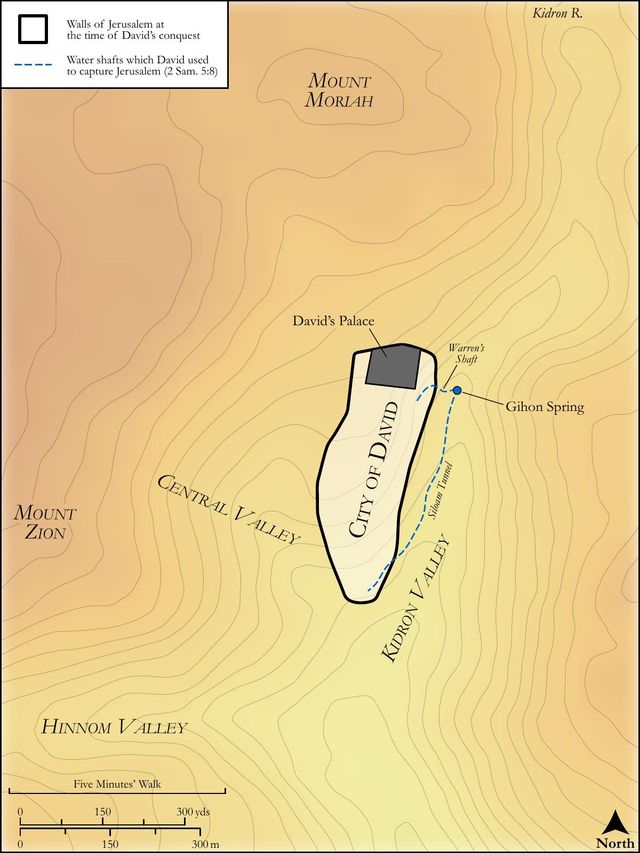
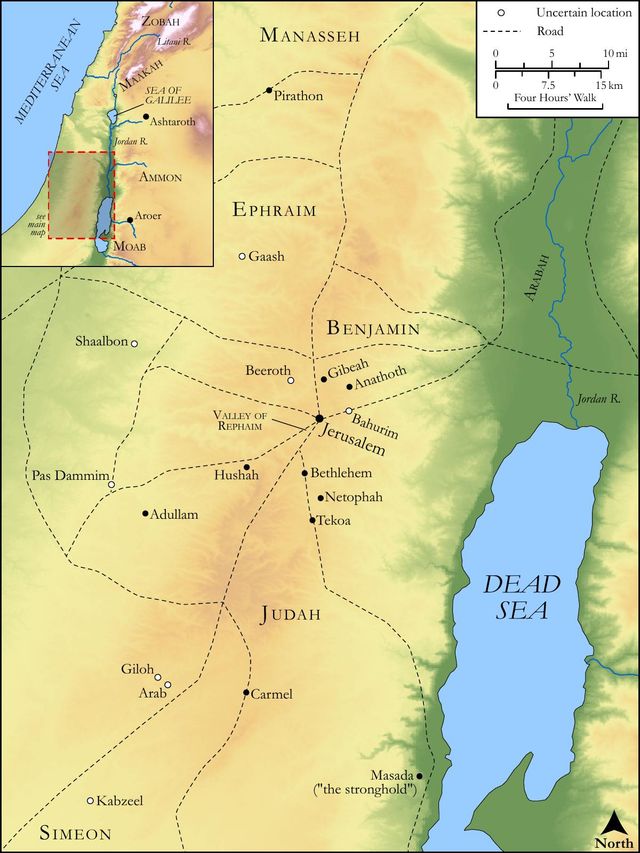
Study this verse
Continue studying 2 Samuel 23:10 across the web’s major study libraries — every link below opens this exact verse, chapter, or book on the destination site.
Read & Compare
 BibleGatewayThis verse in more than 200 translations and 70 languages.
 Bible.comThe YouVersion reader — hundreds of translations, reading plans, and highlights.
 ESV.orgCrossway's official English Standard Version reader.
 NET BibleThe NET translation with 60,000+ translators' notes on every rendering decision.
 STEP BibleTyndale House's free study tool — original text, vocabulary, and scholarly resources.
 BibliaLogos Bible Software's free web reader.
 USCCBThe New American Bible (Revised Edition) with the U.S. bishops' study notes.
Commentaries
 BibleHub CommentariesDozens of classic commentaries on this verse, gathered on one page.
 StudyLightMore than 100 commentary sets — the largest collection on the web.
 BibleRefPlain-English commentary on what this verse means, verse by verse.
 Enduring WordDavid Guzik's free commentary on this chapter, widely used by Bible teachers.
 Bible Study ToolsVerse commentary alongside Greek and Hebrew study aids.
Original Language & Research
- BibleHub InterlinearThe verse word by word — original language, transliteration, and English.
- BibleHub LexiconEvery word's original-language definition and Strong's entry.
 Blue Letter BibleDeep-study tools — Strong's numbers, concordance, and word studies.
 SefariaThe Hebrew text with Rashi and centuries of Jewish commentary.
Sermons, Hymns & Audio


TrulyRandomVerse is not affiliated with these sites and doesn’t control their content. They’re linked because they’re genuinely useful.
Summary
Second Samuel 23:10 powerfully narrates the extraordinary valor of Eleazar, one of King David's elite warriors, during a fierce confrontation with the Philistines. The verse highlights Eleazar's singular devotion to the battle, portraying him as fighting relentlessly until his hand became physically bound to his sword from sheer exhaustion, even as his fellow soldiers retreated. Crucially, the passage then attributes the decisive triumph not solely to Eleazar's superhuman effort, but explicitly to the Lord, thereby underscoring divine agency in Israel's victories and affirming that God sovereignly works through faithful, albeit imperfect, human instruments.
Context
ShowHideLiterary Context
This verse is situated within a distinct and significant section of 2 Samuel 23, immediately following David's "last words" (verses 1-7). Verses 8-39 provide a detailed and honorific roster of David's most distinguished warriors, collectively known as his "mighty men." Eleazar, son of Dodai the Ahohite, is introduced as one of the "Three," the preeminent champions alongside Josheb-basshebeth and Shammah. The narrative here serves to illustrate the exceptional caliber of men who formed the backbone of David's military, embodying the strength, unwavering loyalty, and divine favor that characterized his reign. Eleazar's specific account of battle is presented as a testament to his individual courage and, more importantly, to the Lord's direct intervention, thereby setting a precedent for the subsequent heroic narratives that follow within this chapter.
Historical & Cultural Context
The Philistines represented Israel's most persistent and formidable adversaries throughout the periods of the Judges and early Monarchy. As a powerful seafaring people who had settled the coastal plain, their frequent clashes with the Israelites were a constant struggle for territorial control and national security. Their military superiority, particularly in iron weaponry, often placed Israel at a tactical disadvantage. Battles like the one described in this verse were commonplace, reflecting the ongoing existential conflict for dominance in the land of Canaan. The concept of "mighty men" was a recognized and valued aspect of warfare in Israel, where elite, highly skilled warriors often played a pivotal role in turning the tide of battle. Loyalty to the king and exceptional bravery were virtues held in the highest esteem. The detail that soldiers returned "only to spoil" is also culturally significant, as the collection of plunder was a standard and expected component of ancient warfare, serving as both a reward for victory and a vital source of economic gain.
Key Themes
ShowHideThe account of Eleazar's unwavering stand encapsulates several profound themes woven throughout 2 Samuel and the broader Old Testament narrative. Heroic Perseverance is paramount, as Eleazar fights beyond typical human limits, demonstrating an unwavering commitment despite overwhelming odds and the desertion of his peers. This theme resonates deeply with the call to steadfastness in the face of adversity, mirroring the endurance of figures like Job. Closely linked is Individual Courage, highlighting how one person's extraordinary dedication can dramatically shift the tide of a collective struggle. Most significantly, the verse powerfully conveys Divine Empowerment and Sovereignty. While Eleazar's effort is immense and commendable, the ultimate victory is explicitly attributed to "the LORD," reinforcing the theological truth that God is the true deliverer and the ultimate source of all triumph, a principle echoed in passages such as Deuteronomy 20:4 and 1 Samuel 17:47.
Exposition and Analysis
ShowHideKey Word Analysis
ShowHideThis word, derived from a primitive root, properly means "to impinge, i.e. cling or adhere." In this vivid context, it describes Eleazar's hand becoming so firmly bound or stuck to his sword due to extreme exertion, sweat, and perhaps blood, that it could not be separated. It signifies an almost involuntary, yet resolute, attachment, illustrating a warrior pushed to the absolute limits of human endurance, utterly consumed by the battle. This is not merely poetic flourish but a powerful depiction of a man who refused to let go, physically embodying his unwavering resolve and single-minded focus on the fight.
A primitive root meaning "to do or make, in the broadest sense and widest application," this verb emphasizes the active, effective, and decisive nature of the Lord's intervention. When applied to God, it often denotes a powerful and intentional act, indicating that the victory was not merely a fortunate outcome or a result of human effort alone, but a direct, sovereign work of God. It highlights divine agency as the ultimate cause of the triumph, clearly distinguishing it from Eleazar's human contribution.
This adjective, meaning "great (in any sense)," describes the magnitude and significance of the victory achieved. It implies that the triumph was not merely a minor skirmish won, but a substantial and impactful success, perhaps even exceeding human expectation or capability. When coupled with "victory" and attributed to the Lord, it underscores the extraordinary nature of God's intervention and the overwhelming success He brought about on that day.
Verse Breakdown
ShowHide"He arose, and smote the Philistines"
This opening clause establishes Eleazar's immediate, determined, and proactive engagement with the enemy. "Arose" suggests a ready and decisive posture for battle, indicating his willingness to confront the Philistines directly. The identification of "the Philistines" sets the stage for a specific and intense military conflict, highlighting the perennial adversaries of Israel.
"until his hand was weary, and his hand clave unto the sword"
This segment vividly portrays the extreme physical toll and unwavering commitment of Eleazar's prolonged combat. "Weary" denotes profound physical exhaustion, pushing him to the brink of his human capacity. The phrase "clave unto the sword" serves as a powerful description—whether literal or hyperbolic—of his hand becoming inextricably bound to the h hilt of his weapon. This signifies an unyielding, tenacious grip born of relentless effort and an absolute refusal to cease fighting, underscoring his extraordinary endurance and singular dedication to the battle, even when others might have faltered.
"and the LORD wrought a great victory that day"
This is the pivotal theological statement of the verse, shifting the ultimate focus from Eleazar's human effort to divine intervention. Despite the warrior's immense contribution and self-sacrifice, the ultimate success and the magnitude of the triumph are explicitly attributed to God. "Wrought" emphasizes God's active, intentional, and effective role, while "great victory" highlights the overwhelming nature of the triumph, implying it was beyond what human strength alone could achieve. This asserts God's supreme sovereignty over the outcomes of battles and human endeavors.
"and the people returned after him only to spoil"
This concluding phrase provides a stark and telling contrast to Eleazar's solitary valor. "The people" refers to the rest of the Israelite army who had evidently retreated, fled, or abandoned the fight when the battle was at its fiercest. Their return "only to spoil" reveals their opportunistic nature, re-engaging with the battlefield only after the hard-won victory had been secured by Eleazar's singular heroism and, more importantly, by the Lord's decisive intervention. This highlights Eleazar's unique and isolated courage against the backdrop of common human self-interest.
Literary Devices
ShowHideThe verse employs several potent literary devices to convey its profound message. Hyperbole is powerfully evident in the phrase "his hand clave unto the sword," which, while possibly a literal description of extreme physical adhesion, also serves to exaggerate Eleazar's unwavering grip and relentless effort, emphasizing his extraordinary endurance beyond normal human limits. Contrast is masterfully used to highlight the difference between Eleazar's solitary, tenacious fight and the rest of "the people" who "returned after him only to spoil," underscoring his singular courage against the backdrop of common opportunism and self-preservation. This also creates a stark Juxtaposition between individual heroism and collective retreat, and between human effort and divine power. Finally, the narrative employs explicit Divine Attribution, stating unequivocally that "the LORD wrought a great victory that day." This functions as a crucial theological device, ensuring that the ultimate glory and credit for the triumph are given to God, despite the human agent's remarkable bravery and sacrifice.
Theological and Thematic Connections
ShowHideThe narrative of Eleazar's battle offers a profound illustration of divine sovereignty working in tandem with human fidelity. It teaches that while God calls for our utmost effort and unwavering perseverance in the face of adversity, the ultimate outcome and the true victory belong exclusively to Him. Eleazar's unwavering commitment, even to the point of physical fusion with his weapon, demonstrates a type of dedicated, self-sacrificial service that God profoundly honors and empowers. His story serves as a powerful reminder that God often chooses to use the seemingly impossible efforts of a few faithful individuals to achieve great things, revealing His power most clearly when human strength is pushed to its limits or even fails. The stark contrast with the retreating army further emphasizes that true victory is not predicated on superior numbers or conventional military might, but rather on God's active presence and sovereign power, activated through courageous obedience and unwavering faith.
Reflection and Application
ShowHideEleazar's story provides a compelling and challenging model for believers navigating their own battles, whether they are spiritual struggles, professional challenges, or personal trials. It calls us to persevere with unwavering commitment, even when we feel weary, isolated, or when those around us have given up. The vivid image of his hand "claving unto the sword" serves as a powerful metaphor for clinging to our calling, our faith, or our responsibilities with tenacious resolve, refusing to let go until the work is done or the battle is won. Yet, crucially, the verse simultaneously reminds us that our human effort, however heroic or exhaustive, is always secondary to God's sovereign power and ultimate control. We are called to give our absolute all, to "fight the good fight," but to trust implicitly that the ultimate victory and the glory for it belong solely to the Lord. This profound truth liberates us from the crushing burden of self-reliance, allowing us to pour out our strength knowing that God will complete what we begin and bring about His divine purposes through our faithfulness. It encourages us to remain steadfast, knowing that even in our deepest weariness, God can "wrought a great victory" through us, for His glory.
Questions for Reflection
ShowHideFAQ
ShowHideWhat does "his hand clave unto the sword" literally mean?
ShowHideWhile it may sound like hyperbole, it is very likely a literal description of extreme physical adhesion resulting from Eleazar's extraordinary exertion. "Clave" (from "cleave") means to stick or cling firmly. In the context of intense, prolonged combat, Eleazar's hand could have become so swollen, cramped, and covered in sweat, dirt, and blood that his grip on the sword hilt became physically locked or inextricably bound. This vivid detail emphasizes the sheer, brutal exhaustion and unwavering determination with which he fought, pushing his body beyond normal human limits until his hand was, in essence, fused to his weapon. It paints a powerful and visceral picture of a warrior utterly consumed by the fight, refusing to yield.
Christ-Centered Fulfillment
ShowHideEleazar's singular valor and the divine intervention that secured the victory beautifully foreshadow the ultimate Warrior and Deliverer, Jesus Christ. Just as Eleazar fought relentlessly against the Philistines, Jesus engaged in the ultimate spiritual battle against sin, death, and the powers of darkness. His "hand clave unto the sword" can be seen in His unwavering commitment to the Father's will, even to the point of Gethsemane's agony and the cross's unimaginable suffering, where He "set his face to go to Jerusalem" (Luke 9:51). While Eleazar's victory was physical and temporary, Christ's victory on the cross was eternal and utterly decisive, securing salvation for all who believe. The Lord "wrought a great victory" through Eleazar, but the greatest victory was "wrought" through Christ's perfect obedience, sacrificial death, and glorious resurrection, triumphing over the grave and offering new, everlasting life (1 Corinthians 15:57). Unlike the people who returned "only to spoil," Christ's victory invites us not to plunder, but to participate in His triumph through faith, becoming co-heirs of His eternal kingdom and partakers of His divine nature (Romans 8:17). His finished work is the true and lasting "great victory" that gives meaning and purpose to all other human efforts within God's grand redemptive plan.