


2 Samuel 14:31
Bible text: King James Version (1769 Blayney text) · Public domain
Bible text: Berean Standard Bible · Public domain
Bible text: American Standard Version (1901) · Public domain
Bible text: World English Bible, Messianic edition · Public domain
Bible text: Geneva Bible (1599) · Public domain
Bible text: Young's Literal Translation · Public domain
- וַיָּקָםvai·Ya·komand he aroseH6965Conj-w ¦ V-Qal-ConsecImperf-3msVerb Qal Consecutive Imperfect 3rd Singular Masculineוַandיָּקָםhe arose
- יוֹאָבyo·'AvJoabH3097N-proper-mNoun Proper Masculine
- וַיָּבֹאvai·ya·Vo'and he wentH935Conj-w ¦ V-Qal-ConsecImperf-3msVerb Qal Consecutive Imperfect 3rd Singular Masculineוַandיָּבֹאhe went
- אֶל'eltoH413PrepPreposition
- אַבְשָׁלוֹם'av·sha·LomAbsalomH53N-proper-mNoun Proper Masculine
- הַבָּיְתָהha·Ba·ye·tahthe house towardsH1004Art ¦ N-ms ¦ SfxNoun Singular Masculine Absoluteהַtheבָּיְתָhouseהtowards
- וַיֹּאמֶרvai·Yo·merand he saidH559Conj-w ¦ V-Qal-ConsecImperf-3msVerb Qal Consecutive Imperfect 3rd Singular Masculineוַandיֹּאמֶרhe said
- אֵלָיו'e·Lavto himH413Prep ¦ 3msPreposition Definiteאֵלָיtoוhim
- לָמָּהLa·mah<to> why?H4100Prep-l ¦ InterrogPronoun Interrogativeלָ<to>מָּהwhy?
- הִצִּיתוּhi·Tzi·tuhave they set on fireH3341V-Hiphil-Perf-3cpVerb Hiphil Perfect 3rd Plural common gender
- עֲבָדֶךָ'a·va·De·khayour servantsH5650N-mpc ¦ 2msNoun Plural Masculine Constructעֲבָדֶservantsךָyour
- אֶת'et<obj.>H853DirObjMParticle Object Indicator
- הַחֶלְקָהha·chel·Kahthe portion of landH2513Art ¦ N-fsNoun Singular Feminine Absoluteהַtheחֶלְקָהportion of land
- אֲשֶׁר'a·SherwhichH834RelParticle Relative
- לִיli[belongs] to <the> mePrep-l ¦ 1csSuffix Personal 1st Singular common genderלִ[belongs] to <the>יme
- בָּאֵשׁba·'Eshwith <the> fireH784Prep-b ¦ N-csNoun Singular common gender Absoluteבָּwith <the>אֵשׁfire
English is a literal word-by-word gloss of the Hebrew, not the KJV's wording. Why?
This is the original text the KJV's translators worked from — each Hebrew word with its own literal English meaning in this verse, prepared by scholars at Tyndale House, Cambridge. The KJV translates whole sentences, not word by word, so its wording differs: one Hebrew word can become several English words, and the KJV may choose “the LORD” where the gloss reads “Yahweh”. Both are faithful — they answer different questions. For the KJV's own rendering, switch to the KJV text.
Details
See on the biblical-era maps
Study this verse
Public-domain commentary
Matthew Henry
From his Commentary on the Whole Bible. Henry comments on passages, not single verses — this entry covers 2 Samuel 14:28–33.
Three years Absalom had been an exile from his father-in-law, and now two years a prisoner at large in his own house, and, in both, better dealt with than he deserved; yet his spirit was still unhumbled, his pride unmortified, and, instead of being thankful that his life is spared, he thinks himself sorely wronged that he is not restored to all his places at court. Had he truly repented of his sin, his distance from the gaieties of the court, and his solitude and retirement in his own house, especially being in Jerusalem the holy city, would have been very agreeable to him. If a murderer must live, yet let him be for ever a recluse. But Absalom could not bear this just and gentle mortification. He longed to see the king's face, pretending it was because he loved him, but really because he wanted an opportunity to supplant him. He cannot do his father a mischief till he is reconciled to him; this therefore is the first branch of his plot; this snake cannot sting again till he be warmed in his father's bosom. He gained this point, not by pretended submissions and promises of reformation, but (would you think it?) by insults and injuries. 1. By his insolent carriage towards Joab, he brought him to mediate for him. Once and again he sent to Joab to come and speak with him, for he durst not go to him; but Joab would not come (Sa2 14:29), probably because Absalom had not owned the kindness he had done him in bringing him to Jerusalem so gratefully as he thought he should have done; proud men take every service done them for a debt. One would think that a person in Absalom's circumstances should have sent to Joab a kindly message, and offered him a large gratuity: courtiers expect noble presents. But, instead of this, he bids his servants set Joab's corn-fields on fire (Sa2 14:30), as spiteful a thing as he could do. Samson could not think of a greater injury to do the Philistines than this. Strange that Absalom should think, by doing Joab a mischief, to prevail with him to do him a kindness, or to recommend himself to the favour of his prince or people by showing himself so very malicious and ill-natured, and such an enemy to the public good, for the fire might spread to the corn of others. Yet by this means he brings Joab to him, Sa2 14:31. Thus God, by afflictions, brings those to him that kept at a distance from him. Absalom was obliged by the law to make restitution (Exo 22:6), yet we do not find either that he offered it or that Joab demanded it. Joab (it might be) thought he could not justify his refusal to go and speak with him; and therefore Absalom thought he could justify his taking this way to fetch him. And now Joab (perhaps frightened at the surprising boldness and fury of Absalom, and apprehensive that he had made an interest in the people strong enough to bear him out in doing the most daring things, else he would never have done this) not only puts up with this injury, but goes on his errand to the king. See what some men can do by threats, and carrying things with a high hand. 2. By his insolent message (for I can call it no better) to the king, he recovered his place at court, to see the king's face, that is, to become a privy counsellor, Est 1:14. (1.) His message was haughty and imperious, and very unbecoming either a son or a subject, Sa2 14:32. He undervalued the favour that had been shown him in recalling him from banishment, and restoring him to his own house, and that in Jerusalem: Wherefore have I come from Geshur? He denies his own crimes, though most notorious, and will not own that there was any iniquity in him, insinuating that therefore he had been wronged in the rebuke he had been under. He defies the king's justice: "Let him kill me, if he can find in his heart," knowing he loved him too well to do it. (2.) Yet with this message he carried his point, Sa2 14:33. David's strong affection for him construed all this to be the language of a great respect to his father, and an earnest desire of his favour, when alas! it was far otherwise. See how easily wise and good men may be imposed upon by their own children that design ill, especially when they are blindly fond of them. Absalom, by the posture of his body, testified his submission to his father: He bowed himself on his face to the ground; and David, with a kiss, sealed his pardon. Did the bowels of a father prevail to reconcile him to an impenitent son, and shall penitent sinners question the compassion of him who is the Father of mercy? If Ephraim bemoan himself, God soon bemoans him, with all the kind expressions of a fatherly tenderness: He is a dear son, a pleasant child, Jer 31:20.
Continue studying 2 Samuel 14:31 across the web’s major study libraries — every link below opens this exact verse, chapter, or book on the destination site.
Read & Compare
 BibleGatewayThis verse in more than 200 translations and 70 languages.
 Bible.comThe YouVersion reader — hundreds of translations, reading plans, and highlights.
 ESV.orgCrossway's official English Standard Version reader.
 NET BibleThe NET translation with 60,000+ translators' notes on every rendering decision.
 STEP BibleTyndale House's free study tool — original text, vocabulary, and scholarly resources.
 BibliaLogos Bible Software's free web reader.
 USCCBThe New American Bible (Revised Edition) with the U.S. bishops' study notes.
Commentaries
 BibleHub CommentariesDozens of classic commentaries on this verse, gathered on one page.
 StudyLightMore than 100 commentary sets — the largest collection on the web.
 BibleRefPlain-English commentary on what this verse means, verse by verse.
 Enduring WordDavid Guzik's free commentary on this chapter, widely used by Bible teachers.
 Bible Study ToolsVerse commentary alongside Greek and Hebrew study aids.
Original Language & Research
- BibleHub InterlinearThe verse word by word — original language, transliteration, and English.
- BibleHub LexiconEvery word's original-language definition and Strong's entry.
 Blue Letter BibleDeep-study tools — Strong's numbers, concordance, and word studies.
 SefariaThe Hebrew text with Rashi and centuries of Jewish commentary.
Sermons, Hymns & Audio


TrulyRandomVerse is not affiliated with these sites and doesn’t control their content. They’re linked because they’re genuinely useful.
Summary
2 Samuel 14:31 captures the dramatic and confrontational moment when Joab, King David's chief military commander, directly confronts Absalom, David's estranged son. This pivotal encounter is the immediate result of Absalom's calculated act of arson, ordering his servants to set Joab's barley field ablaze—a desperate and extreme provocation designed to force a meeting with Joab, and through him, to gain access to King David. Joab's indignant and pointed question, "Wherefore have thy servants set my field on fire?", underscores the gravity of Absalom's destructive action and marks a critical turning point in Absalom's relentless pursuit of reconciliation and reinstatement within the royal court.
Context
ShowHideLiterary Context
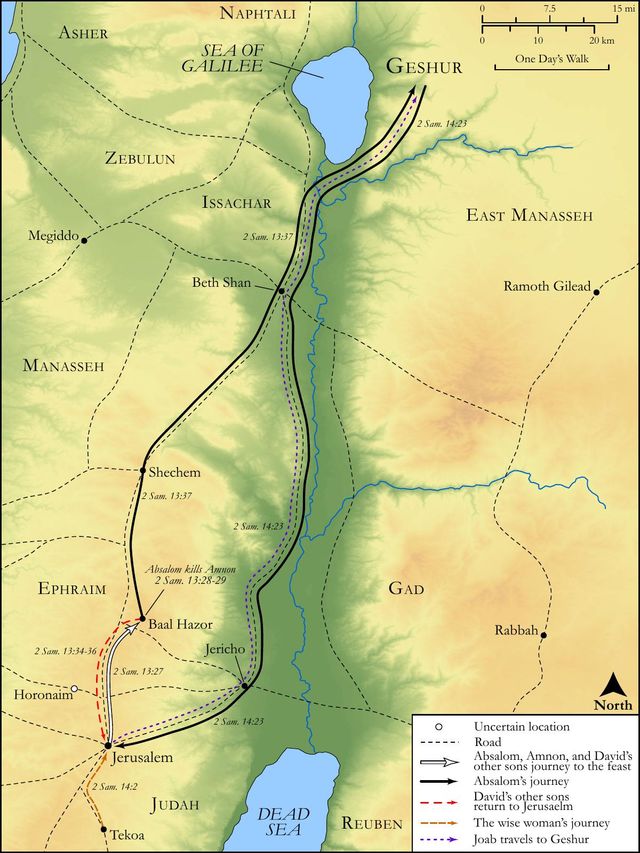
This verse serves as the climax of Absalom's escalating frustration and strategic manipulation following his return from exile. After the murder of his half-brother Amnon for the rape of Tamar, Absalom fled to Geshur for three years, as recounted in 2 Samuel 13:38. Joab, through the clever intervention of the wise woman of Tekoa, successfully orchestrated Absalom's return to Jerusalem (detailed in 2 Samuel 14:1-20). However, despite his physical return, King David steadfastly refused to see Absalom's face for two full years, a period of continued estrangement highlighted in 2 Samuel 14:28. Absalom, desperate for true reconciliation and access to the king, repeatedly sent for Joab, who, perhaps out of caution regarding David's persistent reluctance or due to other duties, consistently refused to come, as noted in 2 Samuel 14:29. As a final, extreme measure to compel Joab's attention, Absalom commanded his servants to burn Joab's field (recorded in 2 Samuel 14:30), understanding that such an act of aggression would guarantee a direct confrontation. Joab's arrival in this verse is the direct and calculated consequence of Absalom's destructive tactic.
Historical & Cultural Context
In ancient Israel, land ownership was not merely an economic asset but a foundational pillar of a family's identity, heritage, and long-term security. Agricultural fields, especially those ripe for harvest like the barley field mentioned in 2 Samuel 14:30, represented significant accumulated wealth and the fruit of arduous labor. Deliberately burning a field was far more than an act of vandalism; it constituted a grave economic assault, a profound personal insult, and a direct challenge to a person's livelihood and honor, often warranting severe legal repercussions. Such an act would necessitate an immediate and forceful response from the injured party, as it directly threatened their sustenance and social standing. Furthermore, this narrative unfolds within the complex political landscape of the Davidic monarchy, where family dynamics were inextricably intertwined with matters of political power, succession, and national stability. The king's favor was the ultimate arbiter of status and influence, and exclusion from his presence was a severe form of punishment, akin to social and political death. Absalom's actions, therefore, must be understood within this high-stakes environment where personal grievances and family feuds possessed the potential to rapidly escalate into full-blown political crises.
Key Themes
ShowHideThis verse powerfully illustrates several enduring themes within the broader narrative of 2 Samuel and the Deuteronomistic History. Firstly, it starkly reveals the desperation and manipulative nature of Absalom, who, despite being physically returned to Jerusalem, resorts to extreme and destructive measures to achieve his personal and political objectives. This manipulative behavior serves as a chilling foreshadowing of his later, far more devastating rebellion against his father and the kingdom, detailed in 2 Samuel 15:1-12. Secondly, the incident highlights the perilous consequences of unresolved conflict and fractured family relationships. David's passive avoidance of Absalom, while perhaps born of grief or anger, only intensified his son's resentment and ultimately led to increasingly aggressive and destructive behavior. The lack of direct communication and genuine reconciliation created a fertile ground for bitterness to fester and erupt. Lastly, the verse effectively showcases Joab's pragmatic, direct, and often ruthless character. Despite his understandable anger over the destruction of his property, Joab immediately seeks to understand the "why" behind Absalom's actions, demonstrating his crucial role as a key, albeit morally ambiguous, figure navigating the complex and often volatile dynamics within David's household and court.
Exposition and Analysis
ShowHideKey Word Analysis
ShowHideMeaning "Jehovah-fathered." Joab, King David's nephew and commander of his army, is a formidable and often ruthless figure in the narrative. His personal presence in this verse underscores the gravity of Absalom's provocation, as Joab's swift and direct response is characteristic of his decisive nature, indicating that Absalom's act has indeed achieved its intended effect of compelling Joab's attention.
Meaning "smoothness; figuratively, flattery; also an allotment; field, flattering(-ry), ground, parcel, part, piece of land (ground), plat, portion, slippery place, smooth (thing)." In this context, "field" refers to a parcel of agricultural land, specifically a barley field ready for harvest, as indicated in the preceding verse. The destruction of such a field was a significant economic blow and a profound personal insult, representing a direct attack on Joab's wealth and livelihood.
A primitive root meaning "to burn or set on fire; figuratively, to desolate." This verb, combined with "fire" (H784, ʼêsh), describes a deliberate and complete act of destruction by combustion. The intensity of this action highlights the severity of Absalom's provocation, designed to be undeniable and to force an immediate and forceful response from Joab, demonstrating the calculated nature of Absalom's desperate gambit.
Verse Breakdown
ShowHide"Then Joab arose, and came to Absalom unto [his] house,"
This clause describes Joab's immediate, decisive, and personal response to the news of his field's destruction. The phrase "arose, and came" conveys a sense of urgency and purposeful movement, indicating that Joab did not send a subordinate but chose to confront Absalom directly at his residence. This personal confrontation underscores the gravity of the offense and the directness of the impending encounter.
"and said unto him,"
This simple conjunction introduces the direct speech that immediately follows, emphasizing the face-to-face nature of the encounter. It sets the stage for the crucial dialogue where Joab demands an explanation, marking the shift from action to verbal confrontation.
"Wherefore have thy servants set my field on fire?"
This is the core of the verse—Joab's direct, accusatory question. It is not a mere inquiry but a demand for justification for an act that is clearly understood as an aggressive, unwarranted, and destructive attack. The question implies a breach of trust, a challenge to Joab's authority, and a violation of his property rights. By specifically referring to "thy servants," Joab subtly yet firmly attributes responsibility for the act to Absalom, forcing him to account for the actions carried out under his command.
Literary Devices
ShowHideThe verse effectively employs several potent literary devices to convey its meaning and emotional weight. Direct Confrontation is paramount, as Joab's immediate physical presence at Absalom's house and his direct verbal challenge eliminate any possibility of evasion or misunderstanding, forcing an immediate reckoning. The question itself functions as a Rhetorical Question, not merely seeking information but primarily conveying Joab's outrage, accusation, and demand for accountability. While it anticipates an answer, its deeper function is to express the speaker's strong emotion and the profound gravity of the offense. There is also a significant element of Irony in Absalom's actions; his destructive act, intended to gain attention and reconciliation with his father, ultimately foreshadows his later, far more devastating rebellion against David and the kingdom, which will bring widespread destruction. Furthermore, Joab's precise phrasing, "thy servants," while addressing Absalom directly, can be understood as a form of Metonymy or Synecdoche, where the agents (servants) stand for the principal (Absalom's command), subtly highlighting Absalom's indirect but undeniable responsibility and calculated orchestrating of the arson.
Theological and Thematic Connections
ShowHideThis incident profoundly underscores the theological truth that unresolved sin and festering conflict, particularly within familial and relational contexts, inevitably breed further destruction and alienation. Absalom's desperate act of arson is a stark symptom of a deeper spiritual and relational malady—a refusal to trust in divine timing or to approach reconciliation with humility and patience. It powerfully illustrates the destructive nature of manipulation and the futility of seeking resolution through coercive means rather than genuine repentance, direct communication, and a willingness to submit to legitimate authority. The narrative implicitly critiques King David's passive and avoidant approach to Absalom's return, demonstrating how a failure to directly address and heal relational wounds can exacerbate rather than resolve conflict, leading to a cycle of escalating tension and aggression. This episode serves as a potent reminder of the critical importance of dealing with sin and conflict directly, honestly, and redemptively, lest bitterness and resentment fester and erupt in profoundly destructive ways.
Reflection and Application
ShowHideThe confrontation depicted in 2 Samuel 14:31 offers profound insights into the complexities of human nature and the dynamics of conflict resolution within strained relationships. Absalom's actions vividly illustrate the dangers of passive-aggressive behavior and the destructive spiral that can ensue when deep-seated issues are left unaddressed or are approached with manipulative tactics rather than direct, honest communication. His desperation, while perhaps understandable given his prolonged estrangement from King David, ultimately led him to inflict damage on another to force a desired outcome. Joab's response, though born of anger and indignation, was commendably direct and sought to uncover the underlying motive, providing a valuable model for addressing conflict head-on rather than avoiding it. For us, this passage serves as a compelling call to examine our own lives: are there unresolved conflicts, festering resentments, or unaddressed grievances we are harboring? Are we, perhaps subtly, tempted to use indirect, coercive, or even destructive means to gain attention, force a resolution, or manipulate outcomes in our relationships? The narrative urges us to pursue genuine reconciliation with courage, humility, and transparency, understanding that true peace and healing come not from coercion or manipulation but from honest confession, heartfelt forgiveness, and direct, empathetic engagement, even when such conversations are difficult and uncomfortable.
Questions for Reflection
ShowHideFAQ
ShowHideWhy did Absalom burn Joab's field instead of just going to him directly?
ShowHideAbsalom had already attempted to contact Joab directly multiple times, sending for him, but Joab consistently refused to come (2 Samuel 14:29). Absalom's act of burning Joab's field was a calculated, extreme measure designed to force Joab's hand and compel a face-to-face meeting. It was a desperate act of provocation, knowing that such a significant economic and personal offense would be impossible for Joab to ignore. Absalom was deeply frustrated by two years of being physically present in Jerusalem but still alienated from his father, King David (2 Samuel 14:28), and Joab was the crucial intermediary he needed to gain access to the king's presence and favor.
What does this incident reveal about Absalom's character?
ShowHideThis incident reveals Absalom's deeply manipulative, desperate, and ultimately rebellious character. He demonstrates a willingness to resort to destructive and aggressive means to achieve his personal and political goals. His actions betray a profound lack of patience and a readiness to inflict harm on others to force desired outcomes. This pattern of behavior chillingly foreshadows his later, more widespread and devastating rebellion against his own father, King David, which ultimately leads to his tragic downfall and death (2 Samuel 15:1-12).
Christ-Centered Fulfillment
ShowHideThe desperate and destructive actions of Absalom in 2 Samuel 14:31, seeking reconciliation with an earthly father through manipulative and coercive means, powerfully prefigure humanity's profound and inherent need for reconciliation with our Heavenly Father. Absalom's burning of Joab's field, an act of aggression intended to force an audience, stands in stark contrast to the divine initiative for reconciliation found supremely in Christ. While Absalom resorted to violence and coercion to bridge a relational chasm, God, in His boundless love and mercy, initiated reconciliation through the ultimate act of self-sacrifice. We, like Absalom, are estranged from our Father due to our sin and rebellion, but unlike Absalom's flawed and destructive approach, we are invited to come directly to God through the perfect mediation of Jesus Christ. Christ is not a reluctant intermediary, like Joab initially was, but the willing and able Mediator of a new and better covenant, who, through His atoning death, perfectly takes away the sin of the world (John 1:29). He did not burn fields to gain attention or force an audience; instead, He was Himself "burned" by the righteous wrath of God for our sake, making peace through the blood of His cross (Colossians 1:20). Through Him, we receive the glorious ministry of reconciliation and are brought near to God, no longer alienated but made one in Christ, thereby fulfilling the deep yearning for belonging, acceptance, and peace that Absalom so desperately, yet destructively, sought.