


2 Kings 23:1
Bible text: King James Version (1769 Blayney text) · Public domain
Bible text: Berean Standard Bible · Public domain
Bible text: American Standard Version (1901) · Public domain
Bible text: World English Bible, Messianic edition · Public domain
Bible text: Geneva Bible (1599) · Public domain
Bible text: Young's Literal Translation · Public domain
- וַיִּשְׁלַחvai·yish·Lachand he sentH7971Conj-w ¦ V-Qal-ConsecImperf-3msVerb Qal Consecutive Imperfect 3rd Singular Masculineוַandיִּשְׁלַחhe sent
- הַמֶּלֶךְha·Me·lekhthe kingH4428Art ¦ N-msNoun Singular Masculine Absoluteהַtheמֶּלֶךְking
- וַיַּאַסְפוּvai·ya·'as·Fuand they gatheredH622Conj-w ¦ V-Qal-ConsecImperf-3mpVerb Qal Consecutive Imperfect 3rd Plural Masculineוַandיַּאַסְפוּthey gathered
- אֵלָיו'e·Lavto himH413Prep ¦ 3msPrepositionאֵלָיtoוhim
- כָּלkolallH3605N-mscNoun Singular Masculine Construct
- זִקְנֵיzik·Nei[the] elders ofH2205Adj-mpcAdjective Plural Masculine Construct
- יְהוּדָהye·hu·DahJudahH3063N-properNoun Proper Location
- וִירוּשָׁלִָםvi·ru·sha·Limand JerusalemH3389Conj-w ¦ N-properNoun Proper LocationוִandירוּשָׁלִָםJerusalem
English is a literal word-by-word gloss of the Hebrew, not the KJV's wording. Why?
This is the original text the KJV's translators worked from — each Hebrew word with its own literal English meaning in this verse, prepared by scholars at Tyndale House, Cambridge. The KJV translates whole sentences, not word by word, so its wording differs: one Hebrew word can become several English words, and the KJV may choose “the LORD” where the gloss reads “Yahweh”. Both are faithful — they answer different questions. For the KJV's own rendering, switch to the KJV text.
Details
See on the biblical-era maps
Study this verse
Public-domain commentary
Matthew Henry
From his Commentary on the Whole Bible. Henry comments on passages, not single verses — this entry covers 2 Kings 23:1–3.
Josiah had received a message from God that there was no preventing the ruin of Jerusalem, but that he should deliver only his own soul; yet he did not therefore sit down in despair, and resolve to do nothing for his country because he could not do all he would. No, he would do his duty, and then leave the event to God. A public reformation was the thing resolved on; if any thing could prevent the threatened ruin it must be that; and here we have the preparations for that reformation. 1. He summoned a general assembly of the states, the elders, the magistrates or representatives of Judah and Jerusalem, to meet him in the house of the Lord, with the priests and prophets, the ordinary and extraordinary ministers, that, they all joining in it, it might become a national act and so be the more likely to prevent national judgments; they were all called to attend (Kg2 23:1, Kg2 23:2), that the business might be done with the more solemnity, that they might all advise and assist in it, and that those who were against it might be discouraged from making any opposition. Parliaments are no diminution at all to the honour and power of good princes, but a great support to them. 2. Instead of making a speech to this convention, he ordered the book of the law to be read to them; nay, it should seem, he read it himself (Kg2 23:2), as one much affected with it and desirous that they should be so too. Josiah thinks it not below him to be a reader, any more than Solomon did to be a preacher, nay, and David himself to be a door-keeper in the house of God. Besides the convention of the great men, he had a congregation of the men of Judah and the inhabitants of Jerusalem to hear the law read. It is really the interest of princes to promote the knowledge of the scriptures in their dominions. If the people be but as stedfastly resolved to obey by law as he is to govern by law, the kingdom will be happy. All people are concerned to know the scripture, and all in authority to spread the knowledge of it. 3. Instead of proposing laws for the confirming of them in their duty, he proposed an association by which they should all jointly engage themselves to God, Kg2 23:3. The book of the law was the book of the covenant, that, if they would be to God a people, he would be to them a God; they here engage themselves to do their part, not doubting but that then God would do his. (1.) The covenant was that they should walk after the Lord, in compliance with his will, in his ordinances and his providences, should answer all his calls and attend all his motions - that they should make conscience of all his commandments, moral, ceremonial, and judicial, and should carefully observe them with all their heart and all their soul, with all possible care and caution, sincerity, vigour, courage, and resolution, and so fulfil the conditions of this covenant, in dependence upon the promises of it. (2.) The covenanters were, in the first place, the king himself, who stood by his pillar (Kg2 11:14) and publicly declared his consent to this covenant, to set them an example, and to assure them not only of his protection but of his presidency and all the furtherance his power could give them in their obedience. It is no abridgment of the liberty even of princes themselves to be in bonds to God. All the people likewise stood to the covenant, that is, they signified their consent to it and promised to abide by it. It is of good use to oblige ourselves to our duty with all possible solemnity, and this is especially seasonable after notorious backslidings to sin and decays in that which is good. He that bears an honest mind does not shrink from positive engagements: fast bind, fast find.
Historical interpretation
Historical reception
1 surviving comment on this verse from the historical church.
Love faith. For by his devotion and faith Josiah won great love for himself from his enemies. For he celebrated the Lord’s Passover when he was eighteen years old, as no one had done it before him. As then in zeal he was superior to those who went before him, so do you, my children, show zeal for God. Let zeal for God search you through and devour you, so that each one of you may say, “The zeal of your house has eaten me up.” An apostle of Christ was called the zealot. But why do I speak of an apostle? The Lord himself said, “The zeal of your house has eaten me up.” Let it then be real zeal for God, not mean earthly zeal, for that causes jealousy.
Continue studying 2 Kings 23:1 across the web’s major study libraries — every link below opens this exact verse, chapter, or book on the destination site.
Read & Compare
 BibleGatewayThis verse in more than 200 translations and 70 languages.
 Bible.comThe YouVersion reader — hundreds of translations, reading plans, and highlights.
 ESV.orgCrossway's official English Standard Version reader.
 NET BibleThe NET translation with 60,000+ translators' notes on every rendering decision.
 STEP BibleTyndale House's free study tool — original text, vocabulary, and scholarly resources.
 BibliaLogos Bible Software's free web reader.
 USCCBThe New American Bible (Revised Edition) with the U.S. bishops' study notes.
Commentaries
 BibleHub CommentariesDozens of classic commentaries on this verse, gathered on one page.
 StudyLightMore than 100 commentary sets — the largest collection on the web.
 BibleRefPlain-English commentary on what this verse means, verse by verse.
 Enduring WordDavid Guzik's free commentary on this chapter, widely used by Bible teachers.
 Bible Study ToolsVerse commentary alongside Greek and Hebrew study aids.
Original Language & Research
- BibleHub InterlinearThe verse word by word — original language, transliteration, and English.
- BibleHub LexiconEvery word's original-language definition and Strong's entry.
 Blue Letter BibleDeep-study tools — Strong's numbers, concordance, and word studies.
 SefariaThe Hebrew text with Rashi and centuries of Jewish commentary.
Sermons, Hymns & Audio


TrulyRandomVerse is not affiliated with these sites and doesn’t control their content. They’re linked because they’re genuinely useful.
Summary
Second Kings 23:1 marks the decisive commencement of King Josiah's profound religious reformation, depicting his immediate and authoritative summoning of the kingdom's principal leaders. This pivotal action, taken in direct response to the rediscovery of the Book of the Law, sets the stage for a comprehensive national covenant renewal. It powerfully demonstrates Josiah's unwavering commitment to purge Judah of idolatry and restore its allegiance to Yahweh, thereby initiating a critical moment of spiritual awakening and governmental leadership in the face of divine revelation.
Context
ShowHideLiterary Context
This verse serves as the immediate and direct consequence of the dramatic events detailed in 2 Kings chapter 22. During the repair of the Temple, the "Book of the Law" (widely understood to be Deuteronomy) was discovered. Upon hearing its words read by Shaphan the scribe, King Josiah was profoundly convicted, demonstrating his deep repentance by tearing his clothes. He then sought divine counsel through the prophetess Huldah, who confirmed the impending judgment upon Judah for its persistent idolatry but assured Josiah that, due to his contrite heart, he would be gathered to his ancestors in peace before the full force of the calamity. Empowered by this divine confirmation and driven by genuine repentance, Josiah immediately takes the first, crucial step toward national repentance and reform by summoning the authoritative figures of the nation. This act directly precedes the public reading of the Law and the covenant renewal ceremony described in 2 Kings 23:2-3, establishing the necessary framework for a kingdom-wide spiritual transformation.
Historical & Cultural Context
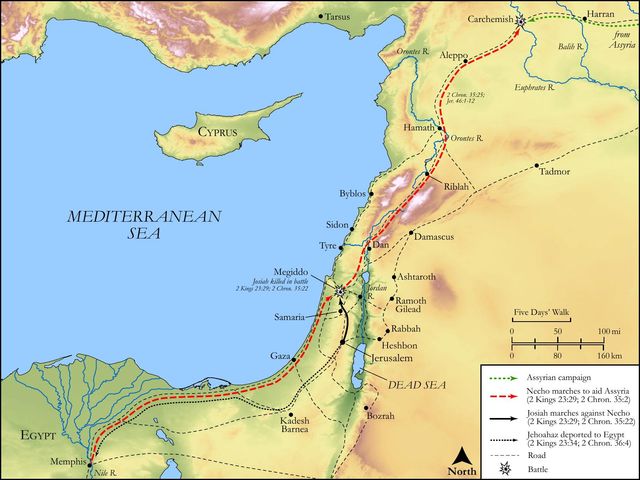
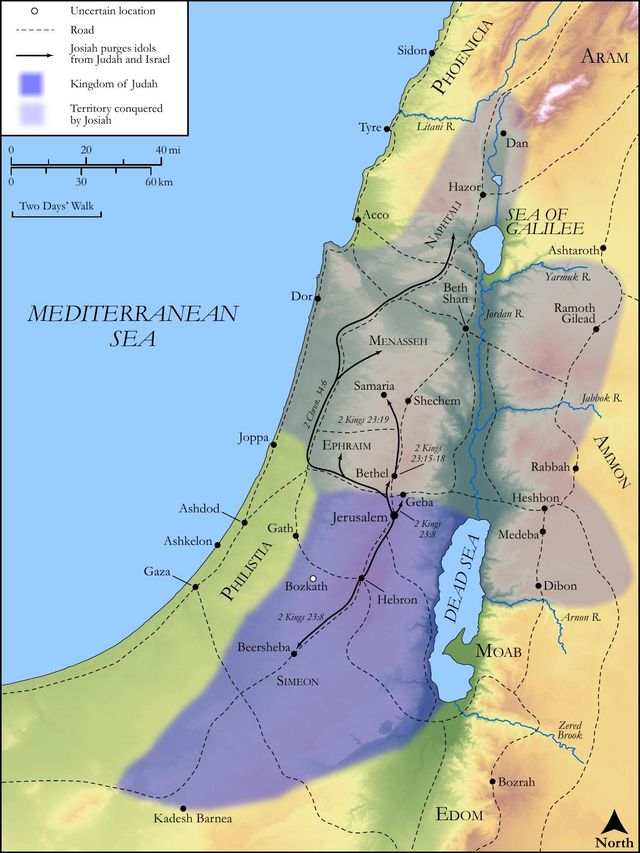
Josiah's reign (640-609 BC) unfolded during a period of significant geopolitical flux, marked by the rapid decline of the mighty Assyrian Empire, which had long exerted control over Judah. This weakening of Assyrian dominance provided Josiah with a unique window of opportunity to assert Judah's independence, not only politically but, more crucially, religiously. For decades prior, under kings Manasseh and Amon, Judah had plunged into deep idolatry, adopting foreign cults, child sacrifice, and syncretistic practices, even within the sacred precincts of the Temple in Jerusalem. The "elders" (Hebrew: zĕqēnîm) were the respected, experienced, and authoritative leaders of their communities, holding significant judicial, administrative, and religious influence in ancient Israelite society. Gathering "all the elders of Judah and of Jerusalem" was a culturally significant act, indicating Josiah's desire for widespread legitimacy and buy-in for his reforms, ensuring that the king's mandate would be communicated and implemented effectively throughout the entire kingdom and its capital.
Key Themes
ShowHideThe immediate and broader narrative of Josiah's reform highlights several crucial themes. Firstly, it underscores Righteous Leadership, as Josiah exemplifies a king who responds to God's word with immediate, decisive, and humble action, prioritizing national spiritual health over personal comfort or political expediency. Secondly, the discovery and subsequent reading of the Law emphasize The Authority and Transformative Power of God's Word. The Scripture itself becomes the catalyst for repentance and reform, demonstrating its inherent power to convict, guide, and renew when truly heard and obeyed. This is evident in Josiah's profound reaction in 2 Kings 22:11. Thirdly, the gathering of the elders signals a call for National Repentance and Corporate Responsibility, moving beyond individual conviction to a kingdom-wide turning back to God. This was not merely a personal spiritual awakening for Josiah but an intentional effort to bring the entire nation into alignment with God's covenant. Finally, this verse sets the stage for a profound Covenant Renewal, where the king and the people collectively recommit to obeying God's commands, reflecting the ongoing dynamic of God's relationship with His people as established in the Mosaic covenant, a pattern seen throughout Israel's history.
Exposition and Analysis
ShowHideKey Word Analysis
ShowHide(מֶלֶךְ), meaning "a king; king, royal." This term immediately establishes Josiah's sovereign authority and the official nature of his actions. As the reigning monarch, his decree carried ultimate weight, enabling him to initiate a kingdom-wide assembly and subsequent reforms. His identity as "the king" underscores the top-down initiative for spiritual renewal.
(שָׁלַח), meaning "to send away, for, or out (in a great variety of applications)." This verb signifies a deliberate and authoritative dispatching. It highlights Josiah's active initiative and kingly authority. He doesn't wait for the elders to come to him; he takes the decisive step to summon them, demonstrating his earnestness and resolve in initiating the reform. This immediate "sending" underscores the urgency and importance he placed on the rediscovered Law.
(אָסַף), meaning "to gather for any purpose; hence, to receive, take away... assemble." This term implies a bringing together, an assembly. It points to the collective nature of the upcoming reform. Josiah understood that national repentance and covenant renewal required the participation and endorsement of the nation's leadership. The act of gathering signifies unity of purpose and the establishment of a broad base of support for the radical changes he intended to implement.
(זָקֵן), meaning "old; aged, ancient (man), elder(-est), old (man, men and...women), senator." These were not merely old men but respected, experienced, and influential leaders within their communities, holding significant judicial, administrative, and religious authority. Their presence was crucial for legitimizing and implementing any widespread national change. By gathering "all" the elders, Josiah ensured that the message and subsequent reforms would filter down through all levels of society in both the capital, Jerusalem, and the broader territory of Judah, signifying a comprehensive and official convocation.
Verse Breakdown
ShowHide"And the king sent"
This opening clause immediately establishes Josiah's agency and authority. It portrays him as a proactive leader, not passive, but one who takes decisive action in response to divine revelation. The "sending" implies a royal decree or summons, initiating a formal and urgent assembly. It highlights his personal conviction translating into immediate governmental action.
"and they gathered unto him"
This indicates the successful execution of the king's command. The elders responded to the summons, signifying their recognition of Josiah's authority and perhaps the gravity of the situation (the discovery of the Law). The phrase "unto him" emphasizes Josiah's central role as the convener, the focal point, and the driving force behind the impending national assembly and spiritual renewal.
"all the elders of Judah and of Jerusalem"
This specifies the comprehensive scope and broad representation of the assembly. "All" emphasizes the inclusive nature of the summons, ensuring that no significant leader was omitted, thereby securing widespread support and accountability. "Judah and Jerusalem" functions as a merism, representing the entirety of the kingdom of Judah, including its capital city. This broad representation was vital for ensuring that the subsequent reforms would have kingdom-wide legitimacy and effective implementation, reaching every corner of the nation.
Literary Devices
ShowHideThe verse employs several impactful literary devices that underscore its significance. The most prominent is Action/Reaction, where Josiah's immediate and decisive action of sending for the elders is a direct, righteous reaction to the profound spiritual conviction he experienced upon hearing the Book of the Law in 2 Kings 22. This highlights his exemplary character and unreserved obedience to God's revealed will. The phrase "all the elders of Judah and of Jerusalem" functions as a Merism, a figure of speech where two contrasting or complementary parts represent the whole, emphasizing the comprehensive nature of the gathering, encompassing the entire kingdom from its capital to its furthest reaches. The use of "all" further provides Emphasis, underscoring the universal scope of Josiah's summons and his intention for a kingdom-wide reform, leaving no segment of leadership untouched. This gathering also serves as a potent form of Foreshadowing, setting the stage for the public reading of the Law and the national covenant renewal that immediately follows in 2 Kings 23:2-3, building anticipation for the significant spiritual changes to come.
Theological and Thematic Connections
ShowHideThis verse powerfully illustrates the principle that genuine spiritual revival often begins with a leader's humble and obedient response to God's Word, which then catalyzes a corporate movement. Josiah's immediate action, driven by conviction, underscores the transformative power of Scripture and the necessity of aligning national life with divine commands. The gathering of the elders signifies the importance of corporate responsibility and leadership in facilitating widespread spiritual renewal. It reflects a core Old Testament theme: the covenant relationship between God and His people, where obedience brings blessing and disobedience leads to judgment, and the perpetual need for periodic renewal of that covenant commitment. This event serves as a powerful reminder that God's Word, when received with humility and acted upon with zeal, has the power to reshape individuals and entire societies.
Reflection and Application
ShowHideKing Josiah's immediate and decisive response to the rediscovered Word of God in 2 Kings 23:1 serves as a profound model for believers today, challenging us to move beyond mere intellectual assent to Scripture and embrace a posture of humble obedience and active implementation. Just as Josiah understood that national reform required the collective engagement of its leaders, so too does spiritual renewal in our families, churches, and communities necessitate a corporate commitment to God's truth. This verse reminds us that true leadership, whether in public or private spheres, involves not only personal integrity but also the courage to initiate and guide others towards righteousness, even when it demands radical change and confrontation with deeply entrenched practices. It calls us to consider our own "idols"—anything that competes for God's rightful place in our lives—and to respond with the same zeal and determination as Josiah, allowing God's Word to convict, transform, and direct our paths, individually and collectively, towards greater faithfulness and obedience.
Questions for Reflection
ShowHideFAQ
ShowHideWhat was the significance of gathering "all the elders of Judah and of Jerusalem"?
ShowHideGathering "all the elders" was crucial for several reasons. First, it ensured that the king's mandate for reform had widespread legitimacy and support across the entire kingdom. Elders were the respected, authoritative leaders in their local communities, possessing significant judicial, administrative, and religious influence. Their presence at this assembly meant that the message of the rediscovered Law and the call for national repentance would be effectively communicated and implemented from the capital, Jerusalem, out to every town and village in Judah. It transformed Josiah's personal conviction into a corporate, national movement, essential for such a sweeping religious reformation. This act underscored the principle of corporate responsibility in the covenant relationship between God and His people, as seen in other covenant renewal ceremonies like the one led by Ezra in Nehemiah 8.
What was the "Book of the Law" that prompted Josiah's actions?
ShowHideWhile the text simply calls it "the Book of the Law," most scholars agree that it was primarily the book of Deuteronomy, or at least a significant portion of it. The content of Deuteronomy, with its emphasis on covenant blessings and curses, its warnings against idolatry, and its detailed instructions for worship and national life, perfectly aligns with the reforms Josiah subsequently initiated. The discovery of this book, which had likely been lost or neglected for generations, served as a powerful reminder of God's covenant requirements and the severe consequences of Judah's long-standing idolatry, as described in 2 Kings 22:8-13. This rediscovery was not merely an archaeological find but a divine catalyst for national spiritual awakening.
Christ-Centered Fulfillment
ShowHideKing Josiah's righteous reign, initiated by his humble and immediate response to the rediscovered Book of the Law, serves as a powerful foreshadowing of the ultimate King, Jesus Christ. While Josiah gathered the elders to renew an old covenant and cleanse a physical temple, Christ, as the true and greater King, gathers His people from every tribe and nation, not to a physical temple, but into His spiritual body, the Church, through the New Covenant established by His blood. Josiah's zeal for God's Word and his efforts to purge idolatry point to Christ, who perfectly embodies and fulfills the Law, and whose very presence purifies hearts and lives from sin and spiritual idolatry. The transformative power of the Law, which convicted Josiah, finds its ultimate and enduring power in the living Word, Jesus Christ, who not only reveals God's will but also empowers believers by His Spirit to obey it (Hebrews 8:10-12). Just as Josiah brought the nation back into alignment with God's commands, Christ, through His atoning work and ongoing intercession, continually draws His people into a right relationship with God, establishing a kingdom that is not of this world but is eternal and righteous (John 18:36). He is the ultimate leader who gathers His flock, not by royal decree, but by His sacrificial love and the irresistible call of His gospel, leading them into everlasting covenant communion with God.