


1 Kings 9:10
- וַיְהִיvay·Hiand it wasH1961Conj-w ¦ V-Qal-ConsecImperf-3msVerb Qal Consecutive Imperfect 3rd Singular Masculineוַandיְהִיit was
- מִקְצֵהmik·Tzehfrom [the] end ofH7097Prep-m ¦ N-mscNoun Singular Masculine Constructמִfromקְצֵה[the] end of
- עֶשְׂרִים'es·RimtwentyH6242N-mpNoun Plural Masculine Absolute
- שָׁנָהsha·Nahyear[s]H8141N-fsNoun Singular Feminine Absolute
- אֲשֶׁר'a·SherwhichH834RelParticle Relative
- בָּנָהba·Nahhe had builtH1129V-Qal-Perf-3msVerb Qal Perfect 3rd Singular Masculine
- שְׁלֹמֹהshe·lo·MohSolomonH8010N-proper-mNoun Proper Masculine
- אֶת'et<obj.>H853DirObjMParticle Object Indicator
- שְׁנֵיshe·Nei[the] twoH8147N-cdcNoun Dual common gender Construct
- הַבָּתִּיםha·ba·Timthe housesH1004Art ¦ N-mpNoun Plural Masculine Absoluteהַtheבָּתִּיםhouses
- אֶת'et<obj.>H853DirObjMParticle Object Indicator
- בֵּיתbeit[the] house ofH1004N-mscNoun Singular Masculine Construct
- יְהוָהYah·wehYahwehH3068N-properNoun Proper Title
- וְאֶתve·'Etand <obj.>H853Conj-w ¦ DirObjMParticle Object Indicatorוְandאֶת<obj.>
- בֵּיתbeit[the] house ofH1004N-mscNoun Singular Masculine Construct
- הַמֶּלֶךְha·Me·lekhthe kingH4428Art ¦ N-msNoun Singular Masculine Absoluteהַtheמֶּלֶךְking
English is a literal word-by-word gloss of the Hebrew, not the KJV's wording. Why?
This is the original text the KJV's translators worked from — each Hebrew word with its own literal English meaning in this verse, prepared by scholars at Tyndale House, Cambridge. The KJV translates whole sentences, not word by word, so its wording differs: one Hebrew word can become several English words, and the KJV may choose “the LORD” where the gloss reads “Yahweh”. Both are faithful — they answer different questions. For the KJV's own rendering, switch to the KJV text.
Details
See on the biblical-era map
Study this verse
Public-domain commentary
Matthew Henry
From his Commentary on the Whole Bible. Henry comments on passages, not single verses — this entry covers 1 Kings 9:10–14.
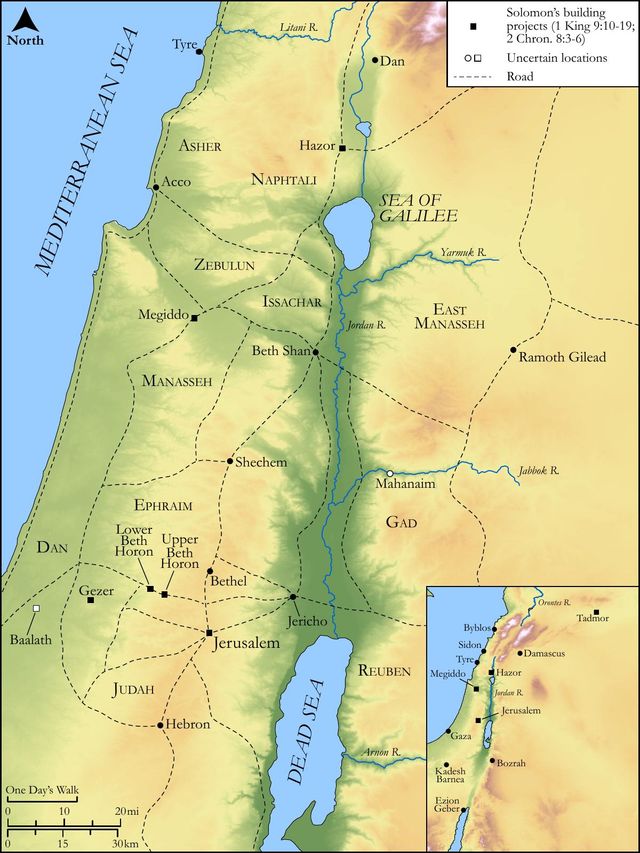
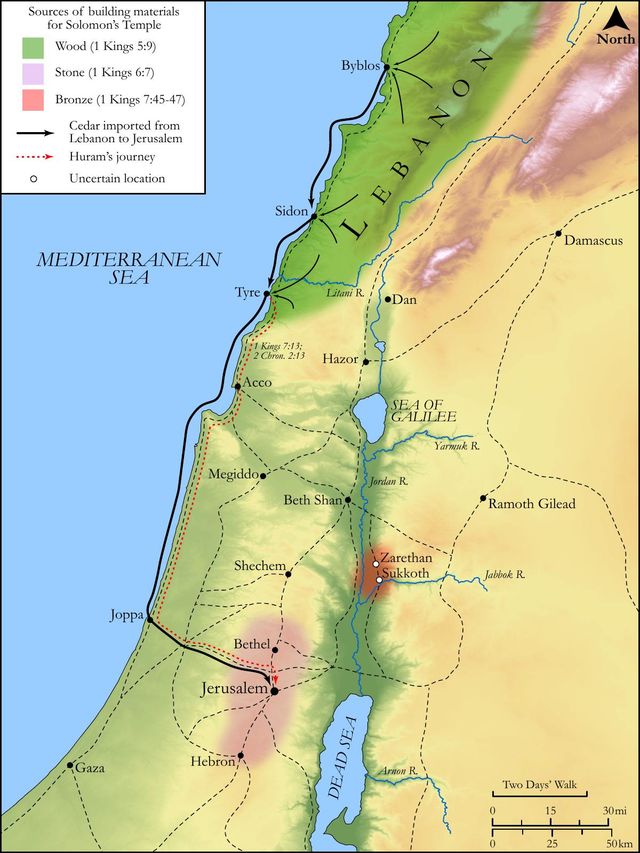
What agreement was made between Solomon and Hiram, when the building-work was to be begun, we read before, ch. 5. Here we have an account of their fair and friendly parting when the work was done. 1. Hiram made good his bargain to the utmost. He had furnished Solomon with materials for his buildings, according to all his desire (Kg1 9:11), and with gold, Kg1 9:15. So far was he from envying Solomon's growing greatness and reputation, and being jealous of him, that he helped to magnify him. Solomon's power, with Solomon's wisdom, needs not be dreaded by any of his neighbours. God honours him; therefore Hiram will. 2. Solomon, no doubt, made good his bargain, and gave Hiram food for his household, as was agreed, Kg1 5:9. But here we are told that, over and above that, he gave him twenty cities (small ones we may suppose, like those mentioned here, Kg1 9:19) in the land of Galilee, Kg1 9:11. It should seem, these were not allotted to any of the tribes of Israel (for the border of Asher came up to them, Jos 19:27, which intimates that it did not include them), but continued in the hands of the natives till Solomon made himself master of them, and then made a present of them to Hiram. It becomes those that are great and good to be generous. Hiram came to see these cities, and did not like them (Kg1 9:12): They pleased him not. He called the country the land of Cabul, a Phoenician word (says Josephus) which signifies displeasing, Kg1 9:13. He therefore returned them to Solomon (as we find, Ch2 8:2), who repaired them, and then caused the children of Israel to inhabit them, which intimates that before they did not; but, when Solomon received back what he had given, no doubt he honourably gave Hiram an equivalent in something else. But what shall we think of this? Did Solomon act meanly in giving Hiram what was not worth his acceptance? Or was Hiram humoursome and hard to please? I am willing to believe it was neither the one nor the other. The country was truly valuable, and so were the cities in it, but not agreeable to Hiram's genius. The Tyrians were merchants, trading men, that lived in fine houses, and became rich by navigation, but knew not how to value a country that was fit for corn and pasture (that was business that lay out of their way); and therefore Hiram desired Solomon to take them again, he knew not what to do with them, and, if he would please to gratify him, let it be in his own element, by becoming his partner in trade, as we find he did, Kg1 9:27. Hiram, who was used to the clean streets of Tyre, could by no means agree with the miry lanes in the land of Cabul, whereas the best lands have commonly the worst roads through them. See how the providence of God suits both the accommodation of this earth to the various dispositions of men and the dispositions of men to the various accommodations of the earth, and all for the good of mankind in general. Some take delight in husbandry, and wonder what pleasure sailors can take on a rough sea; others take as much delight in navigation, and wonder what pleasure husbandmen can take in a dirty country, like the land of Cabul. It is so in many other instances, in which we may observe the wisdom of him whose all souls are and all lands.
Continue studying 1 Kings 9:10 across the web’s major study libraries — every link below opens this exact verse, chapter, or book on the destination site.
Read & Compare
 BibleGatewayThis verse in more than 200 translations and 70 languages.
 Bible.comThe YouVersion reader — hundreds of translations, reading plans, and highlights.
 ESV.orgCrossway's official English Standard Version reader.
 NET BibleThe NET translation with 60,000+ translators' notes on every rendering decision.
 STEP BibleTyndale House's free study tool — original text, vocabulary, and scholarly resources.
 BibliaLogos Bible Software's free web reader.
 USCCBThe New American Bible (Revised Edition) with the U.S. bishops' study notes.
Commentaries
 BibleHub CommentariesDozens of classic commentaries on this verse, gathered on one page.
 StudyLightMore than 100 commentary sets — the largest collection on the web.
 BibleRefPlain-English commentary on what this verse means, verse by verse.
 Enduring WordDavid Guzik's free commentary on this chapter, widely used by Bible teachers.
 Bible Study ToolsVerse commentary alongside Greek and Hebrew study aids.
Original Language & Research
- BibleHub InterlinearThe verse word by word — original language, transliteration, and English.
- BibleHub LexiconEvery word's original-language definition and Strong's entry.
 Blue Letter BibleDeep-study tools — Strong's numbers, concordance, and word studies.
 SefariaThe Hebrew text with Rashi and centuries of Jewish commentary.
Sermons, Hymns & Audio


TrulyRandomVerse is not affiliated with these sites and doesn’t control their content. They’re linked because they’re genuinely useful.
Summary
1 Kings 9:10 serves as a crucial chronological and narrative pivot, marking the culmination of twenty years of monumental construction under King Solomon. This verse precisely delineates the completion of two foundational structures: the magnificent Temple dedicated to the LORD, signifying God's dwelling among His people, and the sprawling royal palace complex, representing the earthly seat of Solomon's power and the grandeur of his reign. It encapsulates an era of immense labor, vast resources, and architectural ambition, setting the stage for the subsequent divine interactions, administrative details, and the ongoing trajectory of Solomon's prosperous kingdom.
Context
ShowHideLiterary Context
This verse functions as a pivotal summary statement, providing a precise chronological anchor that concludes the detailed architectural accounts presented in the preceding chapters. While the divine encounter between God and Solomon (narrated in 1 Kings 9:1-9) is logically understood as God's response after the completion of these significant building projects. Thus, 1 Kings 9:10 retrospectively confirms the successful conclusion of the construction, providing the necessary temporal framework for the covenant renewal and the solemn warnings that follow. It effectively transitions the narrative from an era dominated by grand construction to subsequent phases of Solomon's reign, focusing on his administrative, economic, and political endeavors.
Historical & Cultural Context
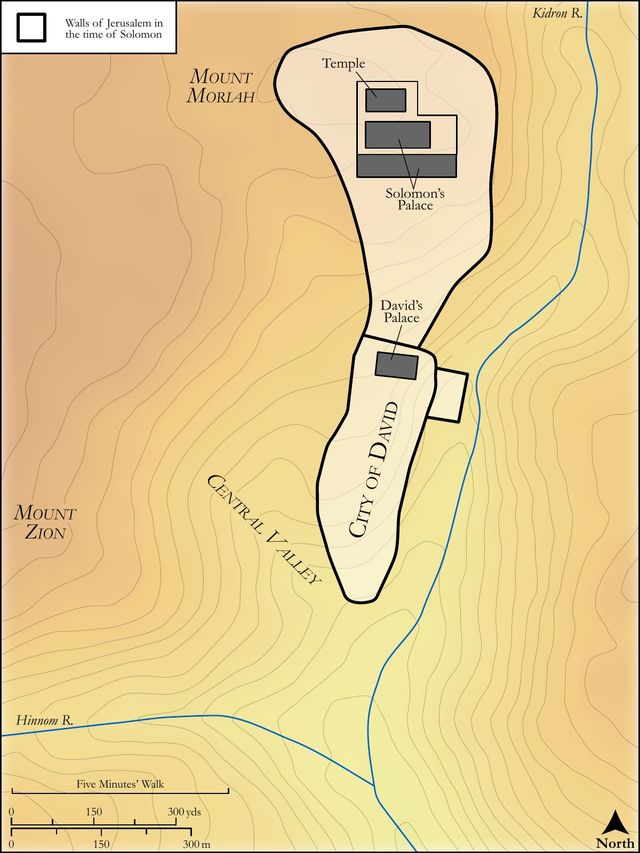
The undertaking of building both the Temple and the royal palace represented an unparalleled feat in ancient Israel, testament to the immense wealth, power, and international standing that characterized Solomon's kingdom. The "twenty years" mentioned here precisely accounts for the seven years dedicated to the Temple (1 Kings 6:38) and the subsequent thirteen years spent on the extensive palace complex (1 Kings 7:1). Such monumental architectural projects were a hallmark of powerful monarchs throughout the ancient Near East, serving to demonstrate their might, solidify their legacy, and function as central hubs of both religious and political authority. The extensive use of skilled Phoenician artisans and imported, high-quality materials, detailed in earlier chapters, highlights the sophisticated international relations and advanced craftsmanship employed in these endeavors. The Temple, in particular, stood as the spiritual heart of Israelite worship, symbolizing God's manifest presence among His chosen people, while the palace underscored the earthly king's authority and the magnificence of his rule.
Key Themes
ShowHideThe completion of these "two houses" profoundly underscores several key theological and narrative themes within the books of Kings. Firstly, it signifies Fulfillment and Completion, bringing to fruition the divine promise made to David that his son would construct a permanent dwelling for the LORD (2 Samuel 7:13). Secondly, it highlights Solomon's Grandeur and Wisdom, as his capacity to orchestrate and execute such massive undertakings speaks volumes about his administrative acumen, the vast resources at his disposal, and the divine favor he initially enjoyed, as evidenced by God's blessings in his early reign (1 Kings 3:12-13). Thirdly, the distinct yet co-existing nature of "the house of the LORD" and "the king's house" illustrates the Intertwining of Sacred and Secular Authority in ancient Israel, where the king bore responsibility for both the spiritual well-being (through oversight of the Temple) and the political stability of the nation. Finally, this moment of completion sets the stage for crucial themes of Covenant Faithfulness and Warning, as God's subsequent appearance to Solomon (1 Kings 9:1-9) makes it unequivocally clear that the blessings associated with these magnificent structures are contingent upon Solomon's unwavering obedience to the divine law.
Exposition and Analysis
ShowHideKey Word Analysis
ShowHideThis word, derived from a root meaning "to cut off" or "to determine," signifies an extremity, a conclusion, or a boundary. In this context, "at the end of twenty years" marks the precise culmination of a defined period, emphasizing the finality and completion of the monumental building projects. It underscores the long duration and sustained effort required, bringing a sense of accomplishment to this significant chronological marker.
A primitive root verb, bânâh means "to build" in both a literal and figurative sense. Here, it denotes the active, successful completion of construction, implying not just the erection of structures but also their establishment and foundation. Its use highlights Solomon's role as the primary agent and executor of these grand designs, signifying the successful realization of his royal duty and the divine mandate.
Derived from a root meaning "to build," bayith encompasses a wide semantic range, referring to a physical dwelling, a household, a family, or even a temple. The dual mention of "the two houses" specifically refers to the sacred Temple and the king's royal palace. This pairing is critical, symbolizing the two pillars of Solomon's reign: his devotion to God and his establishment of a powerful earthly kingdom. The word choice subtly conveys the foundational nature of these structures for both divine presence and human governance.
Verse Breakdown
ShowHide"And it came to pass at the end of twenty years"
This opening phrase serves as a crucial temporal marker, signaling the culmination of a major and distinct period within Solomon's reign. It provides a precise chronological framework for the completion of the massive construction projects, emphasizing the immense duration and sustained dedication required for such undertakings. This exact temporal anchor sets the stage for the subsequent narrative developments, particularly God's significant appearance to Solomon.
"when Solomon had built the two houses"
This clause directly identifies King Solomon as the central figure and primary agent responsible for these monumental architectural achievements. The explicit phrase "the two houses" immediately informs the reader of the dual nature of his endeavors, highlighting both his profound spiritual responsibility to God and his extensive temporal authority as king. It underscores the unprecedented scale of his accomplishments and the vast resources at his command.
"the house of the LORD, and the king's house"
This concluding phrase precisely specifies the identities of "the two houses." "The house of the LORD" refers to the magnificent Temple in Jerusalem, which served as the central place of worship, sacrifice, and the symbolic dwelling place of God's presence among His people. "The king's house" denotes Solomon's extensive royal palace complex, which included his personal residence, administrative offices, and other significant structures like the House of the Forest of Lebanon. The deliberate order of mention, placing the LORD's house first, subtly emphasizes its preeminent importance in the divine economy, even as the king's house signifies Solomon's earthly power, prestige, and the grandeur of his reign.
Literary Devices
ShowHideThe verse employs several literary devices to convey its profound significance. It functions primarily as a precise Chronological Marker, using the phrase "at the end of twenty years" to firmly anchor the narrative in time. This temporal specificity provides a clear sense of progress and completion after a long period of intense activity, lending an air of historical accuracy and highlighting the monumental scale of the undertakings. Furthermore, the verse utilizes Juxtaposition by immediately pairing "the house of the LORD" with "the king's house." This deliberate parallelism emphasizes the dual focus of Solomon's reign – his profound commitment to the sacred (the Temple) and his establishment of a powerful secular kingdom (the Palace). The ordering, with the Temple explicitly mentioned first, subtly prioritizes the divine over the human. Finally, while seemingly a straightforward statement of fact, the verse also carries an element of Foreshadowing. The completion of these grand structures represents the zenith of Solomon's power and glory, yet the subsequent verses in 1 Kings 9:1-9 (which narratively precede this summary statement) contain God's conditional promise and stern warnings, subtly hinting that this peak of achievement could also be a precipice if Solomon fails to maintain his covenant faithfulness.
Theological and Thematic Connections
ShowHide1 Kings 9:10 marks a significant theological moment, signifying the tangible fulfillment of God's promise to David that his son would build a house for the LORD, thereby establishing his kingdom forever (2 Samuel 7:13). The completion of both the Temple and the King's House represents a period of unprecedented peace, prosperity, and divine favor for Israel under Solomon's reign. The Temple's completion underscores God's unwavering commitment to dwell among His people, providing a physical locus for worship, sacrifice, and the manifestation of His glory. Simultaneously, the grandeur of the king's house reflects the blessings of the Davidic covenant and the earthly manifestation of God's chosen king's authority. This verse thus encapsulates the delicate balance between divine presence and human responsibility, where the structures built by human hands are meant to facilitate God's purposes, yet their continued significance is contingent upon the faithfulness of the king and the people. It highlights that while God's promises are ultimately sure, their full enjoyment often depends on human obedience and adherence to the covenant.
Reflection and Application
ShowHideThe completion of Solomon's two houses after twenty years offers profound and enduring lessons for contemporary believers. It serves as a powerful reminder that truly significant achievements, whether in our personal spiritual formation, the nurturing of family relationships, or our communal endeavors within the church or wider society, frequently demand considerable time, unwavering patience, and sustained, diligent effort. Just as Solomon invested two decades in meticulously building these foundational structures for his kingdom and for God's dwelling, so too must we commit ourselves to long-term projects of faith—cultivating spiritual disciplines, nurturing deep relationships, or engaging in sacrificial service within our communities. This verse also implicitly highlights the critical importance of balance in our lives: Solomon built both "the house of the LORD" and "the king's house." This suggests a healthy and necessary integration of our devotion to God (our spiritual "house" of worship and obedience) and our responsibilities in the world (our personal, professional, and civic "house"). Our lives should reflect both a deep, abiding commitment to worship and service to God, and a responsible, diligent stewardship of our earthly domains, ensuring that both aspects are built on solid, godly foundations and ultimately for God's glory.
Questions for Reflection
ShowHideFAQ
ShowHideWhy did it take "twenty years" for Solomon to build these two houses?
ShowHideThe "twenty years" is a precise chronological sum of the time dedicated to each major construction project. According to the detailed accounts in 1 Kings 6:38, the magnificent Temple of the LORD took seven years to complete. Following that, 1 Kings 7:1 explicitly states that Solomon spent thirteen years building his own extensive royal palace complex. Seven years plus thirteen years precisely equals the twenty years mentioned in 1 Kings 9:10, marking a significant and sustained period of national effort, resource allocation, and architectural ambition under Solomon's reign.
What were "the two houses" mentioned in this verse?
ShowHideThe "two houses" refer specifically to the two monumental structures that dominated Solomon's building program: the Temple of the LORD and the king's house. The Temple was the magnificent edifice constructed for God's worship and as a symbolic dwelling place for His presence in Jerusalem, serving as the spiritual center of Israel. The king's house was Solomon's extensive royal palace complex, which encompassed his personal residence, administrative buildings, and other grand structures like the House of the Forest of Lebanon, serving as the political and administrative heart of his kingdom. The explicit mention of both highlights the dual focus of Solomon's building endeavors and the intertwined nature of sacred and secular power in his flourishing kingdom.
What was the significance of completing these buildings for Solomon's reign?
ShowHideThe completion of these monumental structures marked a profound high point in Solomon's reign, symbolizing his immense wealth, divine wisdom, and the tangible fulfillment of the divine mandate to build a permanent dwelling for God. It solidified Jerusalem's status as both the religious and political capital of Israel and powerfully demonstrated Solomon's unprecedented power and prestige to surrounding nations. Furthermore, this completion set the stage for God's second significant appearance to Solomon, as recorded in 1 Kings 9:1-9, where God reaffirmed His covenant promises but also delivered stern warnings about the severe consequences of disobedience. This made it clear that the blessings associated with these magnificent buildings and Solomon's reign were entirely contingent upon his continued faithfulness to the divine covenant.
Christ-Centered Fulfillment
ShowHideWhile 1 Kings 9:10 celebrates the completion of Solomon's magnificent Temple and palace, these grand physical structures ultimately point beyond themselves to a far greater and eternal reality found in Jesus Christ. Solomon's Temple, though glorious and divinely ordained, was a temporary dwelling place for God's presence, a tangible shadow of the ultimate "house" where God truly dwells among His people. Jesus Himself declared, "Destroy this temple, and in three days I will raise it up," referring prophetically to the temple of His own body (John 2:19-21). Christ is the true and eternal Temple, the ultimate meeting place between God and humanity, through whom we now have direct access to the Father in one Spirit (Ephesians 2:18-22). Furthermore, through Christ, believers themselves become the "house of God," living stones being built into a spiritual house, a holy priesthood, and a temple of the Holy Spirit (1 Peter 2:5 and 1 Corinthians 6:19-20). The "king's house" built by Solomon, a symbol of his earthly reign and temporal authority, also finds its ultimate fulfillment in Christ, who is the true and eternal King, establishing an everlasting kingdom not of this world (John 18:36). His kingdom is not built with human hands but is established through His perfect sacrifice and resurrection, culminating in the New Jerusalem where God's presence is so complete and immediate that no physical temple is needed, for the Lord God Almighty and the Lamb are its temple (Revelation 21:22-23). Thus, Solomon's twenty-year building project, impressive as it was, serves as a profound foreshadowing of the infinitely greater and eternal work of Christ in establishing God's permanent dwelling place with humanity and His everlasting, universal reign.