


1 Kings 17:20
- וַיִּקְרָאvai·yik·Ra'and he called outH7121Conj-w ¦ V-Qal-ConsecImperf-3msVerb Qal Consecutive Imperfect 3rd Singular Masculineוַandיִּקְרָאhe called out
- אֶל'eltoH413PrepPreposition
- יְהוָהYah·wehYahwehH3068N-properNoun Proper Title
- וַיֹּאמַרvai·yo·Marand he saidH559Conj-w ¦ V-Qal-ConsecImperf-3msVerb Qal Consecutive Imperfect 3rd Singular Masculineוַandיֹּאמַרhe said
- יְהוָהYah·wehO YahwehH3068N-properNoun Proper Title
- אֱלֹהָי'e·lo·Haimy GodH430N-mpc ¦ 1csNoun Plural Masculine ConstructאֱלֹהָGodיmy
- הֲגַםHa·gam¿ alsoH1571Interrog ¦ AdvAdverbהֲ¿גַםalso
- עַל'alonH5921PrepPreposition
- הָאַלְמָנָהha·'al·ma·Nahthe widowH490Art ¦ N-fsNoun Singular Feminine Absoluteהָtheאַלְמָנָהwidow
- אֲשֶׁר'a·SherwhomH834RelParticle Relative
- אֲנִי'a·NiIH589Pro-1csPronoun Personal 1st Singular common gender
- מִתְגּוֹרֵרmit·go·Rer[am] staying as a sojournerH1481V-Hithpael-Prtcpl-msVerb Hithpael Participle Singular Masculine Absolute
- עִמָּהּ'i·Mahwith herH5973Prep ¦ 3fsPrepositionעִמָּwithהּher
- הֲרֵעוֹתָha·re·'o·tahave you done harmH7489V-Hiphil-Perf-2msVerb Hiphil Perfect 2nd Singular Masculine
- לְהָמִיתle·ha·Mitby putting to deathH4191Prep-l ¦ V-Hiphil-InfVerb Hiphil Infinitive Constructלְbyהָמִיתputting to death
- אֶת'et<obj.>H853DirObjMParticle Object Indicator
- בְּנָהּbe·Nahher sonH1121N-msc ¦ 3fsNoun Singular Masculine Constructבְּנָsonהּher
English is a literal word-by-word gloss of the Hebrew, not the KJV's wording. Why?
This is the original text the KJV's translators worked from — each Hebrew word with its own literal English meaning in this verse, prepared by scholars at Tyndale House, Cambridge. The KJV translates whole sentences, not word by word, so its wording differs: one Hebrew word can become several English words, and the KJV may choose “the LORD” where the gloss reads “Yahweh”. Both are faithful — they answer different questions. For the KJV's own rendering, switch to the KJV text.
Details
See on the biblical-era map
Study this verse
Public-domain commentary
Matthew Henry
From his Commentary on the Whole Bible. Henry comments on passages, not single verses — this entry covers 1 Kings 17:17–24. His two-level outline is real structure in the source text, so it is rendered as structure.
We have here a further recompence made to the widow for her kindness to the prophet; as if it were a small thing to be kept alive, her son, when dead, is restored to life, and so restored to her. Observe,
I.The sickness and death of the child.
For aught that appears he was her only son, the comfort of her widowed estate. He was fed miraculously, and yet that did not secure him from sickness and death. Your fathers did eat manna, and are dead, but there is bread of which a man may eat and not die, which was given for the life of the world, Joh 6:49, Joh 6:50. The affliction was to this widow as a thorn in the flesh, lest she should be lifted up above measure with the favours that were done her and the honours that were put upon her.
1.She was nurse to a great prophet, was employed to sustain him, and had strong reason to think the Lord would do her good; yet now she loses her child. Note, We must not think it strange if we meet with very sharp afflictions, even when we are in the way of duty, and of eminent service to God.
2.She was herself nursed by miracle, and kept a good house without charge or care, by a distinguishing blessing from heaven; and in the midst of all this satisfaction she was thus afflicted. Note, When we have the clearest manifestations of God's favour and good-will towards us, even then we must prepare for the rebukes of Providence. Our mountain never stands so strong but it may be moved, and therefore, in this world, we must always rejoice with trembling.
II.Her pathetic complaint to the prophet of this affliction.
It should seem, the child died suddenly, else she would have applied to Elijah, while he was sick, for the cure of him; but being dead, dead in her bosom, she expostulates with the prophet upon it, rather to give vent to her sorrow than in any hope of relief, Kg1 17:18. 1. She expresses herself passionately: What have I to do with thee, O thou man of God? How calmly had she spoken of her own and her child's death when she expected to die for want (Kg1 17:12) - that we may eat, and die! Yet now that her child dies, and not so miserably as by famine, she is extremely disturbed at it. We may speak lightly of an affliction at a distance, but when it toucheth us we are troubled, Job 4:5. Then she spoke deliberately, now in haste; the death of her child was now a surprise to her, and it is hard to keep our spirits composed when troubles come upon us suddenly and unexpectedly, and in the midst of our peace and prosperity. She calls him a man of God, and yet quarrels with him as if he had occasioned the death of her child, and is ready to which she had never seen him, forgetting past mercies and miracles: "What have I done against thee?" (so some understand it), "Wherein have I offended thee, or been wanting in my duty? Show me wherefore thou contendest with me." 2. Yet she expresses herself penitently: "Hast thou come to call my sin to thy remembrance, as the cause of the affliction, and so to call it to my remembrance, as the effect of the affliction?" Perhaps she knew of Elijah's intercession against Israel, and, being conscious to herself of sin, perhaps her former worshipping of Baal the god of the Sidonians, she apprehends he had made intercession against her. Note, (1.) When God removes our comforts from use he remembers our sins against us, perhaps the iniquities of our youth, though long since past, Job 13:26. Our sins are the death of our children. (2.) When God thus remembers our sins against us he designs thereby to make us remember them against ourselves and repent of them.
III.The prophet's address to God upon this occasion.
He gave no answer to her expostulation, but brought it to God, and laid the case before him, not knowing what to say to it himself. He took the dead child from the mother's bosom to his own bed, Kg1 17:19. Probably he had taken a particular kindness to the child, and found the affliction his own more than by sympathy. He retired to his chamber, and, 1. He humbly reasons with God concerning the death of the child, Kg1 17:20. He sees death striking by commission from God: Thou hast brought this evil for is there any evil of this kind in the city, in the family, and the Lord has not done it? He pleads the greatness of the affliction to the poor mother: "It is evil upon the widow; thou art the widow's God, and dost not usually bring evil upon widows; it is affliction added to the afflicted." He pleads his own concern: "It is the widow with whom I sojourn; wilt thou, that art my God, bring evil upon one of the best of my benefactors? I shall be reflected upon, and others will be afraid of entertaining me, if I bring death into the house where I come." 2. He earnestly begs of God to restore the child to life again, Kg1 17:21. We do not read before this of any that were raised to life; yet Elijah, by a divine impulse, prays for the resurrection of this child, which yet will not warrant us to do the like. David expected not, by fasting and prayer, to bring his child back to life (Sa2 12:23), but Elijah had a power to work miracles, which David had not. He stretched himself upon the child, to affect himself with the case and to show how much he was affected with it and how desirous he was of the restoration of the child - he would if he could put life into him by his own breath and warmth; also to give a sign of what God would do by his power, and what he does by his grace, in raising dead souls to a spiritual life; the Holy Ghost comes upon them, overshadows them, and puts life into them. He is very particular in his prayer: I pray thee let this child's soul come into him again, which plainly supposes the existence of the soul in a state of separation from the body, and consequently its immortality, which Grotius thinks God designed by this miracle to give intimation and evidence of, for the encouragement of his suffering people.
IV.The resurrection of the child, and the great satisfaction it gave to the mother:
the child revived, Kg1 17:22. See the power of prayer and the power of him that hears prayer, who kills and makes alive. Elijah brought him to his mother, who, we may suppose, could scarcely believe her own eyes, and therefore Elijah assures her it is her own: "It is thy son that liveth; see it is thy own, and not another," Kg1 17:23. The good woman hereupon cries out, Now I know that thou art a man of God; though she knew it before, by the increase of her meal, yet the death of her child she took so unkindly that she began to question it (a good man surely would not serve her so); but now she was abundantly satisfied that he had both the power and goodness of a man of God, and will never doubt of it again, but give up herself to the direction of his word and the worship of the God of Israel. Thus the death of the child (like that of Lazarus, Joh 11:4) was for the glory of God and the honour of his prophet.
Historical interpretation
Historical reception
1 surviving comment on this verse from the historical church.
“He stretched himself on the child three times and cried out to the Lord, ‘O Lord my God, let this child’s life come into him again.’ ” These words contain many symbols. [The Scripture] shows us immediately that through the invocation of the three names a human being will come back to life. If he kills the ancient Adam with the help of the Messiah in the holy baptism. The divine Paul says, “If we have died with the Messiah, we believe that we will also live with him.” And what follows agrees precisely with this meaning: “He stretched himself on the child,” because in this life, which he will give us after we are dead to that ancient Adam, “he will transform the body of our humiliation that it may be conformed to the body of his glory.” And here you can also see a symbol of the triple descent of the Son of God to the dead: the first symbol consists here in the fact that he was made flesh and included his infinite nature into the womb of the Virgin; the second, that he stretched his body on the wood and was crucified; the third, that whoever accepts death lies in the grave and goes down to Sheol, so that, in order to vivify humankind, God consented to stretch his majesty on our smallness. “O ineffable miracle,” which Isaiah calls “wonder,” “his Lord has come down to the man and has assumed the likeness of a slave.”
Continue studying 1 Kings 17:20 across the web’s major study libraries — every link below opens this exact verse, chapter, or book on the destination site.
Read & Compare
 BibleGatewayThis verse in more than 200 translations and 70 languages.
 Bible.comThe YouVersion reader — hundreds of translations, reading plans, and highlights.
 ESV.orgCrossway's official English Standard Version reader.
 NET BibleThe NET translation with 60,000+ translators' notes on every rendering decision.
 STEP BibleTyndale House's free study tool — original text, vocabulary, and scholarly resources.
 BibliaLogos Bible Software's free web reader.
 USCCBThe New American Bible (Revised Edition) with the U.S. bishops' study notes.
Commentaries
 BibleHub CommentariesDozens of classic commentaries on this verse, gathered on one page.
 StudyLightMore than 100 commentary sets — the largest collection on the web.
 BibleRefPlain-English commentary on what this verse means, verse by verse.
 Enduring WordDavid Guzik's free commentary on this chapter, widely used by Bible teachers.
 Bible Study ToolsVerse commentary alongside Greek and Hebrew study aids.
Original Language & Research
- BibleHub InterlinearThe verse word by word — original language, transliteration, and English.
- BibleHub LexiconEvery word's original-language definition and Strong's entry.
 Blue Letter BibleDeep-study tools — Strong's numbers, concordance, and word studies.
 SefariaThe Hebrew text with Rashi and centuries of Jewish commentary.
Sermons, Hymns & Audio


TrulyRandomVerse is not affiliated with these sites and doesn’t control their content. They’re linked because they’re genuinely useful.
Summary
1 Kings 17:20 captures the raw and deeply human cry of the prophet Elijah to the LORD following the sudden, devastating death of the son of the widow who had been faithfully sustaining him. His impassioned question, "O LORD my God, hast thou also brought evil upon the widow with whom I sojourn, by slaying her son?", reveals his profound distress, confusion, and sense of theological wrestling at this calamity befalling a household that had shown extraordinary hospitality and faith in the midst of a severe famine. This desperate intercession, born out of empathy and a deep understanding of God's character, sets the immediate stage for one of the most remarkable miracles in the Old Testament, demonstrating God's sovereign power over life and death and His responsiveness to fervent, authentic prayer.
Context
ShowHideLiterary Context
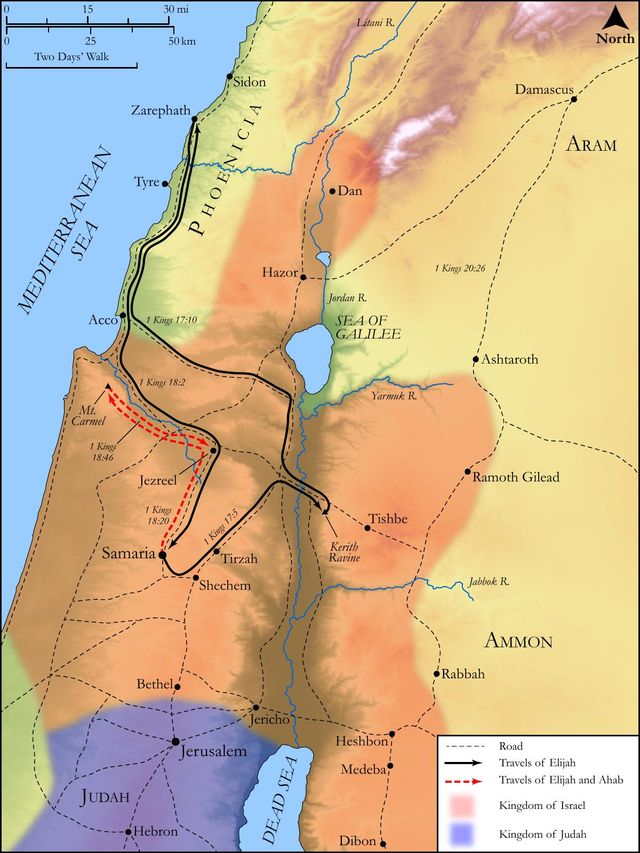
This verse is a pivotal moment within the narrative of Elijah's early prophetic ministry, immediately following his dramatic prophecy of drought in 1 Kings 17:1. After being miraculously fed by ravens at the brook Cherith, which subsequently dried up, God directs Elijah to Zarephath, a town outside Israel's borders, where a destitute Phoenician widow is appointed to sustain him. The miraculous, unending provision of meal and oil through Elijah's presence establishes God's faithfulness even in extreme scarcity. The sudden and inexplicable death of the widow's only son, her sole heir and future hope, shatters this period of divine provision and tests the faith of both the widow and Elijah. His anguished cry in this verse directly precedes the son's miraculous resurrection in 1 Kings 17:21-24, which serves as a profound demonstration of God's life-giving power and a powerful validation of Elijah's prophetic ministry.
Historical & Cultural Context
The setting of Zarephath in Sidon, a Phoenician city, is highly significant. It underscores God's sovereignty extending beyond Israel's geographical and religious boundaries, demonstrating His compassion for Gentiles even during a period of severe judgment on Israel. In ancient Near Eastern cultures, a son was far more than a child; he was the family's heir, provider, and the assurance of continuity, legacy, and care in old age. For a widow, the loss of her only son was an absolute catastrophe, rendering her utterly vulnerable, without social or economic support, and facing a desolate future. The prevalent belief in this era often attributed illness and death directly to divine judgment for specific sins, which explains the widow's initial, poignant accusation against Elijah in 1 Kings 17:18, "What have I to do with thee, O thou man of God? art thou come unto me to call my sin to remembrance, and to slay my son?" Elijah's cry, therefore, is not merely a personal expression of grief but a profound wrestling with the perceived implications of God's action within this deeply held cultural and theological framework.
Key Themes
ShowHideThis verse powerfully contributes to several overarching themes within 1 Kings and the broader biblical narrative. It highlights the humanity of the prophet, portraying Elijah, despite his extraordinary faith and power, grappling with suffering, questioning divine providence, and experiencing deep empathy for others. It underscores God's sovereignty amidst suffering, revealing the tension between divine control and the experience of calamity, and challenging simplistic explanations for pain. The prophet's immediate and fervent turn to prayer emphasizes the power of intercessory prayer as the primary means through which God's power is invoked and manifested in human crises. Furthermore, the incident serves as a significant foreshadowing of the theme of resurrection and God's ultimate power over life and death, a foundational biblical truth that culminates in the New Testament. The narrative also reinforces the enduring theme of divine provision and faithfulness, even when circumstances appear to contradict previous promises, as God had pledged to sustain both the widow and Elijah.
Exposition and Analysis
ShowHideKey Word Analysis
ShowHideA primitive root meaning "to call out to," or "cry (unto)." This verb denotes a loud, urgent cry, often of distress, anguish, or an appeal for help. It is frequently used in the Old Testament to describe the cry of the oppressed or those in desperate need calling out to God (e.g., Exodus 14:10). Elijah's use of qârâʼ here is not a polite request but a vehement, impassioned plea born of deep emotional turmoil and a profound sense of perceived injustice. It signifies the intensity of his prayer and his immediate turning to God in crisis.
A primitive root meaning "to make (or be) good for nothing, i.e. bad (physically, socially or morally)," or "afflict," "do harm," "hurt." While râʻaʻ can indeed mean moral evil, in this context, it refers to calamity, disaster, misfortune, or affliction. Elijah is not accusing God of sin but of bringing a devastating, calamitous event upon an innocent party. This word captures the profound distress and suffering caused by the son's death, which Elijah perceives as a "bad thing" or a "disaster" that God has allowed or brought about. It highlights the human struggle to reconcile God's goodness with the experience of suffering.
A primitive root meaning "to turn aside from the road (for a lodging or any other purpose), i.e. sojourn (as a guest)," or "dwell," "remain," "be stranger." This verb emphasizes Elijah's status as a guest, a sojourner, a temporary resident in the widow's house. This adds a layer of ethical and covenantal concern to his plea: God's prophet, a guest, has seemingly brought calamity upon his host. It implies a perceived violation of the sacred bond of hospitality and a potential stain on God's reputation, prompting Elijah's desperate question.
Verse Breakdown
ShowHide"And he cried unto the LORD"
This opening phrase immediately establishes the nature of Elijah's response to the tragedy. Rather than succumbing to despair, rebuking the widow, or attempting a human solution, he turns directly and vociferously to God. This highlights his unwavering faith and his understanding that only God holds the power to intervene in such a dire situation. His cry is an act of desperate, yet trusting, intercession, demonstrating where his ultimate hope lies.
"and said, O LORD my God"
Elijah addresses God with profound intimacy and personal relationship ("my God"), even in his moment of questioning and anguish. This form of address reflects a deep, established connection and trust, allowing him the spiritual freedom to voice his raw emotions and confusion directly to the One he serves. It underscores the authenticity of his prayer, where even doubt, struggle, and perceived injustice are brought before the divine.
"hast thou also brought evil upon the widow with whom I sojourn"
This is the core of Elijah's anguished question, a direct challenge to God's providence. The inclusion of "also" suggests a connection to the broader drought and famine, implying that this new calamity is an extension of God's judgment, now inexplicably falling upon an innocent, hospitable Gentile. His primary concern is not for himself, but for the vulnerable widow who had faithfully hosted him. He wrestles with the apparent injustice of suffering befalling one who had shown such extraordinary hospitality and faith, especially in association with God's prophet.
"by slaying her son?"
This final clause explicitly states the devastating nature of the "evil" – the death of the widow's only son. It is a direct and blunt articulation of the calamity, not an accusation of moral wrongdoing by God, but of God's direct involvement in a calamitous event. This question encapsulates the profound theological problem of suffering, particularly when it strikes the innocent or those who have demonstrated faithfulness, forcing Elijah to confront the mysterious ways of divine action.
Literary Devices
ShowHideThe verse is rich in Pathos, evoking deep sympathy for both the grieving widow and the anguished prophet. Elijah's raw, emotional cry and direct questioning of God ("O LORD my God, hast thou also brought evil...?") powerfully convey his distress, bewilderment, and profound empathy for the suffering. The use of a Rhetorical Question ("hast thou also brought evil...?") is central to the verse; it is not asked for information but to express Elijah's profound wrestling with God's mysterious ways and the apparent injustice of the situation. This rhetorical device underscores the tension between God's sovereignty and human suffering. The entire scene is an act of Intercession, where Elijah stands in the gap, pleading on behalf of another, demonstrating the power and necessity of fervent prayer in the face of seemingly insurmountable tragedy. There is also an element of Dramatic Irony, as the reader, knowing the broader narrative of God's redemptive plan, understands that God's ultimate purpose is not to bring evil but to demonstrate His power to restore life, thereby validating Elijah's prophetic ministry and bringing glory to Himself.
Theological and Thematic Connections
ShowHideElijah's desperate cry in 1 Kings 17:20 resonates deeply with the biblical understanding of God's sovereignty over life and death, the nature of suffering, and the transformative power of intercessory prayer. It challenges simplistic notions of divine retribution, as the widow's suffering appears undeserved, prompting even a prophet of God to question the divine action. This moment reveals that even the most faithful servants of God can wrestle with profound theological questions when faced with inexplicable pain and loss. Yet, Elijah's immediate turn to the LORD, even with his honest questions, underscores the foundational truth that God is the ultimate source of help and the only one capable of reversing such a calamity. This incident powerfully foreshadows God's ultimate victory over death and His profound compassion for the suffering.
Reflection and Application
ShowHideElijah's raw and honest cry in 1 Kings 17:20 offers profound comfort and guidance for believers navigating the complexities of suffering and loss. It validates the human experience of grief, confusion, and even questioning God's actions when faced with inexplicable calamity. We learn that it is not a sign of weak faith to bring our deepest pain, our "why" questions, and our raw emotions directly to God in prayer. He is big enough to handle our struggles, our doubts, and our accusations, inviting us into a deeper, more authentic relationship. This passage encourages us to be transparent in our spiritual walk, to lament openly, and to trust that even when God's ways are mysterious and painful, His ultimate purposes are good and redemptive. Furthermore, it powerfully demonstrates the transformative potential of intercessory prayer. Elijah's desperate plea was not a passive resignation but an active, fervent engagement with God that ultimately paved the way for a miraculous reversal of death, reminding us that our persistent, faith-filled prayers can be catalysts for divine intervention, demonstrating God's compassion and power in seemingly impossible circumstances.
Questions for Reflection
ShowHideFAQ
ShowHideWhy did the widow's son die in the first place? Was it God's judgment?
ShowHideThe text itself does not explicitly state the cause of the son's death as a direct judgment for sin, though the widow herself implies this in 1 Kings 17:18, asking if Elijah came "to call my sin to remembrance, and to slay my son?" This reflects a common ancient Near Eastern belief that illness and death were direct consequences of divine displeasure. However, the narrative seems to present the death not as a punitive act, but as a catalyst for a greater demonstration of God's power over death and a validation of Elijah's prophetic ministry. It becomes an opportunity for God to display His life-giving power and compassion, proving that He is the true God who "kills and makes alive" (Deuteronomy 32:39). It highlights that even in seemingly tragic events, God can work for His glory and for the good of His people, revealing deeper truths about His character and power.
Why did Elijah question God so directly and seemingly accuse Him of bringing "evil"?
ShowHideElijah's question, "hast thou also brought evil upon the widow... by slaying her son?", is an expression of profound distress, confusion, and a wrestling with the apparent injustice of the situation. The Hebrew word for "evil" (רָעָה, ra'ah) here refers to calamity or disaster, not moral wickedness. Elijah is not accusing God of sin, but of orchestrating or allowing a devastating affliction upon an innocent party, especially one who had shown such hospitality to God's prophet. His directness demonstrates the intimacy of his relationship with God, allowing him to voice his raw emotions and theological struggles. It teaches us that God is big enough to handle our honest questions and even our lamentations in times of suffering, and that authentic prayer can include wrestling with divine providence without diminishing faith.
Christ-Centered Fulfillment
ShowHideElijah's desperate intercession and the subsequent miraculous resurrection of the widow's son in 1 Kings 17 powerfully prefigure the person and redemptive work of Jesus Christ. Elijah, a man of like passions and a servant of God, cried out to God for a life to be restored, and God responded through His prophet. This Old Testament miracle foreshadows Jesus, the ultimate "man of sorrows" (Isaiah 53:3), who not only empathized deeply with human suffering but possessed inherent, divine power over death itself. While Elijah had to cry out to God for the power to restore life, Jesus commanded life back into existence by His own authority, as seen in His raising of Jairus's daughter, the widow of Nain's son, and most profoundly, Lazarus. Jesus is the resurrection and the life (John 11:25), the one who conquered death not by temporary restoration, but by His own glorious, eternal resurrection, offering eternal life and victory over the grave to all who believe (Romans 6:9-10). Thus, Elijah's miracle points forward to the ultimate Lamb of God who takes away the sin of the world and defeats death forever, ushering in a new creation where "death shall be no more" (Revelation 21:4).