


1 Kings 15:13
- וְגַםve·Gamand alsoH1571Conj-w ¦ AdvAdverbוְandגַםalso
- אֶת'et<obj.>H853DirObjMParticle Object Indicator
- מַעֲכָהma·'a·KhahMaacahH4601N-proper-mNoun Proper Masculine
- אִמּוֹ'i·Mohis motherH517N-fsc ¦ 3msNoun Singular Feminine Constructאִמּmotherוֹhis
- וַיְסִרֶהָvay·si·Re·haand he removed herH5493Conj-w ¦ V-Hiphil-ConsecImperf-3ms ¦ 3fsVerb Hiphil Consecutive Imperfect 3rd Singular Masculineוַandיְסִרֶhe removedהָher
- מִגְּבִירָהmi·ge·vi·Rahfrom queen-motherH1377Prep-m ¦ N-fsNoun Singular Feminine Absoluteמִfromגְּבִירָהqueen-mother
- אֲשֶׁר'a·SherthatH834RelParticle Relative
- עָשְׂתָה'a·se·Tahshe had madeH6213V-Qal-Perf-3fsVerb Qal Perfect 3rd Singular Feminine
- מִפְלֶצֶתmif·Le·tzetan abominable imageH4656N-fsNoun Singular Feminine Absolute
- לָאֲשֵׁרָהla·'a·she·Rahto <the> Asherah poleH842Prep-l ¦ N-fsNoun Title Singular Feminine Absoluteלָto <the>אֲשֵׁרָהAsherah pole
- וַיִּכְרֹתvai·yikh·Rotand he cut downH3772Conj-w ¦ V-Qal-ConsecImperf-3msVerb Qal Consecutive Imperfect 3rd Singular Masculineוַandיִּכְרֹתhe cut down
- אָסָא'a·Sa'AsaH609N-proper-mNoun Proper Masculine
- אֶת'et<obj.>H853DirObjMParticle Object Indicator
- מִפְלַצְתָּהּmif·latz·Tahher abominable imageH4656N-fsc ¦ 3fsNoun Singular Feminine Constructמִפְלַצְתָּabominable imageהּher
- וַיִּשְׂרֹףvai·yis·Rofand he burned [it]H8313Conj-w ¦ V-Qal-ConsecImperf-3msVerb Qal Consecutive Imperfect 3rd Singular Masculineוַandיִּשְׂרֹףhe burned [it]
- בְּנַחַלbe·Na·chalin [the] wadi ofH5158Prep-b ¦ N-mscNoun Singular Masculine Constructבְּinנַחַל[the] wadi of
- קִדְרוֹןkid·RonKidronH6939N-properNoun Proper Location
English is a literal word-by-word gloss of the Hebrew, not the KJV's wording. Why?
This is the original text the KJV's translators worked from — each Hebrew word with its own literal English meaning in this verse, prepared by scholars at Tyndale House, Cambridge. The KJV translates whole sentences, not word by word, so its wording differs: one Hebrew word can become several English words, and the KJV may choose “the LORD” where the gloss reads “Yahweh”. Both are faithful — they answer different questions. For the KJV's own rendering, switch to the KJV text.
Details
See on the biblical-era map

Study this verse
Public-domain commentary
Matthew Henry
From his Commentary on the Whole Bible. Henry comments on passages, not single verses — this entry covers 1 Kings 15:9–24. His three-level outline is real structure in the source text, so it is rendered as structure.
We have here a short account of the reign of Asa; we shall find a more copious history of it Ch2 14:1-15, 15, and Ch2 16:1-14. Here is,
I.The length of it:
He reigned forty-one years in Jerusalem, Kg1 15:10. In the account we have of the kings of Judah we find the number of the good kings and the bad ones nearly equal; but then we may observe, to our comfort, that the reign of the good kings was generally long, but that of the bad kings short, the consideration of which will make the state of God's church not altogether so bad within that period as it appears at first sight. Length of days is in Wisdom's right hand. Honour thy father, much more thy heavenly Father, that thy days may be long.
II.The general good character of it (Kg1 15:11):
Asa did that which was right in the eyes of the Lord, and that is right indeed which is so in God's eyes; those are approved whom he commends. He did as did David his father, kept close to God, and to his instituted worship, was hearty and zealous for that, which gave him this honourable character, that he was like David, though he was not a prophet, or psalmist, as David was. If we come up to the graces of those that have gone before us it will be our praise with God, though we come short of their gifts. Asa was like David, though he was neither such a conqueror nor such an author; for his heart was perfect with the Lord all his days (Kg1 15:14), that is, he was both cordial and constant in his religion. What he did for God he was sincere in, steady and uniform, and did it from a good principle, with a single eye to the glory of God.
III.The particular instances of Asa's piety. His times were times of reformation. For,
1.He removed that which was evil. There reformation begins; and a great deal of work of that kind his hand found to do. For, though it was but twenty years after the death of Solomon that he began to reign, yet very gross corruption had spread far and taken deep root. Immorality he first struck at: He took away the sodomites out of the land, suppressed the brothels; for how can either prince or people prosper while those cages of unclean and filthy birds, more dangerous than pest-houses, are suffered to remain? Then he proceeded against idolatry: He removed all the idols, even those that his father had made, Kg1 15:12. His father having made them, he was the more concerned to remove them, that he might cut off the entail of the curse, and prevent the visiting of that iniquity upon him and his. Nay (which redounds much to his honour, and shows his heart was perfect with God), when he found idolatry in the court, he rooted it out thence, Kg1 15:13. When it appeared that Maachah his mother, or rather his grandmother (but called his mother because she had the educating of him in his childhood), had an idol in a grove, though she was his mother, his grandmother, - though, it is likely, she had a particular fondness for it, - though, being old, she could not live long to patronise it, - though she kept it for her own use only, yet he would by no means connive at her idolatry. Reformation must begin at home. Bad practices will never be suppressed in the country while they are supported in the court. Asa, in every thing else, will honour and respect his mother; he loves her well, but he loves God better, and (like the Levite, Deu 33:9) readily forgets the relation when it comes in competition with his duty. If she be an idolater,
(1.)Her idol shall be destroyed, publicly exposed to contempt, defaced, and burnt to ashes by the brook Kidron, on which, it is probable, he strewed the ashes, in imitation of Moses (Exo 32:20) and in token of his detestation of idolatry and his indignation at it wherever he found it. Let no remains of a court-idol appear.
(2.)She shall be deposed, He removed her from being queen, or from the queen, that is, from conversing with his wife; he banished her from the court, and confined her to an obscure and private life. Those that have power are happy when thus they have hearts to use it well.
2.He re-established that which was good (Kg1 15:15): He brought into the house of God the dedicated things which he himself had vowed out of the spoils of the Ethiopians he had conquered, and which his father had vowed, but lived not to bring in pursuant to his vow. We must not only cease to do evil, but learn to do well, not only cast away the idols of our iniquity, but dedicate ourselves and our all to God's honour and glory. When those who, in their infancy, were by baptism devoted to God, make it their own act and deed to join themselves to him and vigorously employ themselves in his service, this is bringing in the dedicated things which they and their fathers have dedicated: it is necessary justice - rendering to God the things that are his.
VI.The policy of his reign.
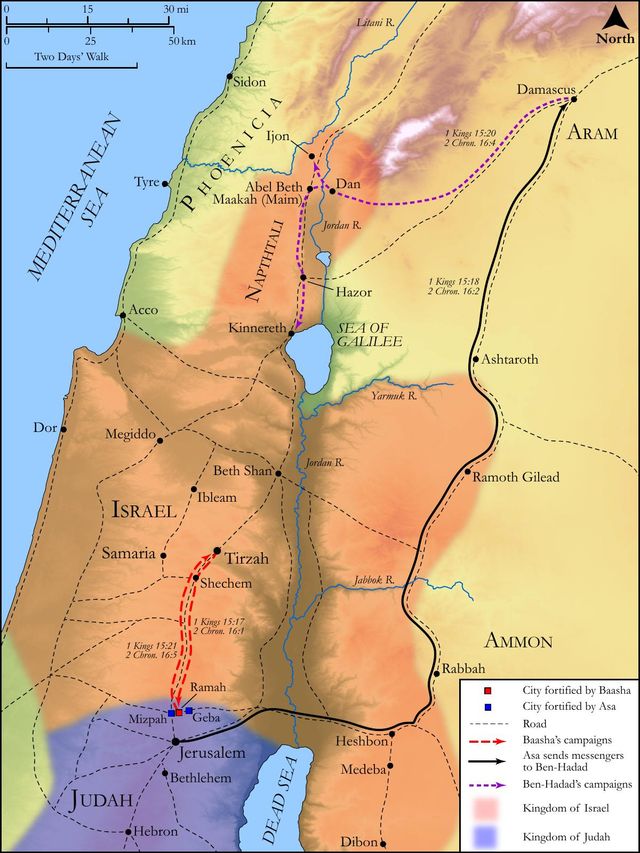
He built cities himself, to encourage the increase of his people (Kg1 15:23) and to invite others to him by the conveniences of habitation; and he was very zealous to hinder Baasha from building Ramah, because he designed it for the cutting off of communication between his people and Jerusalem and to hinder those who in obedience to God would come to worship there. An enemy must by no means be suffered to fortify a frontier town.
V.The faults of his reign.
In both the things for which he was praised he was found defective. The fairest characters are not without some but or other in them.
1.Did he take away the idols? That was well; but the high places were not removed (Kg1 15:14); therein his reformation fell short. He removed all images which were rivals with the true God or false representations of him; but the altars which were set up in high places, and to which those sacrifices were brought which should have been offered on the altar in the temple, those he suffered to stand, thinking there was no great harm in them, they having been used by good men before the temple was built, and being loth to disoblige the people, who had a kindness to them and were wedded to them both by custom and convenience; whereas in Judah and Benjamin, the only tribes under Asa's government which lay so near Jerusalem and the altars there, there was less pretence for them than in those tribes which lay more remote. They were against the law, which obliged them to worship at one place, Deu 12:11. They lessened men's esteem of the temple and the altars there, and were an open gap for idolatry to enter in at, while the people were so much addicted to it. It was not well that Asa, when his hand was in, did not remove these. Nevertheless his heart was perfect with the Lord. This affords us a comfortable note, That those may be found honest and upright with God, and be accepted of him, who yet, in some instances, come short of doing the good they might and should do. The perfection which is made the indispensable condition of the new covenant is not to be understood of sinlessness (then we were all undone), but sincerity.
2.Did he bring in the dedicated things? That was well; but he afterwards alienated the dedicated things, when he took the gold and silver out of the house of God and sent them as a bribe to Benhadad, to hire him to break his league with Baasha, and, by making an inroad upon his country, to give him a diversion from the building of Ramah, Kg1 15:18, Kg1 15:19. Here he sinned,
(1.)In tempting Benhadad to break his league, and so to violate the public faith. If he did wrong in doing it, as certainly he did, Asa did wrong in persuading him to do it.
(2.)In that he could not trust God, who had done so much for him, to free him out of this strait, without using such indirect means to help himself.
(3.)In taking the gold out of the treasury of the temple, which was not to be made use of but on extraordinary occasions. The project succeeded. Benhadad made a descent upon the land of Israel, which obliged Baasha to retire with his whole force from Ramah (Kg1 15:20, Kg1 15:21), which gave Asa a fair opportunity to demolish his works there, and the timber and stones served him for the building of some cities of his own, Kg1 15:22. But, though the design prospered, we find it was displeasing to God; and though Asa valued himself upon the policy of it, and promised himself that it would effectually secure his peace, he was told by the prophet that he had done foolishly, and that thenceforth he should have wars; see Ch2 16:7-9.
VI.The troubles of his reign. For the most part he prospered; but,
1.Baasha king of Israel was a very troublesome neighbour to him. He reigned twenty-four years, and all his days had war, more or less, with Asa, Kg1 15:16. This was the effect of the division of the kingdoms, that they were continually vexing one another, and so weakened one another, which made them both an easier prey to the common enemy.
2.In his old age he was himself afflicted with the gout: He was diseased in his feet, which made him less fit for business and peevish towards those about him.
VII.The conclusion of his reign.
The acts of it were more largely recorded in the common history (to which reference is here had, Kg1 15:23) than in this sacred one. He reigned long, but finished at last with honour, and left his throne to a successor no way inferior to him.
Historical interpretation
Historical reception
3 surviving comments on this verse. Each one is dated, so this reads as a timeline rather than a list.
Select a marker to jump to its quote. Markers stagger vertically where authors wrote within a few decades of each other.
Furthermore, the adversary tempted Job through his children and his possessions, and when he could not prevail over him, he went and brought against him his armor, and he came, bringing with him a daughter of Eve, who had caused Adam to sink, and through her mouth he said to Job, her righteous husband, “Curse God.” But Job rejected her counsel. King Asa also conquered the Accursed-of-life, when he wished to come in against him, through his mother. For Asa knew his craftiness and removed his mother from her high estate and cut in pieces her idol and cast it down.
In the meantime, Asa devoted himself to the reconstruction of the ruins of religion. He destroyed the temples of the idols, smashed the statues, set the sacred woods on fire and removed the ignominy of the effeminate priests. He also drove away Maacah, the mother of his father, Abijam. [She] was the high priestess of that abomination, and he chased her off from that place of honor that she was holding and broke her idols and burned them. Therefore, after removing the worship of the idols in this manner, he restored the holy rites of true religion and constantly protected all the sacred institutions for the forty-one years in which he ruled over the state.
Look for a little at those books on the Republic from which you drew that ideal of the most devoted citizen: that there should be no limit or legitimate restriction on his service. Look, I beg you, and notice with what high praise frugality and temperance are there spoken of, as well as fidelity to the marriage bond, and chaste, honorable and upright conduct. When a state excels in these, it can truly be said to bloom. But in churches in growing numbers all over the world, as in holy gatherings of peoples, these principles are taught and learned; above all, the devotion by which the true and truth-giving God is worshiped, who not only commands these principles to be kept but also gives them fulfillment. It is by these that the human mind is prepared and made fit for the divine society and for its habitation in the eternal heavenly country. Hence he has foretold that the images of the many false gods would be overturned and has commanded them to be overturned.
Continue studying 1 Kings 15:13 across the web’s major study libraries — every link below opens this exact verse, chapter, or book on the destination site.
Read & Compare
 BibleGatewayThis verse in more than 200 translations and 70 languages.
 Bible.comThe YouVersion reader — hundreds of translations, reading plans, and highlights.
 ESV.orgCrossway's official English Standard Version reader.
 NET BibleThe NET translation with 60,000+ translators' notes on every rendering decision.
 STEP BibleTyndale House's free study tool — original text, vocabulary, and scholarly resources.
 BibliaLogos Bible Software's free web reader.
 USCCBThe New American Bible (Revised Edition) with the U.S. bishops' study notes.
Commentaries
 BibleHub CommentariesDozens of classic commentaries on this verse, gathered on one page.
 StudyLightMore than 100 commentary sets — the largest collection on the web.
 BibleRefPlain-English commentary on what this verse means, verse by verse.
 Enduring WordDavid Guzik's free commentary on this chapter, widely used by Bible teachers.
 Bible Study ToolsVerse commentary alongside Greek and Hebrew study aids.
Original Language & Research
- BibleHub InterlinearThe verse word by word — original language, transliteration, and English.
- BibleHub LexiconEvery word's original-language definition and Strong's entry.
 Blue Letter BibleDeep-study tools — Strong's numbers, concordance, and word studies.
 SefariaThe Hebrew text with Rashi and centuries of Jewish commentary.
Sermons, Hymns & Audio


TrulyRandomVerse is not affiliated with these sites and doesn’t control their content. They’re linked because they’re genuinely useful.
Summary
1 Kings 15:13 recounts King Asa of Judah's decisive act of religious reform, wherein he removed his grandmother, Maachah, from her influential position as queen mother due to her promotion of idolatry. This verse highlights Asa's unwavering commitment to Yahweh, demonstrating a profound willingness to prioritize the spiritual purity of the nation over familial ties and political expediency, culminating in the destruction of Maachah's Asherah idol by the Kidron Valley.
Context
ShowHideLiterary Context
This verse is situated within the Deuteronomistic history, specifically detailing the reign of King Asa of Judah, who ascended the throne after his father Abijam (also known as Abijah). The narrative in 1 Kings 15 contrasts Asa's generally righteous reign with the apostasy of many of his predecessors and contemporaries in both Judah and Israel. While Asa is commended for his devotion to the Lord and his efforts to cleanse Judah of idolatry, the broader context of 1 Kings 15:9-24 also notes his later reliance on human alliances rather than God. This account is significantly expanded upon in 2 Chronicles 14-16, which provides additional details about his extensive reforms, military victories, and ultimate spiritual decline. The removal of Maachah is presented as a pivotal act early in his reign, signaling his serious intent to restore pure worship.
Historical & Cultural Context
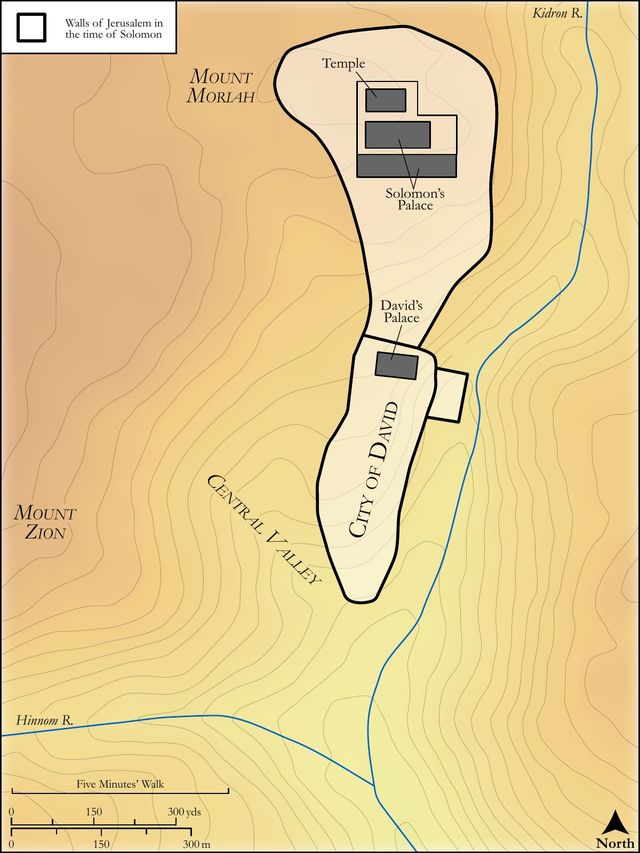
In ancient Near Eastern monarchies, the "queen mother" (Hebrew: gebirah) held a position of considerable authority and influence, often surpassing that of the king's primary wife. Maachah, identified as Asa's grandmother (though sometimes referred to as "mother" in a broader sense, indicating her matriarchal status), would have wielded significant power, making Asa's decision to depose her a truly radical and courageous move. The "idol in a grove" refers to an image or cultic pole dedicated to Asherah, a prominent Canaanite fertility goddess whose worship frequently infiltrated Israelite religious practices, often in "high places" or sacred groves. This syncretism was a constant source of divine displeasure and a direct violation of the Mosaic Law, particularly the Second Commandment. The Kidron Valley, located to the east of Jerusalem, served as a natural boundary and, significantly, as a common place for the disposal of defiled objects and the ashes of pagan sacrifices, symbolizing a thorough and public rejection of impurity, as seen in later reforms by kings like Josiah in 2 Kings 23:6.
Key Themes
ShowHideThis verse powerfully illustrates several key themes central to the book of Kings and the broader Old Testament narrative. Firstly, it underscores the theme of uncompromising piety and radical obedience to God, even when it demands personal sacrifice and confrontation with powerful figures. Asa's willingness to challenge his own grandmother demonstrates a profound commitment to God's covenant commands above all else. Secondly, the verse highlights the pervasive danger and consequences of idolatry, portraying it as a direct affront to God that necessitates drastic measures for its eradication. Maachah's idolatry led to her downfall and the public destruction of her idol, serving as a stark warning. Thirdly, it emphasizes the theme of spiritual reform and national cleansing, as Asa actively purifies Judah from pagan practices, setting a standard for righteous leadership. Finally, the narrative showcases the critical responsibility of leadership in fostering and maintaining the spiritual health of a nation, demonstrating that a king's personal faith must translate into national policy and action.
Exposition and Analysis
ShowHideKey Word Analysis
ShowHideThis term (H1377) refers to the queen mother, a position of immense power and influence in the Judahite court. Asa's removal of Maachah from this role was a radical act, demonstrating his prioritization of religious purity over political stability or familial loyalty. The gᵉbîyrâh often wielded more authority than the king's primary wife, making Asa's decision particularly bold and significant.
The Hebrew term (H4656) literally conveys "a horror" or "a frightful thing," emphasizing the utterly detestable and abominable nature of the object in God's eyes. This was not a mere statue but a representation of a pagan deity, specifically Asherah (implied by "in a grove"), making its presence and worship a grave offense against Yahweh and a source of defilement for the land.
The primitive root (H3772) often implies a decisive, complete severance or cutting off. In the context of the idol, it signifies a thorough and definitive eradication, not merely a removal. This act of "cutting off" the idol reflects Asa's uncompromising commitment to severing Judah's ties with pagan worship and purifying the land from its spiritual corruption.
Verse Breakdown
ShowHide"And also Maachah his mother, even her he removed from [being] queen"
This clause immediately establishes the radical nature of Asa's reform. The queen mother held immense power and prestige in the Judahite court, making her removal an unprecedented and highly controversial act. Asa's willingness to depose his own grandmother demonstrates his unwavering commitment to God's commands above personal loyalty or political expediency, setting a tone for his reign as a reformer.
"because she had made an idol in a grove"
This provides the explicit justification for Maachah's removal. Her offense was not merely passive tolerance of idolatry but active participation in its promotion through the creation of a specific "abominable image" dedicated to Asherah. This act directly violated the covenant stipulations against worshipping other gods and making graven images, underscoring the severity of her sin and the necessity of Asa's response.
"and Asa destroyed her idol, and burnt [it] by the brook Kidron"
This final clause details the decisive and symbolic action taken by Asa. The destruction of the idol signifies a complete rejection of pagan worship. Burning it by the brook Kidron, a valley east of Jerusalem often associated with impurity and used for disposing of defiled objects, emphasizes the thoroughness of the cleansing and the public declaration of Judah's return to Yahweh worship. It was an act of purification, removing the defilement from the holy city.
Literary Devices
ShowHideThe passage employs several potent literary devices to convey its message. Contrast is evident in the depiction of Asa's righteousness against the backdrop of Maachah's idolatry and the general apostasy of previous kings. This highlights Asa as a beacon of faithfulness. Symbolism is richly present: the "idol in a grove" symbolizes the pervasive spiritual corruption threatening Judah, while its destruction represents the purification and restoration of true worship. The brook Kidron itself is a powerful symbol, a place of defilement and disposal, making its use for burning the idol a vivid representation of cleansing and the definitive rejection of paganism. Furthermore, Asa's action can be seen as foreshadowing later, more extensive reforms, such as those undertaken by King Josiah, who also used the Kidron Valley for the disposal of idolatrous objects, reinforcing a pattern of righteous kings cleansing the land.
Theological and Thematic Connections
ShowHideKing Asa's actions in 1 Kings 15:13 resonate deeply with foundational biblical theology, particularly the themes of exclusive worship and covenant faithfulness. God demands singular devotion from His people, as articulated in the Shema and the first two commandments. Asa's radical obedience, even to the point of confronting a powerful family member, exemplifies the kind of uncompromising commitment God desires. His zeal for the purity of worship reflects the divine jealousy for His own glory and His abhorrence of anything that usurps His rightful place. This event serves as a powerful reminder that true faith often requires difficult choices, prioritizing God's will above all human relationships or personal comforts, and actively removing anything that hinders genuine devotion. It underscores the ongoing spiritual battle against idolatry, whether overt or subtle, in the lives of individuals and communities.
Reflection and Application
ShowHideKing Asa's courageous act in 1 Kings 15:13 offers profound lessons for believers today. In a world saturated with distractions and competing loyalties, Asa's uncompromising devotion challenges us to examine our own hearts for "idols"—anything that takes precedence over God in our affections, time, or resources. These modern idols might not be physical statues, but could manifest as career ambition, financial security, relationships, social media, or even self-image. Asa's willingness to sever a powerful familial tie for the sake of spiritual purity calls us to a similar radical obedience, reminding us that true discipleship often demands difficult choices and a willingness to stand against prevailing norms, even within our own families or communities, if they compromise our devotion to Christ. For those in leadership, whether in the home, church, or workplace, Asa's example underscores the solemn responsibility to foster environments conducive to pure worship and righteous living, even when it requires confronting difficult truths or making unpopular decisions. Just as Asa cleansed Judah, we are called to continually cleanse our own lives and spheres of influence, striving for a heart fully devoted to God.
Questions for Reflection
ShowHideFAQ
ShowHideWho was Maachah and why was her removal from being queen significant?
ShowHideMaachah was the queen mother, identified in the biblical text as Asa's grandmother (though sometimes referred to as "mother" in a broader sense, indicating her matriarchal status and influence). She was the daughter of Abishalom (Absalom) and the mother of Abijam (Asa's father). In ancient Judah, the queen mother held a position of immense power, prestige, and influence, often serving as a regent or advisor. Her removal was profoundly significant because it was an act of extreme courage and conviction on Asa's part. It demonstrated his unwavering commitment to God's commands above all personal and political considerations, including familial loyalty and the potential for courtly upheaval. By deposing such a powerful figure, Asa publicly declared his absolute dedication to purifying the nation from idolatry, setting a clear standard for his reign.
What was an "idol in a grove" and why was its destruction by the brook Kidron important?
ShowHideThe phrase "idol in a grove" refers to an abominable image or cultic pole dedicated to Asherah, a prominent Canaanite fertility goddess. The Hebrew term used, mipheletseth la'asherah, emphasizes its detestable nature and direct association with this pagan deity. These idols were often erected in "groves" or "high places," which were sites of Canaanite worship that had infiltrated Israelite religious practices. Their presence was a direct violation of God's covenant and the Second Commandment. The destruction of this idol by burning it in the brook Kidron was highly symbolic and practical. The Kidron Valley, located east of Jerusalem, was historically a place associated with impurity and was often used for the disposal of defiled objects, including the ashes of pagan sacrifices. Burning the idol there signified a thorough, public, and definitive cleansing of the land from its spiritual defilement, reinforcing Asa's commitment to restoring pure worship to Yahweh. This act of purification was later emulated by other reforming kings, such as Josiah, as noted in 2 Kings 23:6.
Christ-Centered Fulfillment
ShowHideKing Asa's zealous act of cleansing Judah from idolatry, even at great personal cost, serves as a powerful Old Testament shadow pointing to the ultimate and perfect cleansing accomplished by Jesus Christ. Asa, as a righteous king, removed an external idol and its associated defilement from the land, but Christ, the true and eternal King, came to remove the idolatry from the human heart itself. While Asa deposed a queen mother who promoted false worship, Jesus, as the Lamb of God who takes away the sin of the world, offered Himself as the ultimate sacrifice to cleanse us from all unrighteousness, making us new creations. His blood cleanses our consciences from dead works to serve the living God (Hebrews 9:14). Asa's willingness to prioritize God above familial ties foreshadows Christ's call to radical discipleship, where love for Him must supersede even the closest earthly relationships, as He declared in Matthew 10:37. Ultimately, Asa's reform was temporary and incomplete, but Christ's work establishes a spiritual kingdom of priests, a holy nation, truly purified and set apart for God (1 Peter 2:9). Through Christ, believers are empowered by the Holy Spirit to put to death the "earthly members" which include idolatry, covetousness, and impurity (Colossians 3:5), living lives of true worship and devotion to the One true God.