


1 Kings 1:5
- וַאֲדֹנִיָּהva·'a·do·ni·Yahand AdonijahH138Conj-w ¦ N-proper-mNoun Proper MasculineוַandאֲדֹנִיָּהAdonijah
- בֶןven[the] son ofH1121N-mscNoun Singular Masculine Construct
- חַגִּיתcha·GitHaggithH2294N-proper-fNoun Proper Feminine
- מִתְנַשֵּׂאmit·na·Se'[was] exalting himselfH5375V-Hithpael-Prtcpl-msVerb Hithpael Participle Singular Masculine Absolute
- לֵאמֹרle·Mor<to> sayingH559Prep-l ¦ V-Qal-InfVerb Qal Infinitive Constructלֵ<to>אמֹרsaying
- אֲנִי'a·NiIH589Pro-1csPronoun Personal 1st Singular common gender
- אֶמְלֹךְ'em·LokhI will become kingH4427V-Qal-Imperf-1csVerb Qal Imperfect 1st Singular common gender
- וַיַּעַשׂvai·Ya·'asand he acquiredH6213Conj-w ¦ V-Qal-ConsecImperf-3msVerb Qal Consecutive Imperfect 3rd Singular Masculineוַandיַּעַשׂhe acquired
- לוֹlofor himselfPrep-l ¦ 3msSuffix Personal 3rd Singular Masculineלforוֹhimself
- רֶכֶבRe·kheva chariotH7393N-msNoun Singular Masculine Absolute
- וּפָרָשִׁיםu·Fa·ra·Shimand horsemenH6571Conj-w ¦ N-mpNoun Plural Masculine Absoluteוּandפָרָשִׁיםhorsemen
- וַחֲמִשִּׁיםva·cha·mi·Shimand fiftyH2572Conj-w ¦ N-mpNoun Plural Masculine Absoluteוַandחֲמִשִּׁיםfifty
- אִישׁ'ishmanH376N-msNoun Singular Masculine Absolute
- רָצִיםra·Tzim[were] runningH7323V-Qal-Prtcpl-mpVerb Qal Participle Plural Masculine Absolute
- לְפָנָיוle·fa·Nav<to> before himH6440Prep-l ¦ N-mpc ¦ 3msNoun Plural Masculine Constructלְ<to>פָנָיbeforeוhim
English is a literal word-by-word gloss of the Hebrew, not the KJV's wording. Why?
This is the original text the KJV's translators worked from — each Hebrew word with its own literal English meaning in this verse, prepared by scholars at Tyndale House, Cambridge. The KJV translates whole sentences, not word by word, so its wording differs: one Hebrew word can become several English words, and the KJV may choose “the LORD” where the gloss reads “Yahweh”. Both are faithful — they answer different questions. For the KJV's own rendering, switch to the KJV text.
Details
See on the biblical-era map

Study this verse
Public-domain commentary
Matthew Henry
From his Commentary on the Whole Bible. Henry comments on passages, not single verses — this entry covers 1 Kings 1:5–10.
David had much affliction in his children. Amnon and Absalom had both been his grief; the one his first-born, the other his third, Sa2 3:2, Sa2 3:3. His second, whom he had by Abigail, we will suppose he had comfort in; his fourth was Adonijah (Sa2 3:4); he was one of those that were born in Hebron; we have heard nothing of him till now, and here we are told that he was a comely person, and that he was next in age, and (as it proved) next in temper to Absalom, Kg1 1:6. And, further, that in his father's eyes he had been a jewel, but was now a thorn.
I.His father had made a fondling of him, Kg1 1:6.
He had not displeased him at any time. It is not said that he never displeased his father; it is probably that he had done so frequently, and his father was secretly troubled at his misconduct and lamented it before God. But his father had not displeased him, by crossing him in his humours, denying him any thing he had a mind to, or by calling him to an account as to what he had done and where he had been, or by keeping him to his book or his business, or reproving him for what he saw or heard of that he did amiss; he never said to him, Why hast thou done so? because he saw it was uneasy to him, and he could not bear it without fretting. It was the son's fault that he was displeased at reproof and took it for affront, whereby he lost the benefit of it; and it was the father's fault that, because he saw it displeased him, he did not reprove him; and now he justly smarted for indulging him. Those who honour their sons more than God, as those do who keep them not under good discipline, thereby forfeit the honour they might expect from their sons.
II.He, in return, made a fool of his father.
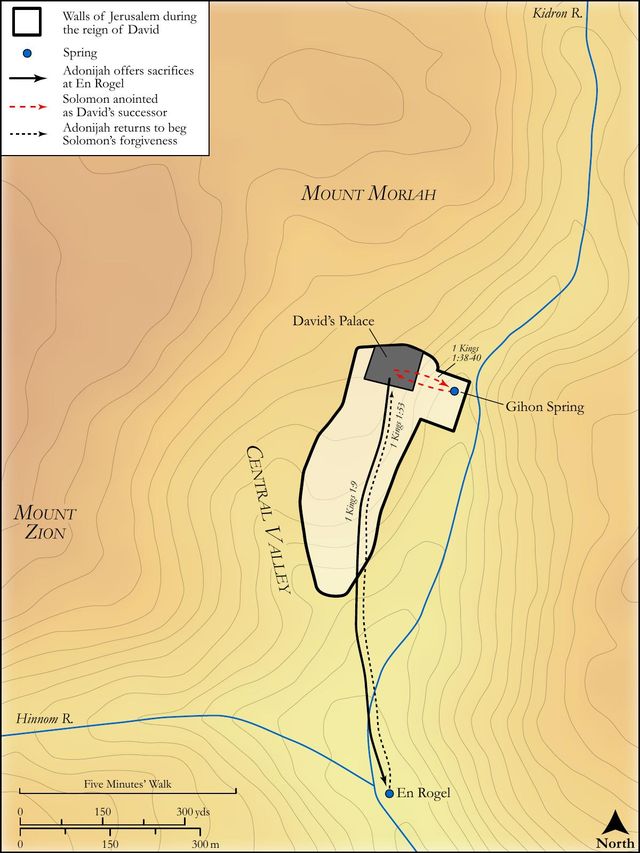
Because he was old, and confined to his bed, he thought no notice was to be taken of him, and therefore exalted himself, and said, I will be king, Kg1 1:5. Children that are indulged learn to be proud and ambitious, which is the ruin of a great many young people. The way to keep them humble is to keep them under. Observe Adonijah's insolence. 1. He looked upon the days of mourning for his father to be at hand, and therefore he prepared to succeed him, though he knew that by the designation both of God and David Solomon was to be the man; for public notice had been given of it by David himself, and the succession settled, as it were by act of parliament, in pursuance of God's appointment, Ch1 22:9; Ch1 23:1. This entail Adonijah attempted by force to cut off, in contempt both of God and his father. Thus is the kingdom of Christ opposed, and there are those that say, "We will not have him to reign over us." 2. He looked upon his father as superannuated and good for nothing, and therefore he entered immediately upon the possession of the throne. He cannot wait till his father's head be laid low, but it must now be said, Adonijah reigns (Kg1 1:18), and, God save king Adonijah, Kg1 1:25. His father is not fit to govern, for he is old and past ruling, nor Solomon, for he is young, and not yet able to rule; and therefore Adonijah will take the government upon him. It argues a very base and wicked mind for children to insult over their parents because of the infirmities of their age. 3. In pursuance of this ambitious project, (1.) He got a great retinue (Kg1 1:5), chariots and horsemen, both for state and strength, to wait on him, and to fight for him. (2.) He made great interest with no less than Joab, the general of the army, and Abiathar the high priest, Kg1 1:7. That he should make his court to those who by their influence in church and camp were capable of doing him great service is not strange; but we may well wonder by what arts they could be drawn to follow him and help him. They were old men, who had been faithful to David in the most difficult and troublesome of his times, men of sense and experience, who, one would think, would not easily be wheedled. They could not propose any advantage to themselves by supporting Adonijah, for they were both at the top of their preferment and stood fast in it. They could not be ignorant of the entail of the crown upon Solomon, which it was not in their power to cut off, and therefore it was their interest to oblige him. But God, in this matter, left them to themselves, perhaps to correct them for some former misconduct with a scourge of their own making. We are told (Kg1 1:8) who those were that were of such approved fidelity to David that Adonijah had not the confidence so much as to propose his project to them - Zadok, Benaiah, and Nathan. A man that has given proofs of his resolute adherence to that which is good shall not be asked to do a bad thing. (3.) He prepared a great entertainment (Kg1 1:9) at En-rogel, not far from Jerusalem; his guests were the king's sons, and the king's servants, whom he feasted and caressed to bring them over to his party; but Solomon was not invited, either because he despised him or because he despaired of him, Kg1 1:10. Such as serve their own belly, and will be in the interest of those that will feast them what side soever they are of, are an easy prey to seducers, Rom 16:18. Some think that Adonijah slew these sheep and oxen, even fat ones, for sacrifice, and that it was a religious feast he made, beginning his usurpation with a show of devotion, as Absalom under the colour of a vow (Sa2 15:7), which he might do the more plausibly when he had the high priest himself on his side. It is a pity that any occasion should ever be given to say, In nomine Domini incipit omne malam - In the name of the Lord begins all evil, and that all religious exercises should be made to patronise all religious practices.
Continue studying 1 Kings 1:5 across the web’s major study libraries — every link below opens this exact verse, chapter, or book on the destination site.
Read & Compare
 BibleGatewayThis verse in more than 200 translations and 70 languages.
 Bible.comThe YouVersion reader — hundreds of translations, reading plans, and highlights.
 ESV.orgCrossway's official English Standard Version reader.
 NET BibleThe NET translation with 60,000+ translators' notes on every rendering decision.
 STEP BibleTyndale House's free study tool — original text, vocabulary, and scholarly resources.
 BibliaLogos Bible Software's free web reader.
 USCCBThe New American Bible (Revised Edition) with the U.S. bishops' study notes.
Commentaries
 BibleHub CommentariesDozens of classic commentaries on this verse, gathered on one page.
 StudyLightMore than 100 commentary sets — the largest collection on the web.
 BibleRefPlain-English commentary on what this verse means, verse by verse.
 Enduring WordDavid Guzik's free commentary on this chapter, widely used by Bible teachers.
 Bible Study ToolsVerse commentary alongside Greek and Hebrew study aids.
Original Language & Research
- BibleHub InterlinearThe verse word by word — original language, transliteration, and English.
- BibleHub LexiconEvery word's original-language definition and Strong's entry.
 Blue Letter BibleDeep-study tools — Strong's numbers, concordance, and word studies.
 SefariaThe Hebrew text with Rashi and centuries of Jewish commentary.
Sermons, Hymns & Audio


TrulyRandomVerse is not affiliated with these sites and doesn’t control their content. They’re linked because they’re genuinely useful.
Summary
Adonijah, David's fourth son, who presumptuously "exalted himself" by declaring his intention to be king, despite lacking divine or paternal appointment. His actions, marked by the public display of chariots, horsemen, and a retinue of fifty runners, mirrored the royal pomp of a legitimate monarch and signaled a clear attempt to usurp the throne, setting the stage for a critical succession crisis at the end of David's reign and highlighting the tension between human ambition and divine sovereignty.
Context
ShowHideLiterary Context
This verse immediately follows the description of King David's extreme old age and physical frailty in 1 Kings 1:1-4. The narrative establishes a significant power vacuum and a clear need for a successor, a situation exacerbated by David's apparent inability to govern decisively or name an heir. Adonijah's self-proclamation is a direct and audacious response to this vulnerability, initiating the dramatic struggle for the throne that dominates the opening chapters of 1 Kings. His actions directly challenge the divine promise of a lasting dynasty through David, which is ultimately fulfilled in Solomon, making this verse the catalyst for the unfolding drama of God's chosen successor.
Historical & Cultural Context
In ancient Near Eastern monarchies, the succession to the throne was often a precarious affair, especially when the reigning king was old, infirm, or had not publicly designated an heir. While primogeniture (the right of the firstborn) was a common principle, it was not absolute; kings often designated a preferred heir, sometimes with divine endorsement, as seen in the case of David himself, who was divinely chosen over his elder brothers. Adonijah, as the eldest surviving son after the deaths of Amnon and Absalom (as recorded in 2 Samuel 3:2-5), would naturally have considered himself the rightful heir by custom. His preparation of chariots, horsemen, and fifty runners was a well-known and potent display of royal authority and prestige, a tactic previously employed by his rebellious half-brother Absalom in 2 Samuel 15:1. This public demonstration was a clear signal of his claim to the throne and an attempt to rally support and project an image of legitimate power.
Key Themes
ShowHideThis verse immediately introduces several crucial themes that will unfold throughout the book of 1 Kings. Firstly, it highlights the theme of human ambition versus divine sovereignty. Adonijah's self-exaltation directly contrasts with God's pre-ordained plan for Solomon to succeed David and build the Temple, as explicitly revealed in 1 Chronicles 22:9-10. Secondly, it underscores the theme of succession and dynastic stability, a recurring concern in the books of Samuel and Kings, where the legitimacy of the king, whether divinely appointed or self-proclaimed, is paramount for the nation's well-being. Thirdly, it touches upon the theme of David's declining authority and the consequences of parental inaction. David's failure to publicly name his successor creates the vacuum that Adonijah exploits, demonstrating the ripple effects of leadership weakness and the importance of clear, decisive leadership, even in old age.
Exposition and Analysis
ShowHideKey Word Analysis
ShowHideThis verb, derived from the root nasa', literally means "to lift oneself up" or "to be exalted." In this context, it conveys a strong sense of arrogant self-assertion, presumption, and an assumption of authority that was neither granted by God nor by the reigning king. It implies a willful act of seizing power and status, rather than patiently waiting for legitimate appointment. This is not merely an expression of desire but an active, public declaration of self-enthronement.
While a common verb for "to say," its placement here emphasizes the declarative and public nature of Adonijah's claim. He didn't merely think it; he vocalized his ambition, making a bold pronouncement that served as a direct challenge to the established order and any potential rival. This public declaration was integral to his attempt to rally support and legitimize his usurpation.
This word signifies the act of reigning or ascending the throne. Adonijah's use of "I will be king" (a volitional statement, "I intend to reign") is a direct self-proclamation of kingship. It is a firm assertion of intent and perceived right, indicating his audacious and unauthorized seizure of royal prerogative, bypassing the traditional processes of divine appointment or royal designation.
Verse Breakdown
ShowHide"¶ Then Adonijah the son of Haggith exalted himself, saying, I will be king:"
This opening clause immediately identifies the protagonist, Adonijah (son of Haggith, David's fourth son), and his decisive, self-initiated action. The phrase "exalted himself" (Hebrew mithnassêʼ) is crucial, signifying a presumptuous, arrogant self-proclamation of authority, indicating that he seized power rather than receiving it. His declaration, "I will be king," is a bold, public assertion of his ambition, setting him in direct opposition to any other potential heir, especially Solomon, whom God had designated. This act reveals a deep-seated self-will and a disregard for established protocol or divine will.
"and he prepared him chariots and horsemen, and fifty men to run before him."
This second clause details the concrete, public steps Adonijah took to legitimize and publicize his claim. The preparation of chariots and horsemen was a significant display of military strength, wealth, and royal pomp, typically reserved for the reigning monarch or a designated heir. These were not merely personal possessions but symbols of state power. The "fifty men to run before him" (often a royal guard, heralds, or a retinue demonstrating speed and readiness) further mimicked the entourage of a king, mirroring the tactics previously used by Absalom in his rebellion (2 Samuel 15:1). These actions were not subtle; they were a public demonstration designed to project an image of legitimate authority, gather support, and solidify his perceived right to the throne in the eyes of the people, effectively staging a coup.
Literary Devices
ShowHideThe verse employs several significant literary devices to convey its dramatic message. Irony is evident in Adonijah's self-exaltation, as his presumptuous attempt to seize power ultimately leads to his swift downfall and the divinely ordained establishment of Solomon's reign, demonstrating the futility of human schemes against God's sovereign will. Foreshadowing is present in Adonijah's actions, which deliberately echo the rebellious tactics of his half-brother Absalom, hinting at a similar tragic outcome for this usurper. The meticulous description of his preparations ("chariots and horsemen, and fifty men to run before him") serves as powerful imagery that vividly portrays his royal pretensions and the public, audacious nature of his usurpation. This detailed imagery also functions as potent symbolism, where the chariots, horsemen, and runners symbolize royal authority, military might, and public prestige, all of which Adonijah attempts to appropriate for himself as a visual declaration of his assumed kingship.
Theological and Thematic Connections
ShowHide1 Kings 1:5 serves as a stark reminder of the dangers of unchecked human ambition and the futility of self-exaltation when it runs contrary to divine purpose. Adonijah's actions highlight a recurring biblical theme: God is the one who exalts and deposes rulers, not human striving or political maneuvering. His presumptuous grab for power underscores the contrast between those who patiently wait for God's timing and those who attempt to force their own agenda. This narrative sets the stage for God's clear demonstration of sovereignty in establishing Solomon, teaching that true authority and lasting success come from divine appointment and humble obedience, not from human strength, cunning, or self-promotion.
Reflection and Application
ShowHideAdonijah's story in 1 Kings 1:5 offers a powerful cautionary tale for believers today, challenging us to deeply examine our own ambitions and desires for position, influence, or recognition. Are we truly willing to wait for God's timing and trust in His sovereign plan, even when circumstances seem to invite us to take matters into our own hands? Or are we prone to "exalt ourselves," pushing our own agendas and assuming authority that has not been given? True leadership and lasting blessing in God's kingdom do not come from self-promotion, outward displays of power, or strategic maneuvering, but from humble submission to His will and patient endurance. This verse encourages us to cultivate a spirit of humility, recognizing that all authority ultimately belongs to God, and He alone determines who He will raise up or bring down. Our focus should be on faithfulness in our current calling, diligently serving where we are, and trusting that God will open doors and provide opportunities according to His perfect wisdom and timing, rather than striving to create them ourselves.
Questions for Reflection
ShowHideFAQ
ShowHideWhat does "exalted himself" mean in this context?
ShowHideIn 1 Kings 1:5, "exalted himself" (Hebrew mithnassêʼ) means that Adonijah arrogantly and presumptuously took it upon himself to claim the kingship. It signifies a self-proclamation of authority and status without legitimate divine or human appointment. He was not merely expressing a desire, but actively asserting his right to the throne and taking steps to publicly assume the role of king, in defiance of David's unstated but understood preference for Solomon and God's prior designation of Solomon. This phrase implies a strong sense of self-will, an overestimation of his own position, and an attempt to force his way into power.
Why was Adonijah's attempt to become king a problem if he was the eldest surviving son?
ShowHideWhile primogeniture was a common custom in the ancient Near East, it was not an absolute rule for succession in the Israelite monarchy, especially when God had a specific plan. The primary reason Adonijah's attempt was problematic was that God had already designated Solomon, David's son by Bathsheba, to be the next king and to build the Temple (as revealed in 1 Chronicles 22:9-10 and foreshadowed in the Davidic covenant in 2 Samuel 7:12-16). David himself had made a private oath to Bathsheba that Solomon would succeed him (1 Kings 1:13). Adonijah's actions were a direct usurpation of both divine will and the reigning king's prerogative to name his successor, making it an illegitimate coup attempt rather than a rightful claim based on custom.
Christ-Centered Fulfillment
ShowHideAdonijah's self-exaltation and attempt to seize the throne in 1 Kings 1:5 stands in stark contrast to the true King, Jesus Christ. Adonijah sought a kingdom by human ambition and outward display, preparing chariots and horsemen to assert his power and gather support. Jesus, however, came not to be served, but to serve and to give His life as a ransom for many (Mark 10:45). His kingdom was not of this world, established by force or human might, but by humble obedience and sacrificial love (John 18:36). While Adonijah's claim was illegitimate and ultimately failed, Jesus' kingship is divinely appointed and eternal, established by God the Father who "highly exalted him and gave him the name that is above every name" (Philippians 2:9) because of His perfect obedience, even to death on a cross (Philippians 2:8). Adonijah's display of earthly power and his ultimate failure foreshadow the futility of all human attempts to establish lasting dominion apart from God's will, while Christ's humble entry into Jerusalem on a donkey (Matthew 21:5) perfectly fulfills prophecy and demonstrates the true nature of divine kingship—one of peace, righteousness, and ultimate victory through self-giving love.