


2 Samuel 15:1
Bible text: King James Version (1769 Blayney text) · Public domain
Bible text: Berean Standard Bible · Public domain
Bible text: American Standard Version (1901) · Public domain
Bible text: World English Bible, Messianic edition · Public domain
Bible text: Geneva Bible (1599) · Public domain
Bible text: Young's Literal Translation · Public domain
- וַיְהִיvay·Hiand it wasH1961Conj-w ¦ V-Qal-ConsecImperf-3msVerb Qal Consecutive Imperfect 3rd Singular Masculineוַandיְהִיit was
- מֵאַחֲרֵיme·'A·cha·reifrom afterH310Prep-m ¦ Adj-mpcAdjective Numerical Plural Masculine Constructמֵfromאַחֲרֵיafter
- כֵןKhenthusH3651AdvAdverb
- וַיַּעַשׂvai·Ya·'asand he acquiredH6213Conj-w ¦ V-Qal-ConsecImperf-3msVerb Qal Consecutive Imperfect 3rd Singular Masculineוַandיַּעַשׂhe acquired
- לוֹlofor <the> himselfPrep-l ¦ 3msSuffix Personal 3rd Singular Masculineלfor <the>וֹhimself
- אַבְשָׁלוֹם'av·sha·LomAbsalomH53N-proper-mNoun Proper Masculine
- מֶרְכָּבָהmer·ka·Vaha chariotH4818N-fsNoun Singular Feminine Absolute
- וְסֻסִיםve·su·Simand horsesH5483Conj-w ¦ N-mpNoun Plural Masculine Absoluteוְandסֻסִיםhorses
- וַחֲמִשִּׁיםva·cha·mi·Shimand fiftyH2572Conj-w ¦ N-mpNoun Plural Masculine Absoluteוַandחֲמִשִּׁיםfifty
- אִישׁ'ishmanH376N-msNoun Singular Masculine Absolute
- רָצִיםra·Tzim[who] ranH7323V-Qal-Prtcpl-mpVerb Qal Participle Plural Masculine Absolute
- לְפָנָיוle·fa·Nav<to> before himH6440Prep-l ¦ N-mpc ¦ 3msNoun Plural Masculine Constructלְ<to>פָנָיbeforeוhim
English is a literal word-by-word gloss of the Hebrew, not the KJV's wording. Why?
This is the original text the KJV's translators worked from — each Hebrew word with its own literal English meaning in this verse, prepared by scholars at Tyndale House, Cambridge. The KJV translates whole sentences, not word by word, so its wording differs: one Hebrew word can become several English words, and the KJV may choose “the LORD” where the gloss reads “Yahweh”. Both are faithful — they answer different questions. For the KJV's own rendering, switch to the KJV text.
Details
See on the biblical-era maps
Study this verse
Public-domain commentary
Matthew Henry
From his Commentary on the Whole Bible. Henry comments on passages, not single verses — this entry covers 2 Samuel 15:1–6. His four-level outline is real structure in the source text, so it is rendered as structure.
Absalom is no sooner restored to his place at court than he aims to be in the throne. He that was unhumbled under his troubles became insufferably proud when they were over; and he cannot be content with the honour of being the king's son, and the prospect of being his successor, but he must be king now. His mother was a king's daughter; on that perhaps he valued himself, and despised his father, who was but the son of Jesse. She was the daughter of a heathen king, which made him the less concerned for the peace of Israel. David, in this unhappy issue of that marriage, smarted for his being unequally yoked with an unbeliever. When Absalom was restored to the king's favour, if he had had any sense of gratitude, he would have studied how to oblige his father, and make him easy; but, on the contrary, he meditates how to undermine him, by stealing the hearts of the people from him. Two things recommend a man to popular esteem - greatness and goodness.
I.Absalom looks great, Sa2 15:1.
He had learned of the king of Geshur (what was not allowed to the kings of Israel) to multiply horses, which made him look desirable, while his father, on his mule, looked despicable. The people desired a king like the nations; and such a one Absalom will be, appearing in pomp and magnificence, above what had been seen in Jerusalem. Samuel had foretold that this would be the manner of the king: He shall have chariots and horsemen, and some shall run before his chariots (Sa1 8:11); and this is Absalom's manner. Fifty footmen (in rich liveries we may suppose) running before him, to give notice of his approach, would highly gratify his pride and the people's foolish fancy. David thinks that this parade is designed only to grace his court, and connives at it. Those parents know not what they do who indulge a proud humour in their children; for I have seen more young people ruined by pride than by any one lust whatsoever.
II.Absalom will seem very good too, but with a very bad design.
Had he proved himself a good son and a good subject, and set himself to serve his father's interest, he would have done his present duty, and shown himself worthy of future honours, after his father's death. Those that know how to obey well know how to rule. But to show how good a judge and how good a king he will be is but to deceive himself and others. Those are good indeed that are good in their own place, not that pretend how good they would be in other people's places. But this is all the goodness we find in Absalom.
1.He wishes that he were a judge in Israel, Sa2 15:4. He had all the pomp and all the pleasure he could wish, lived as great and in as much ease as any man could; yet this will not content him, unless he have power too: O that I were a judge in Israel! He that should himself have been judged to death for murder has the impudence to aim at being a judge of others. We read not of Absalom's wisdom, virtue, or learning in the laws, nor had he given any proofs of his love to justice, but the contrary; yet he wishes he were judge. Note, Those are commonly most ambitious of preferment that are least fit for it; the best qualified are the most modest and self-diffident, while it is no better than the spirit of an Absalom that says, O that I were a judge in Israel!
2.He takes a very bad course for the accomplishing of his wish. Had he humbly petitioned his father to employ him in the administration of justice, and studied to qualify himself for it (according to the rule, Exo 18:21), no doubt he would have been sure of the next judge's place that fell; but this is too mean a post for his proud spirit. It is below him to be subordinate, though to the king his father; he must be supreme or nothing. He wants to be such a judge that every man who has any cause shall come to him: in all causes, and over all persons, he must preside, little thinking what a fatigue this would be to have every man come to him. Moses himself could not bear it. Those know not what power is that grasp at so much, so very much. To gain the power he aims at, he endeavours to instil into the people's minds,
(1.)A bad opinion of the present administration, as if the affairs of the kingdom were altogether neglected, and no care taken about them. He got round him all he could that had business at the council-board, enquired what their business was; and,
[1.]Upon a slight and general enquiry into their cause, he pronounced it good: Thy matters are right. A fit man indeed to be a judge, who would give judgment upon hearing one side only! For he has a bad cause indeed that cannot put a good colour upon it, when he himself has the telling of the story. But,
[2.]He told them that it was to no purpose to appeal to the throne: "There is no man deputed of the king to hear thee. The king is himself old, and past business, or so taken up with his devotions that he never minds business; his sons are so addicted to their pleasures that, though they have the name of chief rulers, they take no care of the affairs committed to them." He further seems to insinuate what a great want there was of him while he was banished and confined, and how much the public suffered by his exile; what his father said truly in Saul's reign (Psa 75:3) he says falsely: The land and all the inhabitants of it are dissolved, all will go to wreck and ruin, unless I bear up the pillars of it. Every appellant shall be made to believe that he will never have justice done him, unless Absalom be viceroy or lord-justice. It is the way of turbulent, factious, aspiring men, to reproach the government they are under. Presumptuous are they, self-willed, and not afraid to speak evil of dignities, Pe2 2:10. Even David himself, the best of kings, and his administration, could not escape the worst of censures. Those that aim to usurp cry out of grievances, and pretend to design nothing but the redress of them: as Absalom here.
(2.)A good opinion of his own fitness to rule. That the people might say, "O that Absalom were a judge!" (and they are apt enough to desire changes), he recommends himself to them,
[1.]As very diligent. He rose up early, and appeared in public before the rest of the king's sons were stirring, and he stood beside the way of the gate, where the courts of judgment sat, as one mightily concerned to see justice done and public business despatched.
[2.]As very inquisitive and prying, and desirous to be acquainted with every one's case. He would know of what city every one was that came for judgment, that he might inform himself concerning every part of the kingdom and the state of it, Sa2 15:2.
[3.]As very familiar and humble. If any Israelite offered to do obeisance to him he took him and embraced him as a friend. No man's conduct could be more condescending, while his heart was as proud as Lucifer's. Ambitious projects are often carried on by a show of humility, Col 2:23. He knew what a grace it puts upon greatness to be affable and courteous, and how much it wins upon common people: had he been sincere in it, it would have been his praise; but to fawn upon the people that he might betray them was abominable hypocrisy. He croucheth, and humbleth himself, to draw them into his net, Psa 10:9, Psa 10:10.
Continue studying 2 Samuel 15:1 across the web’s major study libraries — every link below opens this exact verse, chapter, or book on the destination site.
Read & Compare
 BibleGatewayThis verse in more than 200 translations and 70 languages.
 Bible.comThe YouVersion reader — hundreds of translations, reading plans, and highlights.
 ESV.orgCrossway's official English Standard Version reader.
 NET BibleThe NET translation with 60,000+ translators' notes on every rendering decision.
 STEP BibleTyndale House's free study tool — original text, vocabulary, and scholarly resources.
 BibliaLogos Bible Software's free web reader.
 USCCBThe New American Bible (Revised Edition) with the U.S. bishops' study notes.
Commentaries
 BibleHub CommentariesDozens of classic commentaries on this verse, gathered on one page.
 StudyLightMore than 100 commentary sets — the largest collection on the web.
 BibleRefPlain-English commentary on what this verse means, verse by verse.
 Enduring WordDavid Guzik's free commentary on this chapter, widely used by Bible teachers.
 Bible Study ToolsVerse commentary alongside Greek and Hebrew study aids.
Original Language & Research
- BibleHub InterlinearThe verse word by word — original language, transliteration, and English.
- BibleHub LexiconEvery word's original-language definition and Strong's entry.
 Blue Letter BibleDeep-study tools — Strong's numbers, concordance, and word studies.
 SefariaThe Hebrew text with Rashi and centuries of Jewish commentary.
Sermons, Hymns & Audio


TrulyRandomVerse is not affiliated with these sites and doesn’t control their content. They’re linked because they’re genuinely useful.
Summary
2 Samuel 15:1 marks the ominous commencement of Absalom's calculated and audacious rebellion against his father, King David. This pivotal verse details Absalom's deliberate acquisition and public display of royal symbols—chariots, horses, and a personal retinue of fifty men—which served as a clear, visual declaration of his kingly aspirations and a direct challenge to David's divinely appointed authority. These actions were not merely ostentatious displays of wealth but a carefully orchestrated political maneuver designed to garner popular support and set the stage for a devastating civil war that would plunge the nation of Israel into turmoil and bring profound sorrow to David's house.
Context
ShowHideLiterary Context
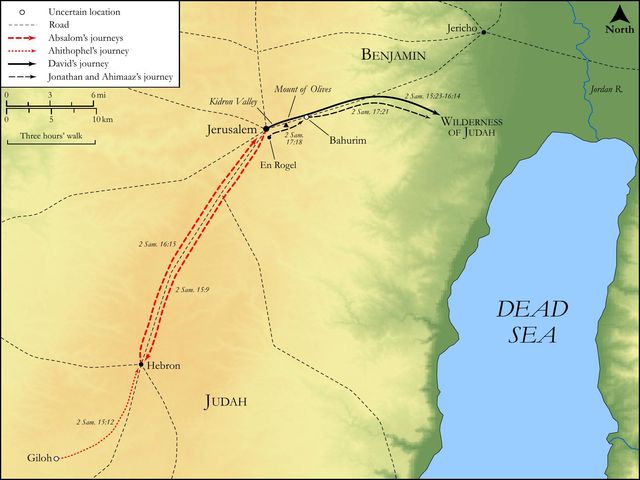
The phrase "after this" in 2 Samuel 15:1 serves as a crucial narrative bridge, directly linking Absalom's overt actions to the preceding events of David's reign. Specifically, it refers to the period following Absalom's three-year exile in Geshur after his vengeful murder of Amnon (2 Samuel 13:28-38). Although Joab, David's commander, had facilitated Absalom's return to Jerusalem (2 Samuel 14:21-23), David maintained a prolonged estrangement, refusing to see his son for two full years (2 Samuel 14:28). This simmering familial tension, coupled with Absalom's inherent ambition and manipulative nature, provided fertile ground for his audacious move. The subsequent verses in 2 Samuel 15 meticulously detail Absalom's calculated strategy to "steal the hearts of the men of Israel" (2 Samuel 15:6), beginning with this public display of royal pomp and power, which clearly foreshadows his open rebellion.
Historical & Cultural Context
Among the kings of that day, the possession of chariots and horses was a potent indicator of military strength, immense wealth, and sovereign authority. Such a retinue was not merely a luxury but a crucial component of a king's public image and a symbol of his ability to project power both domestically and internationally. The specific detail of "fifty men to run before him" was an even more distinct and recognizable mark of royalty. These "runners" typically served as a king's personal guard, swift messengers, or heralds, clearing the way and demonstrating the monarch's speed, readiness, and extensive personal entourage. Absalom's deliberate adoption of these specific royal trappings was a highly calculated political maneuver, a visual and undeniable declaration of his intent to assume the kingship. It was designed to impress the populace, project an image of kingly vigor and accessibility, and subtly undermine David's legitimate rule by presenting himself as a more dynamic and suitable alternative, even before a formal declaration of rebellion.
Key Themes
ShowHideThis verse powerfully introduces and significantly contributes to several major themes within the book of 2 Samuel and the broader Deuteronomistic History. First, it vividly illustrates Unchecked Ambition and Usurpation. Absalom, driven by a relentless desire for immediate power and recognition, disregards the established order of succession and directly challenges the divinely appointed king. Second, it serves as the initial manifestation of The Seeds of Rebellion, detailing the public steps Absalom takes to cultivate popular support and erode David's authority, foreshadowing how he would later "steal the hearts of the men of Israel" (2 Samuel 15:6). Third, this verse starkly reveals the devastating Consequences of Sin and Family Dysfunction. Absalom's rebellion is a grim fulfillment of Nathan's prophecy to David that "the sword shall never depart from thine house" (2 Samuel 12:10) due to David's own transgressions, particularly regarding Bathsheba and Uriah. The unresolved trauma from Amnon's rape of Tamar (2 Samuel 13:1-22) and Absalom's subsequent revenge further underscores the deep-seated dysfunction and moral decay within David's royal family, which ultimately erupts in this tragic civil war.
Exposition and Analysis
ShowHideKey Word Analysis
ShowHideThis verb, H6213, signifies more than simple acquisition; it implies a deliberate, purposeful, and active "making" or "doing." Absalom didn't merely happen upon these items; he actively and intentionally "prepared" or "made ready" these symbols of royal power for himself. This highlights his premeditation and the calculated nature of his actions, underscoring his agency and initiative in setting the stage for his rebellion. It speaks to a conscious, strategic effort rather than a passive accumulation.
This noun, H4818, refers specifically to a war chariot. In Israel and among the nations round about, chariots represented the pinnacle of military technology and were clear indicators of royal wealth, power, and prestige. Their possession by Absalom was a direct appropriation of kingly symbols, a visual declaration of his perceived status and readiness to assume sovereign power. This act directly challenged David's exclusive right to such an entourage, signaling Absalom's intent to usurp the throne.
This verb, H7323, means "to run" or "to rush." In the context of "fifty men to run before him," it describes a specific form of royal retinue. These "runners" were typically swift, strong men who would clear the way for the king's chariot, act as messengers, or serve as a personal guard, demonstrating the king's speed, readiness, and the extent of his personal entourage. For Absalom to employ fifty such men was a bold and public usurpation of a prerogative reserved for the reigning monarch, a clear signal of his royal ambitions to anyone observing.
Verse Breakdown
ShowHide"¶ And it came to pass after this"
This introductory phrase functions as a temporal and thematic connector, firmly situating Absalom's actions within the ongoing narrative of David's dysfunctional family and reign. It explicitly links the commencement of Absalom's rebellion to the unresolved tensions and simmering resentment that followed his return from exile and David's prolonged estrangement from him. This phrase signals that the subsequent events are not random but a direct consequence of the preceding narrative's emotional and political landscape.
"that Absalom prepared him chariots and horses"
This clause reveals Absalom's deliberate and calculated move to acquire the outward symbols of kingship. Chariots and horses were not only expensive and prestigious assets but also potent signifiers of military power and royal authority. By actively "preparing" them for himself, Absalom was not merely displaying personal wealth but consciously constructing a public image of himself as a king-in-waiting, directly mimicking and challenging his father's royal prerogatives and status. This was a direct, visual assault on David's legitimacy.
"and fifty men to run before him"
This specific detail further underscores Absalom's audacious appropriation of royal ceremony and power. Such a retinue of swift runners was a distinct mark of a reigning monarch's personal guard and an impressive display of status, readiness, and the ability to command. This public spectacle was meticulously designed to project an image of power, accessibility, and kingly vigor, intended to impress the populace and subtly draw their allegiance away from David and towards Absalom. It was a clear, unmistakable signal of his royal ambitions.
Literary Devices
ShowHideThe verse effectively employs several literary devices to convey its profound significance and foreshadow the ensuing tragedy. Foreshadowing is prominently featured, as Absalom's preparations—the acquisition of chariots, horses, and a retinue of fifty runners—are not merely displays of wealth but clear and ominous indicators of his imminent rebellion, signaling the dramatic conflict and civil war that will inevitably unfold. The choice of these specific items also functions as powerful symbolism; they are potent symbols of royal power, military might, and sovereign authority. Absalom's appropriation of them symbolically usurps David's legitimate kingship even before a formal declaration of war, effectively staging a visual coup. There is also a strong element of irony present: the son, who should be loyal, submissive, and a support to his father's throne, is actively preparing to overthrow his own father, the anointed king, using the very trappings of power that define his father's position. This sets up a tragic narrative of familial betrayal and political upheaval, highlighting the deep brokenness within David's house.
Theological and Thematic Connections
ShowHideThis foundational verse for Absalom's rebellion resonates with profound theological and thematic implications, serving as a cautionary tale. It underscores the destructive power of unchecked human ambition and pride when it clashes with divinely ordained order and legitimate authority. Absalom's self-exaltation and calculated usurpation stand in stark contrast to the biblical ideal of leadership rooted in humility, service, and submission to God's will. The narrative serves as a powerful reminder that the consequences of sin, particularly within a family and leadership structure, can ripple through generations, fulfilling prophecies like Nathan's concerning David's house. It highlights the inherent fragility of even divinely appointed kingship when internal strife, personal grievances, and a thirst for power are allowed to fester. Ultimately, it speaks to the tension between human will and God's sovereign plan, demonstrating how human choices, driven by sin, can bring about immense suffering and chaos, even within the covenant community.
Reflection and Application
ShowHideThe account of Absalom's initial steps toward rebellion, as detailed in 2 Samuel 15:1, offers timeless lessons for personal and communal life, serving as a potent warning. It starkly illustrates the insidious nature of unchecked ambition and pride, which can blind individuals to legitimate authority and lead to destructive ends. Absalom's outward display of power, meticulously designed to impress and manipulate, compels us to critically examine our own motives and methods for gaining influence or recognition. Are we seeking genuine service and humble leadership, or are we driven by a desire for self-promotion, external validation, or a hunger for control? Furthermore, the underlying family dysfunction—David's passive estrangement and Absalom's festering resentment—underscores the vital importance of addressing unresolved conflicts, fostering open and honest communication, and actively pursuing reconciliation in our relationships before bitterness takes root and bears destructive fruit. This narrative calls us to cultivate a spirit of contentment and trust in God's timing and sovereign ways, rather than grasping for power or status through manipulative or self-serving means.
Questions for Reflection
ShowHideFAQ
ShowHideWhy was Absalom allowed to return to Jerusalem but not see David for two years?
ShowHideAbsalom's return to Jerusalem was orchestrated by Joab, David's military commander, who recognized the king's deep longing for his son despite Absalom's heinous act of fratricide. David's decision to allow Absalom to return but to keep him from his presence for two years (2 Samuel 14:28) was likely a complex blend of grief, a desire for justice, and perhaps a form of continued punishment or a period of probation. However, this prolonged estrangement proved to be a critical misstep in David's leadership and parenting. Instead of fostering reconciliation and healing, it deepened Absalom's resentment, bitterness, and sense of alienation, creating the perfect environment for his ambitious and rebellious plans to take root and flourish. The lack of direct communication and reconciliation allowed a festering wound to become a full-blown, devastating rebellion.
What was the specific significance of "fifty men to run before him"?
ShowHideThe "fifty men to run before him" was a highly specific and profoundly significant display of royal prerogative, such as Samuel foretold when he warned that the king would take the sons of Israel for his chariots and horsemen, so that "some shall run before his chariots," far more than just a personal guard. This retinue was a symbolic representation of a king's swiftness, readiness, and ability to command and project power. These men would clear the way for the king's chariot, act as rapid messengers, and serve as a visible extension of the monarch's power and authority, demonstrating his prestige and the extent of his personal domain. For Absalom, who was merely a prince, to adopt such a display was a direct and public usurpation of a privilege reserved exclusively for the reigning king. It was a meticulously calculated move to project an image of himself as a dynamic, accessible, and powerful leader, subtly but unmistakably challenging David's authority and preparing the populace for his eventual claim to the throne. It was, in essence, a visual declaration of his kingly aspirations, designed to impress and draw allegiance away from his father.
Christ-Centered Fulfillment
ShowHideThe self-exalting ambition of Absalom, vividly portrayed in his preparation of chariots, horses, and a royal retinue, stands in stark contrast to the humble, self-sacrificing kingship of Jesus Christ. Absalom sought an earthly throne through manipulation, outward display, and the usurpation of his father's authority, ultimately bringing division, bloodshed, and death to Israel. His "kingship" was marked by pride, a thirst for personal glory, and a destructive pursuit of power. In profound contrast, Jesus, though truly King of kings and Lord of lords (Revelation 19:16), "did not consider equality with God something to be used to his own advantage; rather, he made himself nothing by taking the very nature of a servant" (Philippians 2:5-8). He did not come with chariots and fifty men to run before him, but rode on a humble donkey (Matthew 21:1-9), declaring that His "kingdom is not of this world" (John 18:36). Christ's mission was not to seize an earthly throne through force or manipulation, but to serve, to "give his life as a ransom for many" (Matthew 20:28), and to establish a spiritual kingdom of righteousness, peace, and joy. Where Absalom's rebellion brought the sword to David's house, Christ's "rebellion" against sin and death brought reconciliation, healing, and eternal life, delivering us from the dominion of darkness into His marvelous light (Colossians 1:13-14) and inaugurating a reign of grace and truth.