


1 Kings 1:47
Bible text: King James Version (1769 Blayney text) · Public domain
Bible text: King James Version with Strong's numbers · Public domain
Bible text: Berean Standard Bible · Public domain
Bible text: American Standard Version (1901) · Public domain
Bible text: World English Bible, Messianic edition · Public domain
Bible text: Geneva Bible (1599) · Public domain
Bible text: Young's Literal Translation · Public domain
- וְגַםve·gamand alsoH1571Conj-w ¦ AdvAdverbוְandגַםalso
- בָּאוּBa·'uthey have comeH935V-Qal-Perf-3cpVerb Qal Perfect 3rd Plural common gender
- עַבְדֵי'av·Dei[the] servants ofH5650N-mpcNoun Plural Masculine Construct
- הַמֶּלֶךְha·Me·lekhthe kingH4428Art ¦ N-msNoun Singular Masculine Absoluteהַtheמֶּלֶךְking
- לְבָרֵךְLe·va·rekhto blessH1288Prep-l ¦ V-Piel-InfVerb Piel Infinitive Constructלְtoבָרֵךְbless
- אֶת'et<obj.>H853DirObjMParticle Object Indicator
- אֲדֹנֵינוּ'a·do·Nei·nuour lord<s>H113N-mpc ¦ 1cpNoun Plural Masculine Constructאֲדֹנֵיlord<s>נוּour
- הַמֶּלֶךְha·Me·lekhthe kingH4428Art ¦ N-msNoun Singular Masculine Absoluteהַtheמֶּלֶךְking
- דָּוִדda·VidDavidH1732N-proper-mNoun Proper Masculine
- לֵאמֹרle·Mor<to> sayingH559Prep-l ¦ V-Qal-InfVerb Qal Infinitive Constructלֵ<to>אמֹרsaying
- יֵיטֵבyei·Tevmay he make goodH3190V-Hiphil-Imperf-3msVerb Hiphil Imperfect 3rd Singular Masculine
- אֱלֹהִים'e·lo·hei·chaGodH430N-mpNoun Plural Masculine Absolute
- אֶת'et<obj.>H853DirObjMParticle Object Indicator
- שֵׁםshem[the] name ofH8034N-mscNoun Singular Masculine Construct
- שְׁלֹמֹהshe·lo·MohSolomonH8010N-proper-mNoun Proper Masculine
- מִשְּׁמֶךָmi·she·Me·khamore than your nameH8034Prep-m ¦ N-msc ¦ 2msNoun Singular Masculine Constructמִmore thanשְּׁמֶnameךָyour
- וִיגַדֵּלvi·ga·Deland may he make greatH1431Conj-w ¦ V-Piel-ConjImperf-3msVerb Piel Conjunction+Imperfect 3rd Singular Masculineוִandיגַדֵּלmay he make great
- אֶת'et<obj.>H853DirObjMParticle Object Indicator
- כִּסְאוֹkis·'Ohis throneH3678N-msc ¦ 3msNoun Singular Masculine Constructכִּסְאthroneוֹhis
- מִכִּסְאֶךָmi·kis·'E·khamore than your throneH3678Prep-m ¦ N-msc ¦ 2msNoun Singular Masculine Constructמִmore thanכִּסְאֶthroneךָyour
- וַיִּשְׁתַּחוּvai·yish·Ta·chuand he bowed downH7812Conj-w ¦ V-Hishtaphel-ConsecImperf-3msVerb Hishtaphel Consecutive Imperfect 3rd Singular Masculineוַandיִּשְׁתַּחוּhe bowed down
- הַמֶּלֶךְha·Me·lekhthe kingH4428Art ¦ N-msNoun Singular Masculine Absoluteהַtheמֶּלֶךְking
- עַל'alonH5921PrepPreposition
- הַמִּשְׁכָּבha·mish·Kavthe bedH4904Art ¦ N-msNoun Singular Masculine Absoluteהַtheמִּשְׁכָּבbed
English is a literal word-by-word gloss of the Hebrew, not the KJV's wording. Why?
This is the original text the KJV's translators worked from — each Hebrew word with its own literal English meaning in this verse, prepared by scholars at Tyndale House, Cambridge. The KJV translates whole sentences, not word by word, so its wording differs: one Hebrew word can become several English words, and the KJV may choose “the LORD” where the gloss reads “Yahweh”. Both are faithful — they answer different questions. For the KJV's own rendering, switch to the KJV text.
Details
See on the biblical-era maps

Study this verse
Public-domain commentary
Matthew Henry
From his Commentary on the Whole Bible. Henry comments on passages, not single verses — this entry covers 1 Kings 1:41–53. His three-level outline is real structure in the source text, so it is rendered as structure.
We have here,
I.The tidings of Solomon's inauguration brought to Adonijah and his party, in the midst of their jollity:
They had made an end of eating, and, it should seem, it was a great while before they made an end, for all the affair of Solomon's anointing was ordered and finished while they were at dinner, glutting themselves. Thus those who serve not our Lord Christ, but oppose him, are commonly such as serve their own belly (Rom 16:18) and made a god of it, Phi 3:19. Their long feast intimates likewise that they were very secure and confident of their interest, else they would not have lost so much time. The old world and Sodom were eating and drinking, secure and sensual, when their destruction came, Luk 17:26, etc. When they made an end of eating, and were preparing themselves to proclaim their king, and bring him in triumph into the city, they heard the sound of the trumpet (Kg1 1:41), and a dreadful sound it was in their ears, Job 15:21. Joab was an old man, and was alarmed at it, apprehending the city to be in an uproar; but Adonijah was very confident that the messenger, being a worthy man, brought good tidings, Kg1 1:42. Usurpers flatter themselves with the hopes of success, and those are commonly least timorous whose condition is most dangerous. But how can those who do evil deeds expect to have good tidings? No, the worthiest man will bring them the worst news, as the priest's son did here to Adonijah, Kg1 1:43. "Verily, the best tidings I have to bring you is that Solomon is made king, so that your pretensions are all quashed." He relates to them very particularly,
1.With what great solemnity Solomon was made king (Kg1 1:44, Kg1 1:45), and that he was now sitting on the throne of the kingdom, Kg1 1:46. Adonijah thought to have stepped into the throne before him, but Solomon was too quick for him.
2.With what general satisfaction Solomon was made king, so that that which was done was not likely to be undone again.
(1.)The people were pleased, witness their joyful acclamations, Kg1 1:45.
(2.)The courtiers were pleased: The kings servants attended him with an address of congratulation upon this occasion, Kg1 1:47. We have here the heads of their address: They blessed king David, applauded his prudent care for the public welfare, acknowledged their happiness under his government, and prayed heartily for his recovery. They also prayed for Solomon, that God would make his name better than his father's, which it might well be when he had his father's foundation to build upon. A child, on a giant's shoulders, is higher than the giant himself.
(3.)The king himself was pleased: He bowed himself upon the bed, not only to signify his acceptance of his servants' address, but to offer up his own address to God (Kg1 1:48): "Blessed be the Lord God of Israel, who, as Israel's God, for Israel's good, has brought this matter to such a happy issue, my eyes even seeing it." Note, It is a great satisfaction to good men, when they are going out of the world, to see the affairs of their families in a good posture, their children rising up in their stead to serve God and their generation, and especially to see peace upon Israel and the establishment of it.
II.The effectual crush which this gave to Adonijah's attempt.
It spoiled the sport of his party, dispersed the company, and obliged every man to shift for his own safety. The triumphing of the wicked is short. They were building a castle in the air, which, having no foundation, would soon fall and crush them. They were afraid of being taken in the fact, while they were together hatching their treason, and therefore each one made the best of his way.
III.The terror Adonijah himself was in, and the course he took to secure himself.
he was now as much depressed as he had been elevated, Kg1 1:42, Kg1 1:50. He had despised Solomon as not worthy to be his guest (Kg1 1:10), but now he dreads him as his judge: He feared because of Solomon. Thus those who oppose Christ and his kingdom will shortly be made to tremble before him, and call in vain to rocks and mountains to shelter them from his wrath. He took hold on the horns of the altar, which was always looked upon as a sanctuary, or place of refuge (Exo 21:14), intimating hereby that he durst not stand a trial, but threw himself upon the mercy of his prince, in suing for which he relied upon no other plea than the mercy of God, which was manifested in the institution and acceptance of the sacrifices that were offered on that altar and the remission of sin thereupon. Perhaps Adonijah had formerly slighted the service of the altar, yet now he courts the protection of it. Many who in the day of their security neglect the great salvation, under the arrests of the terrors of the Lord would gladly be beholden to Christ and his merit, and, when it is too late, will catch hold of the horns of the altar.
IV.His humble address to Solomon for mercy.
By those who brought Solomon tidings where he was, he sent a request for his life (Kg1 1:51): Let king Solomon swear to me that he will not slay his servant. He owns Solomon for his prince, and himself his servant, dares not justify himself, but makes supplication to his judge. It was a great change with him. He that in the morning was grasping at a crown is before night begging for his life. Then Adonijah reigned, now Adonijah trembles, and cannot think himself safe unless Solomon promise, with an oath, not to put him to death.
V.The orders Solomon gave concerning him.
He discharges him upon his good behaviour, Kg1 1:52, Kg1 1:53. He considered that Adonijah was his brother, and that it was the first offence. Perhaps, being so soon made sensible of his error and then not persisting in his rebellion, he might prove not only a peaceable, but a serviceable subject, and therefore, if he will conduct himself well for the future, what is past shall be pardoned: but if he be fond disaffected, turbulent, and aspiring, this offence shall be remembered against him, he shall be called up upon his former conviction (as our law speaks), and execution shall be awarded against him. Thus the Son of David receives those to mercy that have been rebellious: if they will return to their allegiance, and be faithful to their Sovereign, their former crimes shall not be mentioned against them; but, if still they continue in the interests of the world and the flesh, this will be their ruin. Adonijah is sent for, and told upon what terms he stands, which he signifies his grateful submission to, and then is told to go to his house and live retired there. Solomon not only gave him his life, but his estate, thus establishing his throne by mercy.
Continue studying 1 Kings 1:47 across the web’s major study libraries — every link below opens this exact verse, chapter, or book on the destination site.
Read & Compare
 BibleGatewayThis verse in more than 200 translations and 70 languages.
 Bible.comThe YouVersion reader — hundreds of translations, reading plans, and highlights.
 ESV.orgCrossway's official English Standard Version reader.
 NET BibleThe NET translation with 60,000+ translators' notes on every rendering decision.
 STEP BibleTyndale House's free study tool — original text, vocabulary, and scholarly resources.
 BibliaLogos Bible Software's free web reader.
 USCCBThe New American Bible (Revised Edition) with the U.S. bishops' study notes.
Commentaries
 BibleHub CommentariesDozens of classic commentaries on this verse, gathered on one page.
 StudyLightMore than 100 commentary sets — the largest collection on the web.
 BibleRefPlain-English commentary on what this verse means, verse by verse.
 Enduring WordDavid Guzik's free commentary on this chapter, widely used by Bible teachers.
 Bible Study ToolsVerse commentary alongside Greek and Hebrew study aids.
Original Language & Research
- BibleHub InterlinearThe verse word by word — original language, transliteration, and English.
- BibleHub LexiconEvery word's original-language definition and Strong's entry.
 Blue Letter BibleDeep-study tools — Strong's numbers, concordance, and word studies.
 SefariaThe Hebrew text with Rashi and centuries of Jewish commentary.
Sermons, Hymns & Audio


TrulyRandomVerse is not affiliated with these sites and doesn’t control their content. They’re linked because they’re genuinely useful.
Summary
1 Kings 1:47 chronicles a pivotal moment in the peaceful and divinely orchestrated transfer of power from the aging King David to his son Solomon. Following Solomon's anointing as king, David's loyal servants approach him to offer a profound blessing, praying that Solomon's reign would surpass even David's in glory, prosperity, and divine favor. David's humble and worshipful response, bowing himself upon his bed, signifies his deep gratitude and acknowledgment of God's faithfulness in fulfilling His covenant promises for a stable and enduring dynasty. This verse powerfully encapsulates themes of divine sovereignty, the continuity of God's plan, and the people's hopeful anticipation for a blessed future under the new monarch.
Context
ShowHideLiterary Context
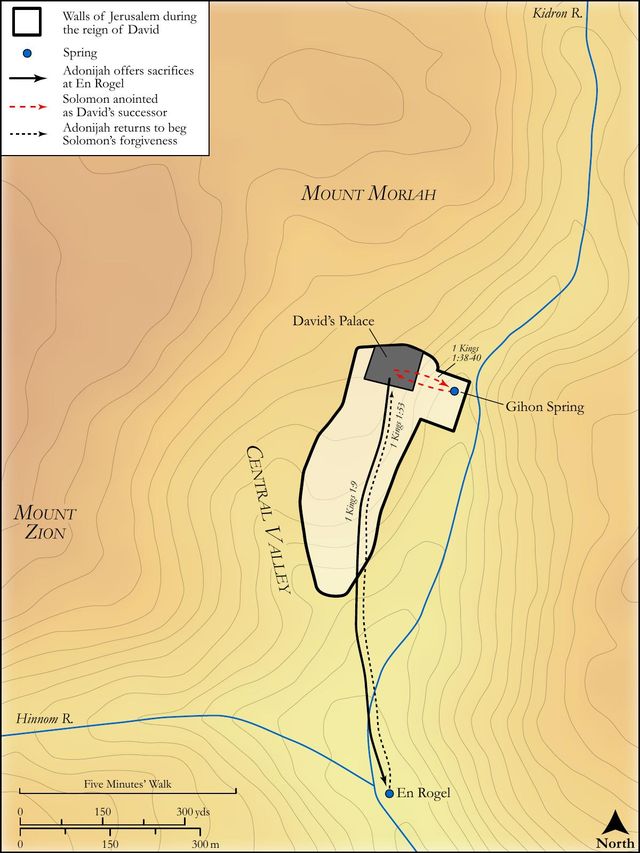
This verse is situated at the dramatic climax of the succession narrative in 1 Kings 1. Immediately preceding this verse, the narrative details the swift and decisive actions taken to thwart Adonijah's attempted coup. Nathan the prophet and Bathsheba successfully remind David of his oath to make Solomon king, prompting David to issue commands for Solomon's immediate anointing at Gihon. The joyous celebrations, including trumpets, flutes, and the shouts of "Long live King Solomon!", have just filled Jerusalem, reaching the ears of Adonijah and his co-conspirators (1 Kings 1:38-41). The "king's servants" mentioned in verse 47 are those who witnessed or participated in this divinely sanctioned event and now come to honor both the departing king and the newly established monarch, signifying the kingdom's unified allegiance and the legitimacy of Solomon's accession. This verse serves as a powerful affirmation of the peaceful transition and God's hand in it, contrasting sharply with the turmoil that often accompanied successions among the kings of that day.
Historical & Cultural Context
Among the kings of that day, royal succession was frequently a perilous and violent affair, often leading to civil strife, assassinations, and instability. The peaceful transfer of power from David to Solomon, despite Adonijah's well-orchestrated attempt to seize the throne, was therefore remarkable and highly significant, underscoring divine intervention. The act of "blessing" a king was a formal and deeply meaningful expression of loyalty, good wishes, and a fervent prayer for divine favor upon his reign. The "king's servants" here represent not just household staff, but high-ranking court officials, elders, and loyal subjects who formally acknowledge the new order and express their allegiance. The concept of a "name" in ancient Israel carried profound significance, embodying a person's character, reputation, and enduring legacy. To wish for Solomon's "name" and "throne" to be "better" and "greater" than David's was not a disrespectful comparison but a hyperbolic expression of fervent hope for an even more glorious and blessed future under God's continued favor, reflecting the boundless nature of divine blessing and the aspiration for an ever-increasing kingdom.
Key Themes
ShowHideThis verse powerfully contributes to several overarching themes within 1 Kings and the broader Deuteronomistic History. It prominently highlights the theme of Divine Sovereignty and Succession, demonstrating that God, not human machinations or political maneuvering, ultimately determines who sits on the throne of Israel, fulfilling His covenant promises to David (as seen in 2 Samuel 7:12-16). The servants' prayer for Solomon's "name" and "throne" to be greater underscores the aspiration for a reign of unparalleled prosperity, peace, and divine favor, signifying an Ever-Increasing Kingdom. Furthermore, David's humble act of bowing, despite his physical weakness, exemplifies Humility, Gratitude, and Worship before God, acknowledging His faithfulness in establishing Solomon's reign and ensuring the continuity of the Davidic dynasty. This peaceful transition also reinforces the Continuity of God's Plan for His people, demonstrating His unwavering commitment to His covenant and the lineage through which the Messiah would eventually come, ensuring stability and hope for the future of Israel.
Exposition and Analysis
ShowHideKey Word Analysis
ShowHideThis primitive root signifies "to kneel," and by implication, "to bless God (as an act of adoration)" or "man (as a benefit)." In this context, the servants "bless" David, meaning they invoke divine favor and prosperity upon his legacy and, by extension, upon Solomon's reign. It is an act of prayer and formal good wishes, recognizing that true success and stability come from God's hand. Their blessing is a petition for God's abundant favor to rest upon the new king.
More than a mere appellation, "name" in ancient Israel represented a person's character, reputation, authority, and memorial of individuality. To wish for Solomon's "name" to be "better" than David's was a profound prayer for his reign to achieve even greater renown, honor, and divine favor. It speaks to the hope for a future of enhanced glory and an enduring, positive legacy for the kingdom, building upon David's already illustrious achievements.
Derived from a word meaning "covered," this term refers to a seat of authority, specifically a royal "throne" (as canopied). It is a powerful symbol of royal authority, power, and sovereignty. The prayer for Solomon's "throne" to be "greater" than David's signifies a desire for his reign to be marked by even greater stability, influence, and success, both domestically and internationally. It anticipates an expansion of the kingdom's peace and prosperity, reflecting God's abundant and increasing blessing.
Verse Breakdown
ShowHide"And moreover the king's servants came to bless our lord king David,"
This opening clause sets the scene, identifying the actors as "the king's servants," representing the loyal court and people, who approach the aging King David. Their act of coming to "bless" David, even as he is in his final days, demonstrates profound respect for his long reign and acknowledges his pivotal role in the divinely ordained succession. It highlights the peaceful and orderly transition of power, contrasting with the earlier turmoil of Adonijah's rebellion.
"saying, God make the name of Solomon better than thy name, and make his throne greater than thy throne."
This is the core of the servants' prayer and blessing. It is a hyperbolic expression of fervent hope and anticipation, rather than a denigration of David's accomplishments. The wishes for Solomon's "name" to be "better" and his "throne" to be "greater" signify a profound desire for his reign to exceed David's in terms of prosperity, peace, international standing, and divine favor, thereby fulfilling and expanding upon the promises of the Davidic Covenant. It underscores the belief that God's hand is upon Solomon and that the future of the kingdom is exceedingly bright.
"And the king bowed himself upon the bed."
This final clause describes King David's humble and worshipful response. Despite his extreme physical weakness, evidenced by his confinement to his bed, David manages to perform an act of prostration or bowing. This posture is an act of profound gratitude and worship towards God, acknowledging His faithfulness in fulfilling His promise to establish Solomon's reign. It also signifies his acceptance of God's sovereign will and his deep contentment in seeing the continuity of the Davidic dynasty secured before his death.
Literary Devices
ShowHideThe verse employs several significant literary devices to convey its profound message. Hyperbole is notably evident in the servants' prayer, "God make the name of Solomon better than thy name, and make his throne greater than thy throne." This is not a literal expectation that Solomon would be superior to David in all respects, but rather a fervent, exaggerated expression of hope and blessing for an exceptionally prosperous and glorious reign, reflecting the boundless magnitude of God's anticipated favor. Symbolism is also prominent, with "name" representing reputation, legacy, and character, and "throne" symbolizing royal authority, power, and the enduring dynasty itself. David's act of bowing, despite his physical frailty, is a powerful piece of Imagery, visually conveying his profound humility, gratitude, and worship before God. This physical posture serves as a non-verbal affirmation of God's sovereignty and faithfulness in fulfilling His promises, providing a poignant final glimpse into David's devout character.
Theological and Thematic Connections
ShowHideThis verse powerfully underscores the divine sovereignty over human affairs, particularly in the realm of leadership and succession. It demonstrates that God's plan for His people is steadfast, even amidst human weakness, intrigue, and the natural progression of generations. The peaceful transition from David to Solomon, affirmed by the people's blessing and David's humble response, highlights the continuity of God's covenant promises. It teaches that true authority and blessing flow from God, and that leaders are ultimately established and empowered by Him. The prayer for Solomon to surpass David's greatness is a theological statement of hope for an ever-increasing manifestation of God's kingdom and blessing, a longing for the ultimate, perfect king whose reign would know no end.
Reflection and Application
ShowHide1 Kings 1:47 offers profound insights into how we, as believers, should approach transitions of leadership, both in the church and in society. It calls us to acknowledge God's ultimate sovereignty in establishing and removing leaders, trusting that His purposes will prevail even when circumstances seem uncertain or challenging. Like the king's servants, we are encouraged to pray earnestly and sincerely for those in authority, seeking God's wisdom, guidance, and abundant blessing upon their endeavors, especially that their leadership might honor God and serve the common good. Furthermore, David's humble posture, even in his final moments of physical weakness, serves as a powerful reminder for us to cultivate a spirit of profound gratitude and worship when we witness God's faithfulness at work. Whether in personal triumphs, communal blessings, or the peaceful continuation of God's work through others, our response should be one of humble adoration, recognizing that all good things flow from His gracious hand. It encourages us to find contentment and joy in God's unfolding plan, even when our own season of leadership or influence may be drawing to a close, trusting Him completely with the future.
Questions for Reflection
ShowHideFAQ
ShowHideWhy did the servants wish for Solomon's name and throne to be "better" and "greater" than David's? Was this disrespectful to David?
ShowHideThis was not disrespectful to David, but rather a common and deeply significant form of hyperbolic blessing in Israel. The "name" represented one's reputation, character, and enduring legacy, while the "throne" symbolized royal authority, power, and the dynasty itself. The servants' wish expressed a fervent prayer and hopeful anticipation that Solomon's reign would be even more prosperous, peaceful, and glorious than David's, building upon David's already illustrious achievements. It was an acknowledgment of God's continued and increasing favor, a desire for the kingdom's future to be exceedingly blessed, and an implicit recognition of the boundless nature of divine blessing promised in the Davidic Covenant, which hinted at an even greater, future king.
What is the significance of King David bowing himself upon the bed, especially given his frail condition?
ShowHideDavid's act of bowing, despite his extreme physical weakness and confinement to his bed, is profoundly significant. It is a posture of deep humility, gratitude, and worship. It signifies his full acceptance of God's sovereign will in establishing Solomon as his successor, thereby fulfilling the divine promise for an enduring dynasty (see 2 Samuel 7:12-16). This humble act demonstrates David's contentment and peace in witnessing the continuity of God's plan for Israel before his death. It reflects his lifelong devotion to God and his unwavering trust in the Lord's faithfulness, even as his own earthly reign was drawing to a close. His physical weakness underscores the spiritual strength of his faith and worship.
Christ-Centered Fulfillment
ShowHide1 Kings 1:47, with its themes of divine succession, a greater king, and an enduring throne, finds its ultimate and most profound fulfillment in Jesus Christ. The servants' prayer for Solomon's "name" and "throne" to be "greater" than David's points beyond Solomon, who, despite his wisdom and wealth, ultimately failed, to the true Son of David, whose reign would indeed surpass all earthly kings. While Solomon brought a period of unparalleled peace and prosperity to Israel, his kingdom was ultimately temporary and flawed. Jesus, however, is the King of kings and Lord of lords, whose name is truly "better" and "greater" than any other, for "at the name of Jesus every knee should bow, in heaven and on earth and under the earth" (Philippians 2:10). His throne is not merely greater, but eternal, for the angel Gabriel declared to Mary that the Lord God would give Jesus "the throne of his father David, and he will reign over Jacob's descendants forever; his kingdom will never end" (Luke 1:32-33). David's humble bowing upon his bed, a final act of worship and trust in God's faithfulness, foreshadows the ultimate submission and worship due to the Messiah, who perfectly fulfills the Davidic Covenant and establishes a spiritual kingdom that knows no bounds, bringing an everlasting peace and righteousness that Solomon could only imperfectly prefigure.