


1 Chronicles 22:18
Bible text: King James Version (1769 Blayney text) · Public domain
Bible text: King James Version with Strong's numbers · Public domain
Bible text: Berean Standard Bible · Public domain
Bible text: American Standard Version (1901) · Public domain
Bible text: World English Bible, Messianic edition · Public domain
Bible text: Geneva Bible (1599) · Public domain
Bible text: Young's Literal Translation · Public domain
- הֲלֹאha·Lo'¿ notH3808Interrog ¦ NegParticle Negativeהֲ¿לֹאnot
- יְהוָהYah·weh[is] YahwehH3068N-properNoun Proper Title
- אֱלֹהֵיכֶם'e·lo·hei·Khemyour GodH430N-mpc ¦ 2mpNoun Plural Masculine ConstructאֱלֹהֵיGodכֶםyour
- עִמָּכֶם'i·ma·Khemwith youH5973Prep ¦ 2mpPrepositionעִמָּwithכֶםyou
- וְהֵנִיחַve·he·Ni·achand has he given rest?H5117Conj-w ¦ V-Hiphil-ConsecPerf-3msVerb Hiphil Consecutive Perfect 3rd Singular Masculineוְandהֵנִיחַhas he given rest?
- לָכֶםla·Khemto youPrep-l ¦ 2mpSuffix Personal 2nd Plural Masculineלָtoכֶםyou
- מִסָּבִיבmi·sa·Vivfrom round aboutH5439Prep-m ¦ N-csNoun Singular common gender Absoluteמִfromסָּבִיבround about
- כִּיkiforH3588PrtParticle Conditional
- נָתַןna·Tanhe has givenH5414V-Qal-Perf-3msVerb Qal Perfect 3rd Singular Masculine
- בְּיָדִיbe·ya·Diin my handH3027Prep-b ¦ N-csc ¦ 1csNoun Singular common gender Constructבְּinיָדִhandיmy
- אֵת'et<obj.>H853DirObjMParticle Object Indicator
- יֹשְׁבֵיyo·she·Vei[the] inhabitants ofH3427V-Qal-Prtcpl-mpVerb Qal Participle Plural Masculine Construct
- הָאָרֶץha·'A·retzthe landH776Art ¦ N-fsNoun Singular Feminine Absoluteהָtheאָרֶץland
- וְנִכְבְּשָׁהve·nikh·be·Shahand it has been subduedH3533Conj-w ¦ V-Niphal-ConsecPerf-3fsVerb Niphal Consecutive Perfect 3rd Singular Feminineוְandנִכְבְּשָׁהit has been subdued
- הָאָרֶץha·'A·retzthe landH776Art ¦ N-fsNoun Singular Feminine Absoluteהָtheאָרֶץland
- לִפְנֵיlif·Nei<to> beforeH6440Prep-l ¦ N-mpcNoun Plural Masculine Constructלִ<to>פְנֵיbefore
- יְהוָהYah·wehYahwehH3068N-properNoun Proper Title
- וְלִפְנֵיve·lif·Neiand <to> beforeH6440Conj-w ¦ Prep-l ¦ N-mpcNoun Plural Masculine Constructוְandלִ<to>פְנֵיbefore
- עַמּוֹa·Mohis peopleH5971N-msc ¦ 3msNoun Singular Masculine Constructעַמּpeopleוֹhis
English is a literal word-by-word gloss of the Hebrew, not the KJV's wording. Why?
This is the original text the KJV's translators worked from — each Hebrew word with its own literal English meaning in this verse, prepared by scholars at Tyndale House, Cambridge. The KJV translates whole sentences, not word by word, so its wording differs: one Hebrew word can become several English words, and the KJV may choose “the LORD” where the gloss reads “Yahweh”. Both are faithful — they answer different questions. For the KJV's own rendering, switch to the KJV text.
Details
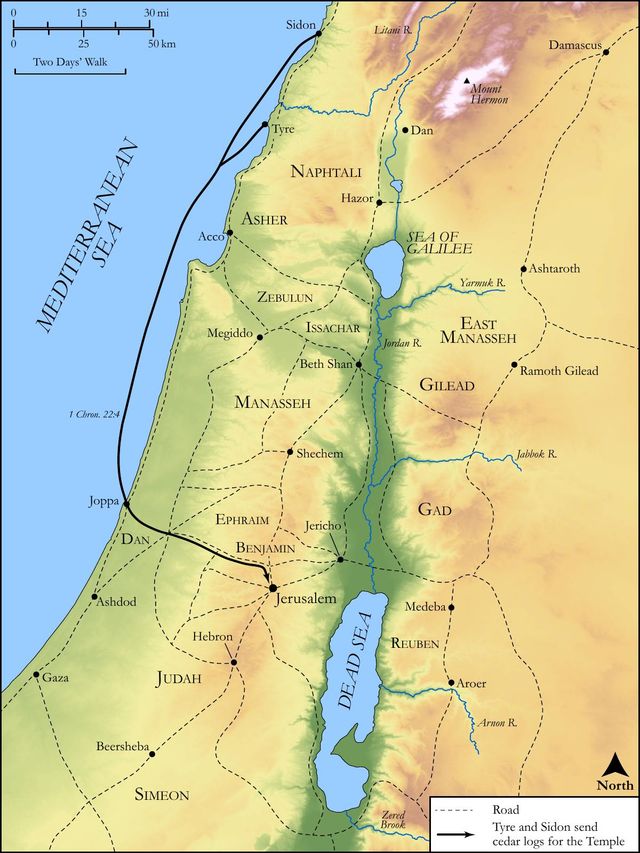
See on the biblical-era map
Study this verse
Public-domain commentary
Matthew Henry
From his Commentary on the Whole Bible. Henry comments on passages, not single verses — this entry covers 1 Chronicles 22:17–19.
David here engages the princes of Israel to assist Solomon in the great work he had to do, and every one to lend him a hand towards the carrying of it on. Those that are in the throne cannot do the good they would, unless those about the throne set in with them. David would therefore have the princes to advise Solomon and quicken him, and make the work as easy to him as they could, by promoting it every one in his place. 1. He shows them what obligations they lay under to be zealous in this matter, in gratitude to God for the great things he had done for them. He had given them victory, and rest, and a good land for an inheritance, Ch1 22:18. The more God has done for us the more we should study to do for him. 2. He presses that upon them which should make them zealous in it (Ch1 22:19): "Set your heart and soul to seek God, place your happiness in his favour, and keep your eye upon his glory. Seek him as your chief good and highest end, and this with your heart and soul. Make religion your choice and business; and then you will grudge no pains nor cost to promote the building of his sanctuary." Let but the heart be sincerely engaged for God, and the head and hand, the estate and interest, and all will be cheerfully employed for him.
Continue studying 1 Chronicles 22:18 across the web’s major study libraries — every link below opens this exact verse, chapter, or book on the destination site.
Read & Compare
 BibleGatewayThis verse in more than 200 translations and 70 languages.
 Bible.comThe YouVersion reader — hundreds of translations, reading plans, and highlights.
 ESV.orgCrossway's official English Standard Version reader.
 NET BibleThe NET translation with 60,000+ translators' notes on every rendering decision.
 STEP BibleTyndale House's free study tool — original text, vocabulary, and scholarly resources.
 BibliaLogos Bible Software's free web reader.
 USCCBThe New American Bible (Revised Edition) with the U.S. bishops' study notes.
Commentaries
 BibleHub CommentariesDozens of classic commentaries on this verse, gathered on one page.
 StudyLightMore than 100 commentary sets — the largest collection on the web.
 BibleRefPlain-English commentary on what this verse means, verse by verse.
 Enduring WordDavid Guzik's free commentary on this chapter, widely used by Bible teachers.
 Bible Study ToolsVerse commentary alongside Greek and Hebrew study aids.
Original Language & Research
- BibleHub InterlinearThe verse word by word — original language, transliteration, and English.
- BibleHub LexiconEvery word's original-language definition and Strong's entry.
 Blue Letter BibleDeep-study tools — Strong's numbers, concordance, and word studies.
 SefariaThe Hebrew text with Rashi and centuries of Jewish commentary.
Sermons, Hymns & Audio


TrulyRandomVerse is not affiliated with these sites and doesn’t control their content. They’re linked because they’re genuinely useful.
Summary
In 1 Chronicles 22:18, King David delivers a poignant rhetorical challenge to the leaders of Israel, reminding them of God's unwavering presence and the comprehensive peace He has sovereignly granted. This verse serves as a foundational appeal, urging the nation's princes and mighty men to wholeheartedly commit themselves to assisting David's son, Solomon, in the monumental and divinely appointed task of constructing the Temple, leveraging their divinely secured rest and past victories as compelling motivation for future obedience and dedicated service to the Lord.
Context
ShowHideLiterary Context
This verse is strategically placed within King David's final instructions and preparations for the building of the Temple. David, having been divinely prohibited from constructing the Temple himself due to his history as a man of war (1 Chronicles 22:8), has meticulously amassed vast quantities of materials and resources for the project (1 Chronicles 22:14-16). Prior to addressing the leaders, David has already exhorted Solomon, his chosen successor, to be strong and courageous, assuring him of God's steadfast presence and assistance in the undertaking (1 Chronicles 22:13). With Solomon prepared, David now turns to the influential leaders of Israel, appealing to their shared experience of God's faithfulness and their current state of peace to secure their full cooperation and dedication to Solomon's divinely appointed mission. This verse functions as a powerful preamble to David's direct command in 1 Chronicles 22:19, where he explicitly instructs them to "set your heart and your soul to seek the LORD your God; arise therefore, and build ye the sanctuary of the LORD God."
Historical & Cultural Context
David's reign was a transformative period for Israel, marked by significant military expansion and national consolidation. Through a series of divinely empowered campaigns, David had decisively defeated Israel's formidable enemies, including the Philistines, Moabites, Arameans, and Edomites, thereby establishing a secure and relatively peaceful kingdom. This era of "rest on every side" was understood as a direct fulfillment of God's ancient covenant promises to Abraham and later reiterated to Joshua, assuring Israel of peace and security in the land if they remained faithful (Deuteronomy 12:10). Culturally, such a period of divinely granted peace and prosperity was not viewed as an invitation to idleness but as an opportune moment for advancing God's purposes, especially the construction of His central dwelling place among His people. The Temple was far more than a mere structure; it was the spiritual epicenter of Israelite worship, symbolizing God's tangible presence and His covenant relationship with His chosen nation. The collective national effort required for such a monumental undertaking would have been deeply ingrained in their understanding as a profound act of corporate devotion and obedience to God.
Key Themes
ShowHideThis verse powerfully encapsulates several foundational themes central to the Chronicler's theological perspective and the broader Old Testament narrative. First, it underscores Divine Presence, affirming God's active, abiding, and supportive presence with His people, which is a cornerstone of Israel's identity and security. Second, it highlights Divine Provision and Rest, acknowledging that the peace and security Israel enjoyed were not the result of human might or strategic brilliance alone, but were a direct, sovereign gift from God, fulfilling ancient promises regarding their secure settlement in the land (Joshua 21:44). This divinely granted rest provides the essential conditions for spiritual and national building. Third, the verse emphasizes God's Sovereignty in Victory, explicitly attributing Israel's successful subjugation of the land's inhabitants directly to God's mighty hand. This reinforces the Chronicler's consistent emphasis on God's active and decisive involvement in the nation's historical triumphs. Finally, it serves as a profound Call to Corporate Responsibility and Obedience, implicitly challenging the leaders to wisely steward their divinely granted peace and past blessings, channeling them towards the greater purpose of God's kingdom, specifically the construction of His sacred Temple. This theme of utilizing God's blessings for His glory is a recurring and central tenet of the Chronicler's theology.
Exposition and Analysis
ShowHideKey Word Analysis
ShowHideThis term signifies a state of quiet, tranquility, or cessation from labor or conflict. In the biblical context, particularly concerning the land of Israel, nûwach often refers to the fulfillment of God's promise to give His people a secure dwelling place free from enemies. The accompanying phrase "on every side" (çâbîyb) emphasizes the comprehensive and pervasive nature of this peace, indicating that all external threats had been neutralized, thereby creating an ideal and stable environment for a monumental undertaking like the Temple's construction. It denotes a divinely granted peace, not merely a temporary lull in hostilities, allowing for the people to "settle down" and "be quiet."
This primitive root means to "tread down," "conquer," "subjugate," or "bring into bondage." It implies a forceful, decisive, and complete subjugation, leaving no ambiguity about the thoroughness of the conquest. In this context, it highlights the definitive nature of Israel's victories over the inhabitants of the land, affirming that the territory was not merely occupied but fully brought under Israelite control, enabling the secure and peaceful conditions necessary for the Temple project. The use of kâbash underscores the divine power behind these victories, as the land was "subdued before the LORD, and before his people," demonstrating God's active role in establishing Israel's dominion.
Verse Breakdown
ShowHide"[Is] not the LORD your God with you?"
This is a potent rhetorical question, not posed to elicit information, but to affirm an undeniable and foundational truth. It serves as a powerful reminder of God's ever-present, active, and supportive presence among His people. David appeals to their collective experience and inherent knowledge of God's faithfulness, implicitly suggesting that His divine presence is the ultimate source of their strength, security, and capacity to undertake even the most daunting tasks. It functions as both an encouragement and a challenge, conveying that with God's abiding presence, nothing is impossible for His obedient people.
"and hath he [not] given you rest on every side?"
Building upon the first, this second rhetorical question highlights God's tangible and comprehensive provision of peace and security. The "rest on every side" refers to the cessation of hostilities and the establishment of a secure kingdom, free from the immediate threat of surrounding enemies. This profound peace was a direct fulfillment of God's covenant promises, creating the optimal conditions for national flourishing and, specifically, for the unhindered construction of the Temple. It underscores divine favor and a strategic window of opportunity for sacred work.
"for he hath given the inhabitants of the land into mine hand;"
This clause provides the concrete evidence and irrefutable justification for the preceding affirmations. David explicitly attributes the military victories and the successful conquest of the land's previous inhabitants directly to God's sovereign intervention. It clarifies that these triumphs were not merely the result of David's military prowess alone, but rather God's supreme power working through him that secured the land. This serves to remind the leaders that their current state of peace and security is a direct consequence of God's past faithfulness and demonstrated power on their behalf.
"and the land is subdued before the LORD, and before his people."
This concluding clause reiterates and reinforces the comprehensive nature of the conquest and the resulting peace. The land is "subdued," meaning it has been thoroughly conquered, brought under control, and its former inhabitants displaced or made subservient. The significant phrasing "before the LORD, and before his people" emphasizes that this subjugation was both divinely orchestrated (God acting as the primary agent) and humanly experienced (Israel serving as His instrument). It solidifies the argument that the current peace is a divinely established reality, providing the perfect and necessary context for the sacred work of building God's dwelling place.
Literary Devices
ShowHideThe primary literary device employed in 1 Chronicles 22:18 is the Rhetorical Question. David utilizes two successive rhetorical questions ("Is not the LORD your God with you? and hath he [not] given you rest on every side?") not to solicit information, but to powerfully affirm undeniable truths. This technique serves to emphasize God's constant presence and comprehensive provision, making the subsequent call to action profoundly compelling and irrefutable. The questions are strategically designed to stir conviction, evoke gratitude, and remind the leaders of their privileged position under God's favor and their consequent responsibility. Additionally, there is a strong element of Cause and Effect or Logical Argumentation, as David presents God's past actions (His presence, the granting of rest, and securing victory) as the irrefutable basis ("for") for the nation's present responsibility to build the Temple. The verse also features Parallelism in the final clause, "before the LORD, and before his people," which effectively highlights the dual nature of God's work—divinely initiated and sovereignly accomplished, yet humanly experienced and participated in.
Theological and Thematic Connections
ShowHide1 Chronicles 22:18 profoundly connects the past faithfulness of God to the present call for His people's obedience and service. It demonstrates a crucial theological principle: divine blessings—God's presence, peace, and victory—are not ends in themselves but are graciously granted to enable God's people to fulfill His greater purposes. The "rest on every side" is not intended for complacency or idleness but for consecrated action, specifically the monumental task of building the Temple as the central hub for worship and a tangible symbol of God's dwelling among His people. This principle extends beyond the physical Temple, signifying that periods of peace, prosperity, stability, or spiritual tranquility, whether experienced nationally or personally, are divine opportunities to invest in God's kingdom, advance His glory, and engage in His work. The verse underscores the Chronicler's consistent emphasis on the paramount importance of the Temple as the focal point of Israel's covenant relationship with God and the indispensable need for unified, Spirit-empowered effort in God's service.
Reflection and Application
ShowHideDavid's rhetorical questions in 1 Chronicles 22:18 resonate as a timeless challenge and profound encouragement for believers today. Just as ancient Israel was called to leverage their divinely granted peace and past victories for the sacred task of building the Temple, we are similarly called to recognize, appreciate, and strategically utilize the "rest on every side" that God graciously provides in our contemporary lives. This "rest" can manifest in various forms: periods of stability, freedom from overwhelming crises, spiritual tranquility, emotional well-being, or even the profound peace of mind that stems from unwavering trust in God's sovereign control. These are not opportunities for spiritual idleness, self-indulgence, or passive contentment, but rather for purposeful engagement in God's kingdom work. Our past experiences of God's faithfulness—His constant presence, His faithful provision, and His demonstrated power in overcoming obstacles in our lives—should serve as powerful and compelling motivations for present obedience and courageous future endeavors. When we reflect deeply on how God has been intimately "with us" and how He has "subdued" challenges and adversaries in our path, it profoundly builds our confidence and empowers us to "arise therefore, and build," whether that "building" takes place within our families, local communities, professional spheres, or through global missions. Furthermore, it encourages us to actively collaborate with other believers, recognizing that God frequently calls His people to corporate efforts for the advancement of His glory and the expansion of His kingdom.
Questions for Reflection
ShowHideFAQ
ShowHideWhat is the significance of David asking rhetorical questions here?
ShowHideDavid's strategic use of rhetorical questions in 1 Chronicles 22:18 ("Is not the LORD your God with you? and hath he [not] given you rest on every side?") is a highly effective persuasive technique. He is not genuinely seeking information from the leaders of Israel, but rather forcefully affirming undeniable truths that they already know and have experienced. By phrasing his statements as questions, David appeals directly to their shared history and collective knowledge of God's faithfulness, making it exceedingly difficult for them to deny their responsibility or to excuse themselves from the task at hand. This rhetorical approach serves to powerfully remind them of God's active presence and His abundant provision, thereby building an irrefutable case for their necessary cooperation and dedication to the monumental task of building the Temple. It functions as a compelling call to acknowledge divine blessings and to respond with immediate and diligent obedience, effectively setting the stage for the direct command and charge that follows in 1 Chronicles 22:19.
Christ-Centered Fulfillment
ShowHideWhile 1 Chronicles 22:18 speaks powerfully of God's tangible presence and sovereign provision enabling the construction of a physical temple in Jerusalem, its ultimate fulfillment and profound spiritual resonance are found in the person and work of Jesus Christ. The "rest on every side" that ancient Israel experienced under the reigns of David and Solomon serves as a compelling foreshadowing of the deeper, eternal rest that believers find exclusively in Jesus. He is our ultimate Sabbath rest, having perfectly completed the redemptive work of salvation on the cross and offering a profound peace with God that transcends all human understanding (Philippians 4:7). The very presence of the LORD with His people, which was so central to David's persuasive argument, finds its perfect and complete embodiment in Jesus, who is divinely revealed as "God with us" (Immanuel, Matthew 1:23). Furthermore, the historical subjugation of the land's inhabitants by God's mighty hand points prophetically to Christ's decisive and ultimate victory over sin, death, and the principalities and powers of darkness (Colossians 2:15). Just as the divinely granted peace allowed for the building of the physical Temple, Christ's accomplished work on the cross and the spiritual peace He provides empower believers, who are now described as living stones, to be continually built into a vibrant spiritual house, a "holy priesthood" for God's glory (1 Peter 2:5), with Christ Himself serving as the indispensable cornerstone (Ephesians 2:20-22). Thus, the physical Temple project, enabled by God's manifest presence and the gift of rest, powerfully points forward to the spiritual temple of the church, which is continually built by the Holy Spirit through the ultimate rest and decisive victory secured by Christ.