


1 Chronicles 16:23
Bible text: King James Version (1769 Blayney text) · Public domain
Bible text: Berean Standard Bible · Public domain
Bible text: American Standard Version (1901) · Public domain
Bible text: World English Bible, Messianic edition · Public domain
Bible text: Geneva Bible (1599) · Public domain
Bible text: Young's Literal Translation · Public domain
- שִׁירוּShi·rusingH7891V-Qal-Imp-2mpVerb Qal Imperative 2nd Plural Masculine
- לַיהוָהla·Yah·wehto YahwehH3068Prep-l ¦ N-properNoun Proper TitleלַtoיהוָהYahweh
- כָּלkolO allH3605N-mscNoun Singular Masculine Construct
- הָאָרֶץha·'A·retzthe earthH776Art ¦ N-fsNoun Singular Feminine Absoluteהָtheאָרֶץearth
- בַּשְּׂרוּba·se·Rubear newsH1319V-Piel-Imp-2mpVerb Piel Imperative 2nd Plural Masculine
- מִיּוֹםmi·yomfrom dayH3117Prep-m ¦ N-msNoun Singular Masculine Absoluteמִfromיּוֹםday
- אֶל'eltoH413PrepPreposition
- יוֹםYomdayH3117N-msNoun Singular Masculine Absolute
- יְשׁוּעָתוֹye·shu·'a·Tohis salvationH3444N-fsc ¦ 3msNoun Singular Feminine Constructיְשׁוּעָתsalvationוֹhis
English is a literal word-by-word gloss of the Hebrew, not the KJV's wording. Why?
This is the original text the KJV's translators worked from — each Hebrew word with its own literal English meaning in this verse, prepared by scholars at Tyndale House, Cambridge. The KJV translates whole sentences, not word by word, so its wording differs: one Hebrew word can become several English words, and the KJV may choose “the LORD” where the gloss reads “Yahweh”. Both are faithful — they answer different questions. For the KJV's own rendering, switch to the KJV text.
Details
See on the biblical-era map
Study this verse
Public-domain commentary
Matthew Henry
From his Commentary on the Whole Bible. Henry comments on passages, not single verses — this entry covers 1 Chronicles 16:7–36.
We have here the thanksgiving psalm which David, by the Spirit, composed, and delivered to the chief musician, to be sung upon occasion of the public entry the ark made into the tent prepared for it. Some think he appointed this hymn to be daily used in the temple service, as duly as the day came; whatever other psalms they sung, they must not omit this. David had penned many psalms before this, some in the time of his trouble by Saul. This was composed before, but was now first delivered into the hand of Asaph, for the use of the church. It is gathered out of several psalms (from the beginning to Ch1 16:23 is taken from Psa 105:1, etc.; and then Ch1 16:23 is the whole 96th psalm, with little variation; Ch1 16:34 is taken from Psa 136:1 and divers others; and then the last two verses are taken from the close of Ps. 106), which some think warrants us to do likewise, and make up hymns out of David's psalms, a part of one and a part of another put together so as may be most proper to express and excite the devotion of Christians. These psalms will be best expounded in their proper places (if the Lord will); here we take them as they are put together, with a design to thank the Lord (Ch1 16:7), a great duty, to which we need to be excited and in which we need to be assisted. 1. Let God be glorified in our praises; let his honour be the centre in which all the lines meet. Let us glorify him by our thanksgivings (Give thanks to the Lord), by our prayers (Call on his name, Ch1 16:8), by our songs (Sing psalms unto him), by our discourse - Talk of all his wondrous works, Ch1 16:9. Let us glorify him as a great God, and greatly to be praised (Ch1 16:25), as supreme God (above all gods), as sole God, for all others are idols, Ch1 16:26. Let us glorify him as most bright and blessed in himself (Glory and honour are in his presence, Ch1 16:27), as creator (The Lord made the heavens), as the ruler of the whole creation (His judgments are in all the earth, Ch1 16:14), and as ours - He is the Lord our God. Thus must we give unto the Lord the glory due to his name (Ch1 16:28, Ch1 16:29), and own it, and much more, his due. 2. Let other be edified and instructed: Make known his deeds among the people (Ch1 16:8), declare his glory among the heathen (Ch1 16:24), that those who are strangers to him may be led into acquaintance with him, allegiance to him, and the adoration of him. Thus must we serve the interests of his kingdom among men, that all the earth may fear before him, Ch1 16:30. 3. Let us be ourselves encouraged to triumph and trust in God. Those that give glory to God's name are allowed to glory in it (Ch1 16:10), to value themselves upon their relation to God and venture themselves upon his promise to them. Let the heart of those rejoice that seek the Lord, much more of those that have found him. Seek him, and his strength, and his face: that is, seek him by the ark of his strength, in which he manifests himself. 4. Let the everlasting covenant be the great matter of our joy and praise (Ch1 16:15): Be mindful of his covenant. In the parallel place it is, He will be ever mindful of it, Psa 105:8. Seeing God never will forget it, we never must. The covenant is said to be commanded, because God has obliged us to obey the conditions of it, and because he has both authority to make the promise and ability to make it good. This covenant was ancient, yet never to be forgotten. It was made with Abraham, Isaac, and Jacob, who were long since dead (Ch1 16:16-18), yet still sure to the spiritual seed, and the promises of it pleadable. 5. Let God's former mercies to his people of old, to our ancestors and our predecessors in profession, be commemorated by us now with thankfulness to his praise. Let it be remembered how God protected the patriarchs in their unsettled condition. When they came strangers to Canaan and were sojourners in it, when they were few and might easily have been swallowed up, when they were continually upon the remove and so exposed, when there were many that bore them ill-will and sought to do them mischief, yet no man was suffered to do them wrong - not the Canaanites, Philistines, Egyptians. Kings were reproved and plagued for their sakes. Pharaoh was so, and Abimelech. They were the anointed of the Lord, sanctified by his grace, sanctified by his glory, and had received the unction of the Spirit. They were his prophets, instructed in the things of God themselves and commissioned to instruct others (and prophets are said to be anointed, Kg1 19:16; Isa 61:1); therefore, if any touch them, they touch the apple of God's eye; if any harm them, it is at their peril, Ch1 16:19-22. 6. Let the great salvation of the Lord be especially the subject of our praises (Ch1 16:23): Show forth from day to day his salvation, that is (says bishop Patrick), his promised salvation by Christ. We have reason to celebrate that from day to day; for we daily receive the benefits of it, and it is a subject that can never be exhausted. 7. Let God be praised by a due and constant attendance upon him in the ordinances he has appointed: Bring an offering, then the fruit of the ground, now the fruit of the lips, of the heart (Heb 13:15), and worship him in the beauty of holiness, in the holy places and in a holy manner, Ch1 16:29. Holiness is the beauty of the Lord, the beauty of all sanctified souls and all religious performances. 8. Let God's universal monarchy be the fear and joy of all people. Let us reverence it: Fear before him, all the earth. And let us rejoice in it: Let the heavens be glad and rejoice, because the Lord reigns, and by his providence establishes the world, so that, though it be moved, it cannot be removed, nor the measures broken which Infinite Wisdom has taken in the government of it, Ch1 16:30, Ch1 16:31. 9. Let the prospect of the judgment to come inspire us with an awful pleasure, Let earth and sea, fields and woods, though in the great day of the Lord they will all be consumed, yet rejoice that he will come, doth come, to judge the earth, Ch1 16:32, Ch1 16:33. 10. In the midst of our praises we must not forget to pray for the succour and relief of those saints and servants of God that are in distress (Ch1 16:35): Save us, gather us, deliver us from the heathen, those of us that are scattered and oppressed. When we are rejoicing in God's favours to us we must remember our afflicted brethren, and pray for their salvation and deliverance as our own. We are members one of another; and therefore when we mean, "Lord, save them," it is not improper to say, "Lord, save us." Lastly, Let us make God the Alpha and Omega of our praises. David begins with (Ch1 16:8), Give thanks to the Lord; he concludes (Ch1 16:36), Blessed be the Lord. And whereas in the place whence this doxology is taken (Psa 106:48) it is added, Let all the people say, Amen, Hallelujah, here we find they did according to that directory: All the people said, Amen, and praised the Lord. When the Levites had finished this psalm or prayer and praise, then, and not till then, the people that attended signified their consent and concurrence by saying, Amen, And so they praised the Lord, much affected no doubt with this newly instituted way of devotion, which had been hitherto used in the schools of the prophets only, Sa1 10:5. And, if this way of praising God please the Lord better than an ox or a bullock that has horns and hoofs, the humble shall see it and be glad, Psa 69:31, Psa 69:32.
Historical interpretation
Three Centuries of Reception
2 surviving comments on this verse. Each one is dated, so this reads as a timeline rather than a list.
Select a marker to jump to its quote. Markers stagger vertically where authors wrote within a few decades of each other.
And again, in another prophecy, the Spirit of prophecy, through the same David, intimated that Christ, after He had been crucified, should reign, and spoke as follows: "Sing to the Lord, all the earth, and day by day declare His salvation. For great is the Lord, and greatly to be praised, to be feared above all the gods. For all the gods of the nations are idols of devils; but God made the heavens. Glory and praise are before His face, strength and glorying are in the habitation of His holiness. Give Glory to the Lord, the Father everlasting. Receive grace, and enter His presence, and worship in His holy courts. Let all the earth fear before His face; let it be established, and not shaken. Let them rejoice among the nations. The Lord hath reigned from the tree."
But when the Spirit of prophecy speaks of things that are about to come to pass as if they had already taken place,-as may be observed even in the passages already cited by me,-that this circumstance may afford no excuse to readers [for misinterpreting them], we will make even this also quite plain. The things which He absolutely knows will take place, He predicts as if already they had taken place. And that the utterances must be thus received, you will perceive, if you give your attention to them. The words cited above, David uttered 1500 years before Christ became a man and was crucified; and no one of those who lived before Him, nor yet of His contemporaries, afforded joy to the Gentiles by being crucified. But our Jesus Christ, being crucified and dead, rose again, and having ascended to heaven, reigned; and by those things which were published in His name among all nations by the apostles, there is joy afforded to those who expect the immortality promised by Him.
"O sing unto the Lord a new song; sing unto the Lord, all the earth." If all the earth sings a new song, it is thus building while it sings; the very act of singing is building, but only if it sings not the old song. The lust of the flesh sings the old song; the love of God sings the new. Hear why it is a new song: the Lord says, "A new commandment I give to you, that you love one another." The whole earth then sings a new song: there the house of God is built. All the earth is the house of God. If all the earth is the house of God, he who clings not to all the earth is a ruin, not a house; that old ruin whose shadow that ancient temple represented. For there what was old was destroyed, that what was new might be built up.
Continue studying 1 Chronicles 16:23 across the web’s major study libraries — every link below opens this exact verse, chapter, or book on the destination site.
Read & Compare
 BibleGatewayThis verse in more than 200 translations and 70 languages.
 Bible.comThe YouVersion reader — hundreds of translations, reading plans, and highlights.
 ESV.orgCrossway's official English Standard Version reader.
 NET BibleThe NET translation with 60,000+ translators' notes on every rendering decision.
 STEP BibleTyndale House's free study tool — original text, vocabulary, and scholarly resources.
 BibliaLogos Bible Software's free web reader.
 USCCBThe New American Bible (Revised Edition) with the U.S. bishops' study notes.
Commentaries
 BibleHub CommentariesDozens of classic commentaries on this verse, gathered on one page.
 StudyLightMore than 100 commentary sets — the largest collection on the web.
 BibleRefPlain-English commentary on what this verse means, verse by verse.
 Enduring WordDavid Guzik's free commentary on this chapter, widely used by Bible teachers.
 Bible Study ToolsVerse commentary alongside Greek and Hebrew study aids.
Original Language & Research
- BibleHub InterlinearThe verse word by word — original language, transliteration, and English.
- BibleHub LexiconEvery word's original-language definition and Strong's entry.
 Blue Letter BibleDeep-study tools — Strong's numbers, concordance, and word studies.
 SefariaThe Hebrew text with Rashi and centuries of Jewish commentary.
Sermons, Hymns & Audio


TrulyRandomVerse is not affiliated with these sites and doesn’t control their content. They’re linked because they’re genuinely useful.
Summary
1 Chronicles 16:23 issues a vibrant and universal call to perpetual praise and proclamation of God's redemptive acts. Embedded within a grand psalm of thanksgiving delivered by King David upon the Ark of the Covenant's arrival in Jerusalem, this verse commands all creation to actively and continuously declare the LORD's saving power and deliverance. It establishes a foundational principle for worship that transcends national boundaries and temporal limitations, encapsulating a dual mandate: to offer joyful adoration and to bear consistent witness to God's mighty works of salvation.
Context
ShowHideLiterary Context
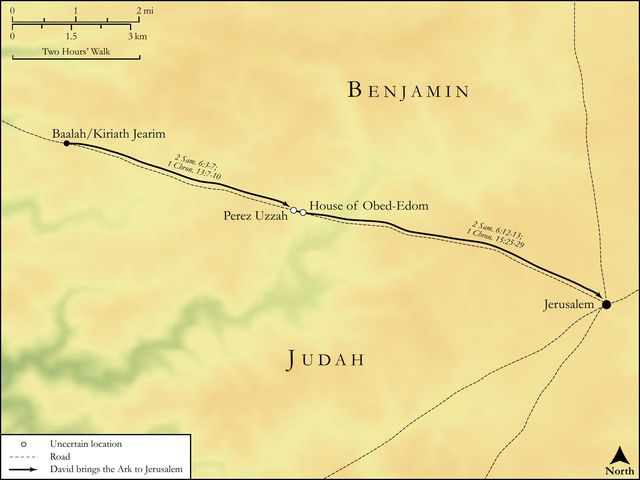
This verse is a pivotal component of a magnificent psalm of thanksgiving (1 Chronicles 16:7-36) delivered by King David on the momentous occasion of bringing the Ark of the Covenant into Jerusalem. This event was a cornerstone for Israel, symbolizing God's tangible presence dwelling among His people and centralizing the nation's worship. The psalm itself is a rich tapestry, weaving together elements from Psalm 105 (verses 1-15) and Psalm 96 (verses 23-33), augmented with unique Chronicler material. David's commissioning of this psalm underscores his profound commitment to worship and his vision for Israel as a beacon to the nations, proclaiming God's glory. The verses immediately preceding 1 Chronicles 16:23 emphasize God's wondrous deeds, His covenant faithfulness, and His protective care over His people, while the subsequent verses continue to extol His greatness and call for universal adoration.
Historical & Cultural Context
The procession of the Ark to Jerusalem (1 Chronicles 15-16) represented a deeply significant religious and political milestone. It solidified Jerusalem's status as both the political capital and the spiritual heart of Israel, a strategic move that consolidated David's kingship and unified the nation under God's chosen dwelling place. The Ark, serving as the focal point of Israelite worship, symbolized God's tangible presence and His covenant with His people. The celebration was characterized by elaborate musical performances, sacrificial offerings, and public declarations of praise, reflecting the vibrant cultic practices of ancient Israel. The seemingly grand call for "all the earth" to sing and proclaim, though uttered in a localized context, reflects the universal scope of God's sovereignty, a concept understood within Israel's unique identity as God's chosen people, through whom all nations would ultimately be blessed, as promised to Abraham in Genesis 12:3.
Key Themes
ShowHide1 Chronicles 16:23 powerfully articulates several core themes central to the book of Chronicles and biblical theology as a whole. Firstly, it highlights Universal Worship, emphasizing that God's glory and saving acts are not confined to Israel but are intended to be known and celebrated by "all the earth." This foreshadows the eschatological vision of all nations worshipping the LORD, a theme echoed in prophetic literature like Isaiah 45:22-23. Secondly, the phrase "from day to day" underscores the theme of Continuous Proclamation, signifying that the declaration of God's salvation is not a one-time event but an ongoing, daily commitment, a lifestyle of witness and thanksgiving. This speaks to the enduring nature of God's faithfulness and humanity's perpetual response to His goodness. Finally, the central message to be proclaimed is God's Salvation, a comprehensive term encompassing His mighty acts of deliverance, rescue, and provision throughout history. While in the Old Testament this often referred to physical deliverance from enemies or hardship, it profoundly anticipates the ultimate spiritual salvation offered through the Messiah, as recognized by figures like Simeon in Luke 2:30.
Exposition and Analysis
ShowHideKey Word Analysis
ShowHideThis word is an imperative plural verb, a direct command to a collective audience. It signifies not merely vocalization but a joyful, enthusiastic expression of praise and adoration. In the context of Israelite worship, singing was a primary means of expressing devotion, recounting God's mighty deeds, and invoking His presence. The command here is active and communal, inviting a full-hearted response to the Lord's character and actions, often associated with a "strolling minstrelsy" or public performance.
Also an imperative plural, this verb carries the powerful meaning "to be fresh," "to announce glad news," "to proclaim," or "to herald." It implies an active, public, and deliberate declaration of something significant. It's not a passive display but an intentional communication, akin to a messenger announcing a victory or a king's decree. The use of this word elevates the act of proclaiming God's salvation beyond mere testimony to a divine mandate to spread the "good tidings" of His saving work.
This is a rich and comprehensive Hebrew term encompassing deliverance, rescue, victory, help, and well-being. It refers to God's mighty acts of intervention on behalf of His people, whether from physical enemies, natural disasters, or spiritual bondage. It speaks to God's power to save and His faithfulness to His covenant promises. In the Old Testament, yᵉshûwʻâh often points to historical deliverances (e.g., the Exodus), but it also carries an eschatological hope for ultimate and complete redemption, signifying "something saved" or "deliverance."
Verse Breakdown
ShowHide"Sing unto the LORD, all the earth;"
This opening clause issues a universal command for worship. "Sing unto the LORD" is a direct imperative, calling for active, joyful praise directed specifically to Yahweh (H3068), the covenant God of Israel. The phrase "all the earth" (H776) expands the scope of this command beyond the immediate Israelite assembly to encompass all peoples and nations. It is a prophetic vision of global adoration, recognizing the LORD's sovereignty over all creation. This is not merely a suggestion but a divine expectation for universal acknowledgment of God's worth.
"shew forth from day to day"
This segment specifies the nature and continuity of the proclamation. "Shew forth" (or "proclaim good news") emphasizes an active, public declaration, not a private contemplation. The temporal phrase "from day to day" (H3117, repeated for emphasis) highlights the ongoing, perpetual nature of this witness. It's not a one-time event but a continuous, daily practice, implying a lifestyle of consistent testimony and thanksgiving. This speaks to the enduring relevance of God's saving acts and the constant need for their proclamation.
"his salvation."
This final clause identifies the core content of the proclamation. The focus is singularly on "his salvation"—referring to God's mighty acts of deliverance, rescue, and redemptive power. This encompasses all the ways God has intervened in history to save His people, from the Exodus to countless other acts of provision and protection. It is the good news of God's character and His active work in the world, the essence of His comprehensive plan for welfare and victory.
Literary Devices
ShowHide1 Chronicles 16:23 employs several potent literary devices to convey its profound message. The predominant device is the Imperative Mood, evident in "Sing" (shîrû) and "shew forth" (bassərû). These are direct, forceful commands, underscoring the non-negotiable nature of the call to worship and witness. The phrase "all the earth" functions as Hyperbole, where a part (the earth) stands for the whole (all its inhabitants, or perhaps all nations). This amplifies the universal scope of God's dominion and the breadth of the intended audience for His praise. The temporal phrase "from day to day" utilizes Repetition (or a form of Merism, signifying "every day, without ceasing") to emphasize the continuous and unceasing nature of the proclamation. This highlights the ongoing relevance of God's salvation and the perpetual duty of His people to declare it. Finally, there is an implied Parallelism between "sing unto the LORD" and "shew forth... his salvation," where both actions are forms of praise and proclamation, reinforcing the dual aspect of worship and witness as integrated expressions of devotion.
Theological and Thematic Connections
ShowHide1 Chronicles 16:23 serves as a profound theological statement on the nature of God's sovereignty and humanity's proper response. It establishes that God's redemptive work is not limited to a single nation but is intended for universal recognition and celebration. The command to "shew forth" His salvation positions God's people as active participants in His redemptive plan, called to be heralds of His good news. This verse beautifully intertwines the themes of worship and evangelism, suggesting that true adoration of God naturally overflows into a public declaration of His saving power. It anticipates a future where every tongue will confess His name, rooted in the historical reality of His mighty acts of deliverance and pointing toward the ultimate global worship of the King.
Reflection and Application
ShowHide1 Chronicles 16:23 offers a timeless and powerful mandate for believers today, transcending its ancient context to speak directly to our contemporary walk of faith. It reminds us that our relationship with God is not merely personal and private, but also communal and public. We are called to embody a lifestyle of continuous praise, recognizing God's sovereignty and goodness in every moment, in every circumstance. This daily worship should naturally lead to an active declaration of His saving work to those around us. The "salvation" we proclaim is not just a historical event but a living reality experienced through Christ. Our lives, both individually and corporately as the church, are meant to be a constant echo of God's goodness, a daily "shewing forth" of His transformative power. This involves both our words and our deeds, demonstrating the hope and deliverance found in Him, thereby participating in God's ongoing mission to reach "all the earth" with His glorious message.
Questions for Reflection
ShowHideFAQ
ShowHideWhat does "shew forth from day to day his salvation" mean for us today?
ShowHideFor believers today, "shew forth from day to day his salvation" means to continuously and actively proclaim the good news of God's saving work, primarily through Jesus Christ. This isn't a one-time event but a daily commitment to live out and articulate the reality of God's deliverance from sin, death, and despair. It encompasses both our verbal testimony—sharing the Gospel with others—and our lived witness—demonstrating the transformative power of God's salvation through our actions, character, and love. It means that every day presents an opportunity to reflect God's glory and share the hope found in Him, making us participants in the Great Commission found in Matthew 28:19-20.
Christ-Centered Fulfillment
ShowHide1 Chronicles 16:23, with its universal call to "sing unto the LORD" and "shew forth... his salvation," finds its ultimate and most profound fulfillment in Jesus Christ. The "salvation" that David's psalm calls for all the earth to proclaim is perfectly embodied and accomplished in the person and work of Jesus. He is the Lamb of God who takes away the sin of the world, the very embodiment of God's saving power. The New Testament reveals that the "good news" or "salvation" to be proclaimed is specifically the Gospel of Christ's death, resurrection, and ascension, which offers deliverance from sin and death to all who believe. The mandate for "all the earth" to participate in this proclamation is realized through the global mission of the church, empowered by the Holy Spirit, to take the message of Christ's finished work to every nation, tribe, people, and language, as commanded in Mark 16:15. Thus, 1 Chronicles 16:23 is not just a historical command but a prophetic echo of the universal worship and witness that centers on Jesus, the only name under heaven given among mankind by which we must be saved, and the one to whom every knee will bow and every tongue confess.