


1 Chronicles 16:24
- סַפְּרוּsa·pe·RurecountH5608V-Piel-Imp-2mpVerb Piel Imperative 2nd Plural Masculine
- בַגּוֹיִםva·go·Yimamong the nationsH1471Prep-b ¦ N-mpNoun Plural Masculine Absoluteבַamong theגּוֹיִםnations
- אֶת'et<obj.>H853DirObjMParticle Object Indicator
- כְּבוֹדוֹke·vo·Dohis gloryH3519N-msc ¦ 3msNoun Singular Masculine Constructכְּבוֹדgloryוֹhis
- בְּכָלbe·kholamong allH3605Prep-b ¦ N-mscNoun Singular Masculine Constructבְּamongכָלall
- הָעַמִּיםha·'a·Mimthe peoplesH5971Art ¦ N-mpNoun Plural Masculine Absoluteהָtheעַמִּיםpeoples
- נִפְלְאֹתָיוnif·le·'o·Tavhis wondersH6381V-Niphal-Prtcpl-fp ¦ 3msVerb Niphal Participle Plural Feminine Constructנִפְלְאֹתָיwondersוhis
English is a literal word-by-word gloss of the Hebrew, not the KJV's wording. Why?
This is the original text the KJV's translators worked from — each Hebrew word with its own literal English meaning in this verse, prepared by scholars at Tyndale House, Cambridge. The KJV translates whole sentences, not word by word, so its wording differs: one Hebrew word can become several English words, and the KJV may choose “the LORD” where the gloss reads “Yahweh”. Both are faithful — they answer different questions. For the KJV's own rendering, switch to the KJV text.
Details
See on the biblical-era map
Study this verse
Public-domain commentary
Matthew Henry
From his Commentary on the Whole Bible. Henry comments on passages, not single verses — this entry covers 1 Chronicles 16:7–36.
We have here the thanksgiving psalm which David, by the Spirit, composed, and delivered to the chief musician, to be sung upon occasion of the public entry the ark made into the tent prepared for it. Some think he appointed this hymn to be daily used in the temple service, as duly as the day came; whatever other psalms they sung, they must not omit this. David had penned many psalms before this, some in the time of his trouble by Saul. This was composed before, but was now first delivered into the hand of Asaph, for the use of the church. It is gathered out of several psalms (from the beginning to Ch1 16:23 is taken from Psa 105:1, etc.; and then Ch1 16:23 is the whole 96th psalm, with little variation; Ch1 16:34 is taken from Psa 136:1 and divers others; and then the last two verses are taken from the close of Ps. 106), which some think warrants us to do likewise, and make up hymns out of David's psalms, a part of one and a part of another put together so as may be most proper to express and excite the devotion of Christians. These psalms will be best expounded in their proper places (if the Lord will); here we take them as they are put together, with a design to thank the Lord (Ch1 16:7), a great duty, to which we need to be excited and in which we need to be assisted. 1. Let God be glorified in our praises; let his honour be the centre in which all the lines meet. Let us glorify him by our thanksgivings (Give thanks to the Lord), by our prayers (Call on his name, Ch1 16:8), by our songs (Sing psalms unto him), by our discourse - Talk of all his wondrous works, Ch1 16:9. Let us glorify him as a great God, and greatly to be praised (Ch1 16:25), as supreme God (above all gods), as sole God, for all others are idols, Ch1 16:26. Let us glorify him as most bright and blessed in himself (Glory and honour are in his presence, Ch1 16:27), as creator (The Lord made the heavens), as the ruler of the whole creation (His judgments are in all the earth, Ch1 16:14), and as ours - He is the Lord our God. Thus must we give unto the Lord the glory due to his name (Ch1 16:28, Ch1 16:29), and own it, and much more, his due. 2. Let other be edified and instructed: Make known his deeds among the people (Ch1 16:8), declare his glory among the heathen (Ch1 16:24), that those who are strangers to him may be led into acquaintance with him, allegiance to him, and the adoration of him. Thus must we serve the interests of his kingdom among men, that all the earth may fear before him, Ch1 16:30. 3. Let us be ourselves encouraged to triumph and trust in God. Those that give glory to God's name are allowed to glory in it (Ch1 16:10), to value themselves upon their relation to God and venture themselves upon his promise to them. Let the heart of those rejoice that seek the Lord, much more of those that have found him. Seek him, and his strength, and his face: that is, seek him by the ark of his strength, in which he manifests himself. 4. Let the everlasting covenant be the great matter of our joy and praise (Ch1 16:15): Be mindful of his covenant. In the parallel place it is, He will be ever mindful of it, Psa 105:8. Seeing God never will forget it, we never must. The covenant is said to be commanded, because God has obliged us to obey the conditions of it, and because he has both authority to make the promise and ability to make it good. This covenant was ancient, yet never to be forgotten. It was made with Abraham, Isaac, and Jacob, who were long since dead (Ch1 16:16-18), yet still sure to the spiritual seed, and the promises of it pleadable. 5. Let God's former mercies to his people of old, to our ancestors and our predecessors in profession, be commemorated by us now with thankfulness to his praise. Let it be remembered how God protected the patriarchs in their unsettled condition. When they came strangers to Canaan and were sojourners in it, when they were few and might easily have been swallowed up, when they were continually upon the remove and so exposed, when there were many that bore them ill-will and sought to do them mischief, yet no man was suffered to do them wrong - not the Canaanites, Philistines, Egyptians. Kings were reproved and plagued for their sakes. Pharaoh was so, and Abimelech. They were the anointed of the Lord, sanctified by his grace, sanctified by his glory, and had received the unction of the Spirit. They were his prophets, instructed in the things of God themselves and commissioned to instruct others (and prophets are said to be anointed, Kg1 19:16; Isa 61:1); therefore, if any touch them, they touch the apple of God's eye; if any harm them, it is at their peril, Ch1 16:19-22. 6. Let the great salvation of the Lord be especially the subject of our praises (Ch1 16:23): Show forth from day to day his salvation, that is (says bishop Patrick), his promised salvation by Christ. We have reason to celebrate that from day to day; for we daily receive the benefits of it, and it is a subject that can never be exhausted. 7. Let God be praised by a due and constant attendance upon him in the ordinances he has appointed: Bring an offering, then the fruit of the ground, now the fruit of the lips, of the heart (Heb 13:15), and worship him in the beauty of holiness, in the holy places and in a holy manner, Ch1 16:29. Holiness is the beauty of the Lord, the beauty of all sanctified souls and all religious performances. 8. Let God's universal monarchy be the fear and joy of all people. Let us reverence it: Fear before him, all the earth. And let us rejoice in it: Let the heavens be glad and rejoice, because the Lord reigns, and by his providence establishes the world, so that, though it be moved, it cannot be removed, nor the measures broken which Infinite Wisdom has taken in the government of it, Ch1 16:30, Ch1 16:31. 9. Let the prospect of the judgment to come inspire us with an awful pleasure, Let earth and sea, fields and woods, though in the great day of the Lord they will all be consumed, yet rejoice that he will come, doth come, to judge the earth, Ch1 16:32, Ch1 16:33. 10. In the midst of our praises we must not forget to pray for the succour and relief of those saints and servants of God that are in distress (Ch1 16:35): Save us, gather us, deliver us from the heathen, those of us that are scattered and oppressed. When we are rejoicing in God's favours to us we must remember our afflicted brethren, and pray for their salvation and deliverance as our own. We are members one of another; and therefore when we mean, "Lord, save them," it is not improper to say, "Lord, save us." Lastly, Let us make God the Alpha and Omega of our praises. David begins with (Ch1 16:8), Give thanks to the Lord; he concludes (Ch1 16:36), Blessed be the Lord. And whereas in the place whence this doxology is taken (Psa 106:48) it is added, Let all the people say, Amen, Hallelujah, here we find they did according to that directory: All the people said, Amen, and praised the Lord. When the Levites had finished this psalm or prayer and praise, then, and not till then, the people that attended signified their consent and concurrence by saying, Amen, And so they praised the Lord, much affected no doubt with this newly instituted way of devotion, which had been hitherto used in the schools of the prophets only, Sa1 10:5. And, if this way of praising God please the Lord better than an ox or a bullock that has horns and hoofs, the humble shall see it and be glad, Psa 69:31, Psa 69:32.
Historical interpretation
Historical reception
1 surviving comment on this verse from the historical church.
And again, in another prophecy, the Spirit of prophecy, through the same David, intimated that Christ, after He had been crucified, should reign, and spoke as follows: "Sing to the Lord, all the earth, and day by day declare His salvation. For great is the Lord, and greatly to be praised, to be feared above all the gods. For all the gods of the nations are idols of devils; but God made the heavens. Glory and praise are before His face, strength and glorying are in the habitation of His holiness. Give Glory to the Lord, the Father everlasting. Receive grace, and enter His presence, and worship in His holy courts. Let all the earth fear before His face; let it be established, and not shaken. Let them rejoice among the nations. The Lord hath reigned from the tree."
But when the Spirit of prophecy speaks of things that are about to come to pass as if they had already taken place,-as may be observed even in the passages already cited by me,-that this circumstance may afford no excuse to readers [for misinterpreting them], we will make even this also quite plain. The things which He absolutely knows will take place, He predicts as if already they had taken place. And that the utterances must be thus received, you will perceive, if you give your attention to them. The words cited above, David uttered 1500 years before Christ became a man and was crucified; and no one of those who lived before Him, nor yet of His contemporaries, afforded joy to the Gentiles by being crucified. But our Jesus Christ, being crucified and dead, rose again, and having ascended to heaven, reigned; and by those things which were published in His name among all nations by the apostles, there is joy afforded to those who expect the immortality promised by Him.
Continue studying 1 Chronicles 16:24 across the web’s major study libraries — every link below opens this exact verse, chapter, or book on the destination site.
Read & Compare
 BibleGatewayThis verse in more than 200 translations and 70 languages.
 Bible.comThe YouVersion reader — hundreds of translations, reading plans, and highlights.
 ESV.orgCrossway's official English Standard Version reader.
 NET BibleThe NET translation with 60,000+ translators' notes on every rendering decision.
 STEP BibleTyndale House's free study tool — original text, vocabulary, and scholarly resources.
 BibliaLogos Bible Software's free web reader.
 USCCBThe New American Bible (Revised Edition) with the U.S. bishops' study notes.
Commentaries
 BibleHub CommentariesDozens of classic commentaries on this verse, gathered on one page.
 StudyLightMore than 100 commentary sets — the largest collection on the web.
 BibleRefPlain-English commentary on what this verse means, verse by verse.
 Enduring WordDavid Guzik's free commentary on this chapter, widely used by Bible teachers.
 Bible Study ToolsVerse commentary alongside Greek and Hebrew study aids.
Original Language & Research
- BibleHub InterlinearThe verse word by word — original language, transliteration, and English.
- BibleHub LexiconEvery word's original-language definition and Strong's entry.
 Blue Letter BibleDeep-study tools — Strong's numbers, concordance, and word studies.
 SefariaThe Hebrew text with Rashi and centuries of Jewish commentary.
Sermons, Hymns & Audio


TrulyRandomVerse is not affiliated with these sites and doesn’t control their content. They’re linked because they’re genuinely useful.
Summary
This verse stands as a profound declaration within David's psalm of thanksgiving, serving as a timeless call for God's people to universally proclaim His inherent majesty and His mighty acts. It transcends a mere national celebration, articulating a foundational missional mandate for Israel to extend the knowledge of Yahweh's glory and wonders beyond their borders, inviting all peoples into the sphere of His worship and recognition. It encapsulates the expansive heart of God, who desires to be known and honored by every nation on earth.
Context
ShowHideLiterary Context
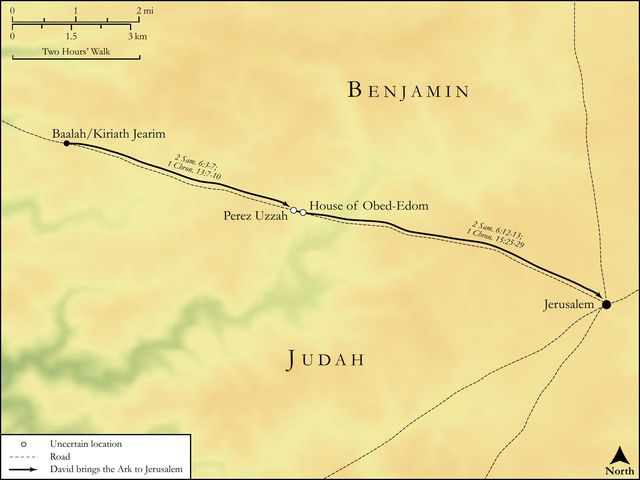
This verse is embedded within a grand psalm of thanksgiving and praise (1 Chronicles 16:8-36) recited by King David on the momentous occasion of the Ark of the Covenant being brought into Jerusalem and placed in the tent he had prepared for it. This event, detailed in 1 Chronicles 15, marked a pivotal moment in Israel's spiritual history, signifying God's dwelling presence among His people. David's psalm is a composite, drawing heavily from elements found in Psalm 105:1-15, Psalm 96:1-13, and Psalm 106:1, 47-48. Within this larger liturgical piece, 1 Chronicles 16:24 shifts the focus from Israel's internal celebration to a prophetic vision of God's universal sovereignty, urging the proclamation of His truth to the entire world, thereby setting a global trajectory for the worship of Yahweh.
Historical & Cultural Context
The bringing of the Ark to Jerusalem was a politically and spiritually unifying event for the nascent kingdom under David. The Ark, representing God's throne and presence, was central to Israel's identity and worship, having been in various temporary locations since its capture by the Philistines. In the ancient Near East, each nation typically worshipped its own patron deity, often associated with specific lands or peoples. Israel's God, Yahweh, however, was unique in His claim to universal sovereignty, creator of all nations. The command to "declare his glory among the heathen" challenged the prevailing ethnocentric religious paradigms, asserting Yahweh's rightful claim over all peoples, not just Israel. This was not merely a cultural expansion but a theological declaration that transcended geographical and ethnic boundaries, setting Israel apart as a light to the nations, a concept deeply rooted in the Abrahamic covenant (e.g., Genesis 12:3).
Key Themes
ShowHideThis verse powerfully articulates several core themes. Firstly, it highlights Universal Proclamation, revealing God's desire for His glory to be known by all humanity. The command to declare His truth "among the heathen" and "among all nations" foreshadows the New Testament's Great Commission, indicating an inherent missionary impulse within God's redemptive plan from the Old Testament era. Secondly, the verse emphasizes the content of this proclamation: God's Glory and His Marvellous Works. "Glory" refers to God's intrinsic worth, majesty, and character, while "marvellous works" points to His mighty acts in creation, salvation, and history—demonstrations of His power and faithfulness. These two aspects provide the compelling reasons for all peoples to acknowledge and worship Him. Lastly, it underscores the theme of Worship and Witness, demonstrating that the act of proclaiming God's glory and works is both an outflow of worship from those who declare it and an invitation to worship for those who hear. It calls God's people to be active participants in making His name renowned worldwide, integrating their praise with their purpose.
Exposition and Analysis
ShowHideKey Word Analysis
ShowHideThis term literally means "weight" or "heaviness," but in a theological sense, it conveys the substantial majesty, honor, splendor, and inherent worth of God. It refers to His magnificent presence and the visible manifestation of His character and attributes. To "declare His glory" is to make known His intrinsic greatness and the awe-inspiring reality of who He is.
This is the primitive root from which the Hebrew noun for "marvellous works" (niplā'ôt) is derived. It properly means "to separate, distinguish," and by implication, "to be (causatively, make) great, difficult, wonderful." Thus, "marvellous works" refers to God's wonders, miracles, and extraordinary deeds—acts that evoke astonishment and awe, demonstrating His unique power, wisdom, and intervention in the world and in human history. They are the tangible proofs of His divine nature and active sovereignty.
This word, used in its plural form (gôyim) in the verse, refers to a foreign nation or gentile people. In the Old Testament, it often denotes non-Israelite nations. The repetition of the concept of "nations" (with gôyim for "heathen" and ʻam (H5971) for "nations" in the second clause) underscores the comprehensive and universal scope of the command: the message is not exclusively for Israel but for every distinct people group on earth, signifying a global, inclusive vision.
Verse Breakdown
ShowHide"Declare his glory"
This is an imperative command, urging an active, vocal proclamation. The focus is on making known God's inherent nature, His weighty presence, His honor, and His majestic character. It is a call to articulate who God is in His essence.
"among the heathen"
This specifies the primary audience for this declaration: the non-Israelite nations. It highlights a mission that extends beyond the covenant community of Israel, indicating God's desire for all peoples to come to know His true identity.
"his marvellous works"
This second object of declaration shifts from God's inherent being to His active deeds. It calls for the recounting of God's miraculous interventions, His wonders in creation, His acts of deliverance, and His historical dealings that demonstrate His power and faithfulness.
"among all nations"
This phrase reiterates and reinforces the universal scope of the mission. It emphasizes that no people group is to be excluded from hearing about God's glory and His mighty acts, underscoring the comprehensive reach of God's redemptive plan.
Literary Devices
ShowHide1 Chronicles 16:24 effectively employs several literary devices to convey its powerful message. The most prominent is Synonymous Parallelism, where the second line ("his marvellous works among all nations") largely repeats the thought of the first line ("Declare his glory among the heathen") using different words. This repetition serves to reinforce and intensify the core message of universal proclamation, emphasizing both the content (glory and works) and the scope (heathen and all nations). The use of the Imperative Mood ("Declare") transforms the verse into a direct command, underscoring the urgency and divine mandate behind the instruction. Furthermore, there is a subtle Merism at play, where "glory" (God's being) and "marvellous works" (God's doing) together encompass the totality of what God is and what He has done, providing a comprehensive scope for the proclamation. The repetition of the concept of "nations" (using gôyim and ʻam in the clauses) also functions as a form of Emphasis, ensuring that the global reach of God's desired fame is unmistakable.
Theological and Thematic Connections
ShowHideThis verse reveals a profound theological truth: God's character is not confined to one nation or people group. His glory and His mighty deeds are meant to be universally known and celebrated. It underscores the inherent missionary heart of God, demonstrating that even in the Old Testament, His redemptive plan was always global in scope, aiming to draw all peoples to Himself. This divine imperative to declare His greatness among the nations establishes a continuity between the Old Testament's vision for Israel as a light to the world and the New Testament's Great Commission. It reminds us that our worship of God is intrinsically linked to our witness of Him, as a heart truly captivated by His glory cannot help but declare it to others.
Reflection and Application
ShowHide1 Chronicles 16:24 serves as a timeless and powerful reminder for believers today regarding our ongoing responsibility and privilege to participate in God's global mission. It challenges us to move beyond insular faith, recognizing that the God we worship is the God of all nations, whose desire is for every tongue and tribe to know His glory and His marvelous works. This means cultivating a heart of intentional witness, actively looking for opportunities to share the truth of God's character and His redemptive acts, particularly through Jesus Christ, with those in our immediate spheres and supporting efforts to reach the unreached globally. Our personal worship should fuel this outward declaration; the more we are awestruck by God's glory and wonders, the more compelled we will feel to make Him known, transforming our praise into purposeful proclamation.
Questions for Reflection
ShowHideFAQ
ShowHideWas global evangelism a concept in the Old Testament, or is it primarily a New Testament idea?
ShowHideWhile the term "evangelism" as we understand it through the Great Commission is more explicit in the New Testament, 1 Chronicles 16:24 clearly demonstrates that the concept of God's glory being known among all nations was an integral part of Old Testament theology. From the Abrahamic covenant, where God promised to bless "all peoples on earth" through Abraham (Genesis 12:3), to the prophetic calls for Israel to be a "light for the Gentiles" (Isaiah 49:6), the Old Testament consistently portrays God's universal redemptive purpose. 1 Chronicles 16:24 is a direct command for Israel to actively participate in this global declaration, showing that the missionary impulse originates with God Himself, long before the coming of Christ.
What is the difference between declaring God's "glory" and His "marvellous works" in this verse?
ShowHideWhile closely related, "glory" and "marvellous works" refer to distinct yet complementary aspects of God to be proclaimed. "Glory" (Hebrew kâbôwd) speaks to God's inherent nature, His intrinsic worth, majesty, and the radiant splendor of His being. It's about who God is—His character, holiness, and transcendent greatness. "Marvellous works" (Hebrew pâlâʼ, from which the noun niplā'ôt is derived), on the other hand, refers to God's active deeds, His wonders, miracles, and extraordinary interventions in history. It's about what God has done—His acts of creation, deliverance, judgment, and salvation. To declare both is to present a comprehensive picture of God: His magnificent being and His powerful, active engagement with His creation.
Christ-Centered Fulfillment
ShowHide1 Chronicles 16:24 finds its ultimate and most profound fulfillment in the person and work of Jesus Christ. He is the preeminent revelation of God's glory, the "radiance of God's glory and the exact representation of his being" (Hebrews 1:3). In Christ, "the Word became flesh and made his dwelling among us. We have seen his glory, the glory of the one and only Son, who came from the Father, full of grace and truth" (John 1:14). Furthermore, Jesus' life, sacrificial death, and victorious resurrection constitute God's most "marvellous works"—the ultimate demonstration of His power, love, and redemptive plan for humanity. The Old Testament call to declare God's glory and works among all nations culminates in the New Testament's Great Commission, where Jesus commands His followers to "go and make disciples of all nations." Empowered by the Holy Spirit, believers are now commissioned to declare the glory of God as revealed in Christ, proclaiming His finished work of salvation to the ends of the earth (Acts 1:8). This universal proclamation of Christ's glory will ultimately result in every knee bowing and every tongue confessing that Jesus Christ is Lord, to the glory of God the Father (Philippians 2:9-11).