


Revelation 11:17
Bible text: King James Version (1769 Blayney text) · Public domain
Bible text: King James Version with Strong's numbers · Public domain
Bible text: Berean Standard Bible · Public domain
Bible text: American Standard Version (1901) · Public domain
Bible text: World English Bible, Messianic edition · Public domain
Bible text: Geneva Bible (1599) · Public domain
Bible text: Young's Literal Translation · Public domain
- λέγοντες·legontessayingG3004V-PAP-NPMVerb Present Active Participle Nominative Plural Masculine
- εὐχαριστοῦμένeucharistoumenWe give thanksG2168V-PAI-1PVerb Present Active Indicative 1st Plural
- σοιsoito YouG4771P-2DSPersonal pronoun Dative 2nd Singular
- κύριεkurieLordG2962N-VSM-TNoun Vocative Singular Masculine Person Gentilic
- ὁho<the>G3588T-VSMDefinite article Vocative Singular Masculine
- θεὸςtheosGodG2316N-VSM-TNoun Vocative Singular Masculine Person Gentilic
- ὁho<the>G3588T-VSMDefinite article Vocative Singular Masculine
- παντοκράτωρpantokratōrAlmightyG3841N-VSM-TNoun Vocative Singular Masculine Person Gentilic
- ὁhowhoG3588T-VSMDefinite article Vocative Singular Masculine
- ὢνōnis beingG1510V-PAP-VSMVerb Present Active Participle Vocative Singular Masculine
- καὶkaiandG2532CONJConjunction
- ὁhowhoG3588T-VSMDefinite article Vocative Singular Masculine
- ἦνēnwasG1510V-IAI-3SVerb Imperfect Active Indicative 3rd Singular
- καὶkaiandG2532CONJConjunction
- ὁhowhoG3588T-NSMDefinite article Nominative Singular Masculine
- ἐρχόμενοςerchomenosis comingG2064V-PNP-NSMVerb Present Middle Or Passive Deponent Participle Nominative Singular Masculine
- ὅτιhotiforG3754CONJConjunction
- εἴληφαςeilēphasYou have takenG2983V-2RAI-2SVerb 2nd Perfect Active Indicative 2nd Singular
- τὴνtēntheG3588T-ASFDefinite article Accusative Singular Feminine
- δύναμίνdunaminpowerG1411N-ASFNoun Accusative Singular Feminine
- σουsouof YouG4771P-2GSPersonal pronoun Genitive 2nd Singular
- τὴνtēn<the>G3588T-ASFDefinite article Accusative Singular Feminine
- μεγάληνmegalēngreatG3173A-ASFAdjective Accusative Singular Feminine
- καὶkaiandG2532CONJConjunction
- ἐβασίλευσαςebasileusasbegan to reignG936V-AAI-2SVerb Aorist Active Indicative 2nd Singular
English is a literal word-by-word gloss of the Greek, not the KJV's wording. Why?
This is the original text the KJV's translators worked from — each Greek word with its own literal English meaning in this verse, prepared by scholars at Tyndale House, Cambridge. The KJV translates whole sentences, not word by word, so its wording differs: one Greek word can become several English words, and the KJV may choose “charity” where the gloss reads “love”. Both are faithful — they answer different questions. For the KJV's own rendering, switch to the KJV text.
Details
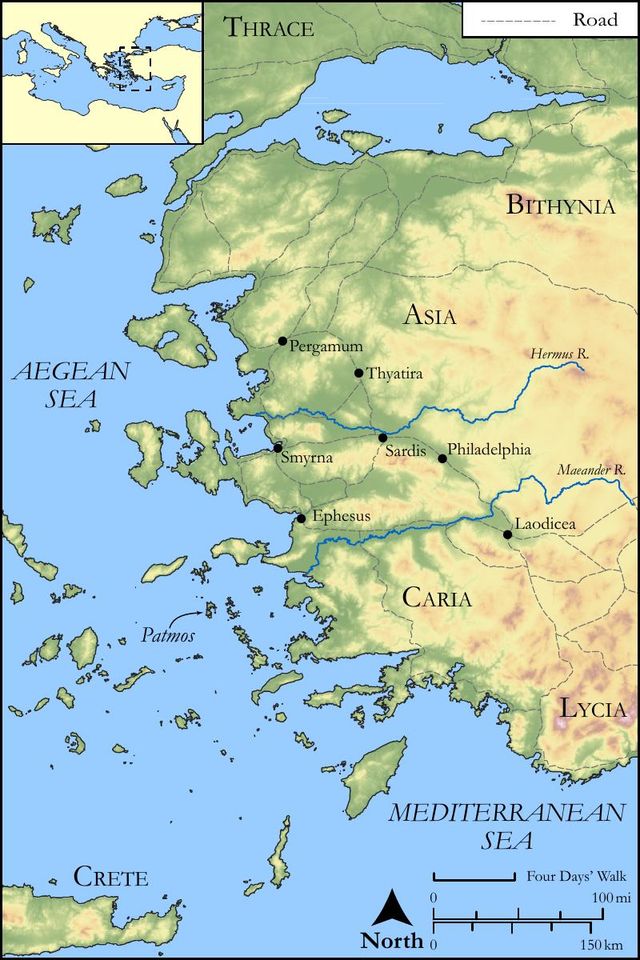
See on the biblical-era maps

Study this verse
Public-domain commentary
Matthew Henry
From his Commentary on the Whole Bible. Henry comments on passages, not single verses — this entry covers Revelation 11:14–19. His three-level outline is real structure in the source text, so it is rendered as structure.
We have here the sounding of the seventh and last trumpet, which is ushered in by the usual warning and demand of attention: The second woe is past, and, behold, the third woe cometh quickly. Then the seventh angel sounded. This had been suspended for some time, till the apostle had been made acquainted with some intervening occurrences of very great moment, and worthy of his notice and observation. But what he before expected he now heard - the seventh angel sounding. Here observe the effects and consequences of this trumpet, thus sounded.
I.Here were loud and joyful acclamations of the saints and angels in heaven. Observe,
1.The manner of their adorations: they rose from their seats, and fell upon their faces, and worshipped God; they did it with reverence and humility.
2.The matter of their adorations.
(1.)They thankfully recognize the right of our God and Saviour to rule and reign over all the world: The kingdoms of this world have become the kingdoms of our Lord and of his Christ, Rev 11:15. They were always so in title, both by creation and purchase.
(2.)They thankfully observe his actual possession of them, and reign over them; they give him thanks because he had taken to him his great power, asserted his rights, exerted his power, and so turned title into possession.
(3.)They rejoice that this his reign shall never end: He shall reign for ever and ever, till all enemies be put under his feet; none shall ever wrest the sceptre out of his hand.
II.Here were angry resentments in the world at these just appearances and actings of the power of God (Rev 11:18):
The nations were angry; not only had been so, but were so still: their hearts rose up against God; they met his wrath with their own anger. It was a time when God was taking a just revenge upon the enemies of his people, recompensing tribulation to those who had troubled them. It was a time in which he was beginning to reward his people's faithful services and sufferings; and their enemies could not bear it, they fretted against God, and so increased their guilt and hastened their destruction.
III.Another consequence was the opening of the temple of God in heaven.
By this may be meant that here is now a more free communication between heaven and earth, prayer and praises more freely and frequently ascending and graces and blessings plentifully descending. But it rather seems to intend the church of God on earth, a heavenly temple. It is an allusion to the various circumstances of things in the time of the first temple. Under idolatrous and wicked princes, it was shut up and neglected; but, under religious and reforming princes, it was opened and frequented. So, during the power of antichrist, the temple of God seemed to be shut up, and was so in a great degree; but now it was opened again. At this opening of it observe,
1.What was seen there: the ark of God's testament. This was in the holy of holies; in this ark the tables of the law were kept. As before Josiah's time the law of God had been lost, but was then found, so in the reign of antichrist God's law was laid aside, and made void by their traditions and decrees; the scriptures were locked up from the people, and they must not look into these divine oracles; now they are opened, now they are brought to the view of all. This was an unspeakable and invaluable privilege; and this, like the ark of the testament, was a token of the presence of God returned to his people, and his favour towards them in Jesus Christ the propitiation.
2.What was heard and felt there: Lightnings, voices, thunderings, an earthquake, and great hail. The great blessing of the reformation was attended with very awful providences; and by terrible things in righteousness God would answer those prayers that were presented in his holy temple, now opened. All the great revolutions of the world are concerted in heaven, and are the answers of the prayers of the saints.
Historical interpretation
Six Centuries of Reception
6 surviving comments on this verse. Each one is dated, so this reads as a timeline rather than a list.
Select a marker to jump to its quote. Markers stagger vertically where authors wrote within a few decades of each other.
He speaks of the beginning and the end. When he says, “You have begun to reign and the nations raged,” he indicates the first coming, for at his birth Herod and the people of Jerusalem were troubled. However, the time of the second coming is declared by wrath and judgment.… “Behold, the third woe has come,” it says. By the sound of the trumpet of the seventh angel he refers to nothing other than the church, which is praising the Lord and is in the sound of the trumpet giving thanks to him without end. And from this we understand that the rewarding of those who are good is not without the punishment of the wicked. “To reward your saints and to corrupt the corrupters of the earth,” it says. This means that [the Lord] gives to the righteous a recompense proper to their merits and to those who were corrupters he gives evil proper to their [wicked] deeds. For whoever has corrupted in himself the temple of the Lord, that is, the church of the body of Christ in baptism, he will without doubt be subjected to corruption. As the apostle said, “If anyone destroys God’s temple, God will destroy him.”
He is now mentioning both the beginning and the end of the dispensation of Christ. For when he says, “You have begun to reign and the nations raged,” he is speaking of the first coming of Christ. But, indeed, when it follows that “your wrath has come and the time of the dead,” or as another translation has it, “at which time he will judge concerning the dead,” he is speaking of the second coming, when the saints and the prophets and those who fear his name, the small and the great and the old and the young, will receive their reward. As it says, “Your eyes beheld my imperfection, and in your book everything will be written.” And lest the wicked think that they may act with impunity, he subjects to destruction whomever has corrupted the earth. As the psalmist says, “The face of the Lord is against those who do evil.” It says that the third woe comes at the sound of the seventh angel, and when he sounded [his trumpet], only the church is mentioned as she praises the Lord and gives him thanks. And from this we learn that the recompense of the good is not apart from the woe of the wicked. And so the psalmist said, “When his wrath is quickly kindled,” certainly upon the wicked, “blessed are all those who trust in him.” And so now the church herself says, “Your wrath has come and the time for death, to reward your servants,” and following. This is the final woe. Since the bodily nativity of the Lord has been nicely recapitulated, he suggests that he is about to speak of the same things but in a different and more extensive manner.
Here again he says that the holy angels and those who live as do the angels send a hymn of thanksgiving to God, because for our sake he has become worthy to receive as man that kingdom that as God he possessed from the beginning. And having been patient with the unbelieving nations who were enraged at this as though it were a new and strange teaching, at the end he brings judgment upon them.… “The time of the dead” is the time of the resurrection of the dead, at which time recompense will be given to each, one after the other. In the “prophets and saints and those who fear God” we are perhaps to recognize the three orders of those who produce fruit a hundredfold, sixtyfold and thirtyfold. However, certainly the apostles will receive the first place and sit upon the twelve thrones. We think that the “small and great” are either the lesser saints and those who are rather more preeminent than they, or the “small” are the sinners who are subjects of contempt and the “great” are the righteous.
Who are, and who were, etc. You indeed have reigned from eternity, even with the wicked rebelling, but now their fury, judged by you, will be crushed. For the Lord reigns; let the peoples be angry (Psalm XCVIII).
And the four and twenty ancients, who sit on their seats in the sight of God, fell on their faces. Concerning the ancients, it has already been said that they signify the preachers, because a genus should be understood in the species. It is right for them to be twenty-four because of the twelve tribes and the twelve apostles. By the seats and the ancients is understood one seat, that of Christ, consisting of superiors and inferiors. It is right to say that the ancients sit in the sight of God, because, when they examine the actions of their inferiors, they do not seek thereby human gratitude, but God's glory. They fall on their faces because they attribute all good not to themselves, but to God. And adored God, saying: We give thee thanks, O Lord God Almighty, who wast, and who art. By the fact that they do not say “who art to come,” it is made clear that all this will be said or done at the last judgment. As for what follows, because thou hast received thy great power, and the nations were angry, it refers to his first coming. He received in his humanity the great power he has always had by his divinity. On the other hand, what is said next, because thy wrath is come, and the time of the dead, refers to his second coming. Yet since the Lord says, Love your enemies, [Matt. 5:44 and Luke 6:27/35] how can it be said that these people are giving thanks for the coming of his wrath against the reprobates? Therefore they are not rejoicing at the destruction of the wicked, but at their own resurrection and glorification, which they know cannot possibly be fulfilled unless the damnation of the wicked comes first. It is according to this interpretation that the souls of the slain under the altar of God are said to cry, How long, O Lord, etc.; [Rev. 6:10] for they are not asking for revenge, but to be themselves rewarded after revenge has been taken on the wicked. Hence the Psalmist: The just shall rejoice when he shall see the revenge. [Ps. 57:11] The Judge's wrath does not mean a perturbation of the mind, but its straightness. So one shall see him such as one's own conscience is like. That thou shouldest judge them, and render reward to thy servants the prophets and the saints, and to them that fear thy name, little and great. When the apostle says that we are saved by grace, [Eph. 2:8] how can the Lord be said here to render reward? One should know then that when the Lord renders reward to his servants, it is his own gifts that he rewards in them, for we could not have any work worthy of reward if we had not received from him the ability to do works. Note also that by the name of prophets are represented the apostles. Meanwhile, let no one despair on account of their imperfection, if they nonetheless strive to do perfect things but do not succeed; because even the little ones shall obtain that reward; whence blessed Job: The small and great are there. [Job 3:19] And shouldest banish them who have corrupted the earth. They are said to be banished rather than killed so as to show the everlasting exile of damnation, their eternal indigence. To corrupt the earth is to pervert one's life with wicked works. So it is from this that the third woe of the wicked results, about which it was foretold that it would come quickly with the seventh angel.
When this voice arose, the elders worshiped God, also offering their own thanksgiving, saying, "We give thanks to you, Lord God Almighty, who is and who was." The phrase "who is" is properly attributed to the Holy Trinity, and "who was," although primarily said concerning the Father, is also applied to the Son, for the Father, the Son, and the Holy Spirit all exist eternally. Thus, the term "who was" is rightly spoken of the Father, the Son, and the Holy Spirit. Therefore, the thanksgiving of the elders is dedicated to the Holy Trinity.
That you say you have taken your great power and your kingdom from those on earth, and that you alone now reign; but concerning the earthly kingdom that is perishing, it is understandable that the nations became angry, as their dominion was overthrown, referring to the orders of both the demons and the unbelieving men.
Continue studying Revelation 11:17 across the web’s major study libraries — every link below opens this exact verse, chapter, or book on the destination site.
Read & Compare
 BibleGatewayThis verse in more than 200 translations and 70 languages.
 Bible.comThe YouVersion reader — hundreds of translations, reading plans, and highlights.
 ESV.orgCrossway's official English Standard Version reader.
 NET BibleThe NET translation with 60,000+ translators' notes on every rendering decision.
 STEP BibleTyndale House's free study tool — original text, vocabulary, and scholarly resources.
 BibliaLogos Bible Software's free web reader.
 USCCBThe New American Bible (Revised Edition) with the U.S. bishops' study notes.
Commentaries
 BibleHub CommentariesDozens of classic commentaries on this verse, gathered on one page.
 StudyLightMore than 100 commentary sets — the largest collection on the web.
 BibleRefPlain-English commentary on what this verse means, verse by verse.
 Enduring WordDavid Guzik's free commentary on this chapter, widely used by Bible teachers.
 Bible Study ToolsVerse commentary alongside Greek and Hebrew study aids.
Original Language & Research
- BibleHub InterlinearThe verse word by word — original language, transliteration, and English.
- BibleHub LexiconEvery word's original-language definition and Strong's entry.
 Blue Letter BibleDeep-study tools — Strong's numbers, concordance, and word studies.
 CNTR CollationThe earliest Greek manuscripts of this verse, collated letter by letter.
Sermons, Hymns & Audio


TrulyRandomVerse is not affiliated with these sites and doesn’t control their content. They’re linked because they’re genuinely useful.
Summary
Revelation 11:17 presents the profound thanksgiving of the twenty-four elders in heaven, a pivotal moment following the sounding of the seventh trumpet. Their worship acknowledges God's eternal nature and omnipotence, celebrating His decisive act of taking up His great power and commencing His ultimate, undisputed reign over all creation. This declaration marks a climactic shift in the divine narrative, signaling the assured triumph of God's kingdom and the fulfillment of His sovereign purposes.
Context
ShowHideLiterary Context
Revelation 11:17 immediately follows the momentous declaration in Revelation 11:15 that "The kingdoms of this world are become the kingdoms of our Lord, and of his Christ; and he shall reign for ever and ever." This announcement is made by "great voices in heaven" upon the sounding of the seventh and final trumpet, which initiates the third woe and signals the culmination of God's judgments and the establishment of His universal kingdom. The twenty-four elders, who are consistently depicted in Revelation as leading heavenly worship and representing the redeemed or heavenly council, respond to this divine declaration with a solemn act of thanksgiving and adoration, prostrating themselves before God's throne. Their response validates and celebrates the divine pronouncement, underscoring its immense significance within the apocalyptic narrative.
Historical & Cultural Context
The book of Revelation was written during a period of intense persecution for early Christians under the Roman Empire, likely during the reign of Emperor Domitian (c. AD 95). Believers faced immense pressure to conform to imperial cult worship, which demanded allegiance to Caesar as "lord" and "god." In this context, the declaration of God as "Lord God Almighty" and the assertion of His ultimate reign served as a powerful counter-narrative, offering hope and assurance to a suffering church. It reminded them that despite the apparent power of Rome, the true and eternal sovereignty belonged to God alone. The imagery of heavenly worship and divine judgment would have resonated with Jewish apocalyptic traditions, providing a framework for understanding God's intervention in history and His ultimate triumph over evil.
Key Themes
ShowHideThis verse contributes significantly to several overarching themes in Revelation. It powerfully reinforces the theme of Divine Sovereignty and Omnipotence, emphasizing God's absolute control over history and His inherent, unchallengeable power. The recurring title "which art, and wast, and art to come" (also found in Revelation 1:4 and Revelation 4:8) highlights God's Eternal Nature, portraying Him as transcendent over time and the ultimate source of all existence. Furthermore, the core message that God "hast taken to thee thy great power, and hast reigned" underscores the definitive Establishment of God's Kingdom and the Consummation of His Redemptive Plan. This is not merely a future hope but a declared reality, signifying the end of all earthly and demonic opposition to His rule. Finally, the elders' response exemplifies Heavenly Worship and Thanksgiving, modeling the appropriate human response to God's character and His decisive actions in history.
Exposition and Analysis
ShowHideKey Word Analysis
ShowHideFrom πᾶς and κράτος, meaning "the all-ruling." This term is used exclusively for God in the New Testament, particularly prominent in Revelation (e.g., Revelation 1:8). It signifies God as the absolute and universal sovereign, possessing complete power and authority over all creation, history, and destiny. The elders' use of this title underscores their recognition of God's limitless dominion now being fully asserted.
From δύναμαι, meaning "force (literally or figuratively); specially, miraculous power." In this context, it refers to God's inherent, active might and ability. The phrase "taken to thee thy great power" does not imply God acquired new power, but rather that He has now decisively and visibly exercised His inherent, immense power to bring about His reign, moving from potential to manifest dominion.
This is a profound divine epithet combining the present participle of "to be" (being), the imperfect of "to be" (was), and the present participle of "to come" (coming). It describes God as the Eternal One, transcending time—He who exists eternally in the present, has always existed in the past, and will always exist in the future. This title emphasizes God's unchanging nature, His continuous active presence, and His sovereign control over all epochs of history, providing the ultimate foundation for His ultimate reign.
Verse Breakdown
ShowHide"Saying, We give thee thanks, O Lord God Almighty,"
The verse opens with the collective voice of the twenty-four elders, prostrate in worship. Their immediate response to the announcement of God's kingdom is one of profound gratitude and adoration. They address God with the majestic title "Lord God Almighty," acknowledging His supreme authority (Lord), His divine nature (God), and His absolute, universal sovereignty (Almighty). This address sets the tone for a declaration of complete submission and praise.
"which art, and wast, and art to come;"
This is a direct invocation of God's eternal and unchanging nature, a recurring descriptor for God in Revelation. It emphasizes His timeless existence, His continuous presence throughout all history (past, present, and future), and His transcendence over all created time. This attribute of eternal being provides the unshakeable foundation for His ultimate and victorious reign, ensuring that His purposes will always endure.
"because thou hast taken to thee thy great power, and hast reigned."
This clause reveals the specific reason for the elders' thanksgiving. The phrase "taken to thee thy great power" signifies not an acquisition of new power, but the decisive and visible exercise of God's inherent, immense power. It marks a climactic moment where God's rightful dominion, previously contested or partially veiled, is now fully asserted. The subsequent "and hast reigned" declares the commencement of His undisputed, universal rule, fulfilling all prophecies concerning His eternal kingdom and bringing an end to all opposition.
Literary Devices
ShowHideRevelation 11:17 employs several powerful literary devices to convey its profound theological message. Apostrophe is prominently featured as the elders directly address God ("O Lord God Almighty"), creating a sense of intimate and reverent communication. The phrase "which art, and wast, and art to come" serves as a Formulaic Epithet or Divine Title, a recurring and majestic description of God's eternal nature found elsewhere in Revelation (e.g., Revelation 1:4, Revelation 4:8). This repetition emphasizes God's unchanging character and reinforces His ultimate authority. Furthermore, the declaration that God "hast taken to thee thy great power, and hast reigned" uses Exaltation and Affirmation to underscore the magnitude of God's decisive action, presenting His reign not as a future possibility but as a present, undeniable reality that elicits immediate and fervent worship.
Theological and Thematic Connections
ShowHideRevelation 11:17 stands as a profound theological statement on God's ultimate sovereignty and the assured triumph of His kingdom. It affirms that despite the chaos, suffering, and apparent opposition witnessed throughout history, God remains the "Lord God Almighty," eternally present and ultimately in control. The elders' thanksgiving is a response to the eschatological reality that God has now decisively intervened, asserting His inherent power to establish His reign. This moment signifies the culmination of His redemptive plan, where all earthly kingdoms and rebellious forces are brought under His undisputed dominion. It offers immense comfort and hope to believers, assuring them that God's purposes will prevail and that His justice and righteousness will ultimately be fully manifested.
Reflection and Application
ShowHideRevelation 11:17 offers a powerful anchor for faith in a world often marked by uncertainty and apparent injustice. The elders' declaration reminds us that God's sovereignty is not merely a theological concept but an active, unfolding reality that will culminate in His undisputed reign. This truth should inspire unwavering trust, even when circumstances seem dire or evil appears to triumph. Knowing that the "Lord God Almighty" has taken His great power and reigns provides a foundation for enduring hope, transforming our perspective from one of despair to one of confident expectation for God's ultimate victory. Our worship, like that of the elders, should be characterized by profound thanksgiving for God's eternal nature, His boundless power, and His unwavering commitment to establish His perfect kingdom. This verse calls us to align our lives with the reality of His coming reign, living as citizens of His kingdom even now.
Questions for Reflection
ShowHideFAQ
ShowHideWhat is the significance of the "seventh trumpet" in Revelation 11:17?
ShowHideThe sounding of the seventh trumpet in Revelation 11:15 is highly significant as it marks the culmination of God's judgments and the decisive transition to the establishment of His universal kingdom. Unlike the previous trumpets, which brought partial judgments, the seventh trumpet announces that "The kingdoms of this world are become the kingdoms of our Lord, and of his Christ; and he shall reign for ever and ever." It signals the end of human and demonic rebellion and the beginning of God's undisputed, eternal rule, prompting the heavenly declaration of thanksgiving in Revelation 11:17.
Who are the "twenty-four elders" mentioned in this verse?
ShowHideThe "twenty-four elders" are a prominent group in the book of Revelation, first introduced in Revelation 4:4. While their exact identity is debated among scholars, they are generally understood to represent either the redeemed people of God (symbolizing the twelve tribes of Israel and the twelve apostles) or a specific order of heavenly beings who serve as a heavenly council. They are consistently depicted leading worship, offering prayers, and prostrating themselves before God's throne, acting as witnesses and participants in God's divine plan. In Revelation 11:17, their thanksgiving serves as a model of appropriate response to God's decisive act of taking up His great power and reigning.
Christ-Centered Fulfillment
ShowHideRevelation 11:17, while directly addressing God the Father, finds its ultimate Christ-centered fulfillment in the person and work of Jesus Christ, who is the appointed agent of God's reign. The declaration that God "hast taken to thee thy great power, and hast reigned" is realized through the victorious Lamb, who has conquered sin and death and to whom all authority in heaven and on earth has been given (Matthew 28:18). Christ, as the "faithful and true witness, the firstborn from the dead, and the ruler of the kings of the earth" (Revelation 1:5), is the one through whom God's kingdom is established and fully manifested. The "kingdoms of this world" become "the kingdoms of our Lord, and of his Christ" (Revelation 11:15), signifying that God's reign is inextricably linked to the reign of His Son. Ultimately, it is Christ who "must reign till he hath put all enemies under his feet" (1 Corinthians 15:25), culminating in the glorious return of the King of Kings and Lord of Lords (Revelation 19:11-16), when His dominion will be visibly and eternally established.