


Numbers 34:29
Bible text: King James Version (1769 Blayney text) · Public domain
Bible text: Berean Standard Bible · Public domain
Bible text: American Standard Version (1901) · Public domain
Bible text: World English Bible, Messianic edition · Public domain
Bible text: Geneva Bible (1599) · Public domain
Bible text: Young's Literal Translation · Public domain
- אֵלֶּה'E·lehtheseH428PrtParticle Demonstrative
- אֲשֶׁר'a·Sher[are those] whomH834RelParticle Relative
- צִוָּהtzi·Vahhe commandedH6680V-Piel-Perf-3msVerb Piel Perfect 3rd Singular Masculine
- יְהוָהYah·wehYahwehH3068N-properNoun Proper Title
- לְנַחֵלle·na·Chelto apportion as an inheritance toH5157Prep-l ¦ V-Piel-InfVerb Piel Infinitive Constructלְtoנַחֵלapportion as an inheritance to
- אֶת'et<obj.>H853DirObjMParticle Object Indicator
- בְּנֵיbe·nei[the] people ofH1121N-mpcNoun Plural Masculine Construct
- יִשְׂרָאֵלYis·ra·'ElIsraelH3478N-properNoun Proper Location
- בְּאֶרֶץbe·'E·retzin [the] land ofH776Prep-b ¦ N-fscNoun Singular Feminine Constructבְּinאֶרֶץ[the] land of
- כְּנָעַןke·Na·'anCanaanH3667N-properNoun Proper Location
English is a literal word-by-word gloss of the Hebrew, not the KJV's wording. Why?
This is the original text the KJV's translators worked from — each Hebrew word with its own literal English meaning in this verse, prepared by scholars at Tyndale House, Cambridge. The KJV translates whole sentences, not word by word, so its wording differs: one Hebrew word can become several English words, and the KJV may choose “the LORD” where the gloss reads “Yahweh”. Both are faithful — they answer different questions. For the KJV's own rendering, switch to the KJV text.
Details
See on the biblical-era map
Study this verse
Continue studying Numbers 34:29 across the web’s major study libraries — every link below opens this exact verse, chapter, or book on the destination site.
Read & Compare
 BibleGatewayThis verse in more than 200 translations and 70 languages.
 Bible.comThe YouVersion reader — hundreds of translations, reading plans, and highlights.
 ESV.orgCrossway's official English Standard Version reader.
 NET BibleThe NET translation with 60,000+ translators' notes on every rendering decision.
 STEP BibleTyndale House's free study tool — original text, vocabulary, and scholarly resources.
 BibliaLogos Bible Software's free web reader.
 USCCBThe New American Bible (Revised Edition) with the U.S. bishops' study notes.
Commentaries
 BibleHub CommentariesDozens of classic commentaries on this verse, gathered on one page.
 StudyLightMore than 100 commentary sets — the largest collection on the web.
 BibleRefPlain-English commentary on what this verse means, verse by verse.
 Enduring WordDavid Guzik's free commentary on this chapter, widely used by Bible teachers.
 Bible Study ToolsVerse commentary alongside Greek and Hebrew study aids.
Original Language & Research
- BibleHub InterlinearThe verse word by word — original language, transliteration, and English.
- BibleHub LexiconEvery word's original-language definition and Strong's entry.
 Blue Letter BibleDeep-study tools — Strong's numbers, concordance, and word studies.
 SefariaThe Hebrew text with Rashi and centuries of Jewish commentary.
Sermons, Hymns & Audio


TrulyRandomVerse is not affiliated with these sites and doesn’t control their content. They’re linked because they’re genuinely useful.
Summary
Numbers 34:29 serves as the divine capstone to the meticulous instructions for the allocation of the Promised Land among the tribes of Israel. This verse encapsulates the absolute authority and solemnity of God's command, ensuring that the distribution of the inheritance in Canaan would be executed precisely according to His revealed will, under the vigilant supervision of divinely appointed leaders. It powerfully underscores the culmination of centuries of covenant promises, affirming God's unwavering faithfulness in providing a permanent homeland for His chosen people.
Context
ShowHideLiterary Context
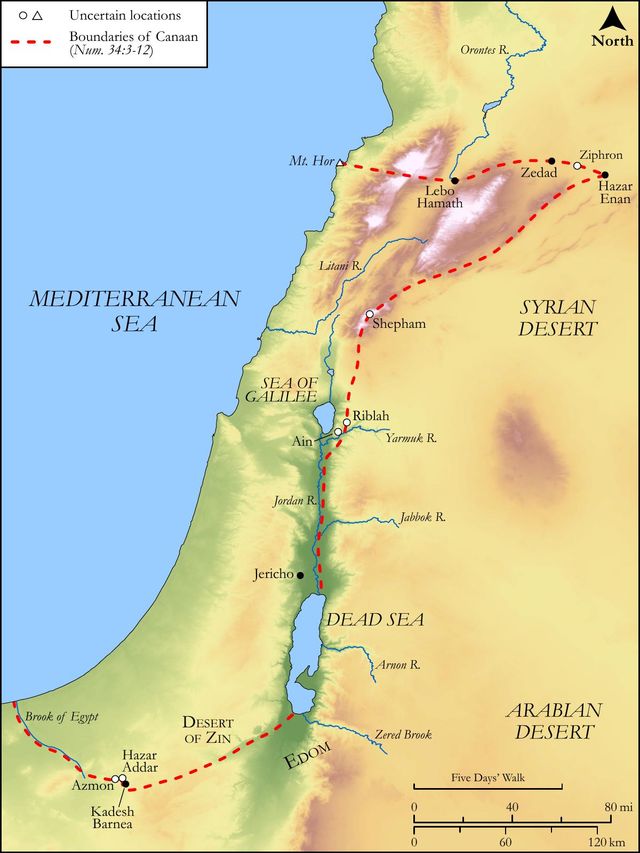
Numbers 34:29 acts as the concluding statement for a significant legislative section (Numbers 34:1-29) detailing the precise divine instructions for the division of the land of Canaan. The preceding verses meticulously delineate the geographical boundaries of the Promised Land, outlining its four precise borders (Numbers 34:1-12). Following this, God explicitly names the individuals entrusted with the monumental task of land distribution: Eleazar the high priest, Joshua the son of Nun, and one prince from each of the nine and a half tribes destined to receive their inheritance west of the Jordan River (Numbers 34:16-28). This meticulous enumeration of boundaries and appointed leaders highlights the divine origin and meticulous planning behind the land's distribution, setting the stage for the fulfillment of the Abrahamic covenant. The verse functions as a final, authoritative declaration, solidifying the divine mandate and ensuring the legitimacy of the entire process described in the preceding chapters.
Historical & Cultural Context
The historical setting of Numbers 34:29 places Israel on the cusp of entering the Promised Land, following forty years of wilderness wandering. The generation that rebelled at Kadesh-Barnea had passed away, and a new generation stood poised to inherit God's promises. In Israel, land inheritance was paramount, signifying identity, security, and continuity for families and tribes. Disputes over land were common and often led to violence and instability. By providing explicit divine commands for the division of Canaan and appointing specific, divinely sanctioned leaders, God preempted potential chaos and ensured an orderly, equitable distribution. This process also established the tribal territories that would define Israel's social, political, and religious landscape for centuries to come, laying the groundwork for their national identity as a people settled in their own land, distinct from the surrounding pagan nations.
Key Themes
ShowHideThis verse contributes significantly to several overarching themes within the book of Numbers and the wider Pentateuch. First, it powerfully reinforces the theme of Divine Sovereignty and Faithfulness, demonstrating that the land was not to be conquered by human might alone but was a direct gift from God, distributed according to His precise command. This fulfills the ancient promises made to Abraham, Isaac, and Jacob that their descendants would inherit the land of Canaan, as seen in passages like God's promise to Abraham in Genesis 12:7 and the detailed covenant in Genesis 15:18-21. Second, the meticulous planning and appointment of leaders underscore God's commitment to Order and Justice. The detailed instructions and designated officials ensured a fair and orderly process, preventing tribal conflict and establishing a stable foundation for the nascent nation. Third, the concept of "inheritance" (Hebrew: nachalah) is central, emphasizing God's gracious Provision and Covenant Fulfillment. The land was not merely a possession but a permanent, generational legacy, symbolizing Israel's identity, security, and their unique relationship with Yahweh. This inheritance was a tangible expression of God's covenant loyalty to His people, a theme that resonates throughout the entire narrative of the Book of Numbers.
Exposition and Analysis
ShowHideKey Word Analysis
ShowHideFrom the root meaning "to be," this is the proper name of the covenant God of Israel, often rendered as Yahweh. It signifies "the self-Existent or Eternal One," emphasizing God's unchanging, sovereign, and faithful nature. In Numbers 34:29, the use of "the LORD" underscores that the command to divide the land originates from the ultimate divine authority, the God who is actively involved in the history and destiny of His people, fulfilling His covenant promises.
This primitive root means "to constitute, enjoin," or "to appoint." It signifies a strong, authoritative directive, an imperative from a superior to a subordinate. It is not a mere suggestion or request but a binding, non-negotiable order. In this context, it highlights that the entire process of land distribution was not a human invention or convenience but a direct, solemn divine mandate, reinforcing God's absolute sovereignty over the land and its allocation.
This word, derived from a primitive root meaning "to inherit," denotes a possession, heritage, or legacy, often signifying something received as a gift or by right, specifically an ancestral possession. It implies permanence and continuity, something passed down through generations. In the biblical context, it emphasizes God's gracious provision to His people, a lasting legacy that represented their identity, security, and connection to God's covenant promises, distinguishing them as His chosen people in their promised land.
Verse Breakdown
ShowHide"These [are they] whom the LORD commanded"
This opening phrase explicitly identifies the group previously listed in Numbers 34:16-28—Eleazar the priest, Joshua the son of Nun, and the twelve tribal princes—as those divinely appointed. The emphasis on "the LORD commanded" highlights the divine origin and ultimate authority behind their mission. Their role was not self-appointed or politically motivated, but a direct, solemn commission from God Himself, lending ultimate legitimacy and weight to their actions.
"to divide the inheritance"
This specifies the precise task entrusted to these leaders: the equitable and orderly distribution of the land. The term "inheritance" (Hebrew: nachalah) signifies not merely a temporary possession but a permanent, ancestral holding, vital for the identity and future of each tribe and family. This act of division was crucial for establishing the tribal boundaries and ensuring each family received its portion as part of God's covenant promise.
"unto the children of Israel"
This clarifies the beneficiaries of this divine act: the entire nation of Israel, organized by tribes and families. It emphasizes the communal aspect of the inheritance, yet also the individual family's right to a portion within their tribal allotment. This highlights God's meticulous care for His entire people, ensuring that none would be left without a share in the Promised Land.
"in the land of Canaan"
This specifies the geographical location of the inheritance, the very land promised to Abraham centuries earlier. It serves as a powerful reminder of God's faithfulness in bringing His people into the land He swore to their forefathers, marking the culmination of a long journey and the fulfillment of ancient covenant promises.
Literary Devices
ShowHideNumbers 34:29, though concise, effectively employs several literary devices to convey its profound message. The most prominent is Emphasis through Repetition, as the concept of "command" or "commanded" (from the root tsavah) appears multiple times throughout Numbers 34, reinforcing the divine authority and non-negotiable nature behind the land division. The verse functions as a powerful Summary Statement, providing a concise and authoritative conclusion to the preceding detailed instructions regarding the land boundaries and the appointed leaders. It also serves as a Framing Device, bringing formal closure to the specific legislative section on land distribution before the narrative moves on to the actual entry into Canaan. Furthermore, the explicit mention of "the LORD" (Yahweh) underscores Divine Agency, portraying God not as a distant or abstract deity but as an active, involved sovereign meticulously orchestrating the future and well-being of His people.
Theological and Thematic Connections
ShowHideNumbers 34:29 powerfully underscores God's meticulous nature, His unwavering faithfulness to His covenant promises, and His commitment to order and justice for His people. The act of dividing the land, under direct divine command and supervision, was not merely a logistical exercise but a profound theological statement. It demonstrated that Israel's possession of Canaan was a gift of grace, a tangible fulfillment of the oath sworn to Abraham, Isaac, and Jacob. This divine orchestration ensured that their inheritance was secure, legitimate, and foundational to their identity as God's chosen nation. It also established a precedent for righteous leadership, where human leaders were to faithfully execute God's clear directives, ensuring fairness and preventing chaos in the community. This divine provision of a physical inheritance foreshadows the greater, spiritual inheritance promised to believers in the New Covenant.
Reflection and Application
ShowHideNumbers 34:29 offers profound insights for contemporary believers, reminding us that God is a God of order, provision, and absolute faithfulness. Just as He meticulously planned and commanded the inheritance for Israel, He has a divine plan for our lives, providing for our needs and guiding our steps. This verse encourages us to trust in His divine appointments and His perfect timing, knowing that His commands are always for our ultimate good and are executed with perfect justice. It also highlights the crucial importance of faithful leadership in carrying out God's will; those entrusted with responsibility must act with integrity, diligence, and unwavering adherence to divine directives, ensuring that tasks are done with justice and according to God's revealed purpose. For us today, while our inheritance is not a physical land, the principle of God's sovereign provision and the call to faithful stewardship of the gifts, callings, and resources He has given us remain profoundly relevant. We are called to live in obedience to His commands, trusting that He will bring His purposes to fruition in our lives and in the world.
Questions for Reflection
ShowHideFAQ
ShowHideWhy was it so important for God to command the division of the land, rather than letting the tribes sort it out themselves?
ShowHideIt was critically important for God to command the division of the land for several profound reasons. First, it underscored His absolute sovereignty over the land; it was His gift, not a prize won by human effort alone. This reinforced the theological truth that the land was part of His covenant promise to Abraham, Isaac, and Jacob, as detailed in passages like Genesis 12:7. Second, it ensured justice and equity among the tribes and families. Without divine oversight, the strongest or most numerous tribes might have taken the best portions, leading to inevitable disputes, conflict, and disunity, as when strife arose between the herdmen of Abram's cattle and the herdmen of Lot's cattle. God's direct command and the appointment of specific, respected leaders (Eleazar, Joshua, and the tribal princes, as listed in Numbers 34:16-28) ensured an orderly and fair distribution, preventing chaos and establishing a stable foundation for the nascent nation. Third, it powerfully demonstrated God's faithfulness in fulfilling His ancient promises, marking a pivotal moment in Israel's history where they were finally poised to inherit the land God had sworn to their forefathers, thereby solidifying their identity as His chosen people in their promised home.
Christ-Centered Fulfillment
ShowHideNumbers 34:29, with its emphasis on a divinely commanded inheritance in the land of Canaan, finds its ultimate and infinitely richer fulfillment in Christ. While Israel received a physical, temporal inheritance, believers in Christ receive a spiritual, eternal inheritance that is far superior and incorruptible. Jesus, as the true and greater Joshua, leads His people not into a temporal land but into the spiritual promised land of God's eternal kingdom. Through His atoning work on the cross and His glorious resurrection, Christ secures an inheritance for all who believe, an inheritance described by Peter as "imperishable, undefiled, and unfading, kept in heaven for you" (1 Peter 1:4). This spiritual inheritance is not bound by geographical borders but is a participation in the very life and blessings of God, secured by the Holy Spirit who serves as a "guarantee of our inheritance until we acquire possession of it" (Ephesians 1:14). Just as the land of Canaan was a gift of God's grace to Israel, so too is our eternal inheritance in Christ a gift, not earned by works but received through faith (Ephesians 2:8-9). Thus, the meticulous divine planning for Israel's earthly inheritance points forward to the infinitely more glorious and secure inheritance that Christ has prepared for His people in the new heavens and new earth, where God will dwell with His people forever (Revelation 21:1-7).