


Numbers 34:19
Bible text: King James Version (1769 Blayney text) · Public domain
Bible text: Berean Standard Bible · Public domain
Bible text: American Standard Version (1901) · Public domain
Bible text: World English Bible, Messianic edition · Public domain
Bible text: Geneva Bible (1599) · Public domain
Bible text: Young's Literal Translation · Public domain
- וְאֵלֶּהve·'E·lehand theseH428Conj-w ¦ PrtParticle Demonstrativeוְandאֵלֶּהthese
- שְׁמוֹתshe·Mot[are] [the] names ofH8034N-fpcNoun Plural Feminine Construct
- הָאֲנָשִׁיםha·'a·na·Shimthe menH582Art ¦ N-mpNoun Plural Masculine Absoluteהָtheאֲנָשִׁיםmen
- לְמַטֵּהle·ma·Tehof [the] tribe ofH4294Prep-l ¦ N-mscNoun Singular Masculine Constructלְofמַטֵּה[the] tribe of
- יְהוּדָהye·hu·DahJudahH3063N-properNoun Proper Location
- כָּלֵבka·LevCalebH3612N-proper-mNoun Proper Masculine
- בֶּןben[the] son ofH1121N-mscNoun Singular Masculine Construct
- יְפֻנֶּהye·fu·NehJephunnehH3312N-proper-mNoun Proper Masculine
English is a literal word-by-word gloss of the Hebrew, not the KJV's wording. Why?
This is the original text the KJV's translators worked from — each Hebrew word with its own literal English meaning in this verse, prepared by scholars at Tyndale House, Cambridge. The KJV translates whole sentences, not word by word, so its wording differs: one Hebrew word can become several English words, and the KJV may choose “the LORD” where the gloss reads “Yahweh”. Both are faithful — they answer different questions. For the KJV's own rendering, switch to the KJV text.
Details
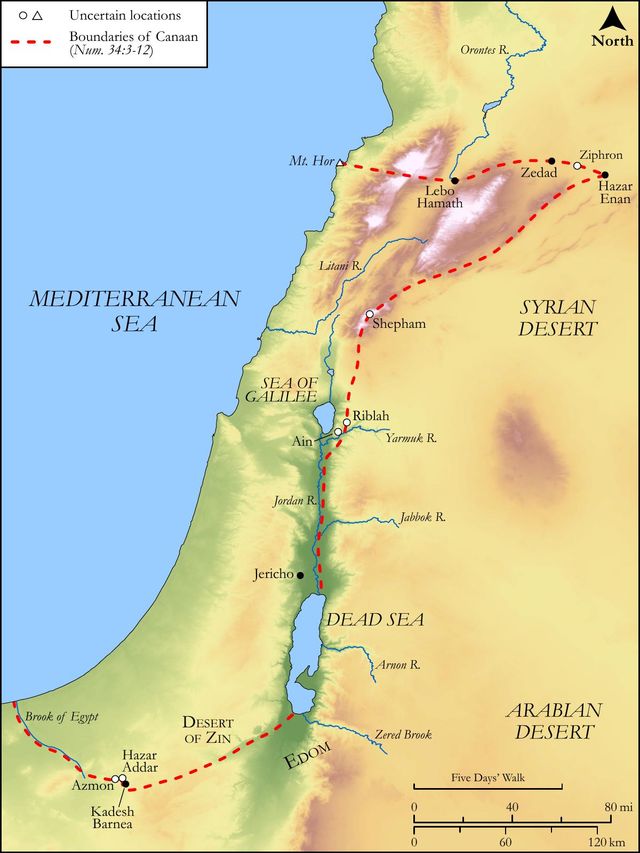
See on the biblical-era map
Study this verse
Continue studying Numbers 34:19 across the web’s major study libraries — every link below opens this exact verse, chapter, or book on the destination site.
Read & Compare
 BibleGatewayThis verse in more than 200 translations and 70 languages.
 Bible.comThe YouVersion reader — hundreds of translations, reading plans, and highlights.
 ESV.orgCrossway's official English Standard Version reader.
 NET BibleThe NET translation with 60,000+ translators' notes on every rendering decision.
 STEP BibleTyndale House's free study tool — original text, vocabulary, and scholarly resources.
 BibliaLogos Bible Software's free web reader.
 USCCBThe New American Bible (Revised Edition) with the U.S. bishops' study notes.
Commentaries
 BibleHub CommentariesDozens of classic commentaries on this verse, gathered on one page.
 StudyLightMore than 100 commentary sets — the largest collection on the web.
 BibleRefPlain-English commentary on what this verse means, verse by verse.
 Enduring WordDavid Guzik's free commentary on this chapter, widely used by Bible teachers.
 Bible Study ToolsVerse commentary alongside Greek and Hebrew study aids.
Original Language & Research
- BibleHub InterlinearThe verse word by word — original language, transliteration, and English.
- BibleHub LexiconEvery word's original-language definition and Strong's entry.
 Blue Letter BibleDeep-study tools — Strong's numbers, concordance, and word studies.
 SefariaThe Hebrew text with Rashi and centuries of Jewish commentary.
Sermons, Hymns & Audio


TrulyRandomVerse is not affiliated with these sites and doesn’t control their content. They’re linked because they’re genuinely useful.
Summary
Numbers 34:19 introduces Caleb, son of Jephunneh, as the divinely appointed representative for the tribe of Judah, tasked with overseeing the allocation of the Promised Land. This verse is a crucial detail within the broader divine mandate for the equitable distribution of Israel's inheritance, highlighting God's meticulous planning and the significance of faithful leadership in fulfilling His covenant promises.
Context
ShowHideLiterary Context
Numbers 34:19 is situated within a detailed legislative and administrative section of the Book of Numbers, specifically chapters 33-36, which outline the final preparations for Israel's entry into and settlement of Canaan. Following a summary of the wilderness journeys in Numbers 33, chapter 34 meticulously describes the precise boundaries of the Promised Land, emphasizing its divine grant. Verses Numbers 34:16-29 then list the specific tribal leaders, chosen by God through Moses and Eleazar, who would be responsible for the intricate and impartial division of the land. Caleb's mention here is thus part of a divinely sanctioned administrative process, underscoring the importance of proper governance and representation in the nascent nation's foundational acts.
Historical & Cultural Context
The setting is the plains of Moab, on the cusp of entering the Promised Land, approximately forty years after the Exodus. The generation that rebelled at Kadesh-Barnea had largely perished, and a new generation was poised to inherit the covenant promises. Land was the primary form of wealth, identity, and security in Israel, and its distribution was a foundational act for any nation. For Israel, land was not merely property but a divine inheritance, a tangible fulfillment of the Abrahamic Covenant (e.g., Genesis 12:7). The appointment of specific leaders for this task ensured fairness, prevented tribal disputes, and maintained the divinely ordained order. The inclusion of Caleb, a non-Israelite by birth (likely a Kenizzite, adopted into Judah), highlights God's inclusive nature and His recognition of individual faithfulness, transcending tribal purity in leadership roles.
Key Themes
ShowHideThis verse and its surrounding passage contribute to several key themes. Firstly, Divine Sovereignty and Providence are evident in God's detailed instructions for the land's boundaries and the selection of its distributors, demonstrating that the inheritance was not a human conquest but a divine gift, meticulously planned by God. Secondly, the theme of Faithfulness and Reward is powerfully underscored by Caleb's inclusion. He was one of only two spies (along with Joshua) who displayed unwavering faith in God's ability to conquer Canaan, even when the majority despaired (Numbers 13-14). His appointment here, decades later, and his subsequent unique inheritance in Joshua 14:6-15 serve as a testament to God's remembrance and honoring of steadfast devotion. Thirdly, Tribal Representation and Unity are crucial. Each tribe's appointed leader ensured that their specific interests and boundaries were justly considered, fostering unity and preventing internal strife during the complex process of national settlement and identity formation.
Exposition and Analysis
ShowHideKey Word Analysis
ShowHideThis name is described as "perhaps a form of כֶּלֶב (kelev), or else from the same root in the sense of forcible." While often linked to "dog" (symbolizing loyalty and tenacity), the Strong's also suggests "forcible." Both aspects aptly describe Caleb's character: his unwavering loyalty and devotion to God, standing firm in his faith, and his forceful, tenacious spirit in advocating for obedience and trust in the Lord, even when the nation wavered.
Caleb's father's name means "he will be prepared." This name subtly points to the divine preparation and equipping for the significant role Caleb would play. It suggests a readiness and a divine hand in preparing the way for the fulfillment of God's promises through faithful individuals like Caleb, who was prepared by God to lead and inherit.
From a root meaning "celebrated," Judah signifies praise and prominence. This tribe would indeed become "celebrated" in Israel's history, from which kings, including David, and ultimately the Messiah would descend. Caleb's appointment as Judah's representative highlights the tribe's early significance and the quality of leadership God intended for it, foreshadowing its future preeminence and its celebrated status in God's redemptive plan.
Verse Breakdown
ShowHide"And the names of the men [are] these:"
This introductory phrase signals the beginning of a formal list, emphasizing the importance and specificity of the appointments. It indicates that the following names are not arbitrary but are divinely selected individuals for a crucial task.
"Of the tribe of Judah,"
This clause immediately identifies the tribal affiliation of the first named representative. The order of the tribes in this list is significant, with Judah, the leading tribe, appearing first, underscoring its prominence even before the monarchy.
"Caleb the son of Jephunneh."
This is the precise identification of the individual. The mention of his father's name, "son of Jephunneh," provides his lineage, a common way of identifying individuals in biblical texts, and connects him to his established family identity within the community. His specific mention here, given his past faithfulness, is a divine endorsement.
Literary Devices
ShowHideThe primary literary device at play in Numbers 34:19 and the surrounding verses is Enumeration or Listing. The text systematically lists the appointed leaders for each tribe, providing a clear and authoritative record of God's chosen administrators for the land division. This enumeration lends a sense of divine order and meticulous planning to the process. Furthermore, the specific mention of Caleb here serves as a powerful instance of Emphasis and Foreshadowing. By singling him out as the first representative listed, the narrative subtly emphasizes his unique significance and faithfulness, foreshadowing his later prominent role in the conquest and his special inheritance in the land. His inclusion also highlights Divine Recognition, as God explicitly remembers and honors his past loyalty through this appointment.
Theological and Thematic Connections
ShowHideNumbers 34:19, by highlighting Caleb's appointment, underscores profound theological truths about God's character and His interaction with humanity. It reveals a God who is meticulously organized, who provides clear instructions for the fulfillment of His promises, and who remembers and rewards faithfulness. The land was not to be seized chaotically but distributed according to divine order, reflecting God's desire for justice and equity among His people. Caleb's inclusion reminds us that divine appointments are often tied to demonstrated character and unwavering trust in God, even across long periods and challenging circumstances. This passage connects to the broader biblical theme of inheritance, both physical and spiritual, and the importance of faithful stewardship.
Reflection and Application
ShowHideCaleb's story, encapsulated in his appointment in Numbers 34:19, serves as a powerful testament to the enduring value of faithfulness and perseverance in the life of a believer. Forty years after his courageous stand at Kadesh-Barnea, God remembers his unwavering trust and appoints him to a position of immense responsibility. This challenges us to consider our own long-term commitment to God's promises, even when the path is long, and the immediate reward is not apparent. It encourages us to cultivate a spirit of loyalty and devotion, trusting that God sees our hidden faithfulness and will honor it in His perfect timing. Furthermore, Caleb's example reminds us of the importance of godly leadership – leaders who are not merely skilled administrators but individuals of deep integrity, courage, and unwavering faith in God's ability to fulfill His word. We are called to embody such faithfulness in our spheres of influence and to support those who lead with similar conviction.
Questions for Reflection
ShowHideFAQ
ShowHideWhy is Caleb specifically named first and given such prominence in this list?
ShowHideCaleb is named first and given prominence due to his exceptional faithfulness and courage displayed four decades earlier during the reconnaissance mission of Canaan. While ten spies brought back a fearful report, Caleb and Joshua alone urged the people to trust God and enter the land (Numbers 13-14). As a direct consequence of his unswerving faith, God promised that Caleb would enter and inherit the land (Numbers 14:24). His inclusion here, as the first appointed leader, signifies God's remembrance and honoring of his steadfast devotion, serving as a powerful example of divine reward for faithfulness.
What was the purpose of appointing specific men like Caleb for the land division?
ShowHideThe appointment of specific, divinely chosen men for the land division served several critical purposes. Firstly, it ensured that the distribution of the land, a foundational act for the nation of Israel, was conducted according to God's precise instructions and with divine authority, not merely human discretion. Secondly, it guaranteed fairness and equity among the tribes, preventing disputes and maintaining unity within the nascent nation. Each tribe had a representative to advocate for its interests. Thirdly, it underscored the importance of integrity and spiritual discernment in leadership, as these men were entrusted with a monumental task directly tied to the fulfillment of God's covenant promises to Israel.
How does Numbers 34:19 relate to the broader narrative of the Book of Numbers?
ShowHideNumbers 34:19 is a pivotal detail within the broader narrative of the Book of Numbers, which chronicles Israel's journey from Sinai to the plains of Moab, preparing to enter the Promised Land. The book transitions from the initial organization at Sinai, through the wilderness wanderings (marked by rebellion and judgment), to the final preparations for settlement. This verse, situated within the detailed instructions for land allocation, signifies the culmination of the wilderness journey and the imminent fulfillment of God's promise to give Israel the land. It represents the transition from a nomadic, wilderness existence to a settled, national identity, firmly rooted in their divine inheritance and governed by God's appointed leaders.
Christ-Centered Fulfillment
ShowHideCaleb's unwavering faithfulness and his subsequent inheritance of the Promised Land serve as a powerful type and shadow pointing to Christ and the spiritual inheritance secured through Him. Just as Caleb, a faithful leader, guided his tribe towards their earthly portion, Jesus Christ, our ultimate and perfectly faithful Leader, leads us to a heavenly inheritance that is imperishable, undefiled, and unfading, kept in heaven for us (1 Peter 1:3-4). Caleb's tenacious grip on God's promise, even in the face of widespread unbelief, foreshadows Christ's perfect obedience and trust in the Father, which secured our access to the true "rest" that the land of Canaan only imperfectly symbolized (Hebrews 4:9-11). The physical land division in Numbers points to the spiritual "division" or allocation of spiritual blessings and eternal life that believers receive in Christ, who is our ultimate inheritance and the fulfillment of all God's promises (Ephesians 1:11-14). Through Christ, the true "son of Jephunneh" who makes a way for us, we receive not merely a plot of land but an eternal dwelling with God and a share in His divine nature.