


Numbers 32:6
Bible text: King James Version (1769 Blayney text) · Public domain
Bible text: Berean Standard Bible · Public domain
Bible text: American Standard Version (1901) · Public domain
Bible text: World English Bible, Messianic edition · Public domain
Bible text: Geneva Bible (1599) · Public domain
Bible text: Young's Literal Translation · Public domain
- וַיֹּאמֶרvai·Yo·merand he saidH559Conj-w ¦ V-Qal-ConsecImperf-3msVerb Qal Consecutive Imperfect 3rd Singular Masculineוַandיֹּאמֶרhe said
- מֹשֶׁהmo·ShehMosesH4872N-proper-mNoun Proper Masculine
- לִבְנֵיliv·neito [the] descendants ofH1121Prep-l ¦ N-mpcNoun Plural Masculine Constructלִtoבְנֵי[the] descendants of
- גָדgadGadH1410N-proper-mNoun Proper Masculine
- וְלִבְנֵיve·liv·Neiand to [the] descendants ofH1121Conj-w ¦ Prep-l ¦ N-mpcNoun Plural Masculine Constructוְandלִtoבְנֵי[the] descendants of
- רְאוּבֵןre·'u·VenReubenH7205N-proper-mNoun Proper Masculine
- הַאַחֵיכֶםha·'a·chei·Khem¿ your brothersH251Interrog ¦ N-mpc ¦ 2mpNoun Plural Masculine Constructהַ¿אַחֵיbrothersכֶםyour
- יָבֹאוּya·Vo·'uwill they goH935V-Qal-Imperf-3mpVerb Qal Imperfect 3rd Plural Masculine
- לַמִּלְחָמָהla·mil·cha·Mahto <the> battleH4421Prep-l ¦ N-fsNoun Singular Feminine Absoluteלַto <the>מִּלְחָמָהbattle
- וְאַתֶּםve·'a·Temand youH859Conj-w ¦ Pro-2mpPronoun Personal 2nd Plural Masculineוְandאַתֶּםyou
- תֵּשְׁבוּTe·she·vuwill you remain?H3427V-Qal-Imperf-2mpVerb Qal Imperfect 2nd Plural Masculine
- פֹהFohhereH6311AdvAdverb
English is a literal word-by-word gloss of the Hebrew, not the KJV's wording. Why?
This is the original text the KJV's translators worked from — each Hebrew word with its own literal English meaning in this verse, prepared by scholars at Tyndale House, Cambridge. The KJV translates whole sentences, not word by word, so its wording differs: one Hebrew word can become several English words, and the KJV may choose “the LORD” where the gloss reads “Yahweh”. Both are faithful — they answer different questions. For the KJV's own rendering, switch to the KJV text.
Details
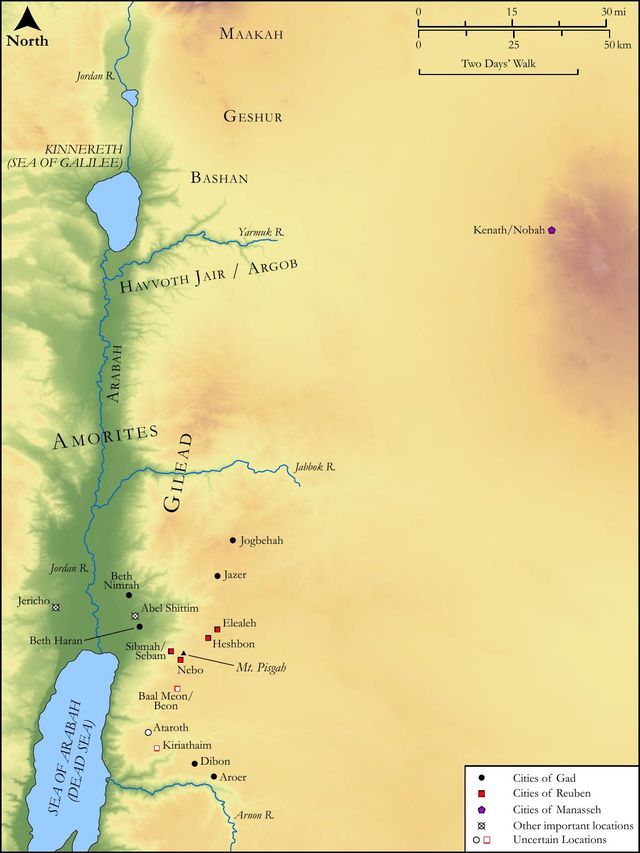
See on the biblical-era map
Study this verse
Continue studying Numbers 32:6 across the web’s major study libraries — every link below opens this exact verse, chapter, or book on the destination site.
Read & Compare
 BibleGatewayThis verse in more than 200 translations and 70 languages.
 Bible.comThe YouVersion reader — hundreds of translations, reading plans, and highlights.
 ESV.orgCrossway's official English Standard Version reader.
 NET BibleThe NET translation with 60,000+ translators' notes on every rendering decision.
 STEP BibleTyndale House's free study tool — original text, vocabulary, and scholarly resources.
 BibliaLogos Bible Software's free web reader.
 USCCBThe New American Bible (Revised Edition) with the U.S. bishops' study notes.
Commentaries
 BibleHub CommentariesDozens of classic commentaries on this verse, gathered on one page.
 StudyLightMore than 100 commentary sets — the largest collection on the web.
 BibleRefPlain-English commentary on what this verse means, verse by verse.
 Enduring WordDavid Guzik's free commentary on this chapter, widely used by Bible teachers.
 Bible Study ToolsVerse commentary alongside Greek and Hebrew study aids.
Original Language & Research
- BibleHub InterlinearThe verse word by word — original language, transliteration, and English.
- BibleHub LexiconEvery word's original-language definition and Strong's entry.
 Blue Letter BibleDeep-study tools — Strong's numbers, concordance, and word studies.
 SefariaThe Hebrew text with Rashi and centuries of Jewish commentary.
Sermons, Hymns & Audio


TrulyRandomVerse is not affiliated with these sites and doesn’t control their content. They’re linked because they’re genuinely useful.
Summary
Numbers 32:6 captures Moses' incisive rhetorical challenge to the tribes of Gad and Reuben, who sought to settle east of the Jordan River before the full conquest of Canaan. This pivotal moment illuminates Moses' profound concern for the unity, shared responsibility, and unwavering commitment of the entire Israelite nation to God's divine plan, highlighting the potential for discouragement and division if some tribes shirked their collective duty to enter and conquer the Promised Land alongside their brethren.
Context
ShowHideLiterary Context
Numbers 32:6 is situated within a critical and tense negotiation between Moses and the tribes of Gad and Reuben. These tribes, having observed the fertile lands of Gilead and Bashan to be ideal for their abundant livestock, requested permission to settle there rather than crossing the Jordan River with the other tribes to conquer Canaan. This request, detailed in Numbers 32:1-5, immediately provokes a strong and sharp rebuke from Moses. His reaction in this verse and the subsequent verses (e.g., Numbers 32:7-15) is deeply informed by the painful and recent memory of the spies' report and the subsequent rebellion at Kadesh-Barnea, which resulted in forty years of wilderness wandering and the death of an entire generation. Moses' rhetorical question in verse 6 serves as a powerful opening salvo in a crucial dialogue that ultimately leads to a conditional agreement, ensuring the unity of the Israelite military effort and preventing a repeat of past failures.
Historical & Cultural Context
At this juncture in Israel's history, they stood on the threshold of the Promised Land, poised to fulfill the ancient covenant promises made to Abraham, Isaac, and Jacob regarding their inheritance of the land. The conquest of Canaan was far more than a mere military campaign; it was a divinely ordained mission, requiring the full and unwavering participation and solidarity of all twelve tribes. In ancient Israelite society, tribal identity and communal responsibility were paramount, with the welfare and success of the collective often taking precedence over individual or sub-group interests. Moses' profound concern in this verse directly reflects the cultural expectation of shared burden in warfare, especially when the very existence and future of the nation were dependent on unified action. The bitter memory of past failures, particularly the lack of faith and unity that led to the prolonged wilderness wandering (recounted in Numbers 14), loomed large, making any hint of disunity or shirking of duty a grave threat to national morale and divine favor.
Key Themes
ShowHideThis verse powerfully contributes to several foundational themes within the book of Numbers and the broader Pentateuch. It vividly underscores the theme of shared responsibility and corporate solidarity, emphasizing that the fulfillment of God's covenant promises necessitated the unified effort of the entire community, not just a fragmented subset. Moses' challenging question highlights the inherent dangers of selfishness and complacency, particularly when immediate personal gain or comfort is prioritized over the collective mission and the well-being of one's brethren. Furthermore, it speaks to the crucial role of courageous leadership in discerning and challenging potentially divisive actions, thereby upholding the divine mandate and the integrity of the community. Moses, as a seasoned and divinely appointed leader, acutely understood the psychological impact of perceived abandonment and the potential for discouragement among the fighting men, a theme that resonates throughout Israel's wilderness experience and their preparations for conquest (e.g., the fear described in Deuteronomy 1:28).
Exposition and Analysis
ShowHideKey Word Analysis
ShowHideMeaning "drawing out (of the water), i.e. rescued." This name, indicative of his miraculous rescue, identifies the central figure of the Pentateuch, the divinely appointed leader and lawgiver of Israel. In Numbers 32:6, Moses acts not merely as a human leader but as God's representative, embodying the divine concern for Israel's unity and faithfulness to the covenant. His authority and past experience with Israel's failures give his words immense weight.
A primitive word meaning "a brother (used in the widest sense of literal relationship and metaphorical affinity or resemblance)." Moses' use of "brethren" (אֲחֵיכֶם, ʼaḥeikhem) is a powerful appeal to the familial and communal bonds within Israel. It emphasizes the shared lineage, destiny, and covenant relationship that should compel Gad and Reuben to act in solidarity with the other tribes, highlighting the moral obligation inherent in their shared identity.
A primitive root meaning "properly, to sit down (specifically as judge. in ambush, in quiet); by implication, to dwell, to remain; causatively, to settle, to marry." When coupled with "here" (פֹה, fo), this verb signifies not just physical repose but a desire for permanent, comfortable settlement and, by implication, a withdrawal from the collective struggle. Moses employs this word to starkly contrast the proposed ease and security of settling east of the Jordan with the active, dangerous, and divinely mandated task of "going to war" that awaited their fellow tribes. It implies a shirking of duty and a prioritization of personal comfort over corporate responsibility.
Verse Breakdown
ShowHide"And Moses said unto the children of Gad and to the children of Reuben,"
This opening clause immediately sets the scene for a direct and authoritative confrontation. Moses, as the leader bearing God's authority, addresses the specific tribal groups whose request has caused him grave concern. This direct address underscores the gravity of the situation, as the unity and future of the entire nation are at stake.
"Shall your brethren go to war,"
This is the first half of Moses' rhetorical question, designed to evoke a sense of shared identity and responsibility. "Your brethren" (אֲחֵיכֶם, ʼaḥeikhem) directly appeals to their familial and communal ties, reminding them of their solidarity with the other tribes. "Go to war" (לַמִּלְחָמָה יֵלְכוּ, lammilchamah yelchu) refers to the imminent, perilous, and divinely mandated military conquest of Canaan, a task requiring immense sacrifice and courage. Moses highlights the active, dangerous, and sacrificial nature of the task awaiting the majority of the tribes.
"and shall ye sit here?"
This is the second, contrasting half of the rhetorical question, directly challenging the proposed inaction and comfort of Gad and Reuben. As explored in the key word analysis, "sit here" implies a desire for ease, a shirking of duty, and a withdrawal from the collective struggle. The powerful juxtaposition of "go to war" and "sit here" is strategically designed to expose the perceived selfishness and moral impropriety of their request, aiming to evoke a sense of shame, responsibility, and a reconsideration of their priorities.
Literary Devices
ShowHideNumbers 32:6 primarily employs a powerful Rhetorical Question. Moses does not seek an answer or information but rather aims to provoke deep reflection, a sense of shame, and ultimately, a change of heart in the tribes of Gad and Reuben. The question, "Shall your brethren go to war, and shall ye sit here?", is masterfully crafted to highlight the perceived absurdity, moral unacceptability, and profound injustice of their proposal, forcing them to confront the severe implications of their actions on the rest of the community. This device is highly effective in conveying Moses' strong disapproval and the ethical dilemma at hand. Additionally, the verse utilizes stark Contrast, setting the active, dangerous, and sacrificial act of "going to war" against the passive, comfortable, and self-serving act of "sitting here." This sharp juxtaposition underscores the perceived disparity in commitment and sacrifice, emphasizing the collective and unified nature of their national mission and the potential for division.
Theological and Thematic Connections
ShowHideNumbers 32:6 serves as a foundational text for understanding the theological imperative of corporate solidarity and shared burden within God's covenant community. It illustrates vividly that God's redemptive purposes are consistently fulfilled through the unified and active effort of His people, where individual desires must often yield to the greater good of the collective mission. Moses' deep concern reflects a timeless divine principle: the well-being, strength, and ultimate success of the whole body depend intrinsically on the active participation, mutual support, and unwavering commitment of all its constituent parts. This principle transcends the ancient Israelite conquest, speaking profoundly to the church's mission today and the believer's call to participate actively and sacrificially in the advancement of the Kingdom of God, rather than seeking personal comfort or spiritual complacency while others labor in the spiritual battle. It underscores that true spiritual flourishing often comes through shared struggle and corporate faithfulness.
Reflection and Application
ShowHideNumbers 32:6 offers profound and enduring lessons for contemporary believers, challenging us to critically examine our own commitment to the collective mission of God's people. In a world that frequently prioritizes individual comfort, personal autonomy, and immediate gratification, this verse calls us to a higher standard of shared responsibility and sacrificial service. It serves as a potent reminder that the spiritual battles we face—the vital work of evangelism, discipleship, justice, and ministering to the hurting—are not meant to be borne by a select few, but by the entire body of Christ, each member contributing their unique gifts and efforts. Our choices, whether to actively engage in the work of the Kingdom or to "sit here" in spiritual apathy and complacency, have a tangible and significant impact on the morale, effectiveness, and spiritual progress of our fellow believers and the church as a whole. This passage urges us to resist the insidious temptation of spiritual disengagement and to wholeheartedly embrace our indispensable role in the ongoing work of God's kingdom, understanding that true fulfillment and spiritual vitality come not from avoiding the struggle but from participating faithfully and courageously in it alongside our brethren.
Questions for Reflection
ShowHideFAQ
ShowHideWhy was Moses so concerned about Gad and Reuben's request?
ShowHideMoses' deep concern stemmed from several critical and interconnected factors, rooted in both past experience and future imperative. First, he feared that the tribes of Gad and Reuben settling east of the Jordan would profoundly demoralize the other tribes, leading them to believe they were being abandoned in the arduous and dangerous task of conquering Canaan. This apprehension was not unfounded; it directly echoed the devastating impact of the spies' negative report at Kadesh-Barnea, which caused the entire generation to wander in the wilderness for forty years and perish there. Moses understood the psychological fragility of the people. Second, Moses grasped the paramount importance of unity for the success of God's mission. The conquest of the Promised Land was not a series of individual tribal skirmishes but a collective, divinely ordained endeavor for the entire nation of Israel. Any division or perceived shirking of duty could undermine the entire national enterprise, jeopardizing their ability to fulfill God's covenant promises. He saw their request as potentially prioritizing personal comfort and immediate gain over the corporate responsibility to fulfill God's promise for all of Israel to inherit the land. His strong, almost accusatory reaction was therefore a protective measure for the spiritual, moral, and physical well-being of the entire nation, ensuring they would not repeat past failures of faith and commitment that had cost them so dearly.
Christ-Centered Fulfillment
ShowHideWhile Numbers 32:6 vividly portrays Moses' concern for the unity and shared responsibility of Israel in conquering the earthly Promised Land, it finds its ultimate and profound Christ-centered fulfillment in the New Covenant's call to corporate participation in the spiritual conquest of God's Kingdom. Jesus Christ, the greater Moses, did not merely lead His people to a physical land but inaugurated a new spiritual reality, the Kingdom of God, and commissioned His disciples to "go and make disciples of all nations" (Matthew 28:19). The temptation for Gad and Reuben to "sit here" while others "go to war" powerfully foreshadows the ongoing challenge for believers in every generation to remain actively engaged in the Great Commission, rather than succumbing to personal comfort or spiritual complacency. Christ Himself exemplified ultimate self-sacrifice, not "sitting here" in heavenly glory but humbling Himself to become obedient to death—even death on a cross (Philippians 2:8). He bore the ultimate burden for His "brethren," bringing salvation and establishing the Church as a unified body, where every member is called to contribute to the common good and the advancement of the Gospel (1 Corinthians 12:27). The unity Moses sought for Israel's physical inheritance is gloriously realized in Christ's body, the Church, where believers are called to bear one another's burdens (Galatians 6:2) and collectively strive for the faith of the gospel (Philippians 1:27), actively participating in the spiritual warfare against sin and darkness until Christ's glorious return.