


Numbers 32:21
Bible text: King James Version (1769 Blayney text) · Public domain
Bible text: Berean Standard Bible · Public domain
Bible text: American Standard Version (1901) · Public domain
Bible text: World English Bible, Messianic edition · Public domain
Bible text: Geneva Bible (1599) · Public domain
Bible text: Young's Literal Translation · Public domain
- וְעָבַרve·'a·Varand he will pass overH5674Conj-w ¦ V-Qal-ConsecPerf-3msVerb Qal Consecutive Perfect 3rd Singular Masculineוְandעָבַרhe will pass over
- לָכֶםla·Khemof youPrep-l ¦ 2mpSuffix Personal 2nd Plural Masculineלָofכֶםyou
- כָּלkoleveryH3605N-mscNoun Singular Masculine Construct
- חָלוּץcha·Lutzequipped [man]H2502V-Qal-PassPrtcpl-msVerb Qal Participle Passive Singular Masculine Absolute
- אֶת'et<obj.>H853DirObjMParticle Object Indicator
- הַיַּרְדֵּןhai·yar·Denthe JordanH3383Art ¦ N-properNoun Proper LocationהַtheיַּרְדֵּןJordan
- לִפְנֵיlif·Nei<to> beforeH6440Prep-l ¦ N-mpcNoun Plural Masculine Constructלִ<to>פְנֵיbefore
- יְהוָהYah·wehYahwehH3068N-properNoun Proper Title
- עַד'aduntilH5704PrepPreposition
- הוֹרִישׁוֹho·ri·Shohe has dispossessedH3423V-Hiphil-Inf ¦ 3msVerb Hiphil Infinitive Constructהוֹרִישׁhas dispossessedוֹhe
- אֶת'et<obj.>H853DirObjMParticle Object Indicator
- אֹיְבָיו'o·ye·Vavhis enemiesH341V-Qal-Prtcpl-mp ¦ 3msVerb Qal Participle Plural Masculine Constructאֹיְבָיenemiesוhis
- מִפָּנָיוmi·pa·Navfrom before himH6440Prep-m ¦ N-mpc ¦ 3msNoun Plural Masculine Constructמִfromפָּנָיbeforeוhim
English is a literal word-by-word gloss of the Hebrew, not the KJV's wording. Why?
This is the original text the KJV's translators worked from — each Hebrew word with its own literal English meaning in this verse, prepared by scholars at Tyndale House, Cambridge. The KJV translates whole sentences, not word by word, so its wording differs: one Hebrew word can become several English words, and the KJV may choose “the LORD” where the gloss reads “Yahweh”. Both are faithful — they answer different questions. For the KJV's own rendering, switch to the KJV text.
Details
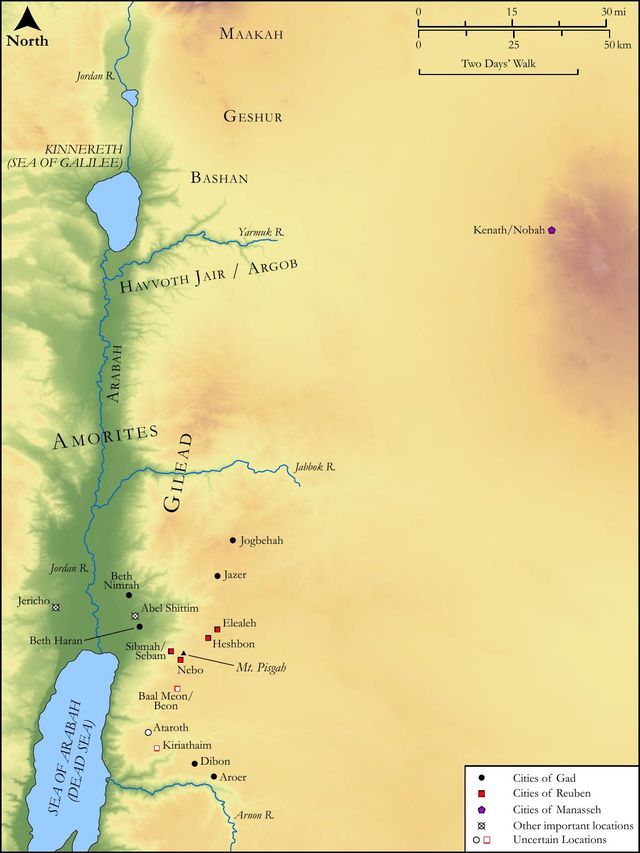
See on the biblical-era map
Study this verse
Continue studying Numbers 32:21 across the web’s major study libraries — every link below opens this exact verse, chapter, or book on the destination site.
Read & Compare
 BibleGatewayThis verse in more than 200 translations and 70 languages.
 Bible.comThe YouVersion reader — hundreds of translations, reading plans, and highlights.
 ESV.orgCrossway's official English Standard Version reader.
 NET BibleThe NET translation with 60,000+ translators' notes on every rendering decision.
 STEP BibleTyndale House's free study tool — original text, vocabulary, and scholarly resources.
 BibliaLogos Bible Software's free web reader.
 USCCBThe New American Bible (Revised Edition) with the U.S. bishops' study notes.
Commentaries
 BibleHub CommentariesDozens of classic commentaries on this verse, gathered on one page.
 StudyLightMore than 100 commentary sets — the largest collection on the web.
 BibleRefPlain-English commentary on what this verse means, verse by verse.
 Enduring WordDavid Guzik's free commentary on this chapter, widely used by Bible teachers.
 Bible Study ToolsVerse commentary alongside Greek and Hebrew study aids.
Original Language & Research
- BibleHub InterlinearThe verse word by word — original language, transliteration, and English.
- BibleHub LexiconEvery word's original-language definition and Strong's entry.
 Blue Letter BibleDeep-study tools — Strong's numbers, concordance, and word studies.
 SefariaThe Hebrew text with Rashi and centuries of Jewish commentary.
Sermons, Hymns & Audio


TrulyRandomVerse is not affiliated with these sites and doesn’t control their content. They’re linked because they’re genuinely useful.
Summary
Numbers 32:21 records the solemn pledge of the Transjordan tribes—Reuben, Gad, and the half-tribe of Manasseh—to Moses. Having secured permission to settle the fertile lands east of the Jordan River, these tribes committed to arm their able-bodied men and lead the vanguard across the Jordan, fighting alongside the rest of Israel until the Lord had completely dispossessed all His enemies from the Promised Land. This verse encapsulates their crucial promise of corporate solidarity and unwavering commitment to the divine mission of conquest before securing their own tribal inheritance, thereby assuaging Moses' initial fears of disunity and self-interest.
Context
ShowHideLiterary Context
The immediate literary context of Numbers 32 is a pivotal negotiation that takes place after Israel's decisive victories over Sihon, king of the Amorites, and Og, king of Bashan. The fertile lands of Transjordan, now conquered, were ideal for the large livestock herds of the tribes of Reuben, Gad, and half of Manasseh. Their request to settle there, rather than crossing into Canaan, initially provoked a strong negative reaction from Moses. He feared a repetition of the faithless rebellion at Kadesh-Barnea, which had resulted in the forty-year wilderness wandering and a severe delay in entering the Promised Land. However, the tribes clarified their petition, promising to first build fortified cities for their families and folds for their flocks, and then, as articulated in this verse, to arm themselves and fight alongside their brethren until the entire land of Canaan was subdued and distributed. This verse, therefore, represents the core of their binding commitment, which ultimately satisfied Moses and formed the basis of the covenant that allowed them to settle in Transjordan.
Historical & Cultural Context
Historically, the Israelites stood on the threshold of entering the land promised to their patriarchs, a culmination of four decades of wilderness wandering. The concept of tribal land inheritance was not merely economic but foundational to their identity as God's covenant people, fulfilling the promises made to Abraham, Isaac, and Jacob. The Transjordan region, particularly Gilead and Bashan, was renowned for its lush pastures, making it exceptionally attractive to pastoral tribes. Culturally, military service was a communal obligation, especially in a conquest scenario, where a unified front was paramount for success against the entrenched Canaanite city-states. The phrase "before the LORD" held profound cultural and theological weight, signifying an action performed under divine scrutiny, approval, and leadership, thereby elevating a military campaign to the status of a holy war. Moreover, the integrity of a sworn oath or promise was deeply valued in Israel, and breaking such a pledge would incur severe social and divine repercussions, as Moses himself warns in Numbers 32:23, "be sure your sin will find you out."
Key Themes
ShowHideNumbers 32:21 significantly contributes to several overarching themes within the book of Numbers and the broader Pentateuch. It powerfully underscores the theme of corporate responsibility and national unity, emphasizing that the success of the divinely ordained mission to conquer Canaan depended entirely on the solidarity and mutual support of all twelve tribes. No single tribe was permitted to pursue its own interests at the expense of the collective good, a principle that foreshadows the New Testament concept of the unity of the body of Christ. The verse also highlights faithfulness to covenant and promise, as the tribes' pledge to "go all of you armed over Jordan before the LORD" was a solemn oath made in the presence of God and Moses, essential for maintaining trust and order within the community. Furthermore, it reinforces the theme of divine sovereignty in conquest, as it is the Lord who "hath driven out his enemies," positioning the Israelites as instruments in God's greater plan of judgment and land distribution. This commitment to fight until God's enemies are dispossessed speaks to the enduring call for believers to participate actively in God's kingdom work, even when personal comfort and immediate gratification beckon.
Exposition and Analysis
ShowHideKey Word Analysis
ShowHideThis term (H2502) signifies being "equipped for war," "ready for battle," or "stripped for action." It conveys a state of complete preparedness, discipline, and active engagement, implying that these tribes would not merely be present but would be at the forefront, ready to undertake the strenuous and dangerous work of conquest. The word emphasizes their commitment to being fully invested in the military campaign, not just symbolically but practically.
This is the sacred, covenantal name of God (H3068), often translated as "Yahweh" or "Jehovah." Its presence here signifies that the entire enterprise is under God's direct authority, oversight, and leadership. Their commitment was not merely to Moses or their brethren, but ultimately to God Himself, implying that their actions would be performed under His watchful eye and in accordance with His divine will. It underscores the sacred, covenantal nature of the conquest and their oath.
While the KJV uses "driven out," the underlying Hebrew root (H3423) primarily means "to inherit," "to take possession," or "to dispossess." In this context, it refers to God's act of dispossessing the Canaanite inhabitants from the land, thereby enabling Israel to inherit it. The phrase "until he hath driven out his enemies from before him" highlights that the ultimate victory belongs to God; the Israelites are His instruments in fulfilling His promise to give them the land. Their commitment was to continue fighting until God's work of dispossession was complete and His people had fully entered their inheritance.
Verse Breakdown
ShowHide"And will go all of you armed over Jordan"
This clause establishes the active, unified, and sacrificial participation of the Transjordan tribes. Their promise is not merely to send a small contingent, but for "all of you" (meaning all able-bodied men from these tribes) to cross the Jordan River, fully "armed" and prepared for battle. This signifies their willingness to leave their newly secured families and flocks behind to fulfill their national duty, demonstrating remarkable self-sacrifice and commitment to the larger Israelite community's divinely ordained mission.
"before the LORD"
This crucial phrase elevates the entire enterprise beyond a mere human military campaign. It signifies that their actions would be performed under God's direct observation, approval, and leadership. Their commitment was a sacred vow, made in the presence of the Almighty, indicating that the conquest was a divinely ordained mission, not simply a human land grab. This imbues their promise with profound theological weight and accountability, emphasizing that their obedience was ultimately directed toward God.
"until he hath driven out his enemies from before him"
This final clause specifies the duration and ultimate goal of their commitment. They would fight not just for a short period or until a certain point, but "until" God Himself had completely dispossessed all His enemies (the Canaanites) from the land. The emphasis on "his enemies" underscores that this was God's war, and "from before him" implies God's direct action in clearing the land. This commitment highlights their understanding that the victory was ultimately God's, and their role was to be His instruments until His sovereign purpose for the land was fully accomplished and Israel's inheritance was secured.
Literary Devices
ShowHideNumbers 32:21 employs several literary devices to convey its powerful and binding message. The verse functions primarily as a solemn pledge or oath, which serves as the narrative's resolution to Moses' initial apprehension. The phrase "before the LORD" serves as a powerful instance of theological emphasis, underscoring the divine oversight and sacred nature of the commitment. This is not merely a political or military agreement but a covenantal promise made in God's immediate presence. There is also an element of conditional promise, as the tribes' ability to settle east of the Jordan is explicitly contingent upon their faithful fulfillment of this military obligation. The repetition of "before him" (referring to the Lord) at the end of the verse creates a subtle sense of framing or inclusio, emphasizing God's central and continuous role from the outset of their commitment to the completion of the task. The entire passage also operates as a foreshadowing of the later tribal allotments and the critical importance of unity in Israel's history, even hinting at the dangers of disunity when tribes fail to uphold their corporate responsibilities.
Theological and Thematic Connections
ShowHideNumbers 32:21 offers profound theological insights into the nature of God's covenant with Israel and the responsibilities of His people. It underscores the principle that divine blessing and the full realization of inheritance are often contingent upon faithful obedience and corporate solidarity. The tribes' willingness to prioritize the national, divinely ordained mission over immediate personal comfort reflects a core biblical teaching: that true flourishing and the reception of God's promises come from aligning one's life with God's purposes for the community. The verse also highlights God's active involvement in the affairs of His people, particularly in warfare, where He is depicted as the ultimate victor who "drives out his enemies." This concept of God fighting for His people is a recurring theme throughout Scripture, assuring believers that their battles, especially spiritual ones, are ultimately His. Furthermore, the emphasis on keeping one's word, especially a promise made "before the LORD," speaks to the integrity and trustworthiness expected of those in covenant relationship with God, reminding us that our commitments are not just to others but ultimately to the Almighty.
Reflection and Application
ShowHideThe commitment of the Transjordan tribes in Numbers 32:21 provides a powerful blueprint for contemporary believers navigating the tension between personal aspirations and corporate calling. In a world that often champions individualism and immediate gratification, this verse challenges us to consider how our personal comforts, desires, and even legitimate needs might sometimes need to be deferred or even sacrificially offered for the greater good of God's kingdom and the flourishing of His people. Just as these tribes were called to participate in a physical conquest, Christians are called to engage in spiritual warfare and the advancement of the gospel, recognizing that we are part of a larger, unified body, the Church. Our "promised land" is not a geographical territory but the spiritual inheritance in Christ and the expansion of His reign on earth. This passage compels us to examine our own integrity—do we keep our promises, especially those made to God and to our community of faith? Are we willing to "go armed" into the spiritual battles of our generation, trusting that the Lord is the one who ultimately "drives out his enemies," and that our participation is a vital act of obedience and solidarity in His grand redemptive plan?
Questions for Reflection
ShowHideFAQ
ShowHideWhy was Moses initially so hesitant about the tribes settling east of the Jordan?
ShowHideMoses' initial hesitation stemmed from a deep concern about disunity and a repeat of past failures that had plagued the Israelites. He feared that if these tribes settled outside the main Promised Land, it would discourage the rest of Israel from crossing the Jordan and completing the conquest, similar to the debilitating lack of faith displayed at Kadesh-Barnea. He explicitly references this fear in Numbers 32:6-15, reminding them of the dire consequences of their fathers' disobedience, which led to the forty-year wilderness wandering. Moses desperately wanted assurance that their desire for land would not undermine the collective, divinely mandated mission to conquer all of Canaan.
Did the Transjordan tribes keep their promise?
ShowHideYes, the Transjordan tribes largely kept their promise with commendable faithfulness. After securing their families and flocks in the newly acquired territory, the able-bodied men from Reuben, Gad, and half-Manasseh did indeed cross the Jordan with Joshua and fought alongside the other tribes during the conquest of Canaan. Joshua 1:12-18 records Joshua reminding them of their pledge, and they unequivocally reaffirm their commitment. Later, Joshua 22 describes Joshua dismissing them to their inheritance after the land was subdued, commending them for their unwavering faithfulness to the Lord and their brethren. While there was a misunderstanding about an altar they built upon their return, their military commitment to the conquest was upheld.
Christ-Centered Fulfillment
ShowHideNumbers 32:21, with its profound emphasis on corporate solidarity, self-sacrificial commitment, and participation in a divinely ordained conquest, finds its ultimate fulfillment and transformation in the person and work of Jesus Christ. While the Old Testament conquest involved physical warfare to secure a geographical inheritance, Christ inaugurates a new covenant and a spiritual conquest of infinitely greater scope. He is the true Commander of the Lord's army, leading His people not into earthly battles for land, but into spiritual warfare against sin, death, and the powers of darkness (Ephesians 6:12). Just as the Transjordan tribes committed to fight "before the LORD" until His enemies were driven out, believers in Christ are called to participate actively in the expansion of God's kingdom, living out the gospel "before the Lord" until all His enemies are subjected. Our inheritance is not a parcel of land but eternal life and co-heirship with Christ (Romans 8:17), a spiritual reality secured by His ultimate sacrifice and glorious resurrection. The unity and self-sacrifice displayed by the tribes foreshadow the profound unity of the body of Christ, where each member, though distinct, is called to serve the whole, prioritizing the advancement of God's redemptive purposes over individual comforts, until Christ's final victory is fully realized and He reigns supreme over all creation (1 Corinthians 15:25).