


Numbers 31:52
Bible text: King James Version (1769 Blayney text) · Public domain
Bible text: King James Version with Strong's numbers · Public domain
Bible text: Berean Standard Bible · Public domain
Bible text: American Standard Version (1901) · Public domain
Bible text: World English Bible, Messianic edition · Public domain
Bible text: Geneva Bible (1599) · Public domain
Bible text: Young's Literal Translation · Public domain
- וַיְהִיvay·Hiand it wasH1961Conj-w ¦ V-Qal-ConsecImperf-3msVerb Qal Consecutive Imperfect 3rd Singular Masculineוַandיְהִיit was
- כָּלkolallH3605N-mscNoun Singular Masculine Construct
- זְהַבze·Hav[the] gold ofH2091N-mscNoun Singular Masculine Construct
- הַתְּרוּמָהha·te·ru·Mahthe contributionH8641Art ¦ N-fsNoun Singular Feminine Absoluteהַtheתְּרוּמָהcontribution
- אֲשֶׁר'a·SherwhichH834RelParticle Relative
- הֵרִימוּhe·Ri·muthey raisedH7311V-Hiphil-Perf-3cpVerb Hiphil Perfect 3rd Plural common gender
- לַיהוָהla·Yah·wehfor YahwehH3068Prep-l ¦ N-properNoun Proper TitleלַforיהוָהYahweh
- שִׁשָּׁהshi·Shahsix-H8337Adj-csAdjective Numerical Singular common gender Absolute
- עָשָׂר'a·SarteenH6240Adj-csAdjective Numerical Singular common gender Absolute
- אֶלֶף'E·lefthousandH505Adj-csAdjective Numerical Singular common gender Absolute
- שְׁבַעshe·va'sevenH7651Adj-cscAdjective Numerical Singular common gender Construct
- מֵאוֹתme·'othundred<s>H3967Adj-fpAdjective Numerical Plural Feminine Absolute
- וַחֲמִשִּׁיםva·cha·mi·Shimand fiftyH2572Conj-w ¦ Adj-mpAdjective Numerical Plural Masculine Absoluteוַandחֲמִשִּׁיםfifty
- שָׁקֶלSha·kelshekel[s]H8255N-msNoun Singular Masculine Absolute
- מֵאֵתme·'Etfrom withH854Prep-m ¦ DirObjMParticle Object Indicatorמֵfromאֵתwith
- שָׂרֵיsa·Rei[the] commanders ofH8269N-mpcNoun Plural Masculine Construct
- הָאֲלָפִיםha·'a·la·Fimthe thousandsH505Art ¦ Adj-cpAdjective Numerical Plural common gender Absoluteהָtheאֲלָפִיםthousands
- וּמֵאֵתu·me·'Etand from withH854Conj-w ¦ Prep-m ¦ DirObjMParticle Object Indicatorוּandמֵfromאֵתwith
- שָׂרֵיsa·Rei[the] commanders ofH8269N-mpcNoun Plural Masculine Construct
- הַמֵּאוֹתha·me·'otthe hundredsH3967Art ¦ Adj-fpAdjective Numerical Plural Feminine Absoluteהַtheמֵּאוֹתhundreds
English is a literal word-by-word gloss of the Hebrew, not the KJV's wording. Why?
This is the original text the KJV's translators worked from — each Hebrew word with its own literal English meaning in this verse, prepared by scholars at Tyndale House, Cambridge. The KJV translates whole sentences, not word by word, so its wording differs: one Hebrew word can become several English words, and the KJV may choose “the LORD” where the gloss reads “Yahweh”. Both are faithful — they answer different questions. For the KJV's own rendering, switch to the KJV text.
Details
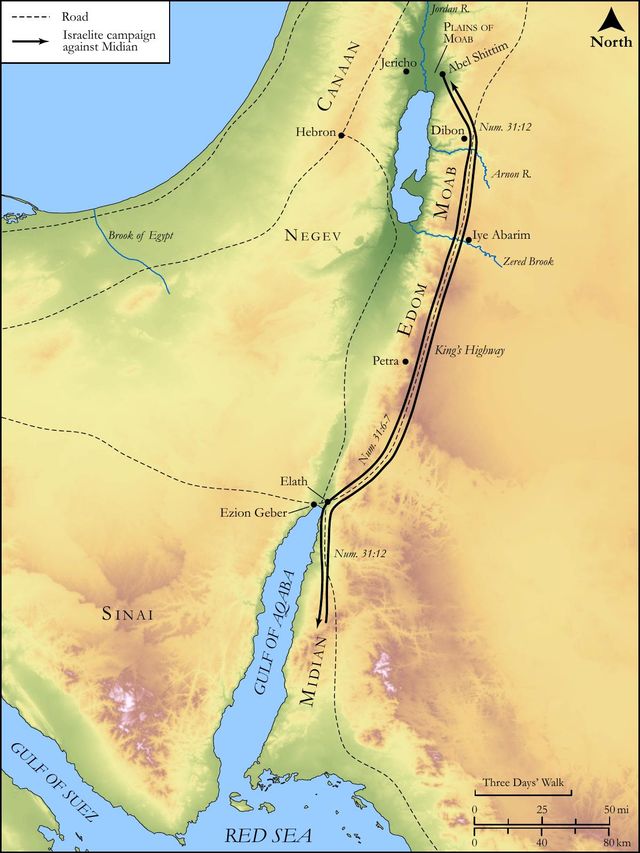
See on the biblical-era map
Study this verse
Continue studying Numbers 31:52 across the web’s major study libraries — every link below opens this exact verse, chapter, or book on the destination site.
Read & Compare
 BibleGatewayThis verse in more than 200 translations and 70 languages.
 Bible.comThe YouVersion reader — hundreds of translations, reading plans, and highlights.
 ESV.orgCrossway's official English Standard Version reader.
 NET BibleThe NET translation with 60,000+ translators' notes on every rendering decision.
 STEP BibleTyndale House's free study tool — original text, vocabulary, and scholarly resources.
 BibliaLogos Bible Software's free web reader.
 USCCBThe New American Bible (Revised Edition) with the U.S. bishops' study notes.
Commentaries
 BibleHub CommentariesDozens of classic commentaries on this verse, gathered on one page.
 StudyLightMore than 100 commentary sets — the largest collection on the web.
 BibleRefPlain-English commentary on what this verse means, verse by verse.
 Enduring WordDavid Guzik's free commentary on this chapter, widely used by Bible teachers.
 Bible Study ToolsVerse commentary alongside Greek and Hebrew study aids.
Original Language & Research
- BibleHub InterlinearThe verse word by word — original language, transliteration, and English.
- BibleHub LexiconEvery word's original-language definition and Strong's entry.
 Blue Letter BibleDeep-study tools — Strong's numbers, concordance, and word studies.
 SefariaThe Hebrew text with Rashi and centuries of Jewish commentary.
Sermons, Hymns & Audio


TrulyRandomVerse is not affiliated with these sites and doesn’t control their content. They’re linked because they’re genuinely useful.
Summary
Numbers 31:52 meticulously records a significant voluntary offering of gold presented to the LORD by the military commanders of Israel. This substantial gift, amounting to sixteen thousand seven hundred and fifty shekels, was a special "heave offering" or "contribution" made in profound gratitude for the miraculous preservation of every Israelite soldier's life during their decisive victory over the Midianites. It served as a tangible memorial before God, underscoring the captains' recognition of divine protection, their deep appreciation for His favor, and their commitment to consecrate their blessings back to the Sovereign Lord.
Context
ShowHideLiterary Context
Numbers 31 unfolds as a detailed account of Israel's punitive war against the Midianites, a divine judgment for their role in luring Israel into idolatry and sexual immorality at Peor, as chronicled in Numbers 25. The chapter systematically describes the execution of the command, the overwhelming victory, the meticulous division of spoils, and the necessary purification rituals. A pivotal detail emerges in Numbers 31:48-49, which highlights the astonishing fact that not a single Israelite soldier perished in the battle. This miraculous preservation prompts the military commanders—the "captains of thousands, and of the captains of hundreds"—to approach Moses and Eleazar with a unique, voluntary offering of gold, distinct from the general division of war spoils. Numbers 31:50-51 explicitly states the purpose of this offering: "an offering for the LORD, to make an atonement for our souls, for our lives." Verse 52 then precisely quantifies this extraordinary gift, which was subsequently brought into the Tabernacle treasury, as noted in Numbers 31:54.
Historical & Cultural Context
The war against Midian was not merely a territorial conquest but a divinely ordained "holy war," a direct act of judgment against a people who had actively sought to corrupt Israel's covenant relationship with Yahweh. Among the nations, it was common for victorious armies to dedicate a portion of their spoils to their gods as a thank-offering or an appeasement. However, the Israelite offering in Numbers 31 carries a distinct theological weight. It is a specific, voluntary contribution from the military leadership, not a mandated tithe of all spoils. The phrase "to make an atonement for our souls" (כַּפֶּר עַל נַפְשֹׁתֵינוּ - kapper al nafshotenu) in Numbers 31:50 resonates with the "ransom for his life" or "atonement money" prescribed in Exodus 30:12-16, which was paid to avert plague during a census. Here, however, it serves as an offering of profound gratitude for lives miraculously preserved, rather than a payment to avert impending death, emphasizing God's direct and protective intervention. Gold, a highly valued and incorruptible metal, was frequently utilized in the construction and adornment of the Tabernacle and its sacred furnishings, symbolizing its suitability for consecrated use and divine glory.
Key Themes
ShowHideThis verse powerfully encapsulates several foundational themes woven throughout the book of Numbers and the Pentateuch. Firstly, it profoundly illustrates Divine Protection and Sovereignty, as God's unmistakable hand is evident in the miraculous preservation of every Israelite soldier's life, demonstrating His absolute control over the outcomes of battle and the destiny of His people (Deuteronomy 20:4). Secondly, it highlights the theme of Gratitude and Voluntary Offering, showcasing a spontaneous, overflowing, and generous response to God's manifest favor, transcending mere legalistic obligation to embody heartfelt worship. The captains' offering functions as a Memorial and Atonement, a tangible remembrance before the LORD of their lives spared, acknowledging that their very existence and safety are utterly dependent on Him. Finally, it powerfully demonstrates Leadership by Example, as the military commanders—those entrusted with significant authority and responsibility—model profound faith, humility, and devotion for the entire congregation. This act also reinforces the enduring principle of Consecration of Wealth, where material blessings are dedicated back to God for sacred purposes, affirming His ultimate ownership of all resources (Haggai 2:8).
Exposition and Analysis
ShowHideKey Word Analysis
ShowHideFrom an unused root meaning "to shimmer," this term refers to the precious metal gold, often figuratively representing something gold-colored or yellow. In Scripture, gold was recognized as a symbol of immense wealth, purity, and divine glory. Its prominent use in the construction and adornment of the Tabernacle (e.g., the Ark of the Covenant, the menorah, the altar of incense) underscores its sacredness and suitability for God's dwelling and service. Here, the sheer quantity of gold offered signifies the magnitude of the captains' gratitude and the profound value they ascribed to the lives God had miraculously preserved. It represents the dedication of the most valuable portion of the spoils to the LORD.
This term denotes a "heave offering" or "contribution," literally something "lifted up" or "set apart" from the common for a sacred purpose. Unlike burnt offerings (which were consumed) or sin offerings, a terumah typically involved a portion of produce, wealth, or spoils designated for the priests or for the maintenance of the Tabernacle. In this specific context, it emphasizes the voluntary, consecrated, and dedicated nature of the gift, distinguishing it from mandatory tithes or portions of the spoils. It signifies a deliberate act of worship and consecration to God, acknowledging His supreme authority and generosity.
Derived from a root meaning "to weigh," the shekel was a standard unit of weight in ancient Israel, not a coin, used for measuring precious metals like silver or, as in this verse, gold. While its precise modern equivalent varies, 16,750 shekels of gold would have constituted an astronomical sum, representing an enormous amount of wealth in the days of Moses. This precise numerical detail highlights the extraordinary generosity and sacrificial nature of the captains' offering, and the immense value they placed on God's miraculous preservation of their lives. It was a truly significant and substantial dedication.
Verse Breakdown
ShowHide"And all the gold of the offering that they offered up to the LORD,"
This initial clause precisely identifies the material (gold) and its sacred purpose. It was not merely a portion of the war spoils, but specifically gold designated as a terumah, a special contribution "offered up to the LORD." This emphasizes the divine recipient and the sacred, worshipful intent behind the gift, signifying a conscious act of devotion and covenantal fidelity.
"of the captains of thousands, and of the captains of hundreds,"
This specifies the collective donors of the offering. The "captains of thousands" and "captains of hundreds" were the principal military leaders, responsible for units of 1,000 and 100 men, respectively. Their unified action underscores a shared and profound recognition of God's direct intervention in their victory and the miraculous preservation of their men. Their leadership is thus highlighted not only in military prowess but also in exemplary worship and generosity.
"was sixteen thousand seven hundred and fifty shekels."
This provides the exact, meticulously recorded quantity of gold. The precise numerical value emphasizes the meticulous record-keeping inherent in the Mosaic Law and underscores the tangible, substantial, and truly immense nature of the offering. This large sum serves as a powerful testament to the depth of their gratitude, the miraculous nature of their preservation, and the immeasurable value of human life in the eyes of God.
Literary Devices
ShowHideThe verse employs several literary devices to convey its profound message with clarity and impact. Emphasis is powerfully achieved through the precise and exceptionally large numerical sum of "sixteen thousand seven hundred and fifty shekels," which immediately draws the reader's attention to the extraordinary nature of the offering and the miraculous event (the preservation of all lives) that prompted it. This numerical specificity, while factual, functions as a form of magnification, highlighting the immense value and significance of both the gift and the divine favor it commemorates. The repetition of "captains of thousands, and of the captains of hundreds" underscores the collective, unified, and widespread nature of this act of worship by the military leadership, indicating a shared and profound recognition of God's sovereign hand. Furthermore, symbolism is inherent in the choice of gold itself, which represents purity, immense value, and something supremely worthy of being dedicated to the divine. The phrase "offered up to the LORD" functions as a liturgical phrase, framing the entire transaction as a sacred act of worship, covenantal fidelity, and thanksgiving.
Theological and Thematic Connections
ShowHideNumbers 31:52 stands as a profound testament to the Israelite understanding of divine providence and the appropriate human response to God's grace. The captains' offering was not a payment to obligate God's protection, but rather a spontaneous overflow of gratitude for lives miraculously preserved, acknowledging that ultimate victory, safety, and indeed all life, reside solely in God's hands. This act of generous giving, born out of a profound sense of indebtedness and awe, served as a "memorial before the LORD" for their souls, echoing the fundamental principle that all life belongs to God and is sustained by His sovereign grace. It teaches that true worship involves not only obedient adherence to commands but also a willing, joyful, and sacrificial dedication of one's most valuable possessions back to the Giver of all good things, especially in response to His manifest and miraculous favor.
Reflection and Application
ShowHideNumbers 31:52 serves as a powerful call for believers today to cultivate a profound and active spirit of gratitude for God's ceaseless protection, provision, and deliverance in our lives. Just as the Israelite captains recognized that their preservation from battle was a direct and miraculous act of divine favor, we too are invited to acknowledge God's sovereign hand in every blessing, every deliverance, and even in the seemingly ordinary course of our days. This verse challenges us to move beyond a transactional or obligatory view of faith to one rooted in heartfelt appreciation, prompting us to consider how we might express our thanks tangibly, sacrificially, and joyfully. It reminds us that our resources, our talents, our time, and indeed our very lives are precious gifts from God, and true worship involves dedicating them back to Him, not out of compulsion, but out of a grateful heart overflowing with love and devotion. Furthermore, this narrative serves as a powerful example for leaders in any sphere, demonstrating that those in positions of influence have a unique opportunity and responsibility to model deep faith, humility, and generosity, thereby inspiring others to likewise honor God with their very best.
Questions for Reflection
ShowHideFAQ
ShowHideWhy was this specific offering made by the captains, and what was its purpose?
ShowHideThis offering was made by the military captains as a spontaneous, voluntary act of profound gratitude and a "memorial" or "atonement" for their lives. Numbers 31:49 explicitly states that not a single Israelite soldier was lost in the battle against Midian, a truly miraculous preservation. Recognizing this as undeniable divine intervention, the captains felt compelled to offer a significant portion of their gold to the LORD. This act acknowledged that their lives were spared by His grace, not merely by their military prowess. It was a tangible expression of thanks for God's protection and a symbolic dedication of their preserved lives back to Him, a "heave offering" lifted up in worship.
What was the significance of "shekels" and the amount of gold mentioned?
ShowHideThe "shekel" was an ancient unit of weight, not a coin, used for measuring precious metals like gold and silver. While its exact modern equivalent varies, 16,750 shekels of gold represented an immense sum of wealth in the days of Moses. This large quantity underscores the extraordinary generosity and sacrificial nature of the captains' offering. It demonstrates the immense value they placed on God's miraculous act of preserving their lives, signifying the depth of their gratitude and devotion.
How was this gold used after it was offered?
ShowHideNumbers 31:54 states that Moses and Eleazar the priest "brought the gold into the tabernacle of the congregation, for a memorial for the children of Israel before the LORD." This indicates that the gold was dedicated for the service and upkeep of the Tabernacle, likely used for its furnishings, repairs, or for the support of the Levitical ministry. It was consecrated wealth, set apart for sacred purposes, reinforcing the idea that material blessings should be used to honor and serve God.
Christ-Centered Fulfillment
ShowHideNumbers 31:52, with its emphasis on a voluntary offering for miraculously preserved lives and the concept of atonement, finds its ultimate and most profound fulfillment in the person and work of Jesus Christ. The Israelite captains offered gold as a memorial for their physical preservation, but Christ offered His own perfect, sinless life as the ultimate and final "atonement for our souls" (Romans 5:8). While the captains' offering was a grateful response to temporal physical deliverance, Christ's singular sacrifice provides eternal spiritual preservation from the dominion of sin and the certainty of death (John 3:16). He is the true "Lamb of God, who takes away the sin of the world!" (John 1:29), whose shed blood is the perfect and fully sufficient ransom, rendering any further "atonement money" or offering for sin utterly unnecessary. Our response to Christ's finished work is not an offering of gold to secure our lives, but rather an offering of our whole lives—our bodies as living sacrifices—in grateful worship for the boundless salvation He has freely provided (Romans 12:1). The Tabernacle, which benefited from the captains' gold and served as God's dwelling place among His people, ultimately points to Christ, who is the true dwelling place of God among humanity (John 1:14) and the Head of His Church, which we are called to build up with our spiritual gifts and consecrated resources (Ephesians 4:11-16). Thus, the spirit of grateful, sacrificial giving for divine preservation in Numbers 31:52 is perfectly realized and transformed in the believer's response to the immeasurable grace of Christ.