


Numbers 11:1
- וַיְהִיvay·Hiand it wasH1961Conj-w ¦ V-Qal-ConsecImperf-3msVerb Qal Consecutive Imperfect 3rd Singular Masculineוַandיְהִיit was
- הָעָםha·'Amthe peopleH5971Art ¦ N-msNoun Singular Masculine Absoluteהָtheעָםpeople
- כְּמִתְאֹנְנִיםke·mit·'O·ne·Nimlike [those who] complainH596Prep-k ¦ V-Hithpael-Prtcpl-mpVerb Hithpael Participle Plural Masculine Absoluteכְּlikeמִתְאֹנְנִים[those who] complain
- רַעra'troubleH7451Adj-msAdjective Singular Masculine Absolute
- בְּאָזְנֵיbe·'a·ze·Neiin [the] ears ofH241Prep-b ¦ N-fdcNoun Dual Feminine Constructבְּinאָזְנֵי[the] ears of
- יְהוָהYah·wehYahwehH3068N-properNoun Proper Title
- וַיִּשְׁמַעvai·yish·Ma'and he heardH8085Conj-w ¦ V-Qal-ConsecImperf-3msVerb Qal Consecutive Imperfect 3rd Singular Masculineוַandיִּשְׁמַעhe heard
- יְהוָהYah·wehYahwehH3068N-properNoun Proper Title
- וַיִּחַרvai·Yi·charand it burnedH2734Conj-w ¦ V-Qal-ConsecImperf-3msVerb Qal Consecutive Imperfect 3rd Singular Masculineוַandיִּחַרit burned
- אַפּוֹ'a·Pohis angerH639N-msc ¦ 3msNoun Singular Masculine Constructאַפּangerוֹhis
- וַתִּבְעַרva·tiv·'arand it burnedH1197Conj-w ¦ V-Qal-ConsecImperf-3fsVerb Qal Consecutive Imperfect 3rd Singular Feminineוַandתִּבְעַרit burned
- בָּםbamamong <the> themPrep-b ¦ 3mpSuffix Personal 3rd Plural Masculineבָּamong <the>םthem
- אֵשׁ'esh[the] fire ofH784N-cscNoun Singular common gender Construct
- יְהוָהYah·wehYahwehH3068N-properNoun Proper Title
- וַתֹּאכַלva·To·khaland it consumedH398Conj-w ¦ V-Qal-ConsecImperf-3fsVerb Qal Consecutive Imperfect 3rd Singular Feminineוַandתֹּאכַלit consumed
- בִּקְצֵהbik·Tzehin [the] outskirt[s] ofH7097Prep-b ¦ N-mscNoun Singular Masculine Constructבִּinקְצֵה[the] outskirt[s] of
- הַמַּחֲנֶהHa·ma·cha·Nehthe campH4264Art ¦ N-fsNoun Singular Feminine Absoluteהַtheמַּחֲנֶהcamp
English is a literal word-by-word gloss of the Hebrew, not the KJV's wording. Why?
This is the original text the KJV's translators worked from — each Hebrew word with its own literal English meaning in this verse, prepared by scholars at Tyndale House, Cambridge. The KJV translates whole sentences, not word by word, so its wording differs: one Hebrew word can become several English words, and the KJV may choose “the LORD” where the gloss reads “Yahweh”. Both are faithful — they answer different questions. For the KJV's own rendering, switch to the KJV text.
Details
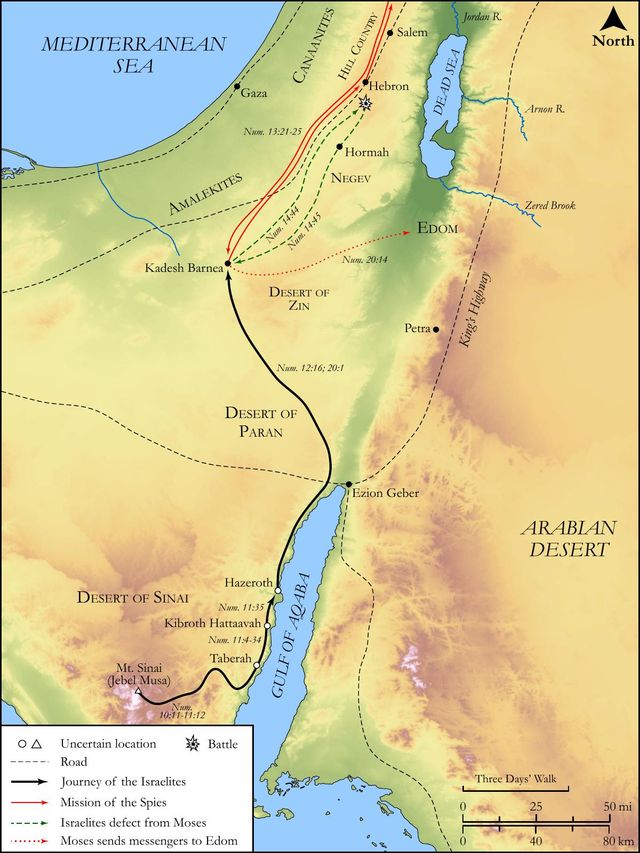
See on the biblical-era map
Study this verse
Public-domain commentary
Matthew Henry
From his Commentary on the Whole Bible. Henry comments on passages, not single verses — this entry covers Numbers 11:1–3. His two-level outline is real structure in the source text, so it is rendered as structure.
Here is, I. The people's sin. They complained, Num 11:1. They were, as it were, complainers. So it is in the margin. There were some secret grudgings and discontents among them, which as yet did not break out in an open mutiny. But how great a matter did this little fire kindle! They had received from God excellent laws and ordinances, and yet no sooner had they departed from the mount of the Lord than they began to quarrel with God himself. See in this, 1. The sinfulness of sin, which takes occasion from the commandment to be the more provoking. 2. The weakness of the law through the flesh, Rom 8:3. The law discovered sin, but could not destroy it; checked it, but could not conquer it. They complained. Interpreters enquire what they complained of; and truly, when they were furnished with so much matter for thanksgiving, one may justly wonder where they found any matter for complaint; it is probable that those who complained did not all agree in the cause. Some perhaps complained that they were removed from Mount Sinai, where they had been at rest so long, others that they did not remove sooner: some complained of the weather, others of the ways: some perhaps thought three days' journey was too long a march, others thought it not long enough, because it did not bring them into Canaan. When we consider how their camp was guided, guarded, graced, what good victuals they had and good company, and what care was taken of them in their marches that their feet should not swell nor their clothes wear (Deu 8:4), we may ask, "What could have been done more for a people to make them easy?" And yet they complained. Note, Those that are of a fretful discontented spirit will always find something or other to quarrel with, though the circumstances of their outward condition be ever so favourable.
II.God's just resentment of the affront given to him by this sin:
The Lord heard it, though it does not appear that Moses did. Note, God is acquainted with the secret frettings and murmurings of the heart, though they are industriously concealed from men. What he took notice of his was much displeased with, and his anger was kindled. Note, Though God graciously gives us leave to complain to him when there is cause (Psa 142:2), yet he is justly provoked, and takes it very ill, if we complain of him when there is no cause: such conduct in our inferiors provokes us.
III.The judgment wherewith God chastised them for this sin:
The fire of the Lord burnt among them, such flashes of fire from the cloud as had consumed Nadab and Abihu. The fire of their wrath against God burned in their minds (Psa 39:3), and justly does the fire of God's wrath fasten upon their bodies. We read of their murmurings several times, when they came first out of Egypt, Ex. 15, 16, and 17. But we do not read of any plagues inflicted on them for their murmurings, as there were now; for now they had had great experience of God's care of them, and therefore now to distrust him was so much the more inexcusable. Now a fire was kindled against Jacob (Psa 78:21), but, to show how unwilling God was to contend with them, it fastened on those only that were in the uttermost parts of the camp. Thus God's judgments came upon them gradually, that they might take warning.
IV.Their cry to Moses, who was their tried intercessor, Num 11:2.
When he slew them, then they sought him, and made their application to Moses to stand their friend. Note,
1.When we complain without cause, it is just with God to give us cause to complain.
2.Those that slight God's friends when they are in prosperity would be glad to make them their friends when they are in distress. Father Abraham, send Lazarus.
V.The prevalency of Moses's intercession for them:
When Moses prayed unto the Lord (he was always ready to stand in the gap to turn away the wrath of God) God had respect to him and his offering, and the fire was quenched. By this it appears that God delights not in punishing, for, when he has begun his controversy, he is soon prevailed with to let it fall. Moses was one of those worthies who by faith quenched the violence of fire.
VI.A new name given hereupon to the place, to perpetuate the shame of a murmuring people and the honour of a righteous God; the place was called Taberah, a burning (Num 11:3), that others might hear, and fear, and take warning not to sin as they did, lest they should smart as they did, Co1 10:10.
Continue studying Numbers 11:1 across the web’s major study libraries — every link below opens this exact verse, chapter, or book on the destination site.
Read & Compare
 BibleGatewayThis verse in more than 200 translations and 70 languages.
 Bible.comThe YouVersion reader — hundreds of translations, reading plans, and highlights.
 ESV.orgCrossway's official English Standard Version reader.
 NET BibleThe NET translation with 60,000+ translators' notes on every rendering decision.
 STEP BibleTyndale House's free study tool — original text, vocabulary, and scholarly resources.
 BibliaLogos Bible Software's free web reader.
 USCCBThe New American Bible (Revised Edition) with the U.S. bishops' study notes.
Commentaries
 BibleHub CommentariesDozens of classic commentaries on this verse, gathered on one page.
 StudyLightMore than 100 commentary sets — the largest collection on the web.
 BibleRefPlain-English commentary on what this verse means, verse by verse.
 Enduring WordDavid Guzik's free commentary on this chapter, widely used by Bible teachers.
 Bible Study ToolsVerse commentary alongside Greek and Hebrew study aids.
Original Language & Research
- BibleHub InterlinearThe verse word by word — original language, transliteration, and English.
- BibleHub LexiconEvery word's original-language definition and Strong's entry.
 Blue Letter BibleDeep-study tools — Strong's numbers, concordance, and word studies.
 SefariaThe Hebrew text with Rashi and centuries of Jewish commentary.
Sermons, Hymns & Audio


TrulyRandomVerse is not affiliated with these sites and doesn’t control their content. They’re linked because they’re genuinely useful.
Summary
Numbers 11:1 marks a dramatic and pivotal moment in Israel's post-Sinai journey, immediately revealing a widespread spirit of discontent among the people that profoundly displeased the LORD. This verse powerfully depicts God's immediate perception of their complaining, the swift kindling of His righteous anger, and the subsequent manifestation of divine judgment through a consuming fire. This initial act of divine discipline, targeting those at the camp's periphery, serves as a stark and foundational warning against murmuring and ingratitude, establishing a recurring pattern of rebellion and divine response that characterizes much of the wilderness narrative.
Context
ShowHideLiterary Context
Numbers 11:1 initiates a significant and somber shift in the narrative of Israel's wilderness wanderings. The preceding ten chapters (Numbers 1-10) meticulously detail the divine order established at Mount Sinai: the census and organization of the tribes, the consecration and duties of the Levites, the dedication of the Tabernacle, and the precise instructions for their departure, including the signals for breaking camp. The narrative had built anticipation for an orderly, Spirit-led journey. However, this verse abruptly shatters that expectation, introducing a pervasive spirit of complaint that immediately follows their departure from Sinai. It sets a crucial tone for the remainder of the book of Numbers, which largely chronicles Israel's repeated failures, their testing in the wilderness, and God's consistent, though often severe, responses. This general complaining directly precedes more specific grievances, such as the craving for meat and the subsequent quail incident, as well as the appointment of the seventy elders to share Moses' burden.
Historical & Cultural Context
The Israelites, a vast and diverse multitude, had recently experienced the most profound demonstrations of God's presence and power. They had been miraculously delivered from Egyptian bondage, witnessed the parting of the Red Sea, received the Law directly from God's voice at Mount Sinai, and entered into a solemn covenant with Yahweh. For over a year, they had been sustained by miraculous provisions like the daily manna and guided by the visible pillar of cloud by day and fire by night. Culturally, their complaining was not merely an expression of discomfort but a profound act of rebellion against the very God who had redeemed them and pledged to lead them to the Promised Land. In the ancient Near East, a covenant implied reciprocal obligations; Israel's murmuring was a direct violation of their commitment to trust and obey their divine King. It reflected a deep-seated lack of faith and an ungrateful heart, despite overwhelming evidence of God's faithfulness and care.
Key Themes
ShowHideNumbers 11:1 introduces or powerfully reinforces several critical themes that resonate throughout the Pentateuch and beyond. Firstly, it highlights the gravity of complaining and unfaithfulness against God. Such murmuring is depicted not as a minor human foible but as a direct affront to God's sovereignty, wisdom, and covenant faithfulness, revealing a heart of unbelief. Secondly, the verse underscores God's immediate awareness and righteous indignation at His people's sin. The LORD is neither distant nor indifferent; He hears their words and discerns their hearts, responding decisively and justly. Thirdly, it vividly portrays divine judgment as a tangible and immediate consequence of rebellion. The "fire of the LORD" is a powerful, symbolic manifestation of God's holiness and justice, demonstrating that sin carries severe repercussions. This incident, which leads to the naming of the place Taberah, meaning "burning" (Numbers 11:3), serves as a perpetual memorial and a stark warning against ingratitude and unbelief, underscoring the seriousness of provoking the divine.
Exposition and Analysis
ShowHideKey Word Analysis
ShowHideThis verb (H596, אָנַן) signifies more than simple grumbling; it denotes a deep-seated, resentful murmuring, often implying lamentation, grief, or even a rebellious spirit. It suggests a profound and persistent discontent that stems from a fundamental lack of trust in God's provision and leadership, rather than a mere expression of transient discomfort. This was not a constructive grievance but a manifestation of a faithless and ungrateful heart.
The phrase "it displeased the LORD" translates the Hebrew (H7451, רָע), which literally means "evil" or "bad." The complaint was "evil in the ears of the LORD." This signifies that the people's grumbling was not merely annoying or inconvenient but morally reprehensible and spiritually offensive in God's sight. It was a direct affront to His character, His covenant faithfulness, and His leadership, indicating the profound severity of their sin from a divine perspective.
The verb (H1197, בָּעַר) means "to kindle" or "to consume (by fire)." In this context, it describes the active and destructive work of the "fire of the LORD." It emphasizes the intensity and efficacy of the divine judgment, indicating a complete and consuming action, rather than a mere scorching. This fire was not accidental or natural; it was a direct, purposeful act of divine consumption.
Verse Breakdown
ShowHide"And when the people complained"
This opening clause immediately establishes the catalyst for divine action. The "people" (H5971, עַם) refers to the entire Israelite community, indicating a widespread, collective attitude of discontent. Their complaining was general, an underlying dissatisfaction that revealed a profound lack of faith and gratitude despite God's miraculous provisions, guidance, and recent covenant relationship.
"it displeased the LORD"
The people's murmuring was not trivial; it was a direct offense to God Himself. The phrase "it was evil in the ears of the LORD" (combining H7451, רַע, "evil" and H241, אֹזֶן, "ear") signifies that their grumbling was heard and judged as morally reprehensible by God. This highlights God's personal involvement and His sensitivity to the spiritual state and attitudes of His covenant people.
"and the LORD heard it"
This clause emphasizes God's omniscience and active attentiveness. He is not distant, indifferent, or unaware of His people's words, even those whispered in discontent. His hearing is not passive but leads directly to a decisive response, demonstrating His intimate and active engagement with their lives and their spiritual condition.
"and his anger was kindled"
The Hebrew idiom (H639, אַף, "nose" or "anger" and H2734, חָרָה, "to glow" or "burn") vividly portrays God's intense and righteous indignation. This is not an uncontrolled human outburst but a holy anger, a just and proportionate response to the people's unfaithfulness, ingratitude, and rebellion against His covenant love and abundant provision. It underscores the profound seriousness of their sin.
"and the fire of the LORD burnt among them"
This describes the immediate, visible, and terrifying manifestation of God's judgment. The "fire of the LORD" (H784, אֵשׁ and H3068, יְהוָה) is a supernatural, consuming blaze, a tangible expression of divine wrath and holiness. It serves as a terrifying demonstration of God's power and His commitment to upholding His sacred character and justice within the camp.
"and consumed them that were in the uttermost parts of the camp"
The judgment was specific in its target, affecting those at the "edges" or "extremities" (H7097, קָצֶה) of the Israelite encampment (H4264, מַחֲנֶה). This might imply those who were physically or spiritually on the fringes, perhaps a "mixed multitude" (Exodus 12:38) or simply those who were most vocal in their complaining. Regardless, it served as a stark and visible warning to the entire community, demonstrating that God's judgment, though targeted, was a clear and powerful message for all, designed to instill fear and promote obedience.
Literary Devices
ShowHideNumbers 11:1 employs several potent literary devices to convey its profound message of divine response to human rebellion. The Repetition of God's actions ("the LORD heard it; and his anger was kindled; and the fire of the LORD burnt") powerfully emphasizes the direct, immediate, and multifaceted nature of His response to the people's sin, highlighting His active involvement. Anthropomorphism is evident in phrases like "it displeased the LORD" and "his anger was kindled," attributing human-like emotions (displeasure, anger) and sensory perception (hearing) to God. This makes God's reaction comprehensible and impactful, allowing the reader to grasp the depth of His offense. The "fire of the LORD" functions as potent Symbolism, representing both God's holy, consuming presence and His righteous judgment against sin. This divine fire is a recurring motif in the Old Testament, often signifying a direct, supernatural intervention. Finally, the entire incident serves as a form of Foreshadowing, setting a pattern for Israel's future rebellions and God's consistent, though often patient and merciful, responses throughout their wilderness journey and beyond.
Theological and Thematic Connections
ShowHideNumbers 11:1 profoundly illustrates the biblical truth that God is intimately involved in the lives of His people, hearing their every word and discerning the attitudes of their hearts. It reveals His unwavering holiness, which cannot tolerate sin, particularly the insidious sin of ingratitude and rebellion against His sovereign provision and leadership. The immediate and severe judgment by fire underscores the seriousness of murmuring, portraying it not merely as an expression of human frustration but as a direct challenge to God's authority, wisdom, and goodness. This incident establishes a foundational theological principle: while God is indeed gracious and patient, His justice is real, and unrepentant sin, especially a pervasive spirit of discontent and unbelief, invites divine consequences. It calls believers to cultivate a spirit of profound gratitude and unwavering trust, recognizing that God's ways are always ultimately good, even amidst hardship and perceived lack.
Reflection and Application
ShowHideNumbers 11:1 serves as a timeless and sobering warning for believers today, prompting a deep self-examination of our own hearts. It challenges us to confront any underlying spirit of discontent, grumbling, or ingratitude, especially when faced with difficulties, unmet expectations, or perceived lack. Just as God heard the Israelites' complaints, He hears ours, and a murmuring spirit reveals a fundamental lack of trust in His sovereign wisdom, perfect timing, and ultimately good plan for our lives. This passage calls us away from a self-centered focus on what we lack or what is difficult, and towards a posture of unwavering faith, profound thankfulness, and humble submission to God's will, even when circumstances are challenging or uncomfortable. It reminds us that our spiritual journey requires constant vigilance against the insidious temptation to complain, which can hinder our walk with God, erode our joy, and even invite His displeasure. Instead, we are called to cultivate a heart of worship and confidence, knowing that God's provision and guidance are always sufficient, even in the wilderness seasons of life, and that true contentment is found in Him alone.
Questions for Reflection
ShowHideFAQ
ShowHideWhy was God's response to the complaining so severe?
ShowHideGod's severe response in Numbers 11:1–manifesting as a consuming fire–highlights the profound seriousness of the people's complaining. This was not a minor irritation but a deep-seated rebellion rooted in a lack of faith and gratitude, directly challenging God's authority, wisdom, and goodness. After witnessing countless miracles (e.g., the Exodus, manna, water from the rock), receiving the Law at Sinai, and being provided for daily, their discontent was an act of profound unfaithfulness to the covenant they had just entered. God's holiness demands a response to sin, and this immediate, visible judgment served as a stark warning to the entire community about the consequences of rejecting His gracious provision and leadership. It underscored that murmuring against God is a direct affront to His character and sovereignty, a betrayal of the relationship He initiated.
What does "uttermost parts of the camp" signify in this context?
ShowHideThe phrase "uttermost parts of the camp" (קְצֵה הַמַּחֲנֶה, q'tseh hammachaneh) refers to the edges or extremities of the Israelite encampment. This detail is significant for several reasons. It might indicate that the judgment specifically targeted those who were physically or spiritually on the fringes, perhaps the "mixed multitude" (Exodus 12:38) who accompanied Israel but were less committed to Yahweh. Alternatively, it could simply mean that the fire began at the periphery and served as a visible, terrifying warning that could be seen by the entire camp, demonstrating God's judgment without annihilating the whole community. In either case, it underscores that God's judgment is precise and serves as a powerful deterrent against widespread rebellion, a clear message to all within the covenant community.
Christ-Centered Fulfillment
ShowHideNumbers 11:1, with its stark depiction of human failure and divine judgment, finds profound Christ-centered fulfillment in the person and redemptive work of Jesus. The Israelites' persistent complaining, rooted in unbelief and ingratitude, underscores humanity's inherent inability to trust God fully and live in grateful obedience, even in the face of miraculous provision. This deep-seated sin of rebellion, which kindled God's righteous anger, ultimately finds its resolution in Christ. Jesus, the true and faithful Israelite, never complained but perfectly submitted to the Father's will, even to the point of death on the cross (Philippians 2:8). He became the ultimate sacrifice, bearing the consuming fire of God's wrath for our sin, so that all who believe in Him might be spared judgment (Romans 8:1). Moreover, where the wilderness generation grumbled for physical food and water, Jesus declares Himself the "bread of life" and the "living water," offering true and lasting satisfaction that transcends mere physical provision and addresses the deepest spiritual hunger (John 6:35; John 7:37-38). Through Him, believers are empowered by the Holy Spirit to live lives of gratitude and trust, overcoming the very spirit of discontent that plagued ancient Israel, and walking in the new covenant of grace rather than under the condemnation of the law (Romans 8:2-4). Jesus is the ultimate answer to humanity's complaining heart, providing perfect obedience, atoning sacrifice, and enduring spiritual provision.