


Numbers 10:28
Bible text: King James Version (1769 Blayney text) · Public domain
Bible text: Berean Standard Bible · Public domain
Bible text: American Standard Version (1901) · Public domain
Bible text: World English Bible, Messianic edition · Public domain
Bible text: Geneva Bible (1599) · Public domain
Bible text: Young's Literal Translation · Public domain
- אֵלֶּה'E·lehtheseH428PrtParticle Demonstrative
- מַסְעֵיmas·'Ei[are] [the] settings out ofH4550N-mpcNoun Plural Masculine Construct
- בְנֵיve·nei[the] people ofH1121N-mpcNoun Plural Masculine Construct
- יִשְׂרָאֵלYis·ra·'ElIsraelH3478N-properNoun Proper Location
- לְצִבְאֹתָםle·tziv·'o·Tamto their military groupsH6635Prep-l ¦ N-fpc ¦ 3mpNoun Plural Feminine Constructלְtoצִבְאֹתָmilitary groupsםtheir
- וַיִּסָּעוּvai·yi·Sa·'uand they set outH5265Conj-w ¦ V-Qal-ConsecImperf-3mpVerb Qal Consecutive Imperfect 3rd Plural Masculineוַandיִּסָּעוּthey set out
English is a literal word-by-word gloss of the Hebrew, not the KJV's wording. Why?
This is the original text the KJV's translators worked from — each Hebrew word with its own literal English meaning in this verse, prepared by scholars at Tyndale House, Cambridge. The KJV translates whole sentences, not word by word, so its wording differs: one Hebrew word can become several English words, and the KJV may choose “the LORD” where the gloss reads “Yahweh”. Both are faithful — they answer different questions. For the KJV's own rendering, switch to the KJV text.
Details
See on the biblical-era map
Study this verse
Public-domain commentary
Matthew Henry
From his Commentary on the Whole Bible. Henry comments on passages, not single verses — this entry covers Numbers 10:11–28. His two-level outline is real structure in the source text, so it is rendered as structure.
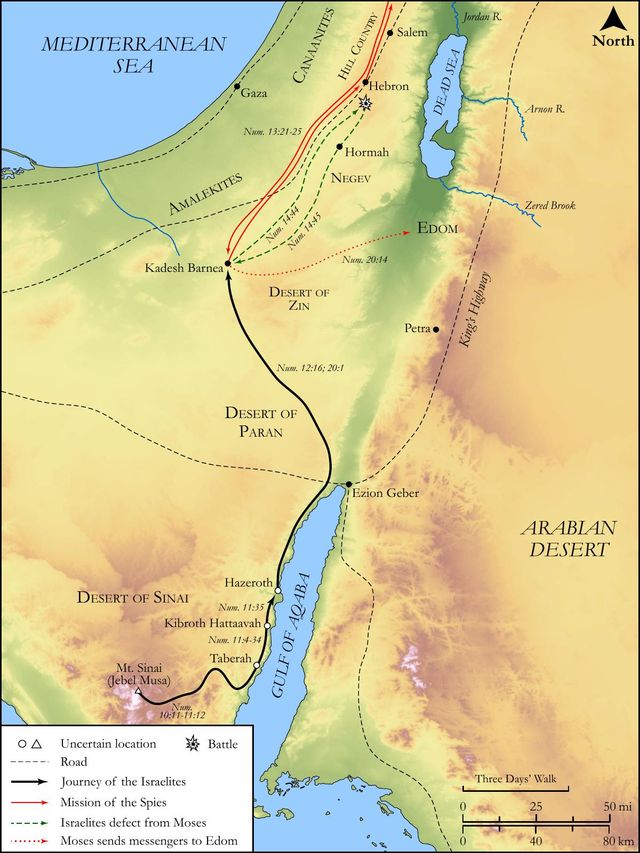
Here is, I. A general account of the removal of the camp of Israel from mount Sinai, before which mountain it had lain now about a year, in which time and place a great deal of memorable business was done. Of this removal, it should seem, God gave them notice some time before (Deu 1:6, Deu 1:7): You have dwelt long enough in this mountain, turn you and take your journey towards the land of promise. The apostle tells us that mount Sinai genders to bondage (Gal 4:24), and signifies the law there given, which is of use indeed as a schoolmaster to bring us to Christ, yet we must not rest in it, but advance towards the joys and liberties of the children of God, for our happiness is conferred not by the law, but by promise. Observe, 1. The signal given (Num 10:11): The cloud was taken up, and we may suppose it stood for some time, till they were ready to march; and a great deal of work it was to take down all those tents, and pack up all those goods that they had there; but every family being employed about its own, and all at the same time, many hands made quick work of it. 2. The march began: They took their journey according to the commandment of the Lord, and just as the cloud led them, Num 10:13. Some think that mention is thus frequently made in this and the foregoing chapter of the commandment of the Lord, guiding and governing them in all their travels, to obviate the calumny and reproach which were afterwards thrown upon Israel, that they tarried so long in the wilderness, because they had lost themselves there, and could not find the way out. No, the matter was not so; in every stage, in every step, they were under divine direction; and, if they knew not where they were, yet he that led them knew. Note, Those that have given up themselves to the direction of God's word and Spirit steer a steady course, even when they seem to be bewildered. While they are sure they cannot lose their God and guide, they need not fear losing their way. 3. The place they rested in, after three days' march: They went out of the wilderness of Sinai, and rested in the wilderness of Paran. Note, All our removals in this world are but from one wilderness to another. The changes which we think will be for the better do not always prove so; while we carry about with us, wherever we go, the common infirmities of human nature, we must expect, wherever we go, to meet with its common calamities; we shall never be at rest, never at home, till we come to heaven, and all will be well there.
II.A particular draught of the order of their march, according to the late model.
1.Judah's squadron marched first, Num 10:14-16. The leading standard, now lodged with that tribe, was an earnest of the sceptre which in David's time should be committed to it, and looked further to the captain of our salvation, of whom it was likewise foretold that unto him should the gathering of the people be.
2.Then came those two families of the Levites which were entrusted to carry the tabernacle. As soon as ever the cloud was taken up, the tabernacle was taken down, and packed up for removing, Num 10:17. And here the six wagons came laden with the more bulky part of the tabernacle. This frequent removing of the tabernacle in all their journeys signified the movableness of that ceremonial dispensation. That which was so often shifted would at length vanish away, Heb 8:13.
3.Reuben's squadron marched forward next, taking place after Judah, according to the commandment of the Lord, Num 10:18-20.
4.Then the Kohathites followed with their charge, the sacred furniture of the tabernacle, in the midst of the camp, the safest and most honourable place, Num 10:21. And they (that is, says the margin, the Gershonites and Merarites) did set up the tabernacle against they came; and perhaps it is expressed thus generally because, if there was occasion, not those Levites only, but the other Israelites that were in the first squadron, lent a hand to the tabernacle to hasten the rearing of it up, even before they set up their own tents.
5.Ephraim's squadron followed next after the ark (Num 10:22-24), to which some think the psalmist alludes when he prays (Psa 80:2), Before Ephraim, Benjamin, and Manasseh, the three tribes that composed this squadron, stir up thy strength (and the ark is called his strength, Psa 78:61), and come and save us.
6.Dan's squadron followed last, Num 10:25-27. It is called the rearward, or gathering host, of all the camps, because it gathered up all that were left behind; not the women and children (these we may suppose were taken care of by the heads of their families in their respective tribes), but all the unclean, the mixed multitude, and all that were weak and feeble, and cast behind in their march. Note, He that leadeth Joseph like a flock has a tender regard to the hindmost (Eze 34:16), that cannot keep pace with the rest, and of all that are given him he will lose none, Joh 17:11.
Continue studying Numbers 10:28 across the web’s major study libraries — every link below opens this exact verse, chapter, or book on the destination site.
Read & Compare
 BibleGatewayThis verse in more than 200 translations and 70 languages.
 Bible.comThe YouVersion reader — hundreds of translations, reading plans, and highlights.
 ESV.orgCrossway's official English Standard Version reader.
 NET BibleThe NET translation with 60,000+ translators' notes on every rendering decision.
 STEP BibleTyndale House's free study tool — original text, vocabulary, and scholarly resources.
 BibliaLogos Bible Software's free web reader.
 USCCBThe New American Bible (Revised Edition) with the U.S. bishops' study notes.
Commentaries
 BibleHub CommentariesDozens of classic commentaries on this verse, gathered on one page.
 StudyLightMore than 100 commentary sets — the largest collection on the web.
 BibleRefPlain-English commentary on what this verse means, verse by verse.
 Enduring WordDavid Guzik's free commentary on this chapter, widely used by Bible teachers.
 Bible Study ToolsVerse commentary alongside Greek and Hebrew study aids.
Original Language & Research
- BibleHub InterlinearThe verse word by word — original language, transliteration, and English.
- BibleHub LexiconEvery word's original-language definition and Strong's entry.
 Blue Letter BibleDeep-study tools — Strong's numbers, concordance, and word studies.
 SefariaThe Hebrew text with Rashi and centuries of Jewish commentary.
Sermons, Hymns & Audio


TrulyRandomVerse is not affiliated with these sites and doesn’t control their content. They’re linked because they’re genuinely useful.
Summary
Numbers 10:28 serves as a pivotal summary statement, concluding the detailed preparations for Israel's inaugural journey from Mount Sinai. This verse encapsulates the divinely orchestrated precision and military-like discipline that characterized their movement, underscoring that their wilderness wanderings were not a chaotic exodus but a meticulously ordered progression, executed precisely as commanded by God, thereby setting the stage for the unfolding narrative of their pilgrimage and highlighting the divine hand guiding every step of their wilderness experience.
Context
ShowHideLiterary Context
Numbers 10:28 functions as a concise concluding statement to a significant section detailing Israel's departure from Mount Sinai, where they had encamped for nearly a year since the Exodus. The preceding verses meticulously lay out the divine instructions for their movement, beginning with the use of silver trumpets to signal assembly and departure. Following these signals, the cloud lifted and Israel began their journey on the twentieth day of the second month of the second year. The immediate context, specifically Numbers 10:14-27, provides an exhaustive account of the specific marching order for each tribe, organized into four distinct divisions, each with its designated leader and position. Verse 28 thus serves as an emphatic affirmation that this complex, divinely prescribed movement was executed with absolute fidelity to the detailed commands, thereby transitioning the narrative from preparation to actual journey and emphasizing the meticulousness of God's plan for His people.
Historical & Cultural Context
The phrase "according to their armies" (Hebrew: tseva'ot) is crucial here, reflecting a military-style organization that was atypical for a newly freed, nomadic people. This imagery emphasizes that Israel was not merely a collection of families but a divinely organized "army" or "host," prepared for both pilgrimage and potential conflict. Among the nations, military organization implied strength, discipline, and a clear chain of command, often under the direct leadership of a king or deity. For Israel, this structure underscored Yahweh's direct leadership as their divine Commander. Their journey was not a haphazard migration but a strategic movement under divine guidance, symbolized by the pillar of cloud by day and fire by night, which dictated their every move, as detailed in Numbers 9:15-23. This level of organization was essential for managing a population estimated to be in the millions, ensuring order, sanitation, and defense in the harsh wilderness environment, demonstrating God's practical care for His covenant people.
Key Themes
ShowHideThis verse powerfully reinforces several overarching themes found throughout the book of Numbers. Firstly, it highlights Divine Order and Sovereignty. God is portrayed not as a distant deity but as intimately involved in the practical details of His people's lives, meticulously orchestrating their movements and ensuring their well-being. This theme is foundational, echoing the detailed census and camp arrangements described in Numbers 1-2. Secondly, the verse underscores the theme of Obedience and Discipline. The successful execution of such a complex, large-scale movement demanded unwavering obedience from every tribe and individual. Their adherence to the precise instructions for setting forward, despite the challenges of the wilderness, demonstrates a collective discipline and trust in God's leadership, which would be continually tested throughout their forty years of wandering. Finally, the verse implicitly speaks to God's Enduring Presence and Guidance. The very act of moving "according to their armies" under divine command affirmed God's active presence among His people, not just as their deliverer from Egypt but as their faithful guide and protector on the journey towards the Promised Land.
Exposition and Analysis
ShowHideKey Word Analysis
ShowHideThis term, derived from the root nâçaʻ (to pull up, set out, journey), specifically refers to a departure or march, often implying a station or point of departure. In Numbers, it frequently denotes the specific stages or stations of a journey, emphasizing the sequential, divinely directed nature of Israel's wilderness trek. The plural form highlights the numerous distinct movements and stopping points that constituted their overall pilgrimage, each one under God's watchful eye and command, signifying a series of purposeful, divinely ordained movements.
This word, often translated as "hosts" or "multitudes," carries a strong military connotation, referring to organized troops or a disciplined body of people. Its use here is profoundly significant, transforming the Israelites from a mere collection of individuals into a structured, disciplined, and unified force. It implies not only numerical strength but also a strategic, purposeful organization, ready for both pilgrimage and, if necessary, warfare, all under the command of the "Lord of Hosts" (Yahweh Tseva'ot), emphasizing their identity as God's organized and disciplined people.
Verse Breakdown
ShowHide"Thus [were] the journeyings of the children of Israel"
This opening clause acts as a concluding summary, affirming that the preceding detailed instructions regarding their departures were indeed the manner in which Israel moved. It emphasizes the reality and execution of their complex, multi-stage movement. The phrase "children of Israel" highlights the collective identity and unified action of the entire nation, underscoring that the entire community, from the smallest child to the oldest elder, participated in this divinely orchestrated progression.
"according to their armies"
This crucial phrase specifies the nature of their movement. It was not a disorganized rabble but a highly structured, disciplined, and ordered procession, resembling a military formation. This underscores the divine organization and the disciplined obedience required from the people, reflecting God's desire for order and purpose in their collective life and their readiness to function as a unified force under His command.
"when they set forward."
This final clause reiterates the act of departure, emphasizing the initiation of their journey from Sinai. It confirms that the detailed preparations and organizational structures were put into immediate action, marking the transition from a period of encampment and instruction to one of active pilgrimage in the wilderness, signifying the practical implementation of God's meticulously laid plans.
Literary Devices
ShowHideNumbers 10:28 primarily functions as a Summary Statement or Conclusive Statement. It succinctly wraps up the extensive preceding narrative (Numbers 10:11-27) that detailed Israel's meticulous preparations and marching order. This device serves to confirm that the divine commands were not merely theoretical but were faithfully executed by the people. Furthermore, the verse employs Emphasis through its declarative tone and the strategic placement of the phrase "according to their armies," highlighting the theme of divine order and the disciplined, military-like nature of Israel's movement. The repetition of the concept of "journeyings" and "setting forward" throughout Numbers 10, culminating in this verse, creates a sense of Completeness and Finality for this segment of their history at Sinai, signaling the end of one phase and the beginning of another.
Theological and Thematic Connections
ShowHideNumbers 10:28 beautifully illustrates God's character as a God of order, precision, and purposeful guidance. It reveals that the divine plan for His people extends beyond salvation from bondage to meticulous direction for their daily journey. This organization was not for efficiency alone but was integral to their identity as God's covenant people, distinguishing them from other nations and preparing them for their destiny. The obedience demonstrated in this complex departure foreshadows the ongoing requirement for Israel to live in disciplined submission to God's commands throughout their wilderness experience and beyond. This passage reminds us that God is not only concerned with our destination but also with the manner of our journey, desiring that our lives reflect His divine order and purpose, ultimately leading us in paths of righteousness for His name's sake.
Reflection and Application
ShowHideNumbers 10:28 offers profound insights for believers today, reminding us that our spiritual walk is also a divinely guided journey, not a haphazard stroll. Just as God meticulously ordered the journey of the children of Israel, He desires order, discipline, and purpose in our spiritual lives. This verse calls us to recognize that God is a God of intentionality, who provides clear direction through His Word and His Spirit for our pilgrimage of faith. It challenges us to embrace discipline in our discipleship, to seek His guidance in every step, and to trust that even when the path ahead seems uncertain or challenging, He is leading us "according to our armies"—with a divine purpose and precision—towards His ultimate plan for us. Our lives, like Israel's journey, are meant to reflect His character of order, obedience, and trust, demonstrating His glory to a watching world.
Questions for Reflection
ShowHideFAQ
ShowHideWhy does the text emphasize "armies" when describing Israel's journey?
ShowHideThe emphasis on "armies" (Hebrew: tsâbâʼ) is highly significant. It transforms the image of the Israelites from a disorganized group of former slaves into a disciplined, unified, and divinely organized "host" or "military force." This highlights several key points: God's meticulous planning and desire for order within His people; their readiness for both pilgrimage and potential conflict in the wilderness; and the fact that Yahweh Himself was their supreme Commander, the "Lord of Hosts." This military structure was crucial for managing such a vast population, maintaining order, and ensuring their survival and progress towards the Promised Land. It underscores that their journey was not random but a strategic, purposeful movement under divine authority, intended to demonstrate God's power and presence among them.
What is the broader significance of God's meticulous instructions for Israel's journey?
ShowHideGod's meticulous instructions for Israel's journey, culminating in Numbers 10:28, underscore His character as a God of order, purpose, and detailed care for His people. This level of precision ensured not only the physical safety and logistical success of the journey but also served as a profound theological lesson. It taught Israel about the importance of obedience, discipline, and trust in divine leadership. It demonstrated that God's covenant relationship with them extended to every practical aspect of their lives, preparing them to be a holy nation set apart for His purposes. This divine blueprint for their journey foreshadows God's ongoing desire to guide and order the lives of His people, providing a model for how a community can function effectively under His sovereign rule, as seen in the later instructions for the tabernacle's construction and service and the detailed laws given at Sinai.
Christ-Centered Fulfillment
ShowHideNumbers 10:28, with its emphasis on divine order, disciplined movement, and purposeful journeying "according to their armies," finds its ultimate fulfillment in Christ and His church. Just as Israel was God's ordered host journeying towards a physical promised land, so too the church, the new Israel, is a spiritual army, called to a purposeful pilgrimage towards the heavenly inheritance. Christ is the ultimate General, the Captain of our salvation, who perfectly embodies and leads in divine order. His life was a journey of perfect obedience, culminating in the cross, which opened the way for us. He is the Way, the Truth, and the Life, guiding every step of our spiritual pilgrimage through the wilderness of this world. The discipline and unity commanded for Israel's journey prefigure the unity of the Spirit and the ordered walk of believers in the body of Christ, as described in Ephesians 4, where believers are called to walk worthy of their calling, equipped for service. Furthermore, the wilderness journey, with its trials and divine provision, serves as a type for the Christian life, reminding us that our journey with Christ is one of faith, dependence, and spiritual warfare, as we press on towards the heavenly city and the rest that remains for the people of God in His eternal presence.