


Numbers 10:27
Bible text: King James Version (1769 Blayney text) · Public domain
Bible text: Berean Standard Bible · Public domain
Bible text: American Standard Version (1901) · Public domain
Bible text: World English Bible, Messianic edition · Public domain
Bible text: Geneva Bible (1599) · Public domain
Bible text: Young's Literal Translation · Public domain
- וְעַלve·'Aland [was] overH5921Conj-w ¦ PrepPrepositionוְandעַל[was] over
- צְבָאtze·Va'[the] military group ofH6635N-mscNoun Singular Masculine Construct
- מַטֵּהma·Teh[the] tribe ofH4294N-mscNoun Singular Masculine Construct
- בְּנֵיbe·Nei[the] descendants ofH1121N-mpcNoun Plural Masculine Construct
- נַפְתָּלִיnaf·ta·LiNaphtaliH5321N-proper-mNoun Proper Masculine
- אֲחִירַע'a·chi·Ra'AhiraH299N-proper-mNoun Proper Masculine
- בֶּןben[the] son ofH1121N-mscNoun Singular Masculine Construct
- עֵינָן'ei·NanEnanH5881N-proper-mNoun Proper Masculine
English is a literal word-by-word gloss of the Hebrew, not the KJV's wording. Why?
This is the original text the KJV's translators worked from — each Hebrew word with its own literal English meaning in this verse, prepared by scholars at Tyndale House, Cambridge. The KJV translates whole sentences, not word by word, so its wording differs: one Hebrew word can become several English words, and the KJV may choose “the LORD” where the gloss reads “Yahweh”. Both are faithful — they answer different questions. For the KJV's own rendering, switch to the KJV text.
Details
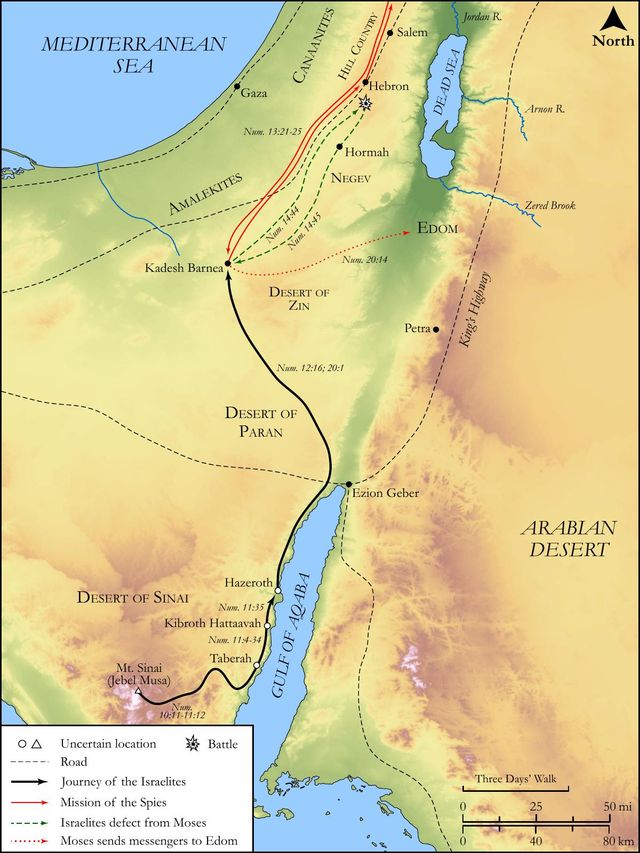
See on the biblical-era map
Study this verse
Public-domain commentary
Matthew Henry
From his Commentary on the Whole Bible. Henry comments on passages, not single verses — this entry covers Numbers 10:11–28. His two-level outline is real structure in the source text, so it is rendered as structure.
Here is, I. A general account of the removal of the camp of Israel from mount Sinai, before which mountain it had lain now about a year, in which time and place a great deal of memorable business was done. Of this removal, it should seem, God gave them notice some time before (Deu 1:6, Deu 1:7): You have dwelt long enough in this mountain, turn you and take your journey towards the land of promise. The apostle tells us that mount Sinai genders to bondage (Gal 4:24), and signifies the law there given, which is of use indeed as a schoolmaster to bring us to Christ, yet we must not rest in it, but advance towards the joys and liberties of the children of God, for our happiness is conferred not by the law, but by promise. Observe, 1. The signal given (Num 10:11): The cloud was taken up, and we may suppose it stood for some time, till they were ready to march; and a great deal of work it was to take down all those tents, and pack up all those goods that they had there; but every family being employed about its own, and all at the same time, many hands made quick work of it. 2. The march began: They took their journey according to the commandment of the Lord, and just as the cloud led them, Num 10:13. Some think that mention is thus frequently made in this and the foregoing chapter of the commandment of the Lord, guiding and governing them in all their travels, to obviate the calumny and reproach which were afterwards thrown upon Israel, that they tarried so long in the wilderness, because they had lost themselves there, and could not find the way out. No, the matter was not so; in every stage, in every step, they were under divine direction; and, if they knew not where they were, yet he that led them knew. Note, Those that have given up themselves to the direction of God's word and Spirit steer a steady course, even when they seem to be bewildered. While they are sure they cannot lose their God and guide, they need not fear losing their way. 3. The place they rested in, after three days' march: They went out of the wilderness of Sinai, and rested in the wilderness of Paran. Note, All our removals in this world are but from one wilderness to another. The changes which we think will be for the better do not always prove so; while we carry about with us, wherever we go, the common infirmities of human nature, we must expect, wherever we go, to meet with its common calamities; we shall never be at rest, never at home, till we come to heaven, and all will be well there.
II.A particular draught of the order of their march, according to the late model.
1.Judah's squadron marched first, Num 10:14-16. The leading standard, now lodged with that tribe, was an earnest of the sceptre which in David's time should be committed to it, and looked further to the captain of our salvation, of whom it was likewise foretold that unto him should the gathering of the people be.
2.Then came those two families of the Levites which were entrusted to carry the tabernacle. As soon as ever the cloud was taken up, the tabernacle was taken down, and packed up for removing, Num 10:17. And here the six wagons came laden with the more bulky part of the tabernacle. This frequent removing of the tabernacle in all their journeys signified the movableness of that ceremonial dispensation. That which was so often shifted would at length vanish away, Heb 8:13.
3.Reuben's squadron marched forward next, taking place after Judah, according to the commandment of the Lord, Num 10:18-20.
4.Then the Kohathites followed with their charge, the sacred furniture of the tabernacle, in the midst of the camp, the safest and most honourable place, Num 10:21. And they (that is, says the margin, the Gershonites and Merarites) did set up the tabernacle against they came; and perhaps it is expressed thus generally because, if there was occasion, not those Levites only, but the other Israelites that were in the first squadron, lent a hand to the tabernacle to hasten the rearing of it up, even before they set up their own tents.
5.Ephraim's squadron followed next after the ark (Num 10:22-24), to which some think the psalmist alludes when he prays (Psa 80:2), Before Ephraim, Benjamin, and Manasseh, the three tribes that composed this squadron, stir up thy strength (and the ark is called his strength, Psa 78:61), and come and save us.
6.Dan's squadron followed last, Num 10:25-27. It is called the rearward, or gathering host, of all the camps, because it gathered up all that were left behind; not the women and children (these we may suppose were taken care of by the heads of their families in their respective tribes), but all the unclean, the mixed multitude, and all that were weak and feeble, and cast behind in their march. Note, He that leadeth Joseph like a flock has a tender regard to the hindmost (Eze 34:16), that cannot keep pace with the rest, and of all that are given him he will lose none, Joh 17:11.
Continue studying Numbers 10:27 across the web’s major study libraries — every link below opens this exact verse, chapter, or book on the destination site.
Read & Compare
 BibleGatewayThis verse in more than 200 translations and 70 languages.
 Bible.comThe YouVersion reader — hundreds of translations, reading plans, and highlights.
 ESV.orgCrossway's official English Standard Version reader.
 NET BibleThe NET translation with 60,000+ translators' notes on every rendering decision.
 STEP BibleTyndale House's free study tool — original text, vocabulary, and scholarly resources.
 BibliaLogos Bible Software's free web reader.
 USCCBThe New American Bible (Revised Edition) with the U.S. bishops' study notes.
Commentaries
 BibleHub CommentariesDozens of classic commentaries on this verse, gathered on one page.
 StudyLightMore than 100 commentary sets — the largest collection on the web.
 BibleRefPlain-English commentary on what this verse means, verse by verse.
 Enduring WordDavid Guzik's free commentary on this chapter, widely used by Bible teachers.
 Bible Study ToolsVerse commentary alongside Greek and Hebrew study aids.
Original Language & Research
- BibleHub InterlinearThe verse word by word — original language, transliteration, and English.
- BibleHub LexiconEvery word's original-language definition and Strong's entry.
 Blue Letter BibleDeep-study tools — Strong's numbers, concordance, and word studies.
 SefariaThe Hebrew text with Rashi and centuries of Jewish commentary.
Sermons, Hymns & Audio


TrulyRandomVerse is not affiliated with these sites and doesn’t control their content. They’re linked because they’re genuinely useful.
Summary
Numbers 10:27 precisely names Ahira, son of Enan, as the appointed leader over the host of the tribe of Naphtali. This seemingly specific detail is an integral part of the meticulously documented departure of the Israelites from Mount Sinai, a divinely orchestrated movement that underscores God's profound commitment to order, established leadership, and the unified yet distinct identity of His people as they embarked on their journey toward the Promised Land.
Context
ShowHideLiterary Context
Numbers 10:27 is situated within a pivotal section of the book of Numbers, specifically Numbers 10:11-28, which details the highly organized departure of the Israelite camp from Mount Sinai. After nearly a year spent at Sinai receiving the Law and establishing the Tabernacle, this chapter marks a critical transition from static encampment to active journeying. The preceding verses outline the divine instructions for the blowing of trumpets to signal assembly and movement (Numbers 10:1-10), followed by the sequential departure of each tribal division. Naphtali is listed as part of the third and final division, which also included the tribes of Dan and Asher, forming the rear guard of the entire procession, following the Levites who carried the sanctuary items (Numbers 10:25). This structured movement directly mirrors and reinforces the divine order established earlier for their encampment in Numbers 2.
Historical & Cultural Context
At this juncture, the Israelites constituted an immense multitude, estimated to be over 600,000 fighting men, along with women, children, and a diverse "mixed multitude," potentially totaling several million individuals. Organizing such a vast population for sustained travel through the challenging wilderness environment demanded extraordinary leadership and a divinely ordained structure. The tribal system was the foundational social, political, and military unit of ancient Israel, with each tribe maintaining its distinct identity while contributing to the national whole. Leaders like Ahira, son of Enan, were not mere figureheads; they bore immense responsibility for the logistical, spiritual, and military well-being of their respective "hosts" or divisions. Their appointment, often confirmed by divine selection or established lineage (as Ahira's name appears earlier as a census leader in Numbers 1:15), was crucial for maintaining order, resolving internal disputes, and ensuring the efficient movement and defense of the entire nation. The meticulous detail in listing these leaders reflects both the practice of precise record-keeping, especially for military and census purposes, as in the numbering of the tribes at Sinai, and, more profoundly, God's direct and intimate involvement in the governance and protection of His covenant people.
Key Themes
ShowHideThe meticulous listing of tribal leaders and their positions within the marching order in Numbers 10 illuminates several profound themes. Firstly, it powerfully illustrates Divine Order and Precision. God is revealed as a God of perfect organization, not chaos, ensuring that every individual and group has a designated place and function within His grand plan for Israel. This theme resonates throughout the Pentateuch, from the orderly creation account in Genesis 1 to the intricate instructions for the Tabernacle. Secondly, the verse underscores the Importance of Leadership. Each tribe required a divinely recognized and appointed head to manage its vast multitude, ensuring cohesion, direction, and accountability during their arduous wilderness journey. Ahira's repeated mention as Naphtali's leader, from the census to the march, emphasizes the continuity and stability of this God-given leadership. Finally, the passage highlights Tribal Identity and Unity. While each tribe maintained its distinct identity, lineage, and designated position, they were all integral parts of a larger, unified nation, moving together under God's singular command. This delicate balance between individual identity and collective purpose was absolutely essential for Israel's survival, witness, and ultimate mission.
Exposition and Analysis
ShowHideKey Word Analysis
ShowHideThis term (H6635) refers to a "mass of persons (or figuratively, things), especially regularly organized for war (an army); by implication, a campaign, literally or figuratively (specifically, hardship, worship)." In this context, "host" signifies the organized military and civilian contingent of the tribe of Naphtali. It emphasizes that this was not a disorganized rabble but a structured, disciplined body of people, prepared for both travel and potential conflict, under the command of their designated leader. The term highlights the military readiness and organizational precision inherent in Israel's wilderness journey.
This tribal name (H5321), derived from Jacob's sixth son, means "my wrestling" or "my struggle," a name given by Rachel in Genesis 30:8 to commemorate her struggle with her sister Leah. The tribe of Naphtali was known for its swiftness and agility, characteristics sometimes associated with its blessings in Genesis 49:21 and Deuteronomy 33:23. In Numbers 10:27, it precisely identifies the specific tribal unit whose leader is being named, underscoring the comprehensive nature of God's organizational plan for every distinct segment of Israel.
This personal name (H299), meaning "brother of wrong" or "my brother is evil," identifies the specific individual appointed as the leader of the tribe of Naphtali. While the etymology can be intriguing, in ancient Israelite culture, names served primarily as identifiers. Here, the name's function is one of clear identification, establishing the legitimacy and authority of the person in charge of this significant tribal contingent. Ahira's lineage, "son of Enan," further solidifies his identity and established position within the tribal structure, confirming his place among the recognized heads of Israel.
Verse Breakdown
ShowHide"And over the host of the tribe of the children of Naphtali"
This opening clause meticulously defines the sphere of Ahira's leadership. "Host" (Hebrew: tsâbâʼ) refers to a large, organized multitude, often with military connotations, indicating a significant number of people under his command. The specific mention of "the tribe of the children of Naphtali" precisely identifies the particular group within the larger Israelite nation for whom Ahira was responsible. This emphasizes the hierarchical and divisional structure God implemented for the wilderness journey, where each leader had a clearly defined sphere of authority and responsibility, ensuring no segment of the vast population was overlooked or disorganized.
"[was] Ahira the son of Enan"
This concluding clause definitively identifies the specific individual holding the leadership position. The inclusion of the patronymic ("the son of Enan") is crucial for ancient identification, distinguishing Ahira from others who might share the same name and confirming his lineage and established authority within the tribal system. It underscores the personal nature of leadership and accountability within God's ordered community, highlighting that God's divine plan is executed through specific, appointed individuals.
Literary Devices
ShowHideNumbers 10:27, along with the surrounding verses detailing the marching order, primarily employs Formulaic Language and Cataloging. The repetitive structure, "And over the host of the tribe of the children of [Tribe Name] [was] [Leader Name] the son of [Father Name]," creates a rhythmic, almost litany-like quality that emphasizes the comprehensive and systematic nature of God's organization. This Repetition serves to reinforce the overarching theme of divine order and meticulous planning for every segment of the vast Israelite community. The act of listing each leader and tribe is a form of Enumeration or Detailing, highlighting the divine attention to every component of the vast Israelite community, down to the specific individuals entrusted with leadership. While not overtly poetic, the precision of the language itself conveys a sense of Authority and Divine Mandate, as if the very act of naming and listing confers legitimacy and purpose upon each element of the marching order. The text also uses Metonymy, where the "host" stands in for the entire tribal population, representing the military and civilian components under one leader, symbolizing the unity and organized strength of the collective.
Theological and Thematic Connections
ShowHideNumbers 10:27, though a seemingly minor detail in a long list, profoundly illustrates God's character as a God of order, not chaos. His meticulous attention to the organization of His people, down to the specific leaders of each tribal division, demonstrates His comprehensive sovereignty and providential care over every aspect of their journey. This divine order was not merely for efficiency but was foundational to Israel's identity as a holy nation, set apart for God's purposes. It teaches us that God values structure, accountability, and clear leadership within His community, ensuring that every part functions harmoniously for the greater good and the successful accomplishment of His will. This precise arrangement also foreshadows the future organization of God's people, the Church, where every member has a specific role and gift, contributing to the body's overall health and mission under Christ's headship.
Reflection and Application
ShowHideThe seemingly mundane detail of Ahira's leadership over Naphtali's host offers profound spiritual insights for believers today. It reminds us that God is intimately involved in the details of our lives and communities. Just as He meticulously organized Israel for their journey, orchestrating the circumstances and providing the leadership necessary for His people to fulfill their purpose, so too does He work in our lives. This verse calls us to embrace the value of order, submission to godly authority, and the recognition that every role, no matter how small or specific it may seem, is vital to the functioning of God's kingdom. It challenges us to consider our own place within the body of Christ, recognizing that our unique gifts and positions are divinely appointed for the collective mission. We are called to contribute to the unity and effective movement of God's people, trusting in His sovereign plan and provision even when the path ahead seems like a wilderness. Our obedience to God's order, even in the "small" things, reflects our trust in His comprehensive wisdom and care.
Questions for Reflection
ShowHideFAQ
ShowHideWhy does the Bible include such seemingly minor details as the name of a tribal leader in a marching order?
ShowHideThe inclusion of such precise details, like Ahira's leadership over Naphtali in Numbers 10:27, serves several crucial purposes. Firstly, it underscores the historicity and authenticity of the biblical account, demonstrating meticulous record-keeping in keeping with the numbering of the tribes at Sinai. These are not vague narratives but specific historical events involving real people. Secondly, it powerfully illustrates God's character of order and precision. He is not a God of chaos, but one who orchestrates every detail of His creation and His people's lives, from the creation of the heaven and the earth to the specific arrangement of a tribal march. This emphasizes His sovereignty and providential care, assuring us that nothing is outside His purview. Thirdly, it highlights the importance of leadership and accountability within God's community. Each leader had a divinely appointed role and responsibility for their "host," ensuring the smooth functioning of the entire nation. Finally, it reinforces the distinct identity and unity of the tribes. While part of a larger whole, each tribe maintained its unique lineage and leadership, contributing to the collective strength and purpose of Israel as they moved forward under God's command. These details, far from being minor, reveal profound theological truths about God's nature and His relationship with His people.
Christ-Centered Fulfillment
ShowHideNumbers 10:27, with its focus on divine order, appointed leadership, and the structured movement of God's people, finds its ultimate fulfillment in Jesus Christ and His Church. Just as Ahira led a specific host within Israel, Christ is the supreme and perfect Leader of God's new covenant people, the Church. The meticulous organization of the Old Testament encampment and march foreshadows the spiritual order and unity found in the body of Christ, where He is the head and every believer is a vital member with a specific function (Ephesians 1:22-23). The wilderness journey of Israel, guided by God's detailed instructions, typifies the Christian life – a pilgrimage through this world, led by the Good Shepherd (John 10:11) and empowered by the Holy Spirit (John 16:13). Christ's attention to the individual, even to the extent that "the very hairs of your head are all numbered" (Matthew 10:30), reflects the same divine precision and care seen in the listing of Ahira. Ultimately, the "host of the tribe of the children of Naphtali" was part of the greater "host of Israel," moving towards a promised land; similarly, believers from every tribe and nation are gathered into the one "host" of God's elect, led by Christ, journeying towards the New Heavens and New Earth, the ultimate fulfillment of God's promises (Revelation 21:1-4).