


Matthew 7:17
- οὕτωςhoutōsthusG3779ADVAdverb
- πᾶνpaneveryG3956A-NSNAdjective Nominative Singular Neuter
- δένδρονdendrontreeG1186N-NSNNoun Nominative Singular Neuter
- ἀγαθὸνagathongoodG18A-NSNAdjective Nominative Singular Neuter
- καρποὺςkarpousfruitsG2590N-APMNoun Accusative Plural Masculine
- καλοὺςkalousgoodG2570A-APMAdjective Accusative Plural Masculine
- ποιεῖpoieiproducesG4160V-PAI-3SVerb Present Active Indicative 3rd Singular
- τὸto<the>G3588T-NSNDefinite article Nominative Singular Neuter
- δὲdebutG1161CONJConjunction
- σαπρὸνsapronthe badG4550A-NSNAdjective Nominative Singular Neuter
- δένδρονdendrontreeG1186N-NSNNoun Nominative Singular Neuter
- καρποὺςkarpousfruitsG2590N-APMNoun Accusative Plural Masculine
- πονηροὺςponērousbadG4190A-APMAdjective Accusative Plural Masculine
- ποιεῖpoieiproducesG4160V-PAI-3SVerb Present Active Indicative 3rd Singular
English is a literal word-by-word gloss of the Greek, not the KJV's wording. Why?
This is the original text the KJV's translators worked from — each Greek word with its own literal English meaning in this verse, prepared by scholars at Tyndale House, Cambridge. The KJV translates whole sentences, not word by word, so its wording differs: one Greek word can become several English words, and the KJV may choose “charity” where the gloss reads “love”. Both are faithful — they answer different questions. For the KJV's own rendering, switch to the KJV text.
Details
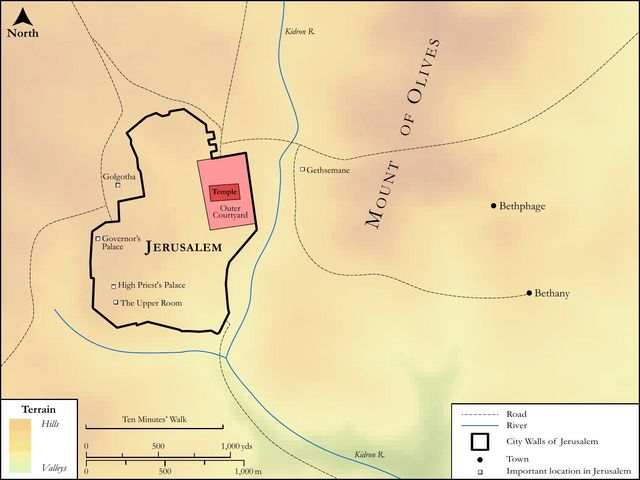
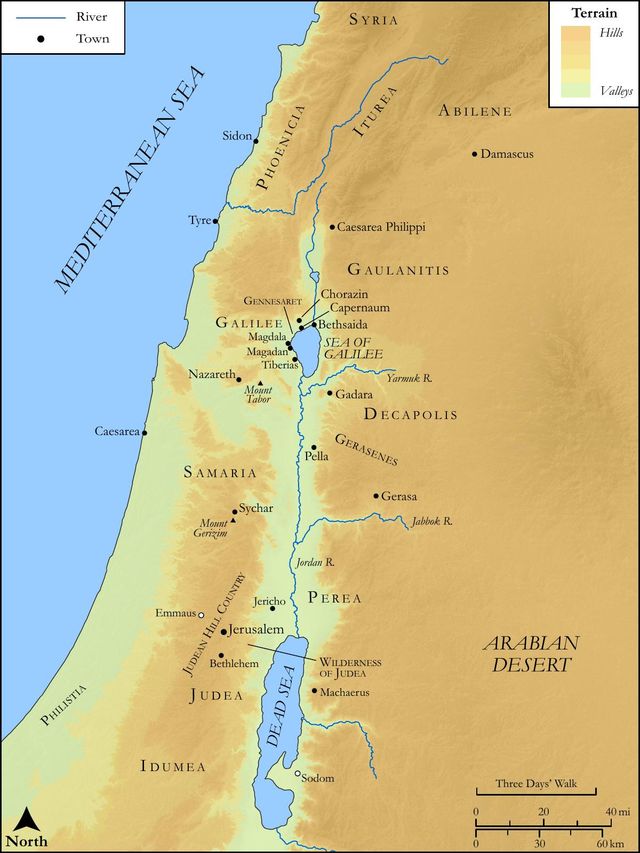
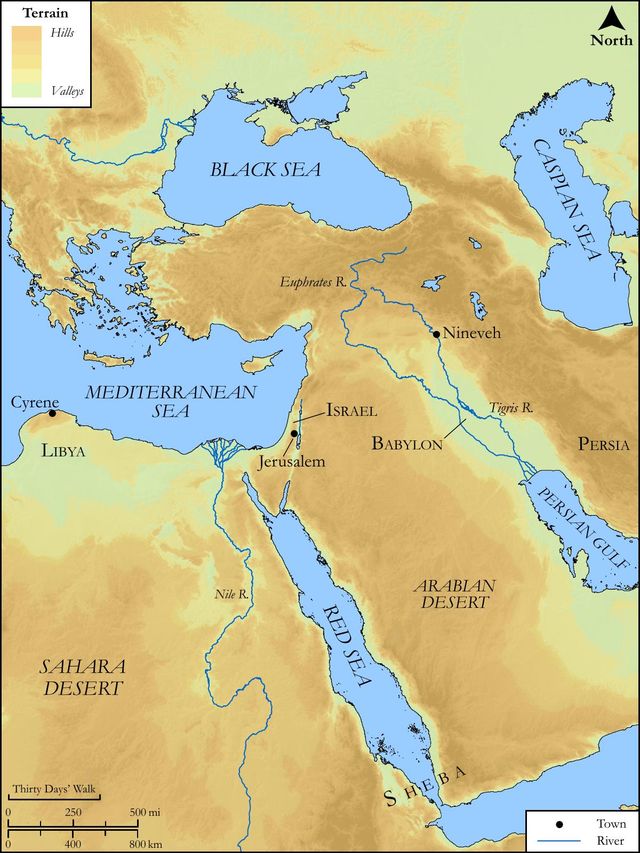
See on the biblical-era map
Study this verse
Public-domain commentary
Matthew Henry
From his Commentary on the Whole Bible. Henry comments on passages, not single verses — this entry covers Matthew 7:15–20. His four-level outline is real structure in the source text, so it is rendered as structure.
We have here a caution against false prophets, to take heed that we be not deceived and imposed upon by them. Prophets are properly such as foretel things to come; there are some mentioned in the Old Testament, who pretended to that without warrant, and the event disproved their pretensions, as Zedekiah, Kg1 22:11, and another Zedekiah, Jer 29:21. But prophets did also teach the people their duty, so that false prophets here are false teachers. Christ being a Prophet and a Teacher come from God, and designing to send abroad teachers under him, gives warning to all to take heed of counterfeits, who, instead of healing souls with wholesome doctrine, as they pretend, would poison them.
They are false teachers and false prophets, 1. Who produce false commissions, who pretend to have immediate warrant and direction from God to set up for prophets, and to be divinely inspired, when they are not so. Though their doctrine may be true, we are to beware of them as false prophets. False apostles are those who say they are apostles, and are not (Rev 2:2); such are false prophets. "Take heed of those who pretend to revelation, and admit them not without sufficient proof, lest that one absurdity being admitted, a thousand follow." 2. Who preach false doctrine in those things that are essential to religion; who teach that which is contrary to the truth as it is in Jesus, to the truth which is accordingly to godliness. The former seems to be the proper notion of pseudo-propheta, a false or pretending prophet, but commonly the latter falls in with it; for who would hang out false colours, but with design, under pretence of them, the more successfully to attack the truth. "Well, beware of them, suspect them, try them, and when you have discovered their falsehood, avoid them, have nothing to do with them. Stand upon your guard against this temptation, which commonly attends the days of reformation, and the breakings out of divine light in more than ordinary strength and splendour." When God's work is revived, Satan and his agents are most busy. Here is,
I.A good reason for this caution, Beware of them, for they are wolves in sheep's clothing, Mat 7:15.
1.We have need to be very cautious, because their pretences are very fair and plausible, and such as will deceive us, if we be not upon our guard. They come in sheep's clothing, in the habit of prophets, which was plain and coarse, and unwrought; they wear a rough garment to deceive, Zac 13:4. Elijah's mantle the Septuagint calls hē mēlotē - a sheep-skin mantle. We must take heed of being imposed upon by men's dress and garb, as by that of the scribes, who desire to walk in long robes, Luk 20:46. Or it may be taken figuratively; they pretend to be sheep, and outwardly appear so innocent, harmless, meek, useful, and all that is good, as to be excelled by none; they feign themselves to be just men, and for the sake of their clothing are admitted among the sheep, which gives them an opportunity of doing them a mischief ere they are aware. They and their errors are gilded with the specious pretences of sanctity and devotion. Satan turns himself into an angel of light, Co2 11:13, Co2 11:14. The enemy has horns like a lamb (Rev 13:11); faces of men, Rev 9:7, Rev 9:8. Seducers in language and carriage are soft as wool, Rom 16:18; Isa 30:10.
2.Because under these pretensions their designs are very malicious and mischievous; inwardly they are ravening wolves. Every hypocrite is a goat in sheep's clothing; not only not a sheep, but the worst enemy the sheep has, that comes not but to tear and devour, to scatter the sheep (Joh 10:12), to drive them from God, and from one another, into crooked paths. Those that would cheat us of any truth, and possess us with error, whatever they pretend, design mischief to our souls. Paul calls them grievous wolves, Act 20:29. They raven for themselves, serve their own belly (Rom 16:18), make a prey of you, make a gain of you. Now since it is so easy a thing, and withal so dangerous, to be cheated, Beware of false prophets.
II.Here is a good rule to go by in this caution; we must prove all things (Th1 5:21), try the spirits (Jo1 4:1), and here we have a touchstone; ye shall know them by their fruits, Mat 7:16-20. Observe,
1.The illustration of this comparison, of the fruit's being the discovery of the tree. You cannot always distinguish them by their bark and leaves, nor by the spreading of their boughs, but by their fruits ye shall know them. The fruit is according to the tree. Men may, in their professions, put a force upon their nature, and contradict their inward principles, but the stream and bent of their practices will agree with them. Christ insists upon this, the agreeableness between the fruit and the tree, which is such as that,
(1.)If you know what the tree is, you may know what fruit to expect. Never look to gather grapes from thorns, nor figs from thistles; it is not in their nature to produce such fruits. An apple may be stuck, or a bunch of grapes may hang, upon a thorn; so may a good truth, a good word or action, be found in a bad man, but you may be sure it never grew there. Note,
[1.]Corrupt, vicious, unsanctified hearts are like thorns and thistles, which came in with sin, are worthless, vexing, and for the fire at last.
[2.]Good works are good fruit, like grapes and figs, pleasing to God and profitable to men.
[3.]This good fruit is never to be expected from bad men, and more than a clean thing out of an unclean: they want an influencing acceptable principle. Out of an evil treasure will be brought forth evil things.
(2.)On the other hand, if you know what the fruit is, you may, by that, perceive what the tree is. A good tree cannot bring forth evil fruit; and a corrupt tree cannot bring forth good fruit, nay, it cannot but bring forth evil fruit. But then that must be reckoned the fruit of the tree which it brings forth naturally and which is its genuine product - which it brings forth plentifully and constantly and which is its usual product. Men are known, not by particular acts, but by the course and tenour of their conversation, and by the more frequent acts, especially those that appear to be free, and most their own, and least under the influence of external motives and inducements.
2.The application of this to the false prophets.
(1.)By way of terror and threatening (Mat 7:19); Every tree that brings not forth good fruit is hewn down. This very saying John the Baptist had used, Mat 3:10. Christ could have spoken the same sense in other words; could have altered it, or given it a new turn; but he thought it no disparagement to him to say the same that John had said before him; let not ministers be ambitious of coining new expressions, nor people's ears itch for novelties; to write and speak the same things must not be grievous, for it is safe. Here is,
[1.]The description of barren trees; they are trees that do not bring forth good fruit; though there be fruit, if it be not good fruit (though that be done, which for the matter of it is good, if it be not done well, in a right manner, and for a right end), the tree is accounted barren.
[2.]The doom of barren trees; they are, that is, certainly they shall be, hewn down, and cast into the fire; God will deal with them as men use to deal with dry trees that cumber the ground: he will mark them by some signal tokens of his displeasure, he will bark them by stripping them of their parts and gifts, and will cut them down by death, and cast them into the fire of hell, a fire blown with the bellows of God's wrath, and fed with the wood of barren trees. Compare this with Eze 31:12, Eze 31:13; Dan 4:14; Joh 15:6.
(2.)By way of trial; By their fruits ye shall know them.
[1.]By the fruits of their persons, their words and actions, and the course of their conversation. If you would know whether they be right or not, observe how they live; their works will testify for them or against them. The scribes and Pharisees sat in Moses's chair, and taught the law, but they were proud, and covetous, and false, and oppressive, and therefore Christ warned him disciples to beware of them and of their leaven, Mar 12:38. If men pretend to be prophets and are immoral, that disproves their pretensions; those are no true friends to the cross of Christ, whatever they profess, whose God is their belly, and whose mind earthly things, Phi 3:18, Phi 3:19. Those are not taught nor sent of the holy God, whose lives evidence that they are led by the unclean spirit. God puts the treasure into earthen vessels, but not into such corrupt vessels: they may declare God's statutes, but what have they to do to declare them?
[2.]By the fruits of their doctrine; their fruits as prophets: not that this is the only way, but it is one way, of trying doctrines, whether they be of God or not. What do they tend to do? What affections and practices will they lead those into, that embrace them? If the doctrine be of God, it will tend to promote serious piety, humility, charity, holiness, and love, with other Christian graces; but if, on the contrary, the doctrines these prophets preach have a manifest tendency to make people proud, worldly, and contentious, to make them loose and careless in their conversations, unjust or uncharitable, factious or disturbers of the public peace; if it indulge carnal liberty, and take people off from governing themselves and their families by the strict rules of the narrow way, we may conclude, that this persuasion comes not of him that calleth us, Gal 5:8. This wisdom is from above, Jam 3:15. Faith and a good conscience are held together, Ti1 1:19; Ti1 3:9. Note, Doctrines of doubtful disputation must be tried by graces and duties of confessed certainty: those opinions come not from God that lead to sin: but if we cannot know them by their fruits, we must have recourse to the great touchstone, to the law, and to the testimony; do they speak according to that rule?
Historical interpretation
Seventeen Centuries of Reception
16 surviving comments on this verse. Each one is dated, so this reads as a timeline rather than a list.
Select a marker to jump to its quote. Markers stagger vertically where authors wrote within a few decades of each other.
He, starting from the fact that it is said, "Every good tree beareth good fruit, but an evil evil," attempted to approve the heresy of Cerdo; so that his assertions are identical with those of the former heretic before him.
Now, if the world is a fault, as is the body, such must be its parts-faulty too; so in like manner must be the heaven and its celestial (contents), and everything which is conceived and produced out of it. And "a corrupt tree must needs bring forth evil fruit." The flesh of Christ, therefore, if composed of celestial elements, consists of faulty materials, sinful by reason of its sinful origin; so that it must be a part of that substance which they disdain to clothe Christ with, because of its sinfulness,-in other words, our own.
Having taught that the gate is strait, because there are many that pervert the way that leads to it, He proceeds, Take heed of false prophets. In the which that they might be the more careful, He reminds them of the things that were done among their fathers, calling them false prophets; for even in that day the like things fell out.
Yet He may seem here to have aimed under the title of false prophets, not so much at the heretic, as at those who, while their life is corrupt, yet wear an outward face of virtuousness; whence it is said, By their fruits ye shall know them. For among heretics it is possible many times to find a good life, but among those I have named never.
And a hypocrite is easily discerned; for the way they are commanded to walk is a hard way, and the hypocrite is loth to toil. And that you may not say that you are unable to find out them that are such, He again enforces what He had said by example from men, saying, Do men gather grapes of thorns, or figs of thistles?
But that none should say, An evil tree brings forth indeed evil fruit, but it brings forth also good, and so it becomes hard to discern, as it has a two-fold produce; on this account He adds, A good tree cannot bring forth evil fruit, neither can an evil tree bring forth good fruit.
He had not enjoined them to punish the false prophets, and therefore shows them the terrors of that punishment that is of God, saying, Every tree that bringeth not forth good fruit shall be hewn down, and cast into the fire. In these words He seems to aim also at the Jews, and thus calls to mind the word of John the Baptist, denouncing punishment against them in the very same words. For he had thus spoken to the Jews, warning them of the axe impending, the tree that should be cut down, and the fire that could not be extinguished. But if one will examine somewhat closely, here are two punishments, to be cut down, and to be burned; and he that is burned is also altogether cut out of the kingdom; which is the harder punishment. Many indeed fear no more than hell; but I say that the fall of that glory is a far more bitter punishment, than the pains of hell itself. For what evil great or small would not a father undergo, that he might see and enjoy a most dear son? Let us then think the same of that glory; for there is no son so dear to his father as is the rest of the good, to be deceased and to be with Christ. The pain of hell is indeed intolerable, yet are ten thousand hells nothing to falling from that blessed glory, and being held in hate by Christ.
"Beware of false prophets, for they will come to you in sheep's clothing, but inwardly they are ravening wolves." Behold together with the dogs and swine another kind of ambush and conspiracy, far more grievous than that. For those are acknowledged and open, but these shaded over. For which cause also, while from those He commanded to hold off, these He charged men to watch with exact care, as though it were not possible to see them at the first approach. Wherefore He also said, "beware"; making us more exact to discern them.
Then, lest when they had heard that it was narrow and strait, and that they must walk on a way opposite to the many, and must keep themselves from swine and dogs, and together with these from another more wicked kind, even this of wolves; lest, I say, they should sink down at this multitude of vexations, having both to go a way contrary to most men, and therewith again to have such anxiety about these things: He reminded them of what took place in the days of their fathers, by using the term, "false prophets," for then also no less did such things happen. Be not now, I pray you, troubled (so He speaks), for nothing new nor strange is to befall you. Since for all truth the devil is always secretly substituting its appropriate deceit.
And by the figure of "false prophets," here, I think He shadows out not the heretics, but them that are of a corrupt life, yet wear a mask of virtue; whom the generality are wont to call by the name of impostors. Wherefore He also said further,
"By their fruits ye shall know them."
For amongst heretics one may often find actual goodness, but amongst those whom I was mentioning, by no means.
"What then," it may be said, "if in these things too they counterfeit?" "Nay, they will be easily detected; for such is the nature of this way, in which I commanded men to walk, painful and irksome; but the hypocrite would not choose to take pains, but to make a show only; wherefore also he is easily convicted." Thus, inasmuch as He had said, "there be few that find it," He clears them out again from among those, who find it not, yet feign so to do, by commanding us not to look to them that wear the masks only, but to them who in reality pursue it.
"But wherefore," one may say, "did He not make them manifest, but set us on the search for them?" That we might watch, and be ever prepared for conflict, guarding against our disguised as well as against our open enemies: which kind indeed Paul also was intimating, when he said, that "by their good words they deceive the hearts of the simple." Let us not be troubled therefor, when we see many such even now. Nay, for this too Christ foretold from the beginning.
And see His gentleness: how He said not, "Punish them," but, "Be not hurt by them," "Do not fall amongst them unguarded." Then that thou mightest not say, "it is impossible to distinguish that sort of men," again He states an argument from a human example, thus saying,
"Do men gather grapes of thorns, or figs of thistles? even so every good tree bringeth forth good fruit, but the corrupt tree bringeth forth evil fruit. A good tree cannot bring forth evil fruit, neither can a corrupt tree bring forth good fruit."
Now what He saith is like this: they have nothing gentle nor sweet; it is the sheep only so far as the skin; wherefore also it is easy to discern them. And lest thou shouldest have any the least doubt, He compares it to certain natural necessities, in matters which admit of no result but one. In which sense Paul also said, "The carnal mind is death; for it is not subject to the law of God, neither indeed can be."
And if He states the same thing twice, it is not tautology. But, lest any one should say, "Though the evil tree bear evil fruit, it bears also good, and makes the distinction difficult, the crop being twofold:" "This is not so," saith He, "for it bears evil fruit only, and never can bear good: as indeed in the contrary case also."
"What then? Is there no such thing as a good man becoming wicked? And the contrary again takes place, and life abounds with many such examples."
But Christ saith not this, that for the wicked there is no way to change, or that the good cannot fall away, but that so long as he is living in wickedness, he will not be able to bear good fruit. For he may indeed change to virtue, being evil; but while continuing in wickedness, he will not bear good fruit.
What then? did not David, being good, bear evil fruit? Not continuing good, but being changed; since, undoubtedly, had he remained always what he was, he would not have brought forth such fruit. For not surely while abiding in the habit of virtue, did he commit what he committed.
Now by these words He was also stopping the mouths of those who speak evil at random, and putting a bridle on the lips of all calumniators. I mean, whereas many suspect the good by reason of the bad, He by this saying hath deprived them of all excuse. "For thou canst not say, 'I am deceived and beguiled;' since I have given thee exactly this way of distinguishing them by their works, having added the injunction to go to their actions, and not to confound all at random."
"For by their fruits," saith He, "ye shall know them." And what commends our own life? Is it indeed a display of miracles, or the perfection of an excellent conversation? Very evidently it is the second; but as to the miracles, they both have their origin from hence, and terminate herein. For both He that shows forth an excellent life, draws to Himself this gift, and he that receives the gift, receives it for this end, that he may amend other men's lives. Since even Christ for this end wrought those miracles, that having made Himself thereby credible, and drawn men unto Him, He might bring virtue into our life. Wherefore also He lays more stress of the two on this. For He is not at all satisfied with the signs only, but He also threatens hell, and promises a kingdom, and lays down those startling laws, and all things He orders to this end, that He may make us equal to the angels.
Then forasmuch as He had not commanded to punish, but only to beware of them, He, at once both to comfort those whom they vex, and to alarm and change them, set up as a bulwark against them the punishment they should receive at His hands, saying,
"Every tree that bringeth not forth good fruit is hewn down, and cast into the fire."
Then, to make the saying less grievous, He added,
"Wherefore by their fruits ye shall know them."
That He might not seem to introduce the threatening as His leading topic, but to be stirring up their mind in the way of admonition and counsel.
Here He seems to me to be hinting at the Jews also, who were exhibiting such fruits. Wherefore also He reminded them of the sayings of John, in the very same terms delineating their punishment. For he too said the very same, making mention to them of an "axe," and of a "tree cut down," and of "unquenchable fire."
And though it appear indeed to be some single judgment, the being burnt up, yet if one examine carefully, these are two punishments. For he that is burnt is also cast of course out of God's kingdom; and this latter punishment is more grievous than the other. Now I know indeed that many tremble only at hell, but I affirm the loss of that glory to be a far greater punishment than hell. And if it be not possible to exhibit it such in words, this is nothing marvellous. For neither do we know the blessedness of those good things, that we should on the other hand clearly perceive the wretchedness ensuing on being deprived of them; since Paul, as knowing these things clearly, is aware, that to fall from Christ's glory is more grievous than all. And this we shall know at that time, when we shall fall into the actual trial of it.
But may this never be our case, O thou only-begotten Son of God, neither may we ever have any experience of this irremediable punishment. For how great an evil it is to fall from those good things, cannot indeed be accurately told: nevertheless, as I may be able, I will labor and strive by an example to make it clear to you, though it be but in some small degree.
Let us then imagine a wondrous child, having besides His virtue the dominion of the whole world, and in all respects so virtuous, as to be capable of bringing all men to the yearning of a father's affection. What theft do you think the father of this child would not gladly suffer, not to be cast out of His society? And what evil, small or great, would he not welcome, on condition of seeing and enjoying Him? Now let us reason just so with respect to that glory also. For no child, be he never so virtuous, is so desirable and lovely to a father, as the having our portion in those good things, and "to depart and be with Christ."
No doubt hell, and that punishment, is a thing not to be borne. Yet though one suppose ten thousand hells, he will utter nothing like what it will be to fail of that blessed glory, to be hated of Christ, to hear "I know you not," to be accused for not feeding Him when we saw Him an hungered. Yea, better surely to endure a thousand thunderbolts, than to see that face of mildness turning away from us, and that eye of peace not enduring to look upon us. For if He, while I was an enemy, and hating Him, and turning from Him, did in such wise follow after me, as not to spare even Himself, but to give Himself up unto death: when after all this I do not vouchsafe to Him so much as a loaf in His hunger, with what kind of eyes shall I ever again behold Him?
Attend to the words, for they have an especial force, many walk in the broad way—few find the narrow way. For the broad way needs no search, and is not found, but presents itself readily; it is the way of all who go astray. Whereas the narrow way neither do all find, nor when they have found, do they straightway walk therein. Many, after they have found the way of truth, caught by the pleasures of the world, desert midway.
What is here spoken of false prophets we may apply to all whose dress and speech promise one thing, and their actions exhibit another. But it is specially to be understood of heretics, who by observing temperance, chastity, and fasting, surround themselves as it were with a garment of sanctity, but inasmuch as their hearts within them are poisoned, they deceive the souls of the more simple brethren.
We would ask those heretics who affirm that there are two natures directly opposed to each other, if they admit that a good tree cannot bring forth evil fruit, how it was possible for Moses, a good tree, to sin as he did at the water of contradiction? Or for Peter to deny his Lord in the Passion, saying, I know not the man? Or how, on the other hand, could Moses' father-in-law, an evil tree, inasmuch as he believed not in the God of Israel, give good counsel?
(Verse 15 and following) Beware of false prophets, who come to you in sheep's clothing but inwardly are ravenous wolves. You will recognize them by their fruits. Are grapes gathered from thornbushes, or figs from thistles? So, every healthy tree bears good fruit, but the diseased tree bears bad fruit. And by their fruits you will know them. It is possible to understand all things, as those who promise one thing in appearance and speech but show another thing in action. But especially, this should be understood about heretics, who seem to clothe themselves in the appearance of piety through continence, chastity, and fasting, but inwardly they have a poisoned heart and deceive the minds of the simple brothers. Therefore, from the fruits of the soul, which drag innocence to ruin, they are compared to ravenous wolves.
(Serm. in Mont. ii. 25.) In this place we must guard against the error of such as imagine that the two trees refer to two different natures; the one of God, the other not. But we affirm that they derive no countenance from these two trees; (Manichees, vid. infr.) as it will be evident to any who will read the context that He is speaking here of men.
(De Civ. Dei, 12. 4.) These men of whom we have spoken are offended with these two natures, not considering them according to their true usefulness; whereas it is not by our advantage or disadvantage, but in itself considered, that nature gives glory to her Framer. All natures then that are, because they are, have their own manner, their own appearance, and as it were their own harmony, and are altogether good.
(Serm. in Mont. ii. 25.) From this speech the Manichees suppose that neither can a soul that is evil be possibly changed for better, nor one that is good into worse. As though it had been, A good tree cannot become bad, nor a bad tree become good; whereas it is thus said, A good tree cannot bring forth evil fruit, nor the reverse. The tree is the soul, that is, the man himself; the fruit is the man's works. An evil man therefore cannot work good works, nor a good man evil works. Therefore if an evil man would work good things, let him first become good. But as long as he continues evil, he cannot bring forth good fruits. Like as it is indeed possible that what was once snow, should cease to be so; but it cannot be that snow should be warm; so it is possible that he who has been evil should be so no longer; but it is impossible that an evil man should do good. For though he may sometimes be useful, it is not he that does it, but it comes of Divine Providence superintending.
(vid. Op. Imp. in. Jul. v. 40. &c. et alibi.) But as it is manifest that all evil works proceed from an evil will, as its fruits from an evil tree; so of this evil will itself whence will you say that it has sprung, except that the evil will of an angel sprung from an angel, of man from man? And what were these two before those evils arose in them, but the good work of God, a good and praiseworthy nature. See then out of good arises evil; nor was there any thing at all out of which it might arise but what was good. I mean the evil will itself, since there was no evil before it, no evil works, which could not come but from evil will as fruit from an evil tree. Nor can it be said that it sprung out of good in this way, because it was made good by a good God; for it was made of nothing, and not of God.
A hermit said, ‘If a man has words but no works, he is like a tree with leaves but no fruit. Just as a tree laden with fruit is also leafy, the man of good works will also have good words.’
The Lord had before commanded His Apostles, that they should not do their alms, prayers, and fastings before men, as the hypocrites; and that they might know that all these things may be done in hypocrisy, He speaks saying, Take heed of false prophets.
What is written below that the Law and the Prophets were until John, (Mat. 11:13.) is said, because there should be no prophecy concerning Christ after He was come. Prophets indeed there have been and are, but not prophesying of Christ, rather interpreting the things which had been prophesied of Christ by the ancients, that is by the doctors of the Churches. For no man can unfold prophetic meaning, but the Spirit of prophecy. The Lord then knowing that there should be false teachers, warns them of divers heresies, saying, Take heed of false prophets. And forasmuch as they would not be manifest Gentiles, but lurk under the Christian name, He said not 'See ye,' but, Take heed. For a thing that is certain is simply seen, or looked upon; but when it is uncertain it is watched or narrowly considered. Also He says Take heed, because it is a sure precaution of security to know him whom you avoid. But this form of warning, Take heed, does not imply that the Devil will introduce heresies against God's will, but by His permission only; but because He would not choose servants without trial, therefore He sends them temptation; and because He would not have them perish through ignorance, He therefore warns them beforehand. Also that no heretical teacher might maintain that He spoke here of Gentile and Jewish teachers and not of them, He adds, who come to yon in sheep's clothing. Christians are called sheep, and the sheep's clothing is a form of Christianity and of feigned religion. And nothing so casts out all good as hypocrisy; for evil that puts on the semblance of good, cannot be provided against, because it is unknown. Again, that the heretic might not allege that He here speaks of the true teachers which were yet sinners, He adds, But inwardly they are ravening wolves. But Catholic teachers should they indeed have been sinners, are spoken of as servants of the flesh, yet not as ravening wolves, because it is not their purpose to destroy Christians. Clearly then it is of heretical teachers that He speaks; for they put on the guise of Christians, to the end they may tear in pieces the Christian with the wicked fangs of seduction. Concerning, such the Apostle speaks, I know that after my departure there will enter among you grievous wolves, not sparing the flock. (Acts 20:29.)
The fruits of a man are the confession of his faith and the works of his life; for he who utters according to God the words of humility and a true confession, is the sheep; but he who against the truth howls forth blasphemies against God, is the wolf.
The grape has in it a mystery of Christ. As the bunch sustains many grapes held together by the woody stem, so likewise Christ holds many believers joined to Him by the wood of the Cross. The fig again is the Church which binds many faithful by a sweet embrace of charity, as the fig contains many seeds inclosed in one skin. The fig then has these significations, namely, love in its sweetness, unity in the close adhesion of its seeds. In the grape is shown patience, in that it is cast into the wine-press—joy, because wine maketh glad the heart of man—purity, because it is not mixed with water—and sweetness, in that it delighteth. The thorns and thistles are the heretics. And as a thorn or a thistle has sharp pricks on every part, so the Devil's servants, on whatsoever side you look at them, are full of wickedness. Thorns and thistles then of this sort cannot bear the fruits of the Church. And having instanced in particular trees, as the fig, the vine, the thorn, and the thistle, He proceeds to show that this is universally true, saying, Thus every good tree bringeth forth good fruit, but an evil tree bringeth forth evil fruit.
(Mor. xxxi. 14.) Also the hypocrite is restrained by peaceful times of Holy Church, and therefore appears clothed with godliness; but let any trial of faith ensue, straight the wolf ravenous at heart strips himself of his sheep's skin, and shows by persecuting how great his rage against the good.
And man is denominated a good tree, or a bad, after his will, as it is good or bad. His fruit is his works, which can neither be good when the will is evil, nor evil when it is good.
The hypocrites are called thorns and thistles: they are like thorns in that they prick unexpectedly; they are like thistles in their cunning and deviousness. The corrupt tree is anyone who has been corrupted by a pleasure-loving and dissolute life.
(non occ.) From the foregoing similitude He draws the conclusion to what He had said before, as being now manifest, saying, Therefore by their fruits ye shall know them.
The bad (natural) tree cannot produce good fruit. But oddly, it can produce fruits that by all external tests are indistinguishable from the good ones: the act done from one's own separate and unredeemed, tho' 'moral' will, looks exactly like the act done by Christ in us. And oddly enough it is the tree's real duty to go on producing these imitation fruits till it recognises this futility and despairs and is made a new (spiritual) tree. The trouble in the XVIth century was that Luther - who intuited the truth - was fundamentally an uneducated man, a peasant type: and really let the whole question get immediately entangled with political and ecclesiological questions which were really quite irrelevant to it. But the whole question must now be raised again.
What most people who talk about Reunion don't realise is that continental Protestantism regards the Church of England as still theologically 'un-reformed' and the Lutheran-Anglican gap is really at present at least as wide as the Anglical-Roman. It is thus a three cornered affair.
Continue studying Matthew 7:17 across the web’s major study libraries — every link below opens this exact verse, chapter, or book on the destination site.
Read & Compare
 BibleGatewayThis verse in more than 200 translations and 70 languages.
 Bible.comThe YouVersion reader — hundreds of translations, reading plans, and highlights.
 ESV.orgCrossway's official English Standard Version reader.
 NET BibleThe NET translation with 60,000+ translators' notes on every rendering decision.
 STEP BibleTyndale House's free study tool — original text, vocabulary, and scholarly resources.
 BibliaLogos Bible Software's free web reader.
 USCCBThe New American Bible (Revised Edition) with the U.S. bishops' study notes.
Commentaries
 BibleHub CommentariesDozens of classic commentaries on this verse, gathered on one page.
 StudyLightMore than 100 commentary sets — the largest collection on the web.
 BibleRefPlain-English commentary on what this verse means, verse by verse.
 Enduring WordDavid Guzik's free commentary on this chapter, widely used by Bible teachers.
 Bible Study ToolsVerse commentary alongside Greek and Hebrew study aids.
Original Language & Research
- BibleHub InterlinearThe verse word by word — original language, transliteration, and English.
- BibleHub LexiconEvery word's original-language definition and Strong's entry.
 Blue Letter BibleDeep-study tools — Strong's numbers, concordance, and word studies.
 CNTR CollationThe earliest Greek manuscripts of this verse, collated letter by letter.
Sermons, Hymns & Audio


TrulyRandomVerse is not affiliated with these sites and doesn’t control their content. They’re linked because they’re genuinely useful.
Summary
Matthew 7:17, a pivotal declaration within Jesus's Sermon on the Mount, articulates a profound principle for spiritual discernment: the intrinsic nature of a person or teaching is inevitably revealed by its consistent outcomes or "fruit." This verse serves as a crucial guide for evaluating authenticity, asserting that genuine goodness produces beneficial results, while corruption yields harmful ones, thereby providing a clear, observable standard for identifying true spiritual character versus deceit.
Context
ShowHideLiterary Context
This verse is situated within the climactic section of the Sermon on the Mount, specifically within Jesus's warnings against false prophets and the call to genuine discipleship. Immediately preceding Matthew 7:17, Jesus states in Matthew 7:15, "Beware of false prophets, which come to you in sheep's clothing, but inwardly they are ravening wolves." He then follows with the direct criterion in Matthew 7:16, "Ye shall know them by their fruits." Thus, Matthew 7:17 functions as an explanatory reinforcement of this principle, elaborating on how one knows them by their fruits—good trees produce good fruit, and corrupt trees produce evil fruit. It is part of a larger discourse on the nature of true righteousness that extends through Matthew 7:20, culminating in the call to obey Jesus's words (Matthew 7:24-27).
Historical & Cultural Context
Jesus's audience lived in an agrarian society where the analogy of trees and their fruit was readily understood and deeply resonant. Farmers knew intimately that the quality of the harvest directly reflected the health and nature of the tree. One would never expect grapes from thorn bushes or figs from thistles (Matthew 7:16). This common agricultural knowledge provided a powerful, intuitive metaphor for spiritual truth. Furthermore, in a religious landscape populated by various teachers, scribes, and emerging movements, the ability to discern authentic spiritual authority from deceptive imitations was paramount. Jesus's teaching offered a practical, observable method for evaluation that cut through superficial appearances, focusing instead on the tangible outcomes of a person's life and ministry.
Key Themes
ShowHideMatthew 7:17 contributes significantly to several overarching themes in the Sermon on the Mount and the broader Gospel of Matthew. Discernment is a primary theme, equipping believers with a practical tool to evaluate spiritual leaders, teachings, and even their own spiritual condition. It emphasizes looking beyond outward show to the consistent, observable results. Closely related is the theme of Authenticity and Character, highlighting the inseparable link between one's inner nature and outward actions. A genuinely transformed heart, rooted in Christ, will naturally produce righteous "fruit," whereas a corrupt heart will inevitably yield "evil fruit." This reinforces the idea that true faith is not merely intellectual assent but a transformative power that manifests in one's life. Finally, the verse underscores the Inescapable Truth that character dictates conduct, an unchangeable spiritual law akin to natural law. Just as a specific tree type consistently produces its own kind of fruit, so too does a person's spiritual disposition consistently produce corresponding actions, echoing the principle found in Luke 6:45 that "out of the abundance of the heart the mouth speaketh."
Exposition and Analysis
ShowHideKey Word Analysis
ShowHideThis word denotes intrinsic goodness, something that is inherently good in its nature, beneficial, and morally excellent. It speaks to the fundamental quality of the tree itself, suggesting a healthy, sound, and morally upright foundation from which good fruit naturally springs.
Meaning "rotten, decayed, worthless, or unfit for use," this term stands in stark contrast to agathós. It describes a tree that is diseased, decaying, or fundamentally unsound, rendering its produce useless or even harmful. Spiritually, it points to a character or teaching that is morally degenerate, spiritually unsound, or leading to decay rather than life.
This word refers to the literal produce of a plant, but here it is used figuratively to denote the outcomes, results, or consistent actions that proceed from a person or teaching. It encompasses not just isolated deeds but the overall impact, character, and spiritual harvest of a life or ministry.
Verse Breakdown
ShowHide"Even so every good tree bringeth forth good fruit"
This clause establishes the foundational principle. The phrase "Even so" (G3779, hoútō) indicates a direct parallel to the preceding statement in Matthew 7:16, emphasizing that the same natural law applies spiritually. A "good tree" (referring to a person with genuine, righteous character or a teaching rooted in divine truth) will inevitably and consistently "bring forth good fruit" (produce actions, results, and influences that are beneficial, righteous, and aligned with God's will). The nature of the tree determines the quality of its yield.
"but a corrupt tree bringeth forth evil fruit."
This contrasting clause reinforces the principle by presenting the inverse. The conjunction "but" (G1161, dé) introduces the antithesis. A "corrupt tree" (representing a person with a morally decayed or spiritually unsound character, or a teaching that is false and deceptive) will, by its very nature, "bring forth evil fruit" (produce actions, results, and influences that are harmful, unrighteous, and contrary to God's will). This highlights the inescapable consequence of an unrighteous foundation, where outward manifestations betray the inner corruption.
Literary Devices
ShowHideMatthew 7:17 masterfully employs several literary devices to convey its profound truth. The most prominent is Analogy, where Jesus draws a direct comparison between the natural world (trees and their fruit) and the spiritual realm (people/teachings and their outcomes). This makes the abstract concept of spiritual discernment tangible and easily graspable for an agrarian audience. Building on this, the entire statement functions as a powerful Metaphor, where the "tree" represents a person's character, heart, or a teacher's doctrine, and "fruit" symbolizes their actions, words, influence, and the ultimate results of their life or ministry. Furthermore, the verse utilizes Contrast by juxtaposing "good tree" with "corrupt tree" and "good fruit" with "evil fruit." This stark opposition highlights the binary nature of spiritual reality—there is no middle ground; one either produces good or evil, revealing their true nature. This contrast serves to sharpen the call for discernment and authenticity.
Theological and Thematic Connections
ShowHideMatthew 7:17 is more than a simple agricultural observation; it is a profound theological statement about the nature of spiritual reality and the integrity of the human heart. It underscores the biblical principle that true righteousness is not merely external conformity but stems from an inner transformation that inevitably manifests in outward behavior. This verse connects to the broader theme of divine judgment, implying that God's assessment of individuals and their teachings will be based on their demonstrable "fruit," not just their claims or appearances. It challenges superficial religiosity, demanding a genuine alignment of heart, word, and deed. The consistent production of "fruit" reveals the fundamental character, whether it is rooted in God's truth or in corruption.
Reflection and Application
ShowHideMatthew 7:17 serves as a timeless mirror for self-examination and a critical lens for evaluating the world around us. For believers, it is a powerful reminder that our faith is not merely a set of beliefs but a living reality that should produce tangible, Christ-like fruit in our lives. We are called to regularly assess the "fruit" we are bearing: Are our actions, words, attitudes, and the overall impact of our lives consistent with the character of Christ? Are we exhibiting the "fruit of the Spirit"—love, joy, peace, patience, kindness, goodness, faithfulness, gentleness, and self-control—or are we manifesting "works of the flesh"? This verse also equips us to wisely discern spiritual teachers and movements, urging us to look beyond charisma, popularity, or eloquent speech to the actual, consistent outcomes of their ministry and the integrity of their lives. Do their teachings lead to genuine godliness, unity, and truth, or to division, moral compromise, or spiritual decay? Ultimately, this verse calls us to prioritize inner transformation, recognizing that true and lasting good fruit can only come from a heart genuinely rooted in Christ and nourished by His Spirit.
Questions for Reflection
ShowHideFAQ
ShowHideWhat does "fruit" specifically refer to in this verse?
ShowHideIn Matthew 7:17, "fruit" (Greek: karpós) refers to the observable outcomes, actions, character, and influence that proceed from a person's life or a teacher's doctrine. It's not about isolated incidents but the consistent pattern and overall harvest. For individuals, this includes their deeds, words, attitudes, the impact of their relationships, and the moral quality of their life. For teachers, it includes the spiritual and moral effects of their teachings on their followers. It's the tangible evidence of one's true nature, whether good or corrupt.
How does this verse help in discerning false prophets or teachers?
ShowHideThis verse provides a practical, observable criterion for discernment. Jesus warns against "false prophets" in Matthew 7:15, stating that they may appear outwardly righteous ("sheep's clothing") but are inwardly destructive ("ravening wolves"). Matthew 7:17, along with Matthew 7:16 and Matthew 7:20, teaches that one can identify them by their "fruit." This means observing the long-term effects of their teachings (do they lead to genuine godliness, love, truth, and unity, or to division, moral compromise, and spiritual harm?) and the integrity of their personal lives (do they live what they preach, or is there hypocrisy and corruption?). The "fruit" reveals the true nature of the "tree."
Does this mean a good person will never make mistakes or do anything "bad"?
ShowHideNo, this verse does not imply sinless perfection. Even genuine believers ("good trees") will stumble and sin (1 John 1:8). However, the emphasis is on the consistent and overall pattern of life and the source of the fruit. A "good tree" (a person whose heart is genuinely transformed by God) will predominantly produce good fruit, and when they do stumble, there will be repentance and a desire to return to righteousness. A "corrupt tree," by contrast, will consistently produce "evil fruit" because its nature is fundamentally flawed, and its actions flow from that corruption. The verse speaks to the dominant character and trajectory, not isolated failures.
Christ-Centered Fulfillment
ShowHideMatthew 7:17 finds its ultimate fulfillment and perfect embodiment in the person of Jesus Christ. He is the quintessential "good tree," whose entire life and ministry consistently brought forth "good fruit" in every conceivable way. From His immaculate conception to His sinless life, His compassionate miracles, His profound teachings, and His sacrificial death, every aspect of Christ's existence bore witness to His perfect, divine nature. He declared, "I am the true vine, and My Father is the husbandman," emphasizing His role as the source of all life-giving fruit. His "fruit" was the redemption of humanity, the defeat of sin and death, the reconciliation of sinners to God, and the establishment of His eternal kingdom. For believers, becoming a "good tree" that bears "good fruit" is only possible through union with Him. As John 15:5 states, "He that abideth in me, and I in him, the same bringeth forth much fruit: for without me ye can do nothing." Christ's perfect "fruit" becomes the standard, and His indwelling Spirit empowers believers to produce the "fruit of the Spirit" (Galatians 5:22-23), transforming us into trees that glorify God through our lives.