


Mark 1:7
- καὶkaiAndG2532CONJConjunction
- ἐκήρυσσενekērussenhe was preachingG2784V-IAI-3SVerb Imperfect Active Indicative 3rd Singular
- λέγων·legōnsayingG3004V-PAP-NSMVerb Present Active Participle Nominative Singular Masculine
- ἔρχεταιerchetaiHe comesG2064V-PNI-3SVerb Present Middle Or Passive Deponent Indicative 3rd Singular
- ὁhowhoG3588T-NSMDefinite article Nominative Singular Masculine
- ἰσχυρότερόςischuroteros[is] mightierG2478A-NSM-CAdjective Nominative Singular Masculine Comparative
- μουmouthan IG3165P-1GSPersonal pronoun Genitive 1st Singular
- ὀπίσωopisōafterG3694PREPPreposition
- μουmoumeG3165P-1GSPersonal pronoun Genitive 1st Singular
- οὗhouof whomG3739R-GSMRelative pronoun Genitive Singular Masculine
- οὐκouknotG3756PRT-NNegative Particle Negative
- εἰμὶeimiI amG1510V-PAI-1SVerb Present Active Indicative 1st Singular
- ἱκανὸςhikanossufficientG2425A-NSMAdjective Nominative Singular Masculine
- κύψαςkupsashaving stooped downG2955V-AAP-NSMVerb Aorist Active Participle Nominative Singular Masculine
- λῦσαιlusaito untieG3089V-AANVerb Aorist Active Infinitive
- τὸνtontheG3588T-ASMDefinite article Accusative Singular Masculine
- ἱμάνταhimantastrapG2438N-ASMNoun Accusative Singular Masculine
- τῶνtōnof theG3588T-GPNDefinite article Genitive Plural Neuter
- ὑποδημάτωνhupodēmatōnsandalsG5266N-GPNNoun Genitive Plural Neuter
- αὐτοῦautouof HimG846P-GSMPersonal pronoun Genitive Singular Masculine
English is a literal word-by-word gloss of the Greek, not the KJV's wording. Why?
This is the original text the KJV's translators worked from — each Greek word with its own literal English meaning in this verse, prepared by scholars at Tyndale House, Cambridge. The KJV translates whole sentences, not word by word, so its wording differs: one Greek word can become several English words, and the KJV may choose “charity” where the gloss reads “love”. Both are faithful — they answer different questions. For the KJV's own rendering, switch to the KJV text.
Details
See on the biblical-era map
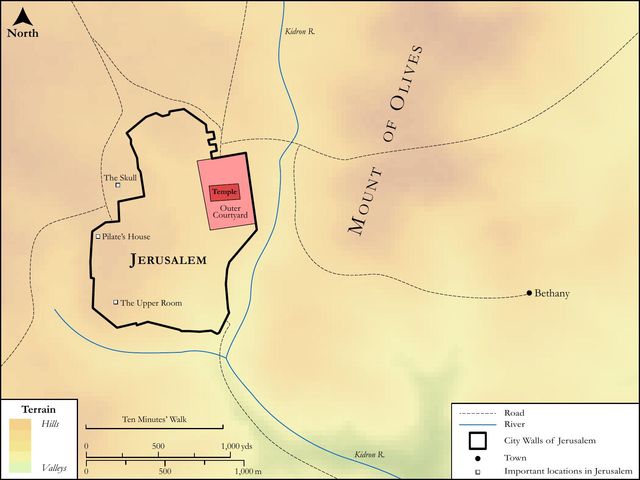
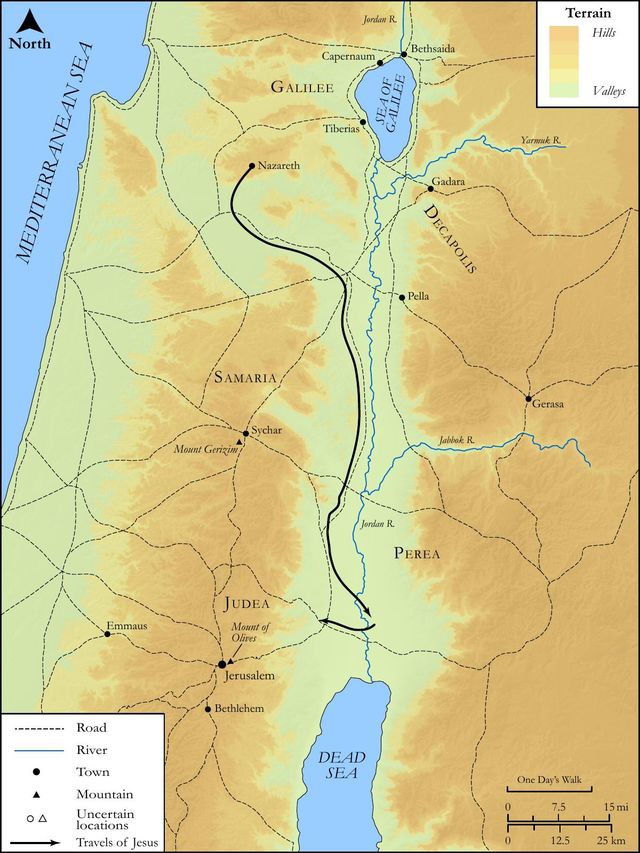
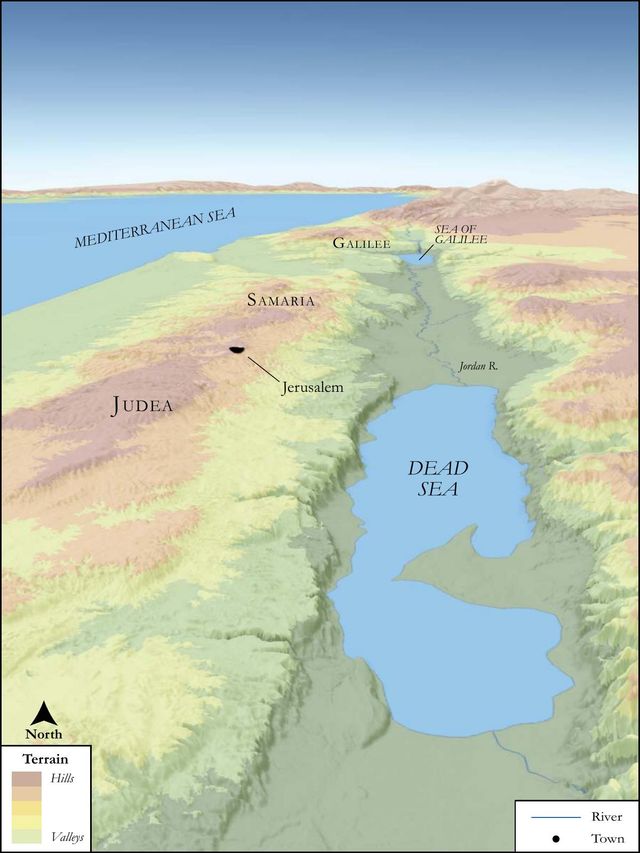
Study this verse
Public-domain commentary
Matthew Henry
From his Commentary on the Whole Bible. Henry comments on passages, not single verses — this entry covers Mark 1:1–8. His four-level outline is real structure in the source text, so it is rendered as structure.
We may observe here,
I.What the New Testament is - the divine testament, to which we adhere above all that is human; the new testament, which we advance above that which was old. It is the gospel of Jesus Christ the Son of God, Mar 1:1.
1.It is gospel; it is God's word, and is faithful and true; see Rev 19:9; Rev 21:5; Rev 22:6. It is a good word, and well worthy of all acceptation; it brings us glad tidings.
2.It is the gospel of Jesus Christ, the anointed Saviour, the Messiah promised and expected. The foregoing gospel began with the generation of Jesus Christ - that was but preliminary, this comes immediately to the business - the gospel of Christ. It is called his, not only because he is the Author of it, and it comes from him, but because he is the Subject of it, and it treats wholly concerning him.
3.This Jesus is the Son of God. That truth is the foundation on which the gospel is built, and which it is written to demonstrate; for is Jesus be not the Son of God, our faith is vain.
II.What the reference of the New Testament is to the Old, and its coherence with it.
The gospel of Jesus Christ begins, and so we shall find it goes on, just as it is written in the prophets (Mar 1:2); for it saith no other things than those which the prophets and Moses said should come (Act 26:22), which was most proper and powerful for the conviction of the Jews, who believed the Old Testament prophets to be sent of God and ought to have evidenced that they did so by welcoming the accomplishment of their prophecies in its season; but it is of use to us all, for the confirmation of our faith both in the Old Testament and in the New, for the exact harmony that there is between both shows that they both have the same divine original.
Quotations are here borrowed from two prophecies - that of Isaiah, which was the longest, and that of Malachi, which was the latest (and there were above three hundred years between them), both of whom spoke to the same purport concerning the beginning of the gospel of Jesus Christ, in the ministry of John.
1.Malachi, in whom we had the Old Testament farewell, spoke very plainly (Mal 3:1) concerning John Baptist, who was to give the New Testament welcome. Behold, I send my messenger before thy face, Mar 1:2. Christ himself had taken notice of this, and applied it to John (Mat 11:10), who was God's messenger, sent to prepare Christ's way.
2.Isaiah, the most evangelical of all the prophets, begins the evangelical part of his prophecy with this, which points to the beginning of the gospel of Christ (Isa 40:3); The voice of him that crieth in the wilderness, Mar 1:3. Matthew had taken notice of this, and applied it to John, Mat 3:3. But from these two put together here, we may observe,
(1.)That Christ, in his gospel, comes among us, bringing with him a treasure of grace, and a sceptre of government.
(2.)Such is the corruption of the world, that there is something to do to make room for him, and to remove that which gives not only obstruction, but opposition to his progress.
(3.)When God sent his Son into the world, he took care, and when he sends him into the heart, he takes care, effectual care, to prepare his way before him; for the designs of his grace shall not be frustrated; nor may any expect the comforts of that grace, but such as, by conviction of sin and humiliation for it, are prepared for those comforts, and disposed to receive them.
(4.)When the paths that were crooked, are made straight (the mistakes of the judgment rectified, and the crooked ways of the affections), then way is made for Christ's comforts.
(5.)It is in a wilderness, for such this world is, that Christ's way is prepared, and theirs that follow him, like that which Israel passed through to Canaan.
(6.)The messengers of conviction and terror, that come to prepare Christ's way, are God's messengers, whom he sends and will own, and must be received as such.
(7.)They that are sent to prepare the way of the Lord, in such a vast howling wilderness as this is, have need to cry aloud, and not spare, and to lift up their voice like a trumpet.
III.What the beginning of the New Testament was.
The gospel began in John Baptist; for the law and the prophets were, until John, the only divine revelation, but then the kingdom of God began to be preached, Luk 16:16. Peter begins from the baptism of John, Act 1:22. The gospel did not begin so soon as the birth of Christ, for he took time to increase in wisdom and stature, not so late as his entering upon his public ministry, but half a year before, when John began to preach the same doctrine that Christ afterward preached. His baptism was the dawning of the gospel day; for,
1.In John's way of living there was the beginning of a gospel spirit; for it bespoke great self-denial, mortification of the flesh, a holy contempt of the world, and nonconformity to it, which may truly be called the beginning of the gospel of Christ in any soul, Mar 1:6. He was clothed with camels' hair, not with soft raiment; was girt, not with a golden, but with a leathern girdle; and, in contempt of dainties and delicate things, his meat was locusts and wild honey. Note, The more we sit loose to the body, and live above the world, the better we are prepared for Jesus Christ.
2.In John's preaching and baptizing there was the beginning of the gospel doctrines and ordinances, and the first fruits of them.
(1.)He preached the remission of sins, which is the great gospel privilege; showed people their need of it, that they were undone without it, and that it might be obtained.
(2.)He preached repentance, in order to it; he told people that there must be a renovation of their hearts and a reformation of their lives, that they must forsake their sins and turn to God, and upon those terms and no other, their sins should be forgiven. Repentance for the remission of sins, was what the apostles were commissioned to preach to all nations, Luk 24:27.
(3.)He preached Christ, and directed his hearers to expect him speedily to appear, and to expect great things from him. The preaching of Christ is pure gospel, and that was John Baptist's preaching, Mar 1:7, Mar 1:8. Like a true gospel minister, he preaches,
[1.]The great pre-eminence Christ is advanced to; so high, so great, is Christ, that John, though one of the greatest that was born of women, thinks himself unworthy to be employed in the meanest office about him, even to stoop down, and untie his shoes. Thus industrious is he to give honour to him, and to bring others to do so too.
[2.]The great power Christ is invested with; He comes after me in time, but he is mightier than I, mightier than the mighty ones of the earth, for he is able to baptize with the Holy Ghost; he can give the Spirit of God, and by him govern the spirits of men.
[3.]The great promise Christ makes in his gospel to those who have repented, and have had their sins forgiven them; They shall be baptized with the Holy Ghost, shall be purified by his graces, and refreshed by his comforts. And, lastly, All those who received his doctrine, and submitted to his institution, he baptized with water, as the manner of the Jews was to admit proselytes, in token of their cleansing themselves by repentance and reformation (which were the duties required), and of God's cleansing them both by remission and by sanctification, which were the blessings promised. Now this was afterward to be advanced into a gospel ordinance, which John's using it was a preface to.
3.In the success of John's preaching, and the disciples he admitted by baptism, there was the beginning of a gospel church. He baptized in the wilderness, and declined going into the cities; but there went out unto him all the land of Judea, and they of Jerusalem, inhabitants both of city and country, families of them, and were all baptized of him. They entered themselves his disciples, and bound themselves to his discipline; in token of which, they confessed their sins; he admitted them his disciples, in token of which, he baptized them. Here were the stamina of the gospel church, the dew of its youth from the womb of the morning, Psa 110:3. Many of these afterward became followers of Christ, and preachers of his gospel, and this grain of mustard-seed became a tree.
Historical interpretation
Eleven Centuries of Reception
16 surviving comments on this verse. Each one is dated, so this reads as a timeline rather than a list.
Select a marker to jump to its quote. Markers stagger vertically where authors wrote within a few decades of each other.
According to the above-mentioned prophecy of Isaiah, the way of the Lord is prepared by John, through faith, baptism, and penitence; the paths are made straight by the rough marks of the hair-cloth garment, the girdle of skin, the feeding on locusts and wild honey, and the most lowly voice; whence it is said, John was in the wilderness. For John and Jesus seek what is lost in the wilderness; where the devil conquered, there he is conquered; where man fell, there he rises up. But the name John means the grace of God, and the narrative begins with grace. For it goes on to say, baptizing. For by baptism grace is given, seeing that by baptism sins are freely remitted. But what is brought to perfection by the bridegroom, is introduced by the friend of the bridegroom. Thus catechumens, (which word means persons instructed,) begin by the ministry of the priest, receive the chrismb from the bishop. And to show this, it is subjoined, And preaching the baptism of repentance, &c.
Now by John as by the bride-groom's friend, the bride is brought to Christ, as by a servant Rebecca was brought to Isaac; wherefore there follows, And there went out to him all, (Gen. 24:61) &c. For confession and beauty are in his presence, (Ps. 95:6. Vulg.) that is, the presence of the bridegroom. And the bride leaping down from her camel signifies the Church, who humbles herself on seeing her husband Isaac, that is, Christ. But the interpretation of Jordan, where sins are washed away, is 'an alien descent.' For we heretofore aliens to God by pride, are by the sign (symbolum) of Baptism made lowly, and thus exalted on highd.
The dress of John, his food, and employment, signifies the austere life of preachers, and that future nations are to be joined to the grace of God, which is John, both in their minds and in externals. For by camel's hair, is meant the rich among the nations; and by the girdle of skin, the poor, dead to the world; and by the wandering locusts, the wise men of this world; who, leaving the dry stalks to the Jews, draw off with their legs the mystic grain, and in the warmth of their faith leap up towards heaven; and the faithful, being inspired by the wild honey, are full-fed from the untilled wood.
Who again is mightier than the grace, by which sins are washed away, which John signifies? He who seven times and seventy times seven remits sin. Grace indeed comes first, but remits sins once only by baptism, but mercy reaches to the wretched from Adam up to Christ through seventy-seven generations, and up to one hundred and forty-four thousand. (Mat. 18:22)
The shoe is in the extremity of the body; for in the end the Incarnate Saviour is coming for justice, whence it is said by the prophet, Over Edom will I cast out my shoe. (Ps. 60:9)
As a witness for simplicity in shoes let John suffice, who avowed that "he was not worthy to unloose the latchet of the Lord's shoes.".
While he, though speaking more perspicuously as no longer prophesying, but pointing out as now present, Him, who was proclaimed symbolically from the beginning, nevertheless said, "I am not worthy to loose the latchet of the Lord's shoe."
Even though Elijah the Tishbite was taken up to heaven, he was not greater than John. Enoch too was translated but was not greater than John. Moses was the greatest of lawgivers and all the prophets were admirable, but none greater than John. It is not I who would dare to compare prophet with prophet, but their Master and ours who himself declared “Among those born of women there is none greater than John.” Not “born of virgins,” observe! but “born of women.”
So that there can neither be penitence without Grace, nor Grace without penitence, for penitence must first condemn sin, that Grace may abolish it. Wherefore John, fulfilling the type of the Law, baptized unto repentance, Christ unto Grace.
John was setting forth the anticipatory and ancillary value of his own baptism, showing that it had no other purpose than to lead to repentance. He did not say he baptized with water of forgiveness, but of repentance. He pointed toward Christ’s baptism, full of inexpressible gifts. John seems to be saying: “On being told that he comes after me, you must not think lightly of him because he comes later. When you understand the power of Christ’s gift, you will see that I said nothing lofty or noble when I said ‘I am unworthy to untie the thong of his sandal.’ When you hear, ‘He is mightier than I,’ do not imagine that I said this by way of comparison. For I am not worthy to be ranked so much as among Christ’s servants, no, not even the lowest of his servants, nor to receive the least honored portion of his ministry.” Therefore John did not simply say, “his sandals,” he said “the thong of his sandals,” the part counted the least of all. THE GOSPEL OF ST.
As he himself bodily preceded Christ as his forerunner, so also his baptism was the prologue to the Lord’s baptism.
“One mightier than I is coming after me, the thong of whose sandals I am not worthy to stoop down and untie.” The meaning of the words: “He must increase, I must decrease,” is that the gospel must increase, but I, the law, must decrease. John, that is, the law in John, was clothed, therefore, in the hair of a camel, for he could not wear a tunic of the lamb of whom it is said: “Behold the lamb of God who takes away the sin of the world;” and again: “He is led like a lamb to the slaughter.” In the law, we cannot wear a tunic from that Lamb.
For what is the difference between water and the Holy Ghost, who was borne over the face of the waters? Water is the ministry of man; but the Spirit is ministered by God.
John therefore was a foreteller of Christ, nearer to him in time than all who went before him. And because all the righteous ones and prophets of former times desired to see the fulfillment of what, through the revelation of the Spirit, they foresaw should come to pass—so also the Lord himself says that “many prophets and righteous men have desired to see those things which you see, and have not seen them; and to hear those things which you hear, and have not heard them.” Therefore it was said of John that he was more than a prophet, and that among all that were born of women there was none greater than he, because to the righteous who went before him it was only granted to foretell the coming of Christ, but to John it was given both to foretell him in his absence and to behold him in his presence, so that it should be found that to him was made manifest what the others had desired.
(Vict. Ant. e Cat. in Marc.) But lest he should be thought to say this by way of comparing himself to Christ, he subjoins, Of whom I am not worthy, &c. It is not however the same thing to loose the shoe-latchet, which Mark here says, and to carry his shoes, which Matthew says. And indeed the Evangelists following the order of the narrative, and not able to err in any thing, say that John spoke each of these sayings in a different sense. But commentators on this passage have expounded each in a different way. For he means by the latchet, the tie of the shoe. (non occ.). He says this therefore to extol the excellence of the power of Christ, and the greatness of His divinity; as if he said, Not even in the station of his servant am I worthy to be reckoned. For it is a great thing to contemplate, as it were stooping down, those things which belong to the body of Christ, and to see from below the image of things above, and to untie each of those mysteries, about the Incarnation of Christ, which cannot be unravelled.
(Moral. xxxi. 25) Or, by the kind itself of his food he pointed out the Lord, of whom he was the forerunner; for in that our Lord took to Himself the sweetness of the barren Gentiles, he ate wild honey. In that He in His own person partly converted the Jews, He received locusts for His food, which suddenly leaping up, at once fall to the ground. For the Jews leaped up when they promised to fulfil the precepts of the Lord; but they fell to the ground, when by their evil works they affirmed that they had not heard them. They made therefore a leap upwards in words, and fell down by their actions.
(Hom. in Evan. vii.) Shoes also are made from the skins of dead animals. The Lord, therefore, coming incarnate, appeared us it were with shoes on His feet, for He assumed in His divinity the dead skins of our corruption. Or else; it was a custom among the ancients, that if a man refused to take as his wife the woman whom he ought to take, he who offered himself as her husband by right of kindred took off that man's shoe. Rightly then does he proclaim himself unworthy to loose his shoe-latchet, as if he said openly, I cannot make bare the feet of the Redeemer, for I usurp not the name of the Bridegroom, a thing which is above my deserts.
"He who comes after me was made before me." For it is said thus: "Made before me," as if it were said, "Placed before me." Therefore he comes after me, because he was born afterward; but he was made before me, because he was preferred to me. But saying these things a little earlier, he also opened the reasons for his preference when he added: "Because he was before me." As if he openly said: Hence he surpasses me even though born after me, because the times of his birth do not confine him. For he who is born in time through a mother was begotten without time from the Father. He shows by adding with what great reverence of humility he is indebted to him: "Whose sandal strap I am not worthy to untie." The custom among the ancients was that if someone did not wish to take as wife the one who was suited to him, he who came as bridegroom by right of kinship to her would untie his sandal. What then did Christ appear as among men, if not the bridegroom of holy Church? But because men thought John was the Christ, which the same John denies, he rightly declares himself unworthy to untie the strap of his sandal. As if he openly said: I am unable to uncover the footsteps of our Redeemer, because I do not undeservedly usurp for myself the name of bridegroom.
(in Marc. i. 2) It is evident that John not only preached, but also gave to some the baptism of repentance; but he could not give baptism for the remission of sinsc. For remission of sins is only given to us by the baptism of Christ. It is therefore only said, Preaching the baptism of repentance for the remission of sins; for he preached a baptism which could remit sins, since he could not give it. Wherefore as he was the forerunner of the Incarnate Word of the Father, by the word of his preaching, so by his baptism, which could not remit sins, he preceded that baptism, of penitence, by which sins are remitted.
(ubi sup.) An example of confessing their sins and of promising to lead a new life, is held out to those who desire to be baptized, by those words which follow, confessing their sins.
It says, clothed in a garment of hair, not in woollen clothes; the former is the mark of an austere garb, the latter of effeminate luxury. But the girdle of skins, with which he was girt, like Elias, is a mark of mortification. And this meat, locusts and wild honey, is suited to a dweller in the wilderness, so that his object in eating was not the deliciousness of meats, but the satisfying of the necessity of human flesh.
(ubi sup.) The dress and food of John may also express of what kind was his inward walk. For he used a dress more austere than was usual, because he did not encourage the life of sinners by flattery, but chid them by the vigour of his rough rebuke; he had a girdle of skin round his loins, for he was one, who crucified his flesh with the affections and lusts. (Gal. 5:24) He used to cat locusts and wild honey, because his preaching had some sweetness for the multitude, whilst the people debated whether he was the Christ himself or not; but this soon came to an end, when his hearers understood that he was not the Christ, but the forerunner and prophet of Christ. For in honey there is sweetness, in locusts swiftness of flight; whence there follows, And he preached, saying, there cometh one mightier than I after me.
(ubi sup.) Thus then John proclaims the Lord not yet as God, or the Son of God, but only as a man mightier than himself. For his ignorant hearers were not yet capable of receiving the hidden things of so great a Sacrament, that the eternal Son of God, having taken upon Him the nature of man, had been lately born into the world of a virgin; but gradually by the acknowledgment of His glorified lowliness, they were to be introduced to the belief of His Divine Eternity. To these words, however, he subjoins, as if covertly declaring that he was the true God, I baptize you with water, but he shall baptize you with the Holy Ghost. For who can doubt, that none other but God can give the grace of the Holy Ghost.
(ubi sup.) Now we are baptized by the Lord in the Holy Ghost, not only when in the day of our baptism, we are washed in the fount of life, to the remission of our sins, but also daily by the grace of the same Spirit we are inflamed, to do those things which please God.
And he preached, saying: One mightier than I is coming, etc. Among the ancients, it was customary that if one did not wish to take as a wife the one who corresponded to him, the one who would be closest by kinship would loose the shoe strap of that man. What then did Christ appear among men, except as the bridegroom of the holy Church? About whom the same John also says: He who has the bride is the bridegroom (John 3). But since men thought that John was the Christ, which the same John denies, he rightly announces himself to be unworthy to loose the strap of his shoe. As if he openly says: I am not able to uncover the footsteps of the Redeemer, because I unworthily do not assume the name of bridegroom. However, this can be understood in another way. For who does not know that shoes are made from dead animals? The incarnate Lord, coming, indeed appeared as if shod, who in his divinity assumed our mortal decay. But the mystery of this incarnation the human eye cannot penetrate. It can by no means be investigated how the Word is embodied, how the highest and life-giving Spirit is animated within the mother's womb, how he who has no beginning and exists is conceived. The strap of the shoe, therefore, is the binding of the mystery. John, therefore, is not able to loose the strap of his shoe, because even he cannot investigate the mystery of the incarnation, which he recognized through the spirit of prophecy. I baptized you with water, but he will baptize you with the Holy Spirit. John does not yet openly proclaim the Lord as God or the Son of God, but rather only a man stronger than himself. For their listeners, being still unrefined, were not yet capable of grasping such great mysteries, that the eternal Son of God, taking on man from the Virgin, was born again into the world, but they had to be gradually introduced through the recognition of glorified humanity to faith in divine eternity. However, in a certain hidden and veiled manner, he declares this one to be the true God, while confirming that he will baptize with the Holy Spirit. For who can doubt that no other than God can give the grace of the Holy Spirit? But as time went on, when he saw that his listeners were more capable of understanding, he also openly preached him as the Son of God, saying: "But he who sent me to baptize with water said to me: Upon whom you see the Spirit descending and remaining, this is he who baptizes with the Holy Spirit. And I have seen and have testified that this is the Son of God." We are baptized by the Lord in the Holy Spirit, not only when on the day of baptism we are washed in the font of life for the remission of sins, but also daily when we are kindled by the grace of the same Spirit to do the things pleasing to God.
The baptism of John had not remission of sins, but only brought men to penitence. He preached therefore the baptism of repentance, that is, he preached that to which the baptism of penitence led, namely, remission of sins, that they who in penitence received Christ, might receive Him to the remission of their sins.
Or else; The garment of camel's hair was significative of grief, for John pointed out, that he who repented should mourn. For sackcloth signifies grief; but the girdle of skins shows the dead state of the Jewish people. The food also of John not only denotes abstinence, but also shows forth the intellectual food, which the people then were eating, without understanding any thing lofty, but continually raising themselves on high, and again sinking to the earth. For such is the nature of locusts, leaping on high and again falling. In the same way the people ate honey, which had come from bees, that is, from the prophets; it was not however domestic, but wild, for the Jews had the Scriptures, which are as honey, but did not rightly understand them.
Some persons also understand it thus; all who came to John, and were baptized, through penitence were loosed from the bands of their sins by believing in Christ. John then in this way loosed the shoe-latchet of all the others, that is, the bands of sin. But Christ's shoe-latchet he was not able to unloose, because he found no sin in Him.
(non occ.) He said this to do away with the opinion of the crowd, who thought that he was the Christ; but he announces that Christ is mightier than he, who was to remit sins, which he himself could not do.
Continue studying Mark 1:7 across the web’s major study libraries — every link below opens this exact verse, chapter, or book on the destination site.
Read & Compare
 BibleGatewayThis verse in more than 200 translations and 70 languages.
 Bible.comThe YouVersion reader — hundreds of translations, reading plans, and highlights.
 ESV.orgCrossway's official English Standard Version reader.
 NET BibleThe NET translation with 60,000+ translators' notes on every rendering decision.
 STEP BibleTyndale House's free study tool — original text, vocabulary, and scholarly resources.
 BibliaLogos Bible Software's free web reader.
 USCCBThe New American Bible (Revised Edition) with the U.S. bishops' study notes.
Commentaries
 BibleHub CommentariesDozens of classic commentaries on this verse, gathered on one page.
 StudyLightMore than 100 commentary sets — the largest collection on the web.
 BibleRefPlain-English commentary on what this verse means, verse by verse.
 Enduring WordDavid Guzik's free commentary on this chapter, widely used by Bible teachers.
 Bible Study ToolsVerse commentary alongside Greek and Hebrew study aids.
Original Language & Research
- BibleHub InterlinearThe verse word by word — original language, transliteration, and English.
- BibleHub LexiconEvery word's original-language definition and Strong's entry.
 Blue Letter BibleDeep-study tools — Strong's numbers, concordance, and word studies.
 CNTR CollationThe earliest Greek manuscripts of this verse, collated letter by letter.
Sermons, Hymns & Audio


TrulyRandomVerse is not affiliated with these sites and doesn’t control their content. They’re linked because they’re genuinely useful.
Summary
Mark 1:7 captures John the Baptist's profound declaration concerning the imminent arrival of the Messiah. In this pivotal statement, John not only announces that one far superior to himself is coming but also emphatically underscores his own unworthiness to perform even the most menial task for this coming figure, thereby setting the stage for the revelation of Jesus Christ's divine authority and unique mission.
Context
ShowHideLiterary Context
Mark's Gospel begins with a direct and urgent introduction to Jesus' ministry, immediately following the prophetic declaration of John the Baptist. Mark 1:1-8 serves as a foundational prologue, establishing John as the prophesied forerunner (alluding to Isaiah 40:3 and Malachi 3:1). Verse 7 is the climax of John's self-identification and his primary message to the crowds, shifting the focus from his own preparatory work to the infinitely greater one who is to follow. It directly precedes the baptism of Jesus in Mark 1:9-11, highlighting the stark contrast between John's water baptism and Jesus' coming baptism with the Holy Spirit.
Historical & Cultural Context
John the Baptist's ministry took place in the wilderness of Judea, a setting that evoked prophetic imagery and a call to return to God. His ascetic lifestyle and message of repentance resonated with many, drawing large crowds from Jerusalem and the surrounding regions for a baptism of repentance for the forgiveness of sins (Mark 1:4-5). In the ancient Near East, the act of unloosing a master's sandals was a task reserved for the lowest slave or servant, often performed upon entering a home to remove dusty footwear. For a rabbi or teacher, even a disciple would not typically perform such a lowly task; it was beneath their dignity. John's declaration, therefore, was a powerful cultural idiom emphasizing the vast, unbridgeable chasm between his own status, however revered, and the unparalleled dignity and authority of the one he announced.
Key Themes
ShowHideThis verse powerfully contributes to several key themes in Mark and the broader biblical narrative. Firstly, it establishes the superiority of Jesus Christ, portraying Him as "mightier" than even a great prophet like John, thereby setting the stage for understanding Jesus' divine nature and authority. Secondly, it exemplifies John's profound humility and self-effacement, as he consistently points away from himself and towards the Messiah, fulfilling his role as a mere "voice" (John 1:23). Thirdly, it underscores the theme of preparation for the Messiah, as John's ministry serves as the divinely appointed prelude to Jesus' public ministry. Finally, it highlights the concept of servanthood and the radical nature of Jesus' coming, where even the most esteemed human figure (John) is unworthy to perform the most menial service for Him, foreshadowing the ultimate servanthood of Christ Himself who came not to be served but to serve (Mark 10:45).
Exposition and Analysis
ShowHideKey Word Analysis
ShowHideMeaning "to herald (as a public crier), especially divine truth (the gospel)." John was not merely speaking; he was proclaiming an official, authoritative message from God, acting as a herald announcing the arrival of a king. This word emphasizes the public, authoritative, and divinely commissioned nature of John's ministry.
Meaning "forcible (literally or figuratively):--boisterous, mighty(-ier), powerful, strong(-er, man), valiant." This term denotes not just physical strength but a superior power, authority, and inherent capability. John uses the comparative form, ischyroteros, to explicitly state that the coming one possesses a greater, more profound power and authority than he does.
Meaning "a strap, i.e. (specially) the tie (of a sandal) or the lash (of a scourge)." In this context, it refers specifically to the strap of a sandal. This seemingly small detail is culturally significant, pointing to the most menial and humble of tasks, typically performed by the lowest servants or slaves.
Meaning "to 'loosen' (literally or figuratively):--break (up), destroy, dissolve, (un-)loose, melt, put off." Here, it refers to the act of untying or unfastening the sandal strap. The combination with "stoop down" (G2955, kýptō) further emphasizes the posture of humility and servitude required for this task.
Verse Breakdown
ShowHide"And preached, saying"
This phrase immediately connects John's declaration to his public ministry. He was not speaking privately but proclaiming a message to the gathered crowds, consistent with his role as a divine herald. The imperfect tense of "preached" (G2784, kērýssō) suggests an ongoing, characteristic action of his ministry.
"There cometh one mightier than I after me"
This is the core of John's message, a prophetic announcement of the Messiah's imminent arrival. The phrase "mightier than I" (G2478, ischyroteros) clearly establishes the qualitative superiority of the coming one over John. The "after me" (G3694, opísō) indicates chronological succession but also a hierarchical relationship, where the one who follows is greater in rank and power.
"the latchet of whose shoes I am not worthy to stoop down and unloose"
This is a powerful statement of profound humility and self-abasement. John uses a culturally understood idiom for the lowest form of servitude. By declaring himself unworthy of even this most demeaning task, John emphasizes the immense, incomparable dignity, authority, and divine nature of the one who is to come. It highlights his recognition that the Messiah's status is infinitely above his own.
Literary Devices
ShowHideMark 1:7 employs several significant literary devices. Hyperbole is evident in John's statement that he is "not worthy to stoop down and unloose" the latchet of Jesus' shoes. While literally meaning unworthiness for a menial task, it functions as an exaggerated expression to emphasize the vast, infinite gap in status and authority between John and the Messiah. This hyperbole serves to elevate Jesus' identity. There is also a strong element of Contrast in the verse, as John deliberately contrasts his own ministry and person with that of the coming Messiah. He highlights his own subordinate role to amplify the superior power and authority of Jesus. Finally, the act of "unloosing the latchet of shoes" functions as Symbolism. It is a concrete, culturally specific image that symbolizes the lowest form of servanthood, thereby powerfully conveying John's deep reverence and the Messiah's supreme dignity and divine nature.
Theological and Thematic Connections
ShowHideMark 1:7 serves as a theological cornerstone, establishing the unparalleled authority and divine nature of Jesus Christ from the very outset of the Gospel. John the Baptist, the last and greatest of the Old Testament prophets, humbly submits to and points towards Jesus, signaling a new era of God's redemptive work. This declaration underscores the radical shift in dispensations, from the preparatory work of the Law and Prophets to the direct, powerful, and saving ministry of the Messiah. John's self-abasement in the face of Christ's greatness models true humility and proper worship, setting a precedent for all who would follow Jesus. It also highlights the theme of divine appointment, as John's ministry was specifically ordained to prepare the way for the Lord, fulfilling ancient prophecies and demonstrating God's sovereign plan unfolding in history.
Reflection and Application
ShowHideJohn the Baptist's declaration in Mark 1:7 offers profound lessons for contemporary believers. In an age that often celebrates self-promotion and personal achievement, John's radical humility stands as a powerful counter-cultural example. He understood his purpose was not to draw attention to himself, but to faithfully point others to the true source of all power and salvation: Jesus Christ. This verse challenges us to examine our own lives and ministries: are we genuinely Christ-centered, or do we subtly seek our own glory? It calls us to cultivate a spirit of genuine humility, recognizing that any gifting or platform we possess is ultimately for the exaltation of Christ, not ourselves. Like John, we are called to be faithful heralds, preparing hearts for the Lord, and doing so with a deep sense of privilege, even in the most seemingly insignificant acts of service, knowing that Christ is infinitely worthy of our utmost devotion and adoration.
Questions for Reflection
ShowHideFAQ
ShowHideWhy did John the Baptist say he was "not worthy to stoop down and unloose" Jesus' shoes?
ShowHideThis statement is a powerful expression of John's profound humility and his recognition of Jesus' supreme divine authority and dignity. In ancient Jewish culture, unloosing or carrying a master's sandals was considered the most menial task, typically performed only by the lowest slaves. Even a disciple would not be expected to perform such a demeaning act for their rabbi. By declaring himself unworthy of even this lowest form of service for Jesus, John was emphasizing the vast, incomparable chasm between his own status (as a great prophet) and the infinitely higher status of the Messiah. It was a cultural idiom signifying utter subservience and reverence, highlighting Jesus' unparalleled worthiness and divine nature from the very beginning of His public ministry, as seen throughout the Gospel of Mark.
Christ-Centered Fulfillment
ShowHideMark 1:7, with John the Baptist's humble declaration, serves as a foundational Christ-centered statement, preparing the reader for the full revelation of Jesus' identity and mission. John's acknowledgment of one "mightier than I" foreshadows Jesus' unparalleled authority over sin, sickness, and even death, as demonstrated throughout the Gospels (e.g., Mark 2:10-11, Mark 4:39). The imagery of John being unworthy to unloose Jesus' sandals is profoundly Christocentric, highlighting the Messiah's divine glory and sacred personhood. This humility on John's part sets the stage for Jesus' own paradoxical humility, where the "mightier one" would not come to be served, but to serve and to give His life as a ransom for many (Mark 10:45). John's preparatory ministry, pointing to the one who would baptize with the Holy Spirit (Mark 1:8), directly anticipates the New Covenant reality inaugurated by Christ's death and resurrection, where believers are empowered by the Spirit to live new lives in Him (Acts 2:1-4). Thus, Mark 1:7 is not merely a historical account but a theological signpost, directing all attention and worship to Jesus as the supremely worthy and powerful Son of God.